The waiting is the hardest part. Your cat is round as a melon, she's been pacing the wardrobe at 3am, and you're hovering with your phone ready to call the vet. The good news: for most cats, giving birth — properly called queening — is a natural process they handle beautifully on their own. Your job is mostly to stay calm, keep the room quiet, and know the difference between "this is normal" and "this needs a vet right now". This guide walks you through both.
If you're not sure how far along she is, check how long cats are pregnant and the early signs first, and make sure you've covered the run-up in caring for a pregnant cat. The whole journey lives in our complete pregnancy and birth guide.
Is My Cat About to Give Birth?
In the final 24 to 48 hours, a queen's body and behaviour start signalling clearly. Watch for this cluster of signs:
- A temperature drop: her rectal temperature often falls below about 37.8°C (100°F) roughly 12 to 24 hours before labour — the most reliable physical clue if you're already comfortable taking it.
- Going off food: many queens refuse their last meal or two before labour.
- Restlessness and nesting: pacing, repeated trips to the kittening box, scratching and rearranging the bedding.
- Vocalising and grooming: she may be more vocal than usual and groom her belly and genital area heavily.
- Seeking you — or hiding: some queens want company; others vanish into a closet. Both are normal.
According to International Cat Care, these behavioural shifts are the clearest early markers that stage one is beginning. The PDSA notes that no single sign is definitive on its own — it's the combination, appearing together over a day or two, that tells you she's close. If she was mated and you've been tracking dates, you'll usually see these land right around day 63–65.
Get Ready: The Queening Box and Birth Kit
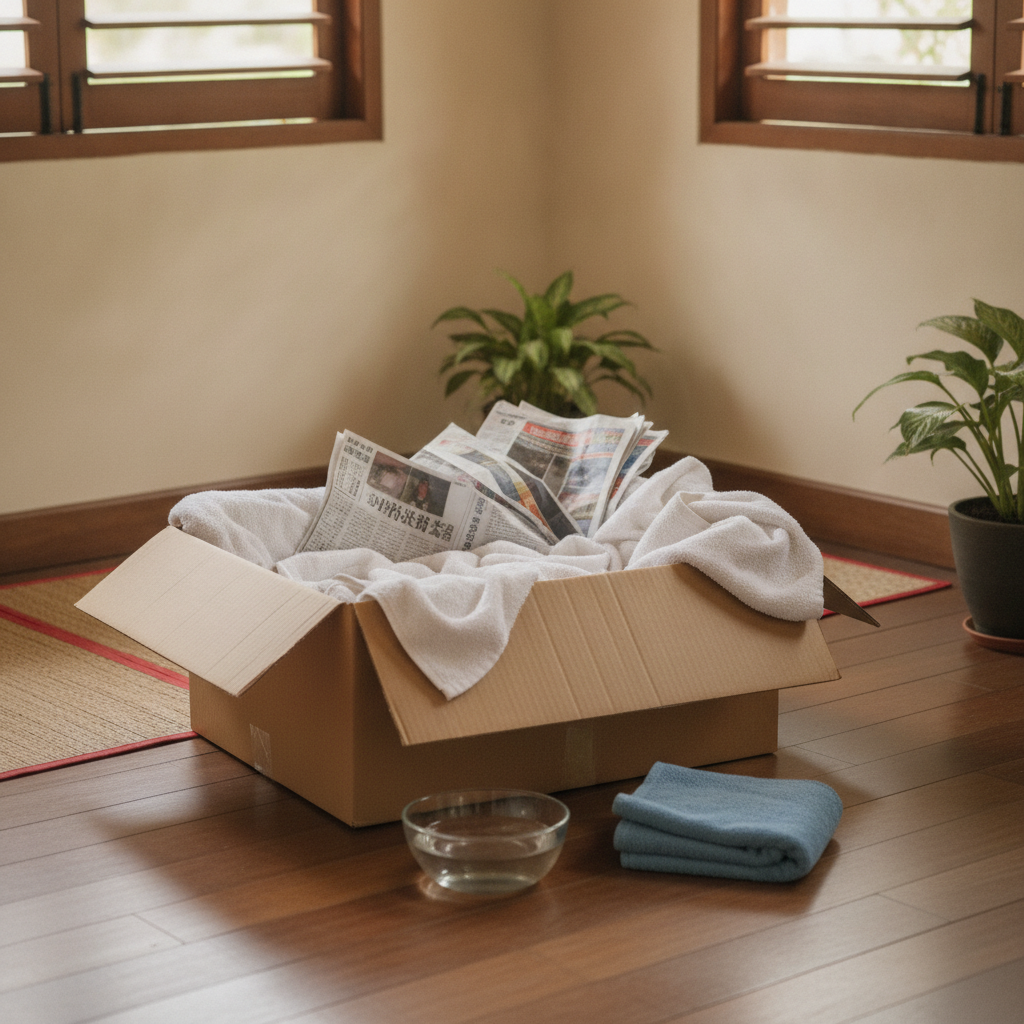
Set up a queening box a week or two before the due date so she can get used to it. A sturdy cardboard box big enough for her to stretch out works perfectly — sides about 20 cm high to keep newborns in, with a low entry cut into one side so she can step over easily. Line it with newspaper (which she can shred to nest) topped with soft, washable towels, and put it in a warm, quiet, draft-free, low-traffic room with her food, water and litter tray nearby. Many queens prefer a covered box for privacy. If she ignores it and picks your laundry basket instead, and the spot is safe, let her have it — forcing the issue just stresses her.
Keep a simple kit within reach: clean towels, a roll of clean paper, a small pair of clean scissors and unwaxed dental floss (only if a cord ever needs tying — usually she handles it), a kitchen scale to weigh kittens, your vet's number, and the nearest 24-hour clinic's address. You can estimate the due date with our cat pregnancy calculator.
Stage One: Early Labour
Stage one is the long, quiet build-up: the cervix relaxes and contractions begin, but they're usually not visible from the outside. It typically lasts 6 to 12 hours, and can stretch up to 36 hours in a first-time mother. You'll see the behaviour, not the contractions — restlessness, pacing, panting, heavy grooming, refusing food, and frequent visits to the nest. She may want reassurance or solitude. The best thing you can do is keep the room calm, dim, and free of other pets and curious children. Resist the urge to crowd her.
Stage Two: Delivering the Kittens
Stage two is active birth, driven by strong, visible abdominal contractions. As the first kitten enters the birth canal, a fluid-filled membrane (the "water bag") appears at the vulva and ruptures. Once she's straining forcefully and continuously, a kitten should arrive within about 5 to 30 minutes. Kittens can come head-first or feet-first — both are normal in cats, unlike in some other animals.
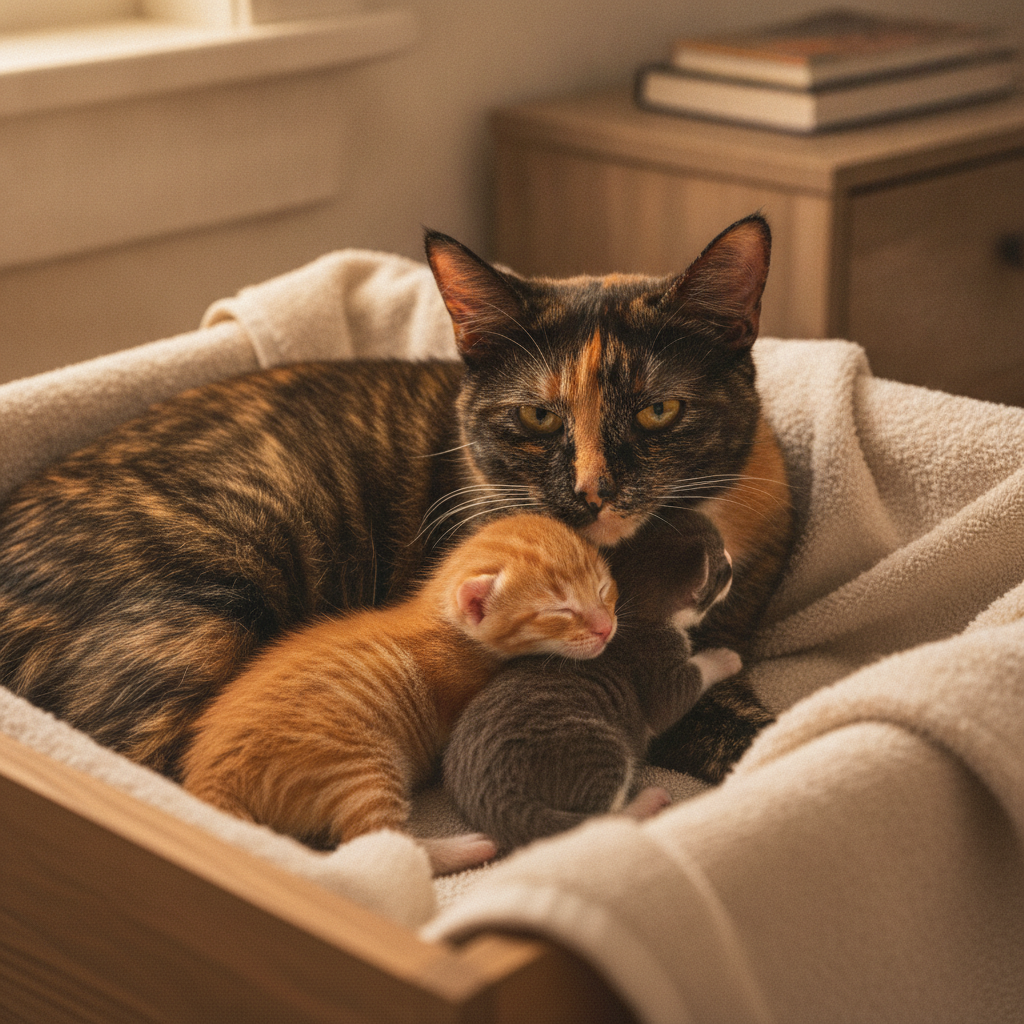
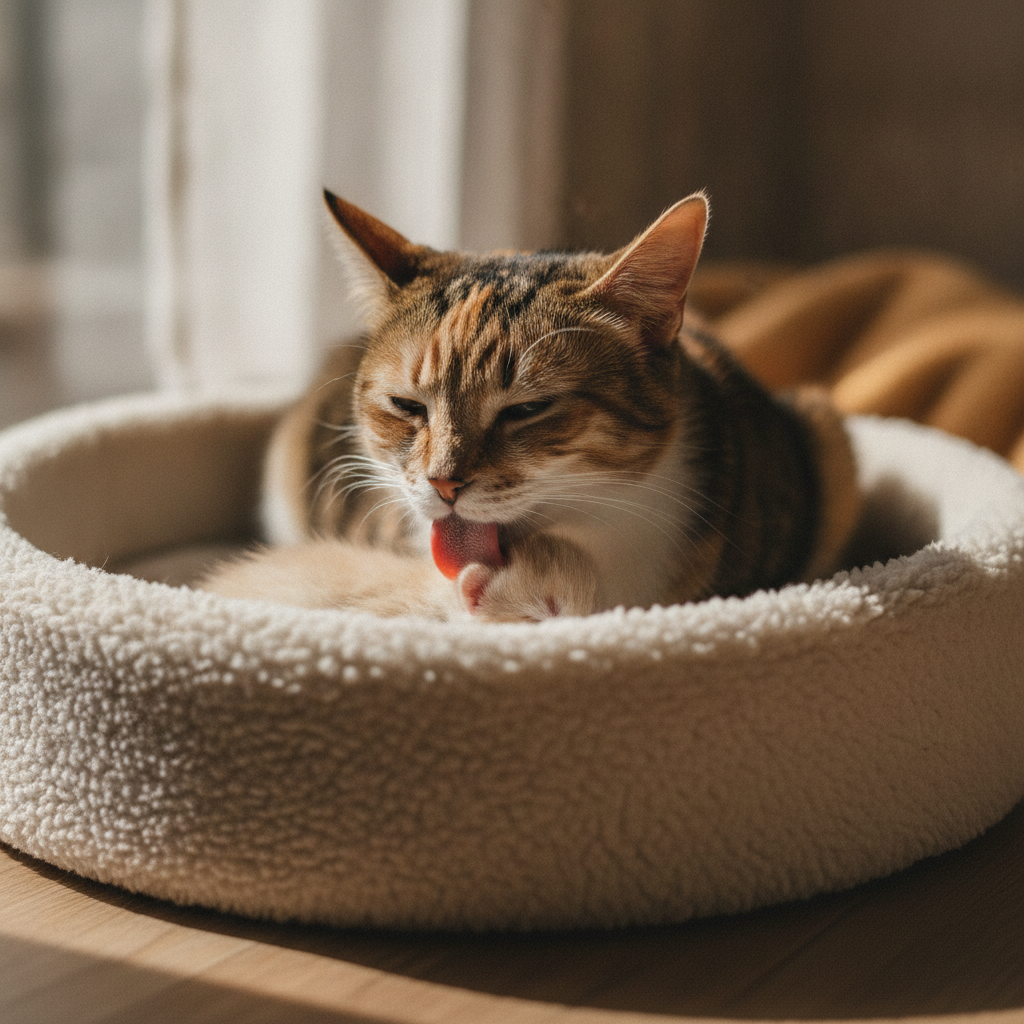
After each birth, the mother instinctively licks the kitten vigorously to tear open the sac, clear its airways, kick-start breathing, and chew through the umbilical cord. Let her do this; it's how she bonds and how the kitten gets going. The gap between kittens usually runs from 10 minutes to an hour. A typical litter of four to six takes a few hours start to finish. Curious how many to expect? See how many kittens do cats have.
Stage Three: The Afterbirth
Stage three is the delivery of the placenta (afterbirth), and it runs hand-in-hand with stage two: a placenta is usually passed within about 15 minutes of each kitten. She'll alternate — kitten, placenta, kitten, placenta — until the litter is complete. Count the placentas against the kittens. A retained placenta can cause a dangerous uterine infection called metritis, so if the numbers don't match, tell your vet. It's completely normal (and useful) for her to eat the placentas — it gives her nutrients and keeps the nest clean, so don't be alarmed.
Interrupted Labour Is Normal
Here's the one that panics owners unnecessarily. A queen may deliver one or more kittens, then simply stop — settling down, nursing the newborns, even eating and drinking, perfectly comfortable. This is "interrupted labour", a normal feline quirk that can last up to 24 to 36 hours before she resumes and delivers the rest. As long as she is relaxed, not straining, and caring for the kittens already born, it is not an emergency. The key distinction: a resting, content queen is fine; a straining, distressed queen who isn't producing a kitten is not. That line is what the next section is about.
Red Flags: When Birth Becomes an Emergency
A difficult birth is called dystocia, and it's a true emergency. Per VCA Animal Hospitals and feline veterinary guidance, call your vet or the nearest emergency clinic immediately if you see any of these:
| Situation | What's normal | Emergency sign |
|---|---|---|
| Strong straining, no kitten | Kitten within 5–30 min | Over 30 min of strong contractions with nothing delivered |
| Kitten visible at vulva | Passes within minutes | Stuck, not delivered after 10–15 min of intense straining |
| Gap between kittens | 10 min to 1 hour | Over 4 hours while still straining or distressed |
| Discharge before first kitten | Clear or slightly bloody fluid | Black, green or foul-smelling discharge; heavy bright-red blood |
| Whole pregnancy | 63–65 days | Past 70 days with no labour |
Also call if she shows extreme exhaustion, collapse, crying in obvious pain, or tremors. A green or black discharge before the first kitten can mean the placenta has separated early — the kittens are at risk and time matters. When in doubt, phone the vet; they would always rather hear from you early.
The First Hours After Birth and a Clean, Low-Dust Space
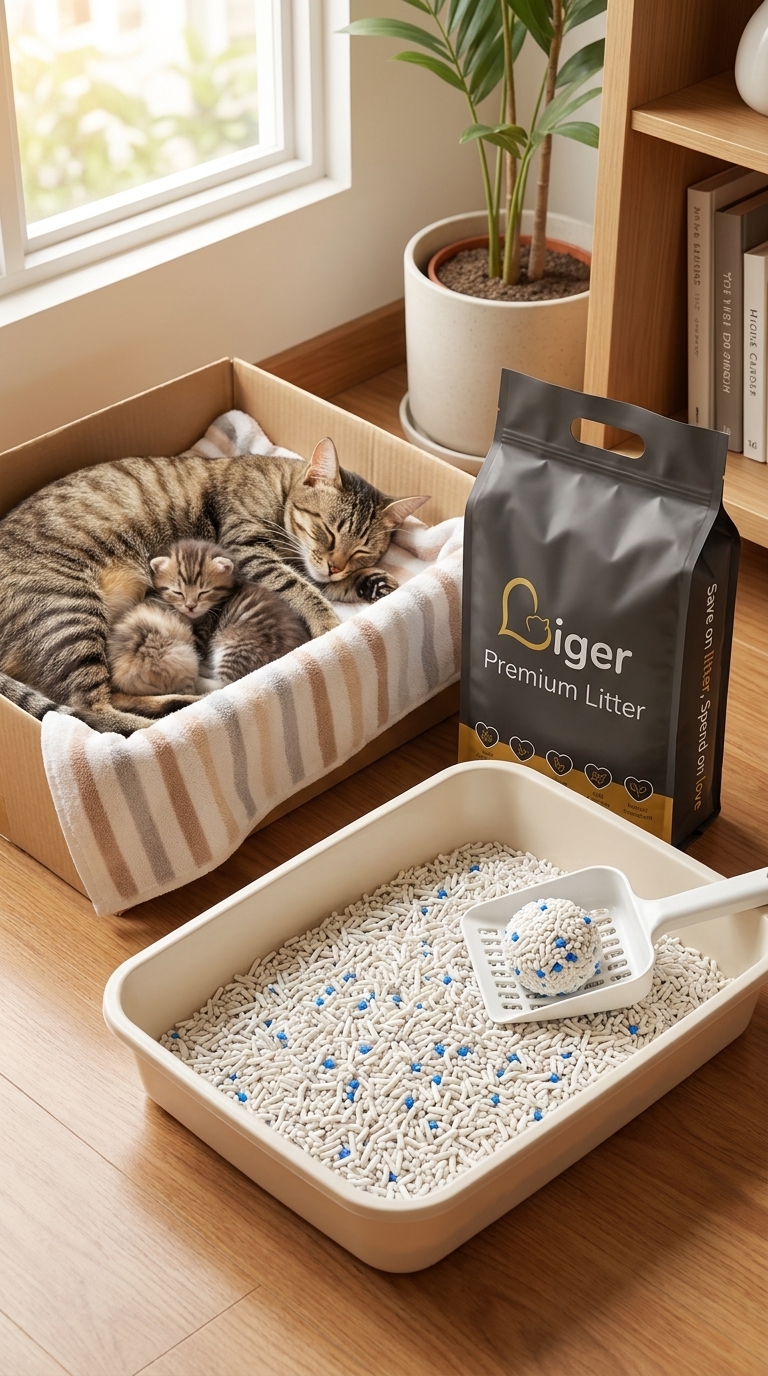
Once the litter is out, the priorities shift to warmth and that first feed. Newborns can't regulate their own temperature, so keep the nest warm — around 29–32°C (85–90°F) for the first week — using a covered heat pad on low under half the box so they can crawl away if too warm. Healthy kittens should nurse within the first one to two hours to get colostrum, the antibody-rich first milk. As a benchmark, PetMD notes a healthy newborn kitten weighs roughly 90–110 grams and should gain about 10–15 grams a day, doubling its birth weight in the first week — which is why a kitchen scale is the single most useful tool in that first fortnight. A reddish-brown vaginal discharge from the queen for up to a week afterwards is normal, but WebMD flags that a foul-smelling, green or black discharge with fever or lethargy points to infection and needs a vet. Book a post-birth check for mum and babies within 24 to 72 hours to confirm no retained placenta and that everyone's feeding. What happens next — lactation, weight checks, the queen's recovery — is covered in caring for a nursing queen and her newborn litter, and if you ever end up hand-raising, our newborn kitten care guide has you covered.
One practical detail for the days after birth: hygiene. A new mum and fragile newborns share a small space, so keep the litter area scrupulously clean and low-dust — dusty clay litter isn't ideal next to a nest of newborns with developing lungs. Liger Premium Tofu Cat Litter suits this stage well: it's made from natural soy fibre, is low-dust, clumps firmly so you can keep the tray spotless with minimal effort, controls odour in our humid Malaysian climate, is flushable in small amounts, and is Halal-certified. Pricing is straightforward: RM21.90 (1 pack, 2 kg), RM53.90 (3 packs), RM89 (5 packs) and RM169 (10 packs) — about RM8.45/kg on the 10-pack (current Liger pricing). With a growing litter your usage climbs fast, so work out how much you'll need with the litter calculator. Congratulations — the hard part is over, and a new little family is settling in.