Cats lack the prefrontal cortex structure needed for complex social planning like 'revenge'.
Short-term memory in cats is limited to about 60 seconds for disappearing objects.
Most 'behavioral' issues are actually reactions to stress or hidden medical problems.
Use enzymatic cleaners to remove urine odors, or cats will keep returning to the same spot.
Your cat is not plotting your downfall. Seriously. I know it feels like it when you come home to find a fresh puddle on your favorite RM3,000 sofa right after you refused them an extra treat. It feels calculated. It feels personal. It feels like revenge.
But the reality is much simpler, though a bit less dramatic. Cats don't 'get even' because their brains literally aren't wired for it. If we want to live in harmony with our furballs, we need to stop looking for a villain and start looking for a cause.
The Science: Why They Can't Plan Revenge
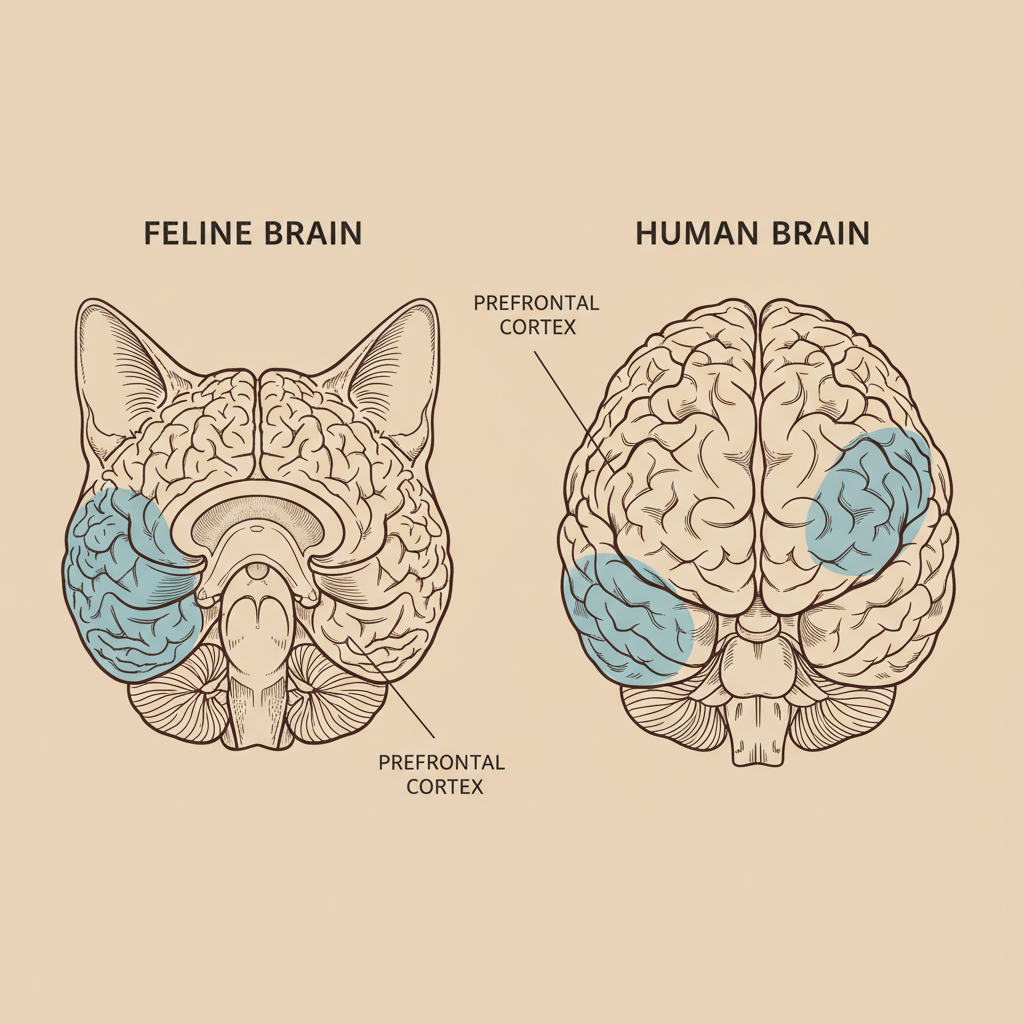
In humans, the prefrontal cortex (PFC) is where the magic (and the drama) happens—it's responsible for complex social behavior and planning. According to quantitative assessments of the prefrontal cortex, this area makes up nearly 30% of our brain. In cats? It's a tiny 3% to 3.5%.
Basically, your cat lives in the 'now'. They don't sit around thinking, 'Yesterday she clipped my nails, so today I shall destroy the rug.' Their working memory is also remarkably short. Research shows that for disappearing objects, cats' working memory lasts only about 60 seconds. By the time you get home and yell at them for the 'revenge' pee from two hours ago, they have absolutely no idea what you're talking about.
| Feature | Human (Homo sapiens) | Cat (Felis catus) | Implications for 'Revenge' |
|---|---|---|---|
| Prefrontal Cortex % of brain | ~25%-29% | ~3%-3.5% | Cats lack the neural hardware for complex planning & social inhibition. |
| Primary Evolution Driver | Complex social interactions, language, tool use | Visual processing, auditory localization, immediate hunting reflexes | Cats' brains prioritize sensory & motor skills over complex social cognition. |
| Time Perception | Long-term past & future psychological projection | Lives in the present, focuses on immediate survival needs | Cats cannot plan "revenge" spanning hours, as they live in the moment. |
| Causal Reasoning | Advanced logical reasoning (A leads to B, C) | Simple associative learning (A accompanied by B) | Cats cannot understand abstract cause-and-effect (e.g., "damaged item" leads to "owner distress"). |
| Working Memory (disappearing objects) | Minutes to hours (with visual cues) | ~60 seconds (egocentric spatial coding) | Cats cannot link a past "misdeed" to a later "punishment." |
The Time I Thought Lucky Hated Me
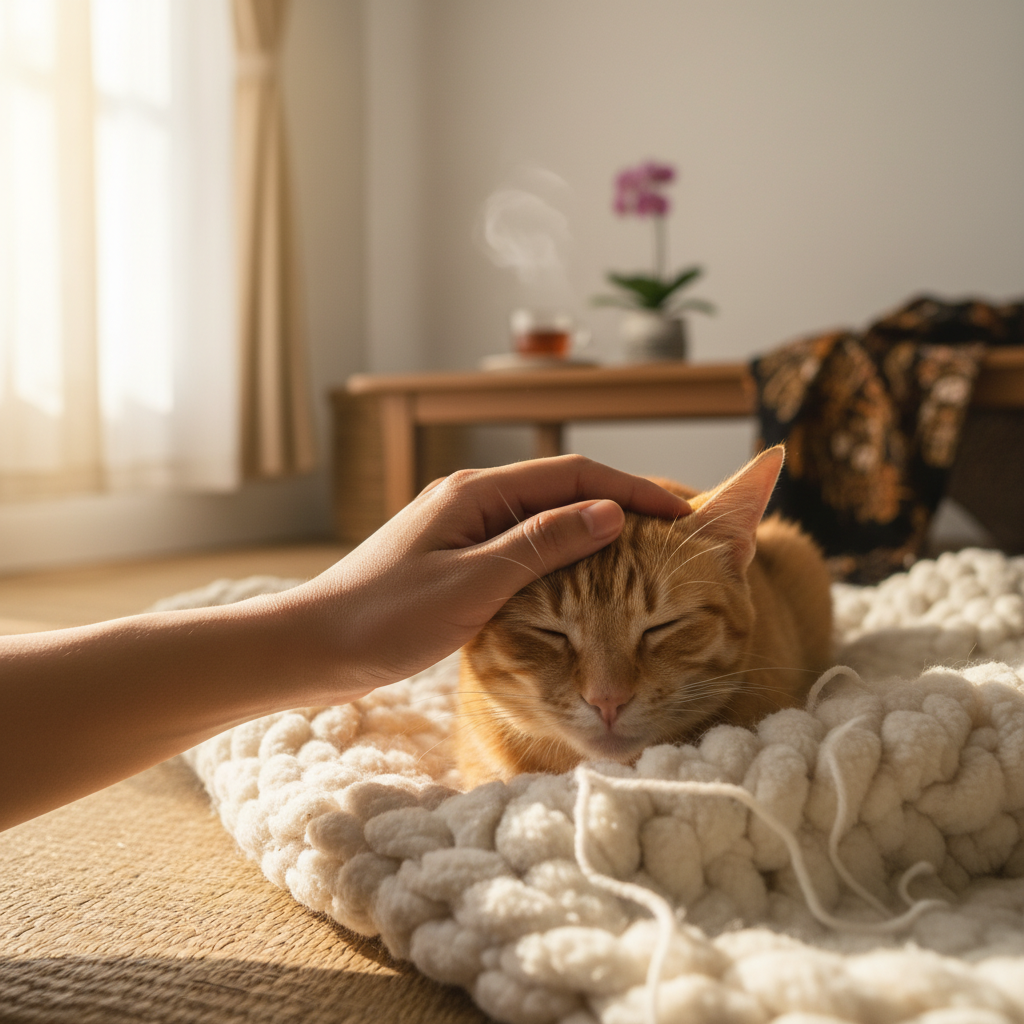
I'll be honest—I used to be 'that' owner. A few months ago, after I came home from a long trip, I found a wet patch on my bed. I felt betrayed. I thought, 'I feed you the best food, and this is how you welcome me back?' I ignored Lucky for a whole evening because I was 'hurt'.
But then I looked closer. Lucky wasn't being mean; he was anxious. My absence had stressed him out, and my bed smelled the most like 'safety' (me). He wasn't trying to punish me; he was trying to mix his scent with mine to feel secure. I felt like a complete idiot. I was punishing him for being scared. Sometimes we let our human ego get in the way of understanding what our cats are actually saying.
Is It Attitude or a UTI?
Before you blame your cat's 'attitude', check their health. Studies show that over 60% of inappropriate urination cases have underlying medical causes. Conditions like Feline Idiopathic Cystitis (FIC) make peeing painful. If it hurts to pee in the box, the cat blames the box, not their bladder. They look for somewhere soft—like your laundry or your duvet.
If your cat's toilet habits change suddenly, use our Cat Peeing Problem Solver to narrow down the cause. It could be something as simple as a dirty box, or something serious that needs a vet visit ASAP.
| Cause | Description | Solution |
|---|---|---|
| Medical Conditions | Conditions like FIC, UTIs, bladder stones cause painful urination. | Vet Visit: Rule out and treat underlying medical issues. |
| Anxiety/Stress | Owner absence, new pets/people, changes in routine lead to stress. | Scent Mixing: Provide safe spaces, use Feliway, create positive associations. |
| Litter Box Aversion | Dirty box, wrong litter type, painful association with box. | Cleanliness: Scoop daily, deep clean weekly. Litter Type: Use preferred clumping, low-dust litter. |
| Litter Box Size/Quantity | Box too small, not enough boxes for multiple cats. | N+1 Rule: Provide N+1 boxes (N=number of cats). Size: Box 1.5x cat's length. |
| Litter Box Location | Box in noisy, high-traffic, or hidden areas. | Placement: Place boxes in quiet, accessible, and visible areas. |
The Clean Freak Factor
Sometimes, it's not stress or sickness—it's just a dirty toilet. Our cat Lion is a prime example. If his litter box isn't pristine, he'll let us know by 'protesting' elsewhere. We learned that to keep him happy, we need to choose the right litter that clumps fast and locks in smells.
That's why we made Liger Tofu Cat Litter with a natural mild milk fragrance. It doesn't just mask the smell with artificial perfume (which cats like Ping'An hate because of their sensitive noses); it clumps in seconds. Also, remember the 'N+1' rule: if you have two cats, you need three boxes. If your home is small, like a condo, choosing a low-dust tofu litter is a life-saver for your own lungs too.
Don't Forget the Size
If your box is too small, your cat will feel cramped. You can use our Litter Box Size Calculator to make sure they have enough room to turn around comfortably. A cramped cat is a stressed cat!
Cats don't live in the past, and they certainly don't hold grudges like we do. If they are acting out, they are communicating—not attacking. Next time you see a mess, take a deep breath. It's not a vendetta; it's a plea for help.
Your Monday Morning Action: Today, get down on your hands and knees and smell the litter box area. If you smell even a faint hint of ammonia, your cat smells it 10x stronger. Scoop it, clean the edges, and maybe add a little more fresh Liger litter. A clean box is the best 'peace treaty' you can offer.
| Aspect | Recommendation |
|---|---|
| Quantity | Follow the "N+1" rule (N = number of cats). For 2 cats, use 3 boxes. |
| Size | Box should be at least 1.5 times the length of the cat to allow comfortable turning. |
| Location | Place boxes in quiet, accessible, and visible areas, away from noisy appliances or hidden corners. |
| Cleanliness | Scoop solid waste daily. Deep clean and change all litter weekly. |
| Litter Type | Use a fast-clumping, low-dust litter, preferably unscented or with a mild natural fragrance. |