Tooth Resorption (TR) is an autoimmune-like condition where the body eats its own teeth from the inside out.
The 'Pink Spot' near the gumline is a major red flag—it's granulation tissue trying to fill a hole in the tooth.
Dental fillings (restorations) are strictly contraindicated for TR; extraction is the only humane solution.
Post-surgery care requires low-dust, food-grade litter to prevent infections in the open gum wounds.
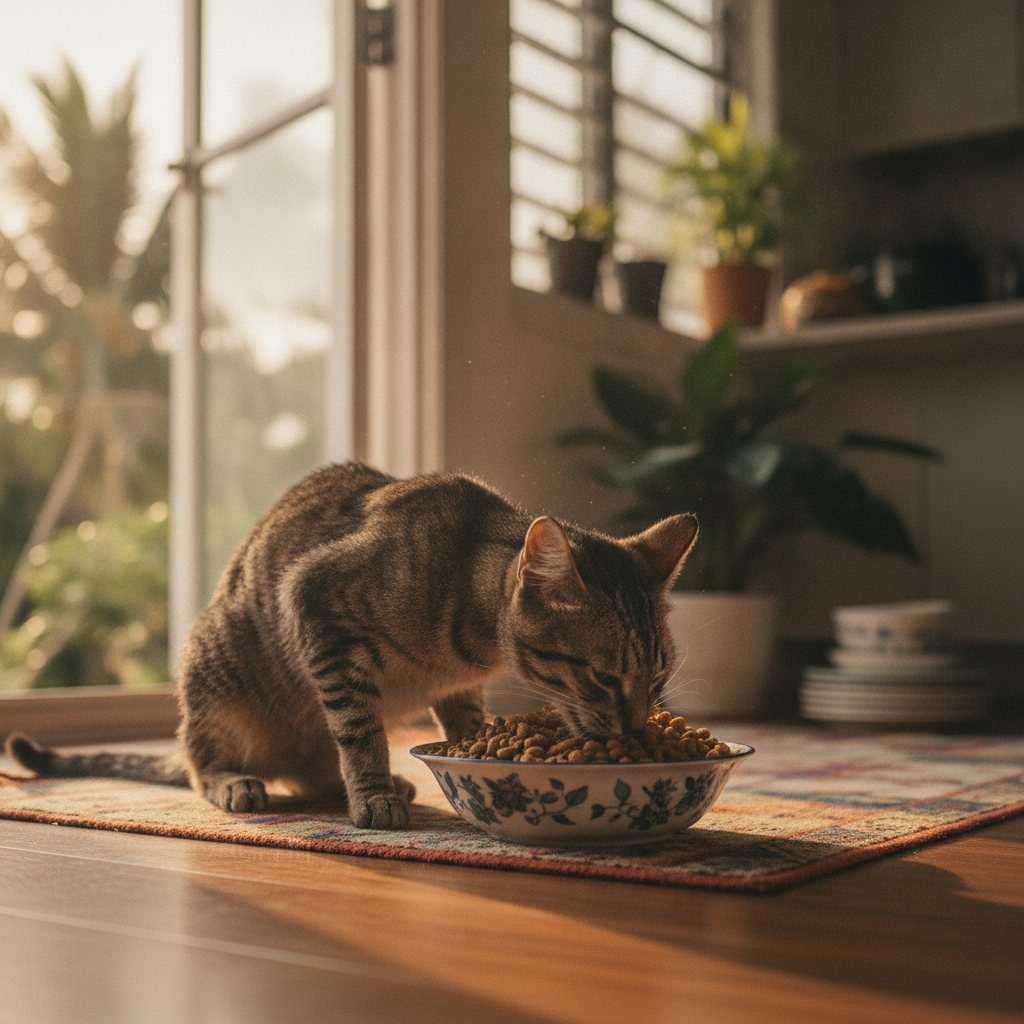
Your cat is a master of lies. One day they are crunching kibble happily, and the next, they are tilting their head oddly or spitting out food. You might think they've just become a 'picky eater' in their older years. But here's a startling fact: Tooth Resorption in Cats affects 20% to 60% of all adult cats, and for those over five, that number jumps to 75%.
This isn't just a 'bad tooth' or a cavity from too many treats. It’s a biological betrayal—a silent autoimmune-like storm where the body’s own cells start dissolving the tooth structure from the inside out. In Malaysia, where we often feed dry diets and dental awareness is still catching up, many cats suffer in silence until a tooth literally snaps off during dinner.
The Microscopic Civil War in the Mouth
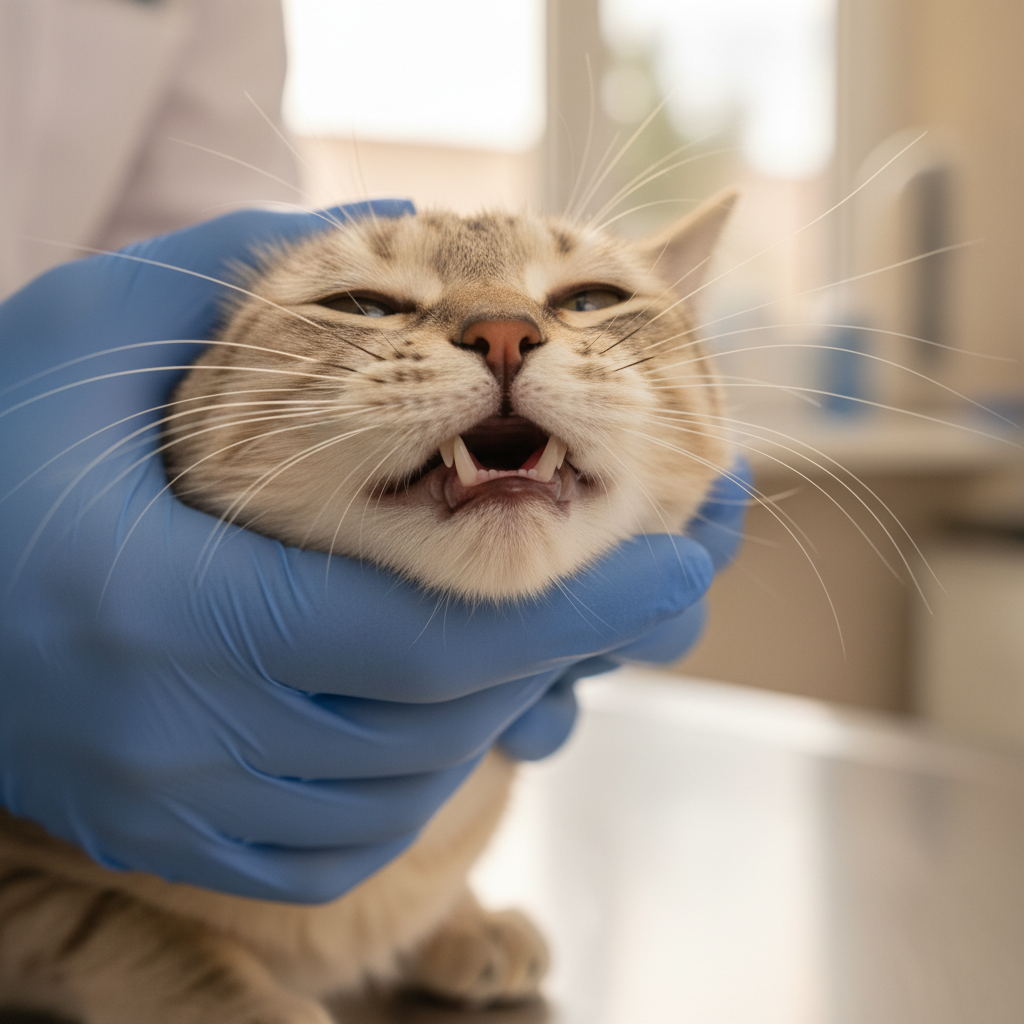
Unlike human cavities caused by bacteria, feline TR is driven by odontoclasts. These are cells that normally dissolve baby teeth to make room for adult ones. In adult cats, these cells accidentally 'wake up' and start attacking healthy teeth. They eat through the cementum, the dentin, and eventually hit the pulp canal where the nerves live. Imagine a tiny construction crew taking a sledgehammer to your home's foundation while you're still living inside. That's what your cat feels.
If you notice your cat has breath that smells like a wet market at noon, don't ignore it. It’s rarely 'just' food breath. It’s often the smell of infection and decaying tissue.
The 'Pink Spot' Warning
The most iconic sign of TR is a small, bright red or pink growth on the tooth near the gumline. This is called granulation tissue. The body is essentially trying to 'bandage' the hole in the tooth with gum tissue. If you see this, your cat is likely in Stage 3 or 4 of the disease and needs immediate help.
| Characteristic | Human Dental Caries | Feline Tooth Resorption (TR) |
|---|---|---|
| Core Cause | External bacteria (Bacteria-mediated) | Internal odontoclasts (Immune/Cell-mediated) |
| Destruction Mechanism | Bacteria ferment carbohydrates, producing acid that causes chemical demineralization | Odontoclasts secrete enzymes and acid, leading to biological degradation and absorption |
| Onset Location | Typically on occlusal surfaces or interproximal areas of the crown (food retention areas) | Typically begins at the gumline (cemento-enamel junction) or subgingival root |
| Lesion Appearance | Dark (black or brown) and soft decay | Lesion often covered by hyperplastic granulation tissue, appearing reddish-pink |
| Treatment Logic | Remove decayed tissue, prepare cavity, fill with restorative material | Filling materials are considered foreign bodies or continue to be absorbed; extraction is mandatory |
| Pain Perception | Painless in early enamel stage, pain only with deep cavities | Severe pain once dentin is invaded, often accompanied by pulp exposure |
| Prevention | Brushing, flossing, reduced sugar intake | Difficult to prevent completely with hygiene; early detection relies on X-ray screening |
The Cost of Care in Malaysia (2024-2025)
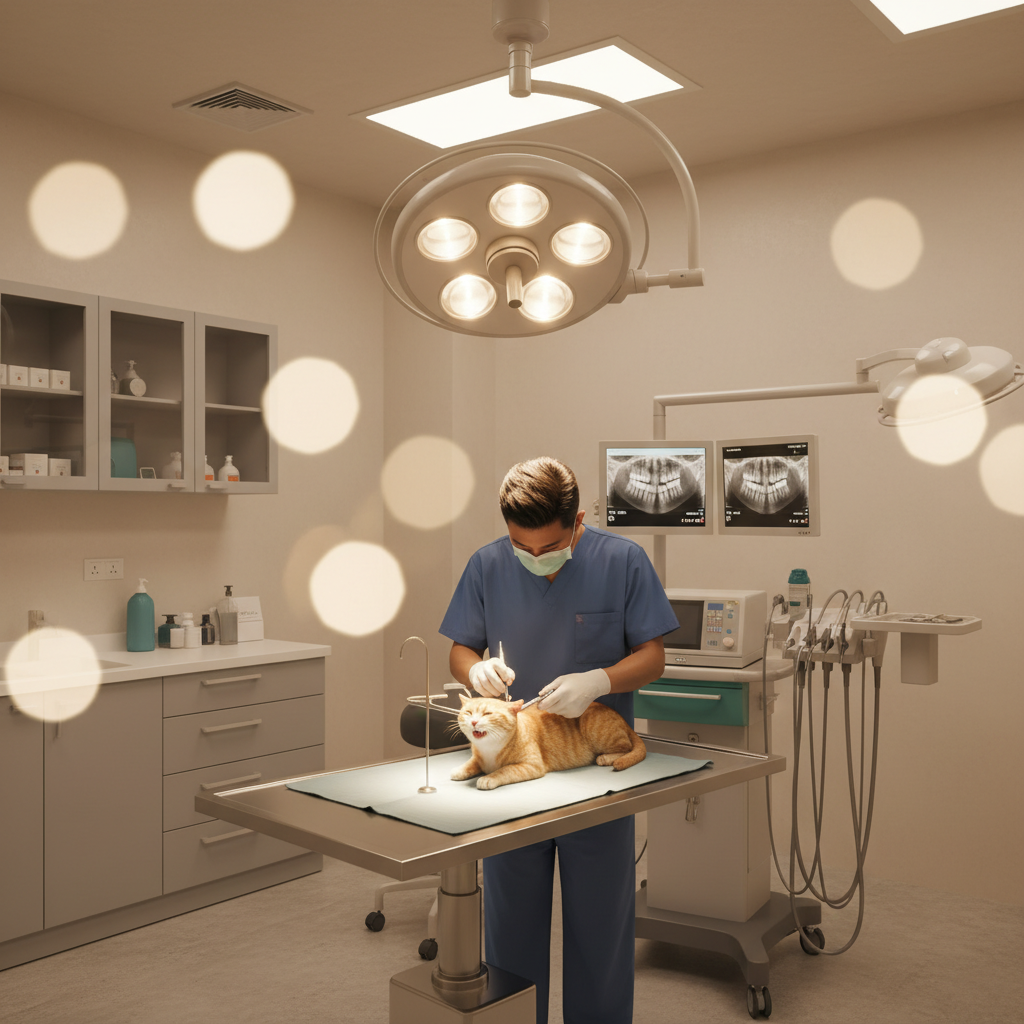
I know the first question every Malaysian cat parent asks is: "How much?" In the Klang Valley, treating a moderate case of TR with a few extractions typically ranges from RM 1,000 to RM 2,500 at private clinics. This usually includes blood tests, general anesthesia, dental X-rays, and the surgery itself.
If your budget is tight, UPM Veterinary Hospital or government clinics offer lower rates, but be prepared for long waiting lists. Given the costs, many owners consider cat insurance to help manage these unexpected surgical bills.
| Item | Private Clinic Estimate (RM) | Govt./University Hospital Estimate (RM) |
|---|---|---|
| Consultation | 30 - 80 | 10 - 30 |
| Pre-surgical Blood Test | 120 - 250 (may exceed 300 for older cats) | Lower (not explicitly stated) |
| Gas Anesthesia | 150 - 350 (varies by weight & duration) | Lower (not explicitly stated) |
| Full Mouth Dental X-rays | 150 - 400 | Lower (not explicitly stated) |
| Simple Extraction (per tooth) | 30 - 80 | Lower (not explicitly stated) |
| Surgical Extraction (per tooth) | 150 - 500 | Lower (not explicitly stated) |
| Crown Amputation (per tooth) | 150 - 500 | Lower (not explicitly stated) |
| Pain Medication & Antibiotics | 50 - 150 | Lower (not explicitly stated) |
| Hospitalization (per night) | 50 - 100 | Lower (not explicitly stated) |
| Total Estimate (Moderate TR) | 1,000 - 2,500 | 500 - 1,000 |
Why You Can't Just 'Fill' the Hole
As tempting as it sounds to just 'patch it up' like a human cavity, Cornell Feline Health Center clearly states that dental restorations are contraindicated for feline TR. Why? Because the destruction is happening inside the tooth. If you put a filling on top, the cells underneath keep eating away the tooth until it shatters. It’s like painting over a termite-infested pillar—it looks fine for a week, then the roof caves in. Extraction is the only kind way out.
The Post-Op Recovery: Why Litter Choice is 'Life or Death'
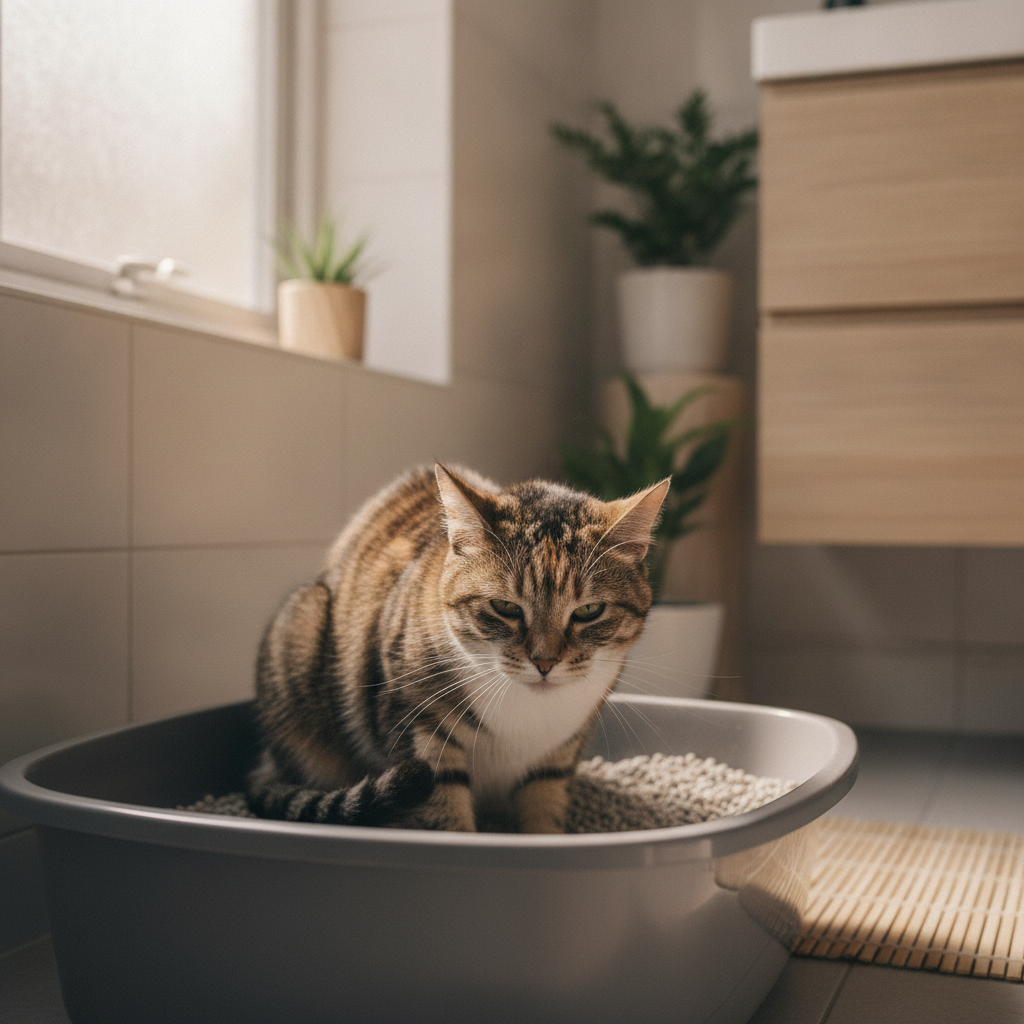
After the vet removes the painful teeth and stitches the gums, your cat enters a 7-day critical healing window. Here’s something most people miss: Traditional clay or mineral litter is a disaster for fresh mouth wounds.
Cats lick their paws constantly after using the litter box. If your litter is dusty, those microscopic mineral shards stick to their paws and get transferred directly into the surgical site. This can cause infection or even aspiration pneumonia. Veterinary experts strongly recommend switching to a low-dust, food-grade tofu litter for at least a week after dental surgery.
Liger Tofu Cat Litter was designed for cats like Ping'An, who has a super sensitive nose and sneezes at the slightest bit of dust. For a post-op cat, a dust-free, food-grade environment isn't a luxury—it's a medical necessity to keep those gum stitches clean and infection-free.
| Characteristic | Traditional Clay Litter | Tofu Litter (Recommended Post-Op) |
|---|---|---|
| Dust Level | High, fine mineral dust | Almost dust-free (low-dust processed) |
| Impact on Wounds | Microscopic mineral shards stick to paws, can transfer to mouth wounds, leading to infection or aspiration pneumonia | Plant fibers, less likely to adhere to paws, significantly reduces risk of wound contamination and respiratory issues |
| Safety if Ingested | Ingestion of small particles may cause gastrointestinal upset or blockages | Made from plant fibers, usually non-toxic and digestible if accidentally ingested in small amounts |
| Texture | Sharp, rough, potentially uncomfortable for sensitive paws post-surgery | Soft, gentle on paws, provides more comfortable toileting experience during recovery |
| Urine Monitoring | Darker color, clumping may be less distinct, harder to observe urine output and color for health monitoring | Lighter color, good clumping, makes it easier to monitor urine output and detect blood or abnormalities |
The Fear of a Toothless Cat
I'll be honest—the first time I heard a cat needed 'full mouth extractions,' I cried. I felt like a failure. How would they eat? Would they be miserable? But then I saw a 'toothless' cat inhaling kibble faster than my cats with full teeth ever did. It turns out, their gums become very hard once healed. A cat with no teeth and no pain is a thousand times happier than a cat with a mouth full of melting, throbbing teeth. If your cat is eating the right amount of calories but still seems miserable, pain might be the hidden culprit.
Tooth resorption is a silent thief. It hides under the gumline, away from our eyes, but never away from the cat's nerves. While we are lucky that Tiger, Lion, Ping'An, and Lucky are currently dental-issue free, we know that vigilance is our only tool. Don't wait for your cat to stop eating—at that point, they've been suffering for months.
Your Monday Morning Action: Gently lift your cat's lip. Look at the upper premolars (the big ones in the back). Do you see a bright red 'dot' touching the tooth? If yes, book a dental checkup today. If not, give them a pat and keep an eye on that spot once a month.