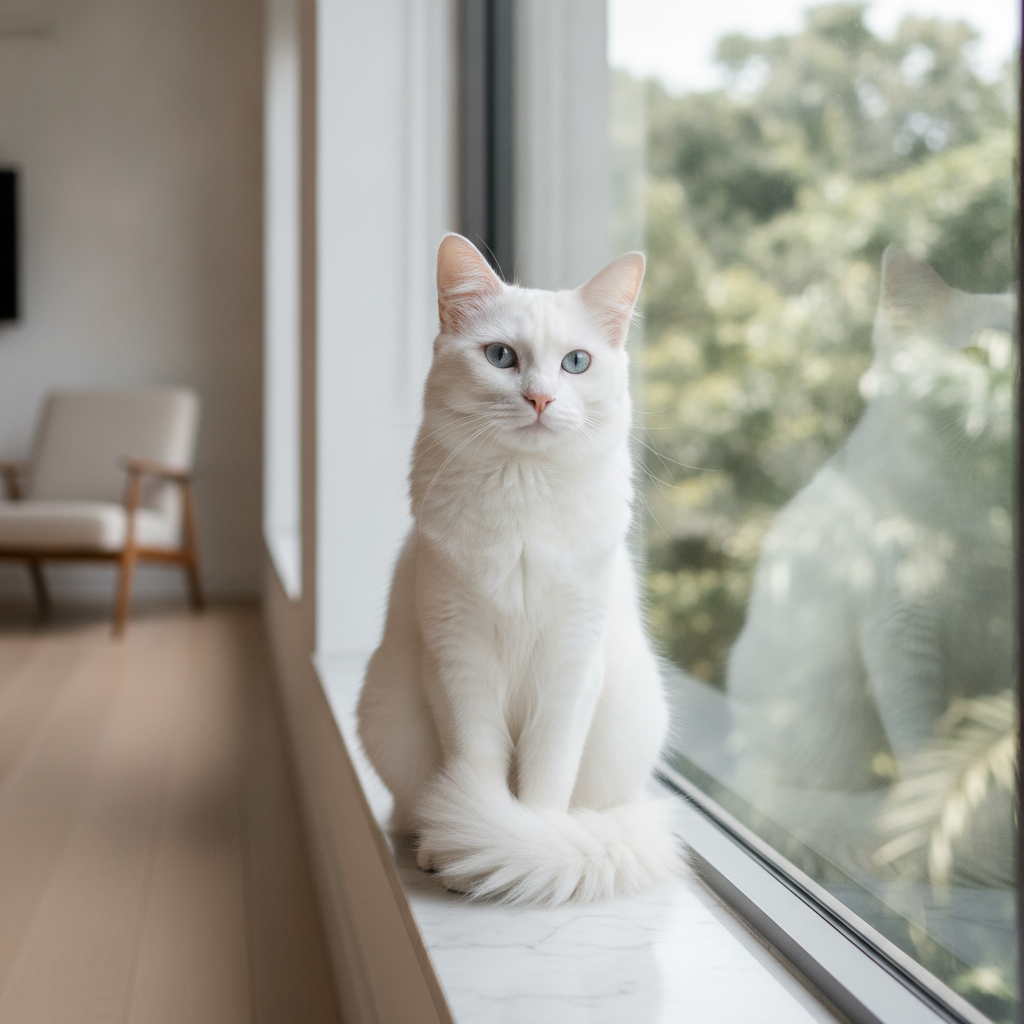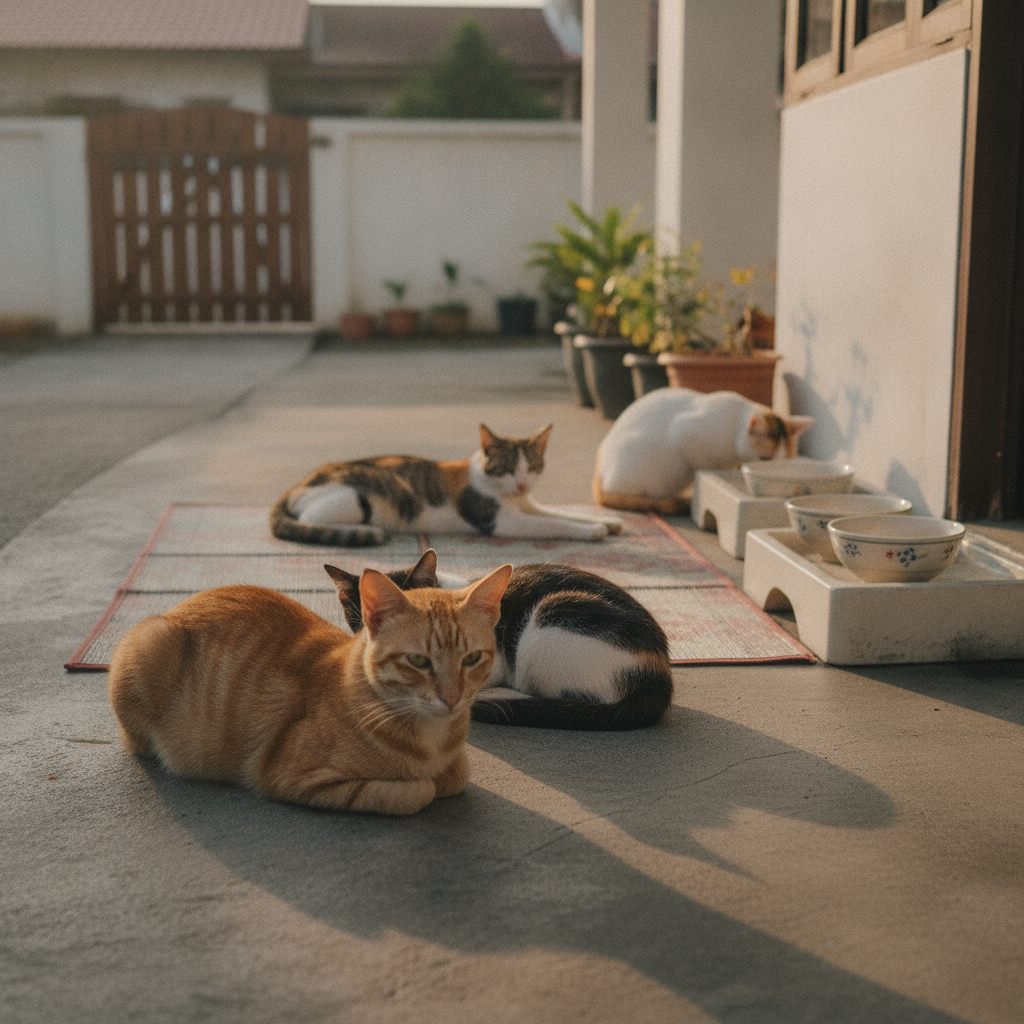
Every Malaysian neighbourhood has them: the cats around the kopitiam, the ones that melt into a drain when you walk past, the bolder ones that wind around your legs at the pasar malam. We lump them all together as "stray cats," but that single label hides a really important distinction — one that decides whether a cat can become someone's pet or is better off living its best life outdoors. Get it wrong and you cause a lot of stress for nothing — and miss the chance to actually help.
This is part of our How Cats Work science hub, and it's the community-cat chapter. Note up front: this is not about adopting a friendly stray that already likes people — we cover that in adopting a stray cat. This is about genuinely unsocialised feral cats and the humane system built around them: TNR.
Feral vs Stray: Not the Same Cat
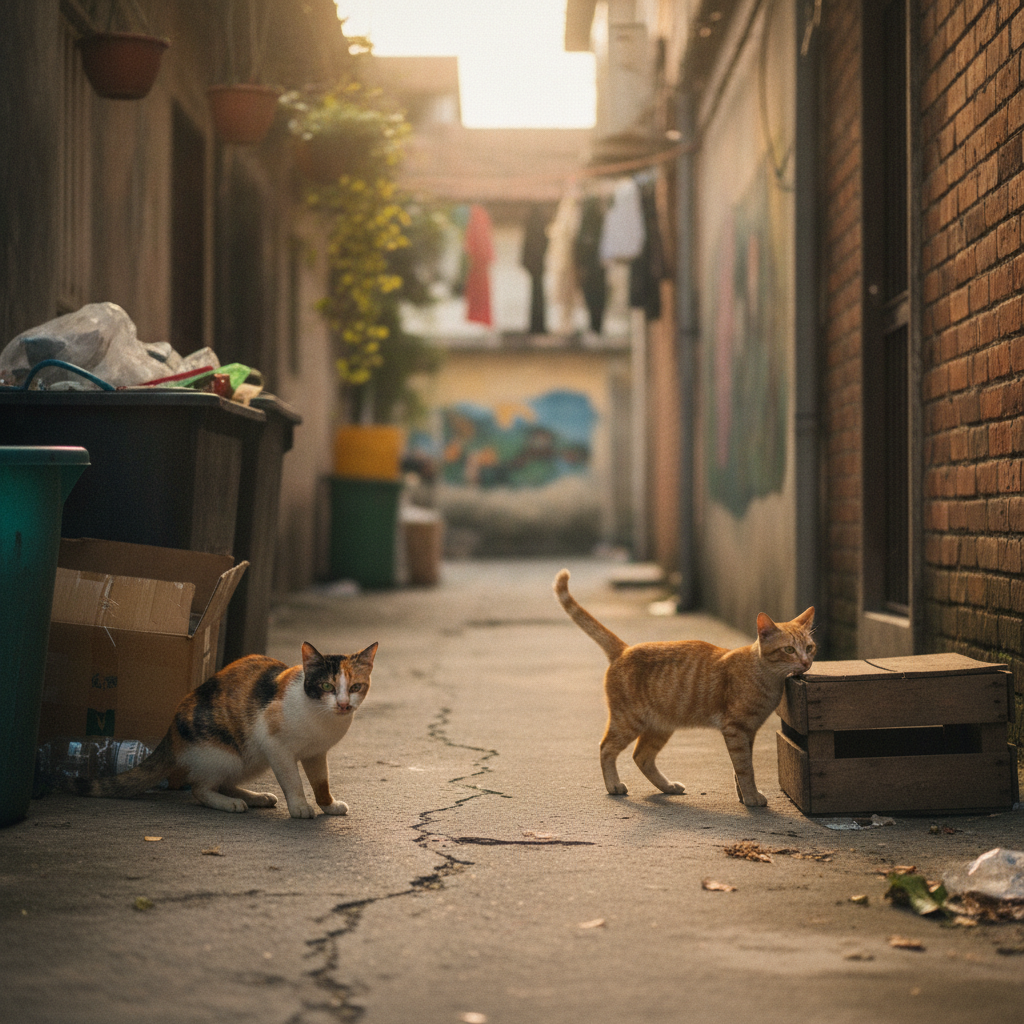
Both are unowned cats living outdoors — together they're called "community cats" — but their histories are opposite. A stray is a cat that was socialised to people: a former pet that got lost or was abandoned. It remembers human company, so it may meow at you, approach, walk with its tail up, and can usually be re-homed with patience — even if it looks dishevelled from the stress of life outside, that's grime, not wildness.
A feral cat, by contrast, has had little or no positive human contact — often born outdoors to other ferals. As Alley Cat Allies explains, a feral cat behaves like a wild animal: it stays silent, avoids eye contact, crouches low, and will hide rather than approach. It can't be safely handled and won't settle into life as an indoor lap cat. That's not a personality flaw, and it certainly isn't a "mean" cat — it's simply a cat that missed a critical early window and never learned that people are safe. Knowing which cat you're looking at is the whole game, because it changes what "helping" actually means.
The Socialisation Window: Why Age Matters
The gap between stray and feral comes down to one biological fact: kittens have a narrow window early in life when they learn that humans are safe. Handle, talk to and play with a kitten during that period and it bonds to people for life. Miss it, and the kitten grows up wired to treat humans as predators.
Feasibility drops fast with age, as groups like feral cat colony specialists note. Feral kittens up to around 8 weeks can usually be socialised fairly easily; from 8 to 12 weeks it takes more time and skill; and past about 4 months it becomes extremely difficult, with no guarantee of success. This is exactly why rescuers race to get young kittens out of colonies (if you'd like to help with that, see our guide on fostering kittens). For an adult feral, though, the kindest outcome is not a forced indoor life — it's a sterilised, vaccinated life in its own territory.
What Is TNR, Step by Step
Trap-Neuter-Return is the humane standard for managing feral colonies. It runs in four steps:
- Trap: the colony's cats are caught using humane box traps.
- Neuter and vaccinate: a vet spays or neuters each cat and vaccinates it, including against rabies — which protects the colony and the people around it, a genuine public-health win, not just an animal-welfare one.
- Ear-tip: while the cat is still under anaesthesia, the vet removes a small straight portion of the tip of one ear (usually the left). It's painless and permanent — a universally recognised badge that says "already done," so the cat is never needlessly trapped or operated on twice.
- Return: once recovered, the cat goes back to its home turf, where a caregiver usually keeps an eye on it.
If you ever spot a confident outdoor cat with a neat flat-tipped ear, now you know: that cat has been through a TNR programme and is part of a managed, non-breeding colony — not a stray to be reported, but a success story walking around on four legs.
Why TNR Works When Catch-and-Kill Doesn't
The instinct to simply remove cats backfires, thanks to a well-documented ecological principle called the vacuum effect. Take the cats out of a spot that has food and shelter, and you've left an empty, resource-rich territory — which new, unsterilised cats quickly move into, while any survivors breed faster to fill the gap. As Alley Cat Allies documents, this is why decades of culling have never solved the problem anywhere.
TNR works with that principle instead of against it. A sterilised colony holds its territory, blocking newcomers, and because no kittens are being born, the colony shrinks naturally over time. A 28-year programme at the University of Central Florida recorded an 85% drop in its campus cat population. A separate multi-year programme at a care centre in Louisiana found that after three years, "new litters could not be located," alongside an overall improvement in the cats' health and body condition. Sterilisation also switches off the behaviours people complain about most — the 3am yowling, the fighting over mates, the territorial spraying — because those are driven by the urge to breed. Quieter cats, smaller colonies, healthier animals, no killing.
Community Cats in Malaysia
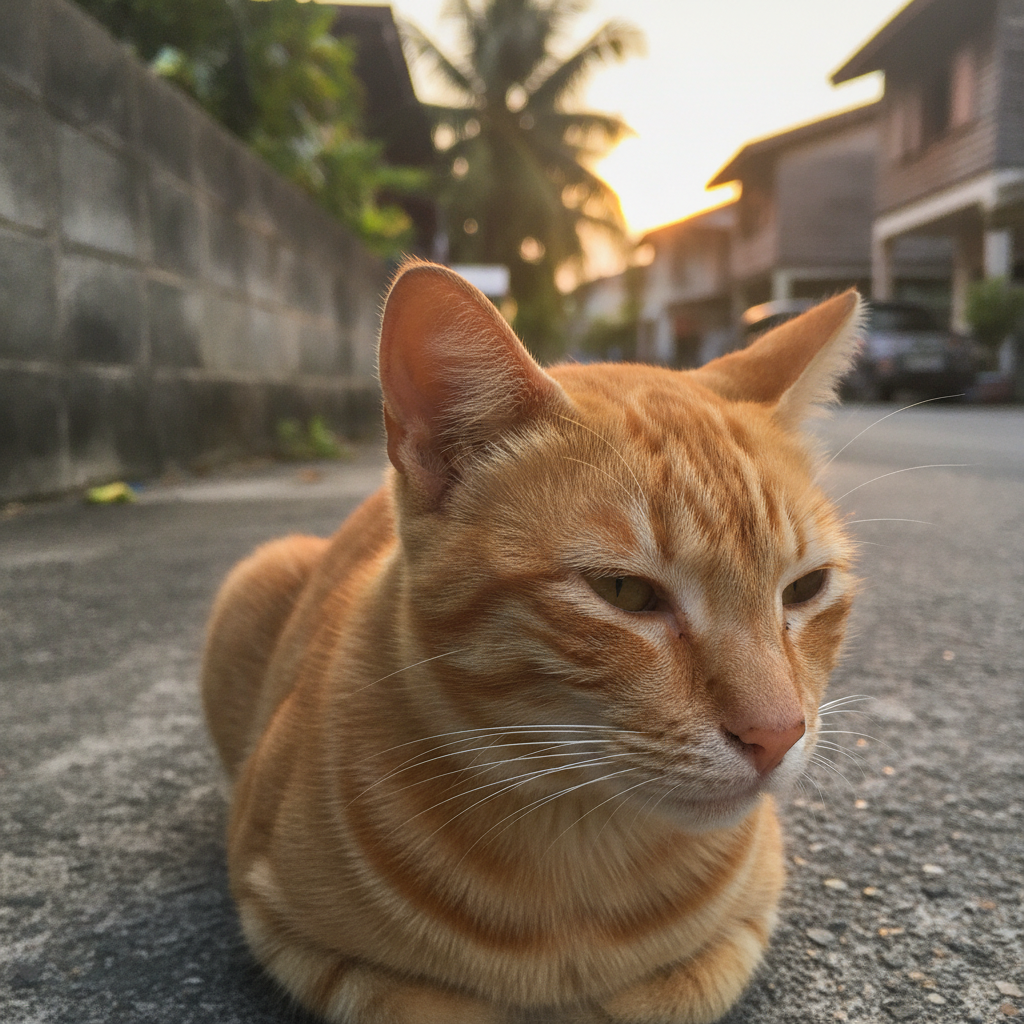
In Malaysia this work is led largely by NGOs and volunteers rather than councils. SPCA Selangor's Stray Free Selangor programme, launched in 2017, has channelled millions of ringgit into subsidised neutering; in 2023 alone its spay-neuter programme sterilised 5,272 animals, including 3,782 cats. The Animal Welfare Act 2015 raised the legal bar against cruelty and abandonment, and public sentiment has shifted hard toward humane methods.
The everyday backbone, though, is community feeders — the aunties and uncles who quietly feed and watch over the cats on their street. If that's you, the single most powerful upgrade is to pair feeding with sterilisation: a fed colony that keeps breeding just grows, but a fed colony that's been through TNR stabilises and shrinks. Talk to a local rescue about subsidised neutering and trap loans rather than going it alone.
It's worth knowing that this isn't theoretical for our region. Right next door, Singapore runs a national, government-backed Trap-Neuter-Release-Manage scheme — note the added "Manage," which formally registers and trains community caregivers to feed and monitor sterilised colonies long-term. It's a model many Malaysian advocates point to: proof that when councils, NGOs and feeders pull in the same direction, community cats and residents can genuinely coexist.
How You Can Help Your Neighbourhood Cats
You don't need to run a colony to make a difference. A few high-impact moves:
- Sterilise your own cats first — an unspayed indoor cat that slips out is how new litters start.
- Fund or volunteer with TNR — sponsor a neuter, lend a trap, drive cats to the clinic.
- Foster the kittens — young colony kittens can still be socialised and adopted out; our kitten fostering guide walks you through it.
- Adopt the friendly ones — many Malaysian community cats are gentle kucing kampung who'd thrive indoors.
- Never dump a cat — abandonment is the source of the whole problem, and it's an offence under the AWA 2015.
Feed responsibly too: set food down at fixed times, clear up after, and keep feeding stations tidy so the colony stays welcome in the neighbourhood. It's worth being honest about where most community cats come from in the first place — abandonment and a "disposable pet" mindset, where animals are picked up on impulse and dropped when they become inconvenient. Every cat that's kept for life, sterilised and never dumped is one that never adds to the colony at all.
If You Bring One Home: Setting Up for Success
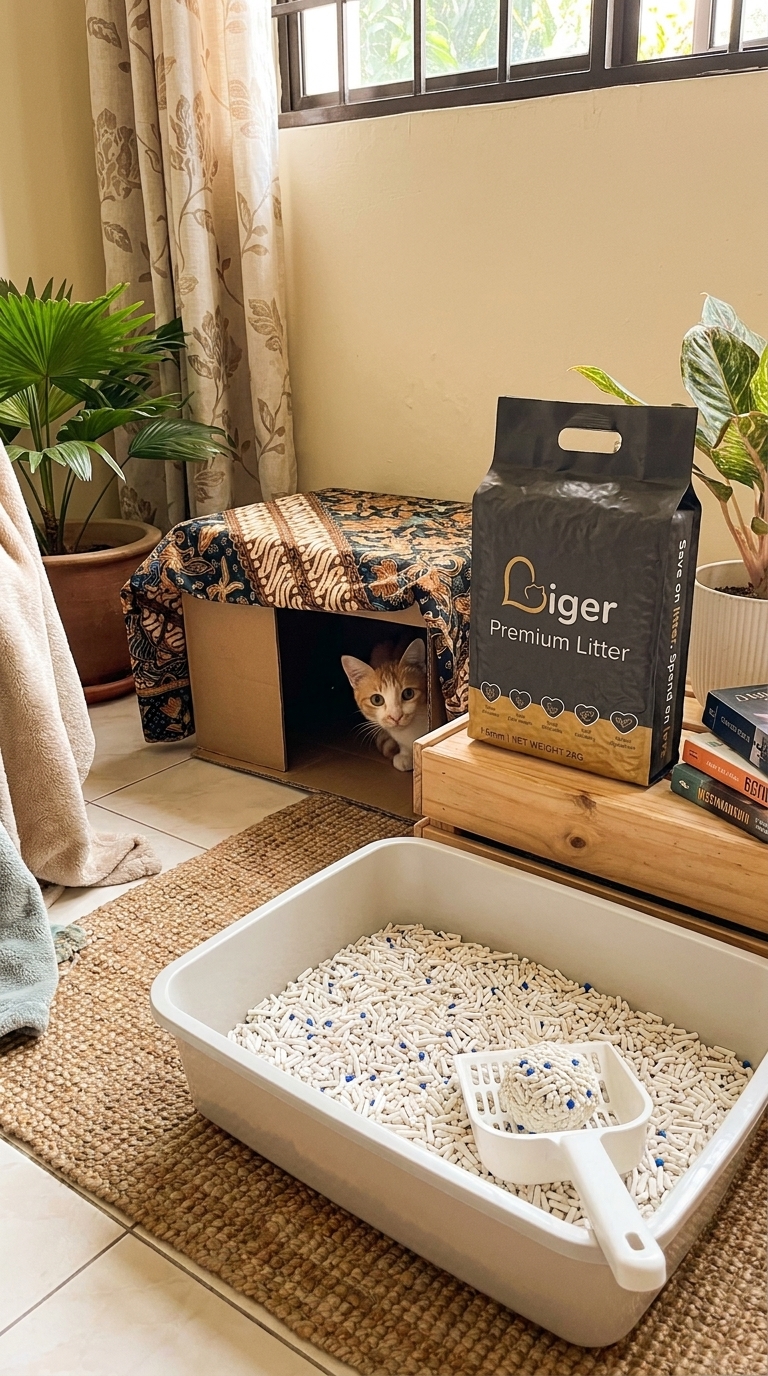
Fostering a litter or adopting a friendly community cat? The setup is the same: start with one quiet room, a hiding spot, food, water, and an easy-to-find litter box. A nervous newcomer is extra sensitive to smell, so skip heavily perfumed litter and choose something low-dust and lightly scented — it's gentler on a stressed cat's nose and on your foster room.
That's where Liger Premium Tofu Cat Litter earns its place: made from food-grade soy fibre, it's low-dust, clumps fast for quick daily scooping (handy when you're monitoring a new cat's health), and carries only a light natural scent. Current Liger pricing (as of May 2026) is RM21.90 for a single 2kg pack, RM53.90 for 3 packs, RM89 for 5 packs and RM169 for 10 packs — RM8.45/kg on the 10-pack, free shipping across Peninsular Malaysia, which helps if you're feeding several foster boxes. Work out how much you'll need with the litter calculator, run through our new cat owner checklist, and head back to the How Cats Work hub for more. Every cat sterilised, fostered or adopted is one less on the street, and one less litter that never has to be born — that's how the maths finally, quietly turns in the cats' favour.