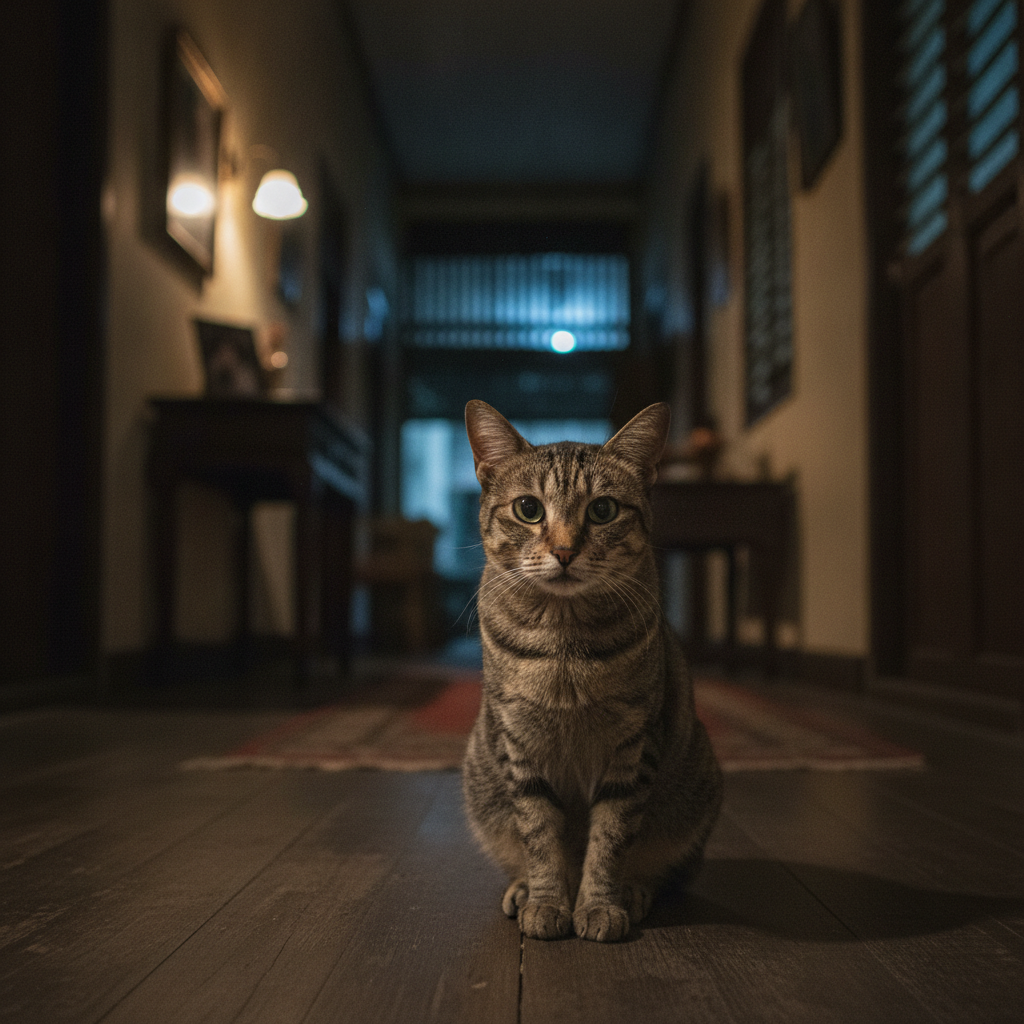
It usually starts with the yowling. Your once-quiet senior cat begins crying out at 3am for no reason you can see, standing in the middle of a dark hallway as if lost. Or you find them staring at a wall, or wedged into a corner unable to work out how to back out. It's heartbreaking to watch, and the easy explanation is "they're just old." But there's often a real, named medical condition behind it: feline cognitive dysfunction — dementia in cats.
The important news is that this is a recognised disease, not a character flaw or simple senility, and there's a lot you can do to help. This guide explains the signs, why a vet visit is essential, and how to make life gentler for a cat whose mind is fading. It's part of our cat life-stage care guide, and pairs with our broader piece on signs your cat is getting old.
When Just Old Is Actually Dementia
Feline cognitive dysfunction (FCD) is a progressive neurodegenerative disease — and it's startlingly similar to Alzheimer's in humans. Affected cats' brains accumulate the same kind of beta-amyloid protein plaques and tau changes seen in early human Alzheimer's, which is why cats are now studied as a natural model for the disease. In other words, this isn't your cat being difficult or stubborn. Physical changes in the brain — plaque build-up, inflammation, and the slow loss of the connections between brain cells — are disrupting how they think, remember and navigate the world. Understanding that shift in framing changes everything about how you respond: with patience rather than frustration. As the VCA and MSD/Merck Veterinary Manual both stress, FCD is a manageable medical condition, not an untreatable fact of old age.
How Common Is Feline Dementia?
Far more common than most owners realise — and badly under-diagnosed, precisely because the signs get dismissed as ageing. The prevalence climbs steeply with age:
| Age | Cats showing at least one sign of dementia |
|---|---|
| 11–14 years | About 28% |
| 15 years and older | More than 50% |
So if you have a cat in their mid-teens behaving strangely, the odds that it's cognitive decline are genuinely high. Because so many owners never report these behaviours to a vet, the true figures are likely higher still. There's a sad irony here: the very behaviours that signal a treatable problem — the crying, the accidents, the personality shift — are exactly the ones owners are most likely to shrug off as "she's just old now." Catching it early is what gives management the best chance to work.
The Six Signs: The DISHAA Checklist
Vets use a memory aid called DISHAA to spot FCD. If you recognise several of these in your senior cat, it's worth a conversation with your vet:
- D — Disorientation: getting "lost" in familiar rooms, staring at walls, getting stuck in corners, or waiting at the hinge side of a door, confused about how it opens.
- I — Interactions changed: a once-independent cat turning clingy and needy, or a sociable one withdrawing and becoming irritable when touched.
- S — Sleep-wake cycle flipped: sleeping all day, then pacing and crying at night. That distressed night-time yowling is the single most reported sign.
- H — House-soiling: a reliably trained cat forgetting where the litter box is, or going right beside it — confusion, not spite.
- A — Activity altered: less play and grooming, or aimless wandering and repetitive pacing.
- A — Anxiety: new fears, easy startling, and clingy, distressed vocalising.
Some feline specialists add a seventh letter for learning and memory loss, but the headline for cats is that night-time vocalisation and disorientation lead the pack. One gentle word of caution: a single odd episode isn't dementia. FCD is about a pattern of several signs that gradually worsen over weeks and months. Keeping a simple diary — what you saw, when, how often — gives your vet exactly the picture they need, and helps you tell genuine decline apart from a one-off bad night.
Why It Must Be a Vet Diagnosis

Here's the part you can't skip: FCD is a "diagnosis of exclusion." There's no single test for it in a living cat, and — crucially — several very treatable diseases produce identical-looking signs. Reaching for "it's just dementia" without a vet check risks missing something curable. The main mimics, per the International Cat Care senior guidance, are:
- Chronic pain (arthritis or dental disease) — causes irritability, withdrawal, and litter-box avoidance. See our feline arthritis guide.
- Hyperthyroidism — restlessness, anxiety and night yowling, easily mistaken for confusion.
- High blood pressure — can damage the brain and cause disorientation, circling and vocalising.
- Chronic kidney disease — toxin build-up can cause lethargy, confusion and accidents.
- Failing sight or hearing — produces anxiety, startling and apparent disorientation.
Your vet will take a behavioural history (the DISHAA list helps), examine your cat, and run bloodwork, urine and blood-pressure checks to rule these out. Only then is FCD the working diagnosis — and several of the alternatives are very fixable, which is the whole point of going.
Living With a Cat Who Has Dementia: What Helps
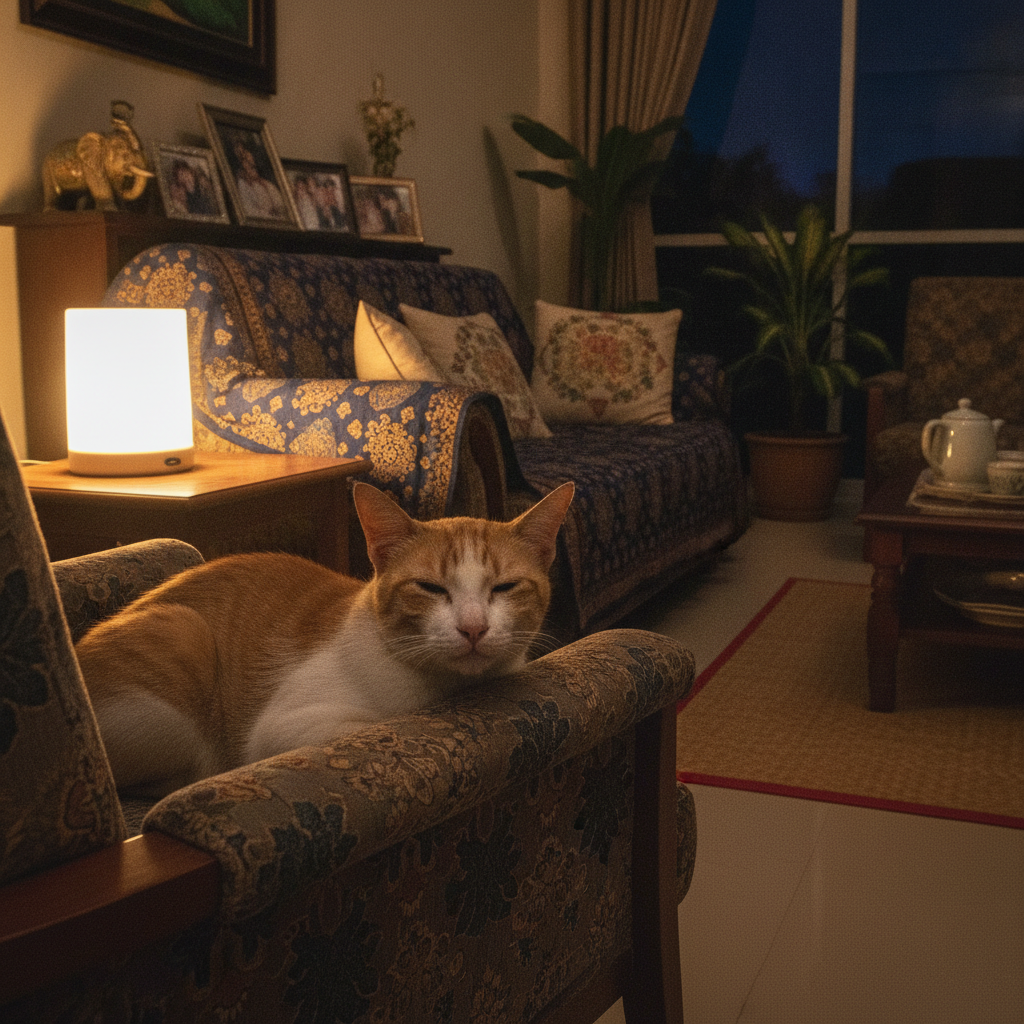
There's no cure, but a thoughtful, gentle environment genuinely improves a dementia cat's quality of life — and often quietens the most distressing symptoms. The goal is to lower the demand on a brain that's struggling to keep up, so your cat can lean on routine instead of memory. The two watchwords are consistency and accessibility:
- Keep things the same. Don't rearrange furniture or move food, water and litter boxes — a confused cat relies on memory of where things are. A steady daily routine for meals and play is reassuring and helps reset a scrambled body clock.
- Make everything reachable. Ramps to favourite spots, low-entry litter boxes, and resource stations on every floor, since most dementia cats also have arthritis.
- Light the night. Night-lights help a disoriented cat navigate after dark and can quiet the anxious 3am yowling, as the ASPCA notes.
- Gentle stimulation. Short, easy wand-toy sessions, food puzzles, and a window view keep an ageing mind engaged without overwhelming it.
- Stay calm and patient. Never scold a dementia cat for accidents or night crying — they genuinely don't understand, and stress makes the confusion worse. A soft voice and predictable handling do more good than any correction.
It also helps to think ahead to night-time specifically, since that's when FCD bites hardest. A predictable wind-down — a late meal, a short calm play session to tire them out, a warm familiar bed near where you sleep, and those night-lights on — can shave the edge off the worst 3am episodes for both of you.
Diet, Supplements and Medication
This is where honesty matters: the evidence in cats is still thin, and much of it is borrowed from dog studies. That said, some approaches show real promise. Diets and supplements rich in antioxidants (vitamins E and C), omega-3 fish oil, B vitamins and SAMe have improved memory and learning in older cats in some studies, and senior or brain-support formulas may be worth discussing with your vet. On medication, there's nothing officially approved for feline dementia, but vets sometimes use drugs off-label — selegiline (approved for canine cognitive dysfunction) and anti-anxiety medicines to ease severe night-time distress. None of this is a DIY project: dosing and suitability are very much a vet decision, especially in an old cat who may have kidney or heart issues. Talk it through rather than buying supplements blindly. The Cornell Feline Health Center is a reliable starting point for understanding the options.
The Litter Box and the Confused Cat

House-soiling is one of the most distressing parts of FCD for owners — but remember it's confusion, never defiance. You can stack the odds in your cat's favour with the setup: a box with a low entry side they can't fail to climb into, placed on every floor so it's never far away, and a litter that's clean, low-dust and inviting so a foggy cat is drawn to use it. Our litter box size calculator helps with the box itself.
Liger Premium Tofu Cat Litter works well here: made from food-grade plant starch, it's low-dust (kinder to old lungs), soft underfoot, and clumps firmly so the box stays fresh and obvious between scoops — small things that help a confused senior keep finding and using it. It runs from RM21.90 for a single 2 kg pack to RM169 for the 10-pack (about RM8.45/kg), free shipping in Peninsular Malaysia (current Liger pricing, as of May 2026). Plan how many boxes and how much litter your household needs with the litter calculator.
Caring for a cat with dementia is tender, tiring work, and you're allowed to find it hard. Managing the symptoms can give you both more good time together — and when that balance eventually shifts, our guide to quality of life and saying goodbye is there to help you think it through with honesty and kindness, at your own pace.