If you're reading this, you may be facing the hardest question a cat parent ever asks: is it time? First, take a breath. The fact that you're even asking shows how much you love your cat and how seriously you take the responsibility of easing their suffering rather than your own loss. There are no perfect answers here, only kind ones — and you don't have to find them alone.
This guide walks through how vets help you assess your cat's quality of life, the warning signs that suffering is outweighing wellbeing, and what a peaceful goodbye actually looks like. It's written gently and accurately, because you deserve both. It's part of our cat life-stage care guide.
The Hardest Question a Cat Parent Ever Faces
Modern veterinary care has shifted, over the last couple of decades, from "cure at all costs" to a gentler philosophy: comfort over cure when a cure is no longer possible. Your vet is no longer just a problem-fixer but a compassionate partner who can help you read your cat's daily experience and make decisions grounded in love and medical reality. Choosing euthanasia, when suffering can't be relieved, is widely regarded by vets as the final act of kindness you can offer — not a failure, and never something to feel guilty about. Holding that truth gently is the foundation everything else here rests on, and it's worth returning to whenever the guilt creeps back in — as it inevitably will.
Quality of Life Scales: Turning a Feeling Into Something You Can See
Love and hope can cloud our view of how a cat is really doing. That's exactly why vets use simple, validated quality-of-life (QoL) scales — they turn an overwhelming emotional question into a set of concrete things you can actually observe. The most widely used is the HHHHHMM scale, created by veterinary oncologist Dr Alice Villalobos and hosted by Lap of Love. You score seven areas from 0 to 10:
- Hurt — is pain genuinely controlled? (Comfortable breathing counts here too.)
- Hunger — is your cat eating enough, willingly?
- Hydration — are they drinking, or becoming dehydrated?
- Hygiene — can they stay clean, or is the coat matted and soiled?
- Happiness — do they still enjoy anything, or seem withdrawn and flat?
- Mobility — can they move and reach the litter box without distress?
- More good days than bad — the overall balance.
A total above about 35 out of 70 is generally considered an acceptable quality of life for a cat in hospice care. The Ohio State University's Honoring the Bond programme offers a more detailed questionnaire that does the same job. Neither scale makes the decision for you — they simply give you and your vet a shared, honest language for the conversation.
More Good Days Than Bad: Keep a Simple Journal
The single most useful thing you can do is keep a quiet daily journal. On a calendar, mark each day as good or bad, and jot a line about appetite, energy, whether they sought you out, and whether they could groom and reach the litter box. Over a week or two, a pattern emerges that emotion alone can't see. A cat with managed arthritis might have the odd stiff day but still purr and eat well; a cat in true decline shows a steady slide across several areas at once. When the bad days clearly and consistently outnumber the good, the journal gently tells you what your heart is struggling to.
It also helps to decide, in advance and while you're calm, what your cat's personal "non-negotiables" are — the few things that make life worth living for them. Maybe it's greeting you at the door, sunbathing by the window, or simply eating with enjoyment. Writing these down early gives you a clear, loving line in the sand, so that when several of those joys are gone, you can recognise it without second-guessing yourself in the fog of grief.
Warning Signs That Suffering Is Winning
Any one of these is a reason to call your vet; together, they strongly suggest quality of life is severely compromised:
- Pain that won't settle despite medication — hiding, a hunched posture, irritability when touched, a tense face.
- Difficulty breathing. As Dr Villalobos puts it bluntly, "if you can't breathe, nothing else matters." Laboured or open-mouthed breathing is an immediate emergency — go to a vet now.
- Profound withdrawal — no interest in food, affection, play, or family; hiding away completely.
- Loss of basic dignity — unable to reach food, water or the litter box, or no longer able to keep clean, without help.
Some of these overlap with treatable conditions covered in our guides to arthritis, feline dementia and kidney disease — which is exactly why a vet conversation, not a solo decision, is so important. As International Cat Care stresses, sometimes what looks like "the end" is a fixable flare, and sometimes a vet can confirm what you already fear — either way, you'll be making the decision with clear eyes rather than in the dark. Bring your journal to that appointment; it does a lot of the talking for you.
Hospice, Comfort and Keeping Dignity Intact
When a cure isn't possible, veterinary hospice and palliative care focus on making the time that's left as good as it can be. In-home services such as animal hospice providers (and clinics offering palliative plans) manage pain, support appetite, and maximise the number of good days — the aim is quality, not simply more time. Ask your vet what comfort care options exist locally.
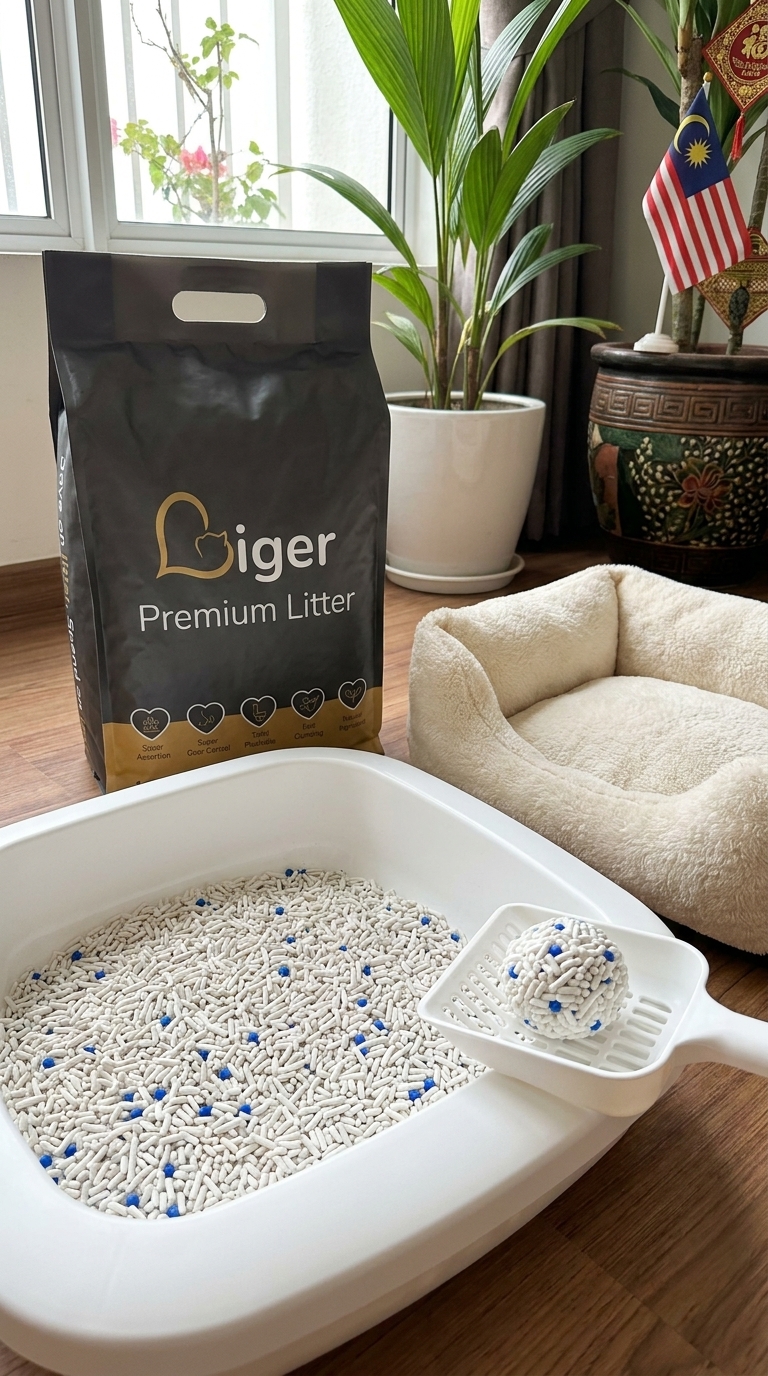
Much of comfort care is small, practical dignity. A frail cat shouldn't have to struggle or soil themselves to toilet — remember, hygiene and mobility are two of the seven QoL measures. Bringing food, water and a litter box close, and using a box with a very low entry, lets a weak cat stay clean and independent for longer. A soft, low-dust, food-grade litter like Liger Premium Tofu Cat Litter is gentle on tired lungs and easy on sensitive paws, helping a poorly cat keep using the box with dignity right to the end; our best litter for senior cats guide and litter calculator can help you set this up. These are the quiet kindnesses that make a cat's last weeks feel cared-for.
What Actually Happens During Euthanasia
Fear of the unknown makes this harder, so here is what to expect — because knowing brings real comfort. The procedure, as defined by veterinary bodies like the AVMA, is designed to be peaceful and painless, and it happens in two gentle steps:
- Sedation. First, your cat is given a strong sedative, usually a small injection under the skin. Over the next several minutes they drift into a deep, peaceful sleep, free of pain and anxiety. This is your quiet moment to hold them and say goodbye.
- The final injection. Once your cat is fully unconscious and unaware, the vet gives a second injection that gently and very quickly stops the heart. Because your cat is already deeply asleep, they feel no pain, fear or distress at all. The vet will then confirm, with a stethoscope, that they've passed.
You can usually choose to be present or not — both are valid, and many cats find comfort in a familiar voice and touch. You may also be able to arrange it at home, which is calmer for an anxious cat and lets the rest of the family be near. Afterwards, your clinic can talk you through aftercare options such as cremation, and many families keep a small keepsake like a paw print or a clipping of fur. There's no "right" way to do any of this; there's only what feels right for you and your cat. If you're unsure about timing, it's worth knowing that most vets say they far more often see owners who waited a little too long out of love than those who acted too soon — a gentle reminder that choosing not to prolong suffering is itself a loving choice.
Carrying the Family Through It
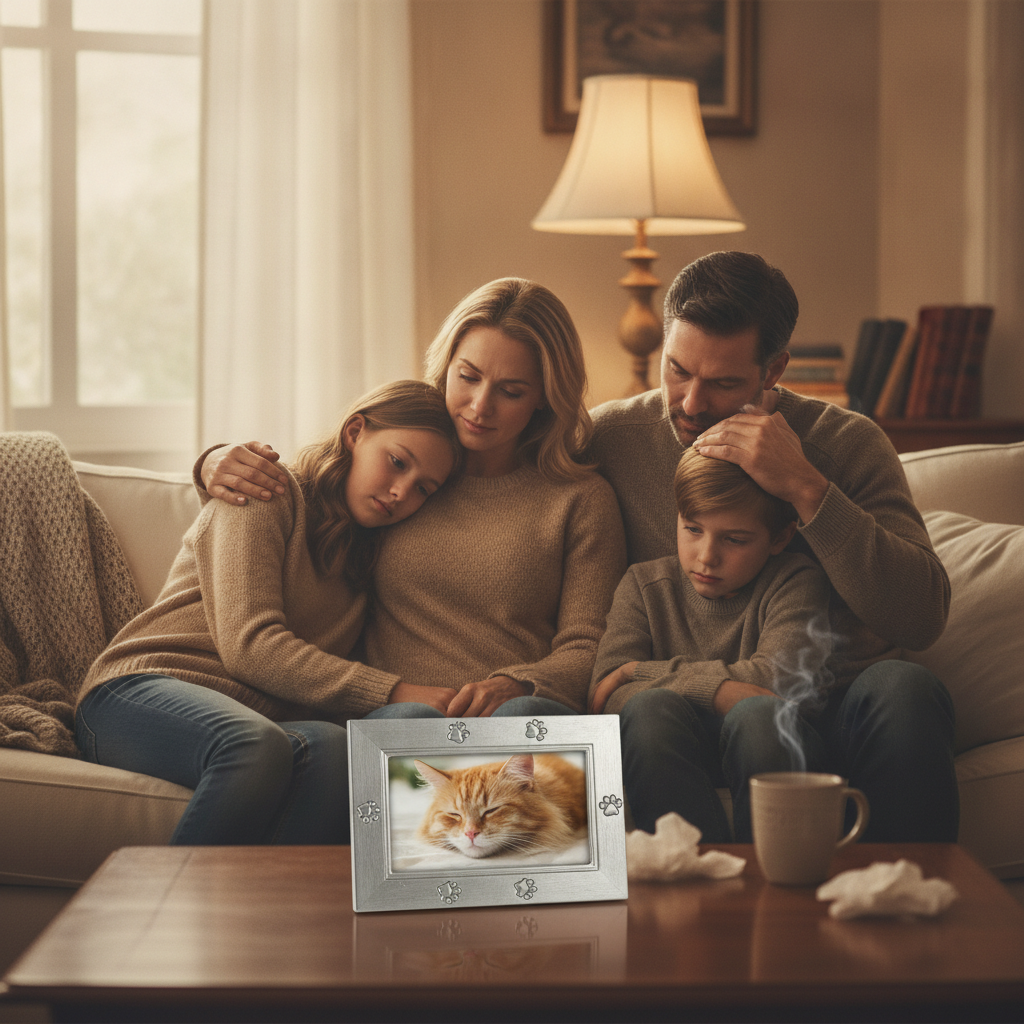
The grief often starts before the goodbye — it's called anticipatory grief, and it's completely normal to mourn while your cat is still here. Be gentle with yourself. If you share your home with children, use honest, simple words like "died" rather than "put to sleep," which can frighten a child about their own bedtime; let them be part of remembering in an age-appropriate way. Watch surviving pets too, as they can grieve a companion. And know that whatever you decide, deciding out of love to end suffering is something to feel at peace with, not guilty about.
When the day comes and afterwards, the weight you carry is real and deserves care of its own. Our companion guide, coping with pet loss and grief, is there for what comes next. Your cat gave you their whole life. Helping them leave it gently is the last, and perhaps greatest, kindness of all.