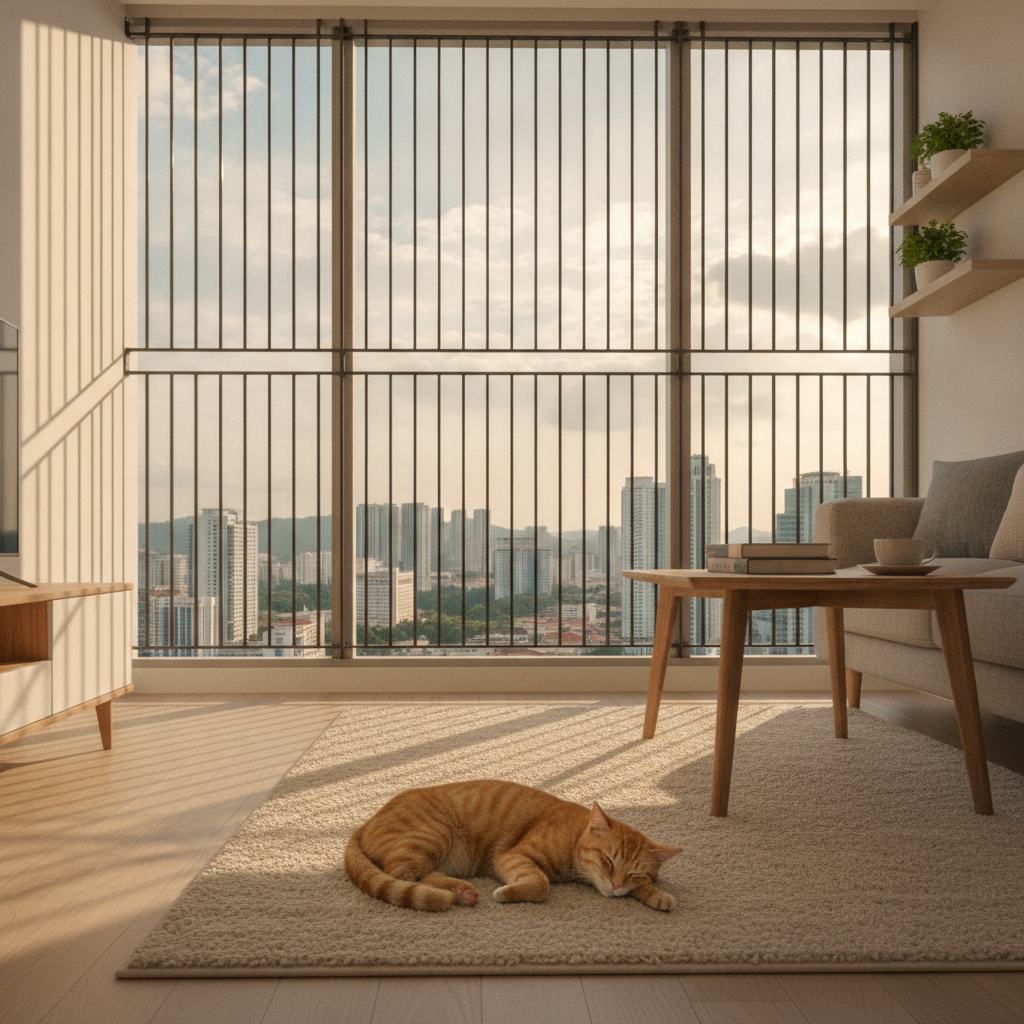
Most cats in Malaysia do not live in houses with gardens. They live where we live — in condos and flats, ten, twenty, thirty floors up, with the windows open all year because of the heat. That makes Malaysian cat ownership genuinely different from the advice you read on American or British websites. A high-rise home removes some dangers (no traffic, no neighbourhood dogs) but adds others that those guides barely mention: falls from height, sealed-in heat, and a small space packed with hazards.
This is the hub guide to keeping a cat safe in a Malaysian home and condo. It pulls together the big risk categories and points you to detailed walkthroughs for each. If you read only one safety article, read this one — then follow the links that matter for your home.
Why a Malaysian Condo Is a Special Case
The single best piece of local evidence comes from our own vets. A study at the University Veterinary Hospital, Universiti Putra Malaysia, reviewed cats brought in after falling from at least the second storey. The findings are stark: 60% had limb fractures and 30% had a collapsed lung (pneumothorax), alongside nosebleeds, spinal dislocations and more. The researchers also found that the higher the fall, the worse the injuries — even falls from the 3rd to 6th floor showed a clear, escalating risk. This is not a foreign scare statistic; it is Malaysian cats, treated in a Malaysian hospital.
Add our climate — indoor temperatures that climb past 32°C with 70–90% humidity — and the building rules that govern what you can install, and you have a safety picture that needs a local playbook. Here it is.
Falls and Escapes: The Number-One Risk
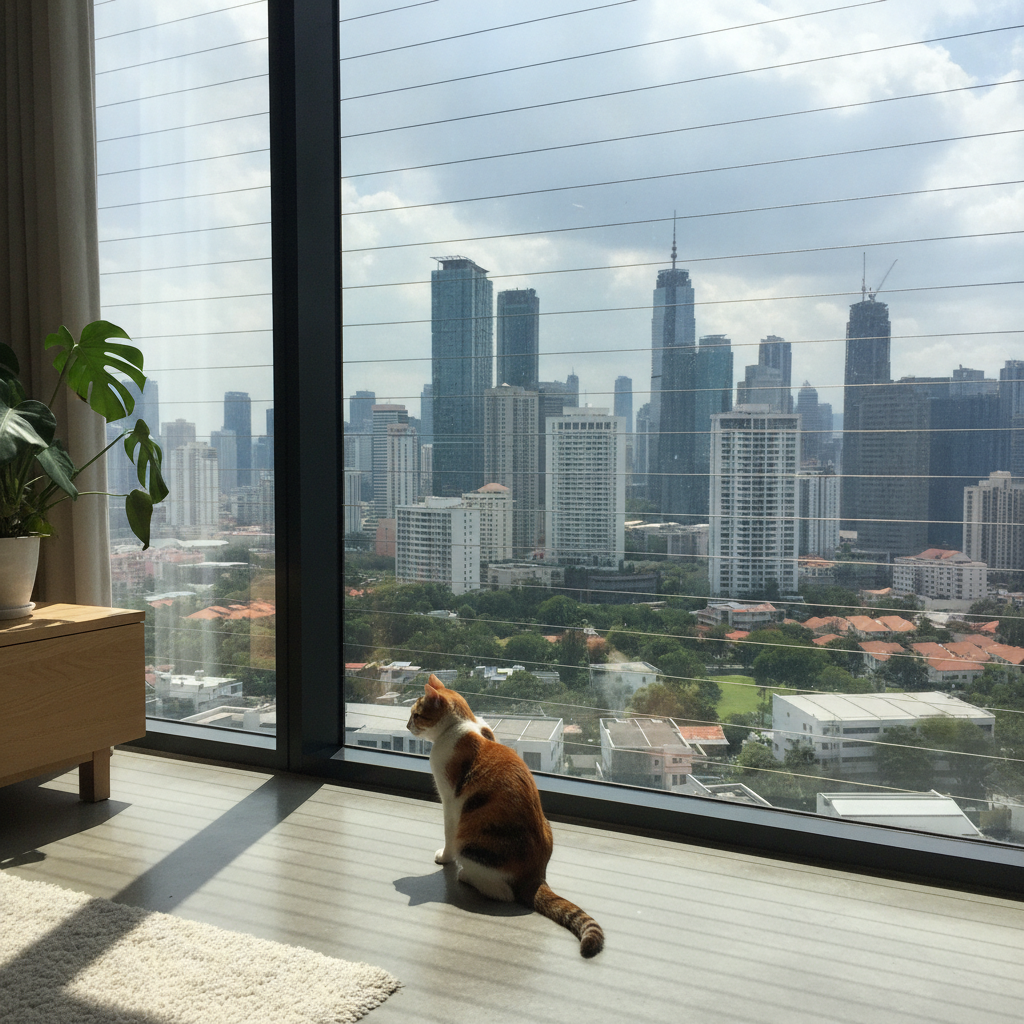
Falls are the gravest, most preventable danger in a high-rise. Vets call the injury pattern "high-rise syndrome", and the myth that cats always land safely is exactly what gets them killed — a cat lunging at a bird or gecko simply misjudges the edge. The fix is physical: secure every window and balcony so a fall is impossible.
- Understand the danger and secure your windows and grilles in our flagship guide to high-rise syndrome, balcony and window safety.
- Turn a risky balcony into a safe one — without buying an expensive enclosure — with our step-by-step balcony cat-proofing guide.
- Stop the other way out — the front door — with our guide to stopping your cat escaping through doors, windows and grilles.
One rule covers all three: a standard insect screen is not a cat barrier. It pops out under a cat's weight. You need a proper grille, pet-rated netting or a security screen. And remember that the UPM data almost certainly under-counts the problem — it only includes cats that survived long enough to reach a hospital, so the real toll is higher. The reassuring flip side is that every one of these falls is preventable with a barrier that costs a fraction of an emergency-vet bill.
Poisons Hiding in Your Cabinets
The next biggest risk is poisoning, and the culprits are products in almost every Malaysian home. The key fact: cats lack a liver enzyme that lets humans and dogs break down certain chemicals, so things that are harmless to us can be lethal to them.
- Antiseptic and pine-scented cleaners. Dettol, for example, contains chloroxylenol — a phenol — at around 4.8% in its liquid form, and phenols are acutely toxic to cats. A cat can be poisoned just by walking across a freshly mopped floor and licking its paws. A simple tell: if a cleaning liquid turns milky when you add water, it likely contains phenols. Keep cats off wet floors and rinse well. VCA Hospitals keeps a fuller list of toxic household products worth checking your cabinet against.
- Insecticides. Popular sprays like the ones built around pyrethroids are far more toxic to cats than to dogs, and can cause tremors and seizures.
- Plants and food. We have full Malaysian guides to toxic and safe plants (lilies can cause fatal kidney failure from a lick of pollen) and the human foods that are toxic to cats.
For the everyday non-plant, non-food dangers — cords, medicines like paracetamol, diffusers and swallowed string — see our deep dive on hidden household hazards for cats. Whatever you use, lock cleaners and medicines in a latched cabinet.
Beating the Heat and Humidity
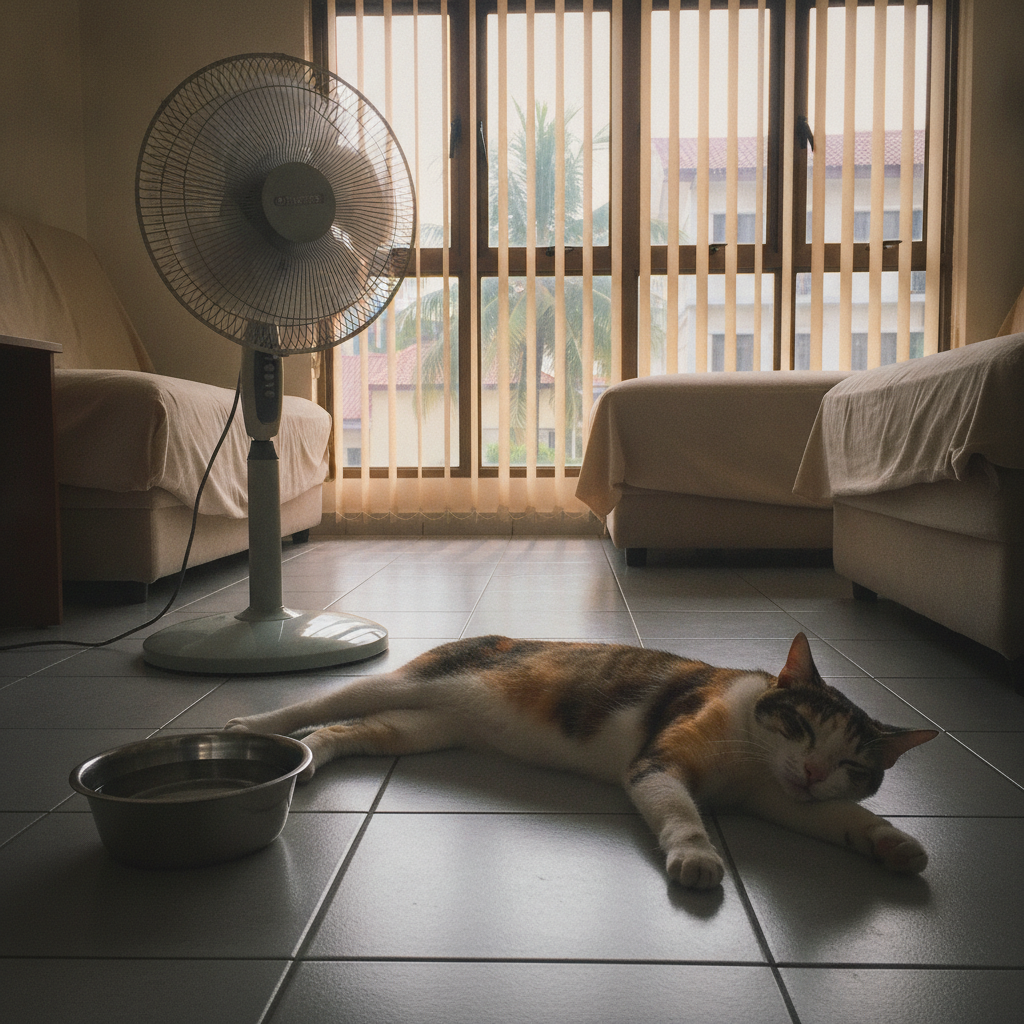
This is the danger foreign guides forget. According to PetMD, a cat's normal body temperature is 38–39.5°C; heatstroke — a true emergency — begins above 40°C, and in a closed-up KL flat on a hot afternoon that threshold is frighteningly easy to reach. Cats cool themselves mainly by panting, which works poorly in our humidity, and Cornell's Feline Health Center notes that kittens, seniors, overweight cats and flat-faced breeds are most at risk of all.
Keep air moving with fans, give your cat cool tiled floors and shade, block harsh afternoon sun, and make sure there is always fresh water (a fountain helps, and wet food adds moisture). Our full guide to heatstroke and keeping your cat cool covers the warning signs and what to do in an emergency.
Gaps, Appliances and Everyday Traps
A compact apartment is full of small dark spaces, and cats are drawn to exactly those. Washing machines and dryers are the classic killers — always check inside and keep the door shut before you start a cycle, or a cat napping inside faces burns, drowning and broken bones. The local fire department, Bomba, has been called out to free cats wedged in tight spots. Other traps:
- Recliner chairs — know where your cat is before lowering the footrest; the mechanism can crush.
- Hot stovetops and electric kettles — a cat can jump onto a hob that is still hot.
- Gaps behind the fridge and washing machine — block them with foam pipe insulation or cut cardboard so a cat cannot get stuck.
All of these, plus electrical cords and small swallowable objects, are covered in our hidden household hazards guide.
The Strata Rules: Getting Grilles Approved
Here is the uniquely Malaysian hurdle. To install safety grilles or netting in a strata property, you usually need written approval from your building's management (JMB or MC), because they care about keeping the facade uniform. The good news: the Strata Management Act 2013 does not ban pets outright — By-Law 14 allows them as long as they cause no "annoyance or nuisance" — and safety grilles are generally permitted.
This is exactly why the "invisible grille" — thin, high-tension stainless-steel cables — has become the default solution in Malaysian condos: it secures the opening without changing how the building looks. For cat safety, insist on a wire spacing of no more than 3 cm so a cat cannot squeeze through. When you apply, frame it as a household safety installation, submit your installer's plans, and be ready to pay the renovation deposit. Approached the right way, it is one of the easier modifications to get signed off.
Indoor vs Outdoor, and a Happy Cat Inside
All of this assumes your cat lives indoors — and the evidence strongly supports that choice. As we cover in indoor vs outdoor cats in Malaysia, a contained cat avoids traffic, disease and fights, and simply lives longer. The trade-off is that you must bring the stimulation indoors, or a bored cat will fixate on the very window or door you are trying to secure. Vertical space, daily play, puzzle feeders and a secured balcony do the job — our indoor enrichment guide for condos is built for small units.
Your Condo Cat Safety Checklist
Pull everything together into one practical sweep of your home, ideally done slowly on your hands and knees at your own cat's eye level, room by room:
- Falls: every window and balcony secured with a 3 cm-spaced grille or pet netting; no insect-screen-only openings.
- Poisons: cleaners, insecticides and medicines locked away; toxic plants removed; floors rinsed and dry before the cat returns.
- Heat: fans, shade, cool surfaces and always-available water.
- Appliances: check the washer and dryer every time; mind the recliner; block gaps.
- Enrichment: height, play and a secured balcony so inside stays interesting.
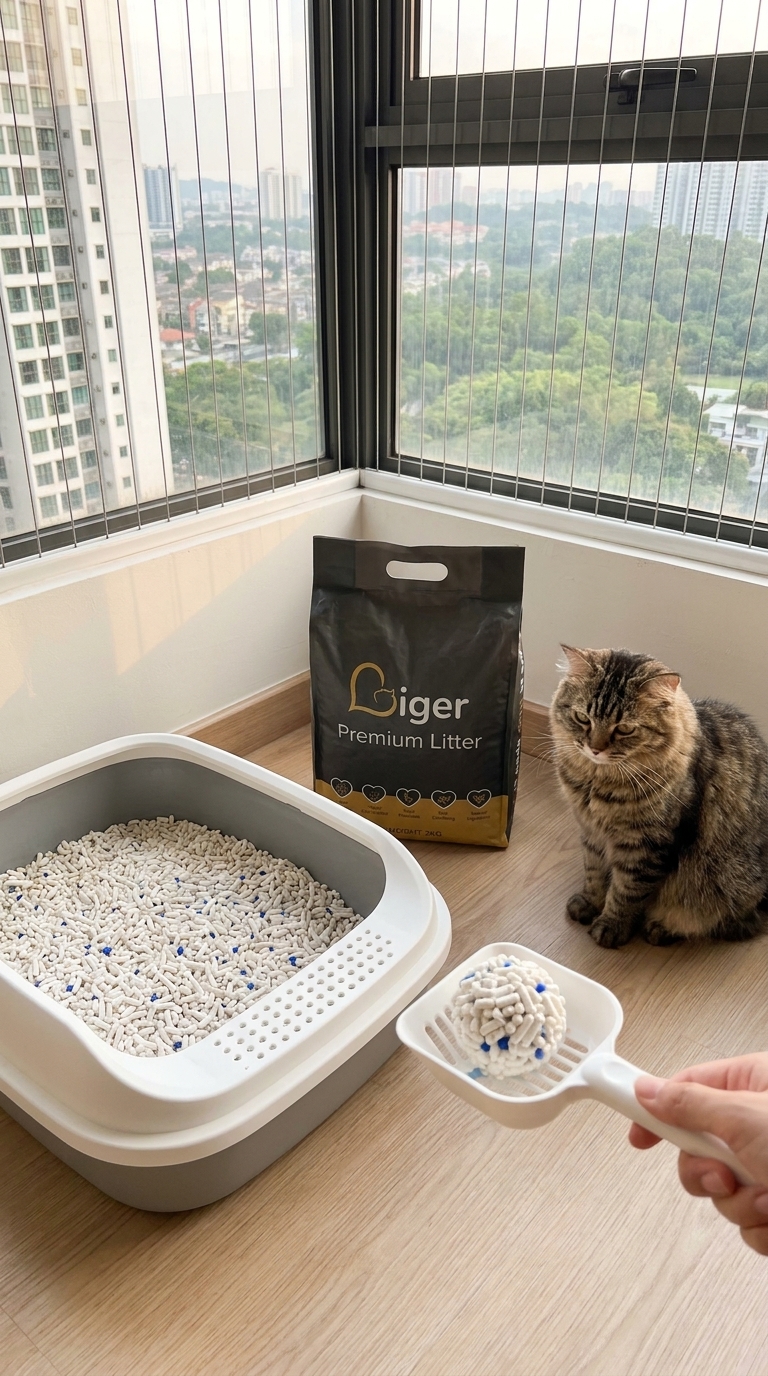
For the complete room-by-room version, work through our cat-proofing home safety checklist. And do not overlook the one spot your indoor cat uses every single day: the litter box. In a sealed condo, a dusty or smelly litter affects the whole home's air, so we use Liger Premium Tofu Cat Litter for our four cats — low-dust (gentler on feline lungs indoors), natural soy, naturally clumping, flushable, and lightly milk-scented. Pricing is local and honest: from RM21.90 for a 2 kg pack up to RM169 for a 10-pack (20 kg), about RM8.45/kg, free shipping in Peninsular Malaysia (current Liger pricing, as of May 2026). Our litter calculator works out exactly what your home needs. Secure the home, beat the heat, lock the cabinets, keep the box clean — and your high-rise becomes the safe sanctuary your cat deserves.