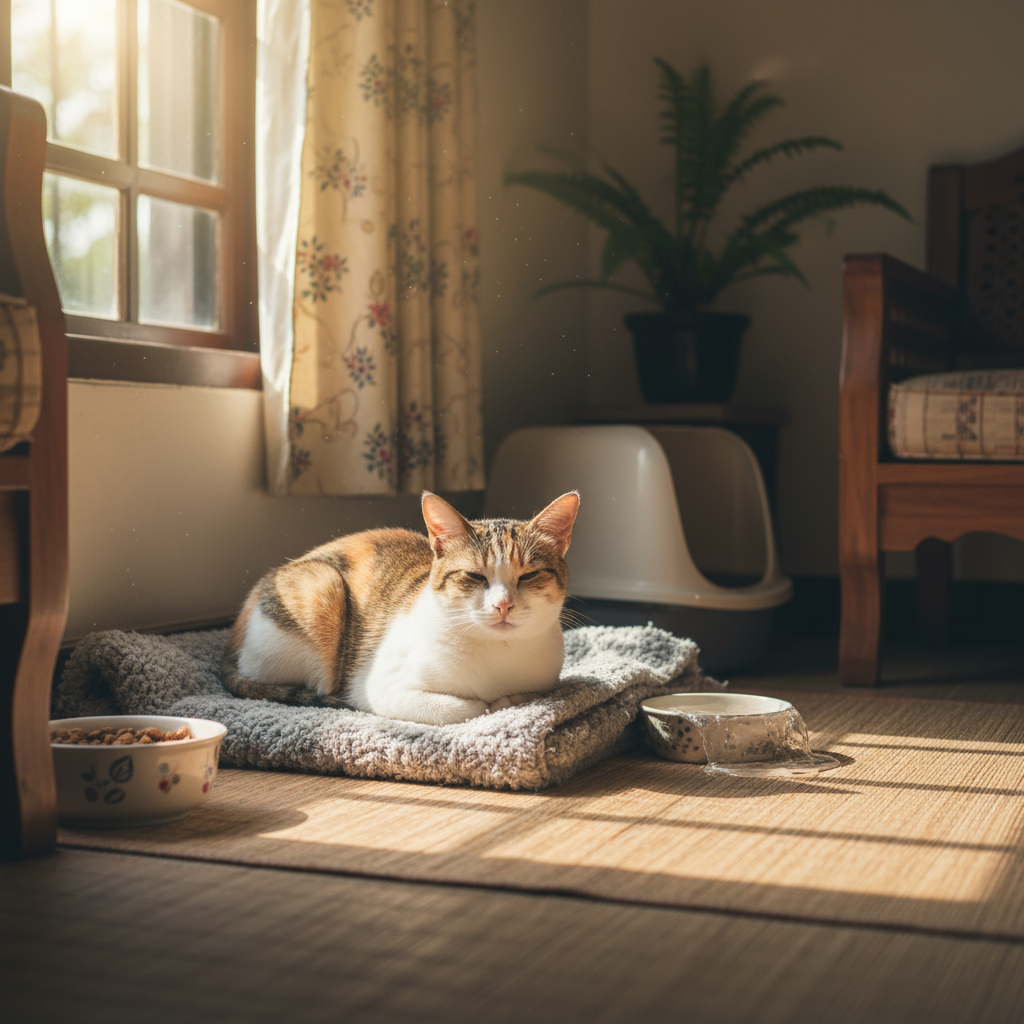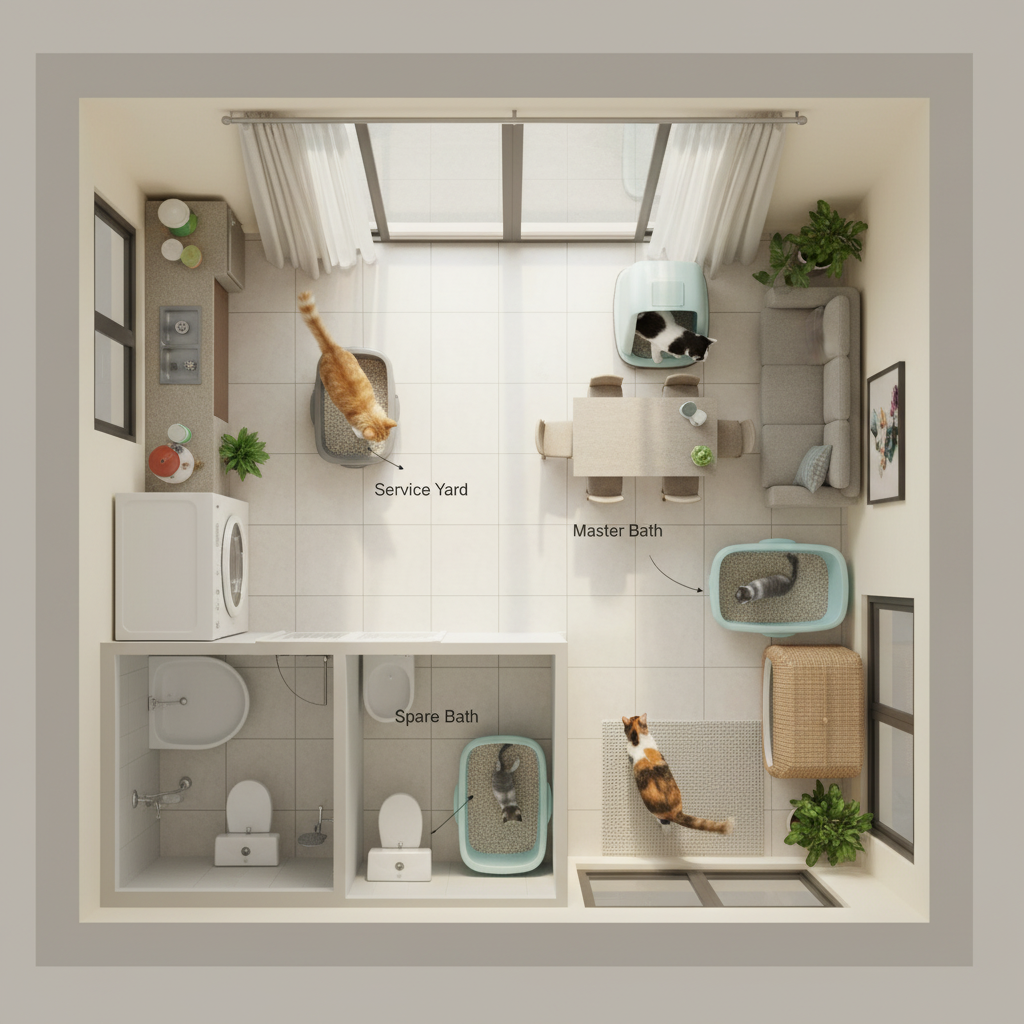
Here's the awkward truth about being a cat parent in a Malaysian condo: your vet says you need N+1 litter boxes, your floor plan says you have one service yard and two bathrooms, and your spouse says the toilet is not negotiable. Welcome to the math problem nobody warned you about when you brought the kitten home from the rescue.
Our Liger family runs four cats — Tiger and Lion (the kitten brothers, born June 2024), Ping'An (our rescue mum), and Lucky (the youngest, born September 2024). By the textbook we should have five boxes. We run four. There is a reason, and we'll get to it. But first, let's actually understand why the N+1 rule exists, when you can bend it, and when bending it bites you in the form of pee on your laundry pile.
The N+1 Rule, Properly Explained
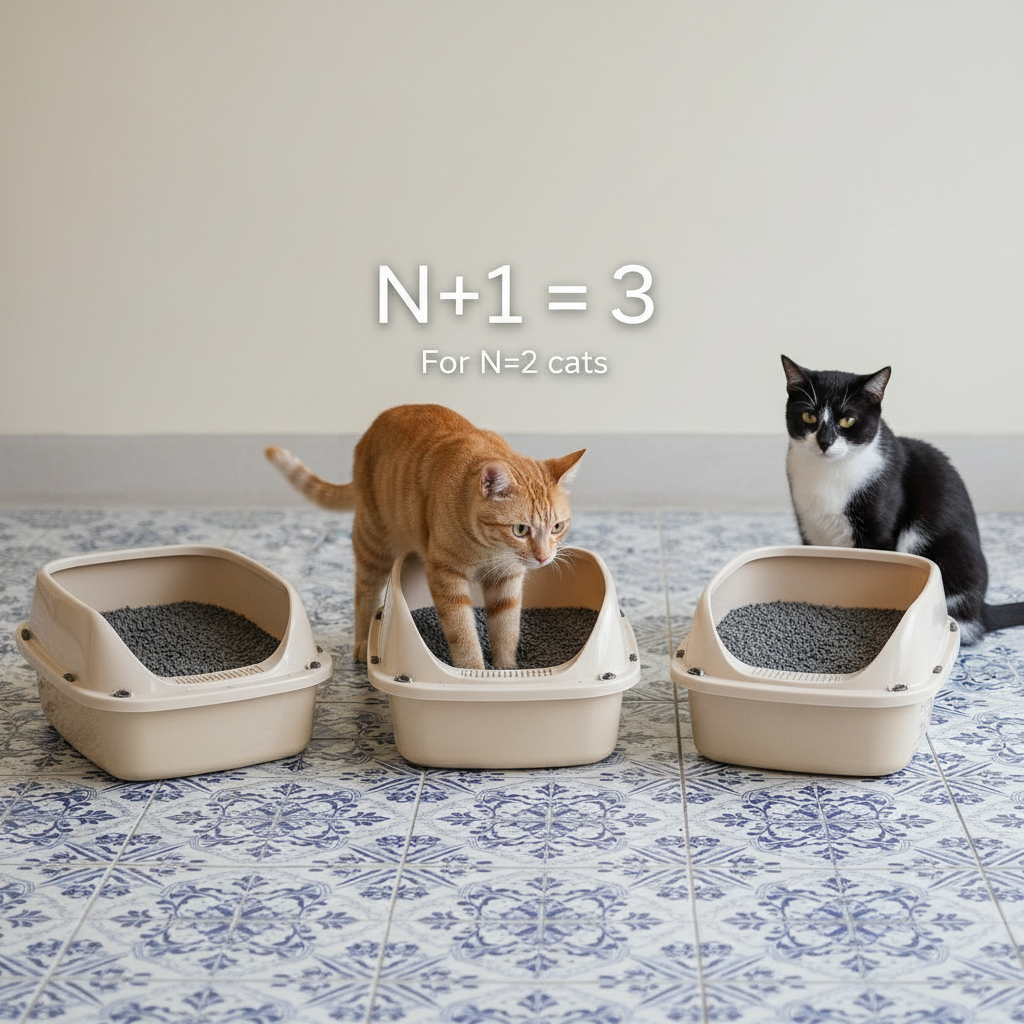
The rule is simple: number of boxes = number of cats + 1. One cat needs two. Two cats need three. Four cats need five. The "+1" is not a vet being paranoid — it's an insurance policy against the moment one box is occupied, dirty, or being guarded by the household bully.
The rule shows up in nearly every authoritative feline behaviour source. The ASPCA recommends one box per cat plus one extra, and so does the Cornell Feline Health Center. The AAFP/AAHA Feline Life Stage Guidelines echo the same number with one critical addition we'll come back to: boxes side-by-side count as one box, not two.
Why "+1" and not just "N"?
Cats are not communal toilet users. They tolerate sharing the way you tolerate using a public bathroom — fine in a pinch, but you would rather not. In a multi-cat home, the "+1" gives every cat a guaranteed clean option even when:
- One box has just been used by another cat (cats often refuse to step into a freshly soiled box)
- One cat is camping near a box and intimidating others
- One box is dirtier than usual because you forgot to scoop before work
- One cat prefers separate boxes for peeing and pooping (yes, this is real)
Veterinary behaviourist Dr Kaitlyn Krebs at UPenn Vet puts it plainly: cats use scratching, rubbing, peeing, and pooping to claim space. When boxes are scarce, those claims turn into conflict.
The Science: Why Insufficient Boxes Actually Make Cats Sick
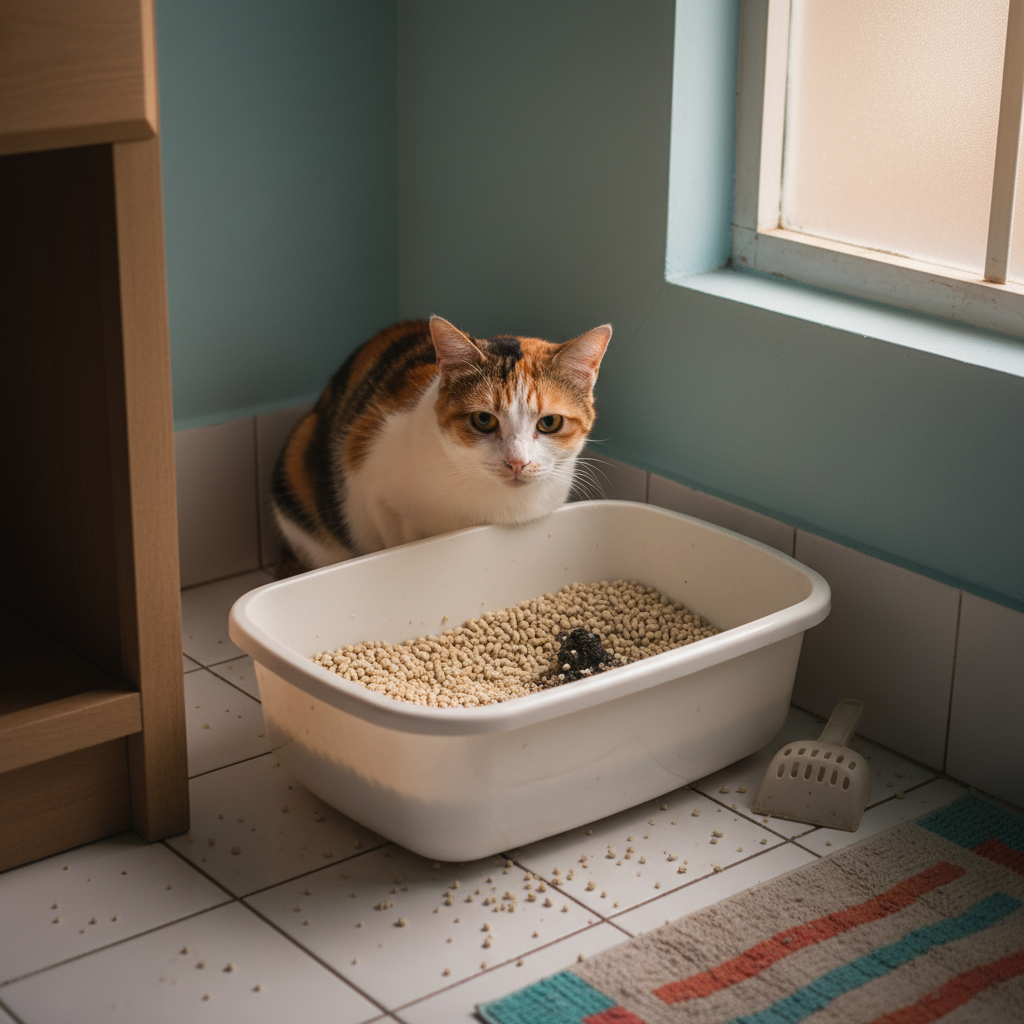
This is the part most condo owners skip, and it's the part that matters most. The N+1 rule is not about hygiene. It's about chronic stress.
When a cat cannot access a clean, safe litter box on demand, the body responds by elevating cortisol — and chronically elevated cortisol is the documented trigger for Feline Idiopathic Cystitis (FIC), the painful, recurring bladder inflammation that lands so many Malaysian cats in the vet clinic with blood in their urine.
FIC is not a bacterial infection. It's a neurogenic inflammation caused by environmental stress, and litter box scarcity is one of the most reproducible triggers in veterinary behavioural research. We have linked the full mechanism in our companion piece on why your cat is peeing outside the box — the litter box count question is the very first variable that piece asks you to check.
The behavioural research behind the rule
A landmark 2017 ethogram by McGowan et al. documented up to 39 discrete behaviours during a single elimination event — sniffing, circling, scratching, posturing, covering. Cats are highly ritualised about this. Interrupt the ritual (with another cat blocking, ambushing, or watching) and the cat learns to avoid that box entirely.
This is what International Cat Care calls a "non-social" species pretending to be social: cats living together do not share resources happily, they tolerate each other when resources are abundant. The N+1 rule is the abundance threshold.
The Box Math by Cat Count
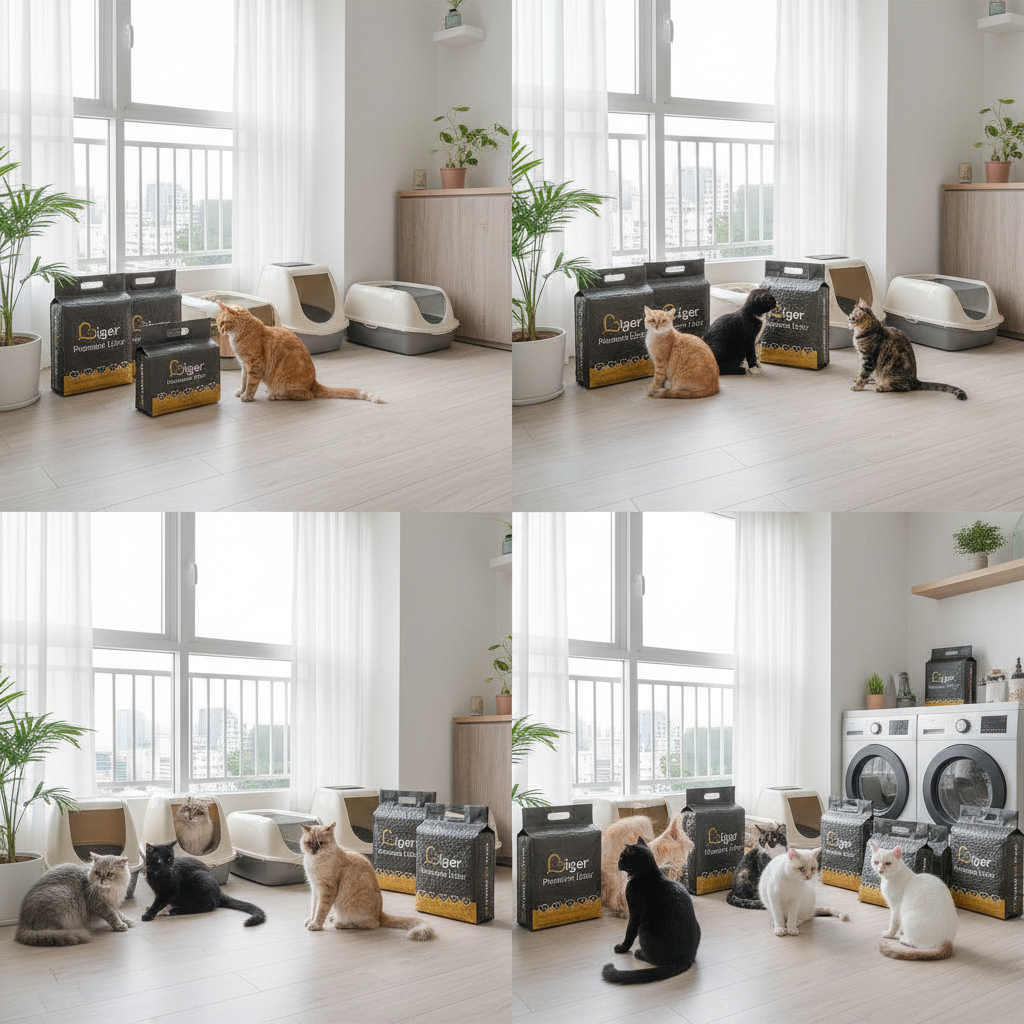
One cat: 2 boxes (yes, really)
Even single-cat homes benefit from two boxes. Many cats refuse to pee and poop in the same box. A single box also means zero options when you're late scooping. For a 600 sqft condo with one cat: one box in the bathroom, one in the service yard. Done.
Two cats: 3 boxes
This is where most KL condo owners start to wince. Three boxes in a 700 sqft unit feels like a lot — until you realise the alternative is one cat ambushing the other and a UTI bill of RM 800+ from your vet. Put them in three separate zones: master bath, second bath, service yard. Never side-by-side — cats interpret two boxes touching as a single box, which we'll get to.
Three cats: 4 boxes
The math holds. Four boxes spread across the home. If you have a balcony, that becomes a perfect fourth zone (covered from rain, away from foot traffic). Most three-cat households can hit this number if they're willing to give up a small section of the spare bathroom or convert a corner of the kitchen.
Four cats: 5 boxes (or honestly, 4 if you watch closely)
Here's where the Liger household lives, and here's where we made a compromise. The textbook says five. We run four — one in the master bath, one in the second bath, one in the service yard, one in the balcony nook. Why?
Because all four of our cats grew up together from young, the social hierarchy is stable, and we are obsessive scoopers: twice a day, every day. Lucky is our designated resource-guarder — he is the youngest but the boldest, and he will park himself near a box if he sees Tiger using it. But Lucky's bullying is mild and never includes ambush behaviour. If it did, we would add a fifth box tomorrow.
The key signal we watch: any cat peeing outside the box for two days running. None of ours have, in over a year. If yours starts, you do not need to think — add a box.
Five+ cats: math vs reality
At five cats, you mathematically need six boxes. In a typical Malaysian condo, that's not happening without sacrificing a bedroom. The honest advice: if you have five cats in 800 sqft, you are running a foster operation, not a household, and you should consider whether the living arrangement is fair to the cats. Five cats in a landed home or a 1,500+ sqft condo can absolutely hit six boxes spread across two floors.
The Placement Rules Nobody Reads
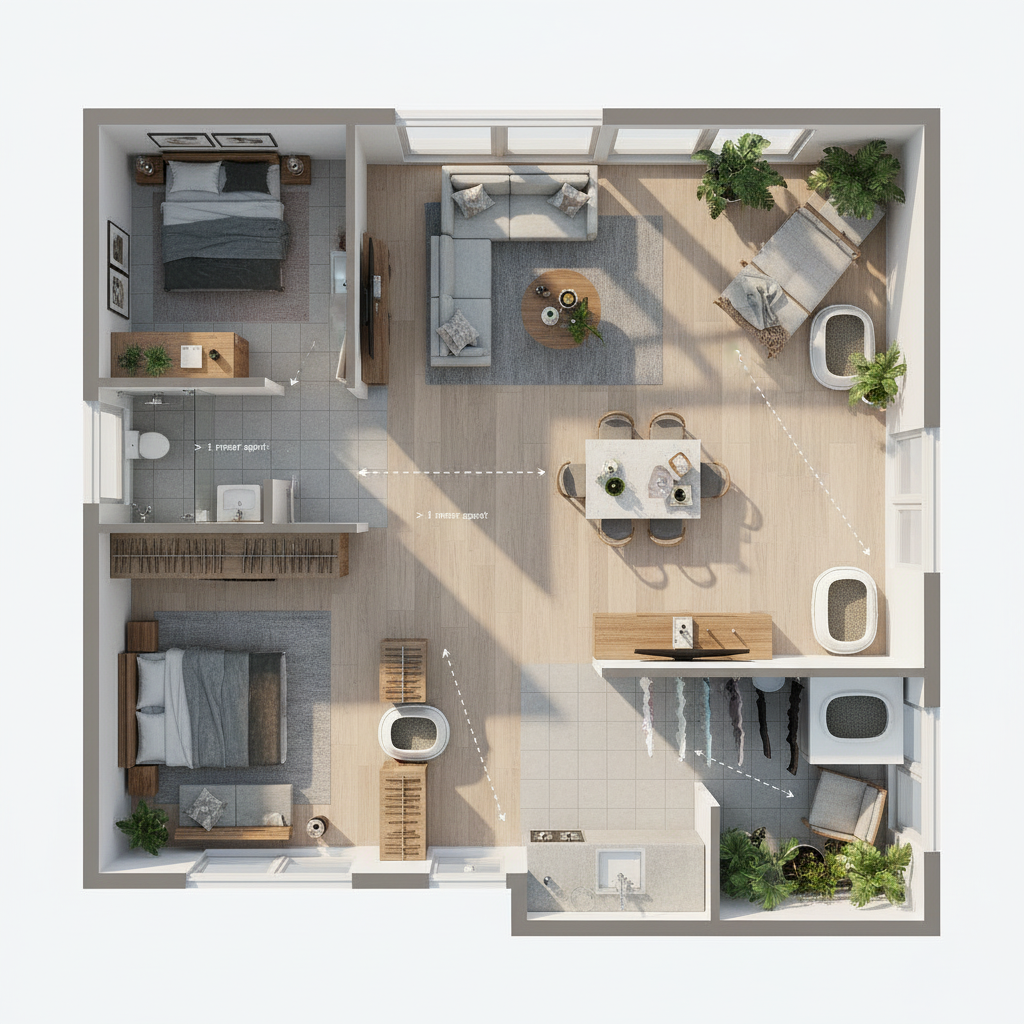
This is the part where most cat owners technically meet N+1 and still get peeing problems. Where the boxes go matters as much as how many.
Rule 1: Boxes side-by-side count as ONE box
Two boxes touching is one large box in your cat's mind. The AAFP guidelines and every behaviourist we found in our research are unanimous on this. If your two boxes are jammed into the same corner of the service yard, you have a one-box household pretending to be a two-box household.
Rule 2: At least 1 metre apart, ideally different rooms
Preventive Vet recommends a minimum of one to two metres between boxes if they're in the same room. Different rooms entirely are better. Different floors, if you live in a duplex or landed home, are ideal — each floor should have at least one box, because cats refuse to descend stairs to a box when they urgently need to go.
Rule 3: Multiple escape routes
A box wedged into a dead-end corner of a tiny bathroom is an ambush trap. The cat using it cannot see who's coming, and cannot bolt if challenged. The ASPCA explicitly recommends boxes with "multiple escape routes" — meaning the cat can leave in at least two directions without being cornered.
Rule 4: Away from food, water, and noisy appliances
Cats instinctively refuse to eliminate near where they eat. Keep boxes at least 5 feet from food bowls. Also: away from washing machines, dryers, and air conditioner outdoor units — the sudden noise during a use can create a lifelong negative association with that box.
One Big Box vs Two Small: Does It Ever Work?
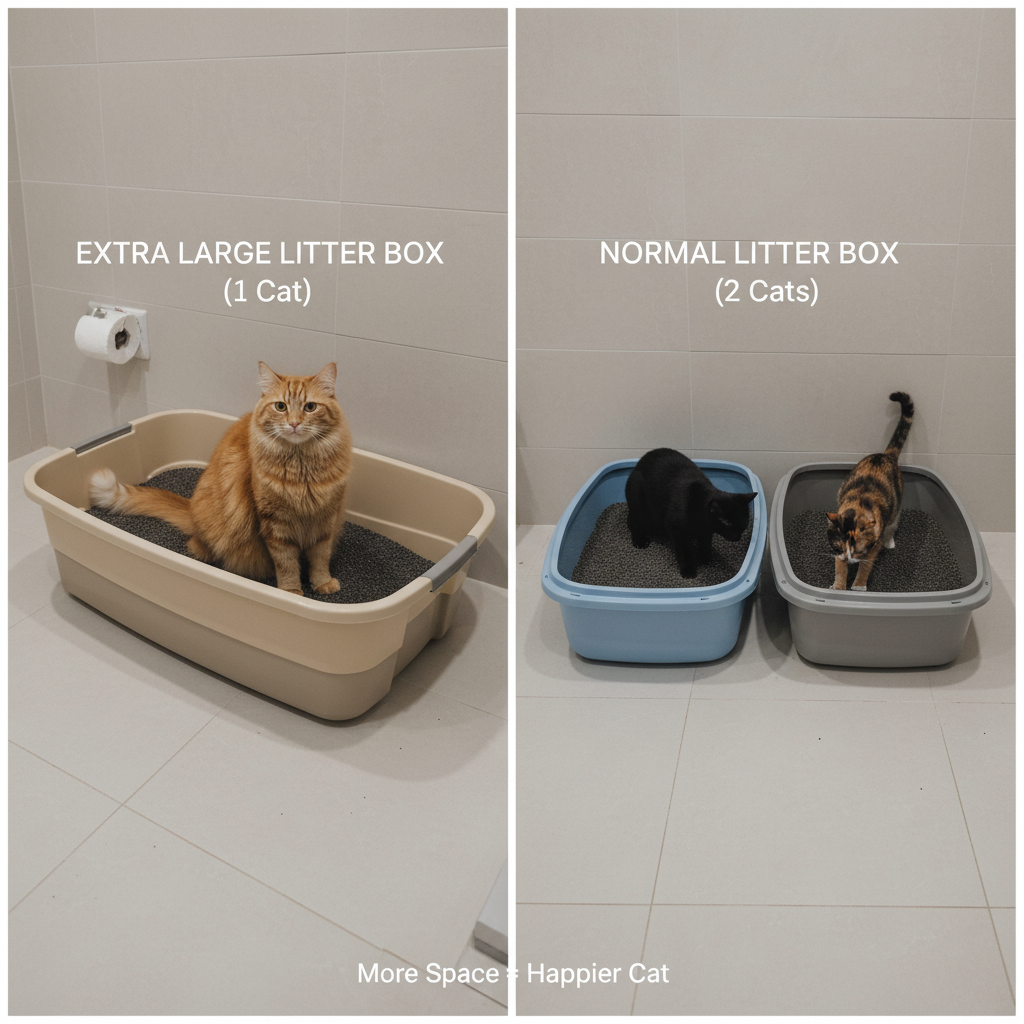
The short answer: rarely, and only in very specific cases. The proper sizing rule from vet behavioural guidance summarised by UPenn's Dr Krebs is that a box must be at least 1.5 times the length of your cat from nose to tail base — usually 60cm or longer for an adult Malaysian moggy. Most boxes sold in pet shops are too small.
For one big cat in a small space, a single 80cm storage tub (cheaper than a "designer" box) works wonderfully. But for two cats? No. One large box still functions as one resource in feline social terms, and the cat that uses it second loses out. Recent feline house-soiling research is unanimous: count matters more than size, once you're past the minimum size threshold.
The Aesthetics Problem: Hidden Boxes and Litter Furniture
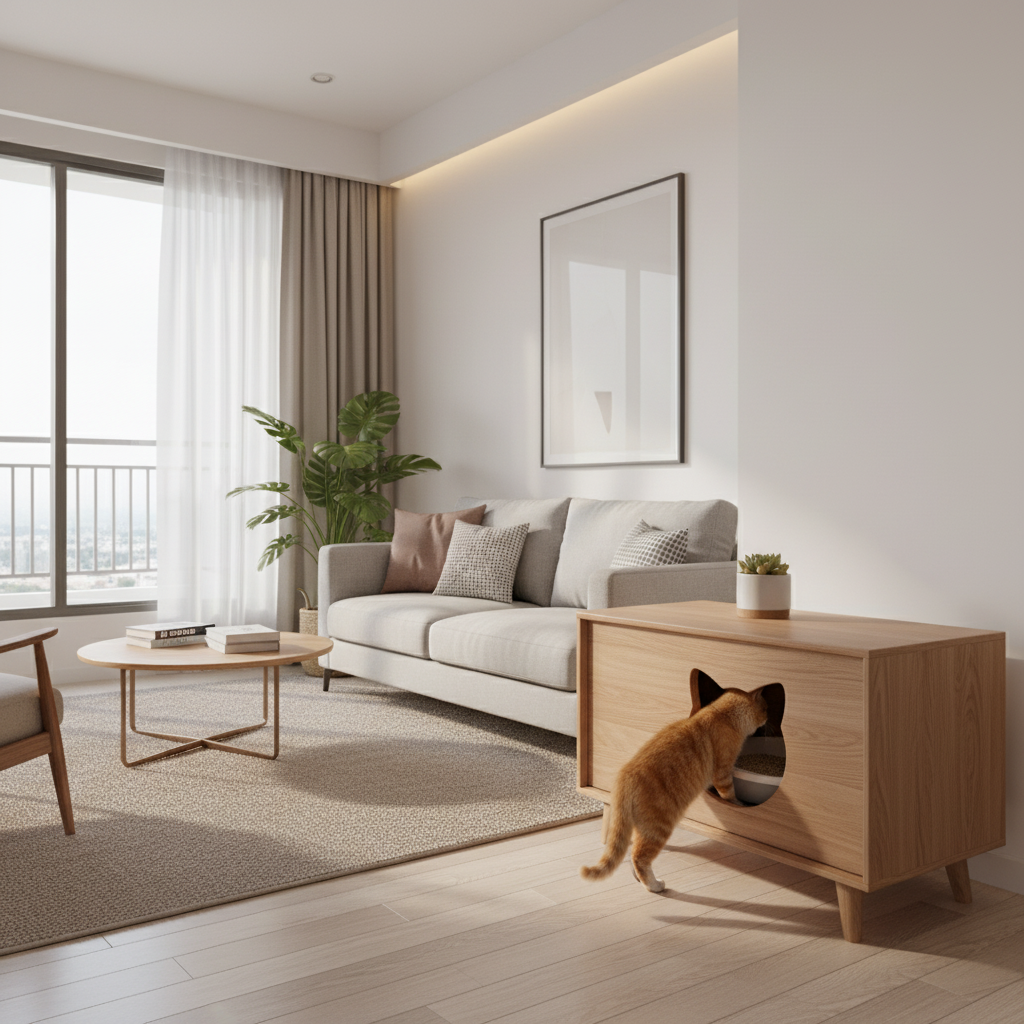
Malaysian condos are small and your living room is usually visible from the front door. Nobody wants three open litter trays in their TV view. Litter furniture — boxes disguised as side tables, benches, or cabinets — is exploding on Shopee and Lazada.
The good news: most cats accept them. The bad news: they fail the "multiple escape routes" rule, and they trap odour. Use them only if you commit to:
- Ventilation cuts on at least two sides of the enclosure
- The cat can exit through the front, not crawl backwards out a side flap
- Daily scooping (an enclosed box hides odour from you, not from the cat)
- Watching for the cat avoiding it — if they hover and then go elsewhere, the enclosure is the problem
For Liger family, we use one cabinet-style enclosure (balcony nook, where Lucky's main territory is) and three open boxes. The trick is consistency: every cat should have the option of an open box if they prefer it.
Multi-Cat Box Politics: Resource Guarding in Real Life
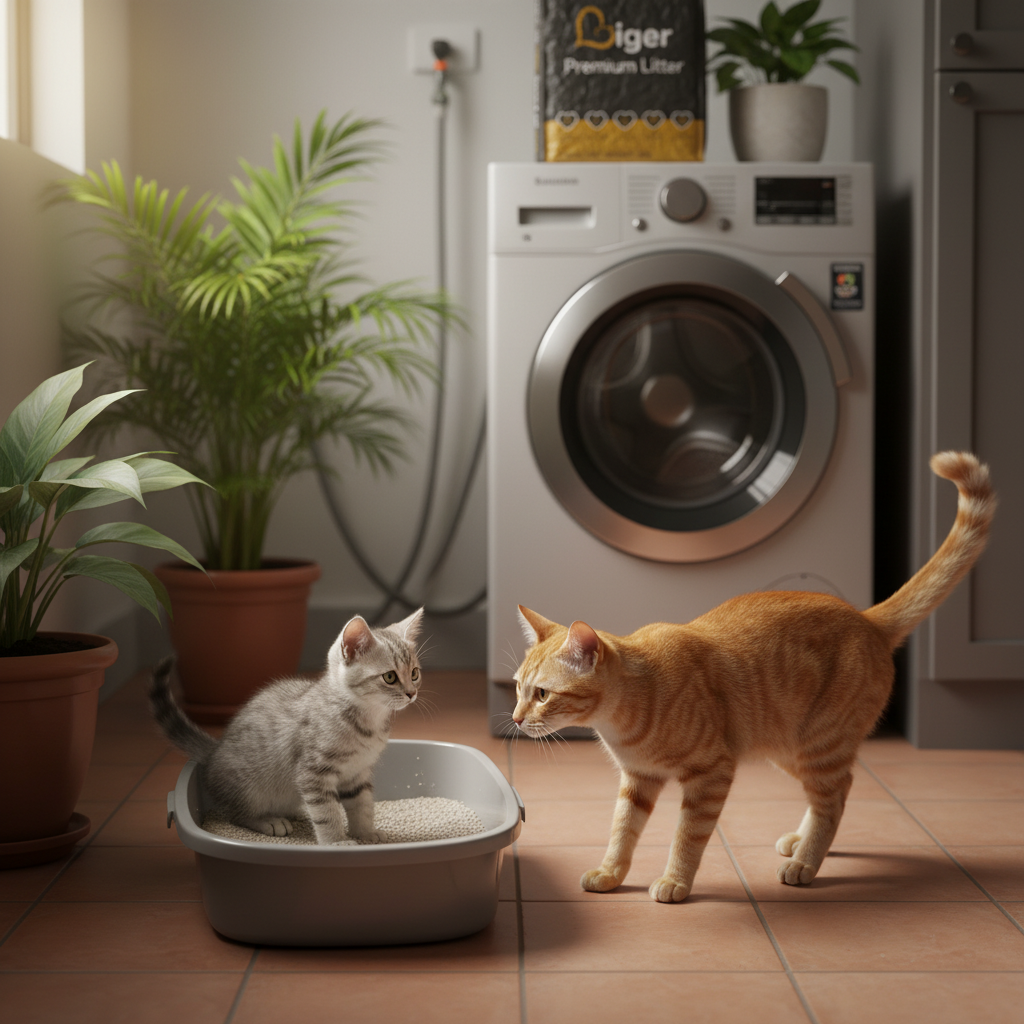
Resource guarding is the technical term for what Lucky does. He stations himself near a box, makes eye contact when another cat approaches, and the other cat backs off. No hissing, no claws — just the slow-blink intimidation that cats do beautifully.
Lucky guards because he is the youngest and the least secure socially. In wild populations this is normal: subordinate cats are most likely to defend resources, because they cannot afford to lose them. Recognise this in your home? Then you need:
- More boxes than the rule says — push to N+2 if guarding is active
- Visual barriers between boxes — a guarder cannot guard what they cannot see
- Boxes in the guarder's lower-territory zones — they guard less in places they don't claim
And critically: never punish the guarder. They are stressed, not aggressive. Behavioural research on multi-cat households shows that punishment escalates guarding into outright aggression — the cat does not learn to stop, the cat learns to hide it.
When to Add a Box: The Warning Signs
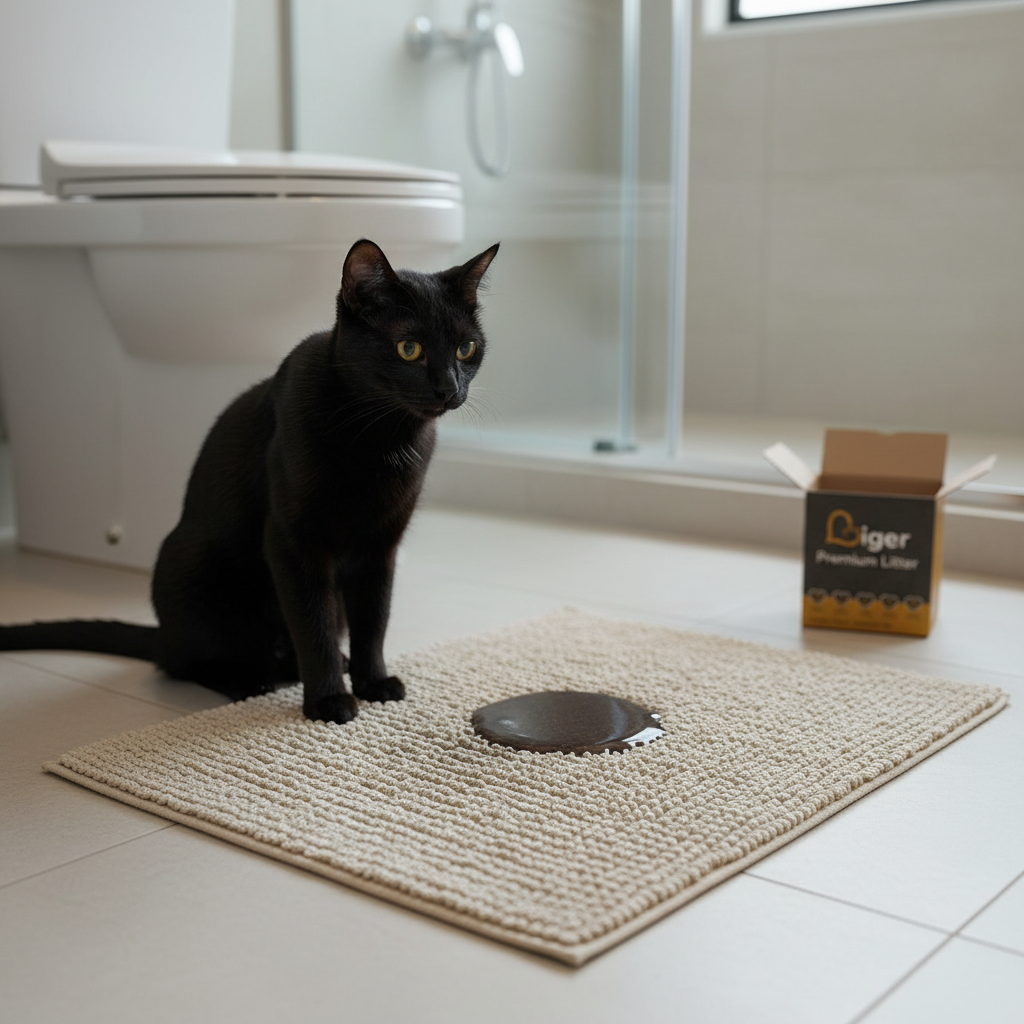
Don't wait for a behavioural emergency. Add a box if you see:
- Any peeing or pooping outside the box (after ruling out medical causes — see your vet first)
- One cat hovering or lingering near boxes when others use them
- Wet patches on bath mats, laundry, or the corner of a sofa
- One cat suddenly using the box much less frequently — they may be holding it in, which causes urinary problems
- Increased grooming around the genitals (sign of urinary discomfort)
Also use our free litter box size calculator to verify your current boxes are actually large enough — undersized boxes look "fine" but cats hate them.
The Decision Tree: How Many Boxes for YOUR Home?
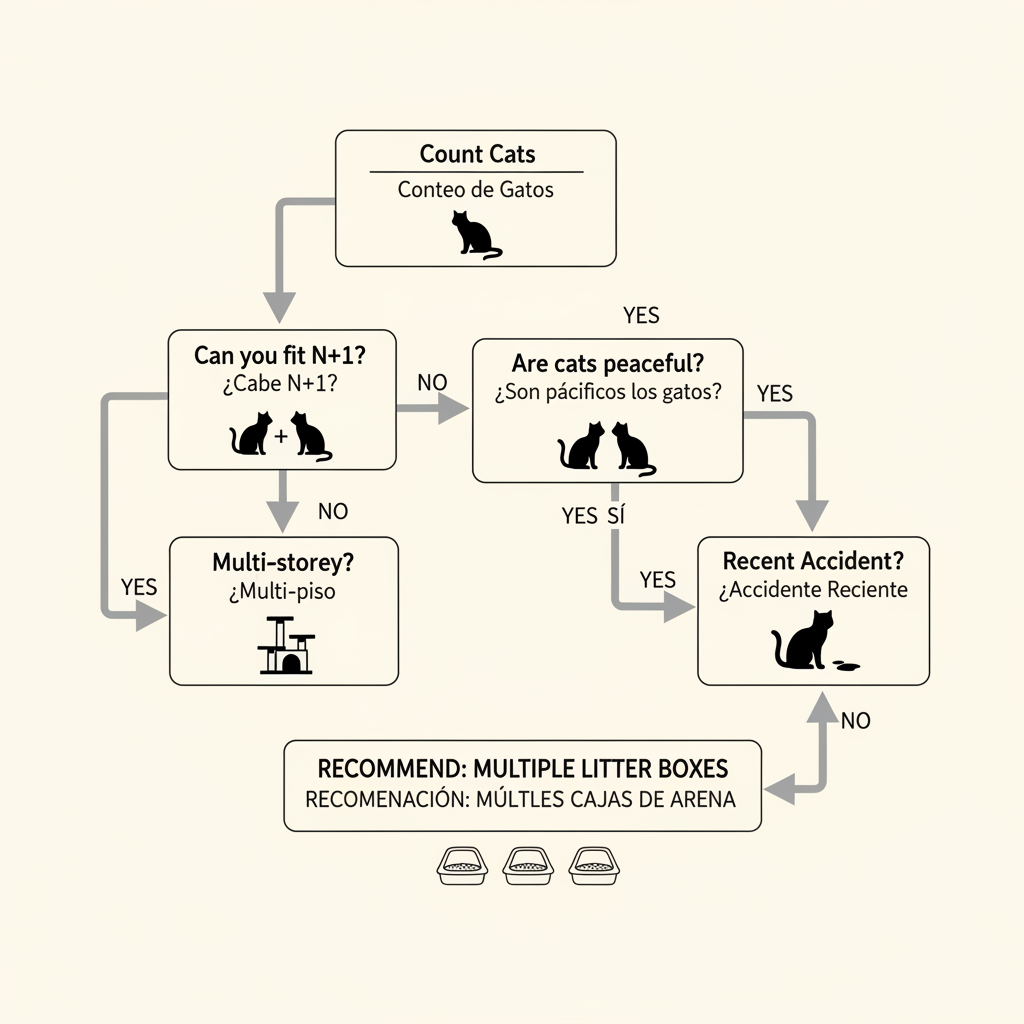
Use this in order:
- Count your cats. Add 1. That's your textbook number.
- Can you physically fit that many? If no, go to step 3. If yes, do it.
- Are your cats peaceful? No guarding, no peeing outside? If yes, you can run at N (cat count, no +1) IF you scoop twice daily and accept the risk.
- Multi-storey home? Distribute boxes across floors — minimum one per floor regardless of math.
- Any peeing accident in the last 30 days? Stop reading and add a box today.
And to budget the litter you'll go through with multiple boxes, use the litter usage calculator — multi-cat homes burn through litter faster than the bag estimates suggest, especially in Malaysia's humidity where you need to refresh boxes more often.
The Honest Bottom Line
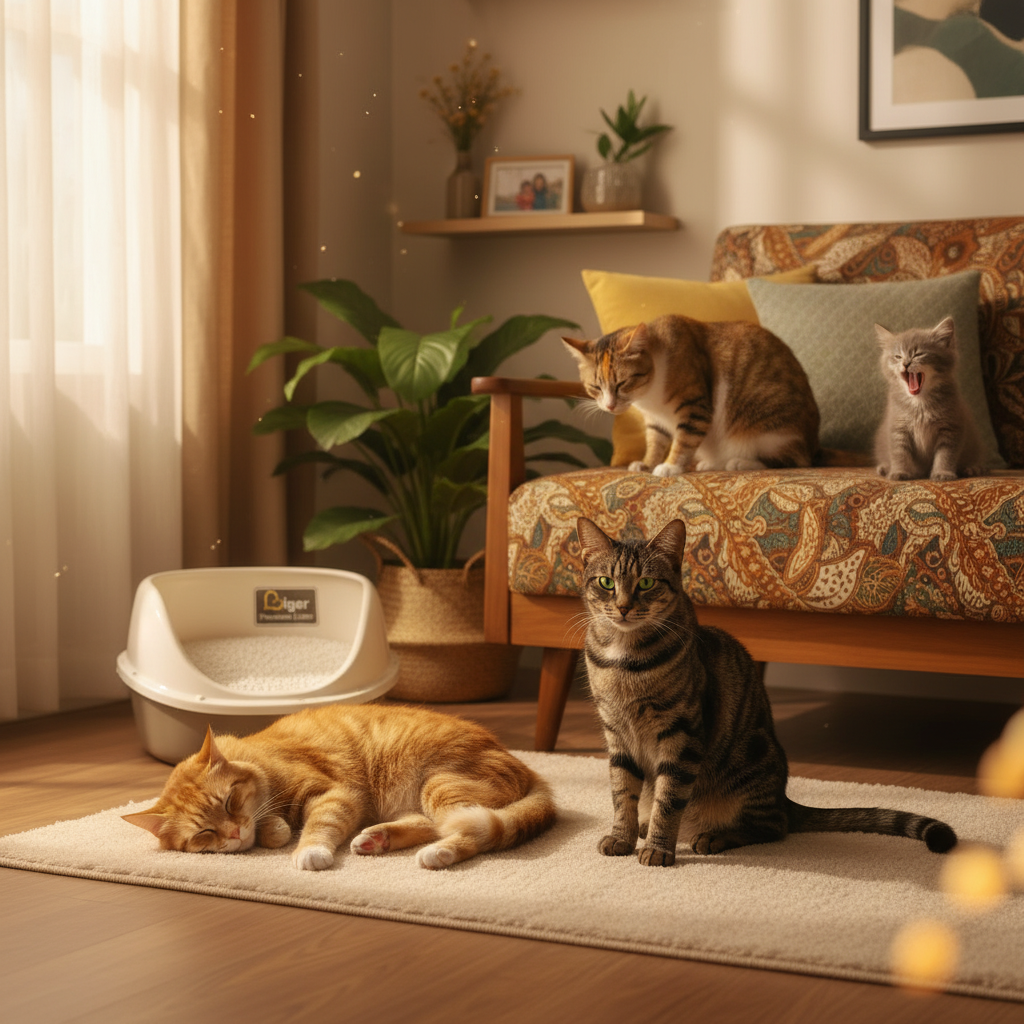
The N+1 rule is right, even when it feels impossible. In our Liger household we run N (four cats, four boxes) instead of N+1, but only because we know our cats, scoop obsessively, and watch behaviour daily. If any of those conditions slipped, we would add a fifth box that week.
If you are starting out, follow N+1. If your unit truly cannot fit it, go to N and make up for it with hygiene and observation. And if you see any sign of stress or accidents, do not negotiate with the rule — add a box. Boxes are cheap. Vet bills for FIC are not, and a stressed cat is a sad cat.
Our cats taught us the most important thing: cats are clear communicators if you watch them. Lucky tells us he needs more space the moment he starts hovering near a box. Tiger tells us his box is dirty by sniffing and walking off. Listen, and the math will solve itself.