Be honest: when did you last look inside your cat's mouth? For most cat parents the answer is 'never,' and that's exactly why dental disease is one of the most common — and most overlooked — health problems cats face. The catch is that cats are masters at hiding mouth pain; by the time you notice bad breath or a cat that's gone off dry food, the problem is usually well advanced. The single most effective thing you can do at home to prevent it is also the thing almost nobody does: brush your cat's teeth. Here's how to actually pull it off, Malaysian-style, without losing a finger — and what to do if your cat simply won't have it. (We've trained Tiger, Lion, Ping'An and Lucky to tolerate it; some took weeks.)
Why You Should Care: Dental Disease Is a Silent Epidemic
Dental disease in cats isn't just 'bad breath.' Plaque builds up on the teeth, hardens into tartar, and inflames the gums (gingivitis), which can progress to painful periodontal disease — loose teeth, infection, and chronic pain that a stoic cat will hide until it's severe. It's startlingly common: studies suggest that somewhere between 20% and 60% of adult cats are affected by tooth resorption alone, one of several painful dental conditions, and the majority of cats show some degree of dental disease by middle age.
And it's not just the mouth. The chronic infection and inflammation from bad dental disease can affect the whole body over time. The reason brushing matters so much is simple mechanics: plaque turns into rock-hard tartar within days, and once it's tartar, no brush will shift it — it needs a vet to scale it off under anaesthesia. Daily brushing is the only thing that reliably removes plaque before it hardens. That's the whole game. If your cat already has stinky breath, our guide on why cats get bad breath covers what that smell is actually telling you.
Start Young, Go Slow: The Golden Rule
The easiest cat to teach is a kitten — start the habit during or just after the teething phase (around 3 to 7 months) and brushing just becomes a normal part of life. (A note for kitten owners: don't brush actively erupting sore teeth, and watch for retained baby teeth as the adult set comes in — a kitten ends up with 30 permanent teeth, up from 26 milk teeth.)
But here's the encouraging part: you can teach an adult cat too. It just takes patience and the cardinal rule of cat tooth-brushing — go slow. This is a process measured in weeks, not a thing you do once by force. Any attempt to pin your cat down and jam a brush in its mouth on day one will teach it that brushing means being ambushed, and you'll never get a second chance. Every session should end before your cat gets annoyed, on a positive note, with a reward. Patience now buys you years of easy brushing later.
What You Need — and the Toothpaste That Could Kill
The shopping list is short and cheap:
- A cat-specific toothbrush — a small, soft-bristled cat brush, or a 'finger brush' that slips over your fingertip (great for nervous cats and beginners). A child's soft toothbrush can work in a pinch.
- Cat-specific enzymatic toothpaste — usually poultry or fish flavoured, designed to be swallowed, and it works partly through enzymes even where the brush doesn't reach.
The one rule you must never break: never use human toothpaste. It's genuinely dangerous. Human toothpaste contains fluoride, which is toxic to cats when swallowed (and cats can't spit), and many human and 'sugar-free' products contain xylitol, which is toxic to cats and can cause hypoglycaemia and liver damage. Cats swallow everything you put in their mouth, so the paste must be made for them. Baking soda and salt-water DIY mixes are also a no — use a proper feline enzymatic paste.
The Step-by-Step: Teaching Your Cat to Accept Brushing
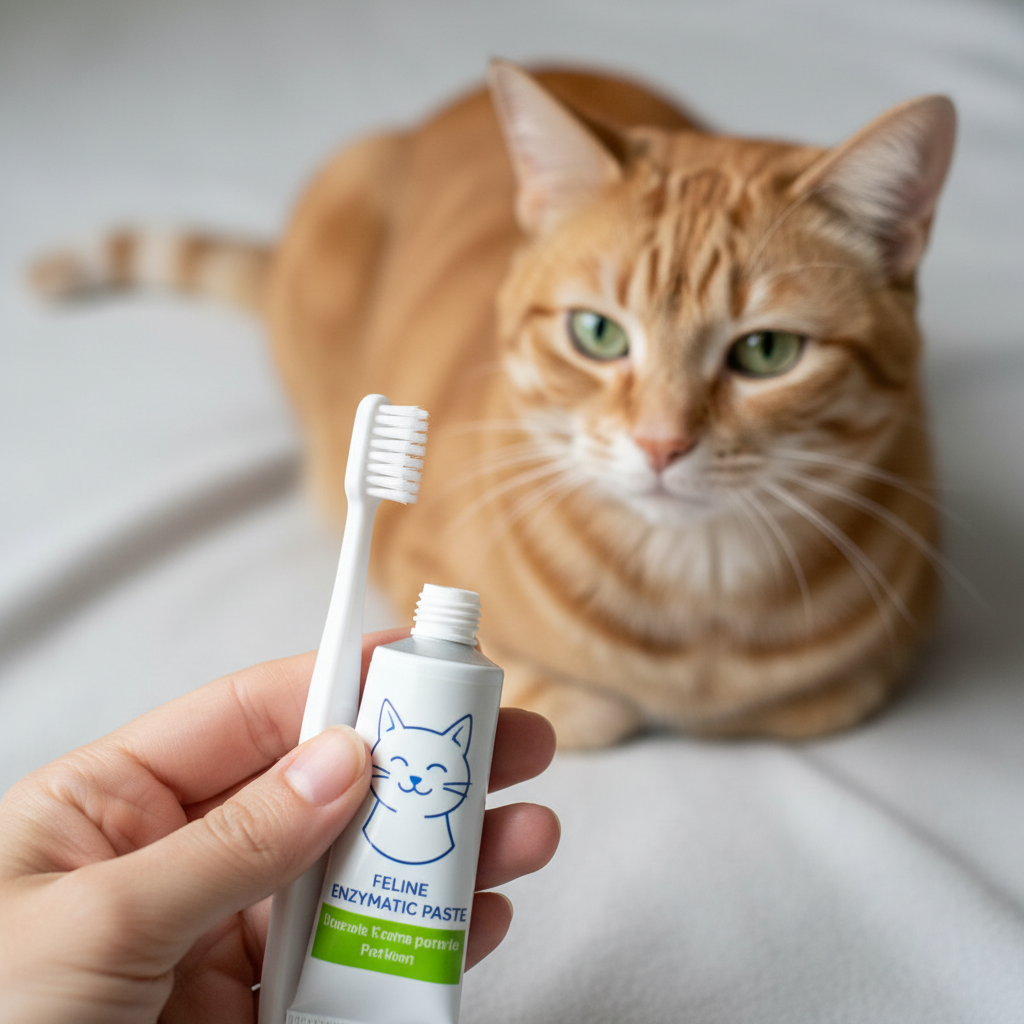
Spread this over a couple of weeks. Don't rush to the next step until your cat is relaxed with the current one. Pick a time when your cat is calm and a little sleepy — never right after play or a fright.
- Days 1–3: Just the taste. Put a dab of the cat toothpaste on your finger and let your cat lick it off, like a treat. The goal is simply 'this stuff is delicious.' Do this daily until your cat looks forward to it.
- Days 4–6: Touch the mouth. With paste on your finger, gently rub it along the outside of a few teeth and the gumline, then stop and reward. Lift the lip briefly. Keep it to a few seconds.
- Days 7–10: Introduce the brush. Put paste on the finger-brush or toothbrush and let your cat taste it from the brush, so the brush itself becomes the tasty thing.
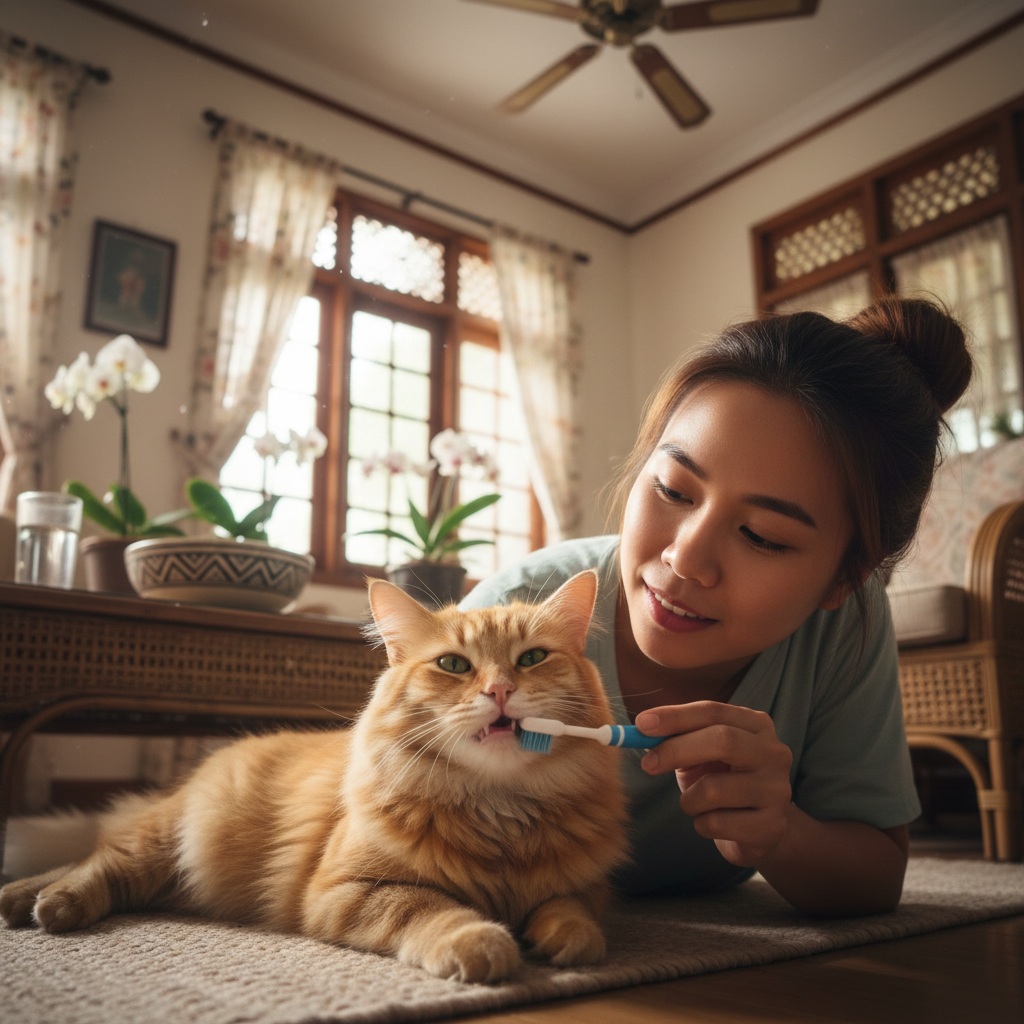
- Day 10 onward: Actually brush. Gently lift the lip and brush a few outer tooth surfaces at a 45-degree angle to the gumline, in small circles. You don't need to open the mouth or reach the inner surfaces — the outer surfaces facing the cheek are where most tartar forms, and the tongue handles much of the inside. Start with just the big canines and a few back teeth; build up.
- Every single time: reward and stop early. Finish with a treat, praise, or play, and always quit while your cat is still tolerating it. Aim to build toward a quick daily brush — even three times a week beats nothing.
If your cat clamps up or gets stressed, you've gone too fast — drop back a step. This is a marathon, not a sprint.
When Brushing Isn't Possible: Realistic Alternatives
Let's be honest: some cats, especially older ones who never learned young, will simply not accept a brush no matter how patient you are. Don't give up on dental care — just use the next-best tools, while being clear-eyed that none of these fully replace brushing:
- Dental diets and treats. Some prescription dental kibbles and dental treats are designed with a texture or coating that helps scrub teeth or slow tartar. Look for ones validated by the Veterinary Oral Health Council (the VOHC seal). Check the ingredients of any dental treat before you commit with our food ingredient checker — 'dental' on the bag doesn't always mean much.
- Water additives and dental gels. Enzymatic water additives or gels you smear on the gums are easier than brushing for a difficult cat. Modest help, but better than nothing.
- Dental wipes. Some cats that hate a brush will tolerate a quick wipe of the outer teeth with a dental wipe or gauze on your finger.
- Professional cleaning. Regardless of home care, most cats will eventually need a professional scale-and-polish under anaesthesia at the vet to remove hardened tartar. Home care stretches the time between these and reduces how much is needed.
A quick reality check: alternatives slow plaque, but only brushing physically removes it daily. Think of treats and additives as backup, not the main plan. And keep an eye out for the signs of trouble — drooling, pawing at the mouth, dropping food, eating on one side, or a sudden preference for wet over dry food. Painful conditions like tooth resorption and chronic gingivostomatitis need a vet, not a brush.
The Malaysian Reality: Vet Dentals Cost, So Prevention Pays
Here's the bottom-line argument for doing the boring daily brush. A professional dental cleaning in Malaysia isn't cheap — it requires general anaesthesia, full-mouth dental X-rays, scaling, and often extractions, and published fee schedules from local university and private clinics show that treating an established problem (for example, a moderate case needing a few extractions) runs into the hundreds of ringgit, climbing higher for advanced disease. Add the anaesthetic risk, especially for older cats, and the case for prevention writes itself.
Every day you brush is a day plaque doesn't turn to tartar, a day of gum disease prevented, and money kept out of a future vet bill. It's five minutes that protects your cat from chronic pain and protects your wallet from a RM-heavy dental procedure down the line. Start slow, never use human toothpaste, reward generously, and accept that 'good enough most days' beats 'perfect never.' Your cat won't thank you — cats never do — but its mouth will stay healthy, pain-free, and a lot less smelly for years to come.