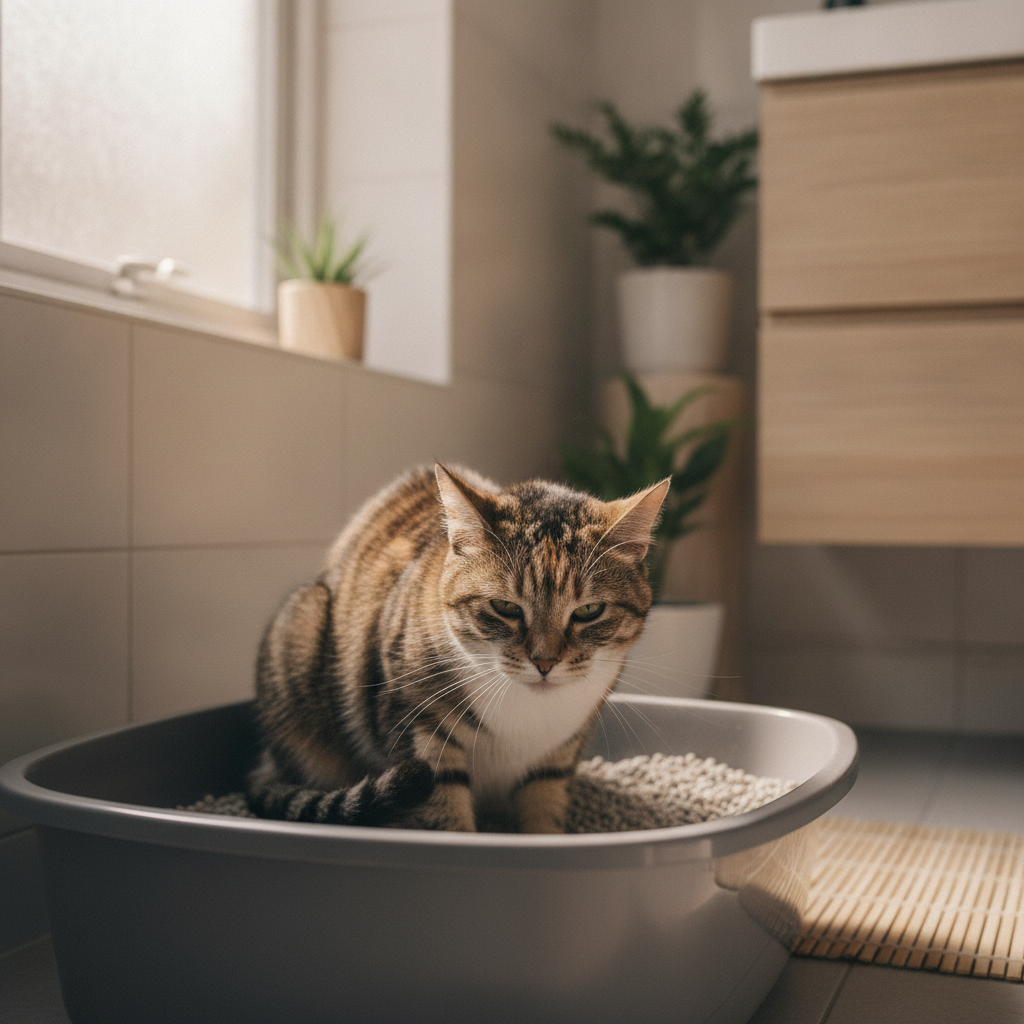
Your unspayed cat hasn't been near a tomcat — or so you thought — and suddenly she's dragging a sock into the wardrobe, fussing over a plush toy like it's a newborn, and her belly looks a little fuller. She might even be producing a drop of milk. Before you panic about a surprise litter, there's a good chance you're looking at a false pregnancy: a harmless hormonal echo of the real thing. Here's what's going on and, crucially, the one scenario where those same signs mean a trip to the vet right now.
If you suspect she might genuinely be expecting, cross-check the real early signs of cat pregnancy first, or see the full pregnancy and birth guide.
What Is a False Pregnancy in Cats?
False pregnancy — the proper terms are pseudopregnancy or pseudocyesis — is when an unspayed female cat shows the physical and behavioural signs of pregnancy after an ovulation that didn't lead to fertilisation. She feels pregnant, hormonally speaking, but there are no kittens. As PetMD explains, it's a normal part of the reproductive cycle rather than a disease, and it usually clears up on its own.
Why It Happens: The Hormones Behind It
Cats are mostly induced ovulators — unlike dogs, the act of mating is normally what triggers the ovaries to release eggs. But ovulation can also happen spontaneously (without mating) or after a sterile mating with a neutered or infertile male. Once an egg is released, a temporary structure called the corpus luteum forms on the ovary and pumps out progesterone, the hormone that maintains pregnancy. Per the MSD Veterinary Manual, this corpus luteum lives for roughly 35 to 50 days whether or not there are kittens. When it fades and progesterone drops, the brain releases another hormone — prolactin — and that's what drives the maternal signs: mammary development, milk, nesting and mothering. So the signs aren't triggered by the pregnancy hormone rising, but by it falling.
Is It Actually Common in Cats?
Here's the reassuring part: clinically obvious false pregnancy is uncommon in cats, very different from dogs, where an estimated 50–75% of intact females show signs after a heat. Most pseudopregnant cats show nothing at all — the only hint is a delayed return to heat. That said, the underlying hormonal event is more common than the visible version: one study of a multi-cat household found 87% of queens had hormonal evidence of a spontaneous ovulation and pseudopregnancy. The lesson for Malaysian multi-cat homes — very common here — is that the busy social environment can nudge a queen into ovulating on her own, so obvious signs, while still unusual, are a bit more likely when several cats live together.
There's a fascinating reason cats differ so much from dogs here. Dogs descend from cooperative pack animals, where a pseudopregnant subordinate female could actually help nurse the pack's pups — so the trait was useful and stuck around. Cats descend from the solitary African wildcat, a lone hunter with no pack to help raise. With no evolutionary payoff for a non-pregnant female to gear up for mothering, the strong, obvious version of false pregnancy simply never got selected for in cats. It's a neat reminder that your cat's body still runs on wildcat software.
Signs to Watch For

When a false pregnancy does show itself, the signs mirror the real thing:
- Mammary changes: enlarged mammary glands, and sometimes a milky or clear watery fluid from the nipples.
- A fuller belly and mild weight gain.
- Nesting: hunting out quiet, hidden spots and gathering towels or blankets into a den.
- Mothering objects: the classic giveaway — "adopting" a toy, sock or slipper, carrying it around and guarding it like a kitten.
- Appetite swings: some cats eat more, others go picky.
- Mood shifts: more affectionate and attention-seeking, or restless, withdrawn, vocal, occasionally irritable.
Severity varies wildly between cats, and even between episodes in the same cat. Some of these — nesting, affection, appetite — overlap with true pregnancy, which is exactly why the vet's confirmation matters. You may also notice her grooming her belly and nipples more than usual, or being clingier at night. None of these signs on their own confirms anything; it's the cluster, the timing after a heat, and the fact that she had no real chance to conceive that point toward a false pregnancy. The Merck Veterinary Manual notes that because the signs so closely shadow true pregnancy, owners are often genuinely unable to tell the two apart by eye — and that's completely normal.
How Long Does a False Pregnancy Last?
The hormonal phase tracks the corpus luteum's lifespan, so it runs about 30 to 50 days. The visible signs, though, are usually shorter-lived and tend to fade on their own within about two to three weeks as her hormones re-balance. After that she typically slips back into her normal cycle. If signs drag on much longer, get worse, or she seems unwell rather than just "broody", that's your cue to call the vet. It's worth jotting down the dates when you first noticed the signs, since false pregnancies often recur on a predictable rhythm tied to her heat cycle — that record helps your vet spot the pattern and decide whether spaying is the sensible next step. A queen who has had one episode is quite likely to have another, so the first one is really a heads-up about what her unspayed reproductive system will keep doing.
The Vet's Job: Ruling Out Pregnancy and Pyometra
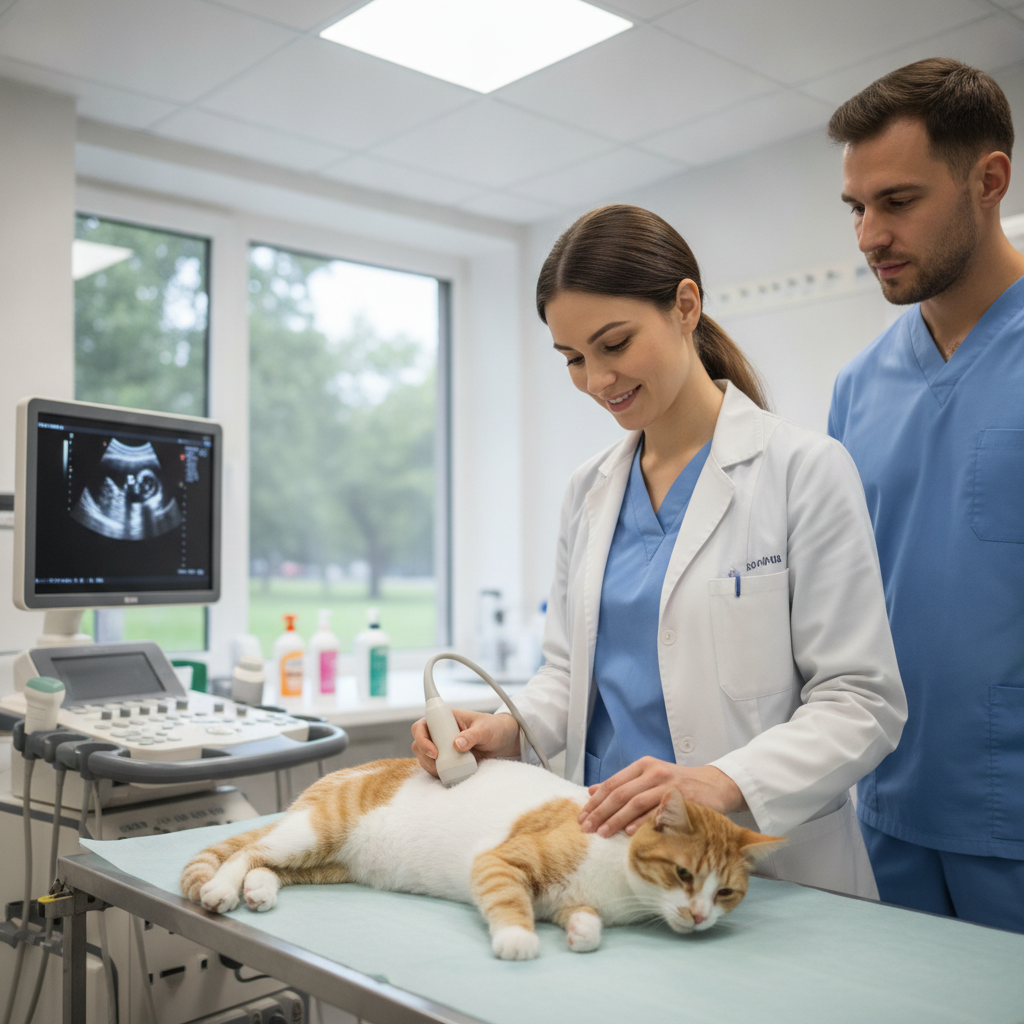
A vet has two jobs here: confirm she isn't actually pregnant, and — far more importantly — rule out pyometra, a life-threatening uterine infection that strikes in the very same window after a heat. This is the part nobody should skip. To confirm she's not pregnant, the vet may use an abdominal ultrasound (no fetuses, no heartbeats) or a relaxin blood test (relaxin comes only from a placenta, so it's a reliable pregnancy check). The critical contrast looks like this:
| Feature | False pregnancy | Pyometra (emergency) |
|---|---|---|
| General health | Bright, alert, otherwise well | Lethargic, depressed, off food |
| Vaginal discharge | Usually none | Often pus-like, foul-smelling |
| Other signs | Mild nesting/mammary changes | Increased thirst, vomiting, fever, swollen painful belly |
| Uterus on ultrasound | Normal | Enlarged, filled with fluid/pus |
As the American College of Veterinary Surgeons stresses, pyometra is a surgical emergency. Any unspayed female who seems unwell in the weeks after a heat needs to be seen the same day. A content cat fussing over a toy is one thing; a feverish, thirsty, lethargic cat with discharge is a different, urgent story.
What You Can Do at Home
For a confirmed, mild false pregnancy, the best treatment is usually none — vets call it "benign neglect". The signs pass by themselves. A few things genuinely help, and one thing makes it worse:
- Don't rub or milk her mammary glands, and gently discourage her from licking them — that stimulation prolongs milk production. A soft recovery suit or, if your vet advises, an e-collar can stop the licking.
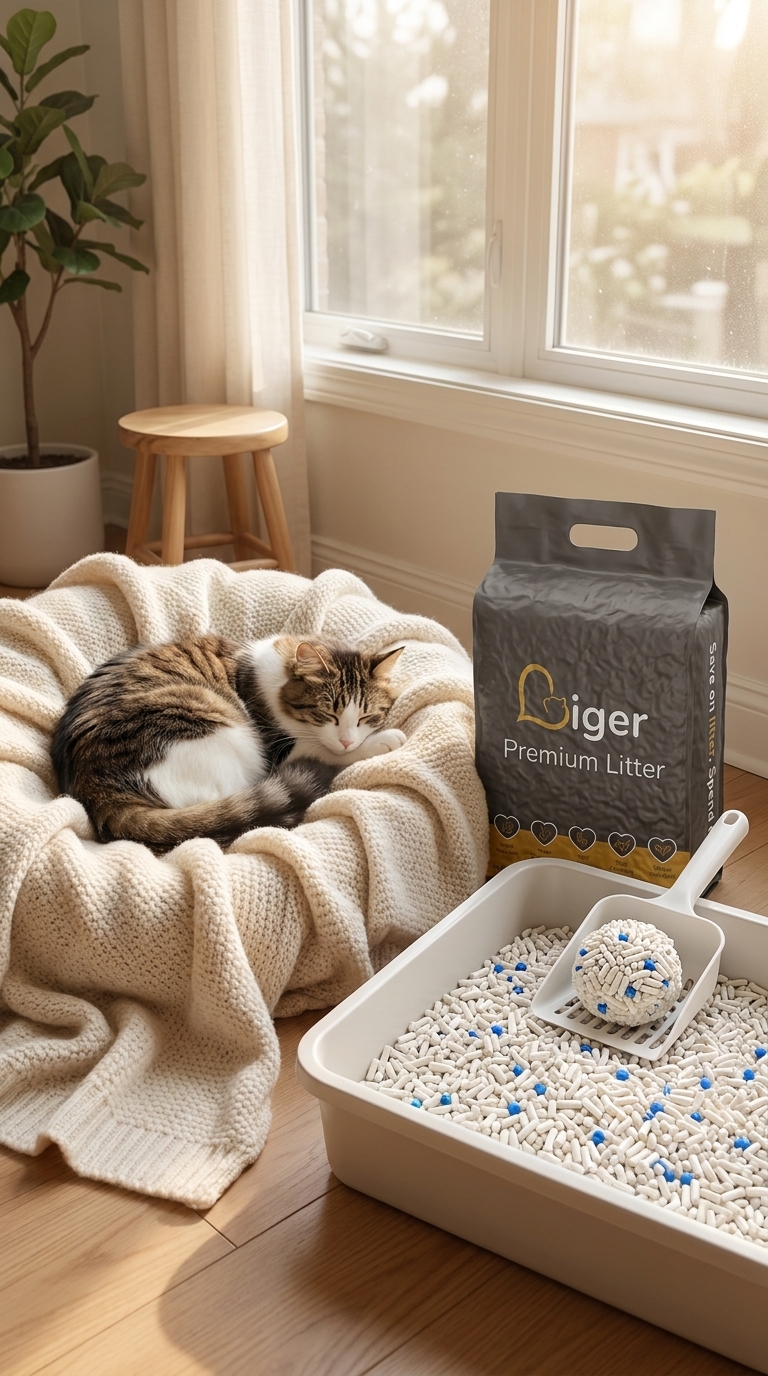
- Keep things calm and let her nest. A quiet, low-stress corner with her own bedding helps her settle. There's no need to take her toy "baby" away — that just stresses her.
- Keep her space clean. While she's nesting she'll use her litter tray as usual, so a clean, low-dust set-up keeps the corner hygienic. Liger Premium Tofu Cat Litter is a tidy fit — natural soy fibre, low-dust, firm-clumping for easy scooping, good odour control in our humid weather, flushable in small amounts, and Halal-certified. Current pricing runs RM21.90 (1 pack, 2 kg), RM53.90 (3 packs), RM89 (5 packs) and RM169 (10 packs) — about RM8.45/kg on the 10-pack. Size your usage with the litter calculator.
One firm warning: don't reach for leftover hormone medications. Progestogen-type drugs make signs vanish briefly but cause a worse rebound when stopped — and can even trigger pyometra. Any medication (the prolactin-blocker cabergoline is the one vets reach for in severe cases) must come from your vet, never the internet.
Prevention: Spaying Ends the Cycle
If a cat has one false pregnancy, she'll likely have more, because the hormonal cycle behind it keeps turning. The one permanent fix is spaying (removing the ovaries and uterus), which stops the heat cycles and the ovulations that set the whole thing off — and as a bonus, eliminates the risk of that dangerous pyometra entirely. We won't cover the surgery's cost, timing and recovery here — that's its own topic in our guide to spaying and neutering in Malaysia, with the wider pros and cons in to snip or not to snip. One small note: if a cat is spayed during the high-progesterone phase, the sudden hormone drop can occasionally trigger a brief, mild false pregnancy — harmless and one-off, and the surgery still prevents every future episode. For any cat not in a responsible breeding programme, spaying is the kindest long-term answer. To understand the heat cycles that start all of this, read decoding cat heat.