So you bought your first bag of tofu cat litter. Maybe a friend told you about it, maybe you got tired of clay dust coating every dark surface in your condo, or maybe Tiger and Lion — our two cheeky kittens — finally convinced you on Instagram. Either way, welcome. The first month with tofu is when most Malaysian cat parents either fall in love with it or quietly go back to bentonite, and the difference almost always comes down to how you use it.
We've run tofu cat litter through four cats — Tiger and Lion (the kitten brothers), Ping'An (our rescue mama) and Lucky (her chaos goblin son) — in a Kuala Lumpur high-rise where the humidity sits at 80% on a polite day. Here are the seven things we wish someone had told us on day one.
1. The First 3 Days: Don't Dump-and-Swap
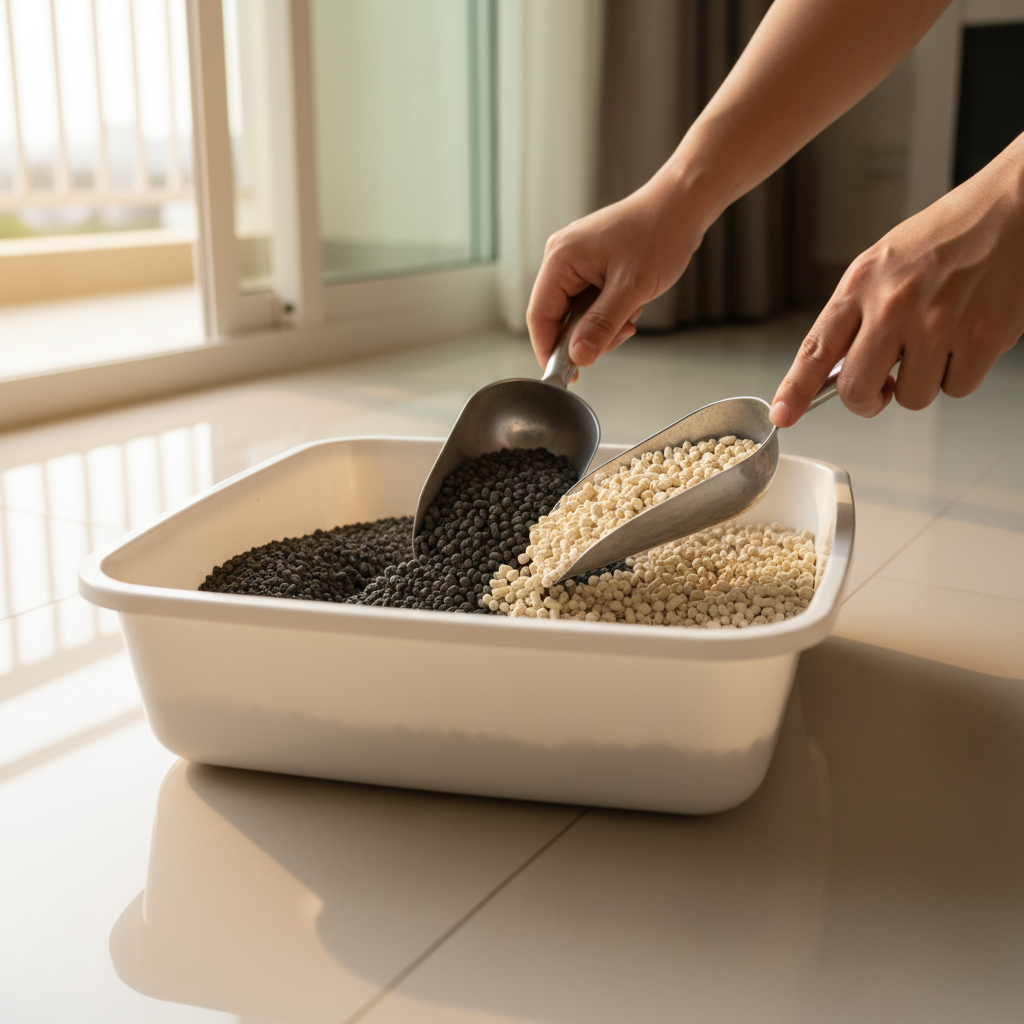
The single biggest mistake we see is the full swap on day one. You empty the old bentonite, pour in fresh tofu, and your cat walks in, sniffs once, and walks straight out. The next thing you know there's a damp patch on your Ikea rug.
Cats are biologically wired to be picky about toilet substrate — in the wild, the wrong texture can be a tell that something dangerous already used the spot. So we transition over three days using a simple ratio:
- Day 1: 70% old litter, 30% tofu — mix them gently in the same box
- Day 2: 50% / 50%
- Day 3: 100% tofu — fill to 5 to 7 cm depth
If your cat is older, anxious, or had a recent move, stretch it to seven days. For senior cats and kittens under 4 months, lean conservative. Ping'An, who came to us as a nervous rescue, needed a full week before she stopped giving us the side-eye every time she stepped into the box.
One quick warning: do not use scented air fresheners or strong-smelling cleaners near the box during this transition. A cat's nose is roughly 14 times more sensitive than ours, and a fresh scent change on top of a new texture change can tip them into a strike.
2. Daily Scooping Rhythm — Once Minimum, Twice Is Smarter
Tofu litter clumps faster than clay because the starch binders absorb moisture in under two seconds. That's a gift and a small trap. The gift: clumps lift out clean and the rest of the litter stays usable. The trap: if you wait three days, the urine clumps start to soften from ambient humidity and they crumble when you scoop.
Our routine in a 4-cat home:
- Morning scoop (after we feed them) — gets the overnight clumps before they sit too long
- Evening scoop (around 8 to 9pm) — clears the post-dinner business
For a single-cat household, once a day is genuinely enough. The key is consistency, not frequency. Cats can hold a grudge against a dirty box and start eliminating elsewhere — usually somewhere that takes you an hour to find by smell.
Pro move: keep a small dustpan or scoop dedicated to the box, not the one you use for sweeping the kitchen. Cross-contamination is real, especially in households with kids.
3. When to Change the Full Batch — and Why a Calculator Helps
This is where most online guides get vague. "Change every 2 to 3 weeks" is a fine starting point, but the truth depends on three variables: how many cats, how big the box, and how humid your unit is.
Our rough Malaysian field guide:
- 1 cat, standard box, ground-floor terrace: full refresh every 14 to 21 days
- 1 cat, condo above floor 10: every 12 to 16 days (less ventilation = faster odour build-up)
- 2 cats sharing 2 boxes: every 10 to 14 days per box
- 3 or more cats: every 7 to 10 days
The honest test? Stick your nose 30 cm above the box on a freshly scooped morning. If you smell ammonia at all, the bed has saturated and it's time. We built a free tofu litter calculator that gives you a monthly estimate based on your exact setup — number of cats, box size, scooping frequency. It also tells you roughly how many kilograms you'll go through a month, which is genuinely useful for budgeting.
If you're still deciding between tofu and other materials, our litter comparison tool sets the trade-offs side by side, and the dust level comparison shows why respiratory-sensitive cats and asthmatic owners tend to switch.
4. Storage in Malaysian Humidity — This Is Not Optional
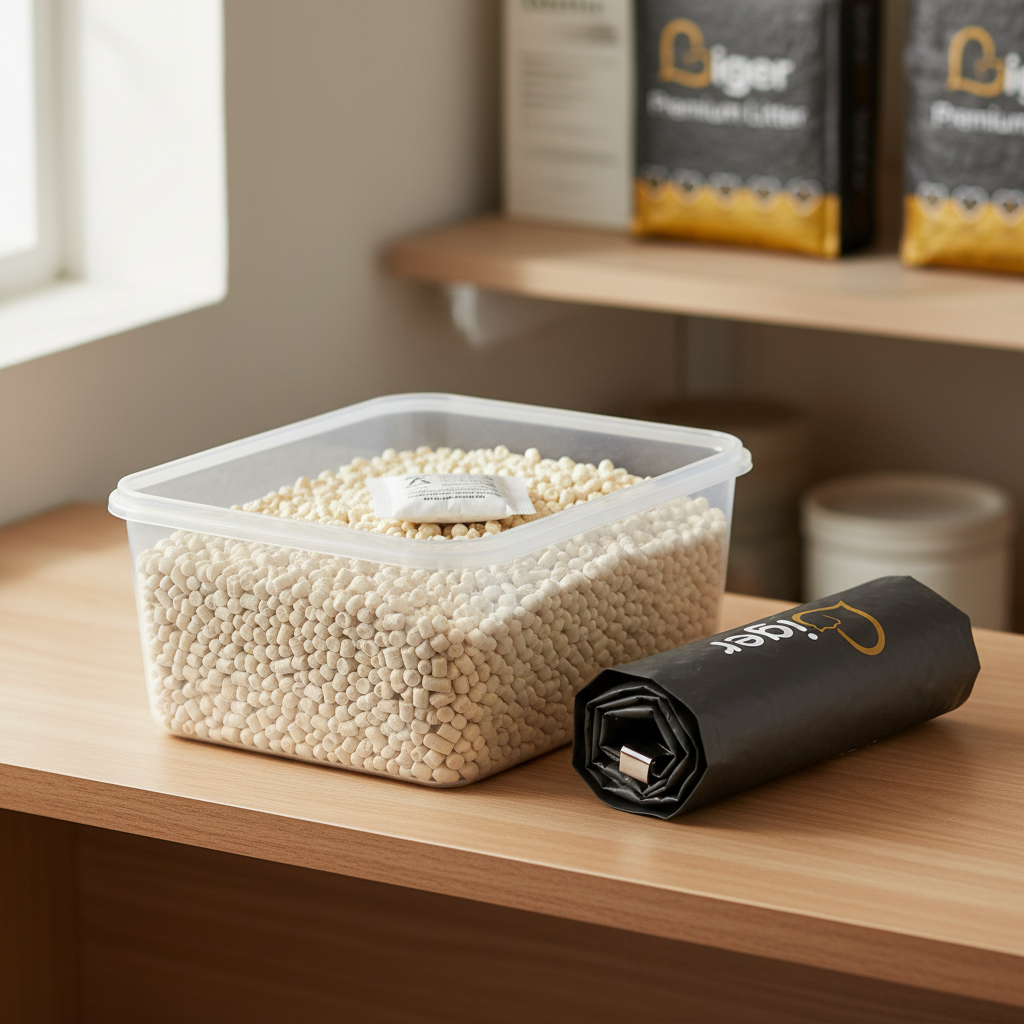
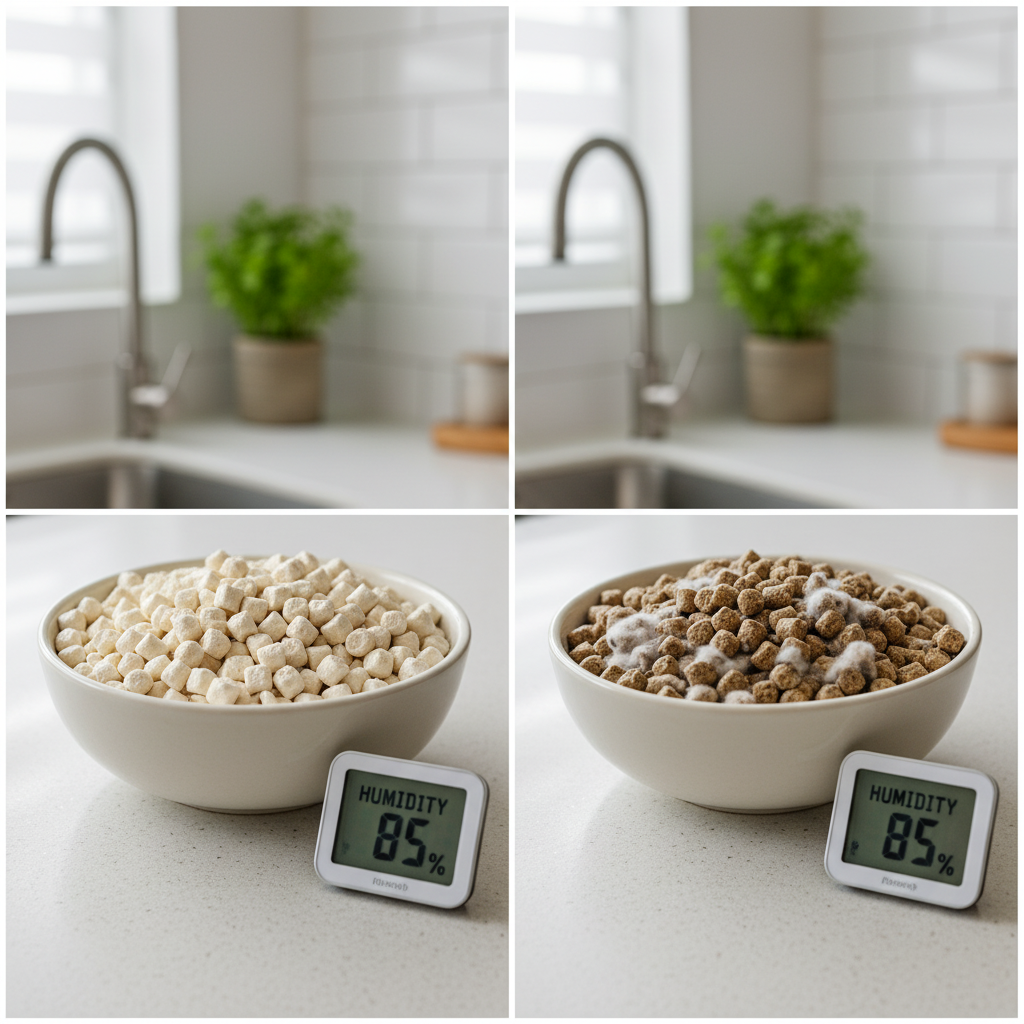
This is the one tip that separates people who love tofu litter from people who quietly trash a half-used bag. Tofu is plant matter. Plant matter in 85% humidity will go soft, then mouldy, then weevil-infested — sometimes in the same week.
What works for us:
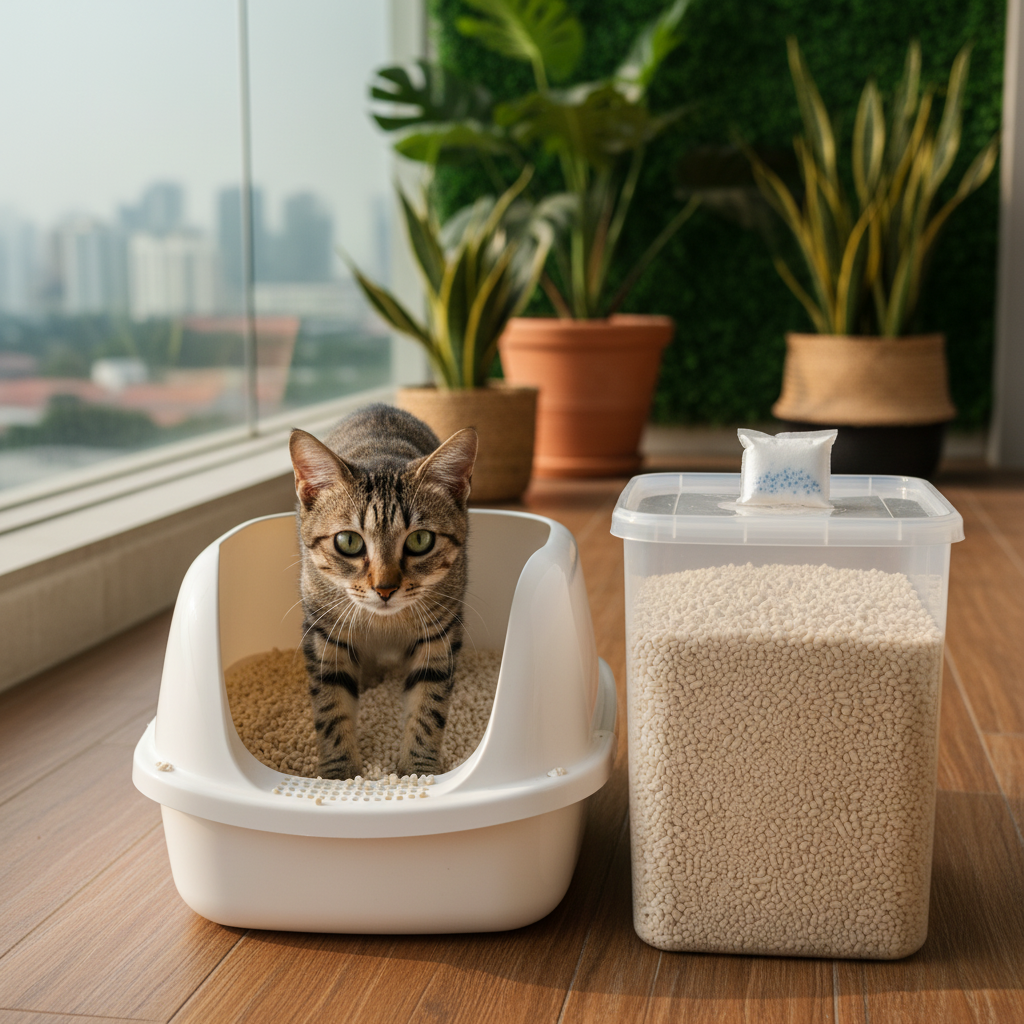
- Sealed container. Transfer the open bag into a clear airtight container the moment you open it. Daiso sells perfectly fine 12L ones for under RM20. Don't trust the original bag's clip — Malaysian humidity will find a way in.
- Dry, ventilated spot. Inside a wardrobe or pantry shelf is great. Under the kitchen sink, beside the bathroom door, or on the service yard floor — all three are common storage mistakes we see and all three trap moisture.
- Throw in a silica desiccant pouch. The little ones that come with shoe boxes work. Replace monthly. This single trick has doubled our bag life during monsoon season.
- Buy in sensible sizes. A 6 kg bag for one cat will get you about 5 to 6 weeks. Bigger isn't always cheaper if half the bag goes off before you reach it.
One signal that something is wrong: if the pellets feel slightly sticky or smell faintly sour when you pour them, that bag is already past it. Don't put it in the box — your cat won't use it anyway.
5. Multi-Cat Households: The Hidden Math
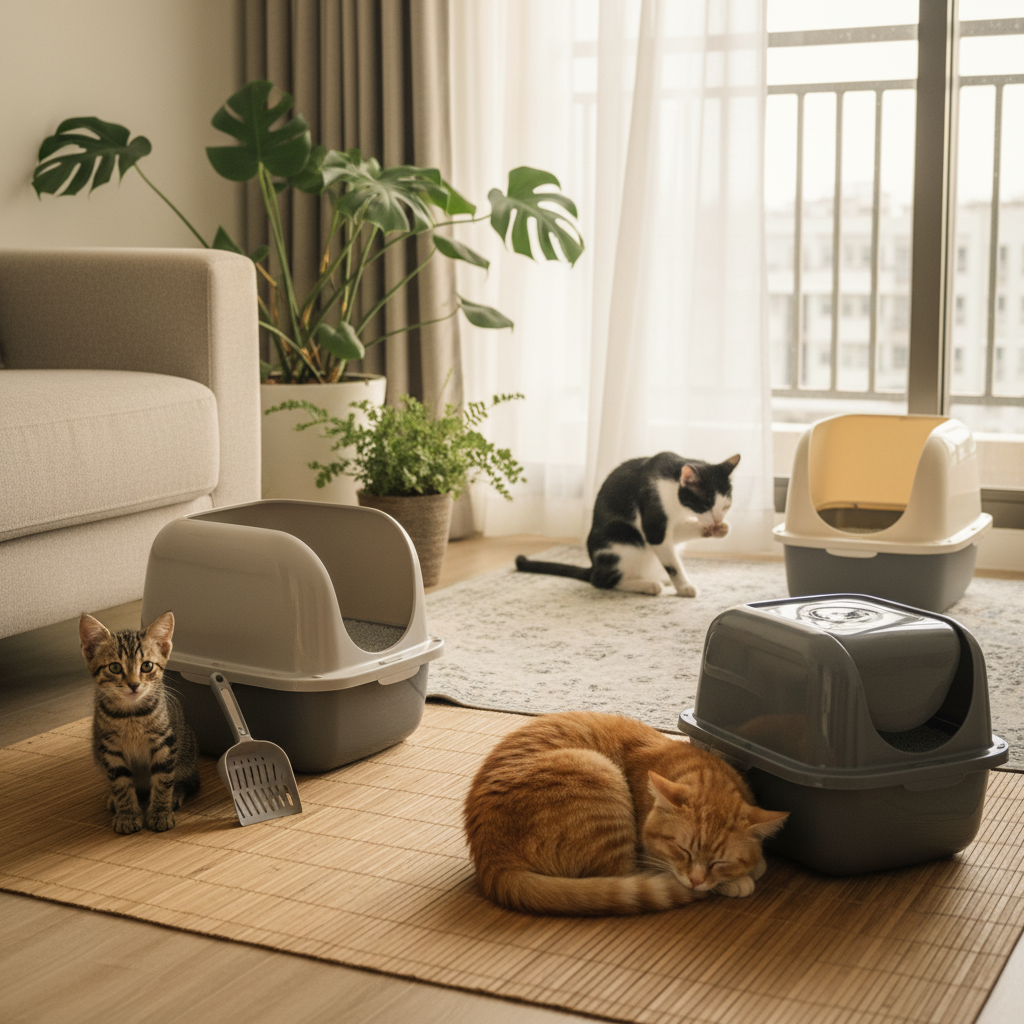
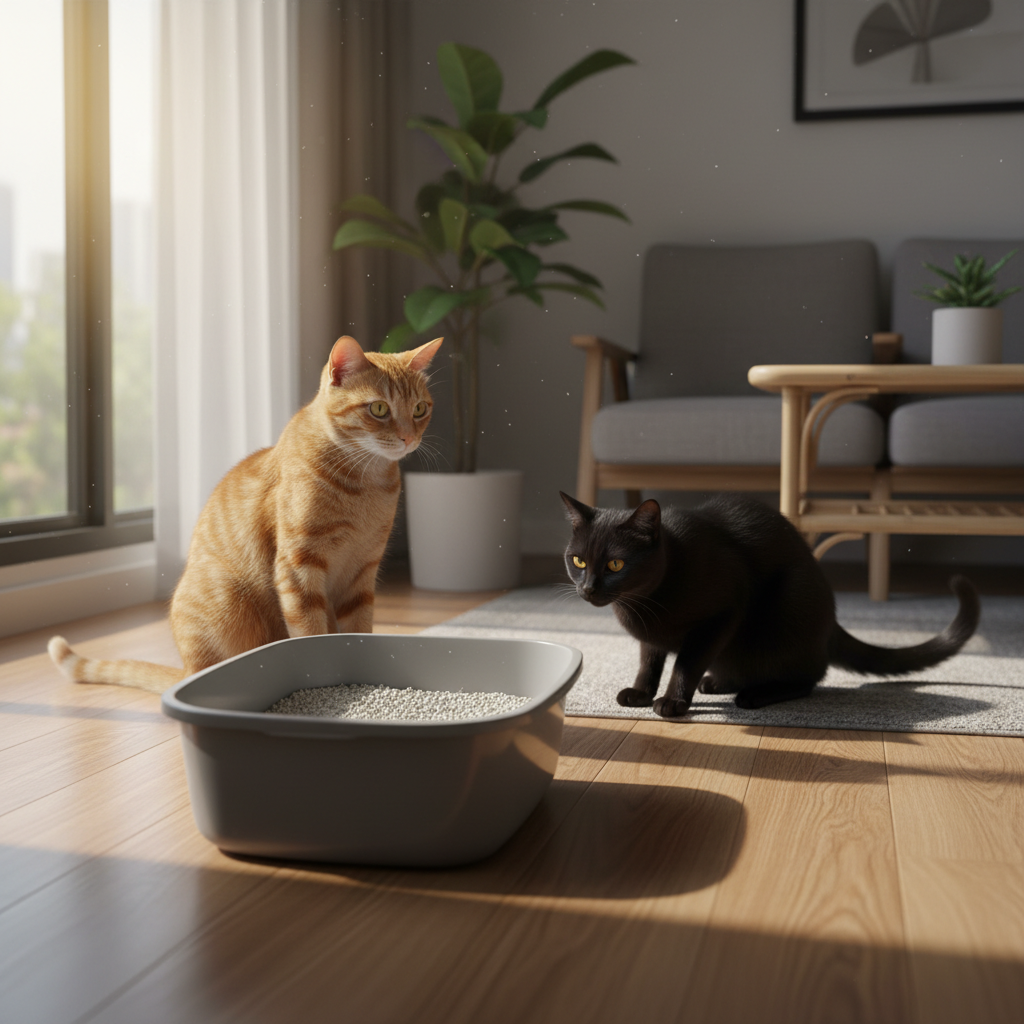
The vet rule of thumb is n + 1 litter boxes for n cats. So for our four (Tiger, Lion, Ping'An, Lucky) the textbook says five boxes. In a real KL apartment, that's not always feasible — we run four boxes across two rooms, and it works because we follow a few extra rules:
- Spread the boxes out. Two side by side counts as one box in a cat's mind. Different rooms, different floors if you have a duplex.
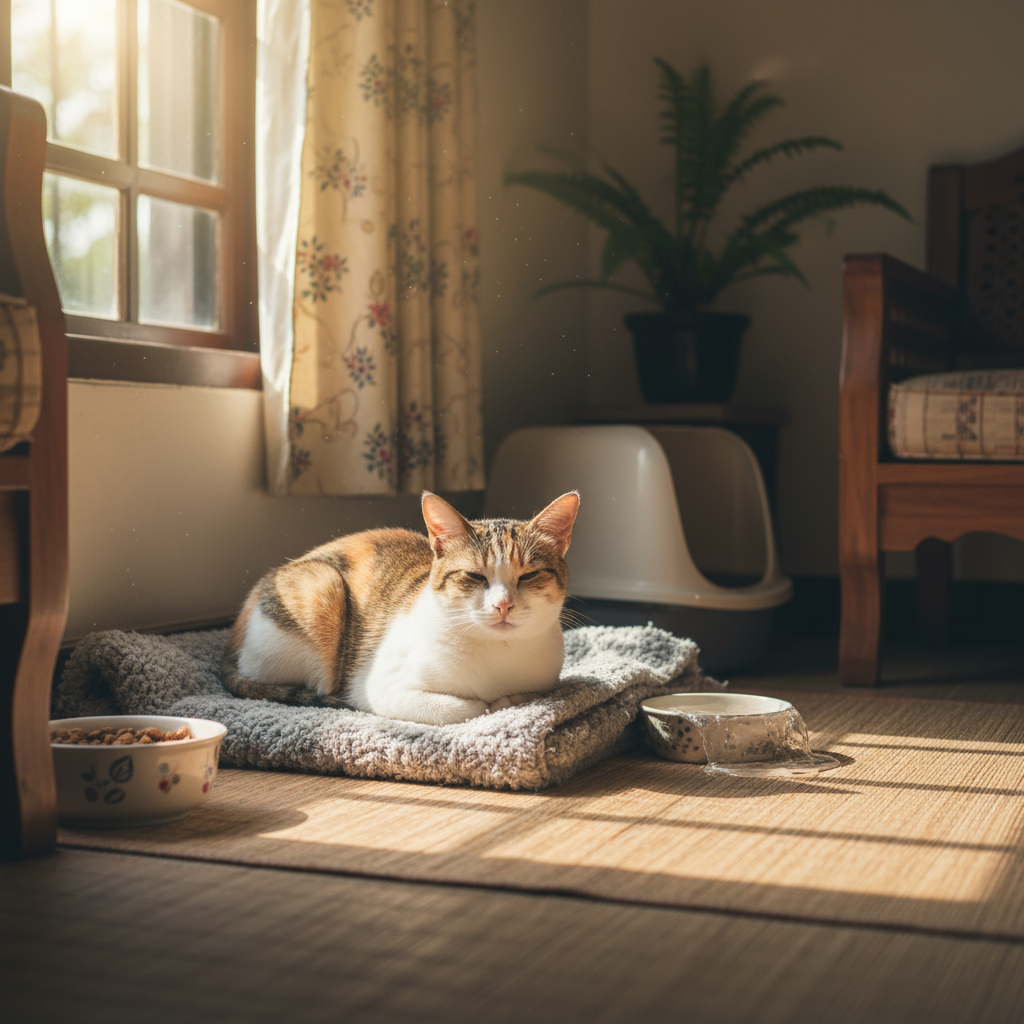
- Resource guarders need their own box. Lucky bullies Tiger at the food bowl, so Tiger has a litter box in our bedroom that Lucky doesn't typically visit.
- Scoop more often, not deeper. A 7 cm bed is plenty even for multi-cat. Going to 10 cm just means more wasted litter when you do the full refresh.
- Watch the quiet cat. The cat who stops using a shared box is often the first sign of stress in the household, not a litter issue.
Multi-cat homes also burn through litter faster, so the storage rules in tip 4 become twice as important. We do a full container audit every two weeks — anything that smells off goes to compost (see tip 6), not the box.
6. Composting After Use — The Eco and Halal Angle
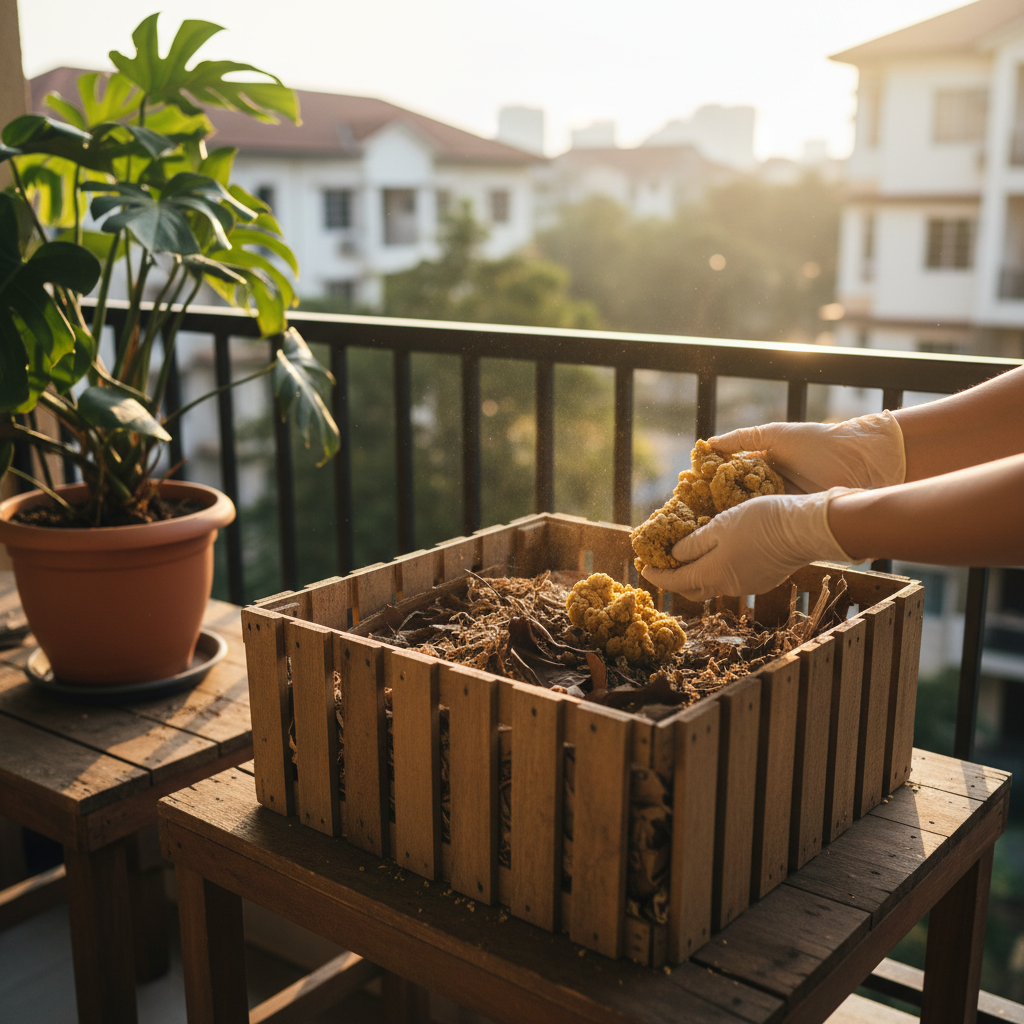
This is one of the genuine wins of switching to tofu, and it's underused in Malaysia. Tofu cat litter is made from soybean pulp (okara) and food-grade starch. Once it has absorbed urine, it can be composted — properly.
The honest version:
- Urine clumps: yes, compostable. Add them to a hot compost pile (the kind that runs above 55°C). Mix with brown material like dry leaves or shredded cardboard at roughly 1:3.
- Faeces: no, not in a regular home compost. Cat faeces can carry Toxoplasma gondii, which a home compost typically won't reach the temperatures to kill. Bag and bin it. This part is just being honest — we don't compost the poop, neither should you.
- For Muslim cat parents: the tofu litter itself contains no animal-derived ingredients, and our milk-scented Liger litter is made with food-grade soy and a vegetal milk fragrance. The handling of urine-soaked litter for plant composting follows the same logic as najis mukhaffafah cleaning — physical removal before use on edible plants, and we'd recommend keeping composted output for ornamentals and fruit trees rather than leafy greens to be safe.
- No garden? Flush sparingly. Tofu litter is marketed as "boleh flush", and small clumps will pass through most KL plumbing fine. But older buildings with narrow risers can clog over time. We flush a handful at a time, never a whole scoop.
The Halal cert and food-grade ingredient list also matter to a meaningful share of Malaysian cat parents, and it's something we built into Liger from the start.
7. Real Mistakes from Real Customers — So You Don't Repeat Them
We've quietly logged the most common usage problems our customers message us about. Here are the patterns, names changed:
- "My cat suddenly stopped using the box on day 4." Nine times out of ten, this is a transition issue — the customer went straight from bentonite to 100% tofu, no mixing. Solution: go back to a 30/70 ratio for three days and try again.
- "The litter has gone soft and smells weird after two weeks." Bag stored on the service yard, no container. Moisture got in.
- "There are tiny moths flying around my litter cupboard." Pantry moths or grain weevils — the bag was opened more than a month ago and stored in a paper pouch. Always transfer to an airtight container.
- "My toilet got blocked after flushing tofu litter." Customer flushed a full week's worth of clumps in one go. Tofu dissolves, but only with enough water. Small handfuls only, and never down a squat toilet.
- "My kitten ate some of the litter." This worries new owners, but food-grade tofu is non-toxic. A few mouthfuls won't hurt. Repeated eating is usually a sign of nutritional gap or pica — check with your vet, and switch the kitten to a less appealing texture if it persists.
- "My senior cat won't squat properly anymore." Often arthritis. Lower the box rim by buying a tray with one cut-down side, and use a slightly shallower bed (4 to 5 cm) so footing is firmer.
Quick Reference: The 7-Day Starter Checklist
- Day 1: 30% tofu, 70% old litter, mixed
- Day 2: 50/50
- Day 3: 100% tofu at 5 to 7 cm depth
- Day 3 onwards: scoop daily (twice if multi-cat)
- Week 1: open the bag, transfer to sealed container with a desiccant pack
- Week 2: first odour check — if ammonia detected, plan a refresh
- End of cycle: compost the urine clumps, bin the poop, refresh the box
One Last Thing
Tofu cat litter rewards a small amount of attention and punishes neglect more obviously than clay does. The upside is real: less dust in your apartment, lighter bags to carry up to the 15th floor, a smaller bin contribution to the landfill, and — if you do tip 6 right — a free soil amendment for your balcony herbs.
If you want to know exactly how many kilograms your household will go through this month, our litter calculator takes 30 seconds. And if you're still on the fence between tofu, bentonite, and pine, the litter comparison tool will save you an hour of Reddit scrolling.
Tiger, Lion, Ping'An and Lucky approve this guide. Mostly. Lucky is currently kicking litter onto the floor anyway, but that's a problem no calculator can solve.