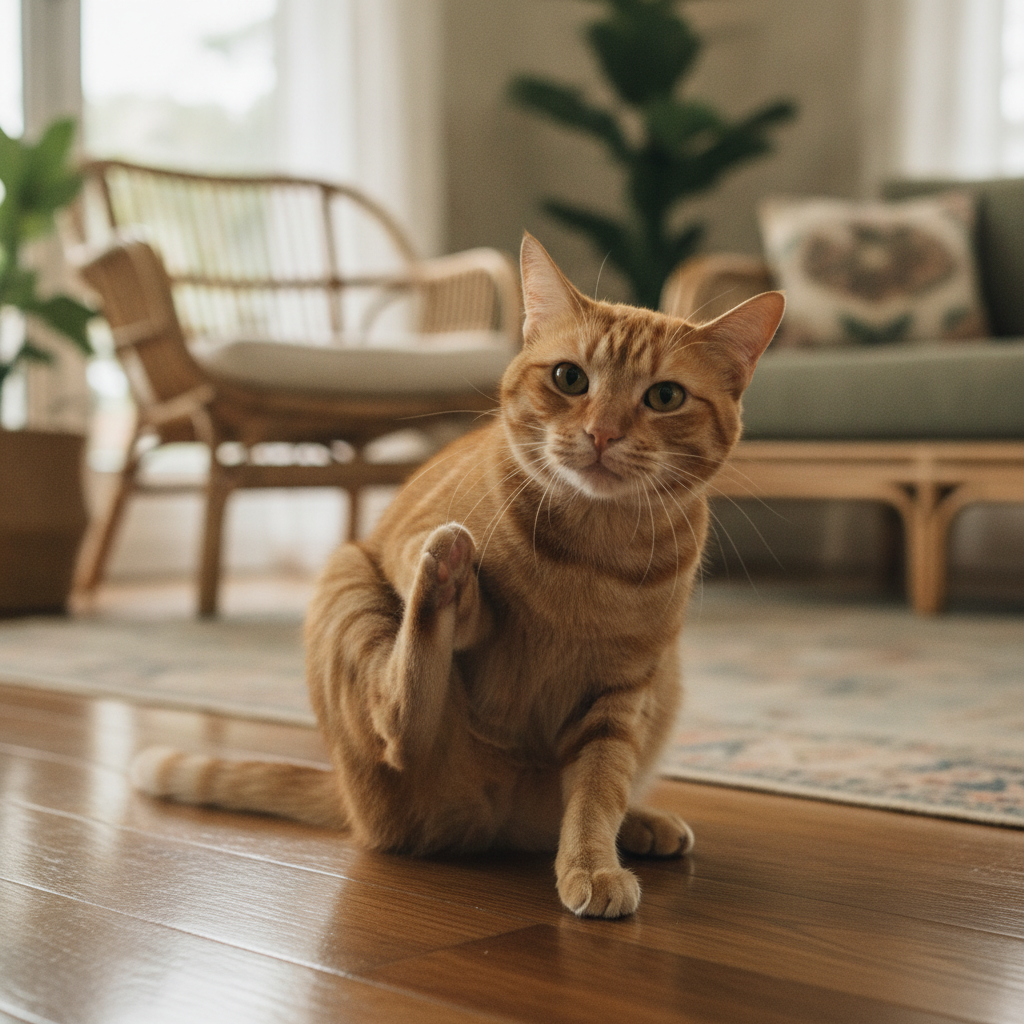
Every cat owner knows the 3am sound: the hack-hack-hack that ends in a damp cylinder of fur on the floor. Hairballs feel like an unavoidable tax on cat ownership — but the right diet, grooming and a bit of vigilance can cut them dramatically, and just as importantly, tell you when a hairball is actually a warning sign. This guide covers how hairball-control food really works, what to look for, and the simple prevention that beats any fancy formula. It sits inside our wider cat nutrition guide; if you're worried about how often yours happen, read it alongside are hairballs normal? first.
What a Hairball Actually Is
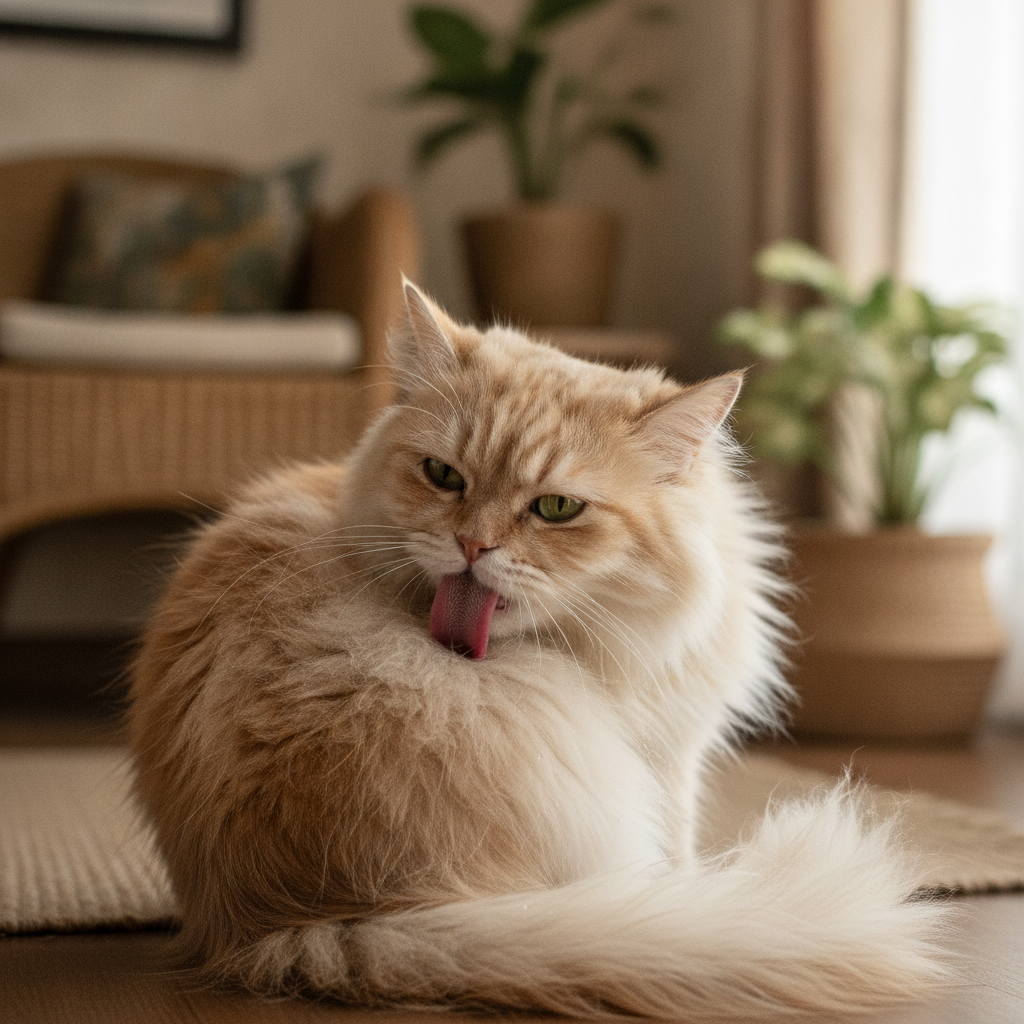
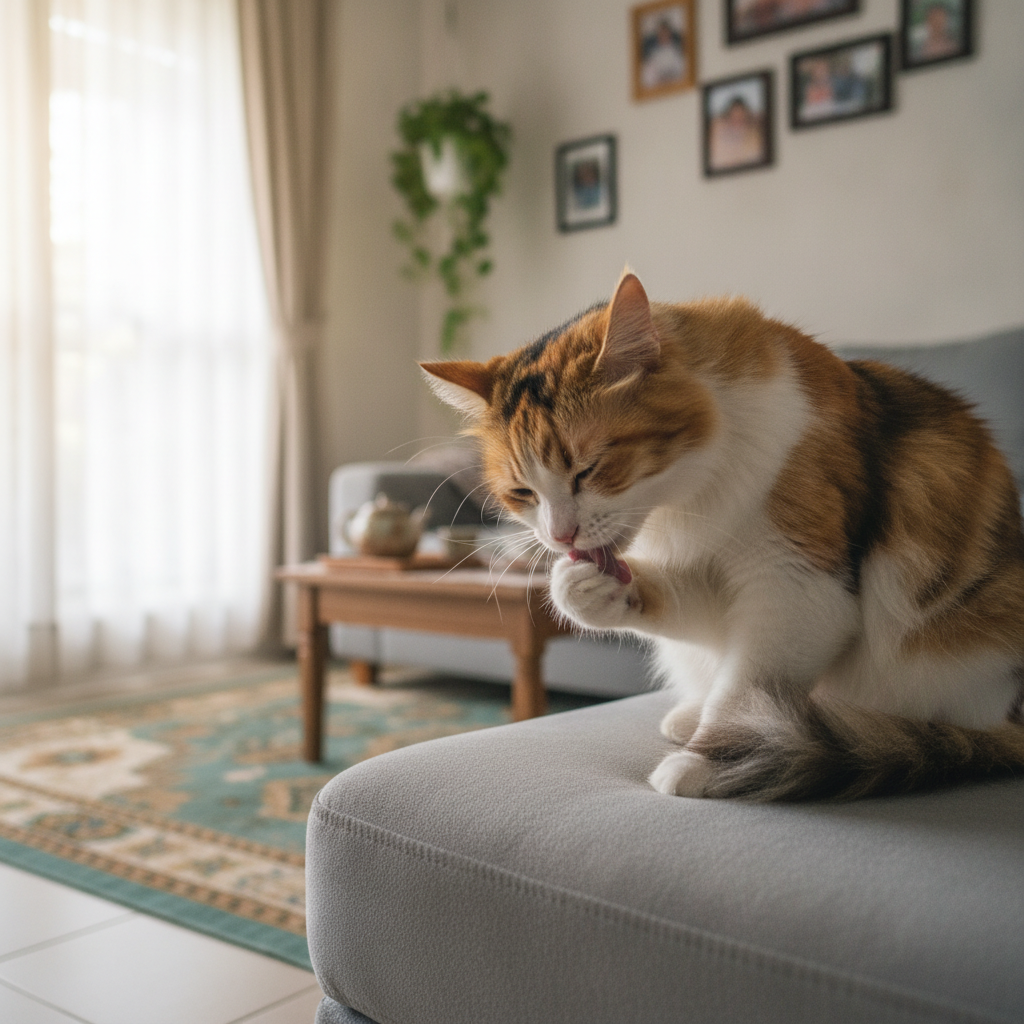
A hairball — properly, a trichobezoar — is a by-product of good grooming. A cat's tongue is covered in hundreds of tiny backward-facing keratin spines (papillae) that work like a comb, catching loose fur. Because those barbs point backwards, the cat can't spit the fur out, so it swallows it. In a healthy gut, that indigestible hair simply passes through and comes out in the stool. A hairball forms when it doesn't: the fur lingers in the stomach, mixes with food and fluid, mats into a mass, and eventually gets retched back up — squeezed into that telltale cylinder shape by the narrow throat on the way out. Long-haired cats and dedicated groomers swallow the most, which is why they're the usual sufferers.
Normal vs Red Flag: When to Worry
Here's the part most people get wrong: frequent hairballs are not normal. One or two a year is fine. But vets increasingly treat hairballs vomited more than once a month as a clinical sign worth investigating, not a quirk. As VCA Hospitals and PetMD note, regular hairball vomiting often points to an underlying problem — slowed gut motility, inflammatory bowel disease (IBD), food allergy or a skin condition driving over-grooming. The MSD Veterinary Manual flags persistent vomiting without a hairball as a particular warning sign. See the vet promptly if you notice frequent retching, vomiting without producing hair, lethargy, appetite loss over 24 hours, constipation or straining in the litter box, a bloated or painful belly, or weight loss — a hairball lodged in the intestine is a genuine emergency. For the difference between a true hairball and a cough, our guide on asthma vs hairballs helps.
Two conditions sit behind most "too many hairballs" cases. Inflammatory bowel disease (IBD) slows the gut so hair lingers and mats instead of passing; tellingly, the vomiting may not even contain hair, and it often comes with chronic diarrhoea or weight loss despite a normal appetite. The Cornell Feline Health Center stresses that short-haired cats vomiting hairballs regularly is an especially strong hint of a primary gut disorder, since they shouldn't be swallowing that much fur. The rarer but graver one is an intestinal obstruction — a hairball stuck in the gut — which shows as repeated vomiting after eating, a hunched painful posture and no stool, and needs the vet immediately. The takeaway: chronic hairballs are a symptom to investigate, not a diagnosis to shrug off.
How Fibre Moves Hair Through the Gut
Hairball-control diets work mainly by getting swallowed fur to leave the other end instead of coming back up. They do it with a blend of two fibres. Insoluble fibre (cellulose, pea fibre) adds bulk that physically sweeps hair along and speeds up gut transit, so it spends less time matting in the stomach. Soluble fibre (psyllium, beet pulp) absorbs water into a gel that lubricates the hair's passage and feeds a healthy gut. The evidence is solid: one study found a diet with 4% added cellulose significantly cut hairball vomiting, and another showed an 11% total-fibre blend of psyllium and cellulose markedly increased the amount of hair long-haired cats passed in their faeces. Some formulas also add a little mineral oil to coat the hair and stop it clumping, though food-based lubrication is gentler than dosing your cat with petroleum-jelly remedies, which can interfere with nutrient absorption if overused.
Omega Oils: Fixing the Coat to Cut Shedding
The second half of the strategy attacks the problem at the source — less loose hair means less to swallow. That comes down to essential fatty acids. Omega-6 (like linoleic acid) maintains the skin's barrier so it stays supple instead of dry and flaky; omega-3s (EPA and DHA, from fish or krill oil) are anti-inflammatory and calm the skin irritation that drives over-grooming. Because cats can't efficiently convert plant omega-3s into usable EPA and DHA, marine sources matter. According to International Cat Care, a healthy skin and coat is the foundation of hairball prevention. A good food aims for an omega-6 to omega-3 ratio of roughly 5:1 to 10:1, and you'll usually see a glossier coat and noticeably less shedding within three to five weeks. We go deeper on shedding itself in why your cat sheds.
What to Look for in a Hairball-Control Food
When you scan a label, you're checking two things: enough fibre, and good fats. As a rough guide from the research:
| Component | Target level | Where |
|---|---|---|
| Crude fibre | 8–10% | Dry hairball formula |
| Crude fibre | 2–4% | Canned hairball formula |
| Omega-3 (EPA+DHA) | ~25–50 mg/lb body weight daily | From diet or supplement |
Remember "crude fibre" on the label undercounts total fibre, so use it only to compare similar products. Named fibre sources (cellulose, psyllium, beet pulp) and a marine omega source are good signs. The same label-reading skills from our how to choose cat food guide apply here, and the food ingredient checker helps you sanity-check a formula. One caveat: a hairball food is still a maintenance diet, so make sure it carries a complete-and-balanced statement for your cat's life stage.
Grooming and Water: The Prevention That Beats Any Food
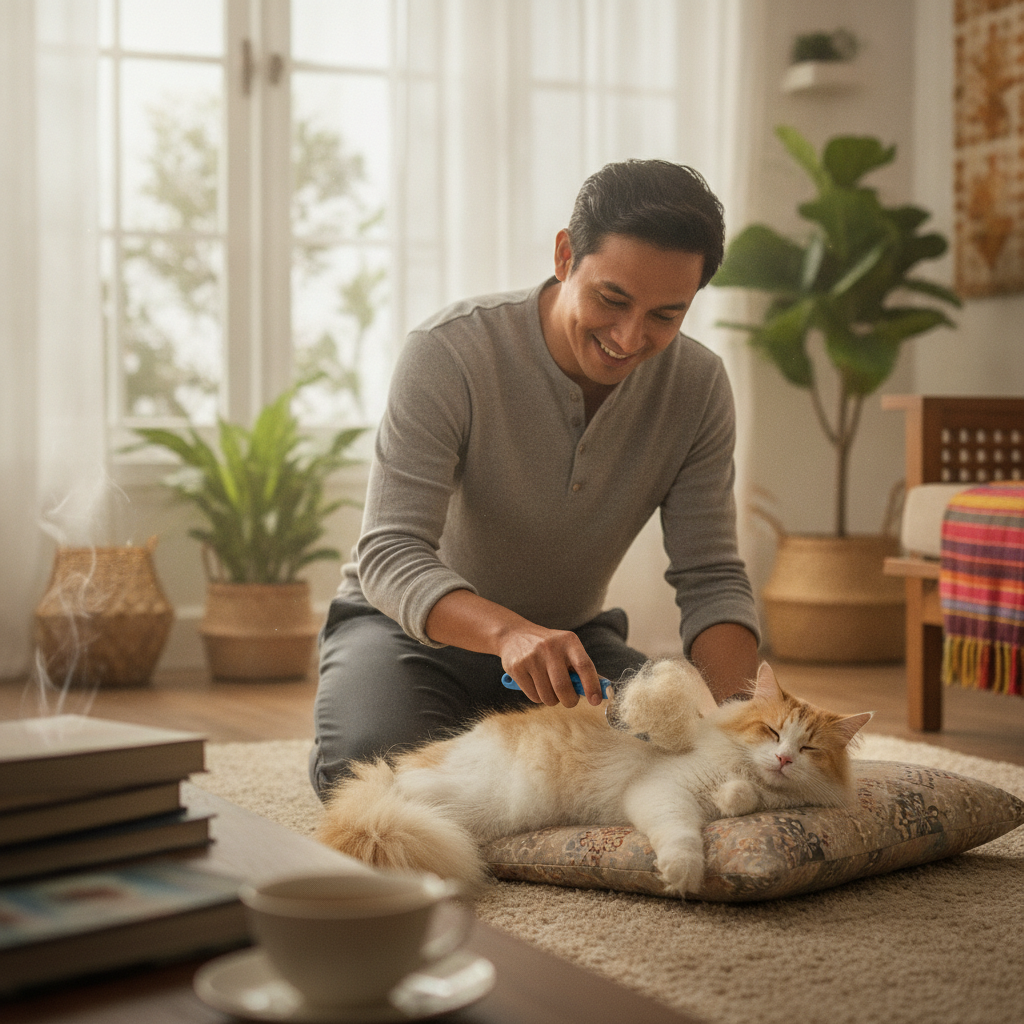
No food beats the obvious: brush the fur out before your cat swallows it. Regular brushing — daily for long-haired cats, a few times a week for short-haired — is the single most effective hairball prevention there is, and it doubles as bonding time. Pair it with good hydration, because water keeps everything moving through the gut; cats need roughly 3.5–4.5 ounces of water per 5 pounds of body weight a day, much of it ideally from wet food given their low thirst drive. Our hydration tips cover how to get more water into a reluctant drinker. Diet, grooming and hydration together do far more than any one of them alone.
Why Malaysia's Climate Makes Hairballs Worse
Cats in temperate countries shed on a seasonal cycle. Ours don't get that break. Malaysia's constant warmth and humidity drive year-round shedding, so there's always loose fur to swallow. Worse, the damp heat encourages skin conditions and irritation that make a cat groom more to soothe itself — and more grooming means more ingested hair and more hairballs. That makes the prevention basics — consistent brushing, a coat-supporting diet, and steady hydration in the heat — even more important here than in a cooler climate. If your cat is grooming a spot raw or its coat looks poor, treat that as a skin issue to investigate, not just a hairball cause.
There's a practical angle too. In an air-conditioned Malaysian condo, all that year-round loose fur ends up everywhere — on the sofa, in the air, and back on the cat as it grooms. Brushing your cat outdoors or by an open window, vacuuming soft furnishings often, and running the diet-and-grooming routine consistently rather than in occasional bursts will quietly do more for hairballs than any single "hairball remedy" gel from the shelf. Think of it as managing the fur before it ever reaches your cat's stomach.
Track Hairballs Through the Litter Box
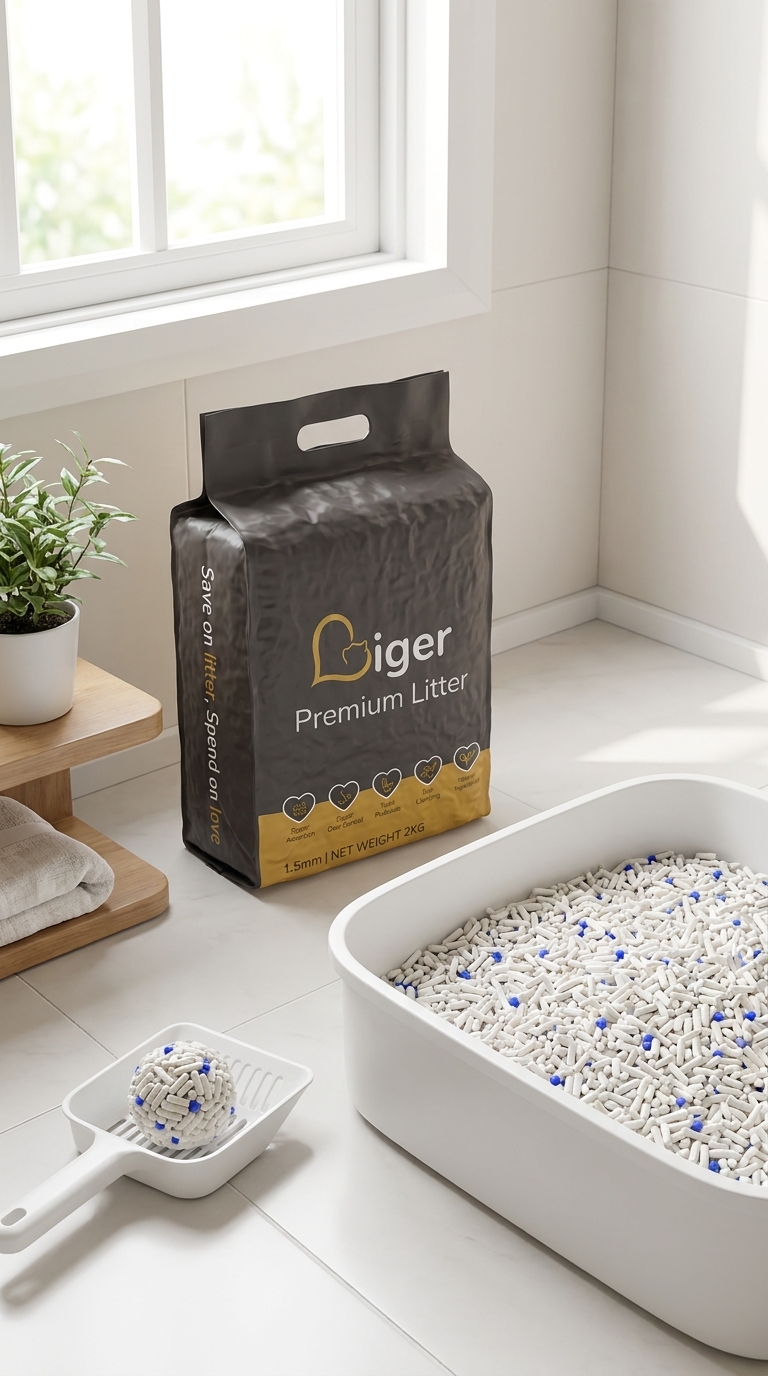
Since "how often" is the number that decides whether a hairball is harmless or a red flag, you need a reliable way to monitor it — and the litter box is half of that picture. The goal of a good hairball diet is to move hair out in the stool rather than up onto your floor, so checking the stool tells you whether it's working: you'll often see fur worked into well-formed faeces, which is exactly what you want. Persistent straining, constipation or no stool at all is a warning sign to act on. This kind of monitoring only works if your litter forms clean, readable clumps and doesn't bury the evidence in dust — which is where a low-dust, firmly clumping litter like Liger Premium Tofu Cat Litter helps: each deposit seals into a scoopable clump you can actually inspect, and the natural plant-starch formula keeps airborne dust down, which is kinder to a cat whose skin or airways are already irritated and over-grooming. A 2 kg pack is RM21.90, or RM8.45/kg on the 10-pack with free Peninsular shipping (current pricing as of 2026); work out your usage with the litter calculator. Combine a fibre-and-omega diet, regular brushing, good hydration and a box you can actually read, and most cats' hairballs become a rare event rather than a weekly clean-up — and you'll spot the warning signs early if they're not.