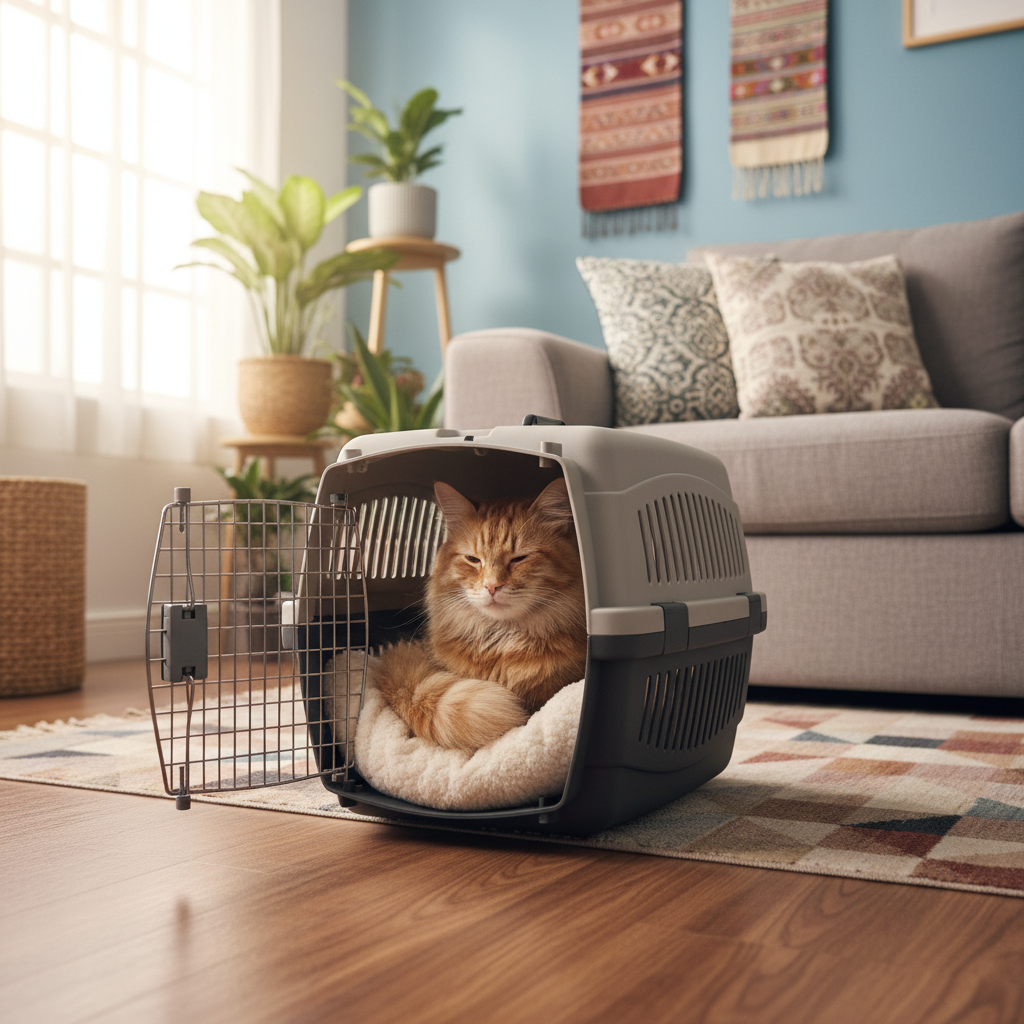
It's one of the most debated questions among Malaysian cat parents, and it splits homes down the middle. In the kampung and in landed neighbourhoods, cats have always come and gone as they please — it's just how it's done. In condos and apartments, cats live strictly indoors. So which is actually right for your cat? The honest answer leans one way, but it's worth understanding why, because the trade-offs are real. Here's a straight look at the dangers, the Malaysian disease numbers, and the practical middle ground — informed by raising Tiger, Lion, Ping'An and Lucky as happy indoor cats.
The Malaysian Dilemma: Kampung Freedom vs Condo Safety
The romantic case for letting cats roam is easy to feel: cats are natural hunters and explorers, and watching a cat patrol its territory in the sun looks like freedom. For generations of Malaysian cats, free-roaming was simply normal. The instinct to defend it is understandable.
But our environment has changed dramatically. The roads are busier and faster, urban density is higher, and the threats a roaming cat faces today — traffic, disease, cruelty, theft — are far heavier than they were a generation ago. A cat that 'just goes out' in 2026 is exposed to a lot more than one did in a quiet kampung decades back. So the question isn't really about freedom versus captivity; it's about how to give your cat a rich, stimulating life while keeping it alive and healthy. And on the keeping-it-alive part, the evidence is lopsided.
The Real Dangers of Letting a Cat Roam
The reason vets and welfare groups increasingly push for indoor or supervised living is simple: the outdoor world is genuinely hazardous for a domestic cat. The big risks here:
- Traffic. Road accidents are one of the leading causes of death for free-roaming cats. A single careless moment near a busy Malaysian road is all it takes.
- Fights and injuries. Territorial cats fight, and bite wounds turn into nasty abscesses fast in our climate — and spread disease (more below).
- Falls. For high-rise cats, an open window or unsecured balcony is lethal. Feline 'high-rise syndrome' — serious trauma from falls is a real and common emergency in Malaysian condos.
- Poisoning. Pesticides, rat poison, antifreeze, and toxic plants are everywhere outdoors, and a roaming cat can't read warning labels.
- Getting lost, stolen, or harmed. Cats go missing, are taken, or are deliberately hurt. Pedigree cats are targets for theft.
- Parasites galore. Fleas, ticks, worms and more thrive in our tropical heat, and outdoor cats pick them up constantly.
None of these are rare freak events — they're the everyday arithmetic of outdoor life. It's why study after study finds indoor cats live significantly longer on average than cats allowed to roam freely.
The Disease Reality in Malaysia (The Numbers)
Beyond accidents, there's an invisible danger that's especially relevant here: infectious disease, much of it spread by outdoor contact and cat fights. The Malaysian numbers are sobering:
- Feline Leukaemia Virus (FeLV) and FIV. A Malaysian study found FeLV seroprevalence around 12.2% in the local cat population. Both viruses are serious — FeLV in particular shortens lifespan considerably — and they spread largely through the saliva and bite wounds of outdoor encounters. As Cornell notes, FIV mainly spreads through aggressive bite wounds, not casual contact — which is exactly what outdoor territorial fights produce.
- Feline Coronavirus (FCoV). Seroprevalence in Malaysian catteries runs as high as 84%. FCoV is widespread and, in a small proportion of cats, mutates into deadly FIP.
- Parasites. A Klang Valley study found a high infection rate of the protozoan Tritrichomonas foetus in stray cats (around 56%) versus far lower rates in pets — a stark illustration of the outdoor parasite load. Liver flukes, worms, and tick-borne diseases round out the picture.
Every unsupervised trip outside is a roll of these dice. Indoor living, combined with keeping core vaccinations current even for indoor cats, dramatically lowers the odds.
But Don't Indoor Cats Get Bored?
Here's where we have to be honest, because the pro-indoor case has a real weakness: a cat shut inside with nothing to do does suffer. Boredom isn't trivial — a lack of environmental enrichment is a root cause of many modern indoor-cat health problems, from obesity to stress-driven illness to behaviour issues like over-grooming and inappropriate elimination.
So 'keep your cat indoors' is only half the advice. The full version is: keep your cat indoors and make the indoors genuinely stimulating. An indoor cat with a barren flat and no engagement is not living its best life — and that's a fair point the free-roaming camp gets right. The good news is that an enriched indoor environment isn't hard or expensive to create, and a well-stimulated indoor cat is both safer and happier than a bored one. Which brings us to the solutions.
The Best of Both: Safe Outdoor Access
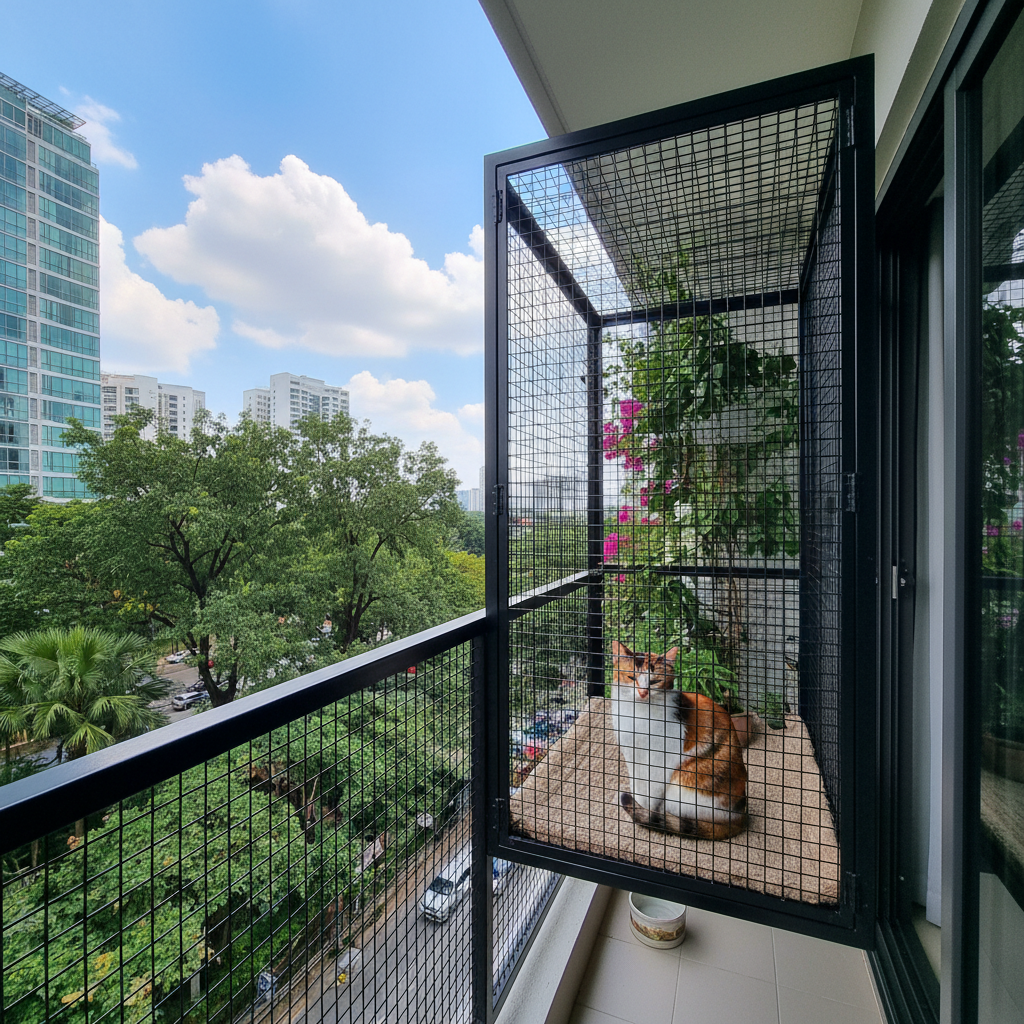
You don't actually have to choose between 'prisoner' and 'free-roaming.' The smart middle ground gives a cat fresh air, sunshine, and stimulation without the lethal risks:
- A secure balcony or 'catio.' Enclosing a balcony with mesh or netting (cat-proofing it) lets your cat lounge outside, watch birds, and feel the breeze with zero risk of falling or escaping. In Malaysian high-rises, this is the single best upgrade you can make — and it doubles as essential fall protection.
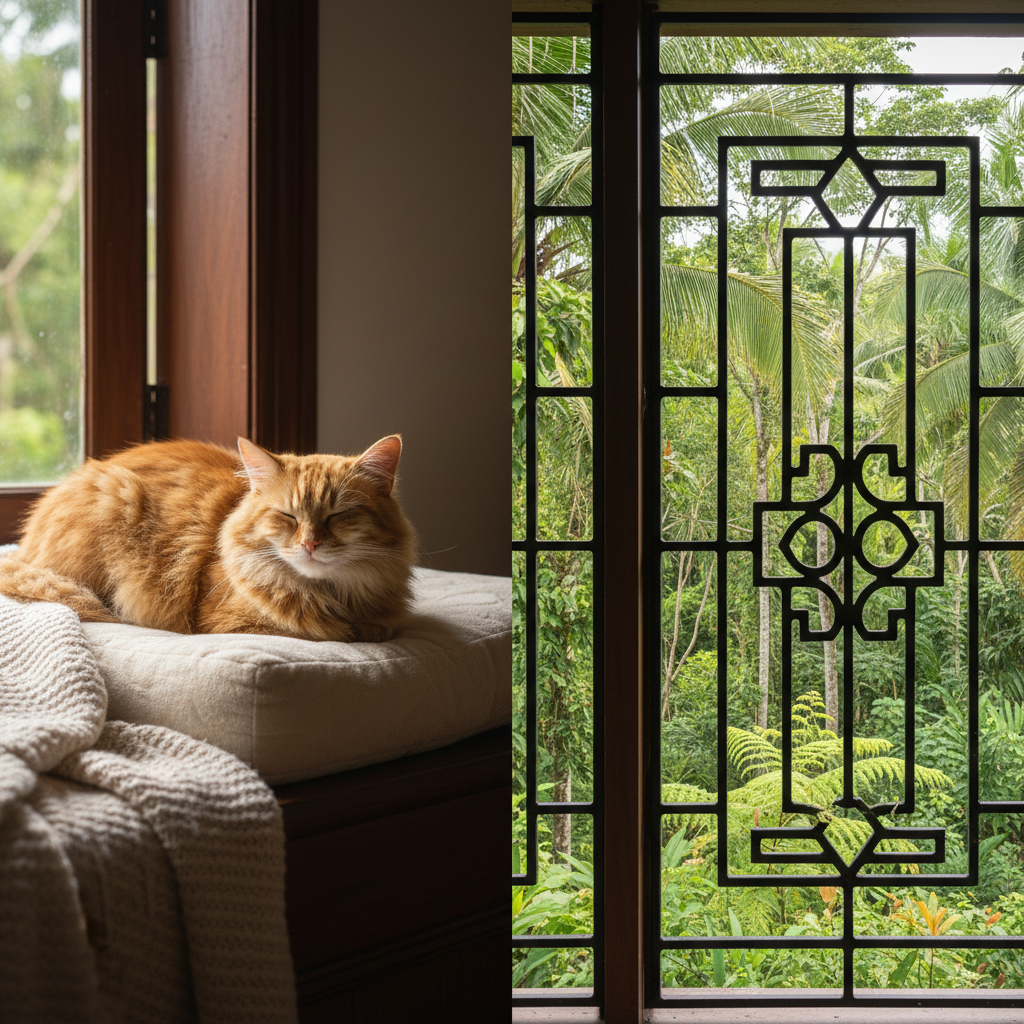
- Window grilles and screens. Secure, well-fitted grilles let windows stay open for airflow while keeping your cat safely in. Non-negotiable for any high-rise cat.
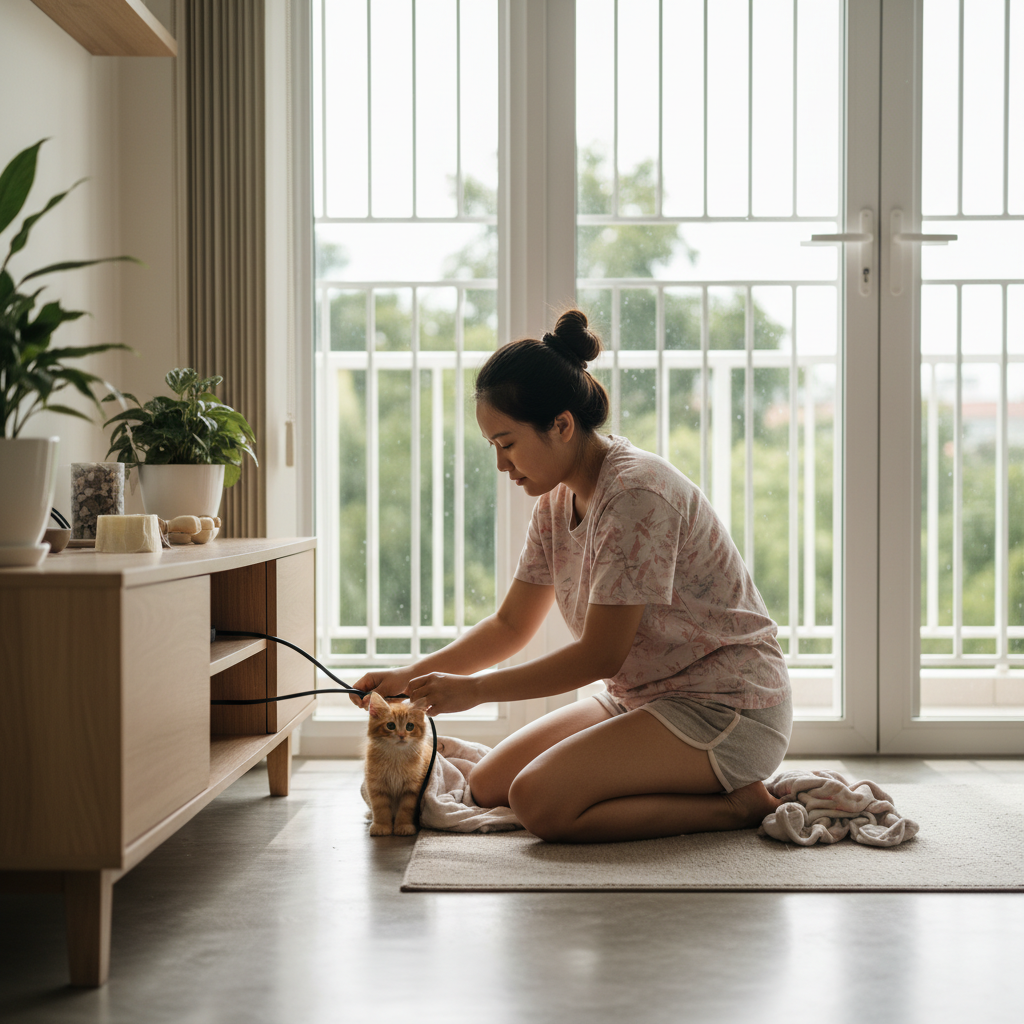
- Leash and harness walks. Some cats happily learn to walk on a harness, getting supervised garden time. Start slow and never leave a harnessed cat unattended.
- A supervised garden. In a landed home, time outside with you watching, ideally in a fenced area, is far safer than free unsupervised roaming.
These options deliver most of the enrichment of the outdoors with almost none of the danger — the genuine best of both worlds.
Making an Indoor Cat Truly Thrive
Commit to indoor living and your job is to bring the stimulation in. The essentials:
- Vertical space. Cat trees, shelves, and high perches multiply your cat's usable territory and let it survey its domain — a core feline need, especially in small condos.
- Daily play. Interactive play that mimics hunting (wand toys, chases) burns energy and satisfies the predator instinct. A few short sessions a day prevents most boredom problems and keeps weight in check.
- Scratching and foraging. Good scratching posts and food puzzles give natural outlets. Our scratching post guide helps you choose.
- A window view. 'Cat TV' — a perch by a (secured) window with birds and movement to watch — is free, endless entertainment.
- And the unglamorous essential: a litter setup it loves. An indoor cat relies entirely on you for its toilet — there's no garden to fall back on. That means enough boxes (one per cat plus one), placed in quiet spots, kept scrupulously clean, with a litter your cat actually wants to use. A low-dust, low-odour litter like Liger tofu litter makes a full-time indoor box pleasant for both of you; size your setup with our litter calculator and see how types compare on our litter comparison tool.
So, indoor or outdoor? For most cats in modern Malaysia, the evidence points firmly to indoor — or safely-supervised outdoor — living: it's the difference between an average lifespan measured in a few hard years and one measured in fifteen-plus comfortable ones. But 'indoor' is a promise, not just a restriction. Keep your cat in, then make 'in' a rich, climbable, playable, bird-watching, clean-litter paradise, and you genuinely give it the best of both worlds: a long life and a full one.