When the pregnancy test shows two lines and there's a cat curled up on your lap, the WhatsApp messages start coming in. Aunties, mother-in-laws, even well-meaning OB-GYNs sometimes say the same thing: "You better give away the cat." It's the most common piece of bad advice pregnant cat owners in Malaysia hear, and it usually causes more stress than it prevents.
Here at Liger we've been through this conversation many times with our customers. We also have Ping'An, our rescue mama cat who came to us pregnant herself, so we've had a front-row seat to what cat-and-pregnancy actually looks like in a Malaysian home. The short version: a well-managed indoor cat is one of the lowest toxoplasmosis risks you'll encounter during pregnancy. The bigger threat is sitting on the satay grill, not on the sofa.
This guide is for Malaysian cat parents — including Muslim families navigating both medical safety and ritual purity (taharah) — who want the actual numbers, the actual rules, and the actual handover plan. No fear-mongering, no "rehome the cat" nonsense.
What is toxoplasmosis, really?
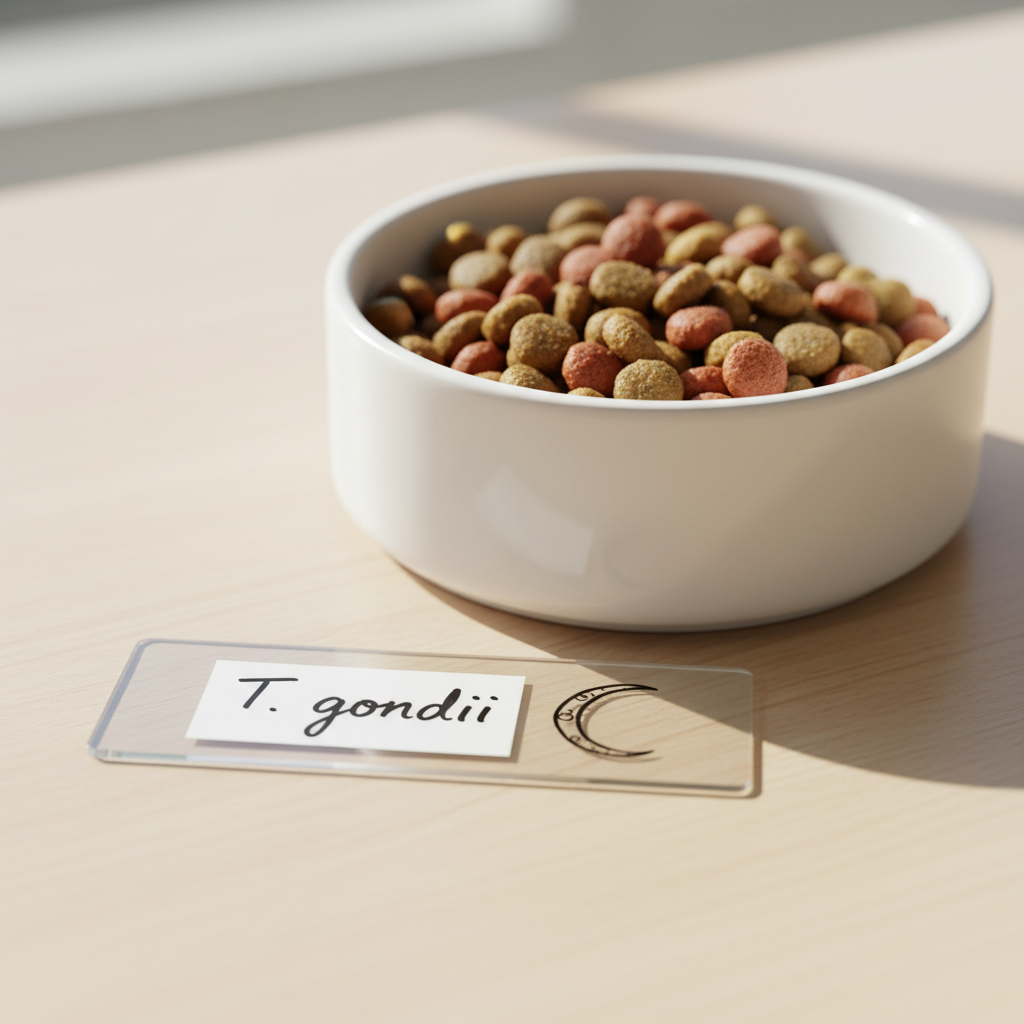
Toxoplasmosis is an infection caused by a single-celled parasite called Toxoplasma gondii. Most healthy adults who catch it never even know — symptoms feel like a mild flu, if anything. The reason it matters during pregnancy is that a first-time infection can cross the placenta and cause congenital problems for the baby, especially in the first and second trimester.
Here's the part nobody explains clearly: cats are the only animals where the parasite reproduces sexually and sheds infective eggs (called oocysts) in their poop. But cats only shed these oocysts once in their lifetime, usually as kittens, for a window of about 1 to 3 weeks after their first exposure (Cornell Feline Health Center). After that, their immune system locks the parasite away and they stop shedding for good.
So if you have an adult indoor cat that has been with you for years, eating commercial cat food, the chance it is actively shedding oocysts right now is close to zero. Ping'An is 5 years old, eats kibble and wet food, never hunts — she is statistically not a toxoplasmosis source. Probably your cat isn't either.
The 24-hour rule (this is the one you actually need to remember)
Even if a cat is in that rare shedding phase, the oocysts in fresh poop are not infectious yet. They need to sit in the environment for at least 24 hours (and up to 5 days) to "sporulate" before they can infect anyone (CDC DPDx, NY State Department of Health).
This is the single most important sentence in this whole article: if you scoop the litter box every single day, the oocysts get thrown out before they can become a threat. That's it. That's the whole prevention strategy.
The real risk numbers — cat litter vs nasi lemak ayam goreng
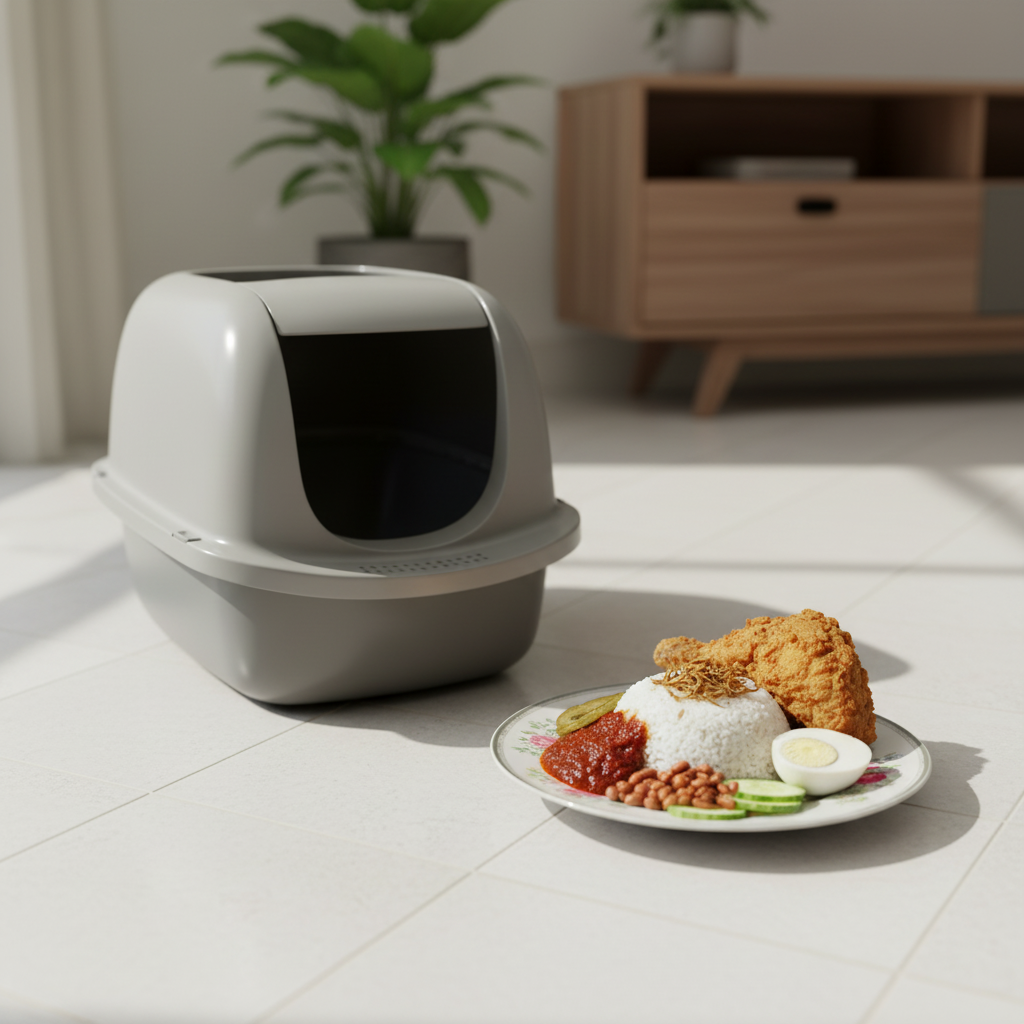
This part will surprise you. In Malaysia we eat a lot of mixed-doneness meat — satay, ayam percik with slightly pink centres, kerabu, raw oyster at hotpot, beef tartare at Western places, rare lamb chops. Undercooked meat is the single biggest toxoplasmosis vector for adults worldwide, including in Malaysia.
A landmark European multicentre study found that 30% to 63% of toxoplasmosis infections in pregnant women came from undercooked or cured meat. The same study found no statistically significant link between infection and simply having contact with cats (Cook et al., BMJ Multicentre Study). A Norwegian study put real odds ratios on each risk factor:
- Eating raw or undercooked mutton: odds ratio 11.4
- Not washing kitchen knives after raw meat: odds ratio 7.3
- Cleaning the cat litter box: odds ratio 5.5
- Eating raw or undercooked pork: 3.4
- Eating unwashed raw vegetables or fruits: 2.4
Cleaning the litter box is on the list — we're not pretending it's zero — but it's lower than eating that satay where the inside is still pink. The CDC explicitly says "people are more likely to get [toxoplasmosis] from eating raw meat or from gardening" than from a pet cat.
Malaysia-specific data: what UM and UKM actually found
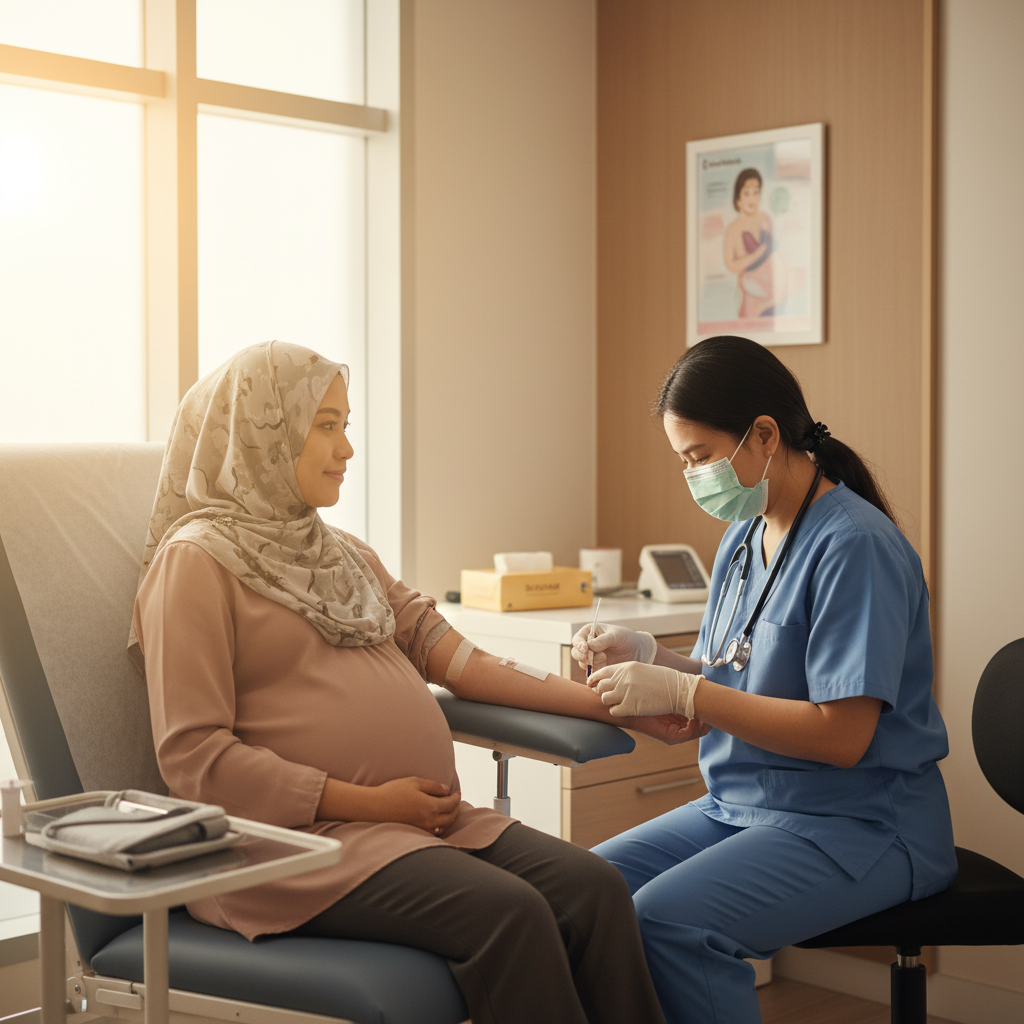
The seroprevalence of Toxoplasma gondii antibodies among Malaysian pregnant women is genuinely high — meaning a meaningful percentage of local mums have already been exposed at some point. University Malaya Medical Centre (UMMC) studies have logged rates ranging from 27% in the 1970s up to 49% in a 2003 cohort and around 34.7% in a 2019 study (Nissapatorn et al., UMMC review).
Important nuance: antibodies mean past exposure, not active infection. If you were exposed before pregnancy, your immune system has already neutralised the parasite and your baby is safe — that exposure actually protects you. The danger is a first-time infection during pregnancy. That's why some Malaysian OB-GYNs include a TORCH panel (Toxoplasma, Other, Rubella, CMV, Herpes) in your first-trimester bloods. If you've never been screened, ask. It's a single blood draw and the result changes how worried you need to be.
Malaysia doesn't yet have a national mandatory screening programme (KKM Perinatal Care Manual notes universal screening is "not cost effective"), so it's up to you to bring it up at your antenatal visit.
Who should not be cleaning the litter box
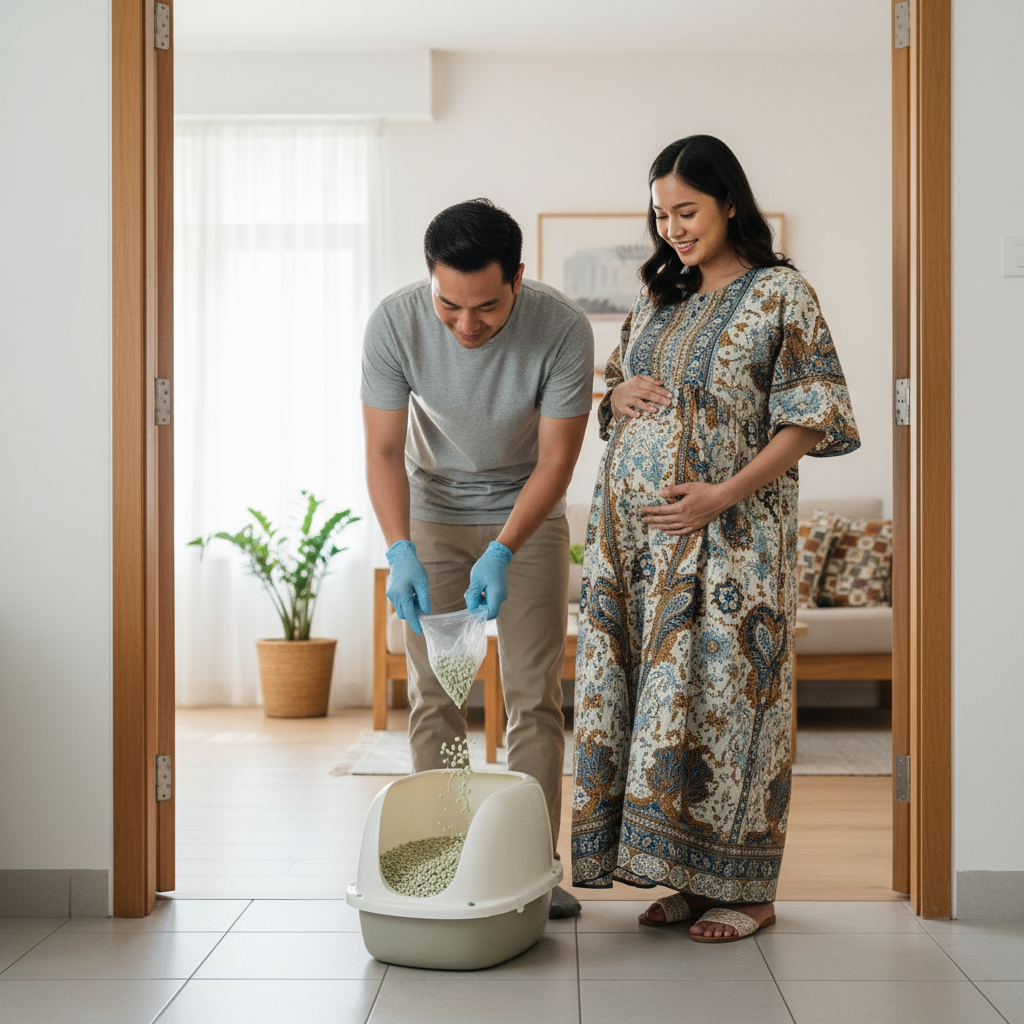
This list is short and firm:
- Anyone pregnant, especially in the first 20 weeks
- Anyone trying to get pregnant in the next month
- Anyone immunocompromised (chemo, organ transplant, advanced HIV, on biologics for autoimmune disease)
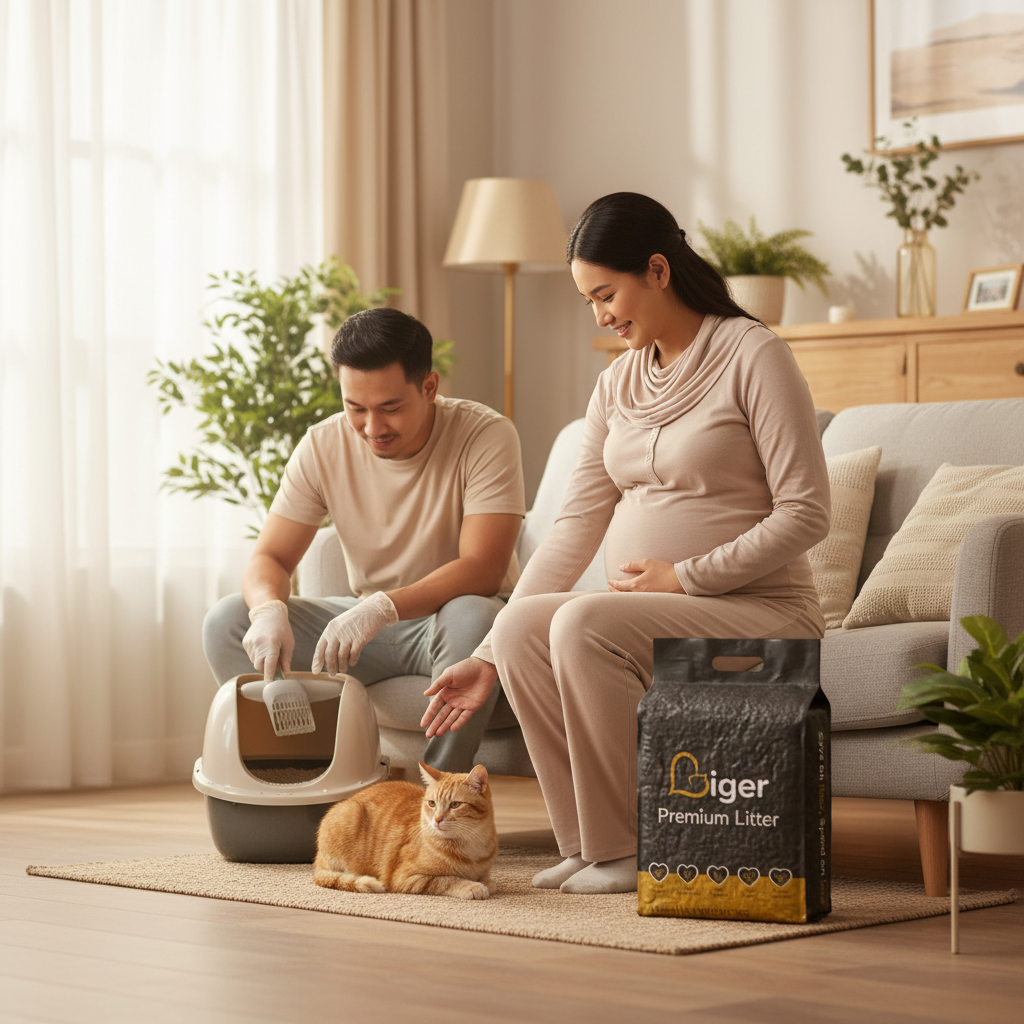
If you fall into any of these categories, the answer is the same: delegate it. Your spouse, your housemate, your maid, your sibling — anyone in the house who is not in the above list can do it. This is not a "nice to have", this is the most useful single change you can make.
The handover conversation — what to actually say
"Sayang, the doctor said I can't clean the cat litter while I'm pregnant. Can you scoop every morning before work? Just once a day, takes two minutes." That's it. Most partners do not realise this is a thing until you tell them. Make it explicit, make it daily, make it theirs until baby is born and breastfeeding is stable.
For Malaysian families that have a domestic helper, this also goes on her checklist — with gloves provided and a clear briefing that the scoop happens every single day, not "when she remembers."
If you genuinely have no other person — the protocol
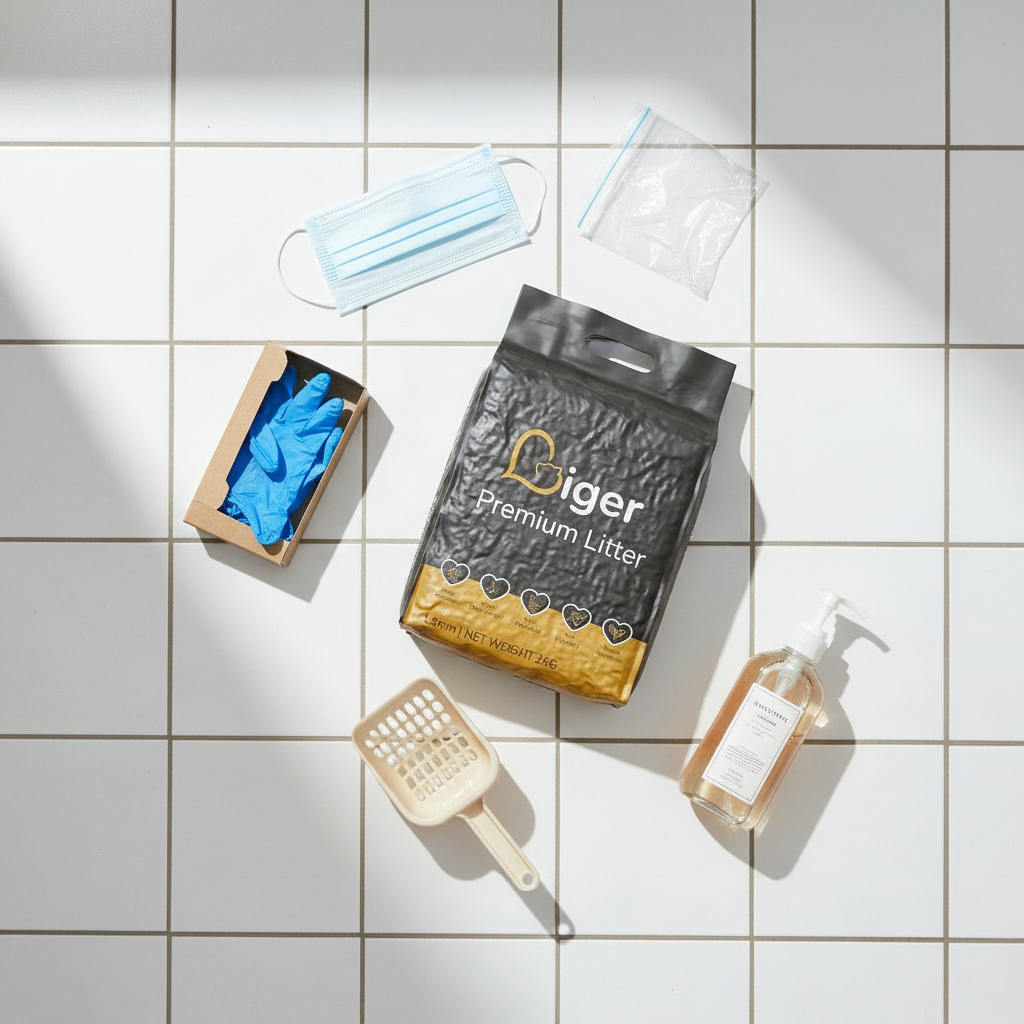
Some readers are single mums, some are pregnant while a spouse is offshore or overseas, some have housemates who are also pregnant. In that case, here's the safe DIY method:
- Wear disposable gloves every single time. Buy a box of 100 at any pharmacy for under RM15.
- Wear a mask. A regular surgical mask is enough. This prevents accidentally inhaling dust that could carry sporulated oocysts if any old waste was missed.
- Scoop daily, no exceptions. Set a phone alarm at the same time every day. This is the rule that does 90% of the work.
- Bag and seal the waste in a small plastic bag before it goes in the bin.
- Wash hands for 20 seconds with soap and warm water afterwards. Even with gloves on — gloves can have invisible tears.
- Don't deep-clean the box yourself. Save weekly box-emptying and washing for a non-pregnant household member. If nobody is available, postpone deep cleans, scoop more frequently instead, and consider switching to a flushable litter that just needs topping up.
The Halal angle: najis, prayer, and Muslim cat owners
For Muslim readers, there's an extra layer that has nothing to do with toxoplasmosis: ritual purity. The Prophet Muhammad (peace be upon him) famously loved cats, and in the Shafi'i school of Islamic jurisprudence — the school followed by most Malaysian Muslims — the cat itself is considered ritually pure (tahir). You can pet your cat, let it sleep on the prayer mat between prayers, even share certain food situations with it without breaking purity.
What is classified as impure (najis mutawassitah, medium-level impurity) is cat urine and faeces (SeekersGuidance Fiqh answer). This is the same category as human waste — cleanable, manageable, not a reason to remove the cat from your home.
Pre-prayer cleansing if you've handled the litter box
- Remove the physical waste fully.
- Wash the affected area (skin, clothes, or floor) with clean flowing water until the colour, smell, and any visible trace are gone. Scholars note that three washes is generally more than sufficient.
- Perform wudu as normal before prayer.
The case is much more relaxed than for dogs (which under the Shafi'i school require the special seven-wash sertu cleansing including soil-water). For cats it's just normal washing with water (Muslima Coaching: purification rulings for household cats).
If you have a flushable tofu litter like ours, the most najis-prone moment — handling damp clumps — is shortened because the clumps go straight down the toilet. Less direct contact, less surface to cleanse.
Why flushable tofu litter helps during pregnancy
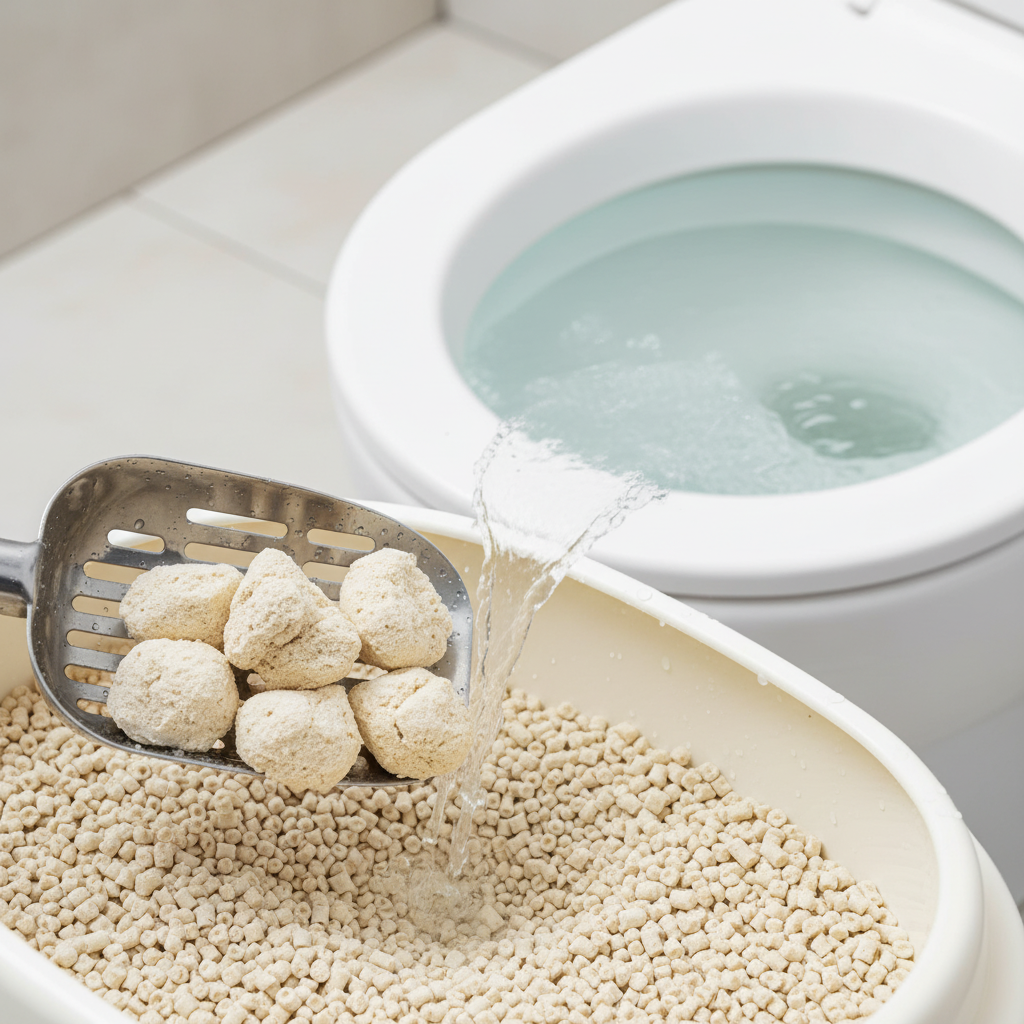
This isn't a sales section, but the practical reality is that tofu cat litter has two pregnancy-friendly properties bentonite clay litter doesn't:
- Less dust. Bentonite is notorious for fine silica-bearing dust (PMC study on bentonite silicosis). Tofu litter is essentially a food-grade plant by-product. When you're already wearing a mask to be safe, less airborne dust is genuinely better.
- Flushable disposal. Small amounts can go down the toilet (Malaysia's IWK sewerage system handles plant-based clumps fine). For Muslim households, flushing the clumps directly is the cleanest disposal route — minimal handling of najis material, no bin handling, no aerosolisation.
If you're trying to set up a low-friction pregnancy-safe litter routine, switch to a low-dust flushable litter before the bump gets in the way of bending down. You can compare options using our litter comparison tool.
By trimester — what to watch for
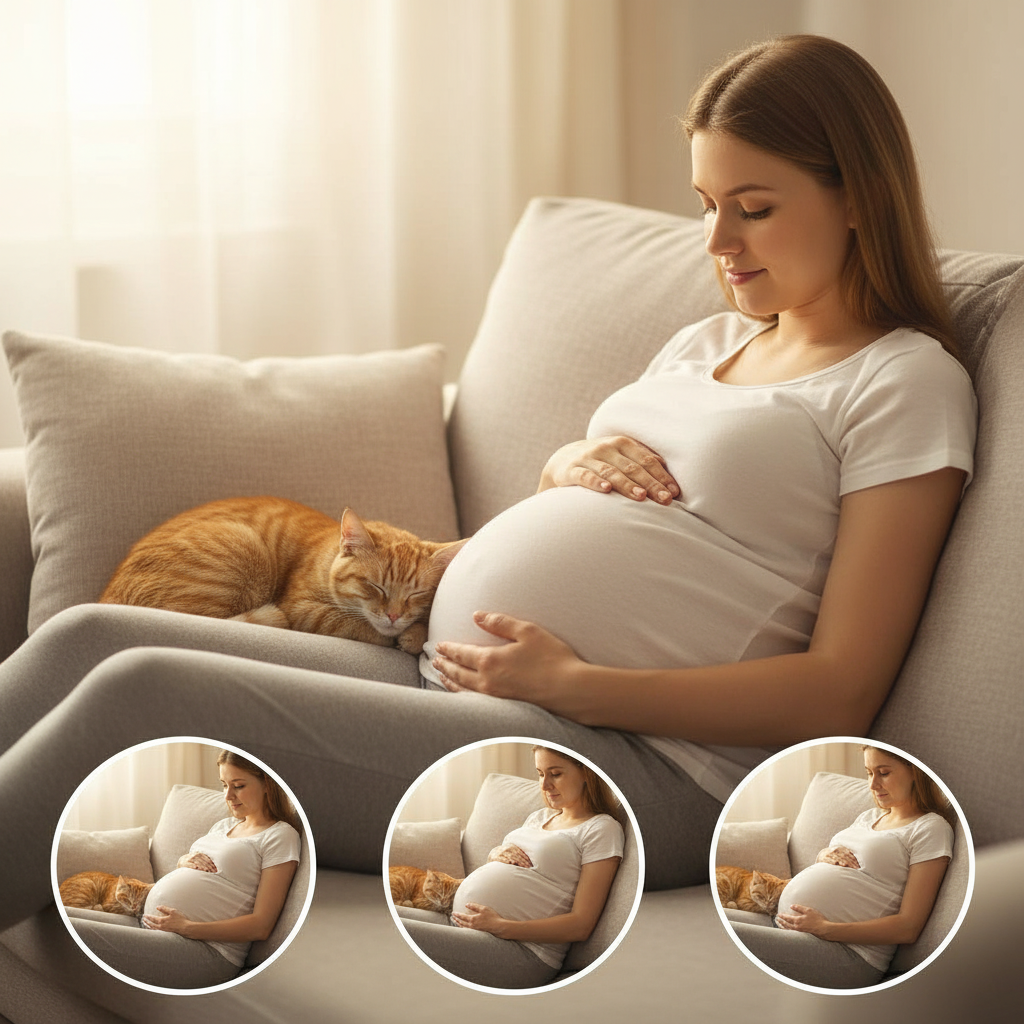
Pre-conception and first trimester (weeks 1-13)
This is when a new T. gondii infection is most dangerous for the baby (highest miscarriage risk, though lower transmission rate to fetus than later in pregnancy). Get your TORCH bloods done. Hand over litter duties from day one. If your cat is a kitten or newly adopted (with unknown vaccination/health history), this is also the right time to take it for a vet check — discuss whether a Toxoplasma serology test on the cat is appropriate. Use our cat pregnancy calculator if your cat is also pregnant (Ping'An was when she came to us, so we know the timing chaos personally).
Second trimester (weeks 14-27)
Transmission risk to the fetus rises but severity of any infection generally decreases. Keep all the same precautions. Pay attention to any flu-like symptoms — fever, swollen lymph nodes, fatigue beyond normal pregnancy tiredness. Mention any to your OB-GYN.
Third trimester and postpartum (weeks 28+)
Highest transmission rate to the baby if you do catch it, but most infections at this stage cause milder congenital outcomes. Continue the same hygiene. Start thinking about the baby's room: keep the litter box away from where baby will sleep, crawl, or play. Ideally on a different floor, in a laundry area or bathroom, with the door reachable only by the cat.
Setting up the home for cat + baby
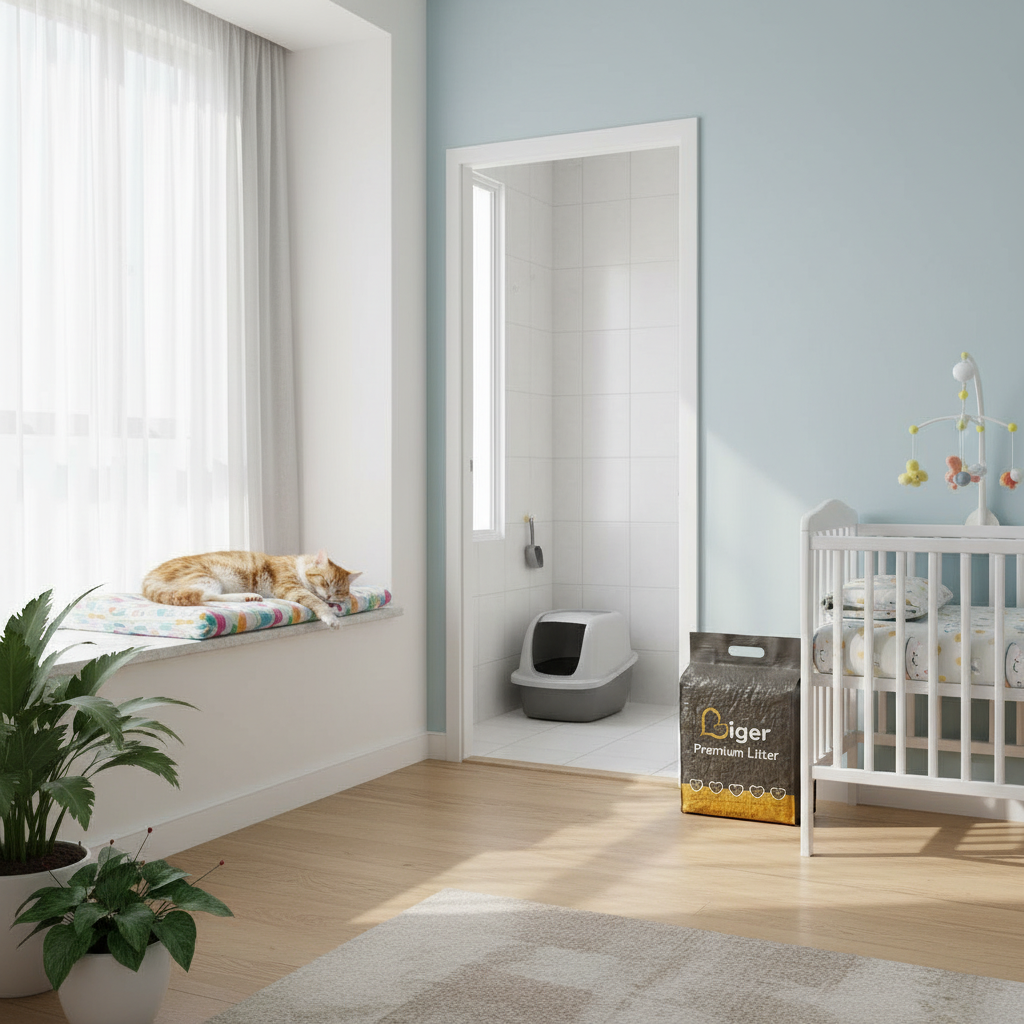
A few practical Malaysian-home tips when you're prepping for newborn arrival:
- Move the litter box gradually, weeks in advance. Cats hate sudden change. If the current box is in the master bathroom, shift it 1 metre per week toward its new permanent location (laundry yard, guest toilet, store room). Sudden moves cause inappropriate elimination, which makes the new-baby phase a nightmare.
- Use a baby gate or mesh door on the nursery once baby comes home. Cats are not interested in baby breath the way old wives' tales say, but they may want to nap somewhere warm — and that should not be the cot.
- Continue regular vet check-ups for the cat. A healthy, vaccinated, parasite-checked cat is the safest cat. While you're at it, run our cat urinary health checker if you notice any litter habit changes — stressed cats sometimes signal stress through urinary issues.
- Don't let the cat eat raw meat. No raw chicken necks, no raw fish, no "BARF diet" experimentation during your pregnancy. Stick to commercial cooked food. This eliminates the cat's main route to a fresh T. gondii infection.
When to call the OB-GYN vs the vet

Call your OB-GYN if you:
- Have flu-like symptoms (fever, swollen glands, body aches) that don't fit a normal pregnancy cold
- Have been bitten or deeply scratched by a cat that has unknown vaccination history
- Realise you've been cleaning the litter box for weeks without knowing the rules and want a TORCH serology
- Have eaten obviously undercooked meat at a restaurant and want a precautionary check
Call your vet if you:
- Have a young cat (under 1 year) with diarrhoea or unexplained illness — they're the most likely shedders
- Suspect your cat is hunting or eating prey (geckos, mice, birds) at home
- Want a Toxoplasma serology test on the cat itself
- Notice litter box habit changes that might signal stress or illness during the household transition to a baby
The bottom line
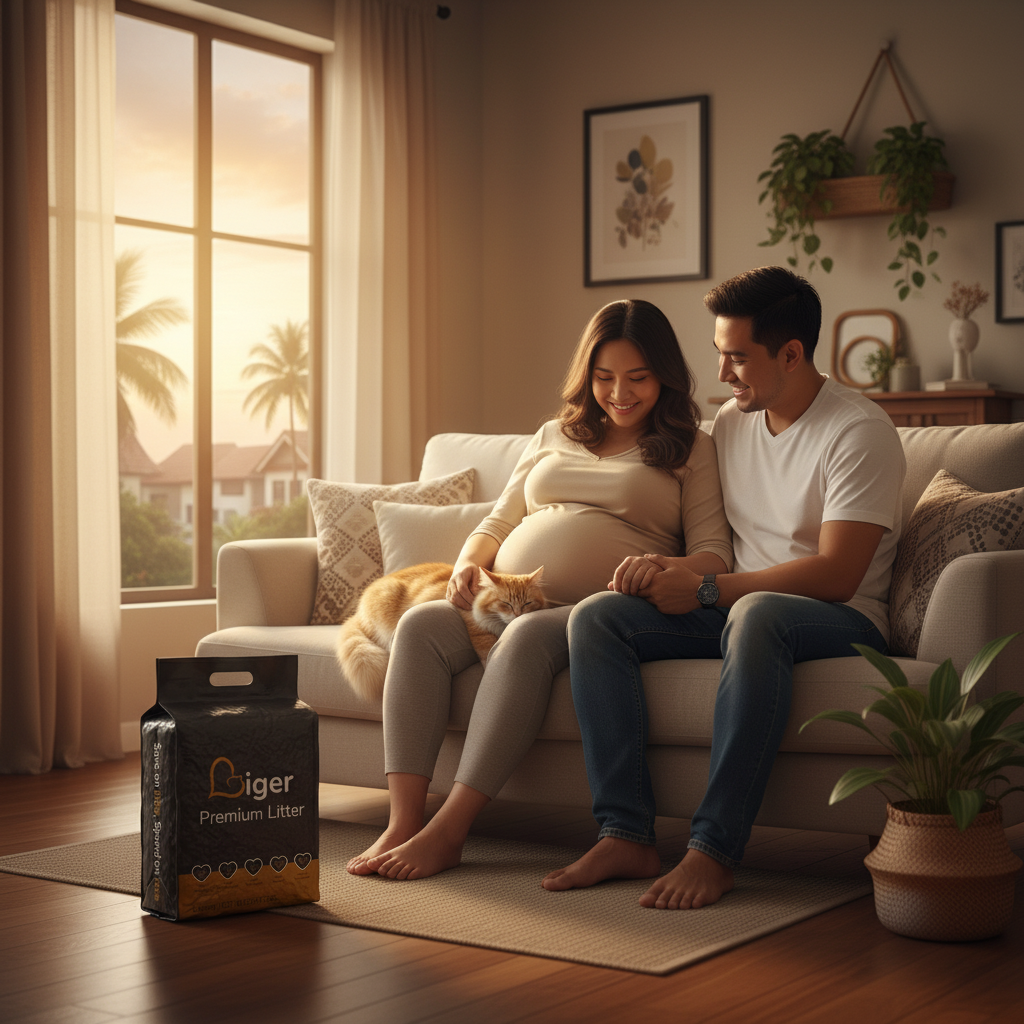
You don't have to give up your cat. The data, the international medical bodies, every reputable veterinary college, and Islamic scholarship in the Shafi'i tradition all agree: a well-managed indoor cat is compatible with a healthy pregnancy and a halal home. The two things that matter are (1) someone else scoops daily, and (2) you don't eat undercooked meat.
Ping'An came to us pregnant. We learned all of this in real time, with two pregnancies happening in the same house — hers and a friend's. Everyone, human and feline, came through it healthy. So can you and your cat. The aunties can relax.