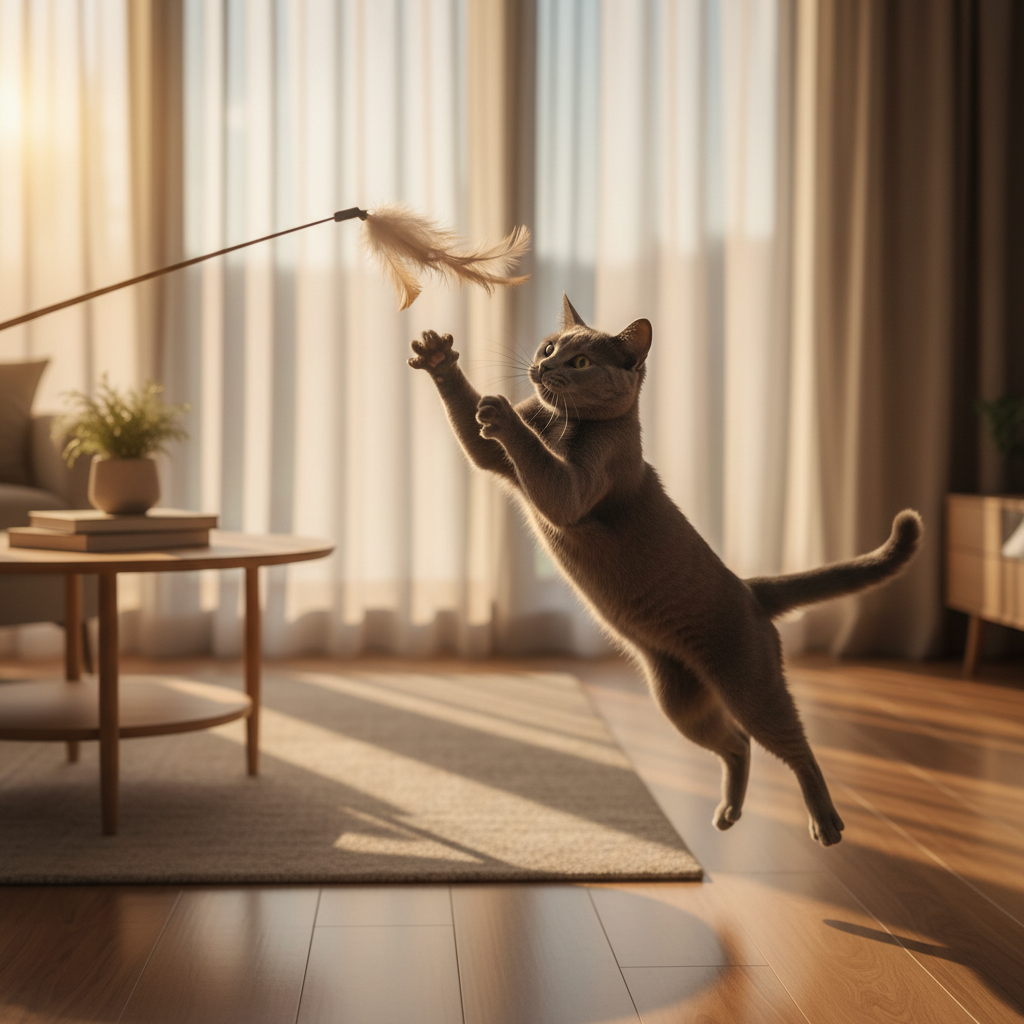
A satisfying play session must mimic the full 6-step predatory sequence: Stare, Stalk, Chase, Pounce, Kill Bite, and Eat.
Laser pointers can cause anxiety if not ended with a physical toy 'catch' and a treat.
Identify your cat's 'Hunter Typology' (Birder, Mouser, Bugger, or Wrestler) to buy the right toys.
Avoid toys with button batteries or strong magnets which are life-threatening if swallowed.
I just watched my cat stare at an RM80 automatic feather spinner for three seconds before walking away to chew on a plastic bread tie. It’s insulting, right? You spend the money, you do the research, and they choose literal trash.
But here’s the thing: cats aren't being ungrateful. They’re biological machines designed for a very specific type of 'work' called hunting. Most toys fail because they break the 'Predatory Sequence.' If you’ve ever felt like your cat is just 'lazy' or getting depressed and unmotivated, the problem might not be the cat—it’s the game.
The 6-Step 'Urge' You Need to Satisfy
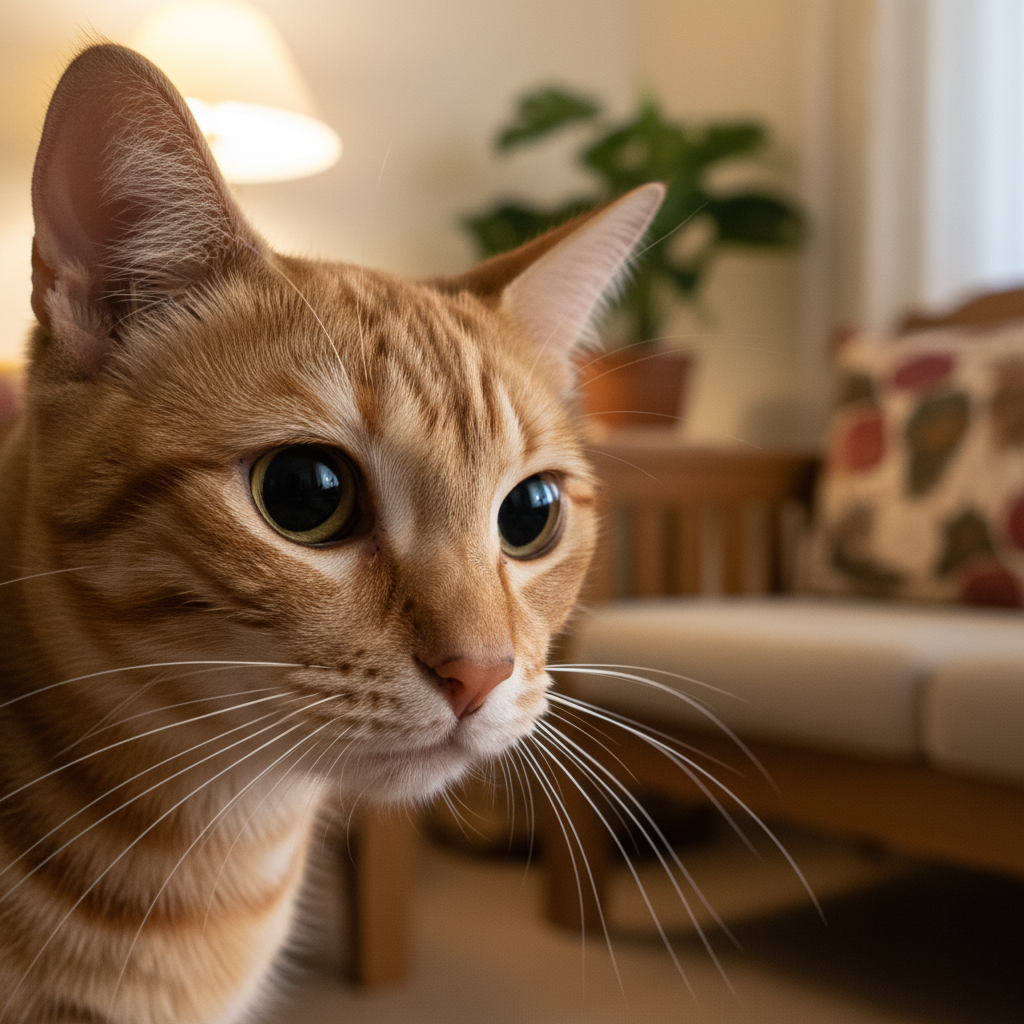
In the wild, a cat doesn't just run. They follow a rhythmic cycle. If you skip steps, your cat gets frustrated. This is why laser pointers are controversial—they provide the 'Chase' but never the 'Catch' or 'Kill,' leaving the cat’s brain stuck in a dopamine loop that won't close.
To fix this, your play sessions need to include:
Stare & Stalk: Hide the toy behind a sofa corner. Let them wiggle their butt.
Chase & Pounce: Fast, erratic movements.
Kill Bite: Let them actually grab the toy and bunny-kick it.
Eat: Give a treat or dinner immediately after play.
If you're not sure how your cat likes to hunt, our Cat Toy Matcher can help you find their specific style.
| Phase | Behavior Description | Neuro-physiological Mechanism | Toy Design Implication |
|---|---|---|---|
| 1. Stare | Cat lowers body, pupils dilate, head subtly adjusts for triangulation, whiskers forward to sense air currents. | Visual cortex highly active, dopamine secretion begins to rise, preparing for impending burst. | Toys must be able to "stop" or "move slightly". Continuous frantic movement is unrealistic and prevents the cat from locking on. |
| 2. Stalk | Utilizes environmental cover (sofa, curtains), slowly and silently approaches the target. | Extremely high muscle tension control, adrenaline levels rise. This is a critical period of psychological strategy. | Play environment needs obstacles (tunnels, boxes). Toys should appear and disappear at the edge of vision, not directly in front of the cat. |
| 3. Chase | Explosive anaerobic movement, short-distance sprint, sharp turns. | Stored energy released instantly, fast-twitch muscle fibers work at full capacity. | Toys need unpredictable trajectories. Uniform motion (e.g., robot vacuum) fails to stimulate chase instinct. |
| 4. Pounce/Grab | Body leaps or lunges forward, front paws extend to hook the target. | Tactile feedback is crucial. Cats need to confirm the physical sensation of "capture". | The fatal flaw of laser pointers is the lack of this step. Must provide physical toys for the cat to grab, otherwise the dopamine circuit cannot close. |
| 5. Kill Bite | Biting the prey's neck (simulating spinal cord severance), vigorous bunny kicks with hind legs, intense head shaking. | Peak release of aggression. Specific neural impulses drive the cat to deeply destroy the object. | Toys must be durable and appropriately sized. Too small risks swallowing, too large won't trigger the bite. |
| 6. Eat | Tearing and consuming the prey. | The ultimate reward of hunting. Eating triggers the parasympathetic nervous system, lowering heart rate and entering a "grooming-sleep" mode. | Food reward (treats or meal) must be provided immediately after play to complete the physiological cycle. |
Which 'Hunter' Lives in Your Living Room?

Every cat is different. Some are 'Birders' who love things flying high. Others are 'Mousers' who want to dig things out from under the fridge. If you buy a wand toy for a cat that prefers tiny bugs on the floor, they won't play. It's like giving a football to a swimmer.
Check your cat's personality with our Cat Personality Quiz to see if they lean more towards high-energy hunting or subtle, tactical play.
| Hunter Type | Behavior Profile | Play Psychology | Recommended Toys |
|---|---|---|---|
| The Birder (Sky Hunter) | Light-bodied, well-developed hind leg muscles. Masters of vertical space, always looking up. Hunts birds or flying insects. | Craves interception, predicting flight paths for aerial capture. | Da Bird (and similar wand toys with rotating feathers), Go Cat Catcher (steel wire wand for erratic aerial movement), wall-mounted spring toys. |
| The Mouser (Ground Dweller) | More grounded, mimics hunting rodents or reptiles. Enjoys squeezing into tight spaces, digging, and hooking with claws. | Concealment and surprise attack. Highly sensitive to ground friction sounds. | Cat Dancer (wire with paper pieces for erratic ground movement), Hexbug Nano (vibrating robotic bug for unpredictable floor movement), sisal balls, real fur toys. |
| The Bugger (Insect Terminator) | Extreme focus on tiny objects. May ignore large toys but stare at a tiny ant for half an hour. Excellent vision, sensitive to high-frequency micro-movements. | Visual tracking and fine manipulation. | Cat Charmer (ribbon wands mimicking snakes/worms), laser pointers (use correctly: guide to physical toy + treat). |
| The Wrestler (Heavyweight Grappler) | Often male or larger cats. Play style involves physical confrontation, hugging objects with front paws, and destructive "bunny kicks" with hind legs. Mimics fighting larger prey like rabbits. | Conquest and destruction. Needs toys that can withstand rough play. | Yeowww! Banana (durable, catnip-filled, curved for hugging), Kicker Toys (long, firm pillows for kicking and biting). |
The Time I Almost Hurt My Cat with a 'Cool' Toy
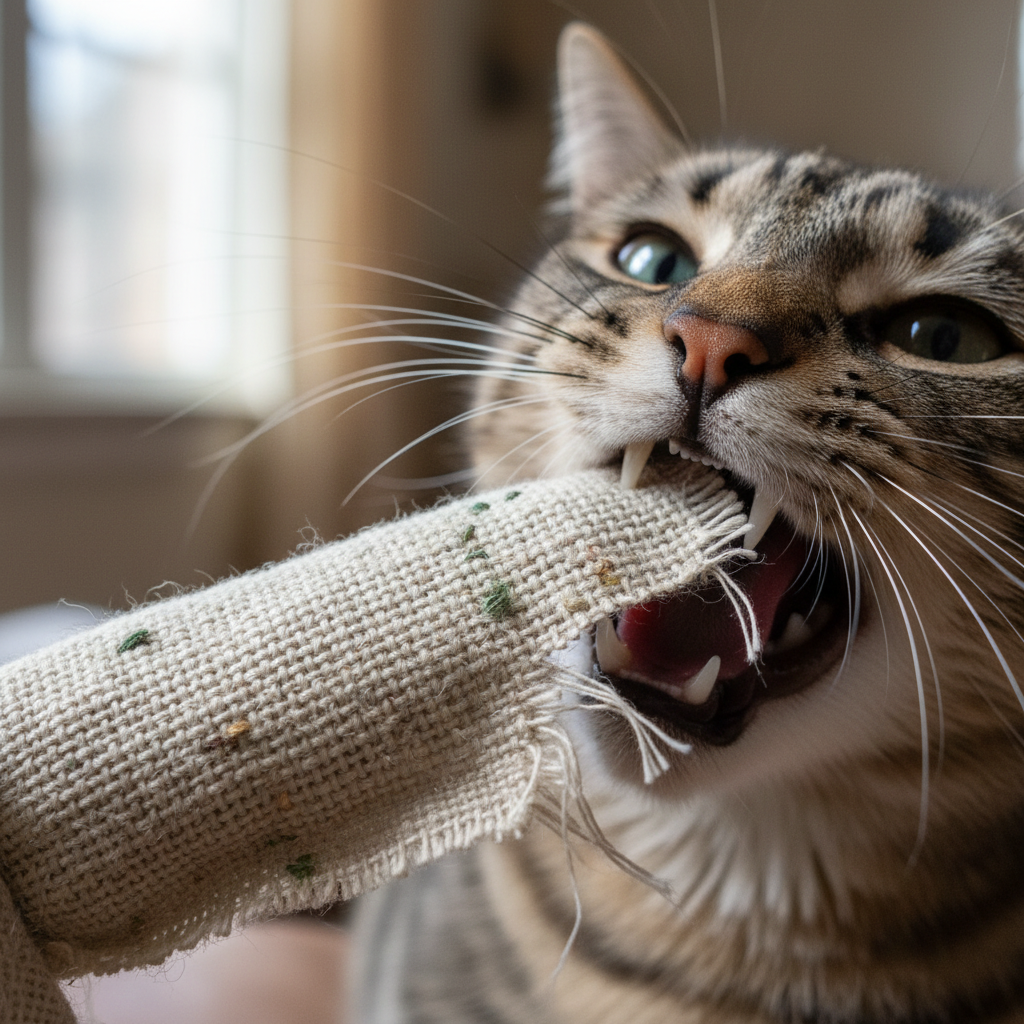
I'll be honest—I used to be a sucker for those cheap electronic toys on Shopee. I bought this little robotic swimming fish that had these tiny button batteries inside. One night, I found Lucky chewing the tail off. If that battery compartment had popped open, it would have been an emergency surgery worth thousands of ringgit.
I learned the hard way: if it has a battery door that isn't screwed shut, or if it uses those tiny 'Buckeyball' magnets, get it out of the house. Magnets are the worst—if a cat swallows two, they can stick together through the intestinal walls and cause literal holes. Not worth the RM10 saving.
| Risk Category | Typical Product Description | Hazard Mechanism & Medical Consequences | Identification Method |
|---|---|---|---|
| Button Battery Toys | Cheap "swimming robotic fish," "glowing bouncy balls," miniature vibrating bugs (non-Hexbug genuine), LED collar lights. | Chemical burns & esophageal perforation: Many cheap toy battery compartments use flimsy plastic clasps, easily breaking during play. If swallowed (especially lithium coin batteries), the battery discharges in the moist esophagus, producing sodium hydroxide which can burn through the esophagus and blood vessels within 2 hours, leading to fatal injuries. | Check if the battery compartment requires a screwdriver to open. If it's a simple clasp or slide cover, absolutely do not buy. Many cheap electronic fish on Shopee use this design. |
| Strong Magnet Toys | Magnetic building blocks, magnetic levitation ornaments, stress-relief magnetic balls (Buckyballs). | Multiple intestinal perforations: If a cat swallows two or more strong magnets (or a magnet + metal object), they can attract each other across different segments of the intestine, compressing intestinal tissue. This leads to ischemic necrosis and perforation. Surgery is extremely difficult, and the fatality rate is very high. | Avoid buying any toy containing magnets that can be swallowed. |
| Foam/Sponge Balls | Bags of cheap colored foam balls (EVA Foam Balls). | Intestinal obstruction: Cat tongues have barbs that easily scrape off and ingest foam material. Foam does not dissolve in stomach acid and can expand or clump, causing complete intestinal obstruction. | Lightly scratch with a fingernail; if fragments easily come off, it is unsuitable. |
Why Your Trash is Better Than My RM100 Toy
Unpopular opinion: Stop buying fancy gadgets. The best toys in my house are empty toilet paper rolls and big Amazon boxes. Why? Because these are 'open-ended.' A box is a fort, a hiding spot for a stalk, and a scratcher all in one.
Cats suffer from 'toy blindness' when the same mouse sits on the floor for a month. To them, that’s just a 'dead, smelly carcass' with no value. If you want to keep them interested, start a toy rotation. Divide toys into groups and swap them every week. It feels like Christmas to them every Monday morning.
Playing with your cat isn't just about 'burning energy'—it’s about emotional stability. When Tiger or Lion gets that satisfying 'kill' at the end of a session, they’re calmer, sleep better, and are less likely to act out at 3 am. It’s the cheapest health insurance you can buy.
Your Monday Morning Action: Grab a cardboard box tonight. Cut two holes in the side just big enough for a paw to poke through. Poke a string or a wand through those holes and watch your cat turn back into a wild jungle predator within seconds.