If you've ever spotted a stubborn, weepy sore on the bridge of your cat's nose that just won't heal, your first thought is probably ringworm or a cat-fight scratch gone bad. Most of the time, you'd be right. But there's another culprit that Malaysian cat owners need to know about — one that doesn't just hurt your cat, but can climb onto your own skin too. It's called sporotrichosis, and here in Malaysia it's not some rare textbook disease. It's a documented, ongoing problem.
We're Kelvin and Ann, the humans behind Liger and full-time staff to four very demanding cats — Tiger, Lion, Ping'An, and Lucky. We're not vets, and this article is not a substitute for one. But after years of reading veterinary research to keep our own crew healthy, we kept running into sporotrichosis in the Malaysian literature and realised almost nobody has written about it in plain language for local cat parents. So here's the honest, careful guide we wish we'd had.
The short version: sporotrichosis is a fungal infection that loves cats, loves humid climates like ours, and can spread from your cat to you through a scratch, a bite, or even just handling an infected wound. If your cat has a non-healing skin lesion, this is one reason to stop guessing and run the symptoms through a skin condition checker and then get to a vet.
What Is Sporotrichosis, Exactly?
Sporotrichosis is an infection caused by fungi in the Sporothrix family — most commonly Sporothrix schenckii, with a nastier cousin called Sporothrix brasiliensis behind the big outbreaks in South America. These fungi normally live in soil, decaying wood, hay, moss, and rotting plant matter. The classic human form was historically nicknamed "rose gardener's disease" because gardeners would get pricked by a thorn carrying the fungus.
That soil-and-thorn route still exists. But the reason this disease matters so much for cat owners is that cats changed the game. According to the Merck Veterinary Manual, sporotrichosis is more common in cats than in any other domestic animal, and infected cats carry an enormous number of fungal organisms in their skin lesions, claws, and even their feces. That heavy fungal load is exactly why cats are such efficient transmitters — far more so than soil contact alone.
In cats, the fungus enters through a break in the skin — usually a puncture wound from a fight, a scratch from climbing, or a bite. Outdoor and stray tomcats who fight a lot are the textbook victims. Once inside, the fungus sets up a slow, smouldering infection that produces lumps, ulcers, and oozing sores, most often on the face and legs.
Why Malaysian Cat Owners Should Pay Attention
This is the part most international articles skip. Sporotrichosis isn't evenly spread around the world — it clusters in warm, humid regions, and Malaysia is firmly on the map.
A study published in Pertanika (Universiti Putra Malaysia) describes feline sporotrichosis as a highly endemic zoonotic disease here, with the University Veterinary Hospital at UPM recording roughly 80 confirmed cases a year in Selangor during the study period. That is not a freak occurrence — that's a steady, year-after-year caseload in just one referral hospital in one state.
The Malaysian connection runs deep in the research. The role of cats in spreading Sporothrix in Malaysia was first flagged back in 1990, in a paper literally titled "Feline sporotrichosis: an increasingly important zoonotic disease in Malaysia." A later review of feline sporotrichosis across Asia notes that the disease is mainly reported from Malaysia, where a single clonal strain has been identified — and worryingly, that strain shows low susceptibility to several major antifungal drug classes, which can make treatment slower and harder.
Why us? A few reasons line up badly:
- Humidity. Malaysia sits at 75–90% relative humidity most of the year. Fungi thrive in exactly these conditions, both in the environment and on a cat's damp skin.
- Free-roaming and stray cats. We have a large outdoor and community-cat population. Cats that roam, fight, and explore garden soil and decaying vegetation get exposed far more.
- Lots of cat contact. Malaysians love cats — feeding strays, taking in rescues, multi-cat homes. More contact means more chances for both cat-to-cat and cat-to-human spread.
None of this is a reason to panic or to stop caring for community cats. It's a reason to recognise the warning signs early and handle suspected cases with sensible hygiene.
How Cats Catch Sporotrichosis
There are two main routes, and in Malaysia the second one dominates.
1. Environmental (the soil route). The cat picks up the fungus from contaminated soil, plants, wood, or thorns that puncture the skin. This is the classic "rose gardener" mechanism applied to a cat scratching around in the garden.
2. Cat-to-cat (the fight route). This is the big one. When an infected cat fights or mates with another cat, the fungus in its claws and lesions is driven directly into the new wound. Because infected cats carry such a heavy fungal load, a single bite or deep scratch can transmit the disease. This is why unneutered outdoor toms — the cats most likely to fight over territory and mates — are at the highest risk, and why the infection so often shows up on the face, nose, and front legs where fight wounds land.
The practical takeaway for Malaysian homes: keeping cats indoors and neutering them dramatically cuts the risk. A neutered indoor cat that doesn't fight or dig in contaminated soil is at very low risk of ever encountering Sporothrix.
Symptoms: What to Actually Look For
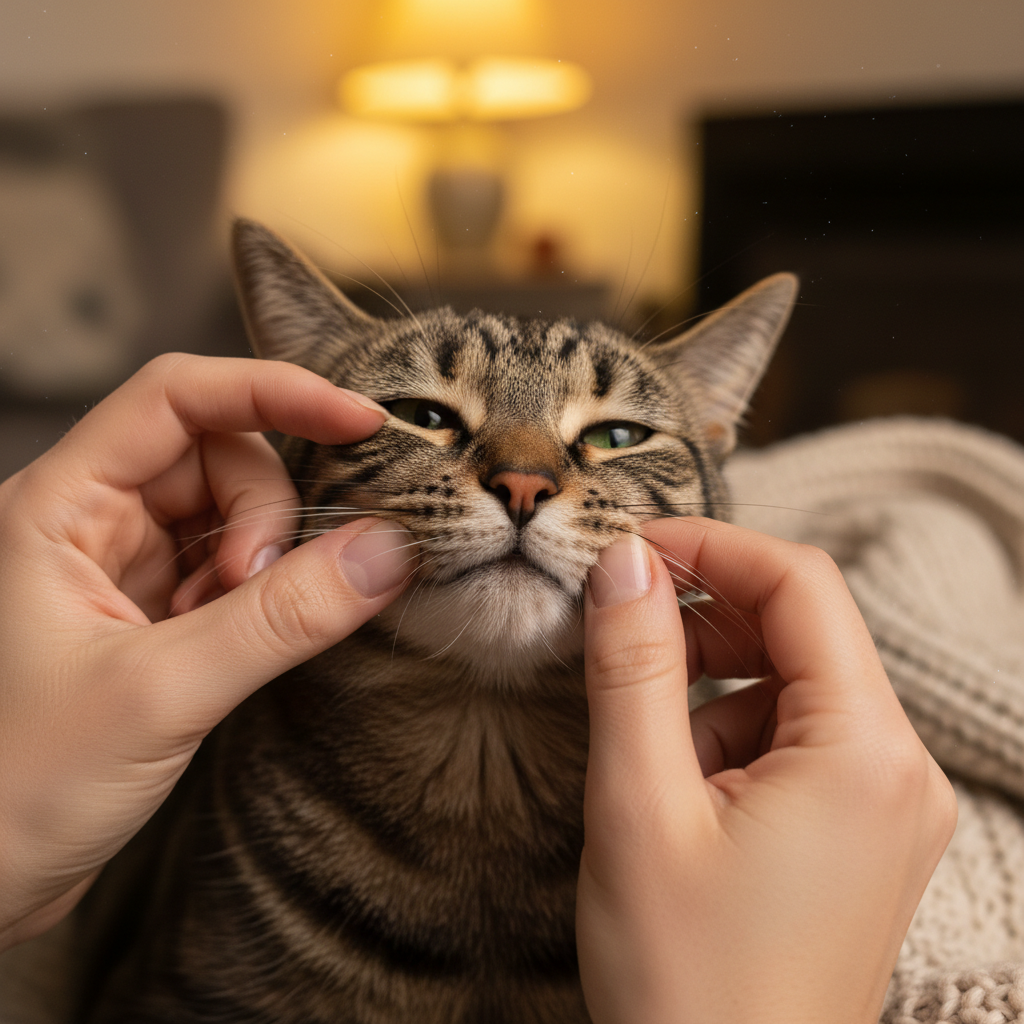
Feline sporotrichosis is sneaky because it starts looking like a dozen other common problems — a cat-fight abscess, ringworm, an allergic sore, or a stubborn scab. The pattern that should raise your suspicion is a wound that refuses to heal and slowly gets worse despite normal wound care or antibiotics.
Per the Merck Veterinary Manual, lesions in cats most often appear on the head — especially the bridge of the nose and the ear flaps (pinnae) — and on the limbs. They typically progress like this:
| Stage | What it looks like | Urgency |
|---|---|---|
| Early nodule | One or more firm small lumps under the skin, often on the nose, face, or a front leg. May be mistaken for a fight abscess. | See a vet within days — don't "wait and see." |
| Ulceration | The lump breaks open into an open sore that weeps clear or pus-like fluid and crusts over. Does not heal with normal care. | Vet visit needed. Start wearing gloves when handling. |
| Spreading lesions | Multiple ulcers appearing along the same limb or across the face; lesions on the nose can erode cartilage. | Urgent — the infection is advancing. |
| Lymphatic / systemic spread | Swollen lymph nodes, lethargy, poor appetite, weight loss; in severe cases the lungs or other organs are involved. | Emergency — this cat needs aggressive veterinary treatment immediately. |
A useful rule of thumb: a scratch or bite wound on a cat should be visibly improving within a week or two. A "wound" that instead spreads, multiplies, weeps persistently, and sits on the nose or ears is a classic sporotrichosis profile — and a strong reason to get a proper diagnosis rather than reaching for another round of over-the-counter ointment. If you want a structured way to compare what you're seeing against other skin conditions before the vet trip, our skin condition checker can help you organise the symptoms.
The Part That Scares People: It Spreads to Humans
Sporotrichosis is a zoonotic disease, meaning it can pass from animals to people. With the cat-associated form, that risk is real and well documented.
The US Centers for Disease Control and Prevention (CDC) notes that in South America, Sporothrix brasiliensis is spreading from cats to people, with most human infections happening through contact with infected cats — via bites, scratches, or even being sneezed on. The CDC also flags that S. brasiliensis infections tend to be more severe than other Sporothrix species, and that veterinarians and cat owners in affected regions are among the most at-risk groups.
The Malaysian data tells the same story from a different angle. In a retrospective review of human sporotrichosis cases discussed in the Asian feline sporotrichosis literature, a majority of patients could recall a skin injury before their infection began, and a large share of those specifically reported a cat scratch or bite beforehand. Translation: in our region, cats are a leading source of human sporotrichosis.
In people, the infection usually starts as a small, painless bump at the site of a scratch or bite — often on the hands or arms — that slowly turns into an ulcer. New bumps can then appear in a line up the arm, following the lymphatic vessels. It is treatable, but it needs a doctor and a proper course of antifungal medication. If you develop an unusual skin sore after contact with a cat that has skin lesions, see a doctor and mention the cat exposure. Do not try to diagnose or treat it yourself — and please don't assume a cream from the pharmacy will fix a fungal infection that has burrowed under the skin.
People with weakened immune systems — those on immunosuppressive medication, living with HIV, or undergoing certain treatments — can develop more serious, widespread disease and should be especially careful around cats with suspicious lesions.
How Vets Diagnose It
You cannot diagnose sporotrichosis by eye alone, and neither can your vet with certainty — it mimics too many other conditions. Confirmation comes from the lab. According to the Merck Veterinary Manual, diagnosis is typically made by identifying the fungus in a sample of affected tissue or by growing it in a culture.
In practice, a Malaysian vet may:
- Take a cytology sample — a swab or scraping of the lesion examined under the microscope. Cats are unusual in that their lesions are absolutely teeming with the cigar-shaped yeast cells of Sporothrix, so cytology alone often spots it quickly (unlike in humans and dogs, where the organisms are scarce).
- Send a sample for fungal culture to confirm the species.
- Sometimes take a biopsy for tissue examination.
The good news is that because feline lesions carry so many organisms, sporotrichosis is often easier to confirm in cats than in other species. The bad news is the same fact makes infected cats highly contagious, so your vet will handle samples with strict precautions.
Treatment: Effective, But It Takes Patience
Here's the most important thing to understand before you start: sporotrichosis treatment is a marathon, not a sprint. This is not a one-week course of pills.
The standard treatment for feline sporotrichosis is the oral antifungal drug itraconazole, given daily for months. A clinical study of cats with S. brasiliensis infection treated with itraconazole documented how the response can vary, with many cats needing prolonged courses and some needing combination therapy. The Merck Veterinary Manual advises that antifungal treatment should continue for 3 to 4 weeks beyond apparent cure — meaning even after the lesions look healed, you keep dosing, because stopping early lets the fungus rebound.
What this means for you as the owner:
- Commit to the full course. Treatment commonly runs three to six months or longer. Stopping when the cat "looks better" is the number-one cause of relapse.
- Expect vet rechecks. Itraconazole can affect the liver, so your vet may monitor with blood tests.
- It can be expensive and slow. Months of medication add up. Budget for it, and don't be tempted to ration the dose.
- Never use leftover human antifungals or self-prescribe. Dosing for cats is specific, and some human antifungal drugs are dangerous for cats. Only give what your vet prescribes.
That Malaysian clonal strain we mentioned earlier — the one with reduced antifungal susceptibility — is exactly why local cases can be stubborn and why finishing the full prescribed course matters even more here than the textbook average suggests.
Protecting Yourself While Your Cat Recovers
If your cat is diagnosed, you'll be handling an animal that is actively shedding a fungus that can infect you. This doesn't mean giving up your cat — it means smart hygiene. The CDC and veterinary guidance broadly agree on the basics:
- Wear disposable gloves whenever you handle the cat, clean lesions, or give medication. Wash your hands thoroughly afterward even so.
- Cover any cuts on your own hands before contact.
- Don't let the infected cat lick your open skin or freshly cleaned wounds.
- Isolate the infected cat from other cats in the home to stop cat-to-cat spread, and keep it indoors so it can't infect community cats.
- Disinfect bedding and surfaces the cat contacts; wash items in hot water.
- Watch your own skin. If a bump or sore appears where the cat scratched or bit you, see a doctor and mention the diagnosis.
Households with young children, elderly members, or anyone immunocompromised should be extra cautious and may want to limit who handles the cat during treatment.
Prevention: The Best Cure Is Not Getting It

Because treatment is so long and the zoonotic risk is real, prevention genuinely pays off. The risk factors point straight at the solutions:
- Neuter your cats. Intact males fight over territory and mates, and fighting is the main transmission route. Neutering slashes fighting behaviour.
- Keep cats indoors, or supervise outdoor time. An indoor cat that doesn't fight strays or dig in contaminated soil is at very low risk. This is the single most protective step.
- Treat fight wounds promptly. Any puncture or scratch that doesn't heal cleanly in a week or two deserves a vet's eye.
- Quarantine new or rescued cats with skin lesions until a vet clears them, especially before introducing them to your existing cats.
- Keep the environment dry and clean. In our humid climate, a hygienic litter and living setup reduces the general fungal pressure on your cat's skin.
If you've dealt with feline skin problems before, you'll know the same Malaysian humidity that fuels sporotrichosis also drives ringworm and other fungal trouble — which is why we wrote a full guide to conquering ringworm in cats and a broader Malaysian cat skin disease guide. And because a weakened or parasite-burdened cat is more vulnerable to any infection, keeping on top of cat parasites matters too. A healthy, indoor, well-cared-for cat is a poor host for Sporothrix.
When to See a Vet — Urgently
Don't wait it out. Get your cat to a vet promptly if you see:
- A skin lump or sore on the nose, face, ears, or legs that isn't healing after one to two weeks.
- A wound that weeps clear or pus-like fluid and keeps crusting back over.
- New sores appearing in a line or cluster near an existing one.
- Any skin lesion in a cat that roams outdoors, fights, or was recently a stray.
Treat it as an emergency if your cat also has swollen lymph nodes, is lethargic, off its food, losing weight, or showing breathing difficulty — these can signal the infection has spread internally. Malaysia has excellent veterinary care, including 24-hour referral hospitals in the Klang Valley, so there's no reason to delay.
And the human side bears repeating: if you develop a strange, slow-growing skin bump or ulcer after contact with a cat that has lesions, see a doctor and tell them about the cat. Early treatment is far easier than late treatment, for both of you.
Frequently Asked Questions
Can I catch sporotrichosis from my cat just by petting it?
The main risk is through a break in your skin — a scratch, bite, or contact with the fluid from an open lesion. Casual petting of a healthy-skinned cat is very low risk, but a cat with open sores is best handled with gloves until a vet confirms what's going on.
Is sporotrichosis the same as ringworm?
No. Both are fungal and both can spread to humans, but they're caused by completely different fungi and treated differently. Ringworm causes circular hairless patches; sporotrichosis causes nodules and non-healing ulcers, often on the nose and legs. Only lab tests can tell them apart for certain, which is why a vet visit matters.
Will my indoor-only cat get sporotrichosis?
The risk is very low. The fungus enters through skin wounds, usually from fighting or digging in contaminated soil. A neutered indoor cat that doesn't fight or roam has very little exposure — which is exactly why keeping cats indoors is such effective prevention.
How long does treatment take, and will my cat fully recover?
Most cats are treated with oral itraconazole for several months — commonly three to six months or longer — and must keep taking it for weeks after the lesions heal. With a full, properly completed course, many cats recover well. Stopping early is the most common reason cases relapse.
My cat was just diagnosed — do I need to give up my other cats or rehome anyone?
No. The right move is to isolate the infected cat from your other cats during treatment, keep it indoors, handle it with gloves, and follow your vet's plan. With sensible hygiene, families routinely nurse a cat through sporotrichosis without it spreading to other pets or people.
Is sporotrichosis common in Malaysia?
Unfortunately, yes — more than in many countries. Malaysian veterinary research describes it as endemic, with one university hospital in Selangor recording around 80 confirmed feline cases a year. Our hot, humid climate and large free-roaming cat population are a big part of why.
The Bottom Line
Sporotrichosis isn't a reason to fear your cat — it's a reason to take non-healing skin lesions seriously, especially here in Malaysia where the disease is genuinely endemic. The pattern to remember is simple: a sore on the nose, face, ears, or legs that won't heal, gets worse, or spreads is not "just a scratch." Get it checked, handle it with gloves, and if your own skin reacts after contact, see a doctor.
The cats most at risk are the ones who fight and roam, so neutering and keeping cats indoors are your strongest defences. With early diagnosis and a full course of itraconazole, the outlook for an infected cat is generally good — it just takes patience. Our four — Tiger, Lion, Ping'An, and Lucky — stay indoors precisely because, in a climate like ours, prevention beats months of treatment every single time. When in doubt, your vet is one phone call away, and that call is always worth making.