Most cat owners pick a litter box location the same way they pick a parking spot — grab whatever's free. Then six months later we wonder why the cat is peeing on the rug.
Here's the thing: placement isn't a small detail. It's the single biggest reason cats stop using their box. Studies show roughly 10% of cats develop elimination problems at some point, and bad placement is usually the trigger (PMC review on feline house-soiling).
We're Liger, a Malaysian tofu cat litter brand. We live in a flat with four cats — Tiger, Lion, Ping'An, and Lucky — so we've stress-tested every spot you can put a litter box in a Malaysian condo. This guide is what we wish someone told us in year one.
The short version: there are five spots you should never use, five that genuinely work in a 700-1,200 sqft Malaysian flat, and a handful of rules that matter more than any specific location. We'll walk through all of them, with the trade-offs honestly laid out — because the perfect spot rarely exists in condo living. It's about picking the best compromise for your cat and your unit's actual layout.
Why Placement Matters More Than the Litter You Buy

You can buy the most expensive odor-neutralizing litter on Shopee, but if the box is in the wrong place, none of it matters. Four things are happening at once when a cat steps into the box:
- Vulnerability check. Cats squat with their guard down. They want sight lines and escape routes.
- Scent separation. Cats instinctively refuse to eliminate near food and water (ASPCA litter box guide).
- Air quality. In a sealed Malaysian condo, ammonia from urine accumulates fast. Bad ventilation = your cat (and you) breathing irritants.
- Acoustic stress. A washing machine spinning two feet away makes the box feel like a war zone.
Get the spot right and your cat uses the box without drama. Get it wrong and you'll be cleaning pee off the sofa for years.
5 Places NOT to Put the Litter Box in a Condo

1. The Kitchen (or Anywhere Near Food)
This is the most common mistake in small Malaysian flats. The kitchen is tiled, easy to clean, and convenient — so people stick the box next to the cat's food bowl. Don't. Beyond the instinctual problem, dust from litter floats around food prep surfaces, and there's a documented hygiene risk from Toxoplasma and Salmonella particles. The ASPCA recommends keeping the box in a different room entirely from food and water.
2. Busy Hallways or Doorways
The corridor between your bedroom and bathroom feels like a quiet spot — until the cat is mid-squat and someone walks past at midnight to grab water. High-traffic = high-startle = avoidance.
3. Bathroom With the Door Usually Closed
Tons of Malaysians put the box in the master bathroom. The problem isn't the room — it's that bathroom doors get closed for showers, guests, or sleeping. A locked-out cat will pee somewhere else. Either commit to leaving the door propped open 24/7 or pick another spot.
4. Inside the Bedroom (Especially Yours)
People do this because they want the cat close. Two problems: the smell is concentrated where you sleep, and scratching at 3 a.m. will destroy your REM cycle. Apartment soundproofing in Malaysian condos is thin — your downstairs neighbor will hear it too.
5. Next to Noisy Appliances
The service yard works — we'll get to that — but not when the box is two inches from a spinning washing machine. The vibration and noise will scare a cat off the box. Set it on the opposite side of the yard if you can.
5 Spots That Actually Work in a Malaysian Flat

1. Service Yard Corner (Our Favorite)
The service yard is the unsung hero of Malaysian condo life. It's tiled, ventilated, semi-outdoor, and already designed to handle mess. Place the box in the corner furthest from the washing machine and you've got near-perfect conditions: airflow that disperses ammonia, easy hose-down cleanup, and separation from food and sleeping zones. Make sure the grille at the bottom of the yard door is large enough for your cat to pass through, or leave the door propped.
2. Dedicated Laundry Nook
If your unit has a separate utility room instead of an open service yard, even better. Quieter, more enclosed, still ventilated. Add a small mat outside the box to catch tracked litter before it hits the rest of the house.
3. Guest Bathroom (Door Permanently Propped Open)
If you have a second bathroom you rarely use, this is gold. Tiled floors, exhaust fan, low traffic. The trick is committing to a doorstop so the cat never gets locked out.
4. Under-Stair / Wardrobe Nook With a Cat Door
For townhouse-style condos and bigger units. Cut a small opening into a low-use closet door (or use a magnetic cat flap) and you get a hidden, private box that looks like nothing from the outside. Add a small USB fan for airflow.
5. Covered Balcony Area (Conditional)
A balcony with full mesh netting on every opening can work — but only if it's covered from rain. Critical warning: never put a box on an unsecured balcony. Feline high-rise syndrome is a real Malaysian condo killer, and a cat startled mid-squat near an open balcony edge is a tragedy waiting to happen.
Not sure which size box fits your spot? Try our free cat litter box size calculator — it sizes the box to your cat's nose-to-tail length using the vet-recommended 1.5x rule from DVM360.
The Ventilation Problem Nobody Talks About

Here's the dirty secret of sealed, air-conditioned Malaysian condos: ammonia from urine accumulates faster than you think. In a humid, 28°C environment, bacterial breakdown of urea speeds up dramatically. The result is a closed-loop room where the cat is breathing concentrated ammonia for hours.
OSHA caps workplace ammonia exposure at 25 ppm over 8 hours, but agricultural research suggests respiratory irritation in cats can start much lower. The fix isn't fancy: airflow. Either pick a naturally ventilated room (service yard, kitchen window area) or run an exhaust fan / small USB fan continuously where the box sits.
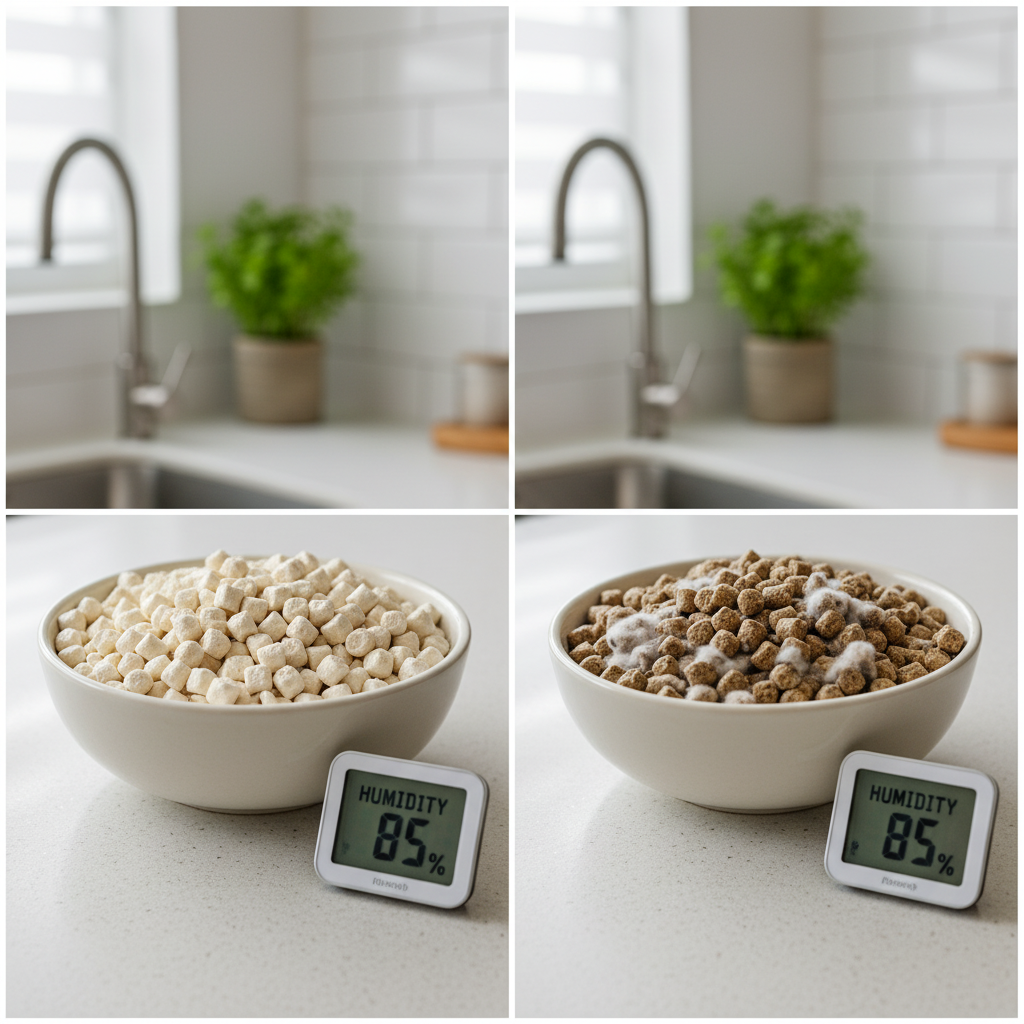
Tropical climate adds another twist — Malaysia's humidity can hatch fly eggs into maggots within 12 to 24 hours at 30°C. Daily scooping isn't optional here, it's mandatory.
Multi-Cat Math: The N+1 Rule and Why Side-by-Side Doesn't Count

If you have more than one cat, the vet consensus is the N+1 rule: one box per cat, plus one extra (Countryside Veterinary Hospital, iCatCare multi-cat guidelines). Two cats = three boxes. Four cats = five boxes.
The catch: cats see two boxes next to each other as one resource. A dominant cat can guard both at once. To make N+1 actually work, the boxes have to be in different rooms or at least on opposite sides of a large room. Each box needs its own escape route so a more timid cat isn't ambushed mid-squat.
For Malaysian flats where space is tight, this often means: one in the service yard, one in a guest bathroom, one in a quiet corner of the living room behind a piece of furniture.
Don't Be That Neighbor: High-Rise Smell and Noise Control
Strata living means your odor problem becomes your neighbor's problem fast. Three rules:
- Scoop daily, minimum. Twice if you have multiple cats. Smell complaints in Malaysian condos can escalate to strata management action.
- Use a high-density mat under the box. Dampens the 3 a.m. scratching sound that travels through floors.
- Don't overflow waste bins on the common corridor. Bag tightly and bin it in your unit's chute.
And for the love of all things tofu — don't flush litter down the toilet. Even "flushable" tofu litter is a plumbing risk in shared high-rise stacks. Malaysia's Water Services Industry Act 2006 prohibits discharging solids that could obstruct sewerage, and Toxoplasma gondii in cat feces can survive municipal water treatment.
Making It Look Decent: Aesthetic Solutions
You don't have to live with a giant plastic box as your living room centerpiece. Three solid options:
- IKEA hack cabinets. A KALLAX or BESTA unit with a side cutout works as a hidden enclosure for under RM200. IKEA Malaysia stocks oversized storage bins that double as cheap litter trays.
- Litter box furniture. Faceket 2-in-1 wooden cat cabinets and similar Lazada / Shopee models look like a side table or shoe cabinet.
- Curtain corners. A tension rod and curtain across an awkward nook hides the box without trapping ammonia.
Whatever you pick, make sure ventilation isn't sacrificed for looks. A sealed wooden cabinet with no airflow is just an ammonia chamber for your cat.
The Liger Family's 4-Box Layout

For transparency, here's exactly how we run it in our flat with Tiger, Lion, Ping'An, and Lucky:
- Box 1: Service yard corner, opposite end from the washing machine. Open-top tray, tofu litter. This is the high-traffic box.
- Box 2: Guest bathroom, door wedged open with a heavy doorstop. Backup for when the service yard is busy or wet from laundry.
- Box 3: Quiet corner of the living room, hidden behind a low cabinet. Tiger uses this most — he likes sight lines.
- Box 4: Master bedroom hallway nook, on a rubber mat to dampen scratching. Ping'An (our rescue mom) prefers a private spot away from the kittens.
That's N+1 satisfied for four cats (we should technically have five boxes, but Box 1 sees so little overlap that four works for us). Every box is in a different room, every box has at least two escape routes, none are near food, and all four have airflow.
If your cat is peeing outside the box despite a clean setup, the problem is almost never the cat being "naughty." Run through our cat pee problem solver — it walks you through medical-vs-behavioral triage step by step.
One pattern we've seen across hundreds of customer messages: most placement "failures" come from optimizing for human convenience first. The owner picks a spot because they don't want to see or smell it, then wonders why the cat protests. Flip the framing — pick the spot the cat would pick if it could shop a floor plan, then layer aesthetic solutions on top. That order matters.
Senior Cats and Kittens: Special Placement Rules
Two groups need extra thought. Senior cats — vets estimate around 90% of cats over age 10 have some degree of arthritis. That means the high-walled box your cat used at age 3 is now a painful obstacle. Switch to a low-entry tray (3-5 inches max), place it on the floor your cat spends most of its time on, and never make them climb stairs to reach it.
For kittens, low sides are also a must (2-3 inches), but the bigger risk is litter ingestion. Avoid clumping clay litter for kittens under four months — clumping particles can cause fatal intestinal blockages if swallowed during early grooming exploration. Tofu litter is a safer default because it dissolves harmlessly if ingested. Place the first box in a confined room with the kitten's food and bed for the first week, then gradually move it to its permanent home.
Pregnant or nursing mama cats (like our Ping'An when she came in) need a private, low-traffic box well away from the nest. Don't move it once she's settled — disruption during nursing causes serious stress.
Quick Decision Flowchart
- How many cats? Multiply by N+1 to get box count.
- How many rooms can host a box? If fewer than your box count, you need creative spots (cat-door closets, balcony nooks).
- For each candidate spot: Is it ventilated? Separate from food? Low-traffic? Always accessible? Safe from falls?
- Pick the litter: For sealed condos, lightweight tofu litter wins on odor and weight. Compare options with our litter comparison tool.
- Test for two weeks: Watch for hesitation, accidents, or one cat hogging a box. Adjust placement before issues become habits.
Bottom Line
The right spot isn't the prettiest one or the most convenient — it's the one your cat will use every single time without thinking. Quiet, ventilated, separate from food, always accessible, with an escape route. Get those five things right and your cat will reward you with a decade of drama-free litter habits.
And if you're still figuring out which litter handles a sealed Malaysian condo best, our milk-scented tofu cat litter was designed exactly for this — lightweight, low-dust, low-tracking, and free shipping across West Malaysia.