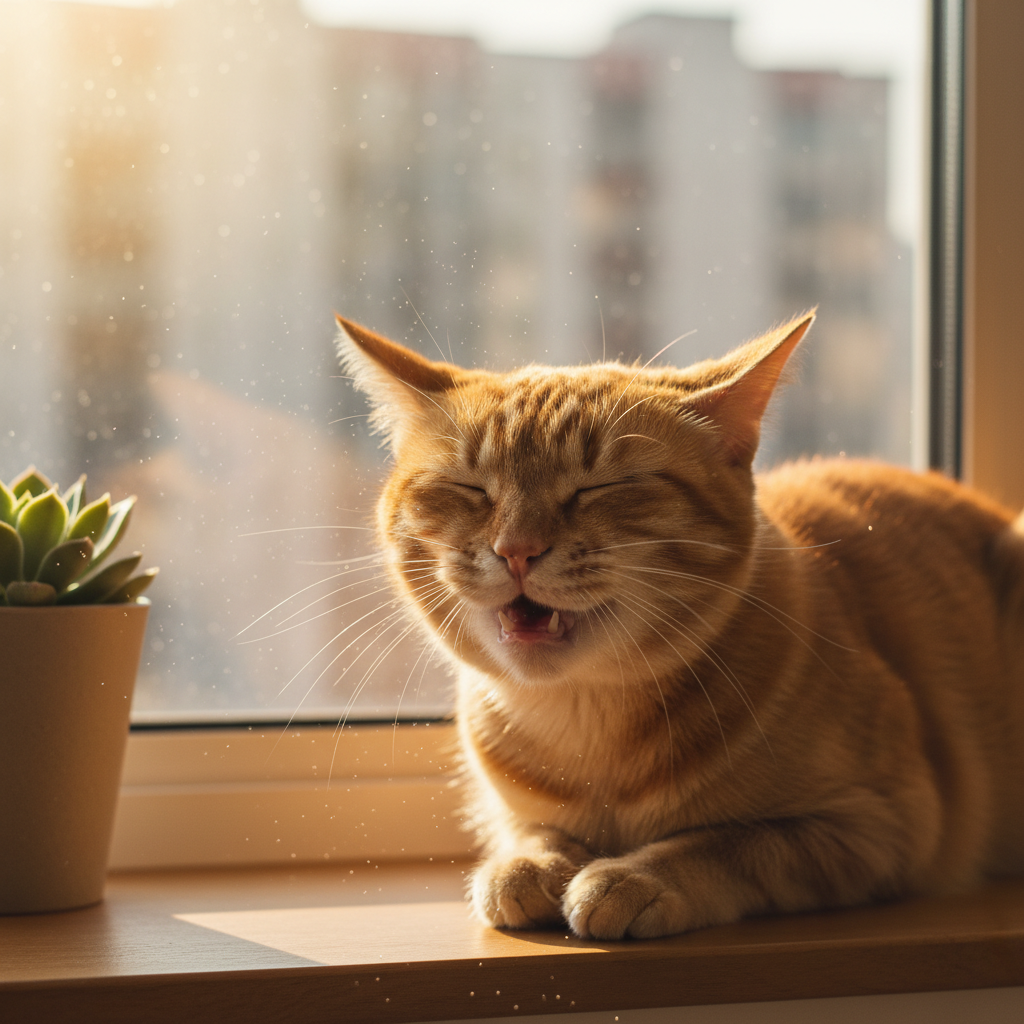
Your cat lets out one delicate "itchoo", looks mildly offended, and carries on washing a paw. Adorable. But when that single sneeze turns into three in a row, then a daily habit, the cute factor wears off fast and the Googling begins at 1am. If you're a Malaysian cat parent staring at a sneezy cat, this guide walks you through what's harmless, what's an infection, what's the air (and the litter) in your home, and the exact signs that mean stop reading and call the vet.
We've raised four cats in a KL condo — Tiger, Lion, Ping'An and Lucky — and between them we've seen every kind of sneeze there is. Here's what actually matters.
First, Don't Panic: Is the Occasional Sneeze Normal?
Cats sneeze for the same boring reason we do: something tickled the lining of the nose. A speck of dust, a whisker of their own fur, a strong smell, a sudden cold draft from the aircon. A healthy cat that sneezes a few times a week — and is otherwise bright-eyed, eating well, playing, and breathing quietly — is almost certainly fine. This is the feline equivalent of you sneezing when you walk past someone's perfume.
The line you're watching for is the shift from occasional and isolated to frequent and clustered. Use this quick gut-check:
| Probably harmless | Worth watching | See a vet |
|---|---|---|
| 1–3 sneezes, then stops | Daily clusters of sneezes | Sneezing fits many times a day |
| Clear nose, no discharge | Clear watery discharge | Yellow/green or bloody discharge |
| Eating, playing, normal | Slightly quieter than usual | Off food, hiding, lethargic |
| Breathing quiet and easy | Occasional sniffle | Open-mouth or laboured breathing |
If your cat sits firmly in the left column, you can relax and play detective on the environment. If anything from the right column shows up, skip to the red-flags section below.
The Trigger Everyone Misses: Litter Dust Your Cat Breathes 16 Hours a Day

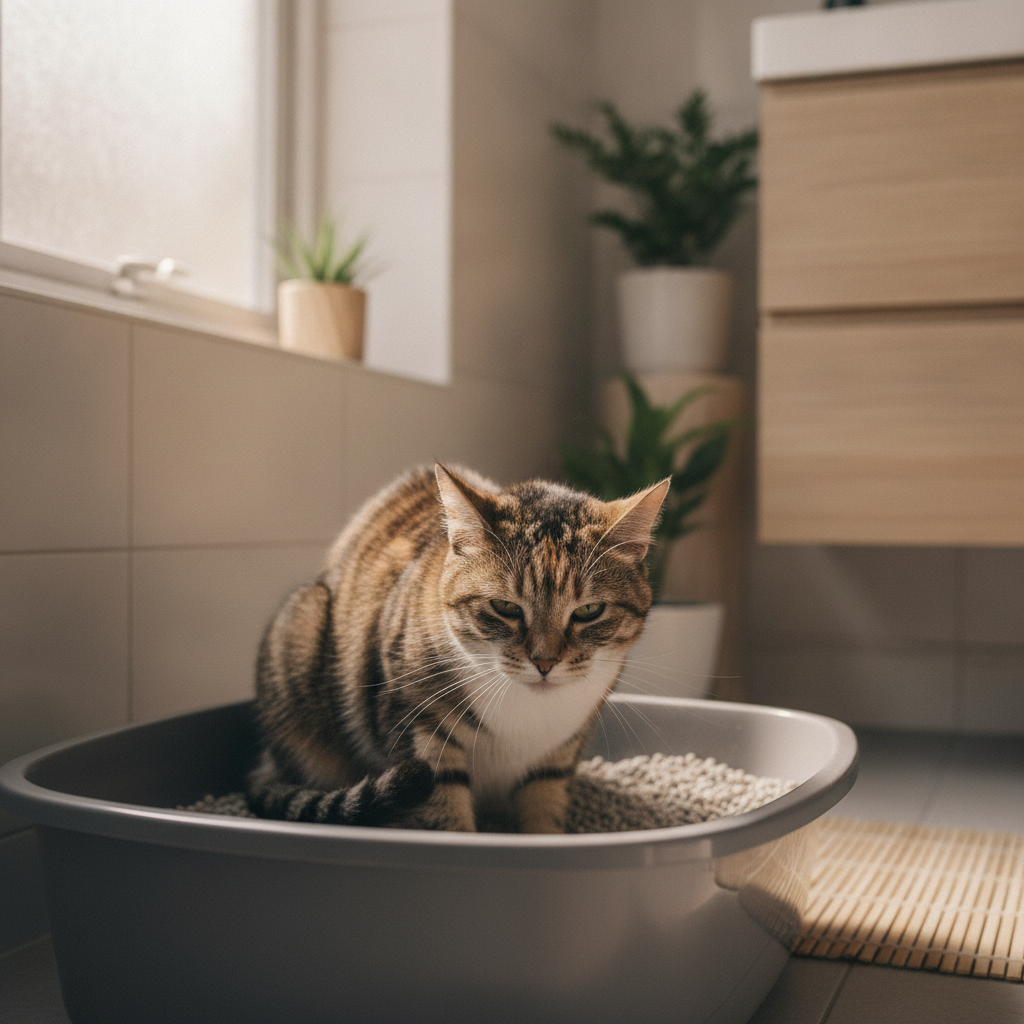
Here's the thing nobody mentions when they're listing causes of cat sneezing: your cat's face spends more time near the litter box than near anything else in the house. Cats dig, bury, sniff, and squat with their nose centimetres from the litter surface, several times a day, every day. Whatever fine particles puff up when they scratch around, they inhale — directly, at close range.
Traditional clumping bentonite clay litter is a heavy dust producer. That fine grey cloud you see in the sunbeam when you pour a fresh bag? Your cat is breathing it. This isn't just an aesthetic gripe: research on crystalline silica dust from bentonite litter documents real respiratory health risks from chronic exposure in enclosed spaces — and a Malaysian condo with the windows shut and the aircon on is about as enclosed as it gets.
For a cat with an already-sensitive nose, or one carrying a dormant respiratory virus (more on that below), constant litter dust is the irritant that keeps the sneezing on a slow boil. It rarely causes a serious problem on its own, but it's the easiest trigger to remove — and removing it often quiets the everyday sneezing dramatically.
This is exactly why low-dust litters exist. A tofu-based cat litter made from compressed soy-fibre pellets produces a fraction of the airborne dust of clay, because the litter is a dense pellet rather than a fine powder. Our own Liger Premium Tofu Cat Litter was built around exactly this problem — low dust, no clay powder, and a soft milky scent instead of a chemical perfume that can itself trigger sneezes. If you want to see how different litter types stack up on dust specifically, our dust-level comparison tool lets you compare them side by side before you decide.
One honest caveat for Malaysia: tofu litter is organic, and in our heat and humidity a forgotten, soaked clump left sitting too long can grow mould — which is its own irritant. The fix is simple scooping discipline, which we cover in the home-fixes section. (Thrive's vets note this tropical degradation risk too — it's manageable, not a dealbreaker.)
Infections: Herpes, Calici & the Malaysian 'Cat Flu'
If the sneezing comes with watery eyes, a runny nose, and a generally miserable cat, you're likely looking at an upper respiratory infection (URI) — what most people loosely call "cat flu." The two big viral culprits are feline herpesvirus (FHV-1) and feline calicivirus, and together they're behind the vast majority of feline URIs worldwide, Malaysia included.
Here's the part that surprises people: feline herpes is a lifelong passenger. According to veterinary data on FHV-1, roughly 80% of infected cats become lifelong carriers. The virus goes dormant and then flares up whenever the cat is stressed — a new pet, a house move, boarding during Raya balik kampung, or just a stretch of bad humidity. So a cat that had a kitten-hood case of cat flu can start sneezing again years later, seemingly out of nowhere. That's not a new infection; that's the old one waking up.
Why this matters in Malaysia specifically:
- Shelter and stray backgrounds. Many of our cats are rescues or kampung adoptees, and crowded early environments are where these viruses spread. A high baseline carrier rate is just reality here.
- Humidity and stress stack up. Our climate keeps environmental stress simmering, and stress is the on-switch for herpes flares.
- Multi-cat homes. Calicivirus in particular spreads easily between cats sharing bowls and boxes.
Vaccination won't erase an existing carrier state, but the core feline vaccines do reduce the severity of these respiratory viruses, and keeping your cats current is part of the picture — even for strictly indoor cats. If your sneezing cat also has eye discharge, mouth ulcers, or seems feverish and flat, that's a vet visit, not a home project. Antivirals, eye treatment, and supportive care exist, and a vet can tell a flare from something more serious. While you're thinking respiratory, it's worth knowing the difference between a sneeze, a cough, and the dry hack of feline asthma versus a hairball — they get mixed up constantly.
Allergies & Irritants: Haze, Humidity, Incense and Cleaning Sprays
Cats can be allergic and reactive to airborne stuff just like we are, and a Malaysian home has a particular menu of nose-ticklers. Unlike an infection, irritant sneezing usually has no discharge, no fever, and tends to come and go with whatever's in the air. Common offenders in our homes:
- Haze season. When the API climbs and the sky goes grey, fine particulate gets into everything — including your cat's airways. Indoor cats aren't immune; the air still gets in.
- Incense and joss sticks. Beautiful for prayer, brutal for small lungs at close range. Same goes for mosquito coils.
- Aerosol everything. Air fresheners, perfume, hairspray, scented cleaning sprays, and strong floor cleaners. If it makes you cough, it's worse for a 4kg cat.
- Humidity and mould. Our damp corners grow mould spores that are classic respiratory irritants — behind cabinets, under sinks, and yes, in a neglected litter box.
- Dust and pollen. Ordinary household dust and the pollen that drifts in through open windows.
The tell-tale sign of irritant sneezing is the pattern: it spikes right after you spray air freshener, or every haze season, or whenever you light incense, and it settles when the air clears. Play detective. If the sneezing tracks an activity or a season, you've found your culprit — and it's usually free to fix.
When to Worry: The Red Flags That Mean 'Vet Now'
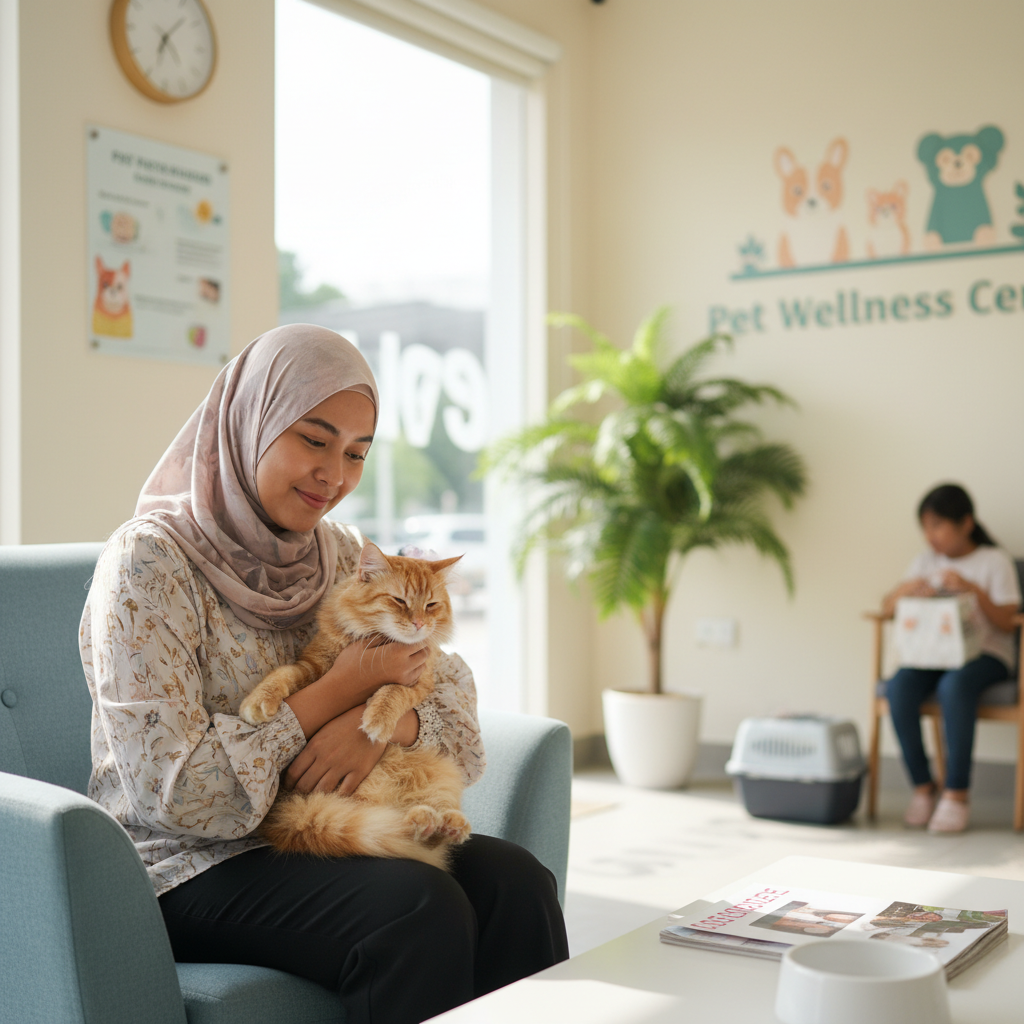
Most sneezing is harmless or manageable at home. But some signs mean your cat needs professional eyes, sometimes urgently. Don't wait it out if you see any of these:
- Coloured or bloody discharge. Clear is usually viral or irritant. Yellow or green suggests a secondary bacterial infection. Blood from the nose always warrants a vet.
- Loss of appetite. A cat that can't smell its food (because its nose is blocked) often stops eating — and cats that stop eating can get dangerously sick fast.
- Lethargy or hiding. A cat that's gone quiet, flat, or is tucking itself away is telling you it feels unwell.
- Open-mouth or laboured breathing. Cats are obligate nose-breathers; mouth-breathing is an emergency. Go now.
- Pawing at the face or one-sided discharge. Discharge or sneezing from only one nostril can signal a foreign object (a grass seed, a stray bit of litter) or, in older cats, something that needs investigating.
- Sneezing that drags on past a week, or keeps relapsing.
One more Malaysian-specific note: when you take a sneezy cat to the clinic, handle it gently and let it stay in its carrier until the vet is ready. Rough or full-body restraint actually raises a cat's respiratory rate and stress, which makes a breathing assessment harder. Calm cat, clearer diagnosis.
How to Cut Sneeze Triggers at Home (Malaysia Edition)
Once your vet has ruled out (or treated) infection, most of the remaining day-to-day sneezing is environmental — and that's the good news, because you control the environment. Here's the practical playbook for a Malaysian home:
1. Switch to a genuinely low-dust litter. This is the single highest-leverage change for a cat that sneezes near the box. A low-dust tofu litter removes the clay-dust cloud entirely. Liger Premium Tofu Cat Litter comes in 2kg packs, and the pricing as of May 2026 is straightforward: RM21.90 for 1 pack, RM53.90 for 3 packs, RM89 for 5 packs (RM8.90/kg), and RM169 for 10 packs — which works out to just RM8.45/kg, with free shipping across West Malaysia. For a multi-cat home like ours, buying the 10-pack is both cheaper per kg and fewer trips to restock. Compare litter types on our litter comparison tool if you're weighing options.
2. Scoop daily, change fully on schedule. This isn't just hygiene — in our humidity, a soaked clump left sitting is a mould factory, and mould is a respiratory irritant. Daily scooping keeps both the smell and the spores down. A neglected box hurts a sneezy cat twice over.
3. Control the air. Skip the aerosol air fresheners (they mask smell and irritate noses — fix the litter instead). Keep incense and mosquito coils away from where the cats rest. During haze season, keep windows shut and run the aircon or an air purifier. A dehumidifier in a damp condo does double duty against both mould and that clammy feeling.
4. Hunt the hidden mould. Check behind cabinets, under the sink, around the aircon vents, and anywhere that stays damp. Tropical homes grow mould in places you forget to look.
5. Reduce stress for the herpes carriers. If your cat is a known FHV-1 carrier, the goal is fewer flare triggers: stable routine, a calm space during festive chaos, and enough litter boxes that nobody's stressed about access. The same multi-cat setup that reduces territorial stress also quietly reduces flare-ups.
6. Support the immune system. Good food, fresh water, and keeping vaccines current all give your cat's body a better baseline to fight off the viral flares that drive sneezing.
Put together, these steps fix the large majority of everyday cat sneezing in Malaysian homes. Start with the litter — it's the trigger your cat is closest to, for the most hours, and the easiest one to take off the table. Then watch the air, mind the humidity, and keep the red-flag list handy. A cat that sneezes once and goes back to napping in a sunbeam is just being a cat. A cat that's sneezing daily is asking you to change something — and now you know where to look first.