- Kittens have unique litter needs due to ingestion risk and sensitive respiratory systems, making many adult litters unsafe.
- Tofu and paper-based litters are the safest choices for young kittens, especially during their peak exploratory phase (4-8 weeks).
- An age-stage litter roadmap is crucial: start with minimal fill, low-entry boxes, and transition gradually as your kitten grows.
- Immediate veterinary attention is critical if a kitten ingests clumping clay litter, as it can cause fatal intestinal blockages.
- Malaysia's humidity affects litter performance and storage, requiring special considerations for natural types.
Bringing a tiny, playful kitten into your Malaysian home is pure joy. They're all wobbly steps, sharp purrs, and endless curiosity. But that adorable curiosity extends to everything, including their litter box. And here's a secret that many new cat parents miss: the wrong cat litter can be a silent, dangerous threat to your kitten's health. Unlike adult cats, kittens have delicate systems and a habit of exploring the world with their mouths, making litter choice a critical decision.
We, fellow cat parents at Liger, understand the concern. Our own Lucky, Ping'An's son, was a notorious litter taster in his early weeks! This guide will walk you through everything you need to know about choosing the safest cat litter for kittens in Malaysia, from their first wobbly steps to confident adulthood. We'll explore age-specific recommendations, highlight hidden dangers, and arm you with the knowledge to protect your precious furball.
Why Kittens Need Different Litter Than Adult Cats
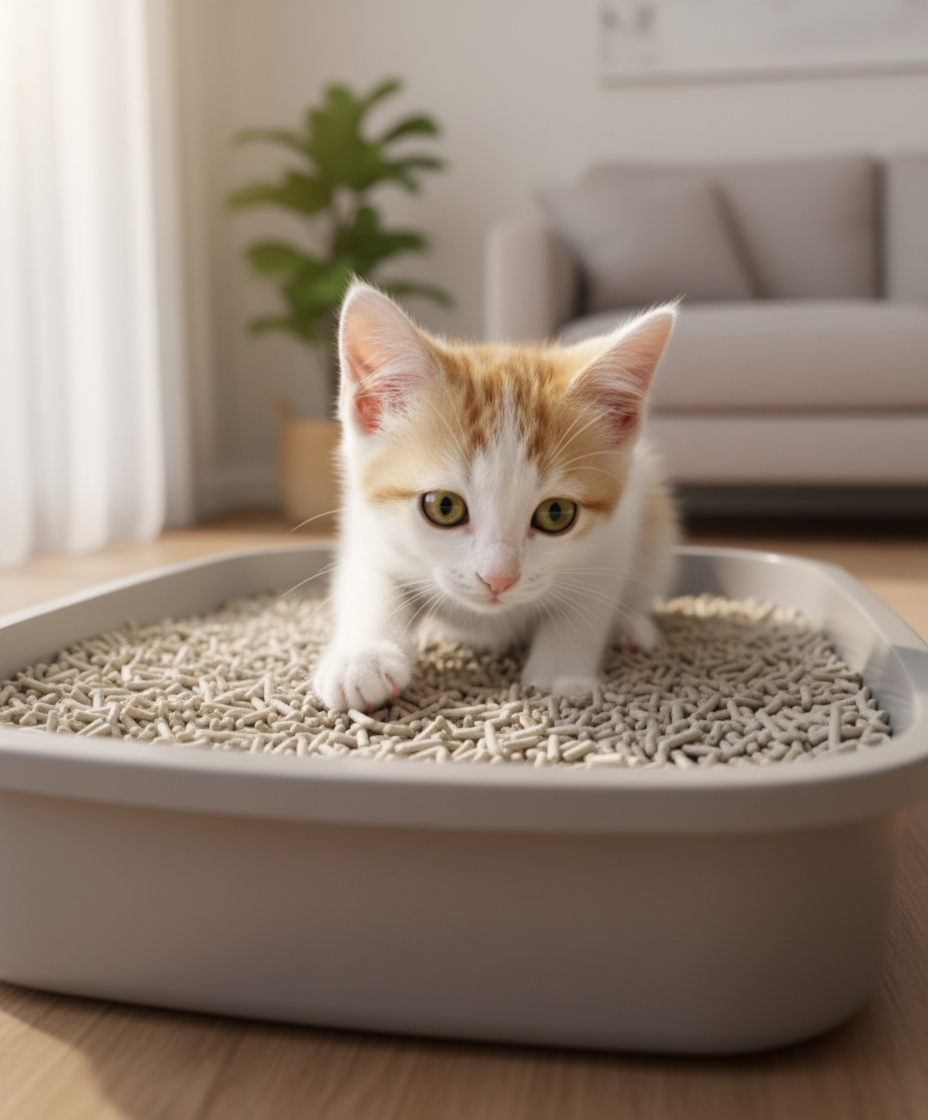
Kittens are tiny explorers who learn with their mouths and have delicate respiratory systems, making adult cat litter potentially dangerous due to ingestion risks and dust. Research indicates that around 25% of kittens will mouth or eat foreign objects, including litter, during their early developmental stages. Their small size and developing bodies simply can't handle what an adult cat can.
The Ingestion Risk — Why Clumping Clay Can Be Fatal
This is probably the most critical factor. Kittens, especially those under 8 weeks old, have an instinct to mouth or even eat small particles, including their litter. Their digestive systems are immature, and their curious nature can lead to serious problems.
Clumping clay litter, specifically bentonite clay, is the biggest culprit here. When ingested, bentonite expands significantly when it comes into contact with moisture (like in a kitten's stomach). This expansion can cause a severe or even fatal intestinal blockage. Imagine cement forming inside their tiny gut. It's a terrifying thought, but a very real risk. A study on bentonite exposure highlights these health risks, including potential fatal intestinal obstruction if ingested by kittens. I've heard too many heartbreaking stories from fellow cat parents who didn't realize this danger until it was too late. It goes without saying, but this type of litter is a definite no-go for young kittens.
Dust and Tiny Lungs — Respiratory Concerns
Beyond ingestion, dust is another silent threat. Many conventional clay litters, and even some natural options, can produce a significant amount of dust. For a kitten with developing lungs and a sensitive respiratory system, inhaling this dust can lead to irritation, coughing, sneezing, and even more serious respiratory issues.
We saw this firsthand with Ping'An, our rescued queen and Lucky's mom. She has a very sensitive nose and would sneeze almost instantly if we ever used dusty litter near her. Kittens are even more vulnerable, making ultra-low dust options non-negotiable. Look for litters with an 'ultra-low dust' or '99% dust-free' label. This isn't just about keeping your house clean; it's about protecting tiny airways.
Kitten Litter Safety Ranking — 6 Types Compared
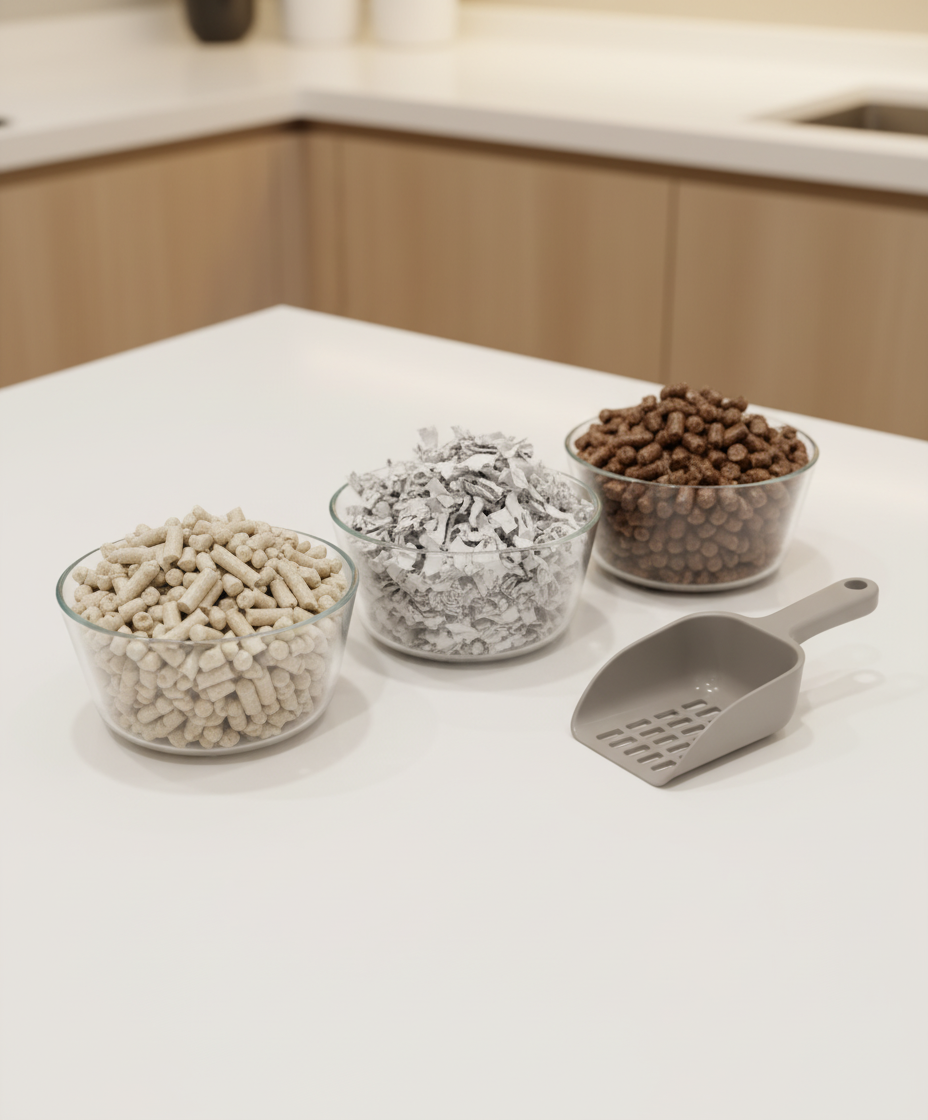
Not all litters are created equal, especially for curious kittens, with tofu and paper-based options being the safest, while clumping clay poses significant ingestion and respiratory hazards. In fact, ingestion of clumping clay can be fatal in up to 30% of cases for very young kittens. This table provides a quick overview, ranking common litter types from safest to most dangerous for your kitten.
| Litter Type | Safety for Kittens | Ingestion Risk | Dust Level | Key Features |
|---|---|---|---|---|
| Tofu/Soybean | ⭐ (Safest) | Very Low (biodegradable, food-grade) | Ultra-Low | Excellent odor control, fast clumping, eco-friendly |
| Paper-Based | ⭐⭐ (Very Safe) | Low (digestible, non-expanding) | Very Low | Good absorbency, often recycled, non-clumping |
| Pine Wood (Pellets) | ⭐⭐⭐ (Safe) | Moderate (non-expanding, but can be sharp) | Low (pellets) to Moderate (shavings) | Natural scent, good odor control, non-clumping/light clumping |
| Crystal (Silica Gel) | ⭐⭐⭐⭐ (Moderate Risk) | Moderate (can cause GI upset, not digestible) | Low | High absorbency, good odor control, non-clumping, sharp edges can irritate paws |
| Non-Clumping Clay | ⭐⭐⭐⭐⭐ (High Risk) | High (not digestible, can cause blockages) | High | Cheap, absorbent, but dusty and dangerous if ingested |
| Clumping Clay (Bentonite) | ⛔ (Most Dangerous) | Fatal (expands in stomach, severe blockage risk) | Very High | Popular for adults, but lethal for kittens if ingested |
The Age-Stage Litter Roadmap ⭐
Choosing the right litter evolves with your kitten's development, requiring specific safe choices during critical stages like their initial exploratory phase at 4-8 weeks. Young kittens have an instinct to explore new textures with their mouths, which changes how we approach litter selection. Think of it as a graduation: they start with the safest, easiest options and slowly work their way up to more varied adult litters.
0-4 Weeks (With Mom) — No Litter Needed Yet
During their first month, kittens are entirely dependent on their mother. Mama cat does all the work, stimulating them to eliminate and keeping them clean. They won't need a litter box yet, but it's a good idea to ensure their nesting area is clean and comfortable. This is a time for bonding and rapid growth, not litter training.
4-8 Weeks — Paper or Non-Clumping Only
This is the most critical period for litter safety. Kittens are now mobile, increasingly curious, and their senses are fully developing. This is the age where they'll be most likely to taste or eat anything new, including litter. Their tiny digestive systems are simply not ready for anything that expands or is indigestible.
For this age group, stick to two main options:
- Paper-based litter: Usually recycled paper pellets. It's soft on paws, highly absorbent, very low dust, and non-toxic if ingested in small amounts.
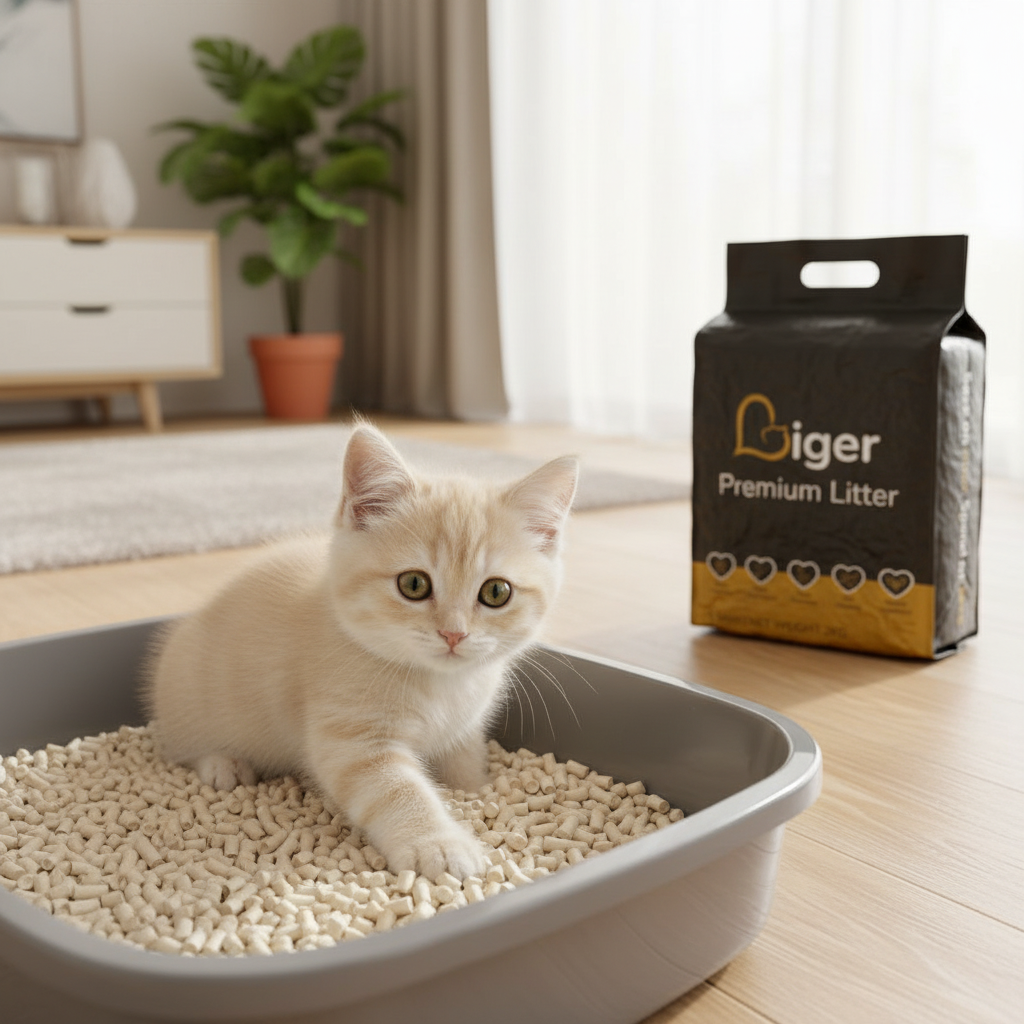
- Non-clumping tofu/soybean litter: If you can find a non-clumping variety, it’s excellent. However, many tofu litters are clumping. If using clumping tofu, ensure it's very shallow (1-2 cm) and monitor closely. Liger Tofu Cat Litter is made from 100% natural, food-grade tofu, meaning it's safe if accidentally ingested in small amounts, making it a good choice for slightly older kittens in this range who are showing less oral fixation.
Avoid any clumping clay, crystal, or traditional pine pellets (which can be dusty or sharp) during this stage.
8-16 Weeks — Transition to Tofu or Pine
As your kitten grows, their oral fixation usually decreases, but they still explore. At this stage, you can start introducing more natural clumping litters. Their lungs are also stronger, making low-dust options still important, but less critically sensitive.
- Tofu/Soybean Litters: This is an ideal time to introduce Liger Tofu Cat Litter. Its ultra-low dust formula is great for developing respiratory systems, and the fast, firm clumping makes scooping easy. Plus, our natural mild milk fragrance is gentle on sensitive noses like Ping'An's, without being an overpowering artificial perfume. The food-grade tofu material offers peace of mind if a little nibble happens.
- Pine Wood Litters: Pelleted pine litter is another good choice. It's natural, absorbent, and has a pleasant, earthy scent. The pellets might be a bit larger or harder, so ensure your kitten's paws are comfortable.
If you're transitioning from paper, do it gradually over 7-10 days, mixing increasing amounts of the new litter with the old. We have a full guide on how to transition cat litter stress-free.
16+ Weeks — Full Range Available
By about 4 months of age, most kittens have passed their peak "eat everything" phase and have stronger respiratory systems. At this point, they can generally handle a wider range of adult cat litters. This means options like crystal litter or even low-dust clay litters can be introduced, if desired. However, many cat parents (including us!) find that once they discover the benefits of natural litters like tofu, they stick with them. Tofu litter offers superior odor control, is easy to clean, and is environmentally friendly.
Even with adult cats, remembering the potential for dust to cause respiratory issues (like what our young Tiger has, with his congenital heart disease, which means we avoid anything that puts extra strain on him) or for certain litters to track excessively means careful consideration is always a good idea. Consider using our litter comparison tool to see how different types stack up.
Best Kitten-Safe Litters Available in Malaysia
For Malaysian cat parents, the safest and most recommended litters for kittens are plant-based options like tofu, paper, and pine, offering natural safety against ingestion and dust concerns. These litters are often derived from sustainable sources, appealing to eco-conscious owners while keeping prices accessible. Here’s a look at some good choices you can find locally.
Tofu/Soybean Litters (Safest Choice)
Tofu litter stands out as the top recommendation for kittens due to its natural, biodegradable composition. Made from food-grade soybean pulp, it's safe if accidentally ingested, produces minimal dust, and boasts excellent odor control. The gentle, mild milk fragrance (like in Liger Tofu Cat Litter) is also a plus for sensitive kitten noses. Expect prices to range from RM25-RM45 for a 6-10L bag.
- Liger Tofu Cat Litter: Our own Liger Tofu Cat Litter is specifically designed with safety in mind. It features a natural mild milk fragrance (no artificial perfumes!), an ultra-low dust formula perfect for tiny lungs like Ping'An's, fast and firm clumping, and minimal tracking. Made from 100% natural tofu/soy, it's food-grade safe. Plus, its flushable nature (though remember IWK guidelines, more on that later) makes disposal simple for apartment dwellers.
- Pottycats Tofu Cat Litter: Another popular Malaysian brand, often available in various scents. Generally good clumping and low dust.
- Kit Cat SOYA Litter: Widely available, often comes in different pellet sizes and scents. Good reputation for clumping.
Paper-Based Litters
These litters, typically made from recycled paper, are a fantastic choice for the youngest kittens (4-8 weeks) who are most prone to ingestion. They are soft, very low dust, non-toxic, and highly absorbent. The main downside is that they don't clump, so odor control might require more frequent full litter changes. You can expect to pay around RM20-RM35 for a large bag.
- Yesterday's News: A well-known brand, though sometimes harder to find in Malaysia.
- Generic Recycled Paper Pellets: Many local pet shops carry generic or house-brand recycled paper pellets, which are often more affordable and just as effective.
Pine Wood Litters
Pine litters are made from compressed pine sawdust. They offer a natural pine scent, good odor absorption, and are generally low in dust. Like paper, they don't clump in the traditional sense; instead, they turn to sawdust when wet. They are safe if ingested in small quantities. Pricing is usually in the RM20-RM40 range for a standard bag.
- Fido Wood Pellets: A common and affordable option available in many Malaysian pet stores.
- Eco-Pine Litter: Another brand often found locally.
What to Avoid for Kittens
Steer clear of these litter types for any kitten under 4 months of age:
- Clumping Clay Litter (Bentonite): As discussed, the expansion risk if ingested is simply too high and potentially fatal.
- Crystal (Silica Gel) Litter: While low dust, the sharp, gritty texture can be irritating to tender kitten paws. More importantly, if ingested, the silica gel can cause gastrointestinal upset or blockages, even if it doesn't expand like bentonite.
- Scented Litters (with artificial perfumes): Strong artificial fragrances can be irritating to a kitten's highly sensitive nose and developing respiratory system. Always opt for unscented or naturally, mildly scented options like the milk fragrance in Liger Tofu Cat Litter.
Setting Up Your Kitten's First Litter Box ⭐
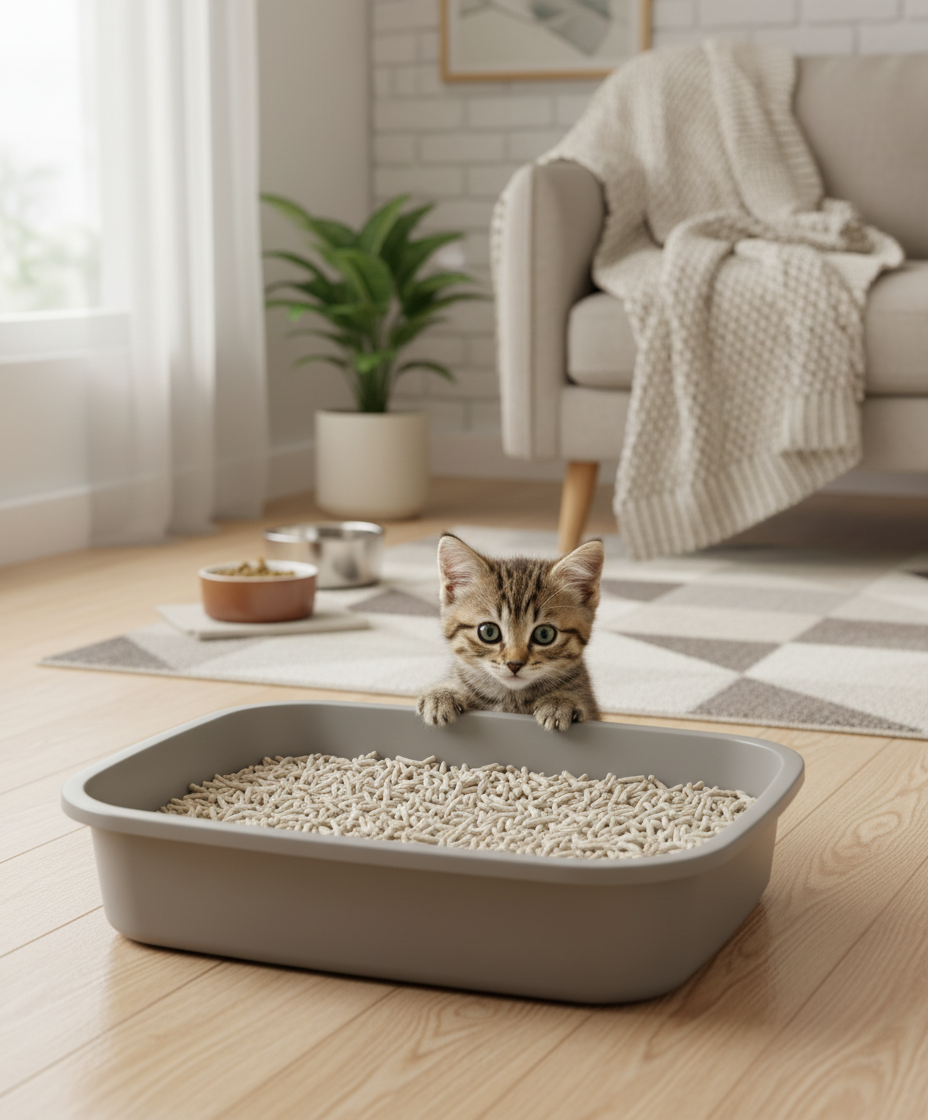
Creating the right litter box environment for a kitten goes beyond just scooping; it means selecting a low-entry box, placing it strategically, and filling it to a shallow depth to encourage proper training and prevent accidents. Studies show that a properly set up litter box significantly reduces the likelihood of inappropriate elimination by 70%. For new cat parents, this foundational step is paramount for a harmonious household.
Choosing the Right Box Size
Forget those huge, covered litter boxes for now. Kittens need something they can easily get in and out of. Look for a shallow, low-entry litter box with sides no more than 2-3 inches high. A small baking pan or a plastic storage container with one side cut down works perfectly. The footprint shouldn't be too large, either, as they're learning to navigate. You can use our litter box size calculator later as your kitten grows.
Where to Place It
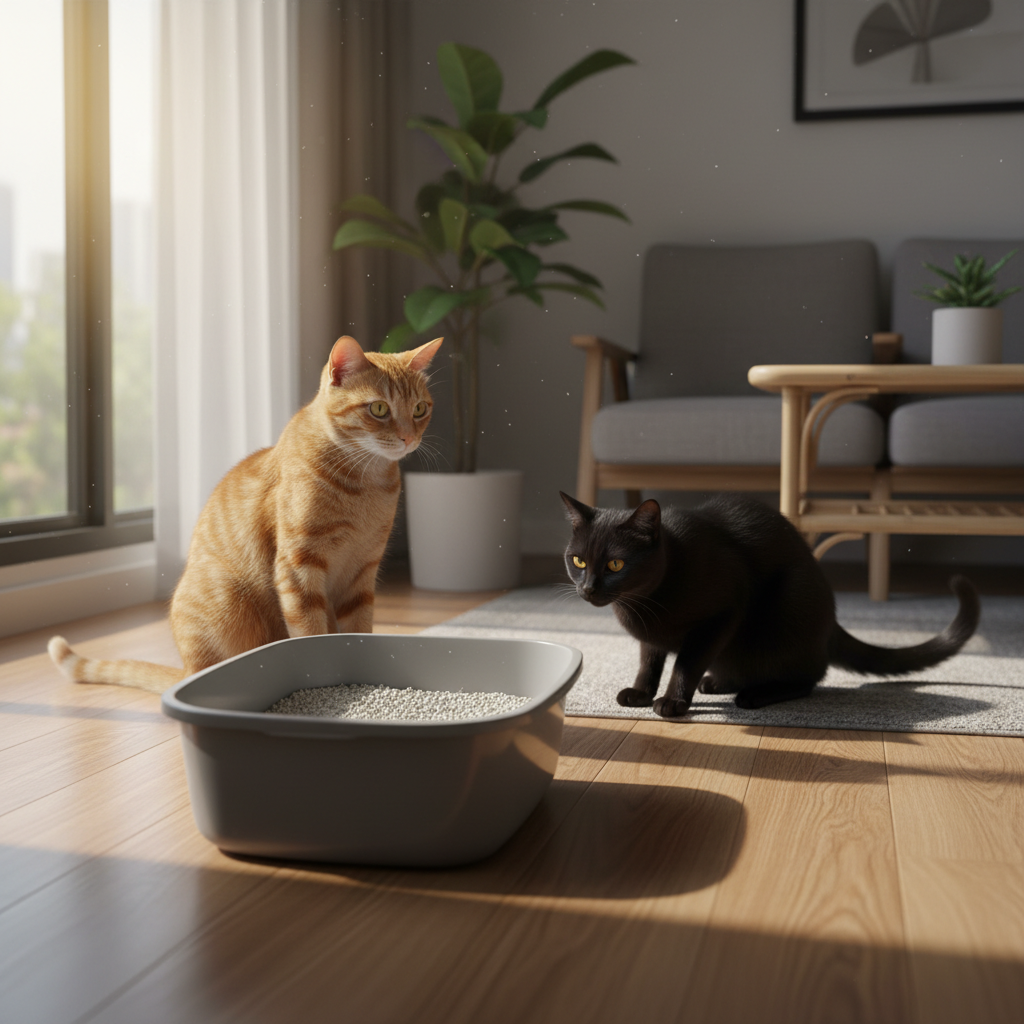
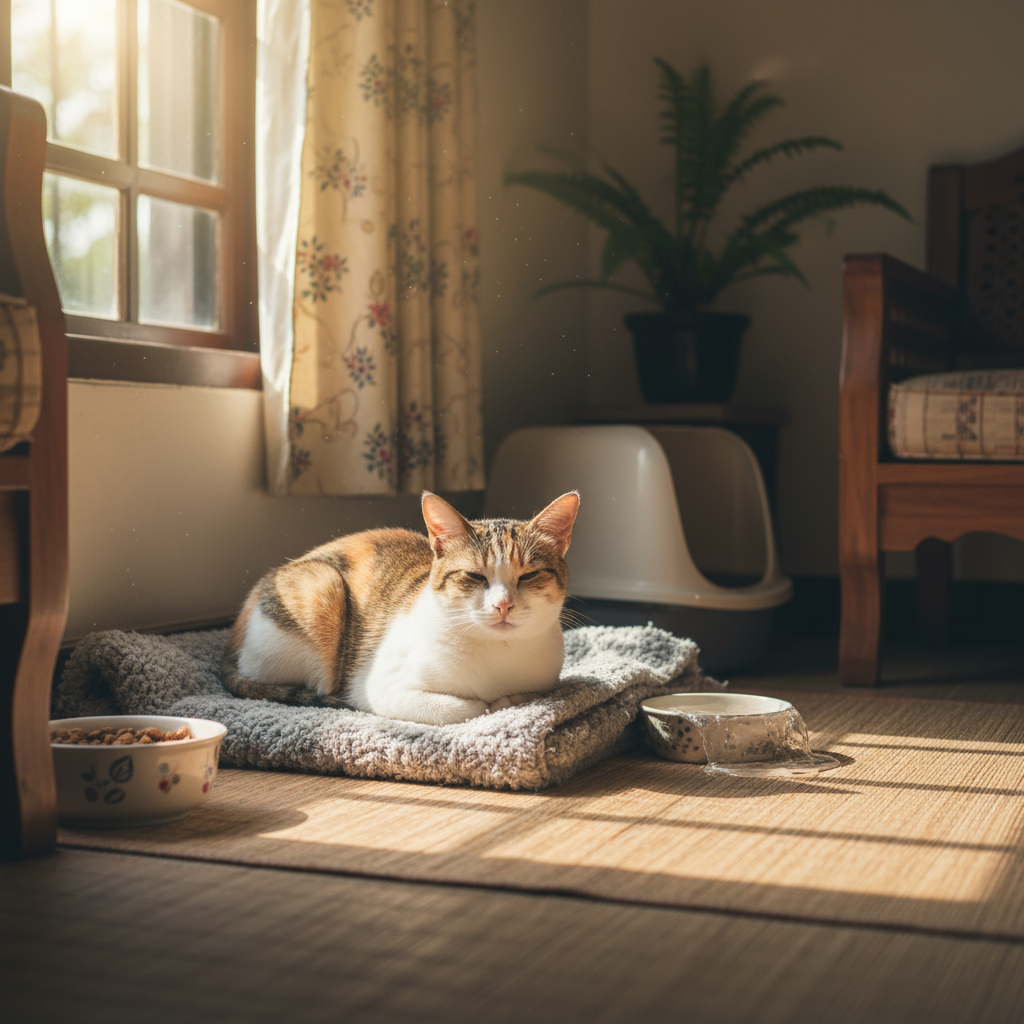
Placement is crucial for success. Kittens need easy access, especially when they're still learning. Place the litter box in a quiet, accessible area, away from their food and water bowls. Avoid high-traffic zones or noisy appliances that might startle them. For a multi-story home, consider having one box per floor initially.
How Deep to Fill (Kittens Need Less)
This is where many new cat parents make a mistake. For kittens, less is more! Fill the box with only 2-3 cm (about 1 inch) of litter. This makes it easier for them to navigate, prevents them from getting completely buried, and reduces the temptation to eat large amounts. As they grow, you can gradually increase the depth to the adult recommendation of 5-7 cm.
Litter Training Steps (Day 1-7)
Litter training a kitten is usually quite straightforward, as cats have a natural instinct to bury their waste. Here’s a simple schedule:
- Day 1: Arrival & Introduction: When you bring your kitten home, immediately show them the litter box. Gently place them inside, let them sniff around, and even gently scratch their paws in the litter (mimicking burying). Do this after they wake up, eat, or play.
- Days 2-3: Consistency is Key: Continue placing them in the box regularly. Look for signs they need to go: sniffing around, squatting, or a sudden pause in play. Positive reinforcement (a gentle pat, soft praise) when they use the box is far more effective than punishment.
- Days 4-7: Building Confidence: By now, your kitten should be getting the hang of it. Keep the box meticulously clean (scoop at least twice daily) as cats are very particular. A dirty box is the number one reason for accidents outside the box. If accidents happen, simply clean them thoroughly with an enzymatic cleaner and redirect your kitten to the box. Never rub their nose in it or scold them; it only creates fear.
Remember, patience and positive reinforcement are your best tools. Every kitten learns at their own pace.
'My Kitten Ate the Litter!' — What to Do ⭐
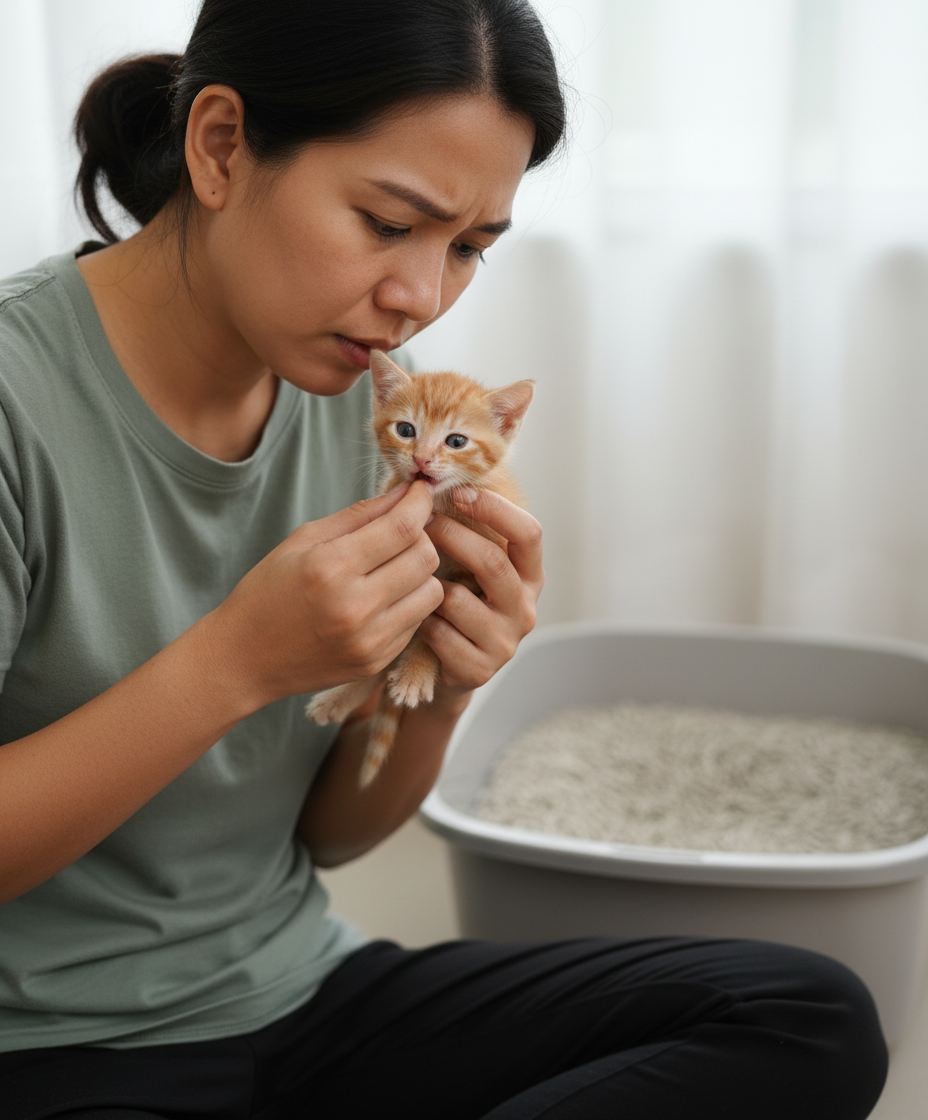
It's a terrifying moment for any cat parent: you catch your tiny furball munching on their litter. Don't panic, but do act fast. If your kitten ingests litter, the danger level varies significantly by type, with clumping clay being the most hazardous due to its expansion properties. Veterinary emergency data indicates that clay litter ingestion is a common cause of GI obstruction in young cats, often requiring urgent intervention.
First, try to identify what type of litter they ate and how much. This information will be crucial if you need to contact your vet.
Danger Levels by Litter Type
The severity of the situation depends heavily on the litter type:
| Litter Type | Ingestion Danger Level | Immediate Action |
|---|---|---|
| Tofu/Soybean | Low | Monitor closely for any changes in appetite, vomiting, or stool. Small amounts are usually harmless due to food-grade nature. |
| Paper-Based | Low | Monitor for mild GI upset. Small amounts are generally digestible. |
| Pine Wood | Moderate | Monitor for GI upset or signs of obstruction. Though natural, larger pieces can cause issues. |
| Crystal (Silica Gel) | Moderate to High | Contact vet immediately. Can cause GI irritation and potential blockages. |
| Non-Clumping Clay | High | Contact vet immediately. Can form a hardened mass, leading to blockages. |
| Clumping Clay (Bentonite) | CRITICAL - FATAL | EMERGENCY VET VISIT IMMEDIATELY. This is extremely dangerous due to expansion in the digestive tract. |
When to Rush to the Vet
Regardless of the litter type, if you observe any of the following symptoms after your kitten has ingested litter, it's an emergency. Don't wait; rush to the nearest veterinary clinic:
- Persistent vomiting or retching
- Lethargy or extreme weakness
- Loss of appetite for more than a few hours
- Straining to defecate or severe constipation
- Abdominal pain or swelling (your kitten might cry when touched)
- Changes in behavior or unusual vocalizations
- Difficulty breathing (if dust was inhaled)
Seriously, when it comes to kitten health, it's always better to be safe than sorry. A quick vet visit can mean the difference between life and death, especially with rapidly developing issues like intestinal blockages. Keep your vet's emergency number handy!
Malaysia-Specific Tips
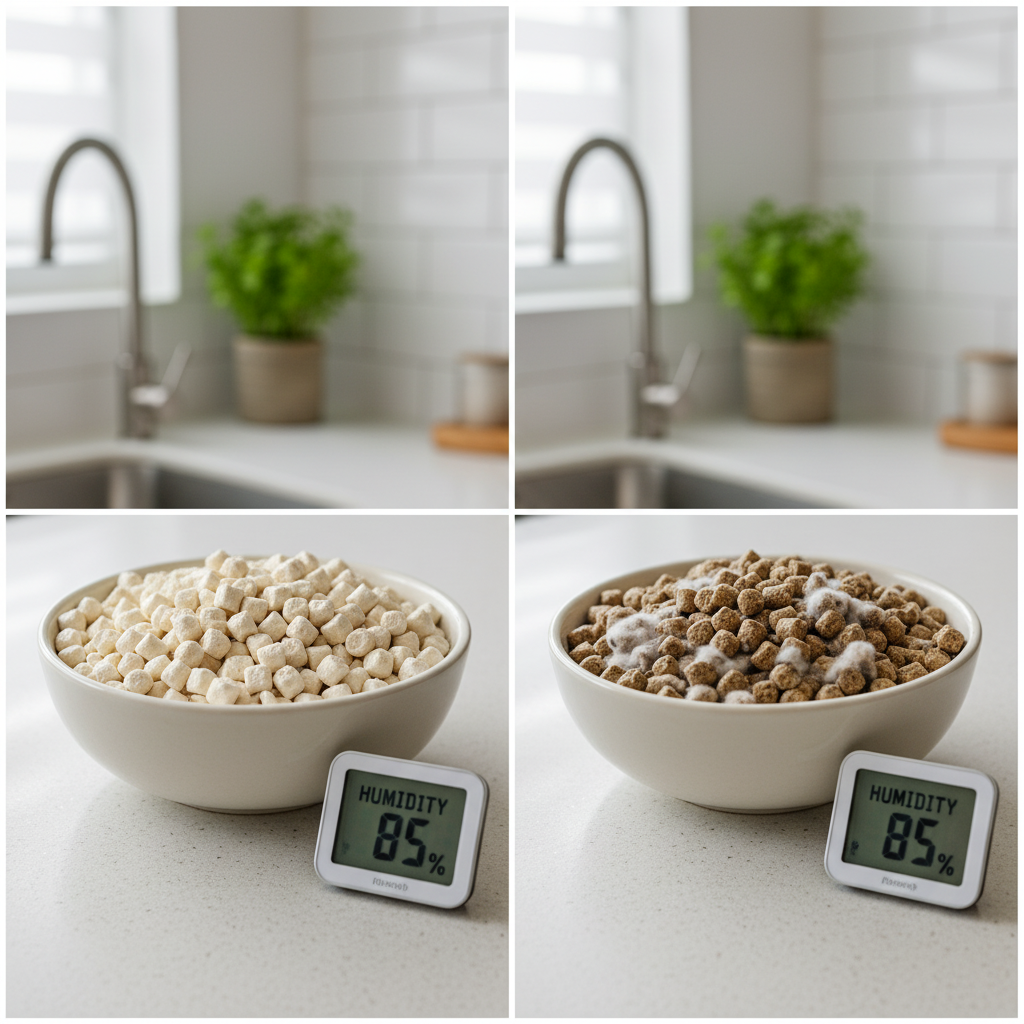
Malaysia's tropical climate, with its high humidity, impacts how cat litters perform and should be stored, especially for natural, absorbent types like tofu or pine to prevent mold growth and maintain freshness. Temperatures often hover around 30°C, increasing the risk of mold if not stored properly. We've learned a few things the hard way as cat parents here in Malaysia.
Humidity and Natural Litter Storage
Natural litters like tofu and pine are fantastic, but Malaysia's high humidity (often above 85% relative humidity) can be their enemy. They are organic and can absorb moisture from the air, making them prone to mold and mildew. Remember, Aflatoxin poisoning in pets from moldy food (or litter) is a real concern, with Aspergillus flavus thriving at 28-32°C.
To combat this:
- Store in airtight containers: Keep opened bags of litter in sealed containers.
- Cool, dry place: Avoid storing litter in damp bathrooms or direct sunlight. A cupboard in an air-conditioned room is ideal.
- Buy smaller bags: If you use litter slowly, opt for smaller bags to ensure freshness.
We've found that Liger Tofu Cat Litter, when stored properly, maintains its integrity and freshness even in our climate.
Where to Buy Kitten-Safe Litter in Malaysia
Finding kitten-safe litter is easier than you think:
- Online Marketplaces: Shopee and Lazada are treasure troves. Filter by 'tofu cat litter', 'paper cat litter', or 'pine cat litter'. Most brands offer fast delivery.
- Pet Stores: Major chains like Pet Lovers Centre, Pet Safari, and smaller local pet shops often carry a good selection of natural litters. Always check labels for 'low dust' and 'natural ingredients'.
- Liger.my: Of course, you can find our Liger Tofu Cat Litter directly on our website, liger.my, with convenient delivery across Malaysia.
One final, important note on disposal: while some tofu litters claim to be flushable, the IWK domestic sewerage guidelines in Malaysia strictly prohibit flushing any solid waste, including cat litter. This is to protect our sewage systems from blockages. Please dispose of all used litter responsibly in municipal waste bins.
Choosing the best cat litter for your kitten in Malaysia can seem daunting, but by understanding their unique developmental needs, you can make safe and smart choices. From the ingestion risks of clumping clay to the delicate nature of tiny lungs, prioritizing safety is paramount. Opt for natural, low-dust options like tofu or paper-based litters in their early months, and always remember that a clean litter box is a happy box.
As fellow cat parents, we truly believe that informed decisions lead to healthier, happier furballs. So, take this knowledge, give your kitten an extra cuddle, and get ready for a lifetime of purrs and playful mischief. Your Monday morning action item? If you have a young kitten, double-check your current litter type against our safety ranking. If it's not a safe option, swap it out for a kitten-friendly alternative before noon tomorrow!