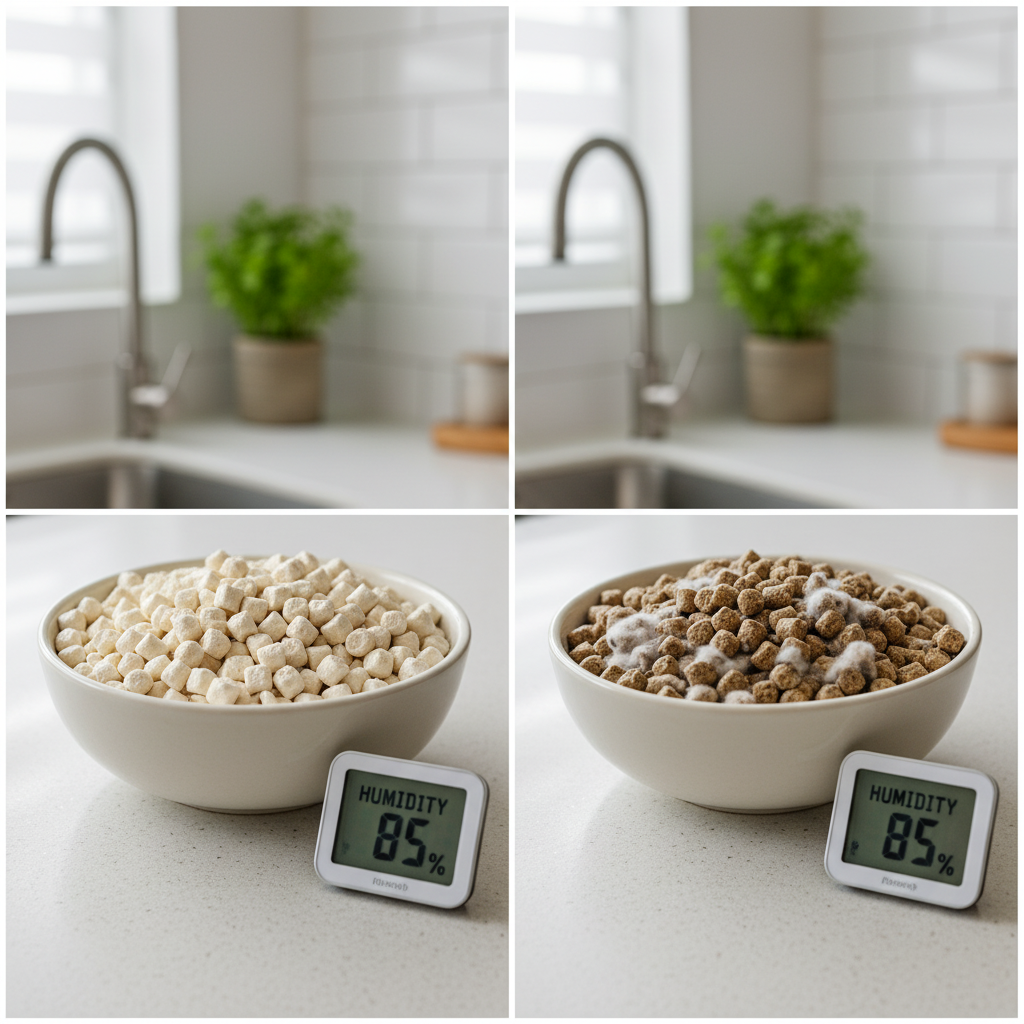
- Malaysia's tropical climate (30°C, 80%+ humidity) significantly degrades organic litters like tofu, promoting mold growth and mushy clumps, making bentonite clay more functionally resilient.
- The 'n+1' litter box rule is foundational, but dispersal of boxes to different, non-clustered locations is crucial to prevent territorial guarding and reduce feline stress.
- While premium tofu litter is more expensive per kilogram, its lower consumption rate means the monthly cost for a multi-cat household is often comparable to premium bentonite clay.
- Flushing cat litter, including 'flushable' tofu, is prohibited by Indah Water Konsortium (IWK) regulations in Malaysia, nullifying a key environmental benefit.
- Effective ventilation, strategic litter box placement in apartments vs. landed homes, and climate-adjusted cleaning schedules are essential for hygiene and odor control in Malaysia.
You love your cats, that much is certain. But let's be honest: managing litter for multiple feline friends in a Malaysian home can feel like a never-ending battle against odors, dust, and territorial squabbles. Our hot and humid climate makes everything just a little bit harder, right? As fellow cat parents, we understand the struggle – we've been there, staring at a box wondering if we're doing it all wrong. It's a journey of trial and error, but with the right insights, you can create a harmonious, fresh-smelling home, even with a bustling multi-cat household.
Why Multi-Cat Litter Management Is Different
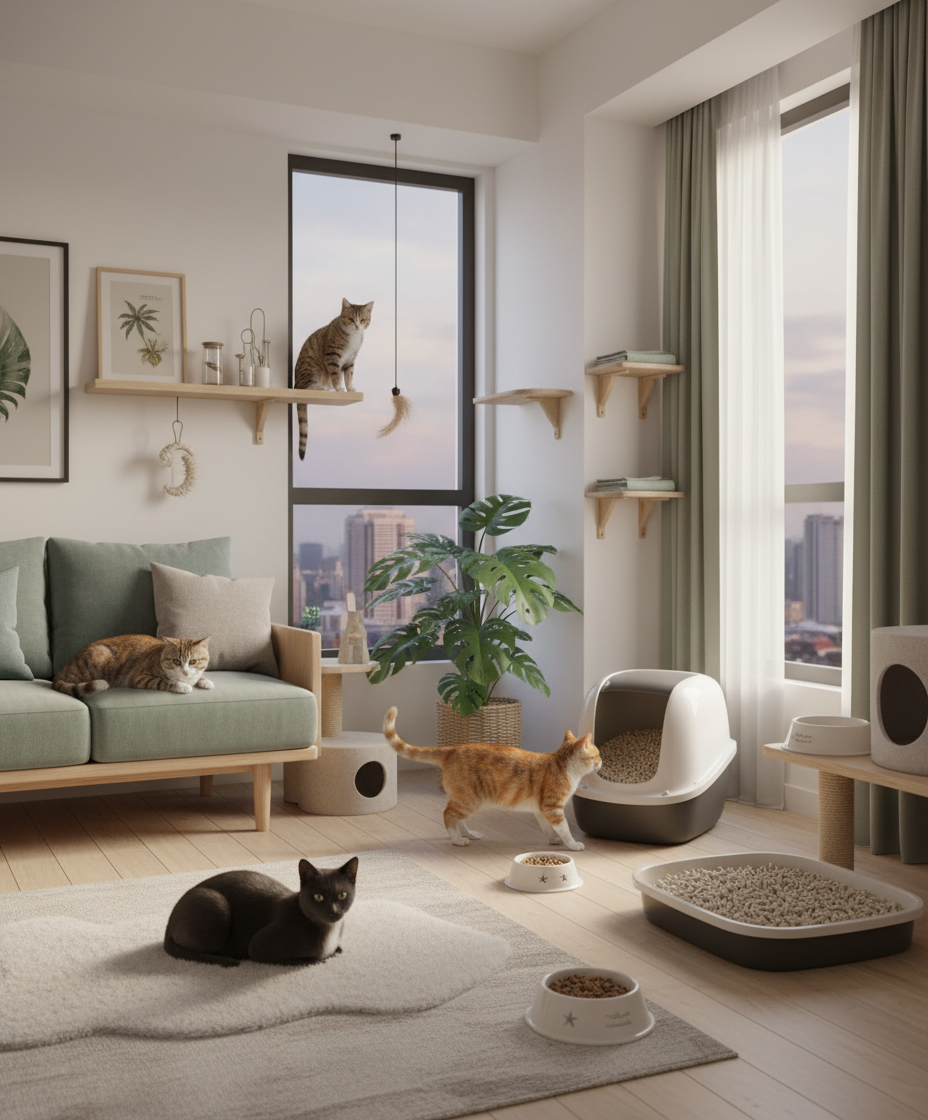
Bringing more cats into your home adds immense joy, but it also multiplies the complexities of litter management. Unlike single-cat households, where one box might suffice, multi-cat dynamics introduce a fascinating, sometimes frustrating, world of feline social structures and resource competition. According to veterinary consensus, the litter box is not just a toilet; it's a critical resource that can trigger significant stress if not managed correctly Mud Bay.
The N+1 Rule — How Many Litter Boxes You Really Need
The golden rule for multi-cat homes, universally endorsed by veterinarians, is the 'n+1' rule: one litter box per cat, plus one extra Inverse. So, if you have three cats, you need four litter boxes. This isn't just an arbitrary number; it's a scientifically backed strategy to reduce stress and prevent inappropriate elimination. Cats are notoriously picky; some prefer to urinate in one spot and defecate in another. Others simply appreciate having a choice, especially if another box is occupied or feels 'dirty' to their sensitive noses. Having ample options ensures cleanliness and reduces the chance of territorial conflicts.
Territorial Behavior and Litter Box Conflicts
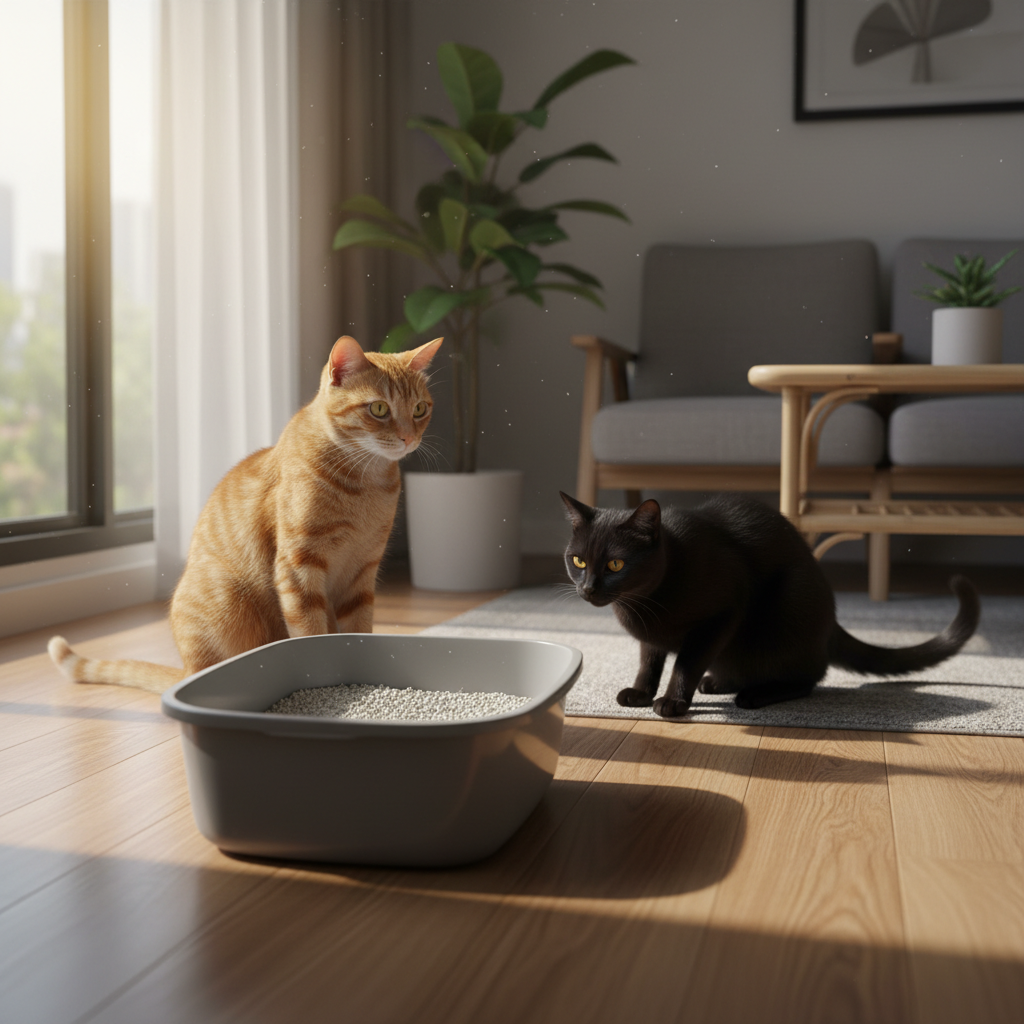
In a multi-cat household, the litter box is often a flashpoint for territorial disputes. A dominant cat might 'guard' a preferred box, preventing other cats from using it, or even ambush a vulnerable cat as it exits Ten Lives. This isn't usually outright aggression, but subtle intimidation – a hard stare, a blocked exit, or occupying a doorway. These conflicts create anxiety, leading to spraying on vertical surfaces, urinating on soft furnishings, or defecating outside the box. It’s a classic case of resource guarding, and it’s a big deal for feline mental health.
Signs Your Current Setup Isn't Working
Your cats might not tell you in words, but their behavior speaks volumes. House soiling, for instance, affects over 10% of cats at some point Cornell Feline Health Center. Before assuming it's 'revenge,' always rule out medical issues with a vet visit first. Once physical causes are excluded, the problem often points to your litter box setup. Here’s a quick behavior decoder:
| Symptom | Potential Cause(s) | Targeted Solution(s) |
|---|---|---|
| Litter Box Guarding (One cat blocks or intimidates another from using the box) | Resource Scarcity/Competition: All boxes are clustered together, making them easy for one cat to control. | Disperse Resources: Place litter boxes in multiple, separate locations across different rooms and on different floors to prevent a single cat from monopolizing them VCA Hospitals. |
| Territorial Insecurity: The guarding cat feels a need to control a key territory. | Improve Access & Escape: Use large, uncovered boxes so the victim cat has a 360-degree view and multiple escape routes. Add vertical spaces like cat trees near boxes to create more environmental complexity Ten Lives. | |
| Spraying on Vertical Surfaces (Marking on walls, doors, furniture) | External Territorial Threat: The cat sees or smells outdoor cats, triggering anxiety. | Block Visual Access & Deter: Use opaque window film or blinds on lower windows. Use motion-activated sprinklers to deter outdoor cats Cornell Feline Health Center. |
| Internal Social Stress: Conflict or tension with another cat inside the home. | Increase Resource Abundance & Separation: Ensure each cat has its own food, water, and resting areas in separate locations Ten Lives. Use synthetic feline pheromone diffusers. | |
| Inappropriate Elimination (Urinating/defecating on floors, beds, laundry) | Litter/Box Aversion: The cat dislikes the litter's texture, scent, the box's size, or location. | Offer Choice & Optimize: Provide multiple litter types. Ensure boxes are large (cats prefer boxes around 86 cm by 39 cm). Keep boxes impeccably clean, scooping daily Cornell Feline Health Center. |
| Negative Association: The cat was ambushed or startled while using the box. | Relocate & Secure: Move the litter box to a quiet, low-traffic area where the cat feels secure and cannot be easily cornered. |
Best Types of Cat Litter for Multi-Cat Homes in Malaysia
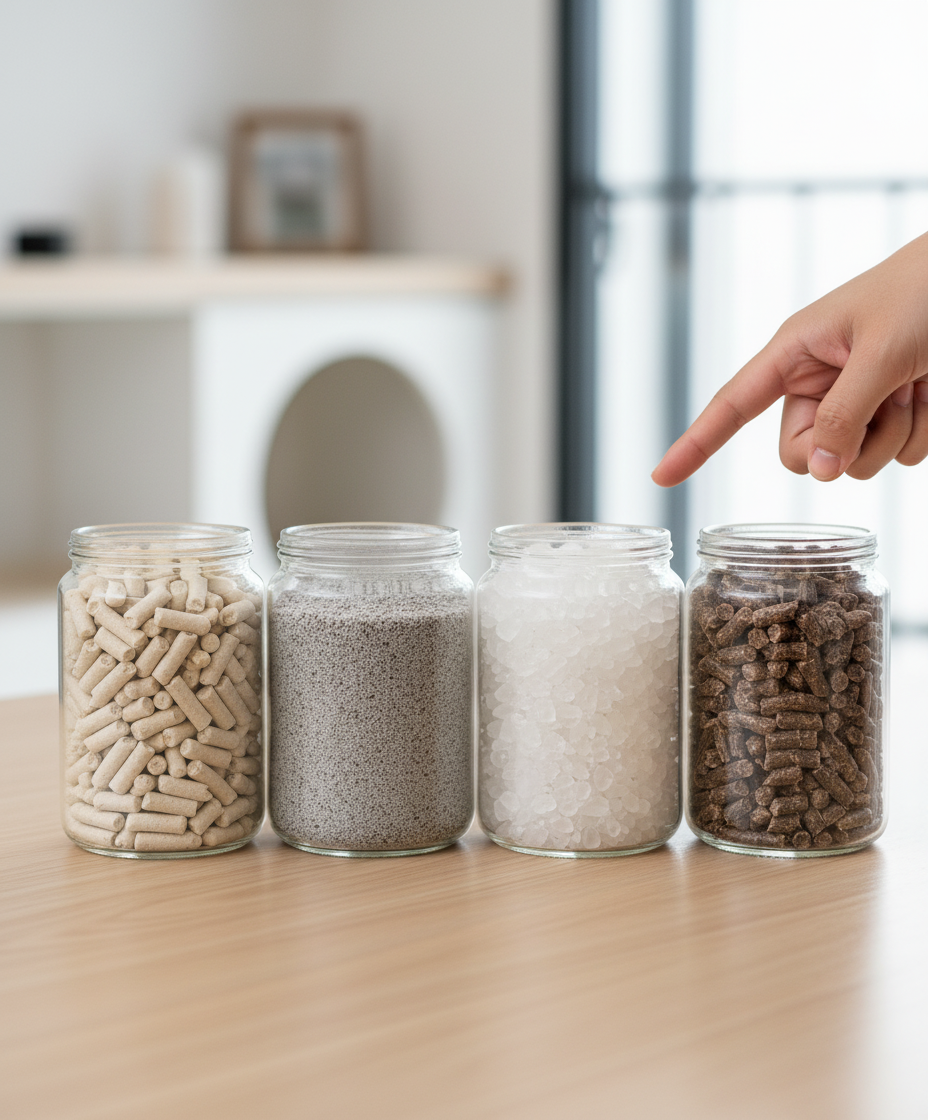
Choosing the right cat litter for a multi-cat household in Malaysia isn't just about what's available; it's about what performs best in our unique tropical climate, balancing odor control, hygiene, and the individual preferences of each cat. The market offers a wide array, but not all are created equal under the scorching sun and constant humidity.
Tofu Cat Litter — Why It Dominates Multi-Cat Homes
Tofu litter, made from soybean pulp, has taken the Malaysian market by storm, with 55% of online discussions in 2026 focusing on tofu or soya-based products Mediapod. It's heralded for its ultra-low dust formula, a huge plus for cats with sensitive respiratory systems like our own Ping'An, who sneezes at dusty litters, and for owners with allergies Pottycats. Its biodegradable nature appeals to environmentally conscious cat parents. Liger Tofu Cat Litter, for instance, offers fast and firm clumping and a natural mild milk fragrance that helps neutralize odors without artificial perfumes. However, its performance in Malaysia's humid climate can be a mixed bag; it readily absorbs ambient moisture, potentially leading to mushy clumps and a higher risk of mold growth Ccatpet.
Clumping Clay Litter — The Traditional Workhorse
Bentonite clay litter has long been the go-to choice for many Malaysian cat parents, valued for its affordability and robust clumping power. In our hot and humid environment, bentonite often outperforms organic litters by forming hard, tight clumps that effectively trap urine and its associated ammonia odors Liger. It's a reliable workhorse for multi-cat homes, maintaining its integrity even when faced with multiple deposits. The main downsides? Clay litters can be dusty, potentially irritating respiratory systems, and they are not biodegradable, contributing significantly to landfill waste Tuft & Paw.
Crystal/Silica Gel Litter — Low Maintenance Option
Crystal litter, made from silica gel, is lauded for its exceptional moisture and odor absorption, capable of absorbing up to 40% of its weight in liquid Tuft & Paw. This often means less frequent scooping of urine, though solids still need daily removal. In a multi-cat household, this can seem appealing. However, in Malaysia's high humidity, crystal litter's lifespan is significantly shortened. It continuously absorbs atmospheric moisture, saturating much faster than in drier climates and leading to premature odor breakthrough and reduced cost-effectiveness Furrbby.
Pine Wood Litter — The Eco-Friendly Choice
Pine wood litter is another eco-conscious option, biodegradable and often made from reclaimed wood waste. It offers a natural, fresh scent that can help mask odors, as the wood fibers neutralize ammonia Purrfect Pet. As cats use it, the pellets break down into sawdust, which can then be composted. For multi-cat homes in Malaysia, however, the challenge lies in its moisture retention. The resulting sawdust can stay damp in humid air, leading to a 'wet wood' or 'farm-like' smell and also creating a hospitable environment for mold growth, similar to tofu litter Pretty Litter.
Head-to-Head: Tofu vs Clay for Multi-Cat Specifically
For Malaysian multi-cat parents, the choice often comes down to tofu versus bentonite clay. Each has distinct advantages and disadvantages, especially when amplified by our tropical climate. Here's a direct comparison:
| Litter Type | Odor Control (Humid Climate) | Clumping (Humid Climate) | Dust Level | Environmental Impact | Multi-Cat Considerations in Malaysia |
|---|---|---|---|---|---|
| Bentonite Clay | Very Good (Effectively traps ammonia) | Good to Very Good (Forms hard clumps, but can get gummy) | High | Poor (Non-renewable, non-biodegradable) | Most resilient performance against humidity; consistent for multiple users. However, dust can be an issue for respiratory health. |
| Tofu | Poor to Fair (Prone to musty odors as it absorbs ambient moisture) | Poor (Becomes mushy and breaks apart easily) | Very Low | Good (Renewable, biodegradable) | Excellent for respiratory health. However, high risk of mold/bacteria in humidity, and the 'flushable' feature is irrelevant due to IWK regulations Liger. Requires more frequent full changes. |
| Crystal (Silica) | Good initially, but short lifespan in humidity | N/A (Non-clumping) | Very Low | Poor (Mined, non-biodegradable) | High absorption but quickly saturates in humidity, losing effectiveness for multiple cats rapidly. |
| Pine | Fair to Good (Can develop a 'wet wood' smell) | Fair (Breaks down into damp sawdust) | Low to Medium | Very Good (Renewable, biodegradable) | Natural odor control but damp sawdust in humidity can harbor mold and lead to unpleasant smells. |
Ultimately, while tofu is a strong contender for its low-dust benefits, especially if you have a cat like Ping'An with a sensitive nose, bentonite clay still offers more consistent performance in challenging humid conditions. The trade-off is often between respiratory comfort and overall functional resilience against climate-induced degradation.
Multi-Cat Litter Cost in Malaysia — How Much Will You Spend? ⭐
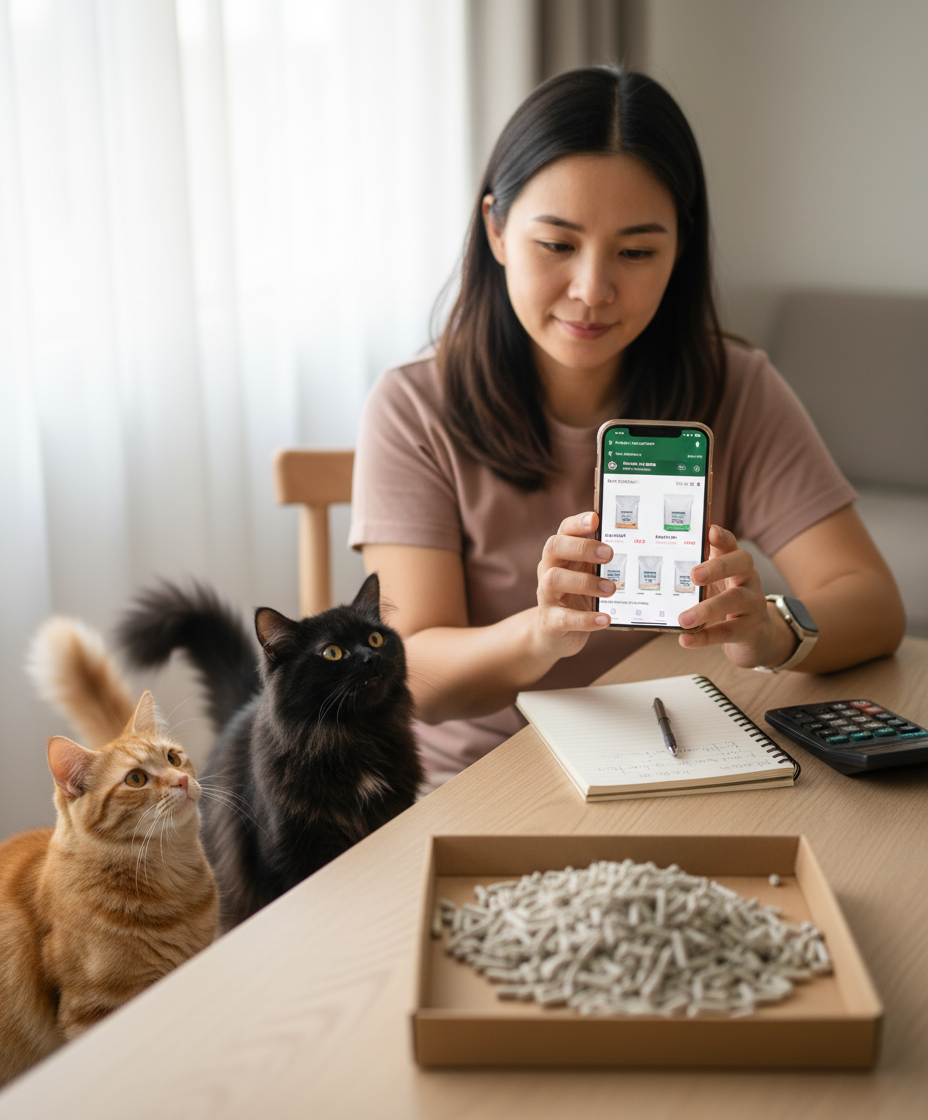
One of the biggest concerns for multi-cat parents is, understandably, the recurring cost of litter. With prices varying widely across brands and types, and consumption rates differing significantly, budgeting can feel like guesswork. A clear understanding of the Malaysian market, including prices from popular platforms like Shopee, Lazada, and Pet Lovers Centre, can really help you plan Oyen.my. Here at Liger, we believe in transparency to help you make informed decisions, just like you would for your own family's budget.
Monthly Cost Breakdown by Litter Type (2, 3, 4+ Cats)
Let's crunch some numbers. Our analysis of the Malaysian market shows that while premium tofu litter can be priced around RM12.00/kg, compared to premium bentonite clay at approximately RM4.14/kg, the lower consumption rate of tofu often evens out the monthly expense for a multi-cat household Purrfact, PetsCrazy. For instance, a single cat typically uses about 2.8kg of tofu litter per month, while bentonite clay can go up to 8.0kg due to its density and clumping characteristics Fur & Fins Pet Care. This disparity in usage means perceived savings per kilogram don't always translate to actual monthly savings. Here's a projection based on current Malaysian market prices (RM) and average consumption rates:
| Litter Type | Avg. Price (RM/kg) | Est. Monthly Consumption (per cat) | Monthly Cost (RM) - 2 Cats | Monthly Cost (RM) - 3 Cats | Monthly Cost (RM) - 4 Cats |
|---|---|---|---|---|---|
| Tofu (Value Brand) | RM 4.95 Alpha Pets | 2.8 kg | RM 27.72 | RM 41.58 | RM 55.44 |
| Tofu (Premium Brand, e.g., Liger) | RM 12.00 Purrfact | 2.8 kg | RM 67.20 | RM 100.80 | RM 134.40 |
| Clay (Value Brand) | RM 1.95 Oyen.my | 8.0 kg | RM 31.20 | RM 46.80 | RM 62.40 |
| Clay (Premium Brand) | RM 4.14 PetsCrazy | 8.0 kg | RM 66.24 | RM 99.36 | RM 132.48 |
| Pine/Wood (Mid-Range) | RM 3.33 Oyen.my | 8.0 kg* | RM 53.28 | RM 79.92 | RM 106.56 |
| Crystal (Silica) | RM 3.40/Litre** Oyen.my | 10 Litres/cat* | RM 68.00 | RM 102.00 | RM 136.00 |
*Consumption for Pine and Crystal is estimated as data is less standardized. Pine is assumed to have a consumption rate similar to clay by weight, while Crystal is based on volume.
**Average price per Litre from available brands.
As you can see, the monthly cost for a three-cat household using premium tofu or premium clay litter is remarkably similar, hovering around RM100. This is often a surprise for cat parents, who assume tofu is always significantly more expensive. For a more personalized budget, check out our Litter Calculator!
Cost-Saving Tips for Multi-Cat Households
Saving a few ringgit here and there can really add up, especially when you're managing multiple litter boxes. Here are some smart strategies to keep your costs down:
- Buy in Bulk: This is probably the most effective way to save. Larger packs, like 10kg bags, almost always offer a lower price per kilogram. Many brands offer discounts for larger quantities, sometimes saving you 10-15% per kg.
- Leverage E-commerce Sales: Keep an eye on Shopee and Lazada. They frequently have 11.11 sales, payday deals, and platform-specific vouchers that can drastically reduce your costs. Free shipping promotions are a lifesaesaver when you're buying heavy bags of litter!
- Compare Brands within Types: Don't just stick to one brand. The price range within tofu or clay litters can be huge. Value brands might offer similar performance for a fraction of the cost, so it's worth experimenting if your cats aren't too picky.
- Diligent Scooping: This might sound obvious, but frequent scooping (at least twice a day) extends the life of your litter. Removing clumps quickly prevents odors from setting in and reduces the need for full litter changes, saving you money in the long run.
Litter Box Setup for Malaysian Homes
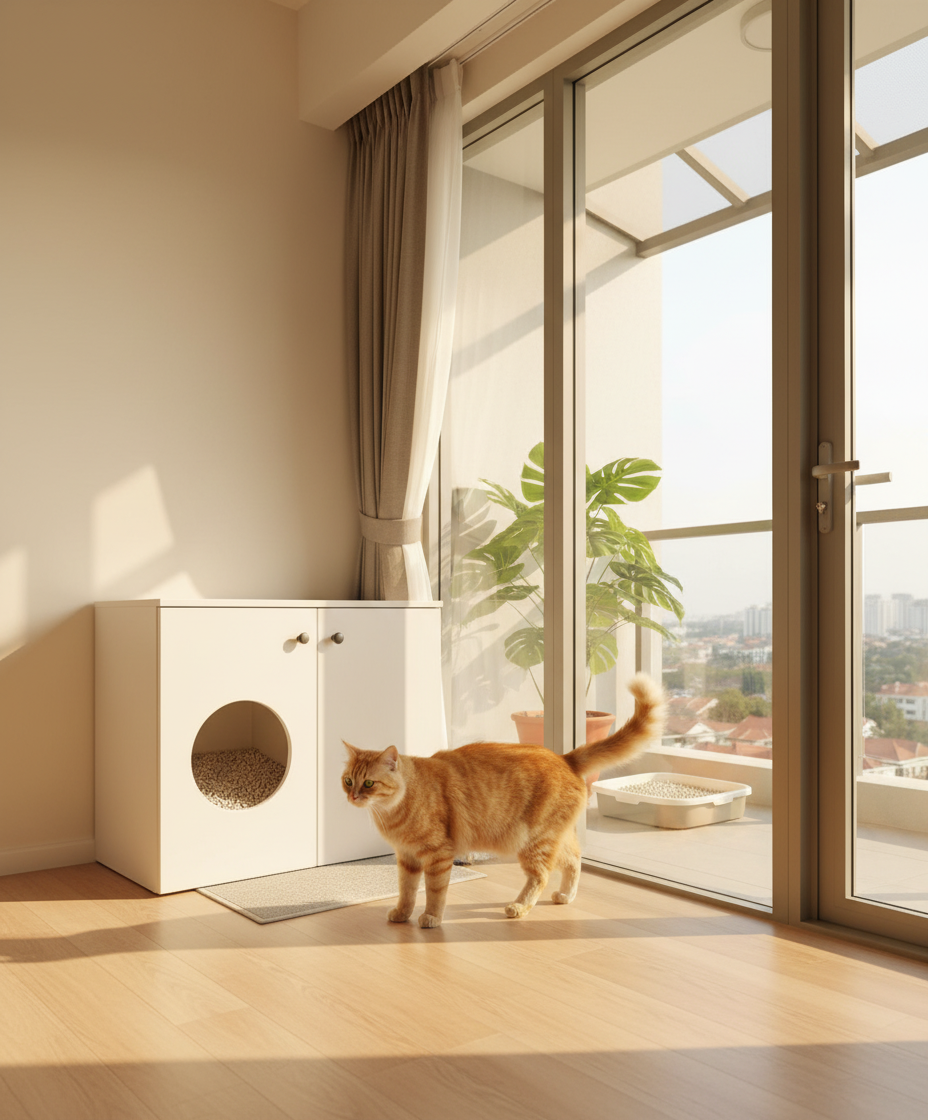
The physical environment of a Malaysian home, whether it's a sprawling landed property or a compact high-rise apartment, dictates the best approach to litter box placement. The goal is always to provide accessible, private, and secure spots for your cats, adhering to that crucial 'n+1' rule, while also maintaining household aesthetics and hygiene.
Apartment/Condo Setup (Limited Space Solutions)
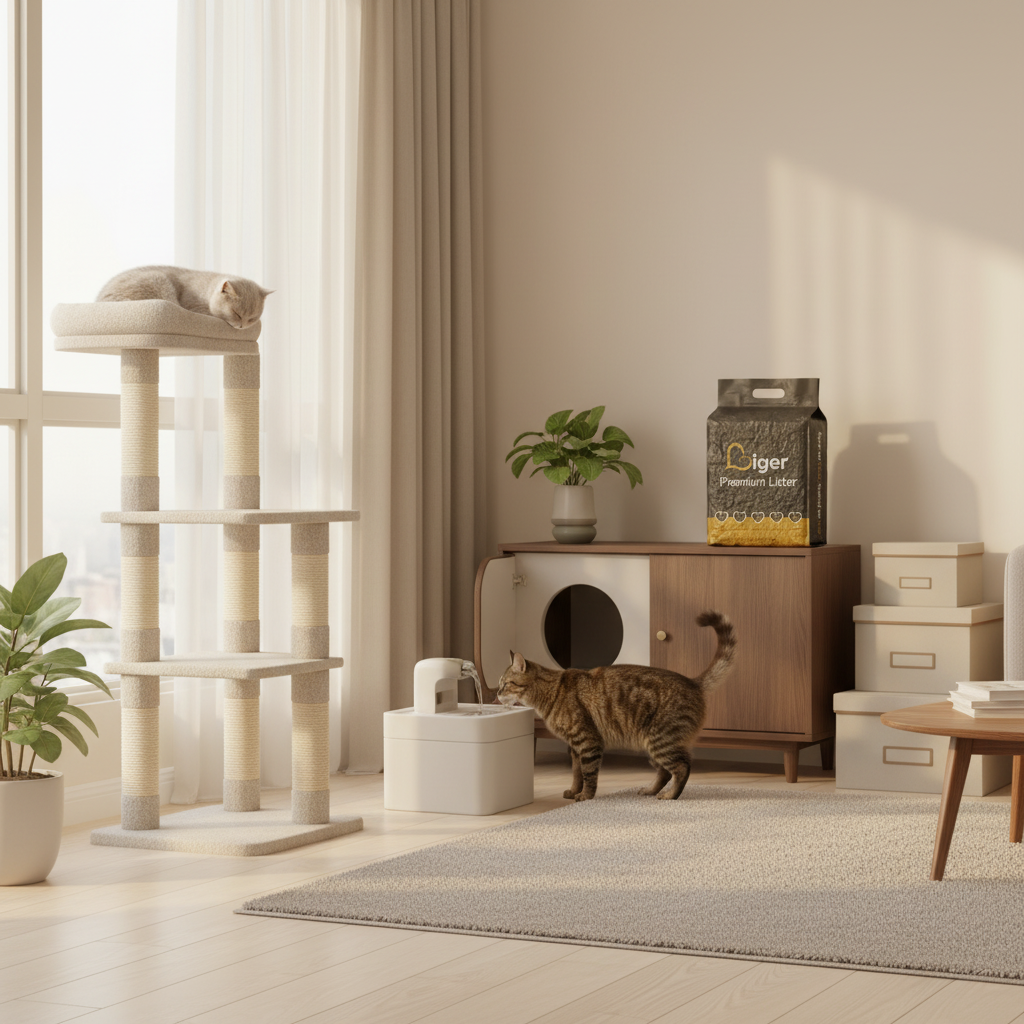
Space is a premium in Malaysian apartments and condos. So, where do you put all those litter boxes? Focus on areas with tiled floors for easy cleaning, like bathrooms or laundry rooms Neakasa. A secured, rain-protected balcony can also be a fantastic spot, offering superior natural ventilation—a must in our humid climate Reddit (r/malaysia). To save floor space, consider corner litter boxes or sleek, top-entry models, which also help reduce litter tracking. Many cat parents get creative with 'IKEA hacks,' converting cabinets like the IVAR or BESTÅ into stylish, concealed litter box furniture. Remember to cut ventilation holes into any enclosed unit to prevent ammonia buildup, which can be harmful to your cat's respiratory system House Digest.
Landed House Setup (Multi-Floor Strategy)
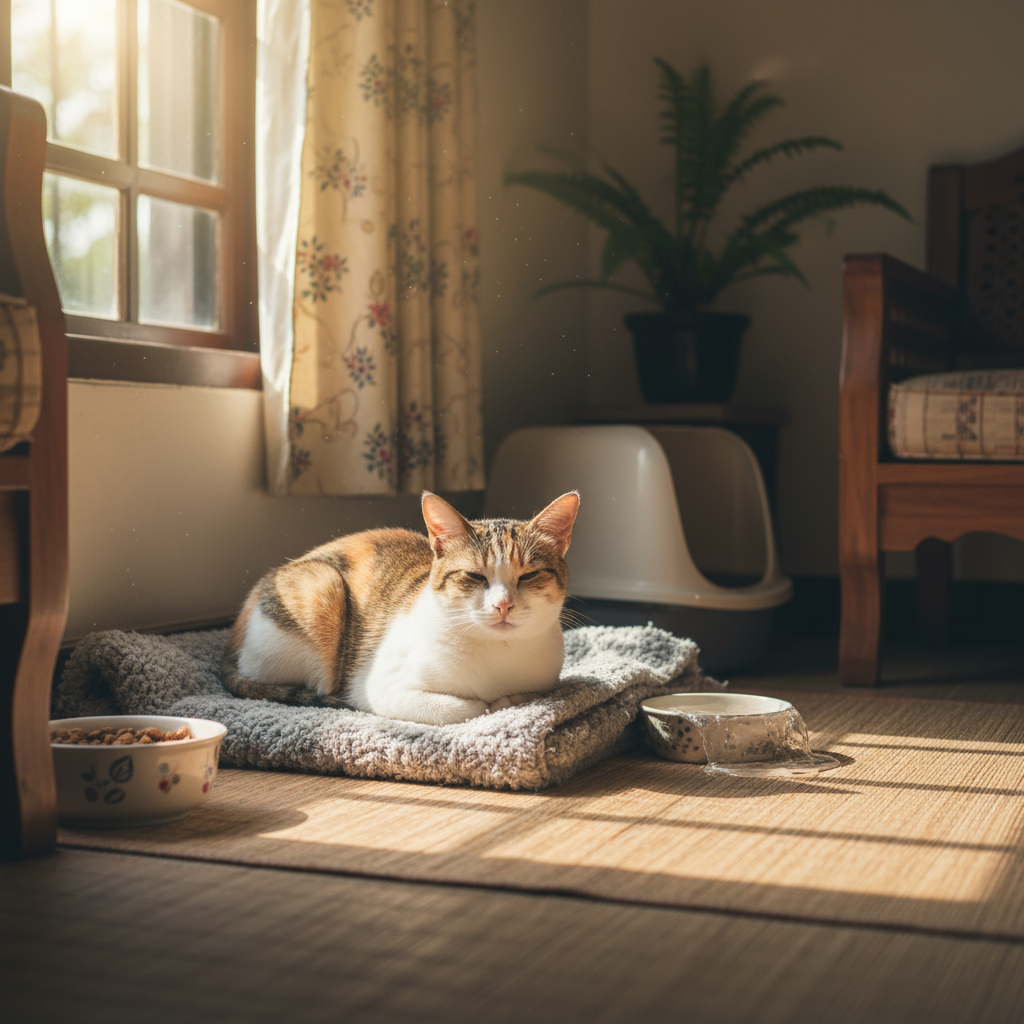
With more square footage, landed properties offer greater flexibility. The key here is dispersal: spread your litter boxes across different floors and in various low-traffic areas. Think utility rooms, spare bathrooms, quiet corners of storerooms, or even an unused bedroom. The goal is to ensure that no single cat can monopolize access and that every cat has a private, safe space to relieve themselves without feeling vulnerable. Always keep litter boxes away from food and water stations; cats generally don't like to eat where they eliminate.
Best Litter Box Types for Multiple Cats
Choosing the right box type can make a big difference for multiple cats:
- Standard Open Boxes: Often preferred by cats as they offer 360-degree visibility and multiple escape routes, reducing feelings of being trapped by another cat. Just ensure they're generously sized—at least 1.5 times the length of your largest cat from nose to tail Is Your Cat's Litter Box Too Small? The 'Big' Truth.
- Hooded Boxes: Provide privacy but can trap odors and make cats feel vulnerable. If you use one, ensure it's extra-large and clean it rigorously. We usually avoid these for multi-cat homes due to potential aggression triggers.
- Top-Entry Boxes: Great for reducing litter tracking and keeping curious dogs out. Some cats might need time to adjust, and older or arthritic cats may struggle to get in and out. Lion, our clean freak, actually prefers top-entry boxes because they keep tracking to a minimum.
- Self-Cleaning Litter Boxes: These can be convenient, but they're not a set-and-forget solution. They still require regular maintenance, and the automatic raking can sometimes scare timid cats. In humid climates, the raking mechanism can also struggle with mushy clumps, especially if you're using organic litters like tofu, leading to a smelly mess.
Tropical Climate and Your Cat Litter ⭐
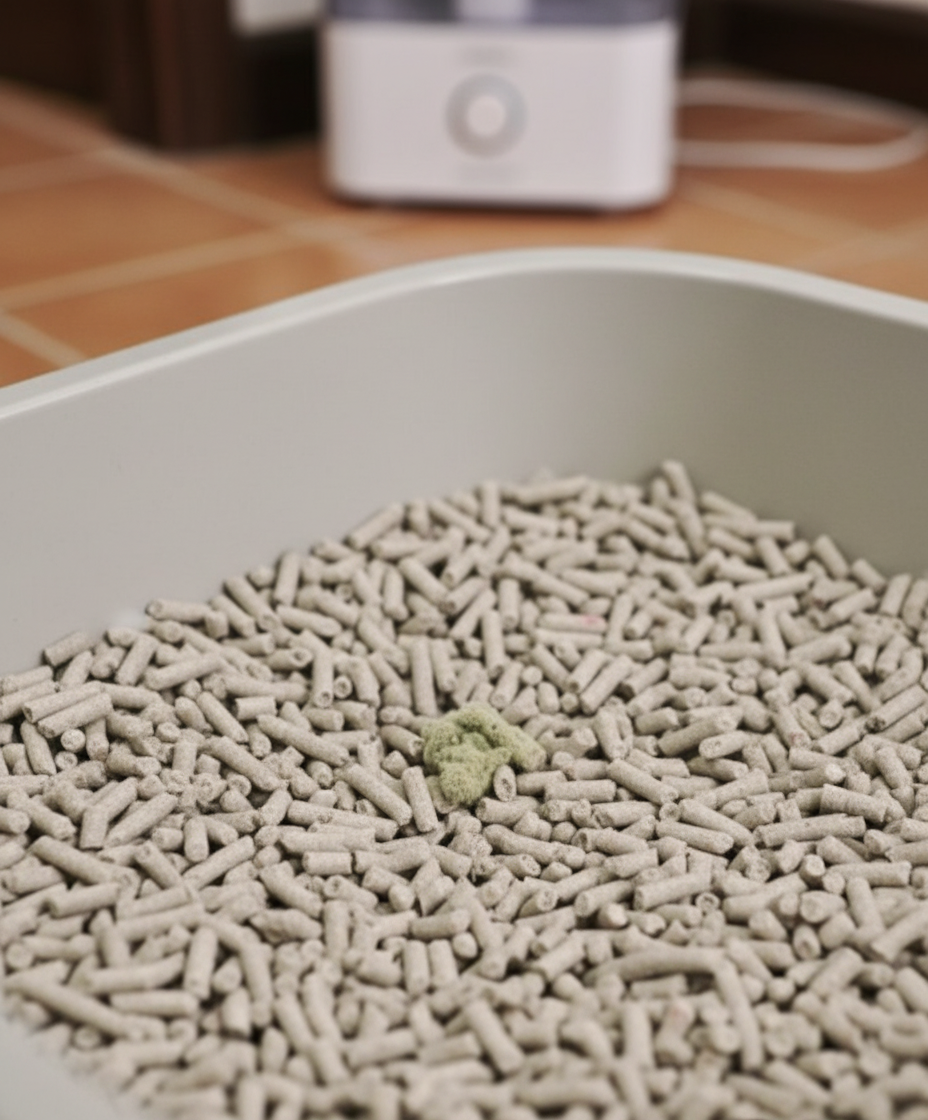
Living in Malaysia, we all know the drill: hot, humid, and sometimes rainy. But have you ever considered how these conditions—average temperatures around 30°C and relative humidity often exceeding 80%—impact your cat litter? This isn't just about comfort; it's a critical factor in odor control, hygiene, and even your cat's health. What works wonders in a temperate climate often falls flat here. It's a truth I learned the hard way with a quickly deteriorating litter box and a suspiciously smelly living room, despite my best efforts.
How Malaysia's Humidity Affects Litter Performance
Humidity is the silent killer of many cat litters. Here's how it plays out:
- Clumping Efficiency: Organic litters like tofu and pine readily absorb moisture from the air, especially when humidity tops 60% Liger. This makes tofu pellets swell, soften, and form mushy clumps that break apart during scooping, leaving contaminated bits behind. Bentonite clay, while more resilient, can sometimes become a bit 'gummy' in extreme humidity, but its clumping mechanism holds up better Liger.
- Odor Amplification: High heat accelerates the release of ammonia from urea, while moisture provides a breeding ground for odor-causing bacteria Furrbby. This means odors develop faster and are more potent than in cooler, drier climates. Tofu litter can even develop a musty smell from the accelerated decomposition of the litter itself Liger.
- Accelerated Microbial Growth: This is the most serious concern. Organic litters, rich in carbon and nitrogen, become ideal incubators for mold and bacteria at 30°C and 80%+ humidity. Lab simulations show organic litters can grow visible mold within a week under these conditions YCM Group. The fungus *Aspergillus flavus*, which produces dangerous aflatoxins, thrives in 28-32°C and over 85% humidity—a perfect match for Malaysia's climate Ccatpet. This poses a serious health risk if cats ingest it.
This is precisely why, despite Liger Tofu Cat Litter's superior dust control and pleasant mild milk fragrance, we constantly emphasize proper storage and frequent maintenance in humid environments to prevent these issues. Storing your unused litter in airtight containers, away from cool concrete floors that can transmit dampness, is absolutely essential Ccatpet.
Climate-Adjusted Maintenance Schedule
Given the challenges, a standard maintenance schedule simply won't cut it. For multi-cat homes in Malaysia, you need to step up your game:
- Scoop Frequency: Instead of once daily, aim for at least twice daily, ideally even more frequently for multiple cats. Rapid removal of waste reduces the time for odors and bacteria to develop.
- Full Litter Changes: For tofu litter, a full change (discarding all litter, washing the box, and refilling) should happen every 1-2 weeks. For bentonite clay, you can stretch it to 2-4 weeks, depending on the number of cats and odor levels. Contrast this with typical recommendations in drier climates, which might suggest once a month for a single cat – a big difference!
- Ventilation is Key: Ensure your litter areas are well-ventilated. Open windows, use an extractor fan in bathrooms, or consider an air purifier with activated carbon filters to combat airborne odors Rabbit Air.
Adopting these climate-adjusted habits will dramatically improve your multi-cat household's hygiene and overall freshness. For more detailed tips, read our How Often to Change Tofu Cat Litter — Malaysia Schedule guide.
Cleaning and Maintenance Best Practices
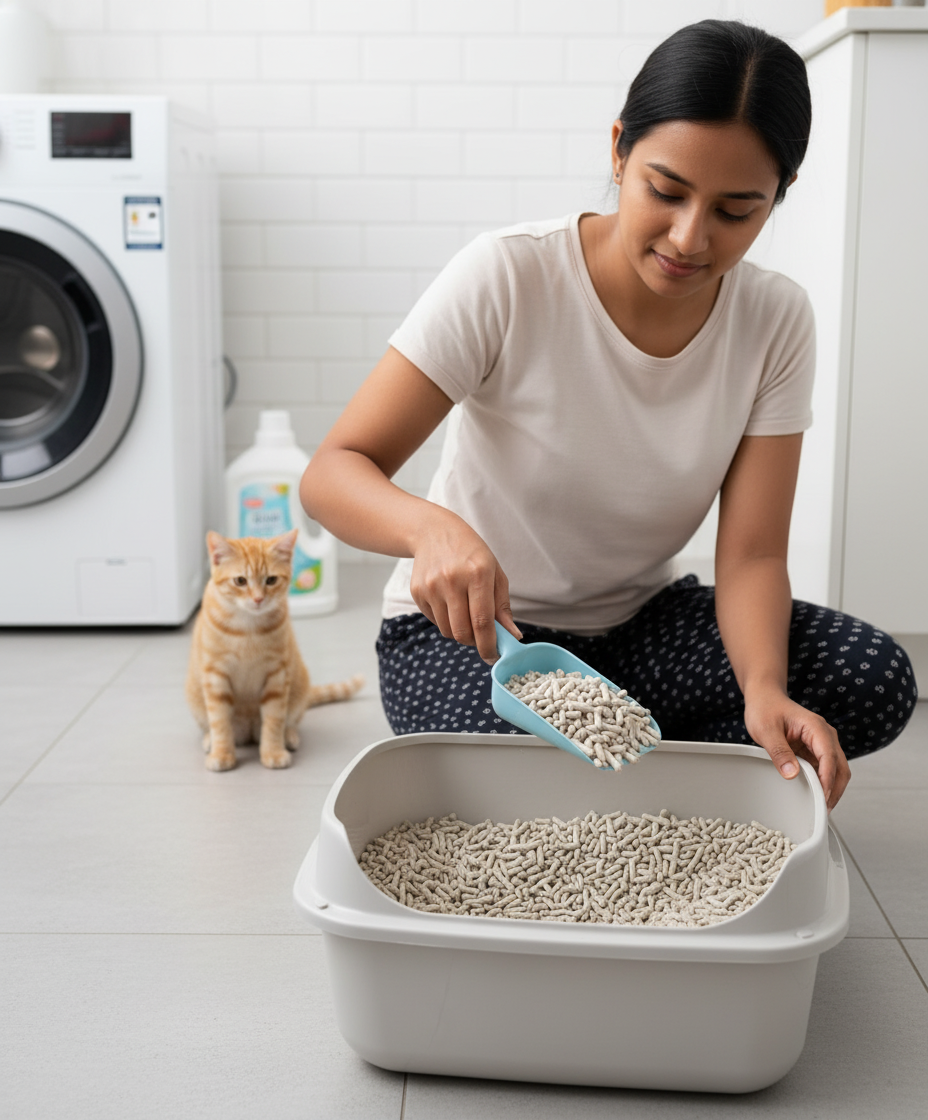
Consistent cleaning is the cornerstone of a happy multi-cat household, far more so than in a single-cat home. It not only keeps odors at bay but also prevents serious health issues like parasite transmission and bacterial growth. Our cats, especially Lion, are extremely particular about clean litter boxes. If a box isn't up to his standards, he'll simply refuse to use it, which is a problem for everyone involved!
Daily, Weekly, and Monthly Cleaning Routine
Here’s a practical, multi-cat cleaning routine:
- Daily: Scoop solids and urine clumps at least twice a day. This is non-negotiable for odor control and to prevent parasitic infections. With multi-cat households, daily scooping prevents boxes from becoming overly full and unappealing.
- Weekly (for Tofu/Pine) / Bi-Weekly (for Clay): Fully empty the litter box, scrub it with hot water and a pet-safe, unscented detergent. Rinse thoroughly and dry completely before refilling with fresh litter. This removes bacteria and odor-causing residues. In multi-cat homes, a weekly full change for organic litters like tofu helps combat humidity issues and mold growth.
- Monthly: For multi-cat households, consider replacing litter boxes entirely every 6-12 months. Plastic can absorb odors and bacteria over time, even with diligent cleaning.
Always wash your hands thoroughly with soap and water after handling used litter to prevent zoonotic transmission of pathogens DialAVet. This is particularly important for households with cats positive for Feline Leukemia Virus (FeLV) or Feline Immunodeficiency Virus (FIV). While FIV transmission via litter is very low, FeLV can transmit through shared bodily fluids, making separate boxes a recommended precaution in mixed-status homes Alley Cat Allies.
Odor Control Tips for Multi-Cat Homes
Odor control is paramount in multi-cat households, especially in Malaysia's climate:
- Activated Carbon: Consider litter box liners with activated carbon or add activated charcoal directly to the bottom of the litter box (under the litter). Activated carbon is excellent at absorbing airborne odors First Saturday Lime.
- Good Ventilation: As mentioned, ensuring good air circulation around litter boxes is crucial. Place them near open windows or use a small fan to circulate air.
- Air Purifiers: An air purifier with a HEPA filter (for dust) and an activated carbon filter (for odors) can make a significant difference in enclosed spaces.
- Avoid Scented Litters/Deodorizers: While Liger Tofu Litter has a natural mild milk fragrance, many heavily perfumed litters and deodorizers can be off-putting to cats and may even mask underlying issues. If your cats avoid a scented litter, listen to them.
- Regular Deep Cleaning: This is the most effective odor control. Removing the source of the odor—urine and feces—is always better than trying to mask it.
Where to Buy Multi-Cat Litter in Malaysia
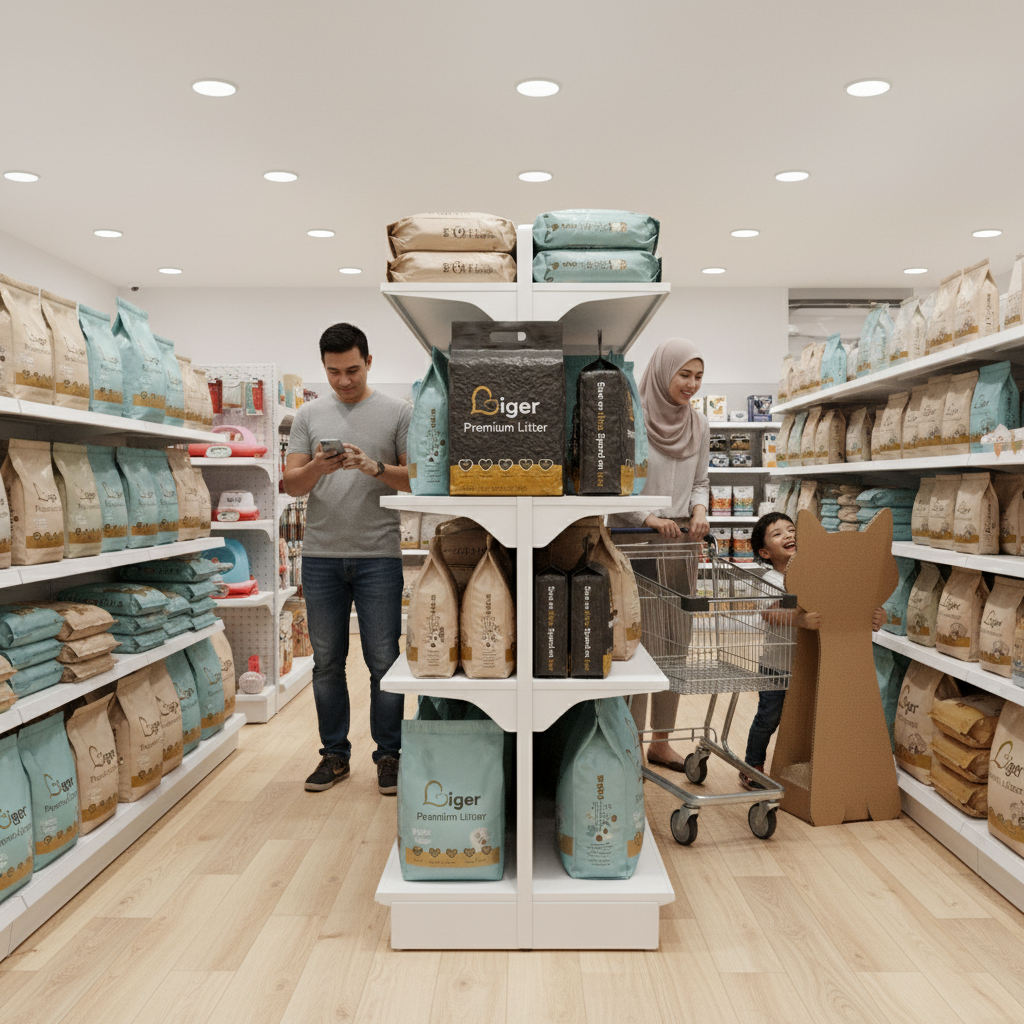
Finding the right litter at the right price is half the battle. Fortunately, Malaysian cat parents have a plethora of options, both online and in physical stores, making it easier to manage the demands of a multi-cat household. Whether you're a bargain hunter or prefer the convenience of doorstep delivery, there's a solution for you.
Online (Shopee, Lazada, Brand Websites)
For many Malaysian cat parents, online marketplaces are the go-to for bulk purchases and competitive pricing. Platforms like Shopee and Lazada offer an incredible variety of brands, including popular choices like Pottycats, Kit Cat, Cature, Fussie Cat, and of course, Liger. These sites frequently feature sales, discount vouchers, and free shipping promotions, making them ideal for stocking up on heavy litter bags. Many brands also have their own official websites, like Liger.my, which can offer exclusive deals or subscription services. The convenience of having litter delivered straight to your door, especially for large multi-cat households, is undeniable.
Physical Stores (Pet Lovers Centre, Mr. Pet, Local Shops)
If you prefer to see and feel the products before buying, or need something urgently, physical pet stores are invaluable. Chains like Pet Lovers Centre and Mr. Pet are widely available across Malaysia, offering a curated selection of litter types and brands. Local neighborhood pet shops are also fantastic resources, often providing personalized advice and carrying niche products you might not find online. While prices might be slightly higher than online deals, the immediate availability and ability to inspect products can be a huge advantage. It's often a good idea to check online prices beforehand, so you know if you're getting a good deal in-store.
Managing cat litter in a multi-cat household in Malaysia is indeed a challenge, but with the right knowledge and a bit of strategic planning, it's entirely manageable. From understanding the unique impact of our tropical climate on litter performance to dissecting the real costs and optimizing your home setup, you now have a complete guide to creating a clean, harmonious environment for your feline family. Remember, every cat is an individual, so observe their preferences and adjust your strategy accordingly. The goal is always a happy cat and a happy home. So, why not start by checking your current litter box setup today? Add an extra box, try a new placement, or calculate your monthly costs. Even small changes can make a big difference for your multi-cat family!