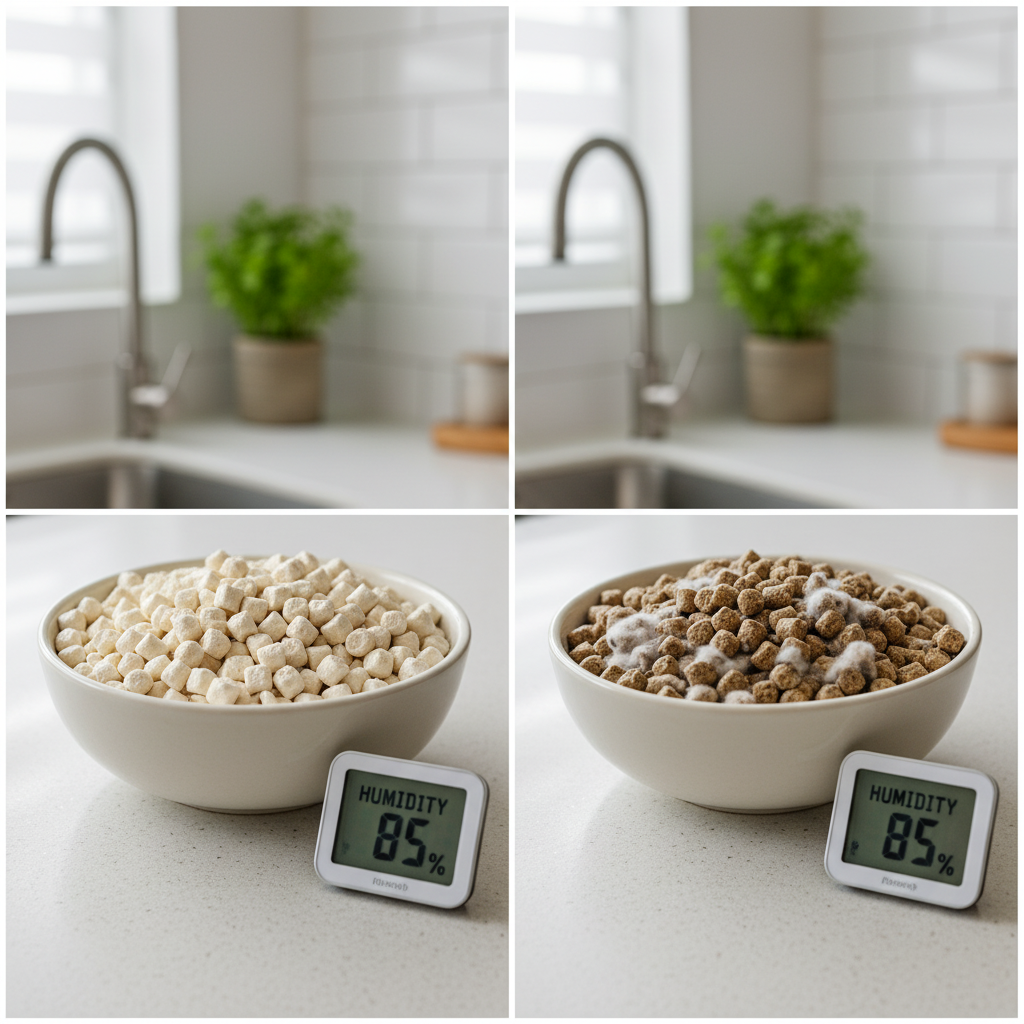
- Malaysia's high humidity (70-90%) makes effective odor control paramount for cat litter, especially in apartments.
- Tofu litter is highly popular in Malaysia for its low-dust, flushable, and eco-friendly properties, dominating online discussions (55% of mentions).
- Scented litters and baking soda (when mixed in) are often counterproductive, irritating cats and potentially worsening ammonia odors.
- A holistic approach combining the right litter with diet changes (e.g., Yucca Schidigera) and advanced air purification (PCO) offers the best long-term odor control.
- Consider specific needs: bentonite for multi-cat homes, silica for maximum odor control and low maintenance, and plant-based for kittens and sensitive cats.
Quick Answer: The Best Cat Litter for Odor Control in Malaysia
For Malaysia's hot, humid climate, the best cat litter for odor control is a low-dust, soy-based tofu litter that clumps firmly and traps ammonia on contact. Our top pick is Liger Premium Tofu Cat Litter — it locks in moisture and smell, produces almost no dust in enclosed apartments, and is flushable for fast daily scooping (the single biggest factor in a fresh-smelling box). Here's the quick at-a-glance comparison, followed by the full 2026 rankings further down. Last updated June 2026.
| Litter | Best for | Odor control | Dust | Flushable |
|---|---|---|---|---|
| Liger Premium Tofu | ⭐ Best overall (MY humidity) | Excellent | Very low | Yes |
| Activated-charcoal tofu | Extra odor masking | Very good | Low | Usually |
| Premium clumping clay | Tight clumps | Very good | Moderate–high | No |
| Silica crystal | Low maintenance | Good (dries waste) | Low | No |
| Pine / wood pellet | Natural, budget | Good (fresh scent) | Low | No |
Why Odor Control is #1 for Malaysian Cat Owners
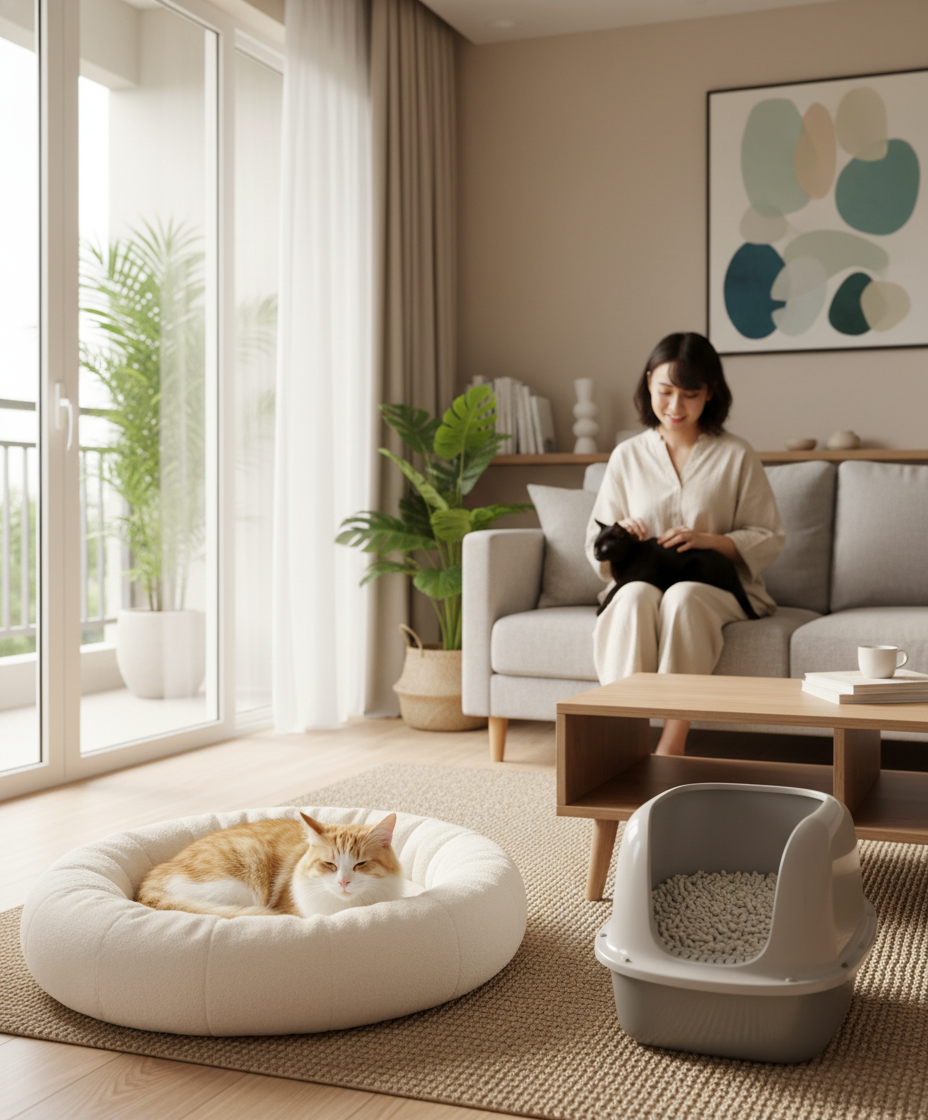
Understanding the Different Types of Cat Litter
The Malaysian cat litter market has evolved far beyond basic clay, now offering a diverse range of products tailored to different needs. An analysis of over 3,800 online discussions in Malaysia revealed that tofu and soya-based litters alone accounted for 55% of all mentions, far outstripping traditional options, as detailed by. Each litter type has its own set of pros and cons, especially when battling our persistent humidity (often 70-90%), so understanding these differences is key to making an informed decision for your home.Tofu / Soybean Litter
Tofu litter, made from natural soybean pulp, has rapidly become a favorite in Malaysia. Its popularity stems from its eco-friendly and flushable nature, a huge convenience for apartment dwellers where waste disposal can be tricky. Users frequently praise tofu litter for being ultra-low dust (a major plus for cats with sensitive respiratory systems, like our Ping'An, who sneezes at dusty litters!) and for its decent odor control, often enhanced by mild natural fragrances like milk or green tea. Liger Tofu Cat Litter, for instance, offers a natural mild milk fragrance, ultra-low dust, and fast, firm clumping. While typically good at odor control, its performance can be variable between brands, with some becoming 'too sticky' or prone to breaking down if not changed often in humid conditions.Bentonite Clay Litter
Bentonite clay litter remains a staple globally and in Malaysia, primarily due to its powerful clumping ability. It forms hard, solid clumps that effectively trap urine and its associated ammonia odor, a feature widely recommended by Malaysian veterinarians for our humid climate. Brands like Fussie Cat are known for their strong clumping bentonite. The downside? Bentonite is notorious for high dust levels, which can be an issue for cats and humans with respiratory sensitivities. It also tends to create a cement-like residue at the bottom of the box if not scooped diligently, making cleaning a chore.Pine Wood / Wood Pellet Litter
Pine wood litter offers a natural and eco-friendly alternative. These pellets absorb urine and break down into sawdust, releasing a natural pine scent that helps mask odors. They are biodegradable and generally low dust. However, their odor control relies on the natural wood scent, which some find pleasant and others find too strong. In high humidity, if not maintained well, the sawdust can also get damp and lose its effectiveness, potentially fostering mold growth if not managed carefully. The cost is usually mid-range, making it a budget-friendly eco-option.Silica Gel / Crystal Litter
Silica gel or crystal litter is often hailed as the champion of odor control and low maintenance. Its porous crystals absorb urine and dehydrate solid waste, locking in odors for an extended period – sometimes up to a month for a single cat, making it ideal for busy owners. Crystal litter is virtually dust-free and tracking is minimal due to its larger, heavier granules. The main drawbacks are its higher upfront cost and a texture that some cats dislike. It doesn't clump, so solid waste still needs daily scooping, and the crystals change color to indicate when a full change is needed.The Best Cat Litter for Odor Control in Malaysia ⭐
Choosing the best cat litter for odor control in Malaysia means finding a product that stands up to our challenging climate and living conditions. While many brands promise excellent results, real-world performance, especially in high humidity (70-90%), is what truly matters. Below is our top pick, followed by a few other options you'll find on the Malaysian market.1. Liger Premium Tofu Cat Litter (Our #1 Pick for Malaysia)
For our home and for Malaysian cat parents in general, Liger Premium Tofu Cat Litter is our top recommendation for odor control. Made from natural soybean pulp, it tackles the exact problems our tropical climate throws at us. It delivers fast, firm clumping that seals urine and its ammonia smell into a tight clump for easy daily scooping, plus a natural, mild milk fragrance that keeps things fresh without the harsh artificial perfumes that irritate sensitive noses. It's also ultra-low dust, which matters a lot in our four-cat household: our Ping'An sneezes the moment he meets a dusty litter, and he has zero issues with Liger. Because it's flushable and clumping, waste disposal is effortless for high-rise and apartment living, where lugging heavy clay bags to the bin is a real chore. It's Halal-friendly, locally made in Malaysia, and comes with free West Malaysia shipping, so you're supporting a local product without paying import premiums. Pricing is straightforward: a 2kg pack is RM21.90, the 6kg (3-pack) is RM53.90, the 10kg (5-pack) is RM89 (RM8.90/kg), and the 20kg (10-pack) is RM169 (RM8.45/kg) — about 23% cheaper per kilo than buying single packs. Honestly, after cycling through countless litters for Tiger, Lion, Ping'An, and Lucky, this is the one that stayed in our home: low dust, dependable clumping, and a clean milk scent that never overwhelms the room.2. Activated Charcoal Tofu/Clay Litters (Other Options)
Activated charcoal is a popular ingredient for tackling strong odors, as it naturally adsorbs pungent odor molecules. Several brands, such as Fussie Cat, offer activated charcoal variants that are noted for clumping and odor control in enclosed living spaces. These can be worth a look if you specifically want a charcoal-based formula, though performance and texture vary from brand to brand.3. Premium Clumping Clay Litters (Other Options)
Bentonite clay litters, including premium lines like EverClean, are known for hard-clumping action that seals off urine and feces, and many offer multi-cat formulas for heavier usage. The trade-off is that clay litters generally produce more dust and are not flushable, so they suit households where dust sensitivity isn't a concern.4. Non-Clumping Value Litters (Other Options)
Budget-oriented options like Purina Tidy Cats are non-clumping but use absorbent granules to trap moisture and smells, often with a stated multi-day odor-control window. They tend to require more frequent full changes than clumping types, but can be an economical choice for some households.5. Wood Pellet Litters (Other Options)
Wood pellet litters, such as Cat's Best, are made from wood fibres and release a natural pine scent while being biodegradable. They suit cat parents who prefer a natural approach, though in Malaysia's humidity they need good ventilation to avoid dampness affecting performance.6. Premium Odour-Lock Clay (Other Options)
Some premium clay litters, such as Odourlock, are engineered for extended odor neutralisation and are marketed for multi-cat homes. They offer hard clumping and lower dust than standard clay, at a higher price point, and like all clay litters they are not flushable.7. Other Tofu Brands (Other Options)
Beyond Liger, other tofu litters such as Cindy & Friends are available on the Malaysian market, offering eco-friendly attributes and flushability. As with all tofu litters, clumping firmness can vary between brands and batches, so results differ depending on the product you pick.Comparison: Which Cat Litter is Right for You?
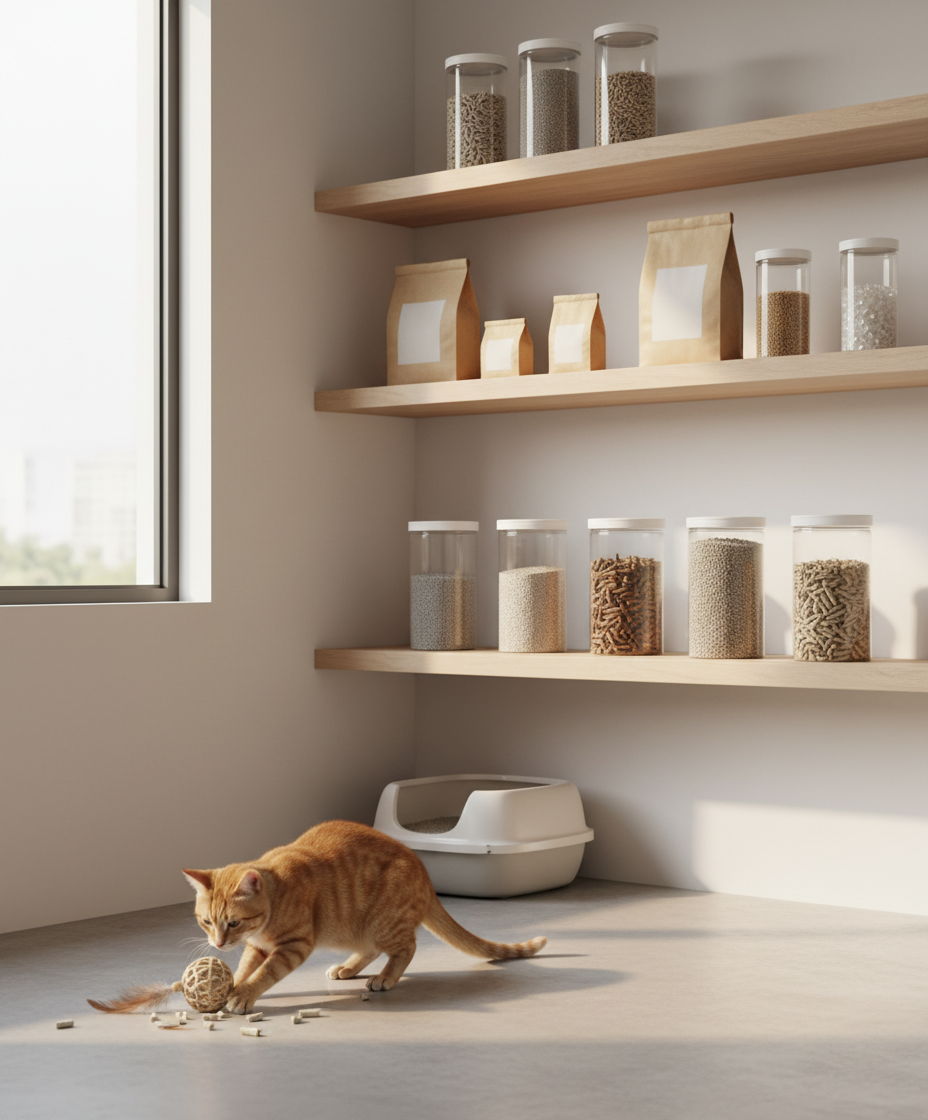
Detailed Cat Litter Comparison for Malaysia
| Litter Type | Odor Control Rating (1-5) | Clumping Rating (1-5) | Dust Level | Price Point (per kg est. RM) | Eco-Friendly | Best For... |
|---|---|---|---|---|---|---|
| Liger Premium Tofu (Our #1 Pick) | 4-5 | 4-5 (fast, firm) | Ultra-Low | From RM 8.45/kg (20-pack) | Yes (Flushable, Halal, local) | Apartments, sensitive cats, multi-cat homes, free WM shipping. |
| Other Tofu / Soybean | 4 | 3-4 (variable) | Ultra-Low | RM 5 - RM 10 | Yes (Flushable) | Apartment dwellers, sensitive cats, eco-conscious. |
| Bentonite Clay | 4-5 | 5 (hard) | High | RM 2 - RM 5 | No | Budget-conscious, multi-cat homes (if dust not an issue). |
| Pine Wood / Wood Pellet | 3-4 | 2 (disintegrates) | Low | RM 3 - RM 7 | Yes (Biodegradable) | Natural scent preference, eco-conscious. |
| Silica Gel / Crystal | 5 | 1 (no clumps) | Virtually Zero | > RM 10 | No | Maximum odor control, low maintenance, busy owners. |
Beyond the Litter: 4 Tips to Maximize Odor Control
Choosing the perfect litter is a great start, but it's only one piece of the puzzle. Truly conquering odor, especially with Malaysia's high humidity accelerating bacterial growth and ammonia formation, requires a few extra strategies that competitors often overlook. These practical steps, combined with the right litter, will keep your home smelling fresh and inviting.Scoop Daily, Change Regularly
This might sound obvious, but in Malaysia's warm, damp climate, scooping frequently is non-negotiable. Waste should be removed at least twice daily to prevent odors from setting in and bacteria from rapidly multiplying, a crucial tip from. For clumping litters, a full litter replacement and thorough washing of the box with mild soap or a vinegar solution should happen every 2-4 weeks. For non-clumping types, you might need to change the entire litter more often, perhaps weekly. Consistent cleaning dramatically reduces the source of bad smells, as confirmed by numerous veterinary experts.Ensure Proper Litter Depth
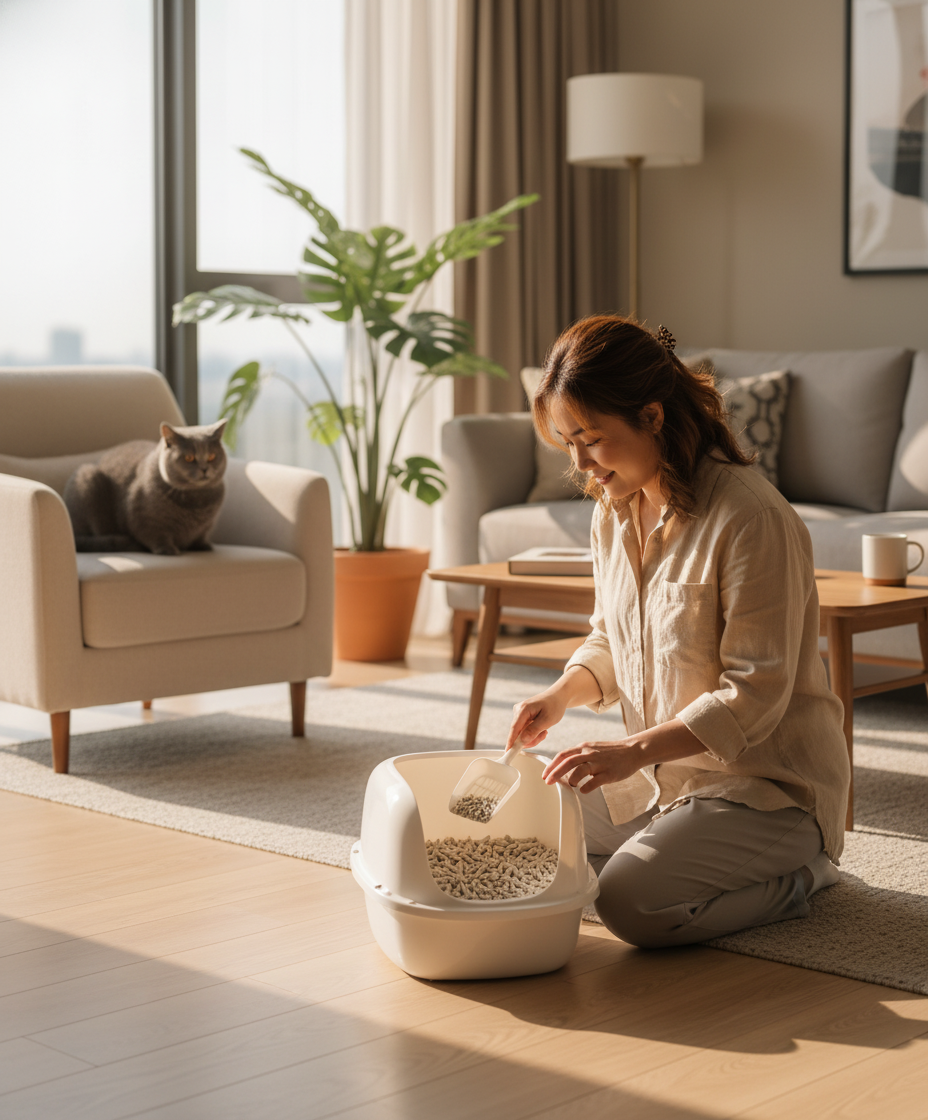
Many cat parents unknowingly use too little litter, compromising its effectiveness. Aim for at least 3-4 inches (7-10 cm) of litter in the tray. This depth allows for proper encapsulation of waste, preventing urine from reaching the bottom of the box and forming sticky, smelly residues. Proper depth also gives your cat enough material to dig and cover their waste effectively, a natural instinct that helps them feel secure and contributes to better odor containment. Don't be afraid to top up the litter as needed between full changes.Choose the Right Litter Box and Placement
The box itself and where you put it matter a lot. For odor control, especially in smaller apartments, an open-style tray placed in a well-ventilated area is often better than a covered box, which can trap heat, humidity, and concentrate ammonia smells. Think a utility room with an exhaust fan or near a window. Also, ensure the box is large enough for your cat to turn around comfortably; ideally, it should be 1.5 times the length of your cat from nose to tail. If you have multiple cats, the "One Box per Cat + 1 Rule" is crucial to prevent territorial issues and ensure enough clean spaces. You can even use our Litter Box Size Calculator to find the perfect fit!Consider Advanced Odor Elimination and Diet
Beyond the basic cleaning, modern solutions can make a big difference. For persistent ambient odors, consider an air purifier with a True HEPA filter, an activated carbon filter, and Photocatalytic Oxidation (PCO) technology. PCO uses UV light to actively destroy odor-causing volatile organic compounds (VOCs), breaking them down into harmless elements – a superior solution for humid climates, as explained by. Also, remember that a cat's diet directly impacts waste odor. Switching to highly digestible, high-moisture foods (often >70% moisture) can lead to more diluted urine and less pungent stools. Supplements like Yucca Schidigera extract have even been shown to reduce stool odor by 15-25% in controlled studies.Navigating the cat litter aisle in Malaysia can feel like a maze, but with the right knowledge, you can confidently choose a litter that keeps your home fresh and your cat happy. Our journey has shown that while tofu litters are gaining immense popularity for their eco-friendliness and urban convenience, traditional bentonite and advanced crystal options still hold their own, especially for powerful odor control. Remember that local conditions, like our tropical humidity, demand consistent maintenance and sometimes, a holistic approach that goes beyond just the litter itself. By picking the right type, staying diligent with cleaning, and even considering diet adjustments, you're creating a truly comfortable, odor-free sanctuary for your beloved feline companion. Ready to make the switch? Start by observing your cat's preferences and your lifestyle. Then, perhaps, grab a bag of Liger Tofu Cat Litter to experience the difference firsthand.The Science of Litter Odor Control: Why It Smells and How to Stop It
Litter-box odor isn't really a "poop" problem — it's mostly a chemistry problem. When cats urinate, bacteria break down the urea in urine into ammonia, the sharp, eye-watering smell that builds up in an enclosed box. Controlling odor comes down to three mechanisms:
- Fast absorption — the quicker a litter pulls liquid away from the surface, the less time bacteria have to produce ammonia. Soy-based tofu and crystal litters absorb almost on contact.
- Firm clumping — locking urine into a solid, scoopable clump traps the moisture (and the smell) so you can lift it out whole, instead of letting it soak through the whole bed of litter.
- Odor-neutralising additives — activated charcoal, baking soda (sodium bicarbonate) and natural zeolite adsorb and neutralise odor molecules, rather than just masking them with perfume.
This is why daily scooping plus a firm-clumping, fast-absorbing, low-dust litter beats any heavily scented litter that only perfumes over the problem — and strong artificial fragrance can actually put sensitive cats off the box entirely. For a material-by-material breakdown, see our tofu vs bentonite comparison and our guide to clumping vs non-clumping litter.
Why Malaysia's Humidity Makes It Worse
In Malaysia's 70–90% humidity and year-round heat, odor control is on hard mode. Moisture lingers in the litter bed instead of evaporating, bacteria multiply faster in the warmth, and a damp box can even grow mould — all of which amplify the ammonia smell. Humidity also makes weaker litters clump poorly or turn to mush. That's why a low-dust litter that still clumps firmly in humid air, paired with more frequent changes, matters far more here than in a cool, dry climate. Work out exactly how much you need with our litter calculator.
How We Chose These Picks (and Why You Can Trust This Guide)
These rankings aren't pulled off a spec sheet. They're shaped by real, long-term use in Malaysian homes — including our own four resident cats, Tiger, Lion, Ping'An and Lucky, who put litter through daily multi-cat reality in a hot, humid local climate. We weigh what actually matters to Malaysian cat parents: odor control in enclosed apartments, dust levels, how well a litter clumps in humid air, ease of daily scooping, flushability, and honest local pricing in Ringgit — not just what looks good on packaging.
The science in this guide (how ammonia forms, how absorption and clumping work, and dust/respiratory considerations) is grounded in established veterinary and feline-care sources, and we refresh our picks as products and prices change. Last reviewed and updated June 2026. None of this replaces your vet's advice for a cat with a specific health problem.
Best Cat Litter by Need: Quick Picker
| Your situation | What to prioritise | Our pick |
|---|---|---|
| Small apartment / enclosed box | Low dust + strong odor lock | Liger Premium Tofu |
| Multiple cats | Fast absorption + firm clumps + frequent changes | Liger Premium Tofu (10-pack) |
| Kitten under 3–4 months | Non-clumping safety first | See our kitten litter guide |
| Tight budget | Cost per day, not price per bag | Liger 10-pack (RM8.45/kg) |
| Allergy / asthma household | The lowest dust you can get | See litter for asthma & allergies |
Whatever your situation, the same principles win: absorb fast, clump firm, keep dust low, scoop daily. For most Malaysian homes — especially humid apartments and multi-cat households — that points back to a quality tofu litter like Liger Premium Tofu Cat Litter (from RM21.90 for 2 kg, down to RM8.45/kg on the 10-pack, with free Peninsular Malaysia shipping).