"Whisker fatigue" is having a moment. Pet shops sell special wide "whisker-friendly" bowls, and the story goes that your cat's bowl is secretly tormenting it. So is whisker fatigue a real thing you need to spend money on — or clever marketing? The honest answer sits in the middle, and once you understand it, choosing a bowl gets simple.
This guide covers what whiskers actually do, what the science says about whisker fatigue, the medical causes to rule out first, and the genuinely useful rules for picking a food and water bowl — shape, material, height and placement — for a Malaysian home. By the end you'll know exactly what's worth your money, what's just a clever label, and what your particular cat actually needs.
What Whiskers Actually Do (And Why Bowls Might Matter)
A cat's whiskers (vibrissae) aren't just long hairs — they're precision sensory instruments. Each one is embedded about three times deeper than normal fur, rooted in a follicle packed with nerves and a blood-filled sinus that amplifies the tiniest movement. The tips carry specialised receptors that feed a constant stream of information to the brain. The result: whiskers are roughly as touch-sensitive as your fingertips, and a remarkable share of a cat's sensory brainpower is devoted to processing what they feel.
Cats use them to judge whether they fit through gaps (the muzzle whiskers are roughly as wide as the body), to sense air currents and obstacles in the dark, to protect their eyes via a blink reflex, and to aim the killing bite while hunting. They're so central that damaging or trimming them disorients a cat — which is why you should never cut a cat's whiskers. Given all that sensitivity, the idea behind "whisker fatigue" is at least biologically plausible: if whiskers constantly drag against the steep sides of a deep, narrow bowl at every meal, that could create a barrage of unwanted "static" some cats find unpleasant. The plausibility is exactly why the theory caught on — but plausible isn't the same as proven, which brings us to the evidence.
Is Whisker Fatigue Real? The Honest Verdict
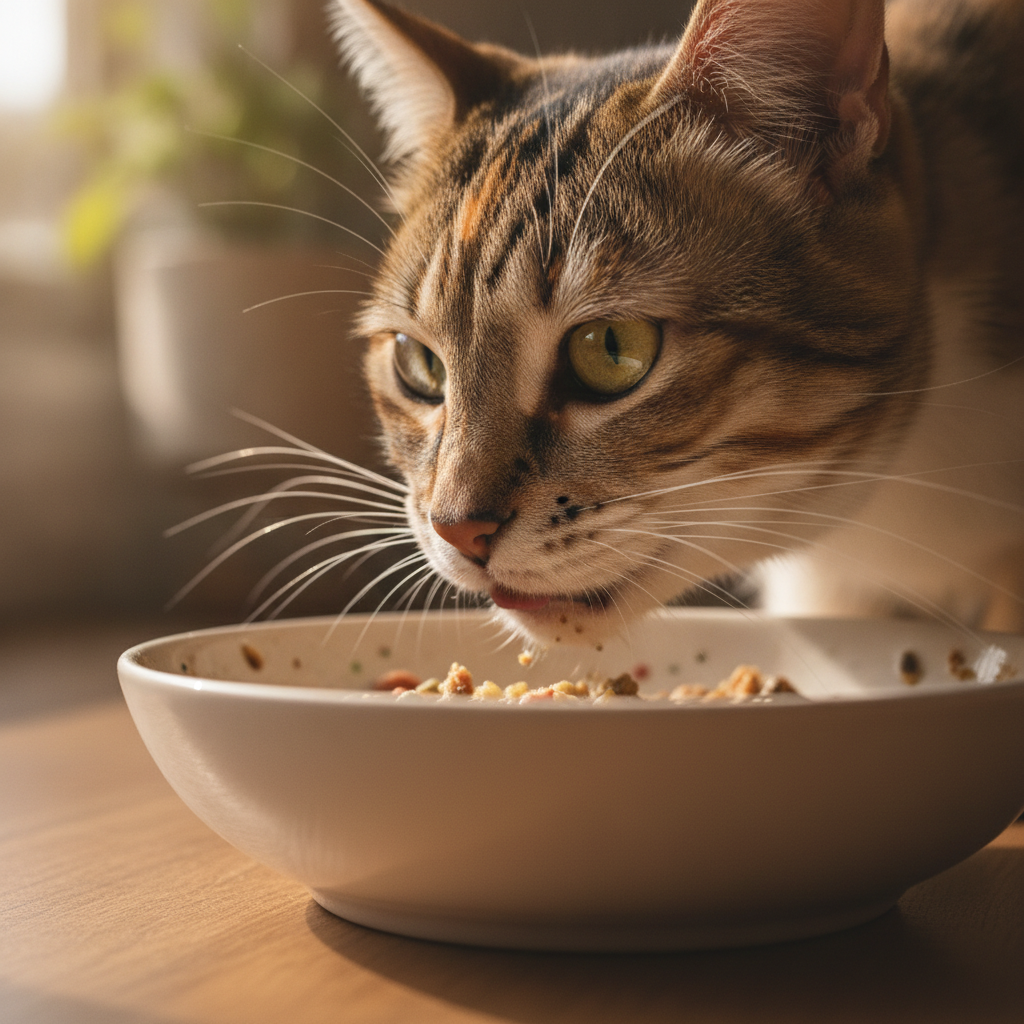
Here's the part the product pages skip: "whisker fatigue" is not a recognised veterinary diagnosis. The evidence is mostly anecdotal. A 2020 study in the Journal of Feline Medicine and Surgery compared cats eating from a standard bowl versus a wide "whisker-friendly" one and found no significant difference in how much they ate or how long they took — but it did note that some individual cats clearly preferred the wide bowl.
So the sensible reading is: whisker fatigue isn't a universal epidemic, but whisker sensitivity is real and matters for some cats. The good news is that the "fix" — a wide, shallow bowl — is cheap and harmless, so there's no downside to using one whether or not your cat is among the sensitive minority. As PetMD puts it, it's a low-risk adjustment that may improve some cats' dining experience.
Opinion in the profession is genuinely split, which is worth knowing so you can tune out the absolutist marketing. Some teaching hospitals, including Oklahoma State University's veterinary hospital, describe whisker fatigue as a real sensory-overload phenomenon; other vets remain unconvinced pending controlled studies. Both camps agree on the practical bottom line, though: a comfortable, low-stress feeding setup is good practice regardless, and a wide bowl costs you nothing to try. Don't let a brand convince you your cat is suffering — just observe your own cat and respond to what it actually does.
Rule Out the Vet Stuff First
This matters more than the bowl. The behaviours blamed on whisker fatigue — pawing food onto the floor, eating only from the centre, walking away from a full bowl, reluctance to eat — are also classic signs of medical problems. Before you decide it's the bowl, rule out:
- Dental disease — painful teeth or gums make cats drop food and eat oddly; extremely common.
- Nausea or GI issues, including kidney disease, which kill appetite.
- Oral growths that make chewing painful.
- Stress or bullying at the bowl from another pet.
Cats are hardwired to hide pain, so any real change in eating deserves a vet check rather than a new bowl, as both the Cornell Feline Health Center and International Cat Care stress. Swapping the bowl while ignoring a dental abscess just delays treatment.
Bowl Shape: Wide, Shallow, and Whisker-Friendly
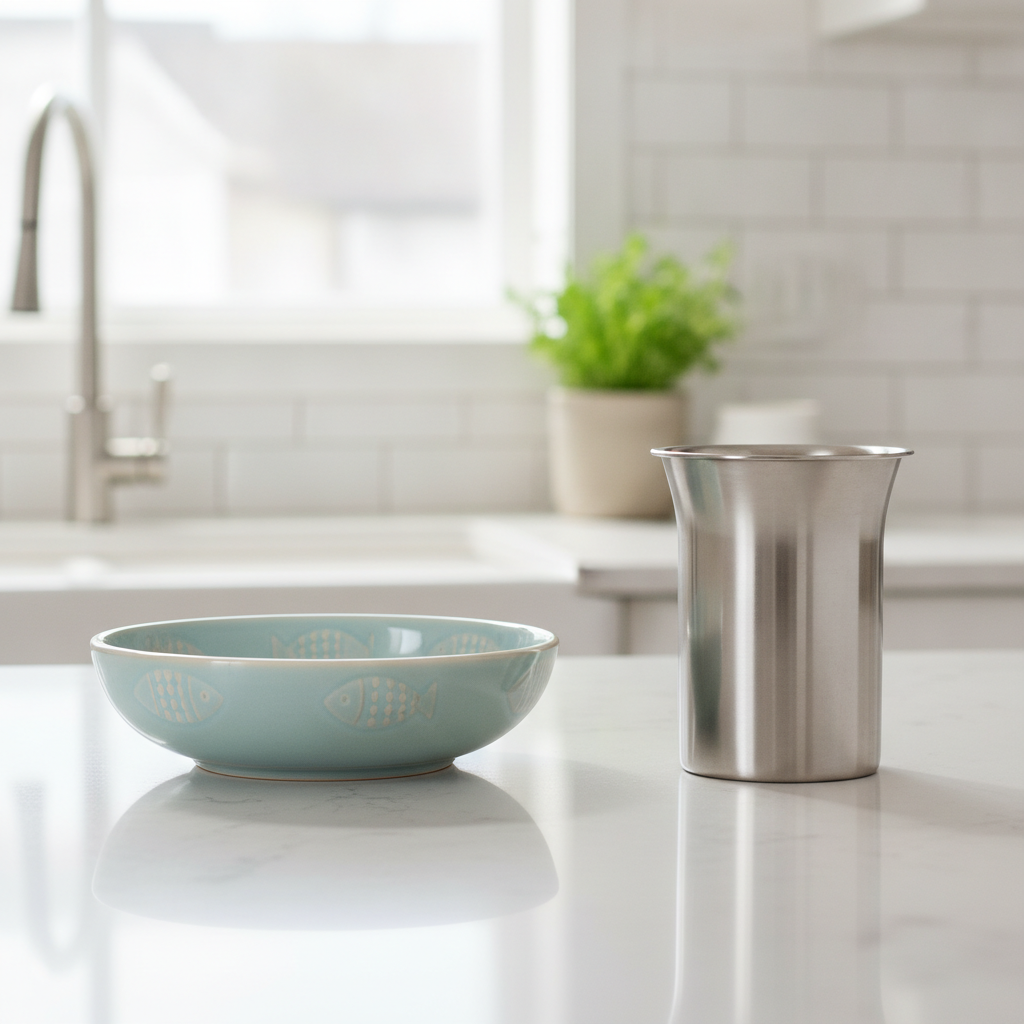
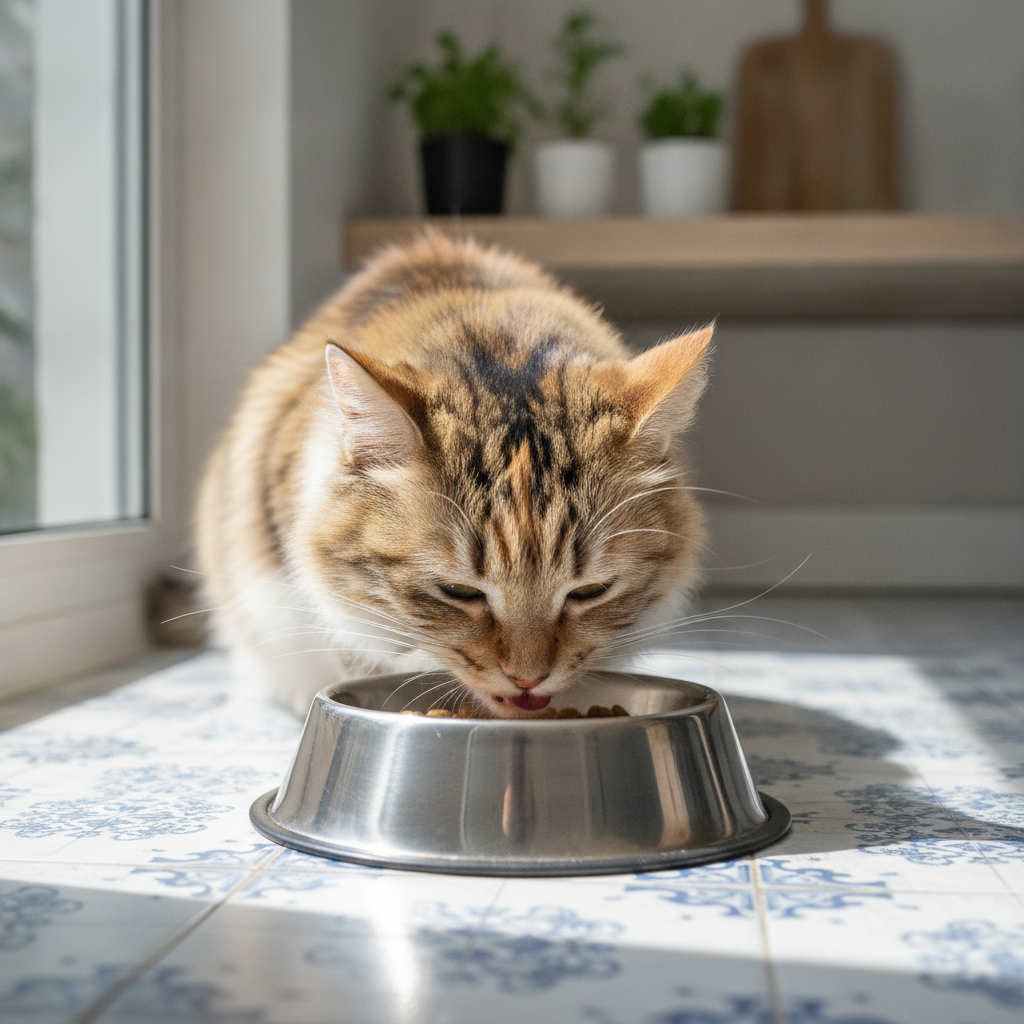
Once medical causes are out, shape is the easy win. Aim for a bowl that's wide (around 4–6 inches across) and shallow (about 1–2 inches deep) so your cat can eat without its whiskers brushing the sides. Avoid deep, narrow, steep-sided bowls — the classic "dunk your whole face in a well" design — especially for cats that already paw food out or leave a ring of food around the edge.
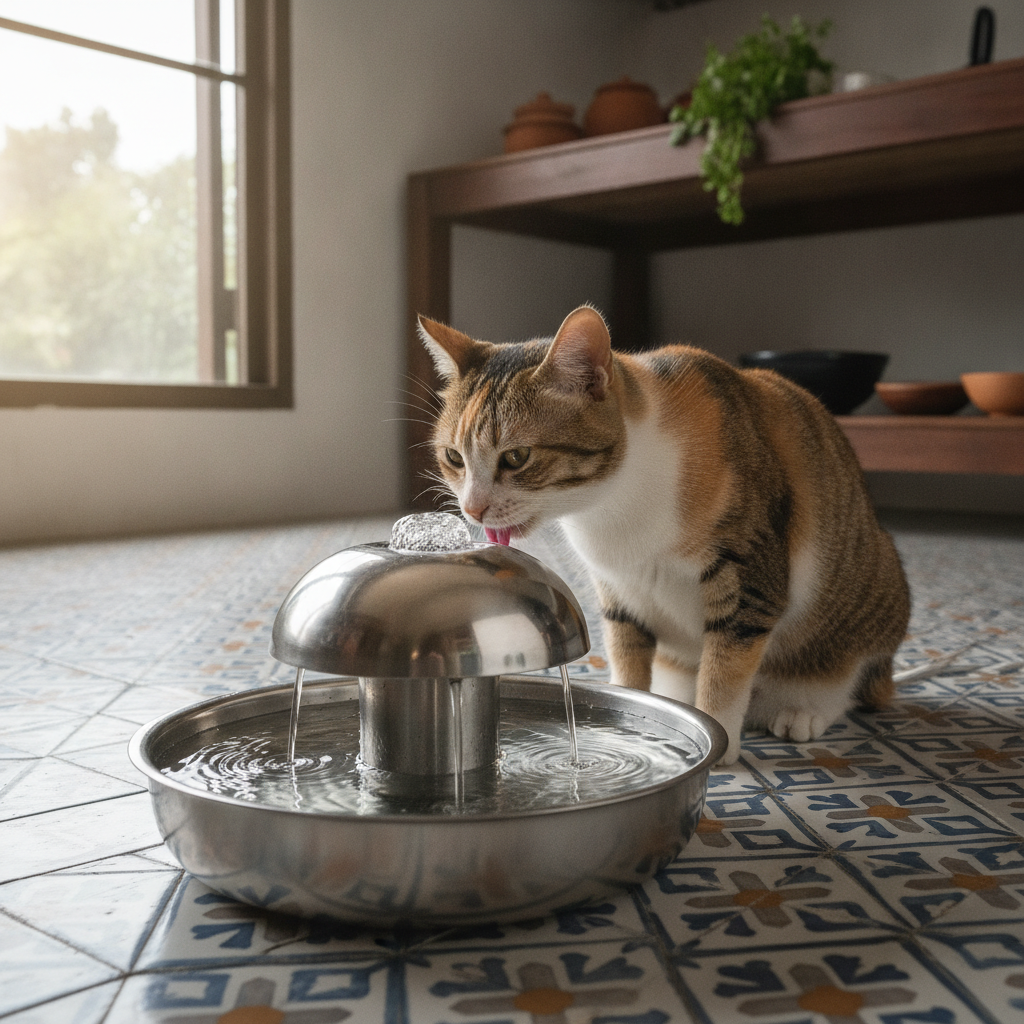
For water, the same logic applies: a wide, shallow dish lets a cat drink without whisker contact, and many cats prefer a bowl filled near the brim so they don't have to dip their face in. A common tell that a cat dislikes a too-deep water bowl is drinking from odd places instead — taps, glasses, even the toilet — or pawing at the surface before drinking. If your cat already eats and drinks happily from its current bowls, you don't have to change anything — but if it's a messy or fussy eater, a wide shallow bowl is the first, cheapest thing to try before assuming something is wrong with the food.
Material: Why Stainless Steel Wins
Material is where the real health stakes are. Stainless steel is the top veterinary pick: non-porous, durable, dishwasher-safe, and impossible for bacteria to colonise the way other surfaces allow. Plastic is the worst choice — it scratches easily, and those micro-scratches trap bacteria that are a leading suspected cause of feline chin acne (those stubborn black bumps on a cat's chin). Plastic can also leach odours and chemicals over time. Ceramic and glass are good non-porous options too, provided the glaze is lead-free and food-safe — but retire any piece that chips or cracks, since the crack becomes a bacteria pocket. If your cat has chin acne, switching from plastic to stainless steel is often the single most effective change you can make — pair it with daily cleaning and, in stubborn cases, a vet check. One more reason to skip plastic in a Malaysian home: in our humidity, scratched plastic holds onto moisture and odour, going stale and smelly far faster than a steel bowl you can scald clean.
Height, Placement and Hygiene
Three finishing touches. Height: eating from a floor-level bowl makes a cat crane its neck down. A raised or slightly tilted bowl improves posture and can ease digestion — a real benefit for senior and arthritic cats, and worth noting that an estimated 90% of cats over 12 have arthritis somewhere. Raise the bowl to about lower-chest height. Placement: keep food and water apart — ideally several feet — because cats instinctively avoid drinking next to where they eat (in the wild, prey near water means contamination). Separating the stations, and offering water in more than one spot, nudges a cat to drink more, which protects kidney and urinary health. Hygiene: wash bowls daily — biofilm (that slimy film) builds fast in our heat — and don't just top up the water; tip it out, rinse the bowl and refresh it. Greasy residue around a food bowl is another acne and bacteria trigger, so a proper daily wash with soap, not just a wipe, matters more here than in a cooler climate. Run plastic-free bowls through the dishwasher when you can.
None of this needs to be expensive. A pair of wide, shallow stainless-steel bowls — one for food, one for water, placed apart and washed daily — covers the science for the vast majority of cats. Add a raised stand if your cat is older or stiff. That's genuinely it; the rest is marketing.
The Other Daily Station: The Litter Box
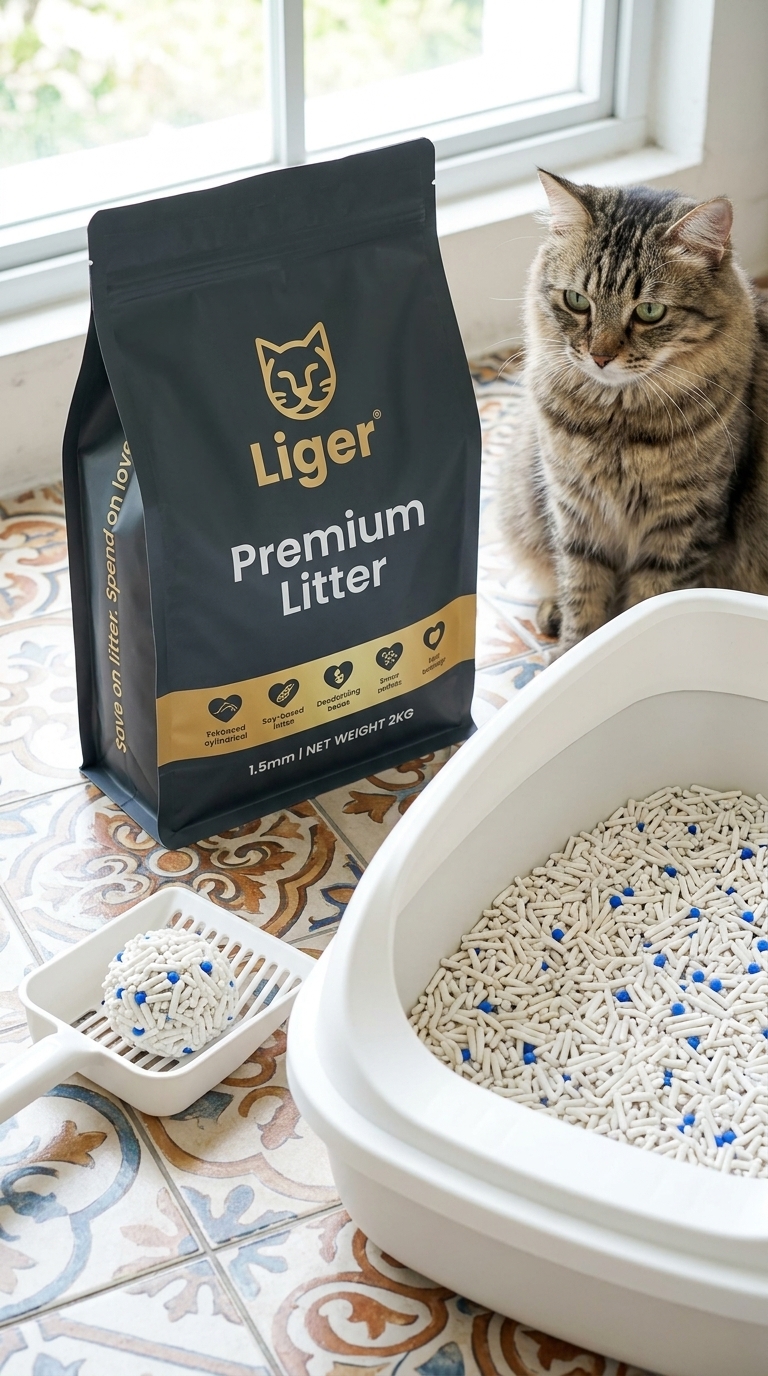
If you're optimising the feeding station for comfort and hygiene, apply the same care to the station your cat visits just as often — the litter box. The parallels are exact: get the size right, keep it scrupulously clean, and choose a material that works in a humid Malaysian home.
Size the box at about 1.5 times your cat's body length with our litter box size calculator, and fill it with a litter built for the climate. Liger Premium Tofu Cat Litter gives you low dust for sensitive airways, firm clumping for easy daily scooping, and blue deodorising beads for odour — plus it's flushable and Halal-friendly. As of 2026 it's RM21.90 for a 2 kg starter pack up to RM169 for the 20 kg bundle (RM8.45/kg, about 23% cheaper per kilo than singles, free shipping in West Malaysia). The litter calculator sizes your supply, and the full kit is in our cat essentials buying guide.