Walk into any pet shop in the Klang Valley and the wall of cat gear is overwhelming: forty kinds of scratching post, fountains that glow, carriers shaped like astronaut helmets, bowls in every colour. Most of it is sold to you, the human, on looks and price. Almost none of it is sold on what your cat's body and brain actually need.
This guide flips that around. It's a Malaysian buyer's framework for the gear that genuinely matters — built on feline behaviour and veterinary science, not on what's trending on Shopee. We'll cover feeding stations, scratching furniture, carriers and harnesses, balcony catios, and the few things you can happily skip. Each section links to a deeper buying guide if you want the full breakdown. One ground rule up front: we name what to look for, never "buy this exact brand from this exact link" — because the right choice depends on your cat and your condo, not on an affiliate kickback.
Start With Behaviour, Not the Shopping Cart
Your cat is a desert-evolved solitary hunter living in a concrete high-rise. That single sentence explains almost every piece of gear it needs. Domestic cats retain a full suite of instincts — to climb to a high vantage point, to scratch and scent-mark, to stalk and pounce, and to drink from sources they perceive as fresh and safe. A typical Malaysian condo, safe as it is from traffic and strays, stifles most of those instincts. When that happens, the fallout shows up as shredded sofas, curtain-climbing, boredom-driven overeating, and stress.
So the real job of "cat essentials" isn't decoration — it's bridging the gap between a wildcat's wiring and an indoor life. According to the Ohio State University Indoor Pet Initiative, environmental enrichment is a core part of feline preventive health, not a luxury. Before you buy anything, ask one question: which natural behaviour does this let my cat perform? If the answer is "none, but it's cute," put it back. If you're setting up for a brand-new cat, our new cat owner checklist walks you through the genuine must-haves first.
Food and Water: The Bowls and Fountains That Matter
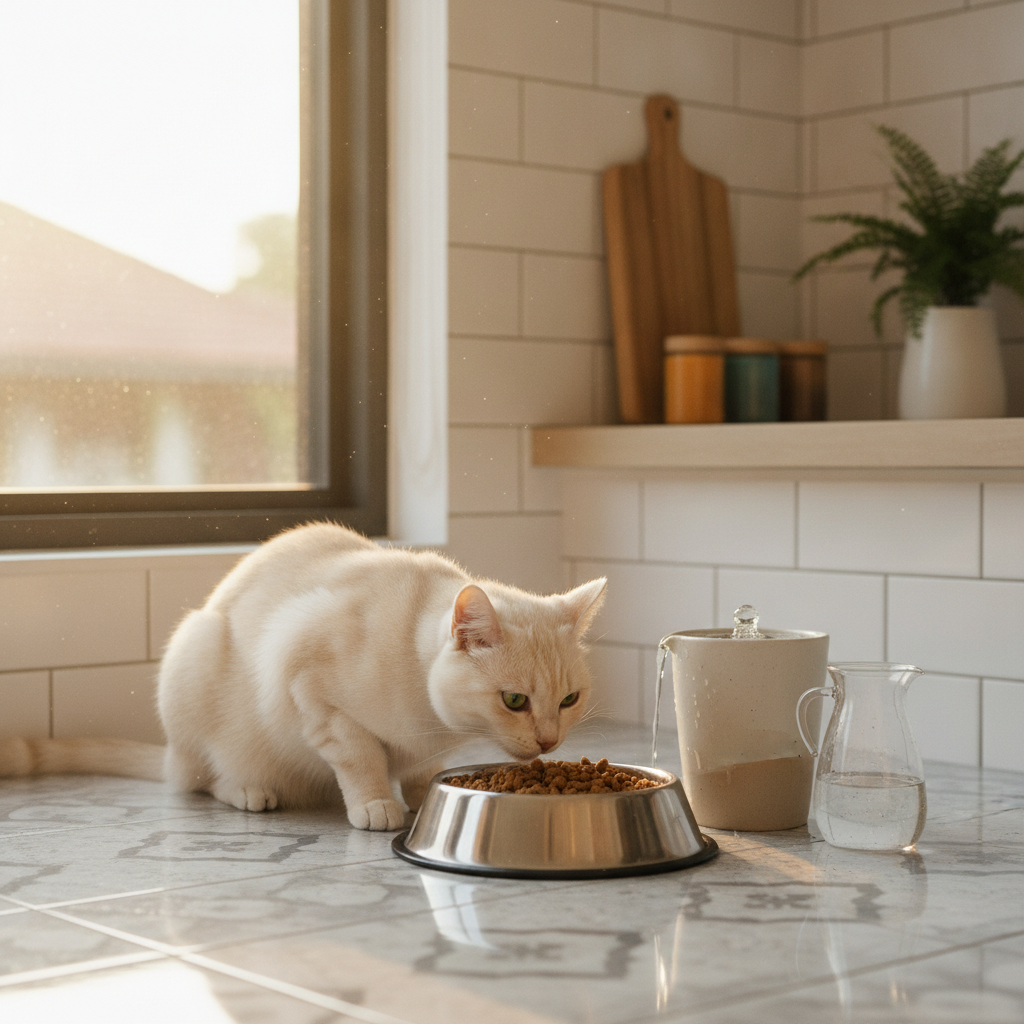
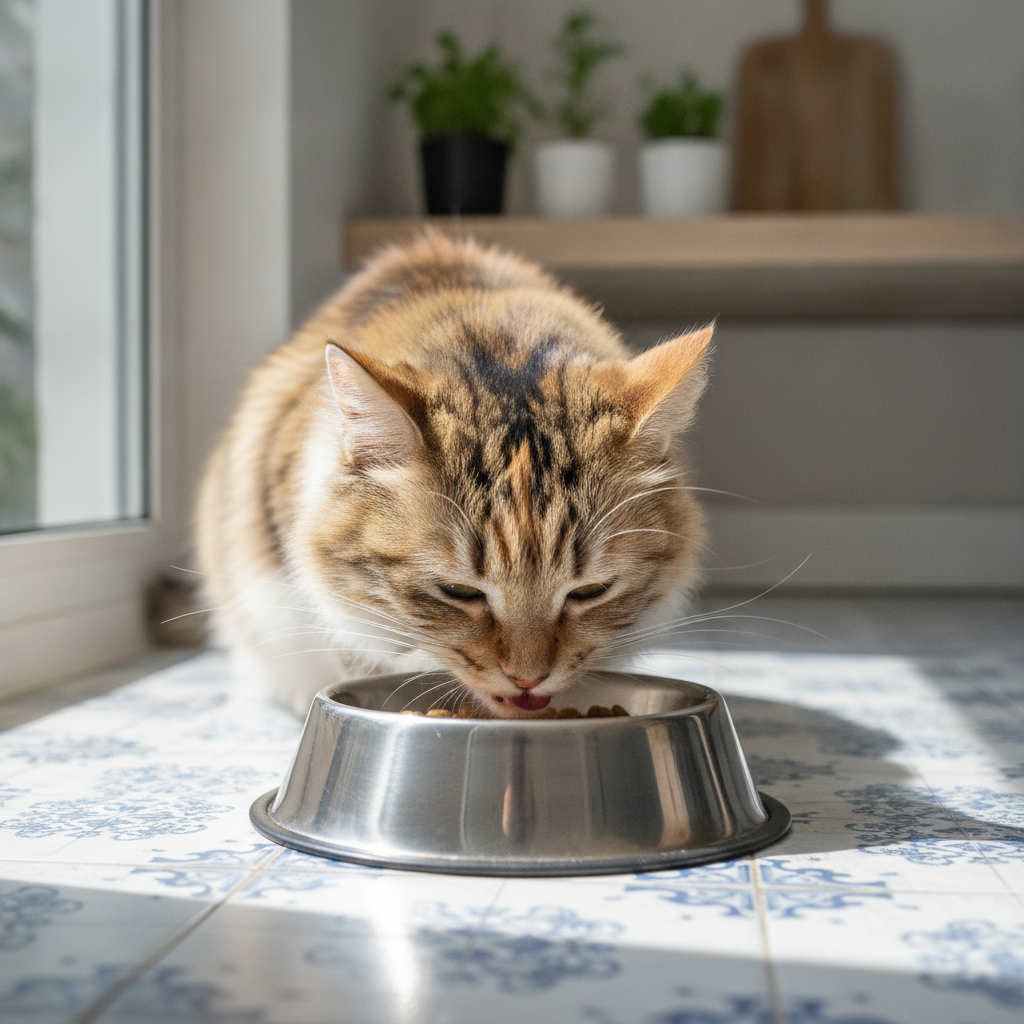
The cheapest gear category is also the one owners get wrong most often. Start with the bowl. Veterinarians steer cat owners away from plastic dishes because plastic develops microscopic scratches that trap bacteria — a leading trigger of feline chin acne. Stainless steel is the safest default: non-porous, dishwasher-safe, and impossible for bacteria to colonise the way plastic allows. Ceramic and glass work too, as long as the glaze is lead-free and you bin any bowl that chips.
Shape matters as much as material. Many cats suffer whisker fatigue — the over-stimulation that comes from sensitive whiskers repeatedly dragging against the walls of a deep, narrow bowl. The fix is a wide, shallow dish so the cat can eat without whisker contact. We unpack the science and the right dimensions in our cat bowls and whisker fatigue guide.
Then there's water — and in Malaysia's heat, this is non-negotiable. Cats inherited a famously low thirst drive from their desert ancestors, getting most of their moisture from prey in the wild. Chronic mild dehydration produces concentrated urine, raising the risk of urinary tract disease and kidney problems. Cornell Feline Health Center and most vets recommend actively encouraging water intake, and many cats drink more from a moving source. Whether a fountain is right for your cat — and how to pick one that isn't a noisy, mouldy headache — is covered in do cats need a water fountain. If you just want to know whether yours is drinking enough, start with our cat hydration calculator and the deeper drinking-enough-water guide.
Scratching Posts and Cat Trees: Buying Vertical Territory
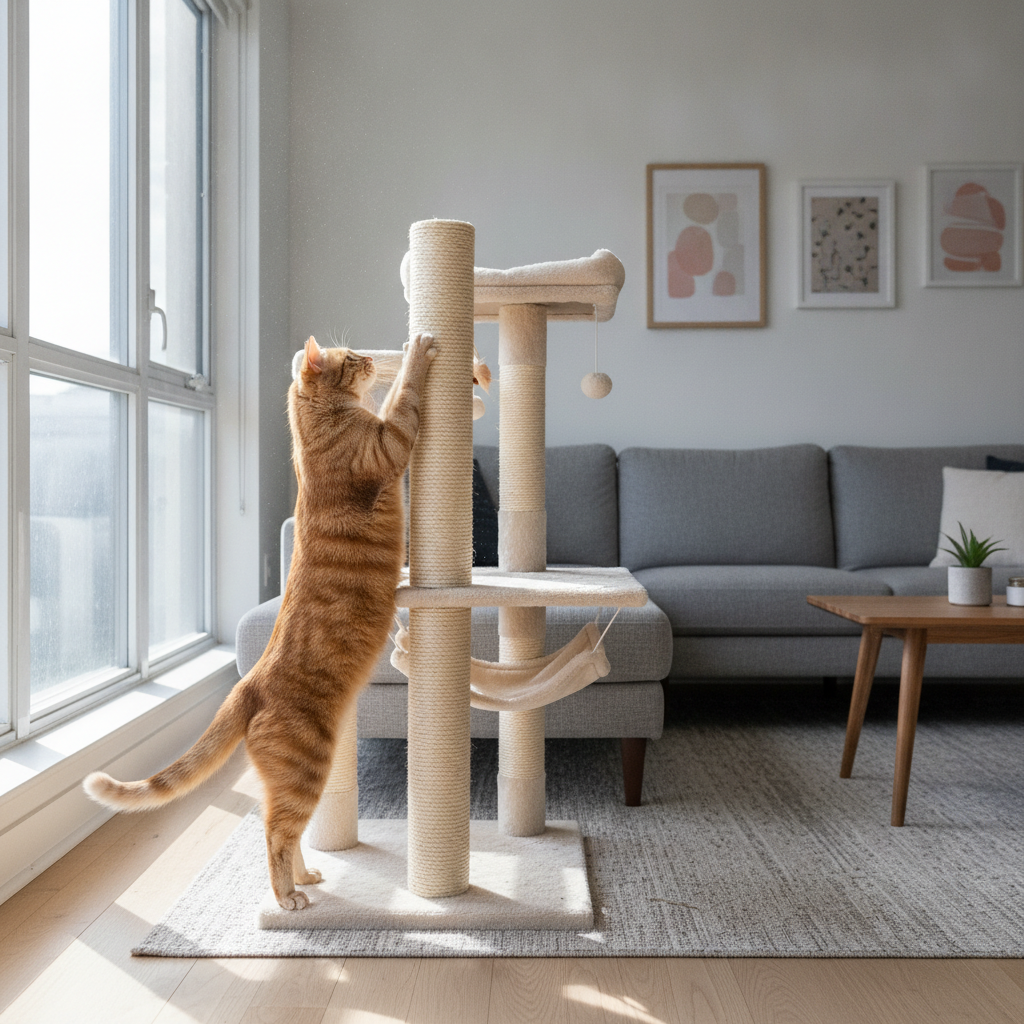
Scratching is not vandalism. Cats scratch to shed the dead outer husk of their claws, to stretch their whole spine, and to leave both a visual mark and a scent signal from glands in their paws. Deny them an outlet and they'll use your sofa — not from spite, but because the sofa is tall, stable, and conveniently placed.
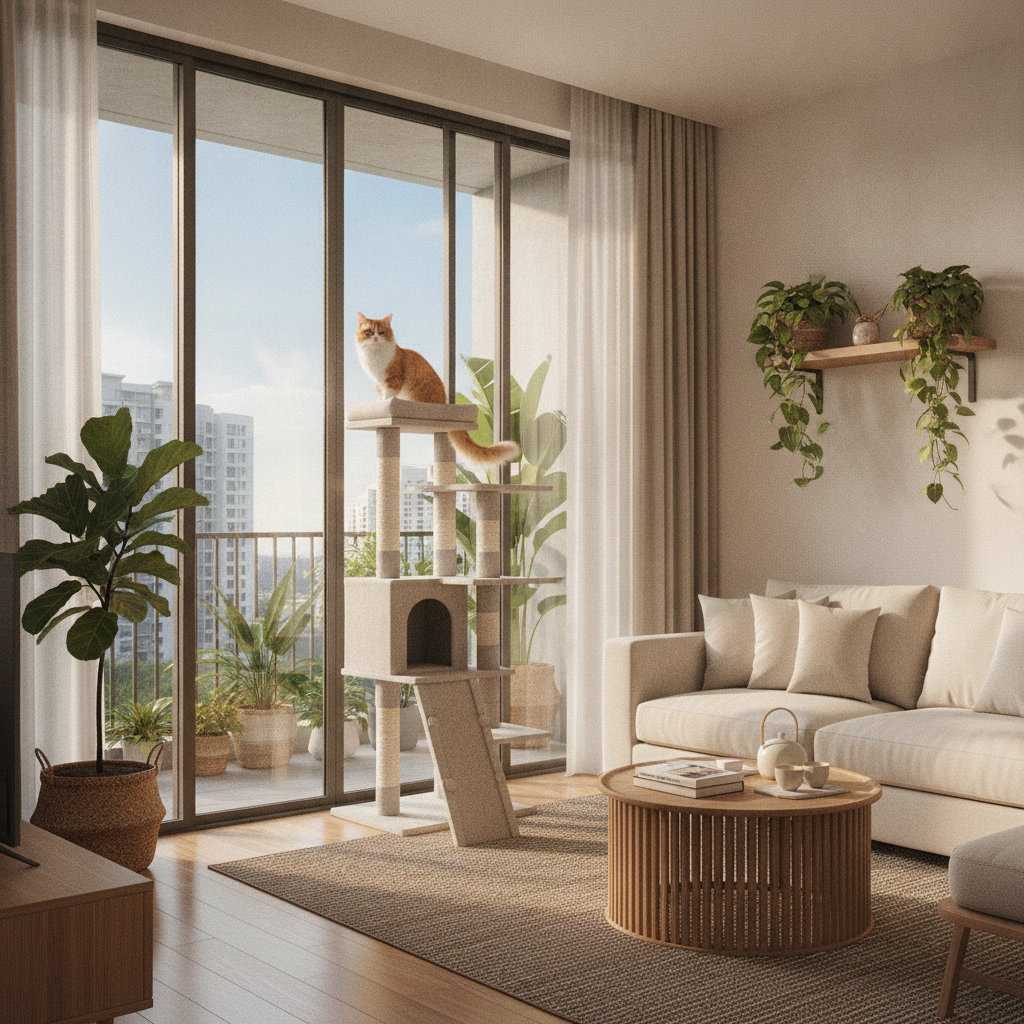
Two rules cover most buying mistakes. First, material: feline behaviourists treat sisal fabric as the gold standard because its rough weave mimics tree bark and gives a satisfying shred. Looped carpet is the opposite — claws snag in the loops, which hurts, and it teaches the cat that carpet everywhere is fair game. Second, height and stability: the post must be tall enough for a full vertical stretch (think 80 cm or more for most adults) and heavy-based enough that it never wobbles. A post that tips even once is a post your cat abandons.
Cat trees add the vertical territory a high-rise cat craves — multiple levels to climb, perch, and survey from. In a multi-cat home, apply the n+1 rule: for every cat, provide one extra of each key resource, spread around the home so no cat can guard them all. Full sizing tables by life stage, plus placement tricks for small condos, are in how to choose a cat scratching post or cat tree. Pair the climbing furniture with proper hunting play — our guide to cat toys and the hunting instinct explains why the right toy beats an expensive tree left unused.
Carriers and Harnesses: Gear That Moves Your Cat Safely
A carrier is the one piece of gear that decides how stressful every vet trip will be for the next decade. The American Association of Feline Practitioners (AAFP) and International Cat Care both recommend a hard-sided carrier with a removable top. The reason is clever: the top lifts off so your vet can examine the cat while it stays sitting in the familiar bottom half — no dragging a terrified cat out by the scruff. Top-loading also lets you lower the cat in gently instead of shoving it headfirst into a cave. Size it at roughly 1.5 times the cat's body length: big enough to stand and turn, snug enough to feel den-like.
Buying the right carrier is only half the battle — the cat also has to stop fearing it. That's a training job, and we cover it separately in stress-free vet visits: how to carrier-train your cat. For the full feature-by-feature buying breakdown, see the best cat carrier buying guide.
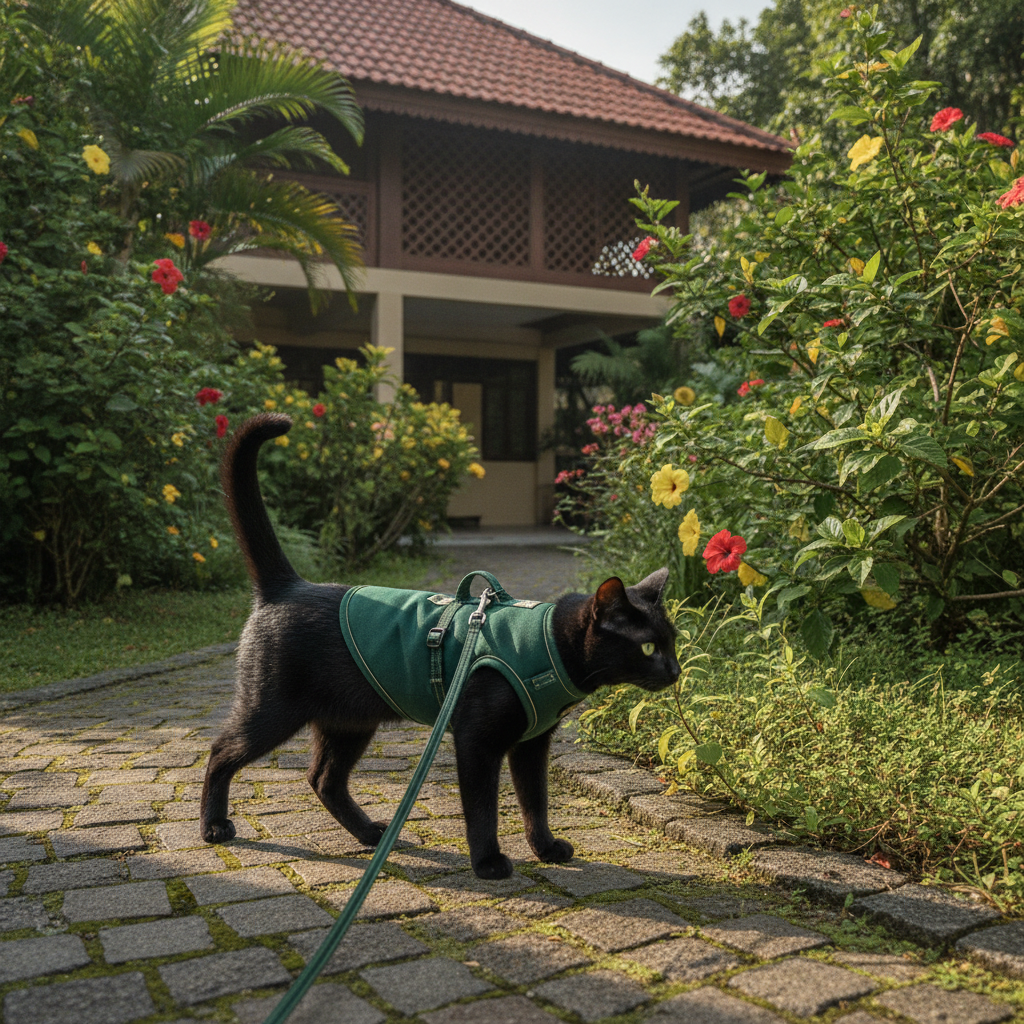
A harness and leash open up safe, supervised outdoor time — useful enrichment for a condo cat. The key is a snug, escape-proof H-style or vest harness that spreads pressure across the chest, never a collar-and-lead that chokes the neck. Harnesses suit some cats and terrify others, and the introduction has to be slow. Which designs to trust and how to train to them is in the cat harness and leash guide.
Catio and Balcony Enclosures for High-Rise Cats
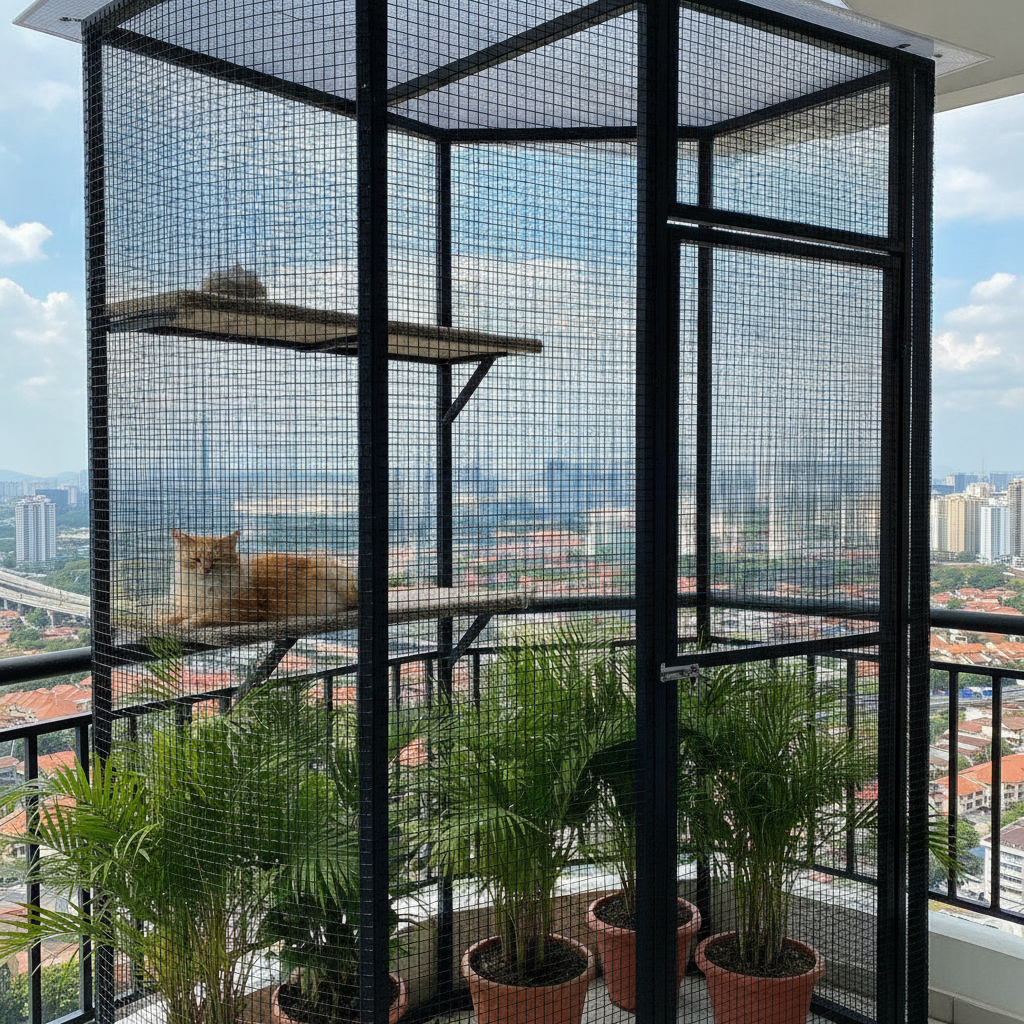
For a condo cat, a secured balcony — a "catio" — is the closest thing to safe outdoor living. It delivers fresh air, sun, and hours of visual stimulation while keeping the cat behind a barrier. But in a Malaysian high-rise, two things are non-negotiable. The first is safety: an open or poorly meshed balcony is a fall risk vets call High-Rise Syndrome, and cats absolutely do fall from condos. The second is permission: any change to a balcony is regulated under the Strata Management Act 2013 because the façade is common property, so you'll need written approval from your JMB or MC before building anything.
This article owns the enclosure as a product — how to choose climate-proof materials (powder-coated steel, PVC-coated mesh, polycarbonate roofing for our sun and monsoon), mesh sizing, and removable designs that get approved. The broader question of balcony-proofing and stopping escapes without a full enclosure is a safety topic in its own right. Get the full build-and-choose breakdown in catio and balcony enclosures for Malaysian condos.
What You Can Skip or Go Cheap On
Not every "essential" earns its shelf price. A few honest calls:
- Beds: in our climate, cats often ignore the plush igloo bed entirely and sleep on cool tile. Spend little here. Our Malaysian cat bed guide explains what actually gets used.
- Toys: the RM5 wand toy you actively play with beats the RM150 electronic gadget the cat watches once. It's about the human on the other end, as our cat toy science guide shows.
- Automatic feeders: genuinely useful for portion control and routine, but a health tool, not a babysitter. The honest case is in why your cat feeder is a health tool.
- Automatic litter boxes: expensive, and not the dream they're marketed as for every home — we tested the trade-offs in automatic litter boxes: dream or smelly nightmare.
- Litter mats: cheap and worth it for tracking control — see are cat litter mats worth it in Malaysian condos.
The Essential Most Owners Get Wrong: The Litter Setup
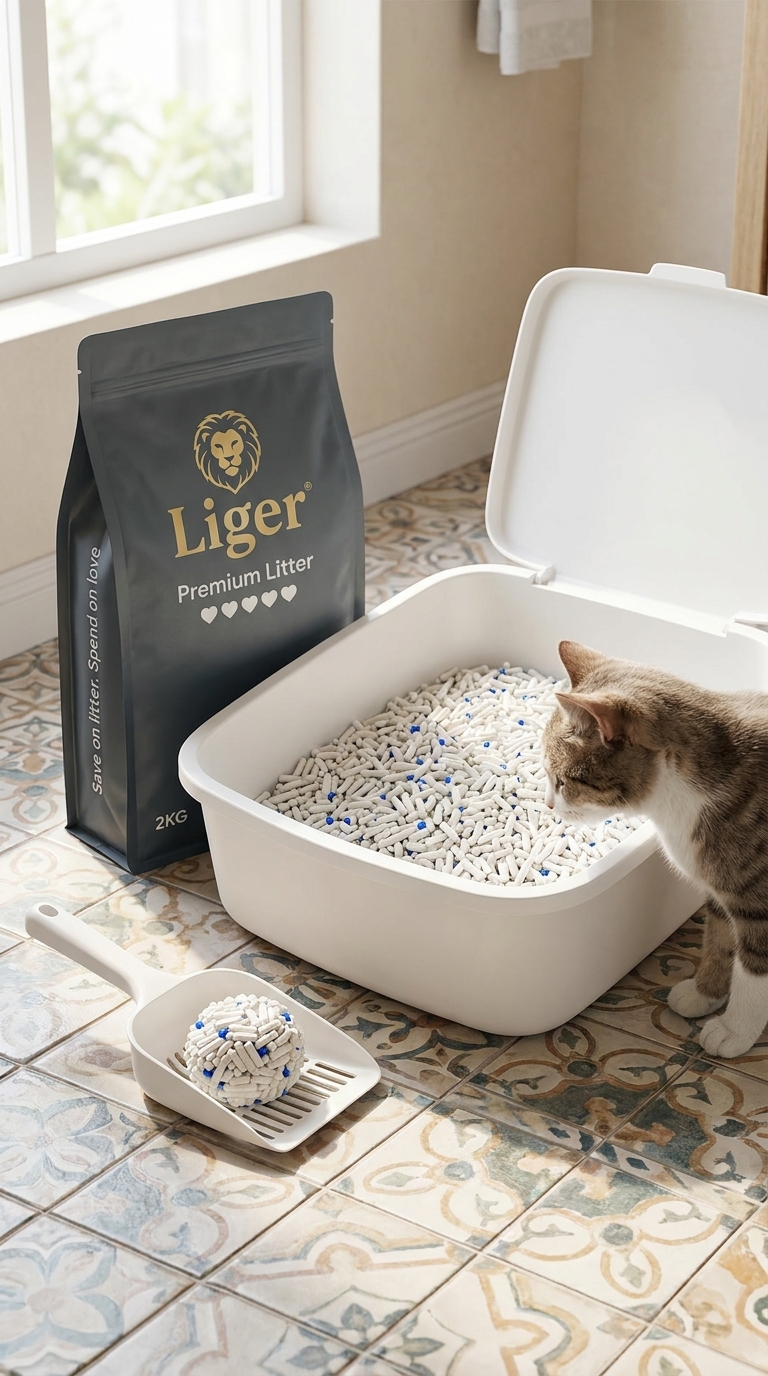
Owners will agonise over a RM300 cat tree and then default to whatever litter is cheapest that week. That's backwards. Your cat visits the litter box several times a day, every day — it's the single most-used piece of "gear" in the home, and the wrong setup drives both odour misery and litter-box avoidance.
Two parts matter: the box and the litter. Size the box at roughly 1.5 times your cat's body length and follow the n+1 rule for multiple cats — our litter box size calculator does the math. For the litter itself, in a humid, often poorly-ventilated Malaysian apartment, the priorities are low dust, strong clumping, and real odour control. That's exactly where Liger Premium Tofu Cat Litter earns its place: bright white soy-based pellets that clump firmly, blue deodorising beads, very low dust for sensitive airways, and it's flushable and Halal-friendly. Pricing is honest and local (as of 2026): RM21.90 for a 2 kg starter pack, RM53.90 for 6 kg, RM89 for 10 kg, and RM169 for the 20 kg bundle — that's RM8.45/kg at the 10-pack, about 23% cheaper per kilo than buying singles, with free shipping across West Malaysia.
Work out exactly how much you need (and what it costs per day) with the litter calculator, or compare litter types side by side in our litter comparison tool. If anyone in your home has a dusty-cough problem, the dust level comparison is worth a look before you buy anything.
The Bottom Line: A Behaviour-First Shopping List
Strip away the marketing and the essentials are short: a wide stainless-steel bowl, reliable hydration, a tall sisal scratching post and some vertical space, a removable-top carrier, a properly sized litter box with a low-dust clumping litter, and — if your building allows it — a safe balcony catio. Everything else is optional comfort.
Buy for the behaviour, not the box it comes in. A cat whose instincts to climb, scratch, drink, and hide are all met is calmer, healthier, and far less likely to "act out" in ways that cost you a sofa or a vet bill. Use the linked guides above to go deep on whichever piece you're shopping for next — and when you're ready to sort the litter setup properly, the litter calculator is the fastest place to start.