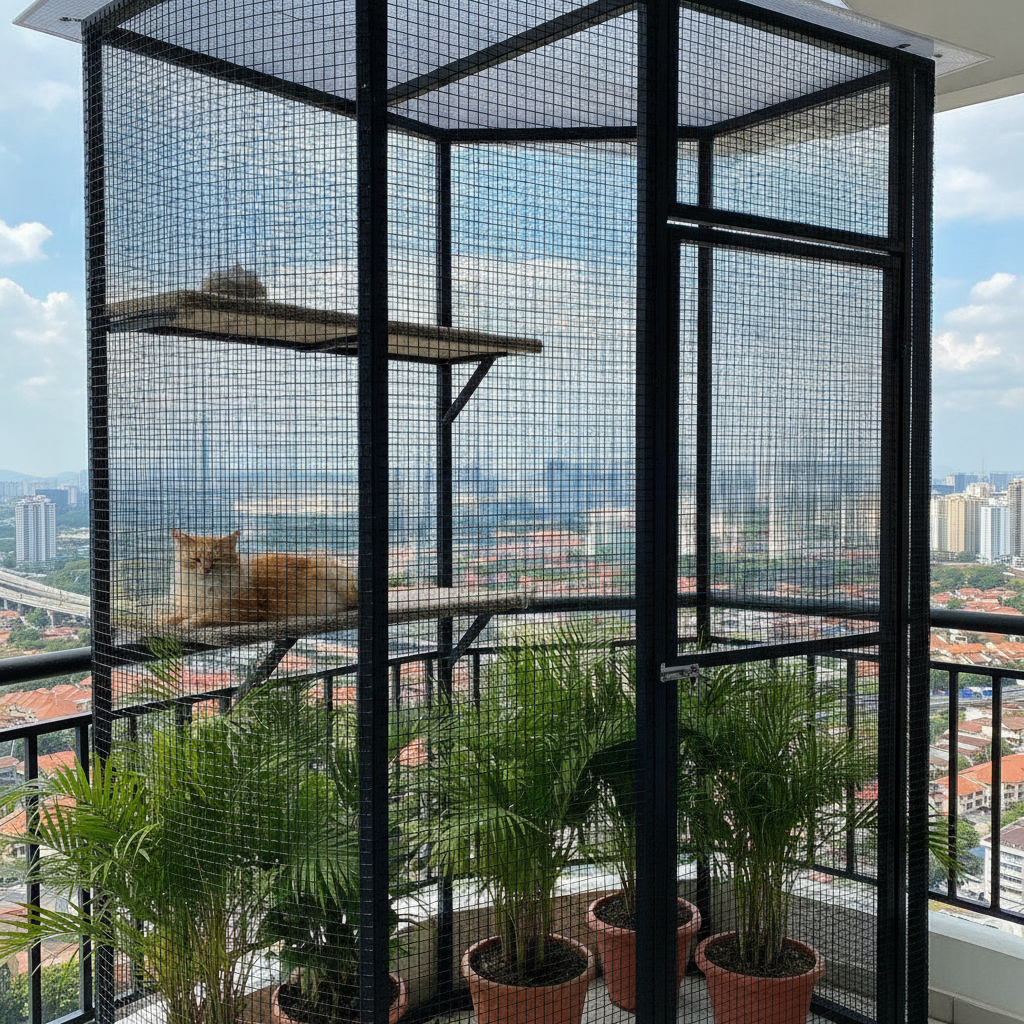
A balcony is the cruellest tease for an indoor cat: all those smells and birds, one low railing away from a fatal drop. A catio — a purpose-built, fully enclosed outdoor cat space — solves that. It gives a high-rise cat fresh air, sun and stimulation while making a fall impossible. This guide treats the catio as what it really is: a structure you choose and build, with materials, mesh, mounting and — this being Malaysia — management approval all to get right.
One boundary first. This article is about the enclosure as a product. The broader job of cat-proofing a balcony and stopping escapes through doors and windows is a safety topic in its own right; if that's what you need, that's covered separately. Here, we're building the box.
Catio vs Safety Netting: Know the Difference
People use "catio" and "balcony netting" interchangeably, but they are not the same thing, and the gap can be lethal. Plain safety netting — nylon or plastic mesh strung up with tension rods or adhesive hooks — is a barrier. It might deter a calm cat from slipping through railings, but a panicked or determined cat can tear it or pop its fastenings, giving you a false sense of security.
A catio is a complete enclosure: a rigid frame with chew-proof mesh on all sides plus a secured top and floor, engineered to contain a cat under any circumstances. That structural integrity is the whole point, because the risk it guards against is real. Cats don't fall from balconies because they're clumsy — they fall because instinct takes over. A passing bird, an insect, or a sudden noise can trigger a predatory lunge or a panicked bolt, and a low railing offers no protection. A cat perfectly calm on a balcony for months can go over the edge in a single unguarded second. Vets call it High-Rise Syndrome — the cluster of severe injuries (shattered jaws, punctured lungs, broken limbs) cats suffer falling two or more storeys. As VCA Hospitals notes, a cat's righting reflex does not make it fall-proof. If you want genuine protection, build the enclosure, not just a screen.
Step One Is Paperwork: JMB/MC Approval
In a Malaysian condo, the very first step isn't shopping — it's permission. Your balcony is part of the building façade, so any modification falls under the Strata Management Act 2013 and the authority of your Joint Management Body (JMB) or Management Corporation (MC). Written approval is mandatory and non-negotiable; building without it risks fines, a forced dismantling, and loss of your deposit.
Expect a formal process: pull your building's House Rules first, then submit an application with detailed drawings (design, dimensions, materials, exact location), your installation method, contractor details if any, and a signed undertaking to take responsibility for damage. You'll typically pay a refundable renovation deposit of around RM2,000 to RM5,000, returned after a post-install inspection. On pets specifically, By-Law 14 doesn't allow a blanket pet ban, but it does let management act against an animal causing nuisance or danger — so a tidy, secure catio plan helps your case. A local council permit (DBKL, MBPJ) usually isn't needed for a minor non-permanent enclosure, only for structural or "wet" works. For the detail on strata renovation rules, this Malaysian condo renovation guide is a useful primer. Designing the catio as a removable, non-permanent structure markedly improves your odds of approval. Bear in mind the process can take several weeks, since the committee usually reviews applications at a scheduled meeting and any work must then keep to the building's renovation hours — so start the paperwork well before you want the catio finished.
Climate-Proof Materials for the Tropics
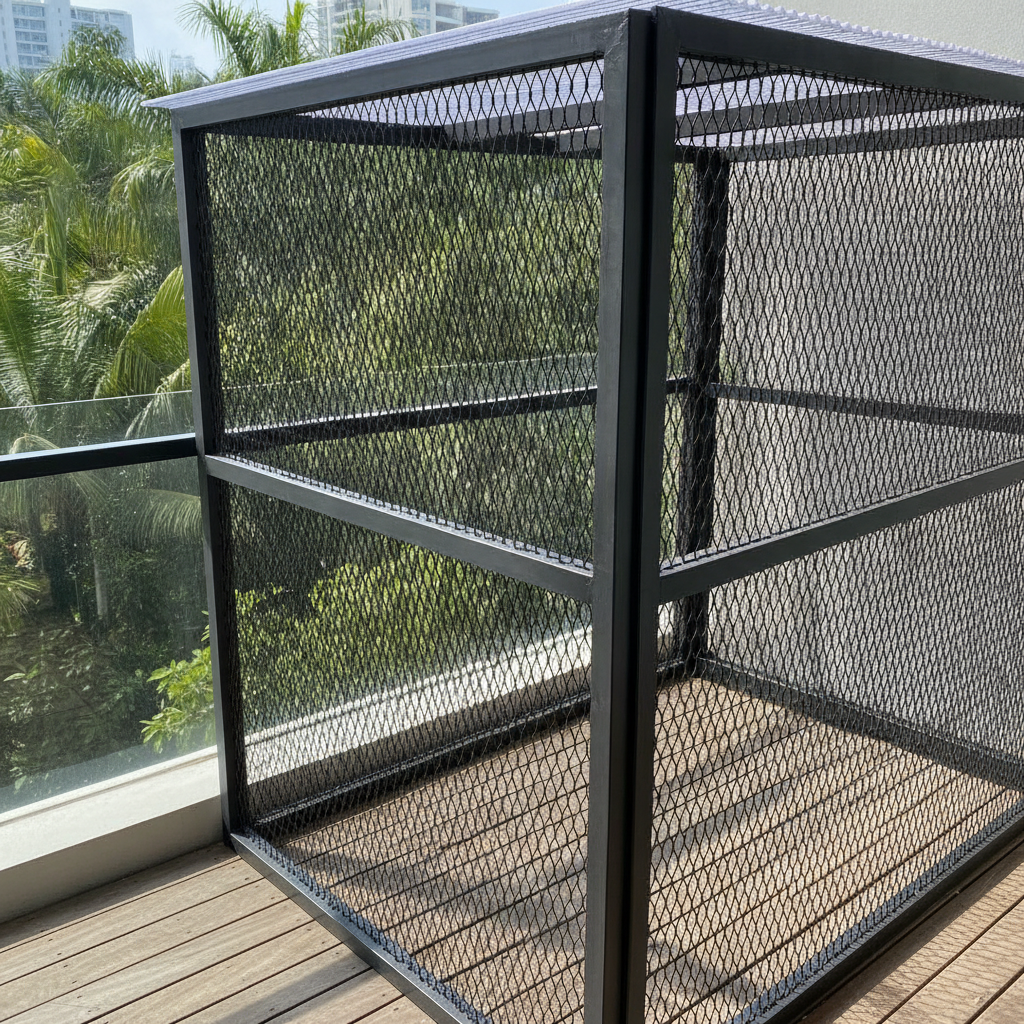
Our heat, humidity and monsoon rain destroy the wrong materials fast. Choose for corrosion resistance:
- Frame: aluminium is the standout — it forms a natural oxide layer so it won't rust even if scratched, and powder-coated aluminium can last decades with little upkeep. Powder-coated steel is strong and cheaper, but once the coating chips, the exposed steel rusts quickly in our humidity, so it needs watching.
- Mesh: use 16-gauge PVC-coated or galvanised welded wire — strong, chew-resistant and rust-resistant. Chicken wire is explicitly unsafe; a cat or an outside animal can tear it.
- Roof: polycarbonate panels give shade, UV protection and rain cover while letting filtered light through — essential so the catio doesn't become a sun-baked oven or a flooded tray during a downpour. Pitch the roof slightly so monsoon rain runs off rather than pooling.
Ventilation and shade deserve a specific thought in our climate. The mesh provides airflow, but a catio in full afternoon west sun can overheat dangerously, so position shade — the roof, a shade cloth, or plants — to give the cat a cool retreat at the hottest part of the day, and always make sure it can come back indoors freely rather than being trapped in the heat.
Skimping on materials is the most common catio mistake. A rusted frame or a torn mesh panel isn't just ugly — it's an escape route over a long drop.
Mesh Size and Escape-Proofing
The single most important safety spec after material is mesh aperture — the size of the holes. Too big and a slim cat squeezes through or gets its head stuck (a genuine strangulation risk). A 1 x 2 inch opening suits most adult cats; for kittens, drop to a much smaller 0.5 x 0.5 inch mesh, since kittens fit through gaps that look impossibly small. If you have cats of different sizes or plan to foster kittens, size the mesh for the smallest animal that will ever use the space. The enclosure must be genuinely floor-to-ceiling and gap-free — cats exploit the smallest weak point, especially where the frame meets the existing railing or wall. The access door needs a secure, cat-proof latch a clever paw can't flick open. Given the stakes, having a professional check or install the structure is money well spent.
Drilled vs Tension-Mounted: Installation
How you anchor the catio matters both for safety and for getting past management. Drilled (permanent) mounts are the most rigid and secure, but many JMB/MCs forbid drilling into the façade, and it's harder to reverse. Tension-mounted systems — floor-to-ceiling poles braced by pressure — are the "condo-friendly" route: no holes, removable, and far more likely to be approved, which is why they suit renters and strict buildings. Whichever you use, the structure must be genuinely solid; a wobbly tension rig is worse than none. If you drill, you'll likely need explicit written sign-off and possibly a contractor's details in your application.
Kit vs Custom, and Designing for Enrichment
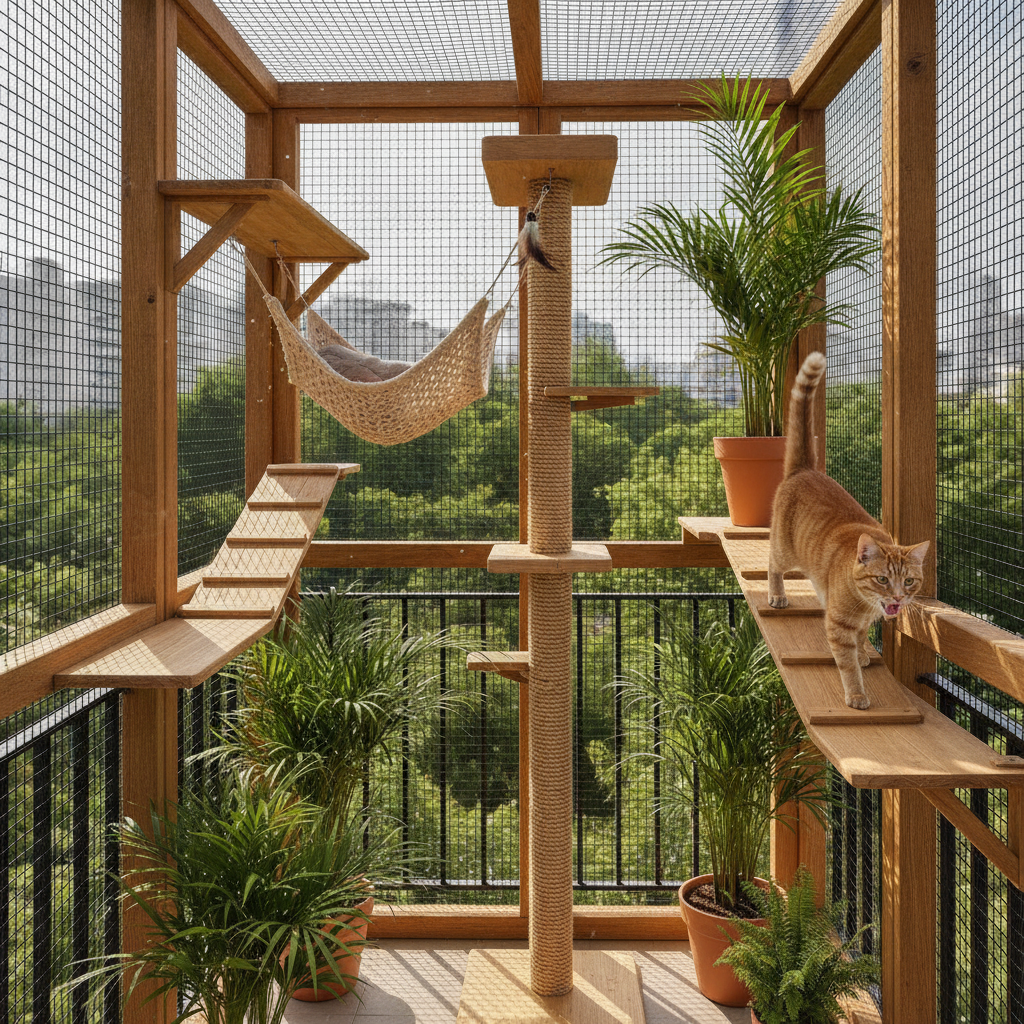
You can buy a pre-fab catio kit (faster, predictable, but rarely a perfect balcony fit) or have one custom-built (pricier, but sized exactly to your space and railings). For odd Malaysian balcony shapes — and most condo balconies are awkward — custom often wins, and a local metalwork contractor can fabricate an aluminium-and-mesh enclosure to measure. Whichever route you take, budget realistically: between the deposit, quality materials and possibly a contractor, a proper catio is an investment, but set against a single emergency vet bill for a fall — or losing the cat — it's cheap insurance. Either way, a catio should be more than a cage — design in the enrichment that makes a cat actually use it. Add multi-level shelves and perches in weather-resistant material so the cat can climb and survey, a shaded hammock or bed out of the direct sun, and an outdoor-friendly sisal scratching post.
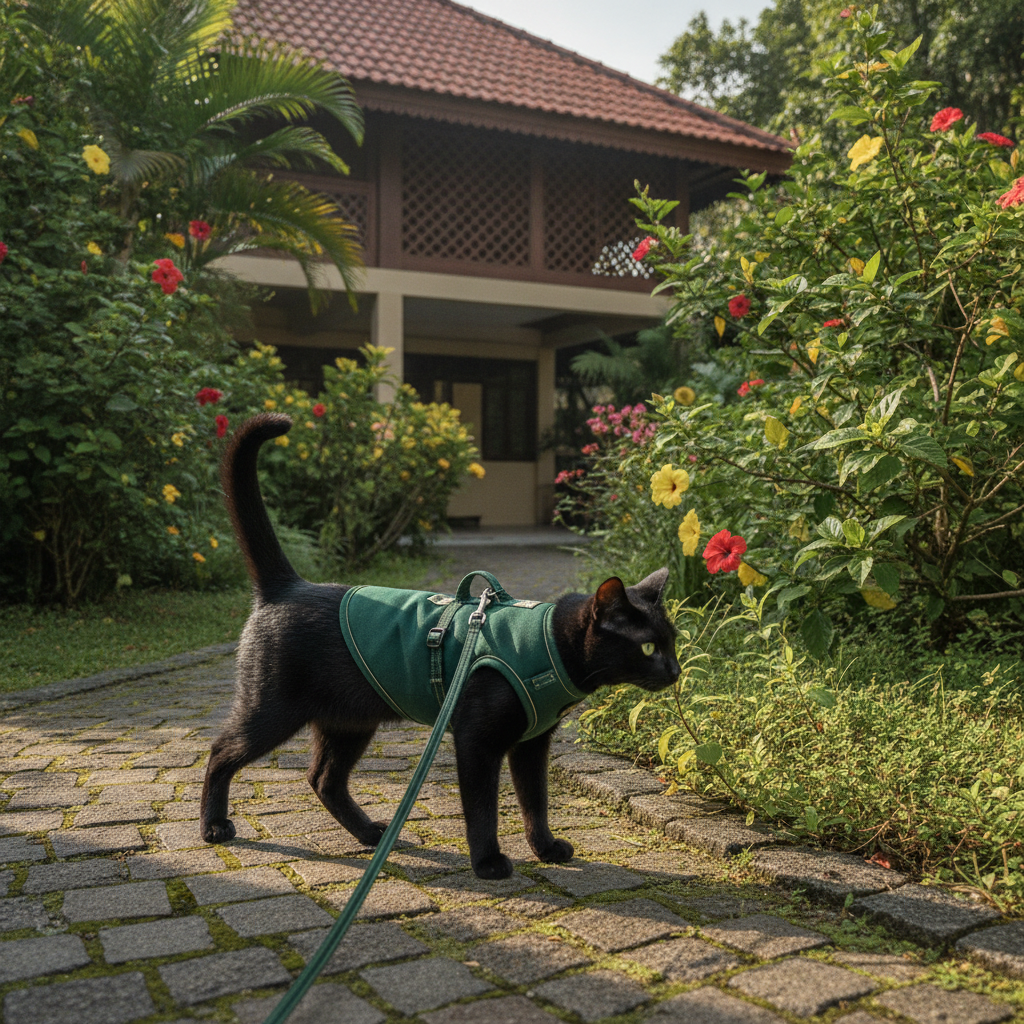
Greenery makes it a sanctuary, but only cat-safe greenery: good tropical options include the Areca palm, spider plant and Boston fern. Cross-check anything you add against the ASPCA toxic and non-toxic plant list before it goes in, and consult International Cat Care for indoor-cat enrichment ideas you can carry into the catio. If a full enclosure isn't possible in your building, supervised harness and leash time is the next-best outlet.
Inside the Catio: Don't Forget the Litter
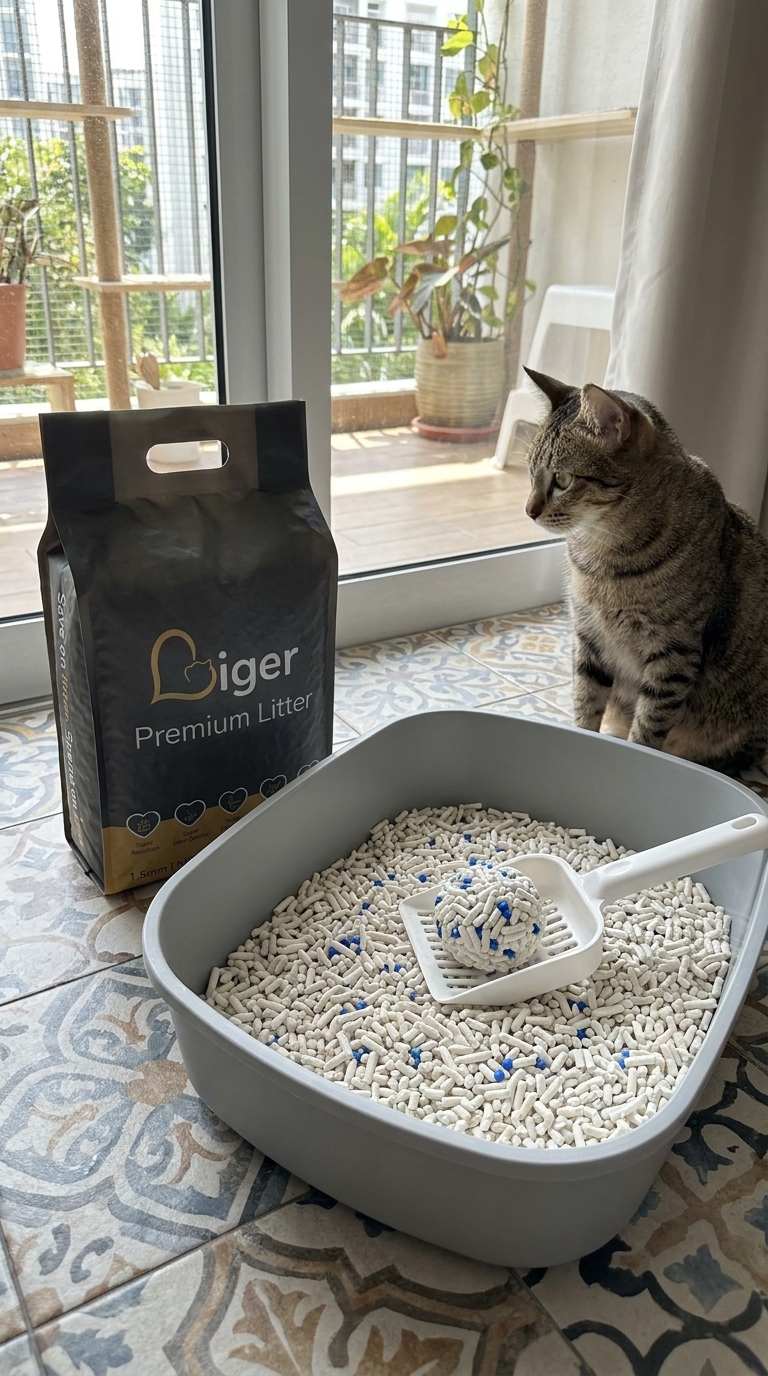
A catio changes where your cat spends its day, but not its bathroom needs. Many owners place a litter station near the catio access so the cat can come in to go — and in our heat, an outdoor-adjacent box demands serious odour control or the whole balcony starts to smell. That makes the litter choice part of the catio plan, not an afterthought.
Liger Premium Tofu Cat Litter handles a warm, airflow-heavy spot well: firm clumping for easy daily scooping, blue deodorising beads for odour, and very low dust — plus it's flushable and Halal-friendly. As of 2026 it's RM21.90 for a 2 kg starter pack up to RM169 for the 20 kg bundle (RM8.45/kg, about 23% cheaper per kilo than singles, free shipping in West Malaysia). Size your supply with the litter calculator, get the box dimensions right with the litter box size calculator, and see the rest of the kit in our cat essentials buying guide.