It sounds like the most trivial question in cat care: how much litter do you actually pour into the box? But get it wrong in either direction and you pay for it — in smell, in clumps that fall apart, in a cat that refuses the box, or in ringgit quietly going into the bin. After years of filling boxes for four cats in a KL condo, we've learned that litter depth is one of those small dials that has an outsized effect on both your nose and your wallet. Here's how to set it right.
The Short Answer: About 2 Inches for Most Cats
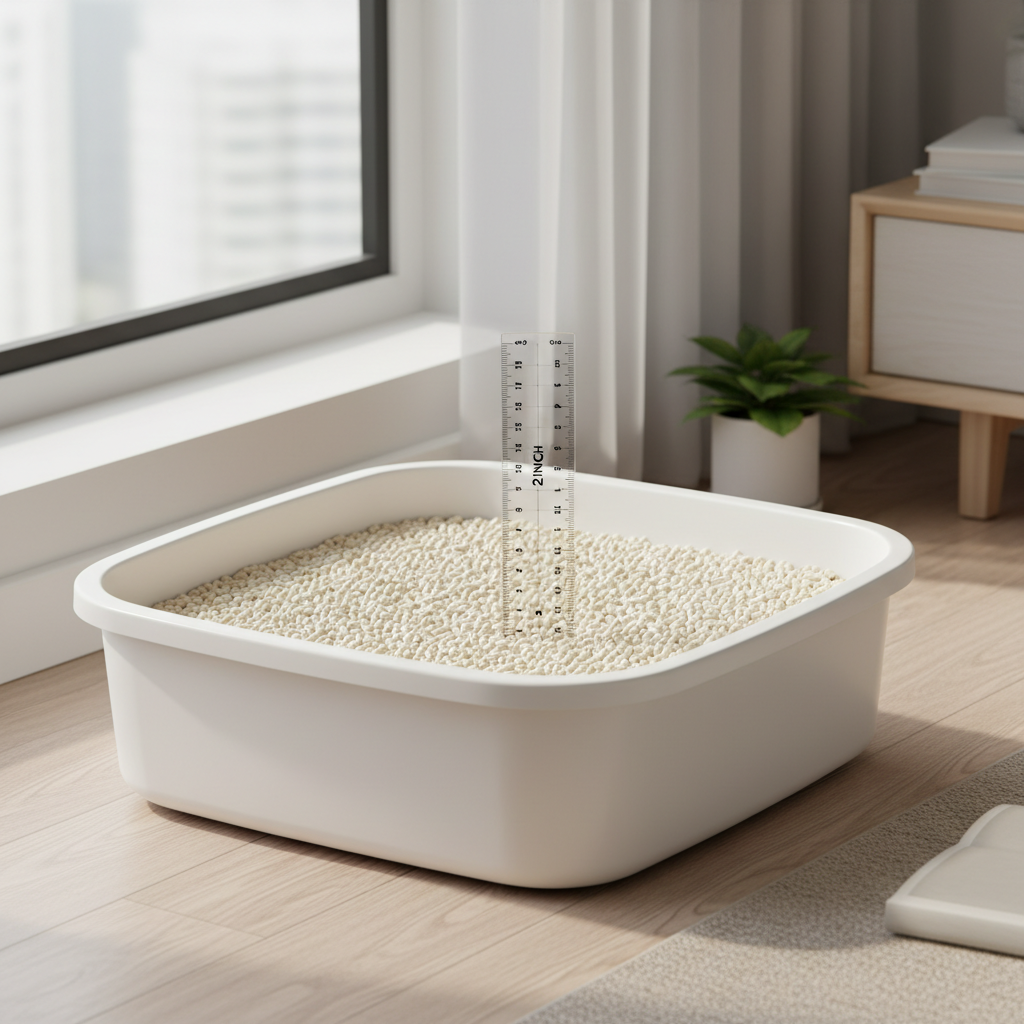
For a typical adult cat, aim for roughly 2 inches (about 5cm) of litter across the bottom of the box. That's the sweet spot the vast majority of cats and litters are happy with. Deep enough that your cat can dig and bury the way instinct demands; deep enough for a urine clump to form properly without cementing to the floor of the box; but not so deep that you're throwing away clean litter every time you scoop.
Two inches is a guideline, not a law of physics — your cat, your box, and your litter type all nudge it slightly. But if you remember one number, remember two inches. Most "my litter doesn't work" complaints we hear trace straight back to a box that's either bone-shallow or filled to the brim.
Why Depth Matters More Than You Think
Depth quietly controls three things at once:
- Clumping quality. When a cat pees, the liquid needs enough litter beneath it to be fully absorbed before it reaches the hard bottom of the box. Too little litter and the urine pools on the plastic, sticks, and leaves a smelly residue you can't scoop — forcing a full change far sooner. The clump needs a bed to form in.
- Digging and burying instinct. Cats are hardwired to dig a hole, go, and cover it. A shallow tray gives them nothing to work with, and a frustrated cat may start doing its business beside the box instead of in it. Enough depth keeps the instinct satisfied — and your floor clean.
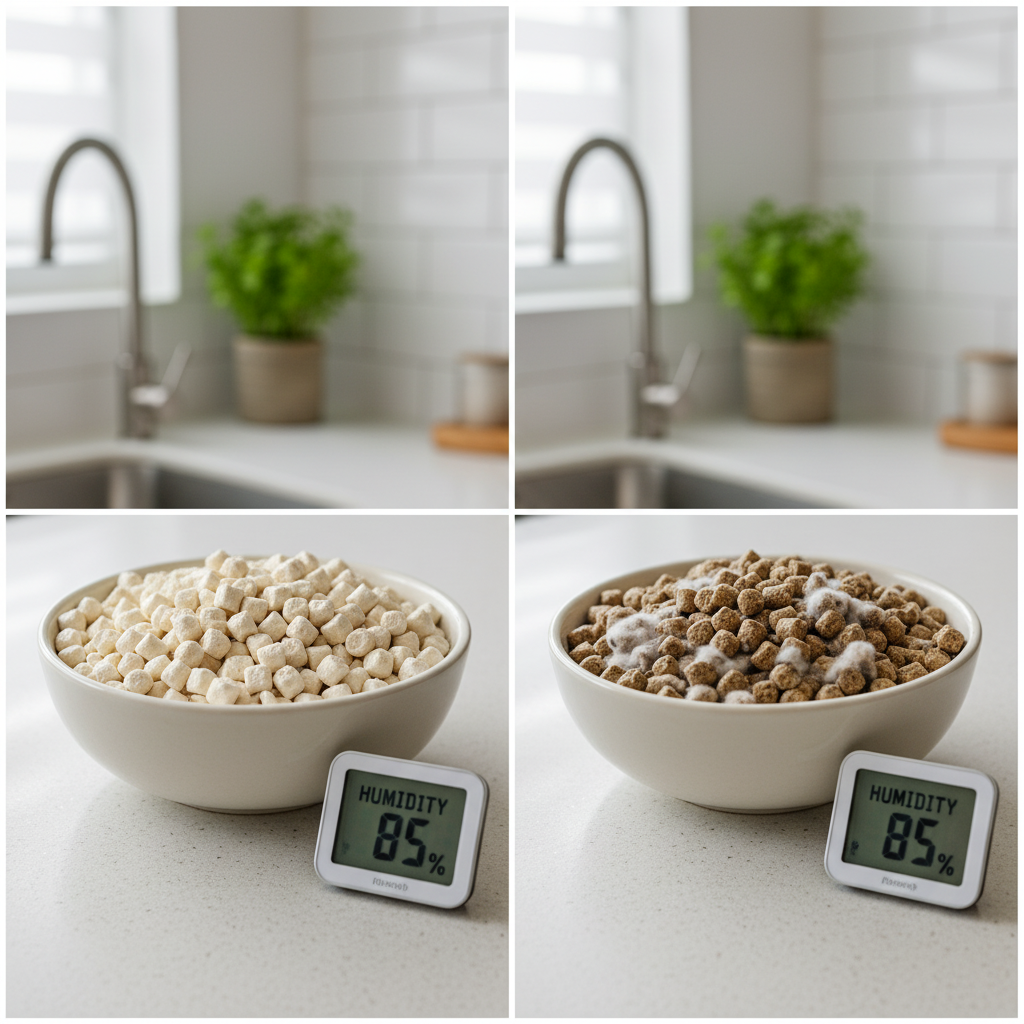
- Odour control. A proper bed of litter traps and seals waste. A skimpy layer lets ammonia escape almost immediately. In our Malaysian heat and humidity, weak odour control turns into a full-flat problem within hours.
There's a setup point worth pairing with depth: the box itself has to be big enough. Vets generally recommend a box at least 1.5 times the length of your cat, nose to base of tail. A correctly deep layer of litter in a too-small box still leaves a cramped, unhappy cat — depth and box size work together. If you're not sure your box measures up, our litter box size calculator takes the guesswork out.
Clumping Clay vs Tofu Litter: They Don't Want the Same Depth
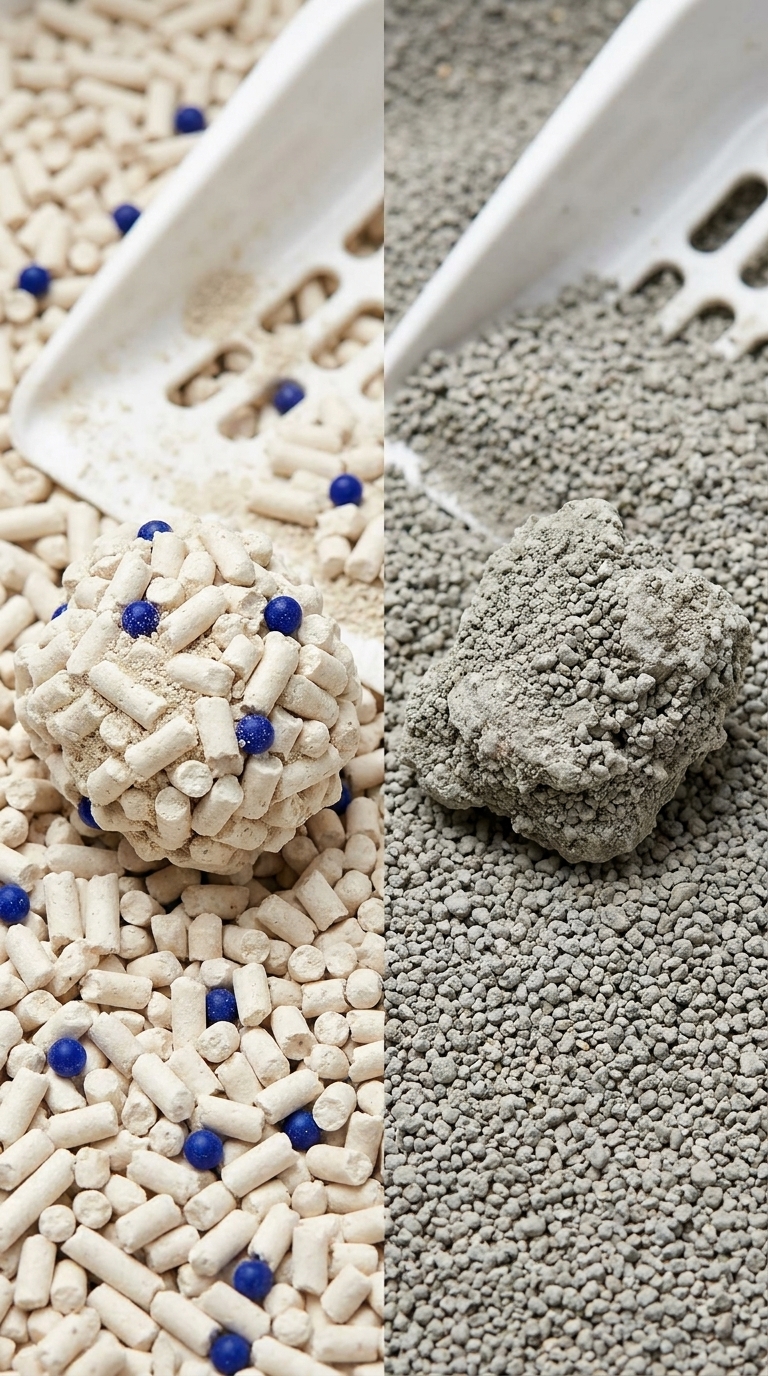
Here's the nuance most depth advice skips: different litters clump differently, so they don't all want the same depth.
Clumping bentonite clay generally wants a deeper bed — around 2.5 to 3 inches. Clay forms its clump partway down into the litter, so it needs that extra depth to wrap the liquid and keep it off the box floor. Run clay too shallow and you get those maddening clumps that fuse to the plastic.
Quality tofu litter behaves differently — and in your favour. Because each soy-fibre pellet is dense and absorbs fast, a good tofu litter forms its clump high, near the surface, almost on top of the bed. Liger Premium Tofu Cat Litter is lab-certified at 97% clumping strength, which means the clump grabs the liquid quickly and lifts out clean in one scoop. The practical upshot: tofu litter clumps reliably at about 2 inches, where clay would need closer to 3. You get the same performance from a thinner bed — which, as we'll see, is money in your pocket.
That surface-clumping behaviour is also why tofu litter is friendlier to flushing. Because clumps lift cleanly and break down in water, a single clump can be flushed in buildings with decent water pressure — though one clump per flush is the safe rule. Compare how the major litter types handle depth, clumping and odour side by side on our litter comparison tool.
The Money Part: How Depth Changes Your Tofu Litter Bill
This is the part nobody tells you, and it's where depth pays for itself. Litter depth is a hidden cost lever, and it cuts both ways:
- Too deep wastes litter directly. When you overfill, every scoop drags clean, unused pellets out with the clump. You're literally tossing fresh litter into the bin. Fill a box 4 inches deep and you'll burn through a bag almost twice as fast as you need to — for zero extra benefit.
- Too shallow wastes litter indirectly. When the bed is too thin, urine reaches the bottom, sticks, and smells. Now you can't just scoop — you have to dump the entire box and start over, far more often than you should. A full change every few days instead of a top-up is the expensive way to run a litter box.
The 2-inch sweet spot is the cheapest way to run tofu litter, because it gives you full clumping with the least litter in play and the longest stretch between full changes. With Liger's pricing (as of May 2026), that efficiency compounds:
| Pack | Total weight | Price (MYR) | Per kg |
|---|---|---|---|
| 1 pack | 2 kg | RM21.90 | RM10.95 |
| 3 packs | 6 kg | RM53.90 | RM8.98 |
| 5 packs | 10 kg | RM89 | RM8.90 |
| 10 packs | 20 kg | RM169 | RM8.45 |
Run at the right depth, a 5-pack at RM89 stretches to roughly 70 days of single-cat use — that's about RM1.27 a day to keep one cat's box fresh. Run the box too deep and that same RM89 might only last 40-something days; run it too shallow and you're doing full changes that eat through it just as fast. The 10-pack at RM8.45/kg is 23% cheaper per kilo than the single pack and ships free across West Malaysia, so a multi-cat home that dials in the right depth saves twice — once on the bulk price, once on the waste it avoids. Want the exact numbers for your own setup? Our litter calculator works out how much you actually need, and our full breakdown on tofu litter cost per day shows the honest math.
Exceptions: Kittens, Seniors & the Enthusiastic Diggers
Two inches is the default, but a few cats want a tweak:
- Kittens. Tiny cats need a shallower layer — around 1 to 1.5 inches — so they can climb in easily and aren't wading through litter. Just as important, kittens explore with their mouths, which is exactly why clumping clay is unsafe for cats under four months: swallowed clay can clump inside the gut. A natural tofu litter is the safer choice for the curious-kitten phase, kept shallow until they grow.
- Senior or arthritic cats. Older cats with stiff joints — like our Ping'An as he's aged — appreciate a slightly shallower, firmer footing that's easy to balance on. Pair it with a low-entry box so climbing in doesn't hurt.
- Enthusiastic diggers and kickers. Some cats treat the box like an archaeological dig and fling litter to the four corners. Counterintuitively, the fix isn't less litter — a slightly deeper bed (toward 2.5 inches) in a high-sided box satisfies the digging urge and contains the mess better than a shallow tray they can spray everywhere.
- Multi-cat homes. More cats means more use per box, so keep depth consistent at the full 2 inches and scoop more often rather than piling it deeper. Depth doesn't replace the number of boxes — the old rule of one box per cat plus one still holds.
5 Common Depth Mistakes (and the Quick Fix)
- Filling to the brim. A box mounded with litter looks generous but just means litter flung over the sides and money in the bin. Fix: level it to two inches and keep the rest in the bag.
- Topping up without ever doing a full change. Adding fresh litter on top of an aging bed traps odour underneath. Fix: top up between changes, but still do a complete reset on schedule — here's our how-often-to-change guide.
- Going shallow to 'save money.' The classic false economy — a thin bed forces full dumps and actually costs more. Fix: trust the two inches; it's the cheaper depth in the long run.
- Same depth for kittens and adults. Fix: shallower for the little ones, full depth once they're grown.
- Ignoring the box size. Perfect depth in a too-small box still gives you an unhappy cat. Fix: size the box first, then set the depth.
Litter depth is the kind of small detail that separates a box that just works from one that's a constant battle. Set it to about two inches, adjust for tofu's surface-clumping (you need a touch less than clay), tweak for kittens and seniors, and you'll get cleaner scoops, better odour control, and a pack of litter that lasts exactly as long as it should — no more, no less. For the full routine once your depth is dialled in, our guide to using tofu litter properly ties it all together.