Here's a quiet truth about cats: most of them don't drink enough water, and their owners have no idea. Unlike dogs, cats descended from desert-dwelling ancestors and carry a famously feeble sense of thirst. In Malaysia's year-round heat, that mild, chronic under-hydration doesn't just make a cat a bit dry — over time it feeds two of the most common feline health problems we see: urinary disease and kidney disease.
The good news is that hydration is one of the easiest things to improve once you know what to look for. Let's start with the numbers.
How Much Water Does a Cat Actually Need?
As a rule of thumb, a cat needs roughly 50–60ml of water per kilogram of body weight per day. For a typical 4–5kg Malaysian housecat, that's around one cup of water daily. The Cornell Feline Health Center frames it similarly — about 4 ounces of water per 5 pounds of lean body weight.
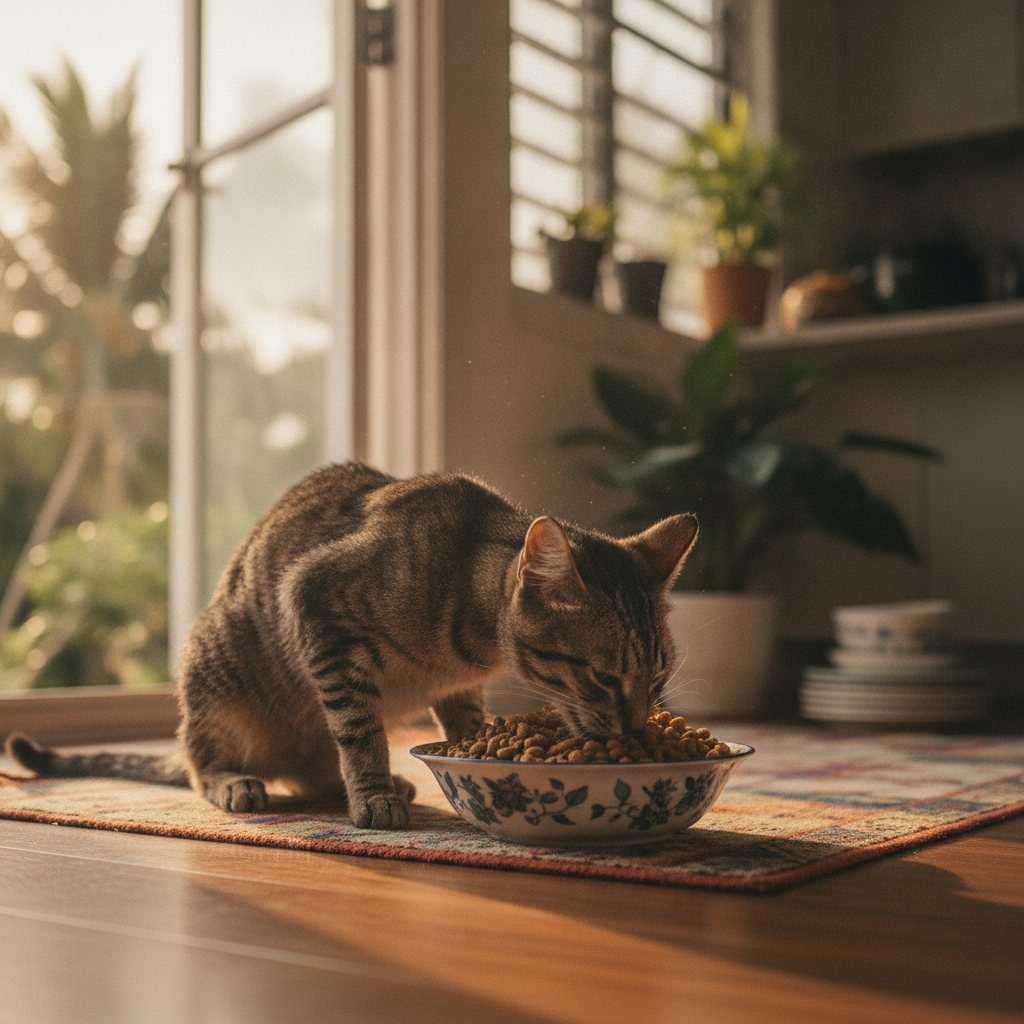
The crucial catch: that total includes water from food. A cat eating mostly wet food — which can be up to 80% moisture — gets a big chunk of its daily water from meals and may barely touch the bowl. A cat on dry kibble only, by contrast, has to drink almost all of it, and many simply don't manage. If you want a number tailored to your cat's exact weight and diet, our cat hydration calculator does the maths for you.
Here's a quick worked example. Take a 4.5kg cat needing roughly 250ml of water a day. On a 100% wet-food diet, a couple of pouches might supply 150ml or more, leaving only a small top-up to drink. Switch that same cat to dry food only, and it now has to actively drink almost the entire 250ml from a bowl — every single day, in tropical heat. You can see why dry-fed cats so often run a hidden water deficit. This single difference is why many vets in hot climates nudge owners toward including wet food.
Why Cats Are Such Terrible Drinkers
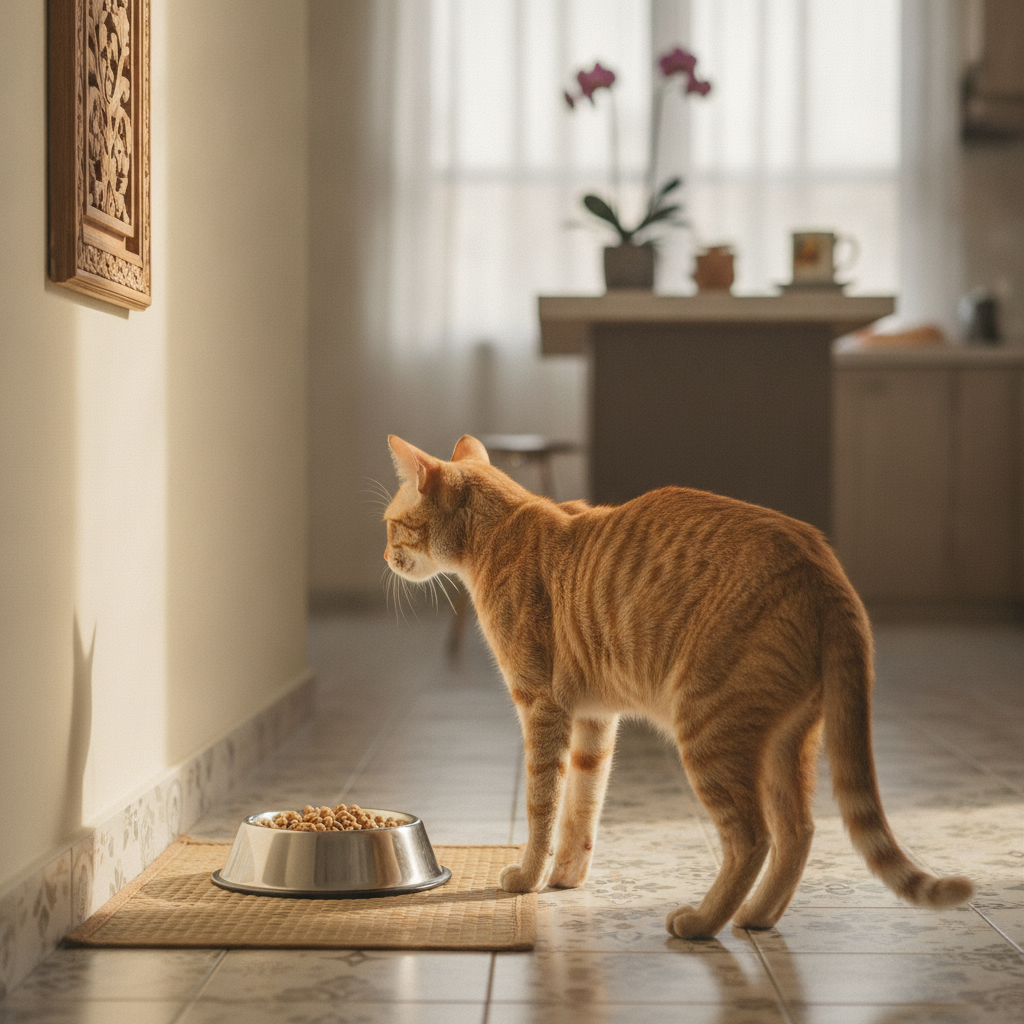
It's not stubbornness — it's biology. Wild cats got most of their moisture from fresh prey, so they never evolved a strong urge to seek out and drink standing water. That instinct survives in your pampered housecat. They'll also refuse water for reasons that seem fussy but are very real to a cat: a bowl placed right next to the food (cats instinctively separate water from "kill"), water that's been sitting too long, or a bowl in a busy, exposed spot.
There's even a hygiene angle. Cat Watch (Cornell) notes that plastic bowls can develop microscopic scratches that harbour bacteria, which can put fussy cats off drinking. A heavy ceramic or stainless-steel bowl, washed daily, often gets more use.
The diet factor is the big one in Malaysia, where dry food dominates for convenience in our humidity. Research summarised in the veterinary literature links dry-food-only diets with a higher risk of feline lower urinary tract disease — precisely because of the lower total water intake.
Signs Your Cat Is Dehydrated
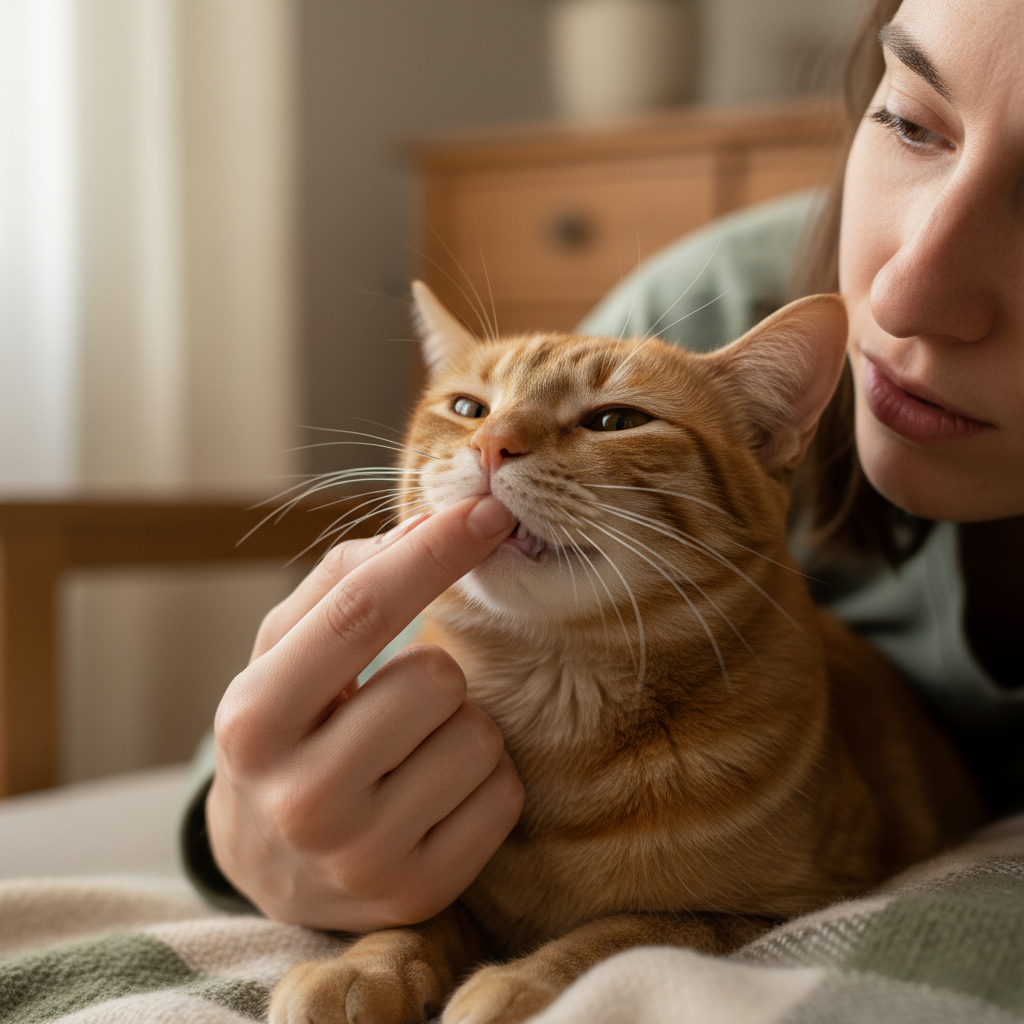
You don't need equipment to do a basic hydration check. Two quick tests, drawn from standard veterinary practice:
The gum test. Gently touch your cat's gums. They should feel slick and wet. Tacky, dry, or sticky gums suggest dehydration.
The skin-tent test. Gently lift the loose skin over the shoulders and let go. In a well-hydrated cat it snaps back instantly. If it sinks back slowly — or stays "tented" — your cat is dehydrated and needs attention.
More advanced or worrying signs include lethargy, weakness, loss of appetite, and, in serious cases, eyes that look sunken into their sockets. Severe dehydration is a veterinary emergency that may need IV or subcutaneous fluids, so don't sit on it — if the skin tent is obvious or your cat seems flat, call your vet.
Senior cats need extra vigilance. Because kidney disease becomes so common with age, an older cat that suddenly starts drinking a lot more — emptying the water bowl and producing larger, more frequent urine clumps — is sending an important signal too. Both too little and a sudden surge in drinking are worth a vet conversation, since increased thirst is a classic early sign of kidney disease, diabetes or hyperthyroidism. If your cat is over seven, it's worth noting roughly how much it drinks so you can spot a change.
The Hidden Link: Hydration, Urine and the Litter Box
This is where hydration stops being abstract. A poorly hydrated cat produces small amounts of highly concentrated urine, and concentrated urine is the perfect environment for the crystals, stones and inflammation behind FLUTD (feline lower urinary tract disease) and FIC (feline idiopathic cystitis). As VCA Animal Hospitals explains, FIC is a painful, stress-linked condition — and dehydration makes it worse. Chronic under-hydration also adds strain to the kidneys over a lifetime, and chronic kidney disease affects an estimated 20–50% of cats over the age of ten.
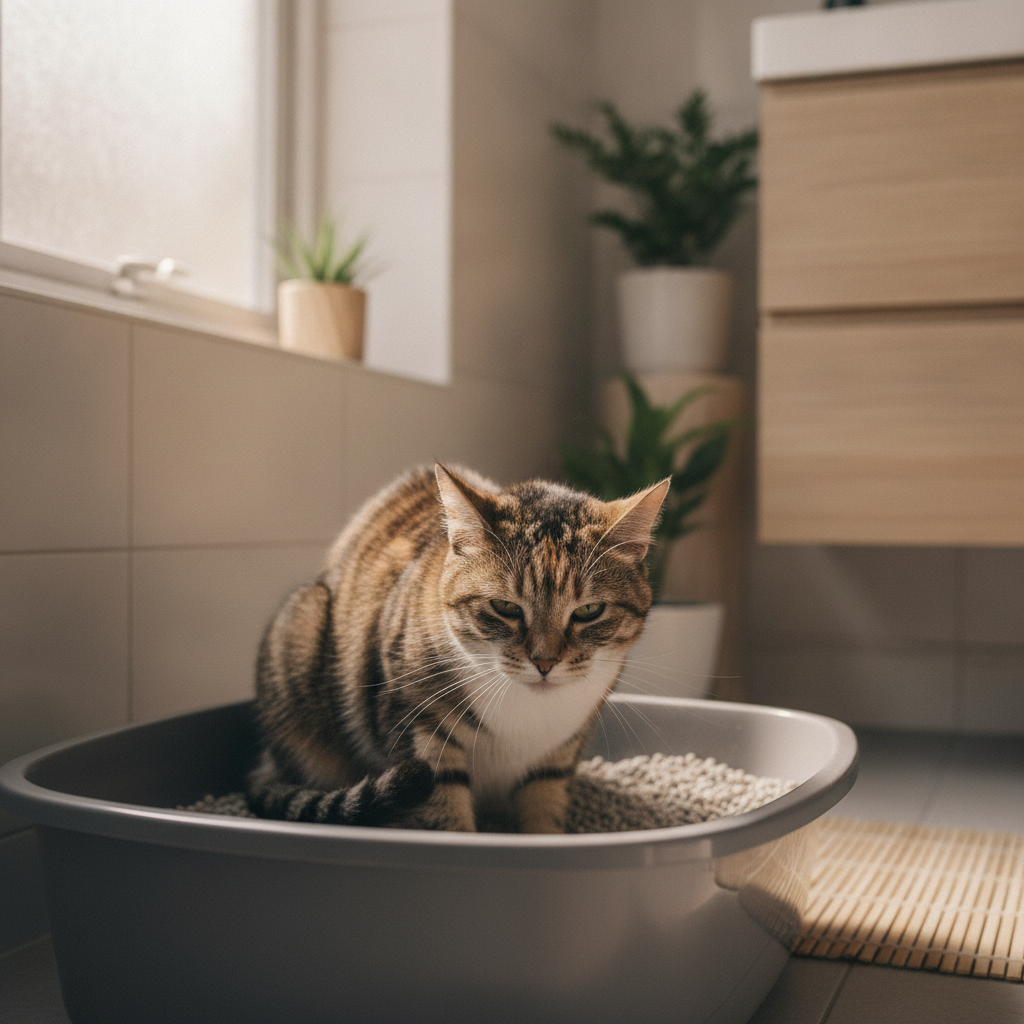
Your litter box is a surprisingly good hydration monitor. With a firmly clumping litter, you can actually see how much your cat is peeing: lots of small, hard, dark clumps can mean concentrated urine and low water intake, while healthy output produces regular, decent-sized clumps. A low-dust tofu litter like Liger Premium Tofu Cat Litter clumps tightly enough to make these patterns obvious, so a drop in urine output — an early warning sign of both dehydration and urinary blockage (which is a life-threatening emergency in male cats) — doesn't slip past you. Pair that habit with our urinary health checker, and read our full cat urinary health and UTI prevention guide for the complete picture.
The Malaysian Heat Factor
Our climate raises the stakes. A cat in a non-air-conditioned flat loses more moisture simply panting and grooming through a hot, humid day, so its baseline water need sits at the higher end. Water also goes stale and warm faster in the heat, which makes a fussy cat even less keen to drink. And because lilies and several common plants can cause acute kidney failure in cats, keeping kidneys healthy through good hydration is one more reason to take water seriously here.
Practical heat tactics: refresh water at least twice a day, keep bowls out of direct sun and away from warm spots, and consider adding an extra water station in the coolest room of the house.
How to Get Your Cat to Drink More
If your cat is a reluctant drinker, stack several of these — small changes add up:
- Add wet food. The single most effective move. Even mixing some wet food into a dry diet meaningfully raises total water intake.
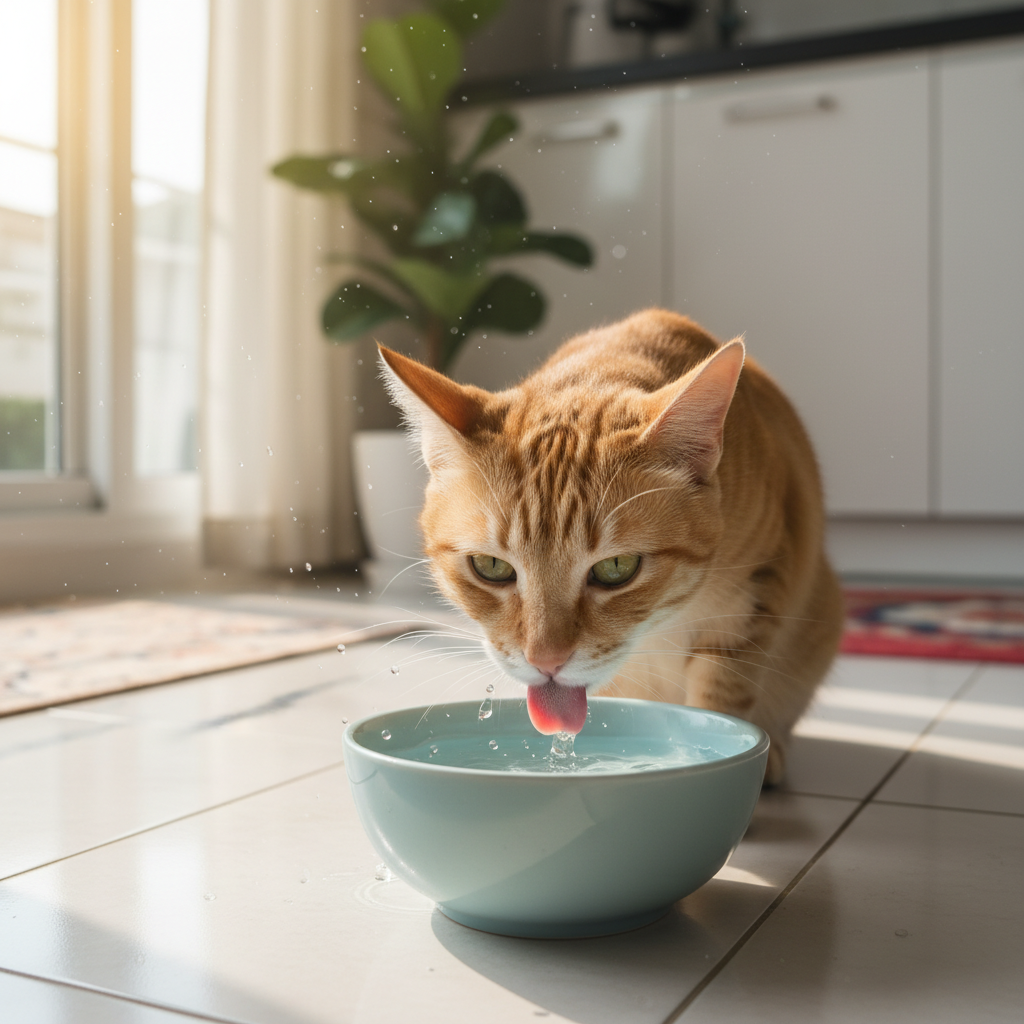
- Try a pet fountain. Many cats are drawn to moving water and will drink far more from a fountain than a still bowl.
- Offer multiple water stations around the home, away from the litter box and the food bowl.
- Switch to ceramic or stainless steel and wash bowls daily to keep water fresh and bacteria-free.
- Widen the bowl. Some cats dislike their whiskers touching the sides, so a broad, shallow bowl can help.
- Add water to meals — a splash of water or unsalted, onion-free broth into food bumps intake.
For more ideas on coaxing a stubborn drinker, PetMD has a useful rundown. Hydration is a slow, invisible problem — there's rarely a dramatic moment, just years of slightly-too-dry that quietly raise the risk of urinary and kidney trouble. Get the water right, watch the litter box, and you're protecting your cat's health in one of the simplest ways there is.