- A gradual 10-day transition plan minimizes stress and prevents litter box aversion.
- Cats' litter preferences are rooted in early-life imprinting and neophobia, not just pickiness.
- Monitor your cat's stress using a Green/Yellow/Red system to adjust the transition pace.
- Specific strategies are needed for multi-cat homes, kittens, and senior cats.
- Switching from traditional clay to plant-based litters like tofu offers health and environmental benefits, but requires patience.
Ever tried to switch your cat's litter only to find little 'gifts' outside the box? You're not alone. Many cat parents, including myself, have faced the frustration of a cat suddenly boycotting their once-beloved potty spot. It feels like defiance, right? But what if I told you it's not about being 'picky' at all? It's a deep-seated instinct, and understanding it is your secret weapon for a stress-free switch. This complete guide provides a proven day-by-day system to help your cat adjust smoothly, avoiding anxiety and unwanted accidents, ensuring a healthy and happy home for everyone.
Why Cats Hate Litter Changes (And Why It Matters)
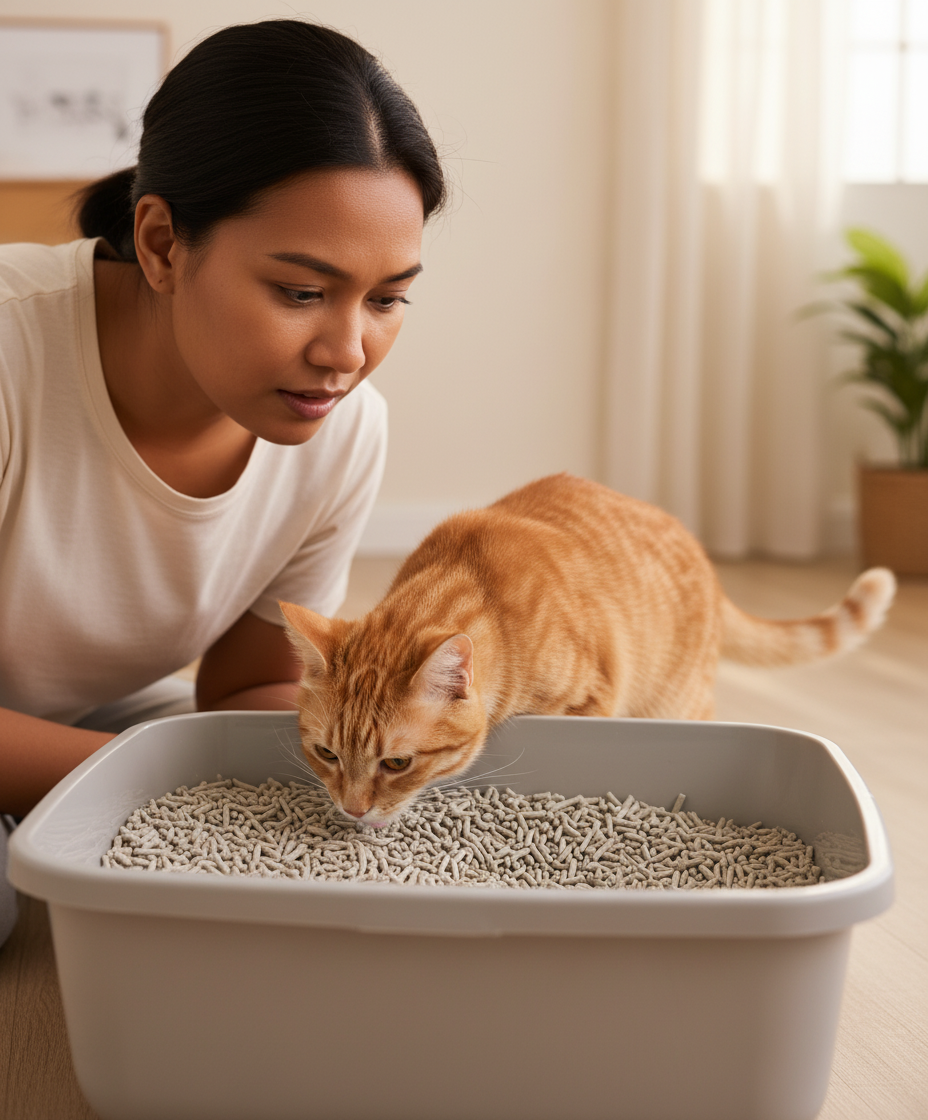
Successfully switching cat litter means understanding your feline friend's unique perspective. Cats aren't just being difficult when they reject a new litter; their strong preferences are rooted in evolutionary instincts and early life experiences, making sudden changes a significant source of stress. In fact, an estimated 50% of adult cats will feel uncomfortable using a litter they were not exposed to as a kitten unless it is introduced very gradually, according to pet behavior experts PetSafe.
The Science Behind Litter Preferences
Our domestic cats inherited their bathroom habits from wild ancestors who buried their waste to hide scent from larger predators and avoid territorial conflicts Wildlife Animal Control. This ingrained behavior explains why cats prefer soft, loose, diggable substrates. These preferences are further solidified during a critical socialization window between two and seven weeks of age, where kittens learn proper toileting from their mother and imprint on the first acceptable litter NutrenaWorld. A new litter with a different texture, scent, or dust level triggers their highly sensitive paws and over 20 million scent receptors, activating neophobia – an innate fear of anything new or potentially threatening PetSafe.
When You Should (and Shouldn't) Switch Cat Litter
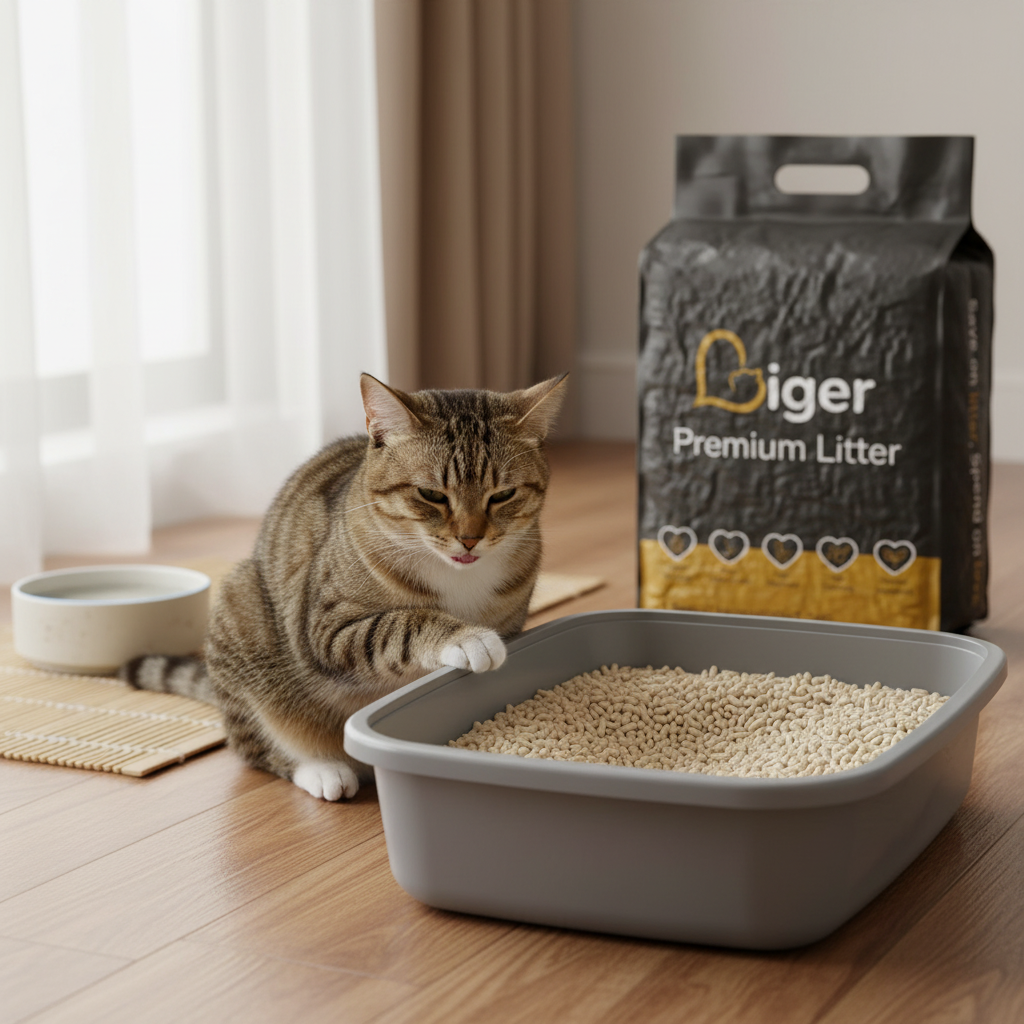
Knowing when to initiate a litter change is as crucial as the 'how'. Valid reasons to switch include upgrading to a low-dust formula for a cat with respiratory sensitivities like Ping'An, choosing a more eco-friendly option, addressing allergies, or improving odor control and clumping. Many Malaysian cat parents switch to Liger Tofu Cat Litter for its ultra-low dust, natural milk fragrance, and flushable convenience, which are great benefits for both cat and owner. However, timing is everything. Avoid switching litters during other stressful household events like moving to a new home, introducing a new pet, or when your cat is ill. Such 'stress stacking' can make a successful transition almost impossible, leading to aversion.
Signs Your Cat Is Stressed by Their Current Litter
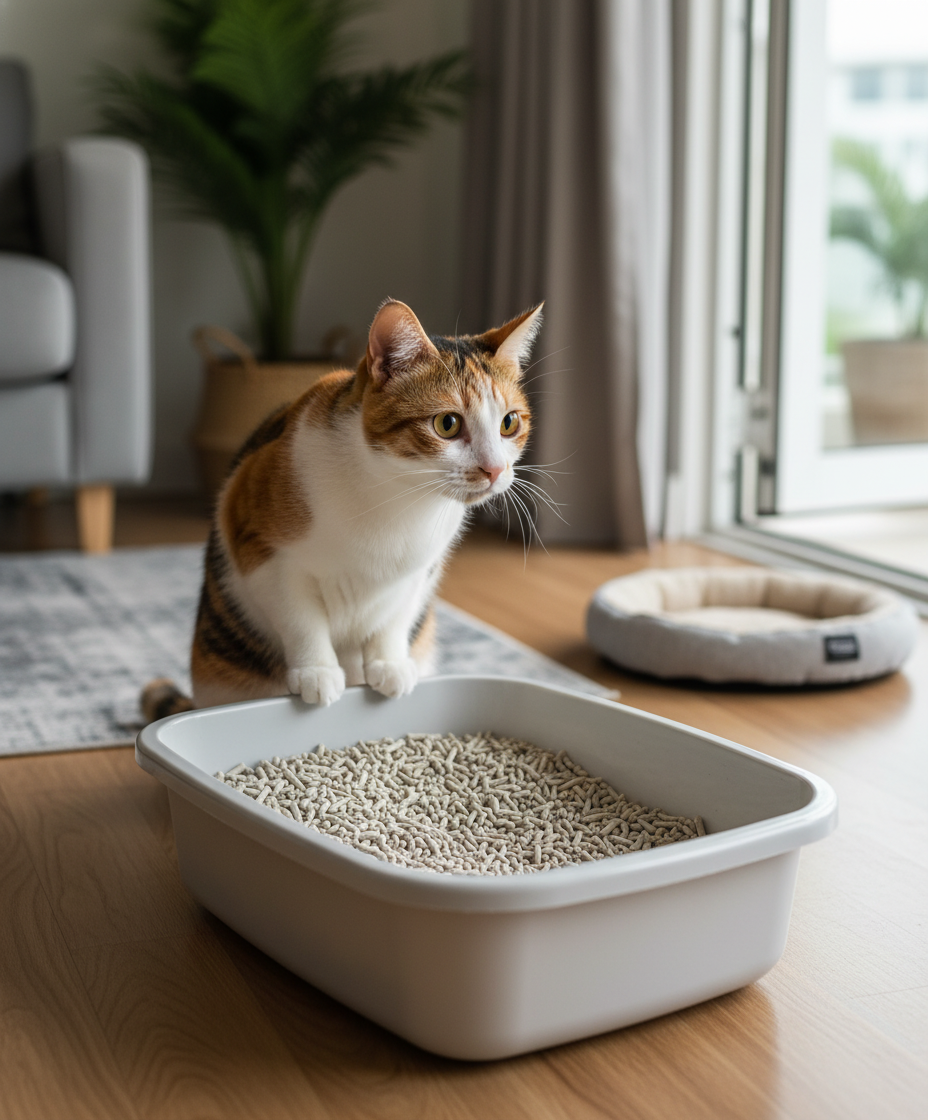
Before you even consider switching, it's vital to recognize if your current litter setup is already a source of stress for your cat. Subtle behavioral and physical cues are your cat's way of communicating discomfort, and ignoring them can lead to significant problems. Inappropriate elimination, or peeing outside the box, is a leading reason cats are relinquished to shelters ASPCA, making early detection critical.
Behavioral Red Flags
Your cat's actions around the litter box can speak volumes. Watch for any of these signs that indicate they dislike their current litter type or setup:
- **Avoiding the box entirely:** Eliminating in inappropriate locations like carpets, laundry baskets, or even just next to the litter box.
- **Perching on the edge:** Minimizing paw contact with the litter itself, which suggests discomfort with the texture.
- **Frantic digging:** Excessive digging either before or after use, or trying to 'dig' at the walls outside the box.
- **Incomplete covering:** Leaving waste uncovered, indicating a desire to leave the box quickly.
- **Excessive paw shaking:** Shaking paws vigorously upon exiting, trying to remove litter particles.
- **'Rocket' exits:** Bolting out of the box immediately after elimination, sometimes with distressed vocalizations iCatCare.
Health Warning Signs
Beyond behavior, the wrong litter can trigger physical symptoms, especially for sensitive cats. For instance, our Ping'An has a very sensitive nose and sneezes at dusty litters. This is a common issue! Look out for:
- **Sneezing or coughing:** Especially after using the litter box, pointing to dust irritation.
- **Watery or irritated eyes:** Another sign of airborne irritants.
- **Skin irritation:** Paw pad redness or excessive licking if the litter is abrasive or chemically irritating.
- **Urinary issues:** Chronic stress from an unacceptable toileting situation can contribute to Feline Idiopathic Cystitis (FIC), a painful inflammatory condition of the bladder Peterborough Vets. Any signs of straining or vocalizing in the box warrant an immediate vet visit.
3 Proven Methods to Switch Cat Litter
When it comes to introducing a new litter, there isn't a single 'magic bullet' method. The right approach depends on your cat's personality and the urgency of the change. Roughly 50% of adult cats will resist a new litter unless introduced gradually PetSafe, highlighting the importance of a thoughtful strategy. By understanding these three proven methods, you can choose the one best suited for your feline companion.
Method 1 — The Gradual Mix (Best for Most Cats)
This is the gold standard for a stress-free transition. The gradual mix method involves incrementally introducing the new litter by mixing it with the old over a period of days. It works by allowing your cat to slowly acclimate to the new texture and scent without feeling overwhelmed. Think of it as a subtle introduction, rather than a jarring surprise. The key is thorough mixing, ensuring a consistent texture throughout the box rather than layering the litters. This method is highly effective for minimizing neophobia and preserving your cat's established litter box habits. The full 10-day plan is detailed in the next section.
Method 2 — The Side-by-Side Box (Best for Picky Cats)
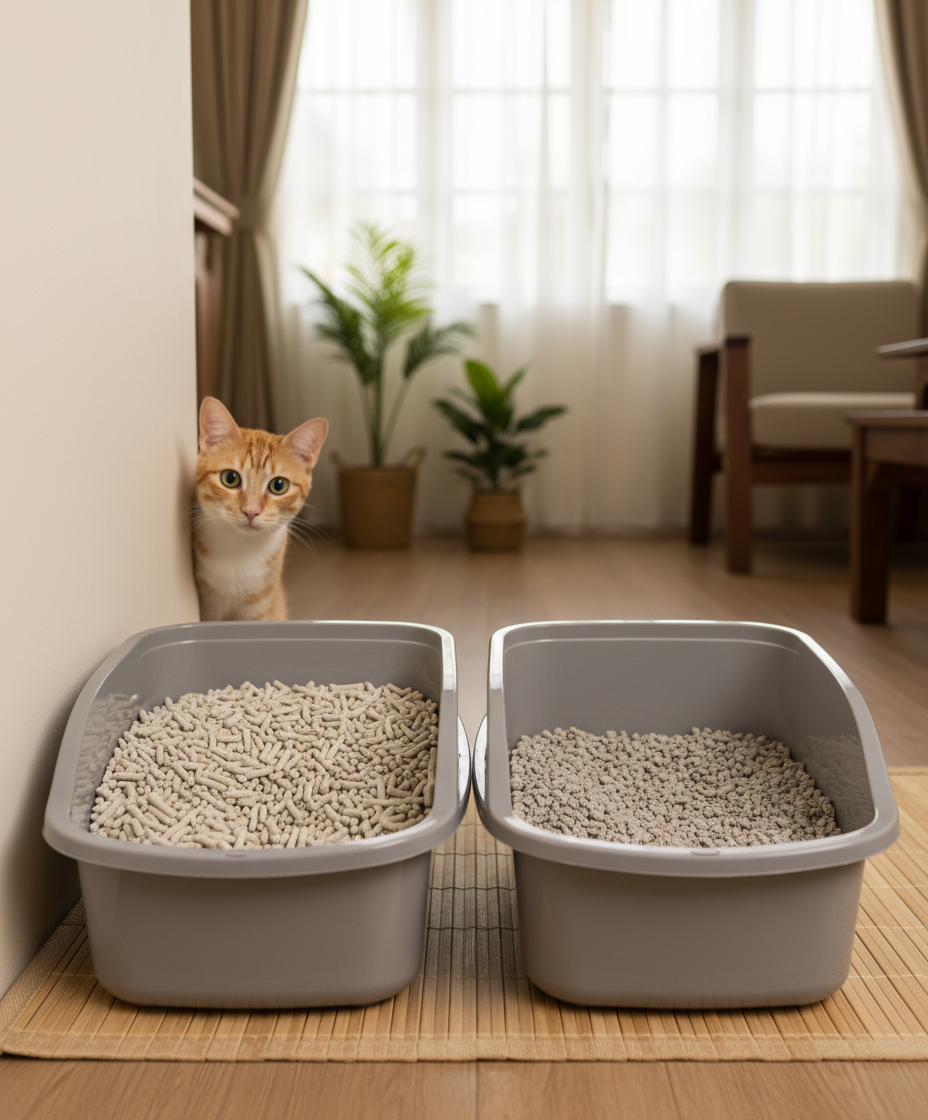
For particularly picky or neophobic cats, or if you're unsure which new litter they might prefer, the 'Two-Box Method' (also known as the 'litter cafeteria') is an excellent, low-pressure alternative. Set up a second, identical litter box directly beside the current one. Fill the original box with 100% of the old, familiar litter, and the new box with 100% of the new litter type. This empowers your cat to explore and choose at their own pace. Lion, our clean freak, might appreciate this choice! Once your cat consistently uses the new litter box, typically for at least a week, you can remove the old one. This method is also fantastic for multi-cat households, allowing individual cats to express their preferences without forced change.
Method 3 — The Cold Turkey Switch (Only When Medically Necessary)
A sudden, 'cold turkey' switch is almost always discouraged due to the high risk of severe stress and litter box aversion. However, there are rare medical emergencies where a veterinarian might recommend an immediate change, such as after surgery to prevent ingestion of clumping clay litter or due to a severe, acute allergy. If this is the case, be prepared to offer extra support: ensure multiple litter boxes (even if temporarily), provide Feliway pheromone diffusers for calming, and closely monitor for any signs of distress. This method should only be used under direct veterinary guidance when the health risk of the old litter outweighs the behavioral risk of a sudden change.
The 10-Day Stress-Free Transition Calendar ⭐
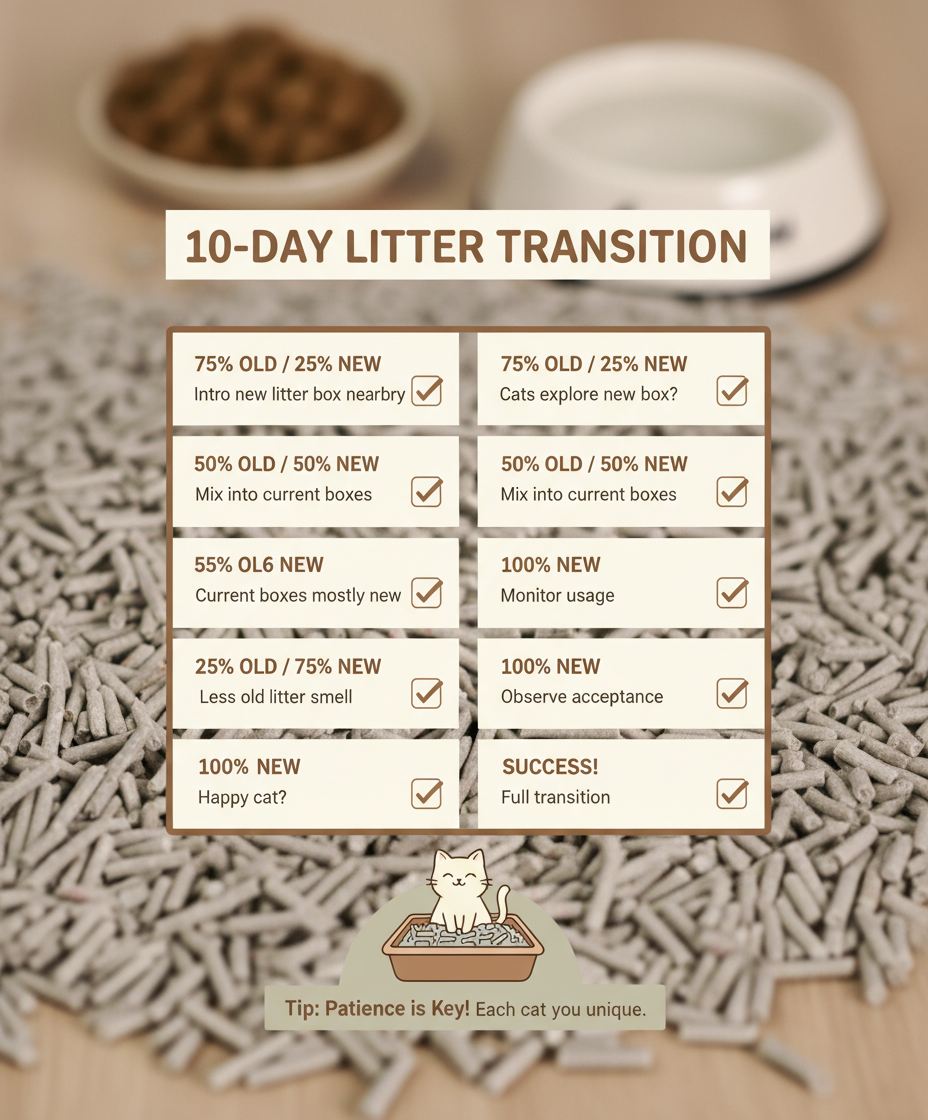
This 10-day gradual mixing protocol is the cornerstone of a stress-free litter transition, recommended by veterinary and shelter guidelines Loflly. It provides a structured, phased approach, allowing your cat to comfortably adjust to new textures and scents. Remember, consistency is key: maintain your cat's preferred litter depth (2-3 inches or 8-10 cm) and scoop the box daily during this process to keep it inviting. If at any point your cat shows signs of stress, revert to the previous successful ratio for a few extra days before attempting to progress.
Standard Plan (10 Days)
This is the most widely endorsed and effective schedule for most cats. It balances gradual introduction with a reasonable timeframe. Always thoroughly mix the old and new litters; don't just layer them.
| Transition Phase | Days | Old Litter Ratio | New Litter Ratio | Observation Notes | Action Plan |
|---|---|---|---|---|---|
| Introductory Phase | 1-3 | 75% | 25% | Normal use, digging, covering. | Continue as planned. |
| Adjustment Period | 4-6 | 50% | 50% | Slight hesitation, increased sniffing. | Continue to observe closely. |
| Acclimation Stage | 7-9 | 25% | 75% | Consistent use, normal behavior. | Almost there! |
| Full Transition | 10+ | 0% | 100% | Fully accepted new litter. | Maintain new litter. |
Fast-Track Plan (7 Days) — For Adaptable Cats
Some confident, easygoing cats might adapt more quickly. If your cat shows absolutely no hesitation or stress signals during the first few days, you might be able to speed up the process slightly. However, proceed with extreme caution and be ready to revert if any signs of discomfort appear. For example, you could increase the new litter by 33% every two days instead of 25% every three days. This would look like: Days 1-2 (67% old / 33% new), Days 3-4 (33% old / 67% new), Days 5-7 (100% new). This is a calculated risk, so ensure you know your cat's personality well.
Extended Plan (14 Days) — For Sensitive or Senior Cats
For highly anxious cats, senior felines, or those known to be particularly sensitive to change, extending the transition to 14 days or longer is highly advisable. Senior cats, especially, may have arthritis, making changes in texture uncomfortable Litter-Robot. Their senses may also be duller, requiring more time to process new smells and textures. Increase the new litter proportion every 3-4 days instead of 2-3 days, or even take an entire week for each 25% increment. Patience is truly a virtue here. Remember that any change can feel like a big deal to them.
Switching Between Different Litter Types — What You Need to Know ⭐
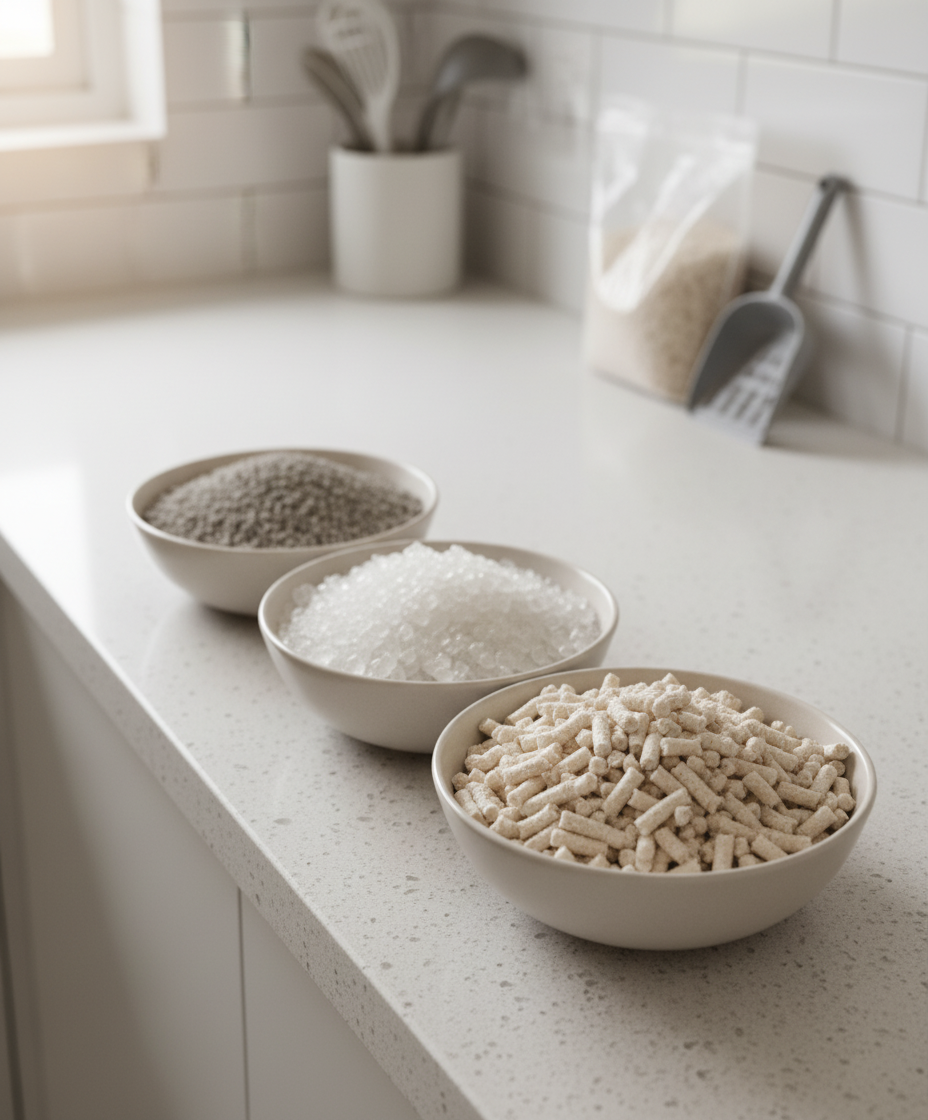
The ease of transition often hinges on the fundamental differences between the old and new litter types. Changing from one brand of clumping clay to another is far different from switching from hard silica crystals to soft tofu pellets. The texture, scent, and clumping behavior of the new litter are primary factors influencing feline acceptance Mudbay. Each type of switch presents unique challenges, requiring tailored strategies to ensure success.
Clay to Tofu Cat Litter (Texture + Weight Change)
This is a very common eco-upgrade in Malaysia, with many cat parents switching from traditional bentonite clay to plant-based tofu litter. The main challenges are the difference in texture (fine sand-like clay vs. soft pellets) and the lighter weight of tofu litter. Cats used to digging in heavy clay might find the lighter tofu a bit strange at first. Our Liger Tofu Cat Litter offers a natural mild milk fragrance and ultra-low dust, which is often a welcome change from heavily perfumed or dusty clay. To ease this, start with a very small amount of tofu pellets, ensuring the clay still dominates the texture. Gradually increase the tofu, allowing your cat's paws to adjust to the new feel. Also, ensure the new tofu litter can clump quickly and firmly, like Liger's, to maintain the cleanliness your cat expects.
Crystal to Clumping (Behavior Change)
Switching from non-clumping crystal (silica gel) litter to a clumping variety (like clumping clay or tofu) presents a behavioral shift for your cat. Crystal litters absorb urine, but don't clump, meaning your cat isn't used to seeing or digging solid clumps Tuft & Paw. When transitioning, your cat needs to learn that digging and burying solid clumps is now part of the routine. The texture difference can also be significant, as crystal litter consists of harder, bead-like granules compared to softer clumping options. A very gradual mix is essential here, giving your cat time to re-learn their 'digging' etiquette and accept the new texture. For kittens, be mindful that non-digestible crystal litter, while less dangerous than clay, can still cause minor GI upset if ingested Dutch.
Clumping Clay to Wood Pellets (Major Texture Shift)
This is often one of the most challenging transitions due to the dramatic change in texture. Clumping clay is fine-grained and soft, while wood pellets are large, firm, and offer a completely different feel under paw. Cats who prefer soft, sand-like textures may find wood pellets uncomfortable or foreign. The natural pine or cedar scent of some wood litters can also be a deterrent for sensitive cats, even if it's natural. Expect this transition to require significant patience and a much longer extended plan (14+ days), potentially starting with as little as 10% new litter and increasing in tiny increments. The 'Two-Box Method' can be especially helpful here, allowing your cat to investigate the wood pellets on their own terms.
Litter Type Transition Difficulty Table
To simplify your planning, here's a quick overview of common litter transitions, their typical difficulty, and key considerations:
| From Litter Type | To Litter Type | Difficulty | Key Challenge | Liger Tip |
|---|---|---|---|---|
| Clay (Clumping) | Tofu (Clumping) | Easy-Medium | Texture (sand vs. pellets), scent (earthy vs. mild milk). | Gradually introduce Liger Tofu Litter. Its soft texture is less jarring than other pellet types. |
| Clay (Clumping) | Clay (Non-Clumping) | Easy | No clumping for easy waste removal. | Keep box impeccably clean to prevent aversion. |
| Crystal (Non-Clumping) | Tofu (Clumping) | Medium | Texture (hard beads vs. soft pellets), clumping behavior. | Consider the 'Two-Box Method' first. Tofu is safer if ingested accidentally. |
| Crystal (Non-Clumping) | Clay (Clumping) | Medium | Texture (hard beads vs. fine granules), clumping behavior. | Ensure the clay is low-dust to avoid respiratory issues. |
| Wood Pellets | Tofu (Clumping) | Medium-Hard | Texture (firm pellets vs. softer, smaller pellets). | Use an Extended Plan (14+ days). Liger Tofu Litter's softer pellets are less jarring. |
| Any Clumping | Any Non-Clumping | Medium-Hard | Lack of clumping for burying preference. | Increase scooping frequency dramatically. |
The Stress Audit Checklist — Reading Your Cat During Transition ⭐
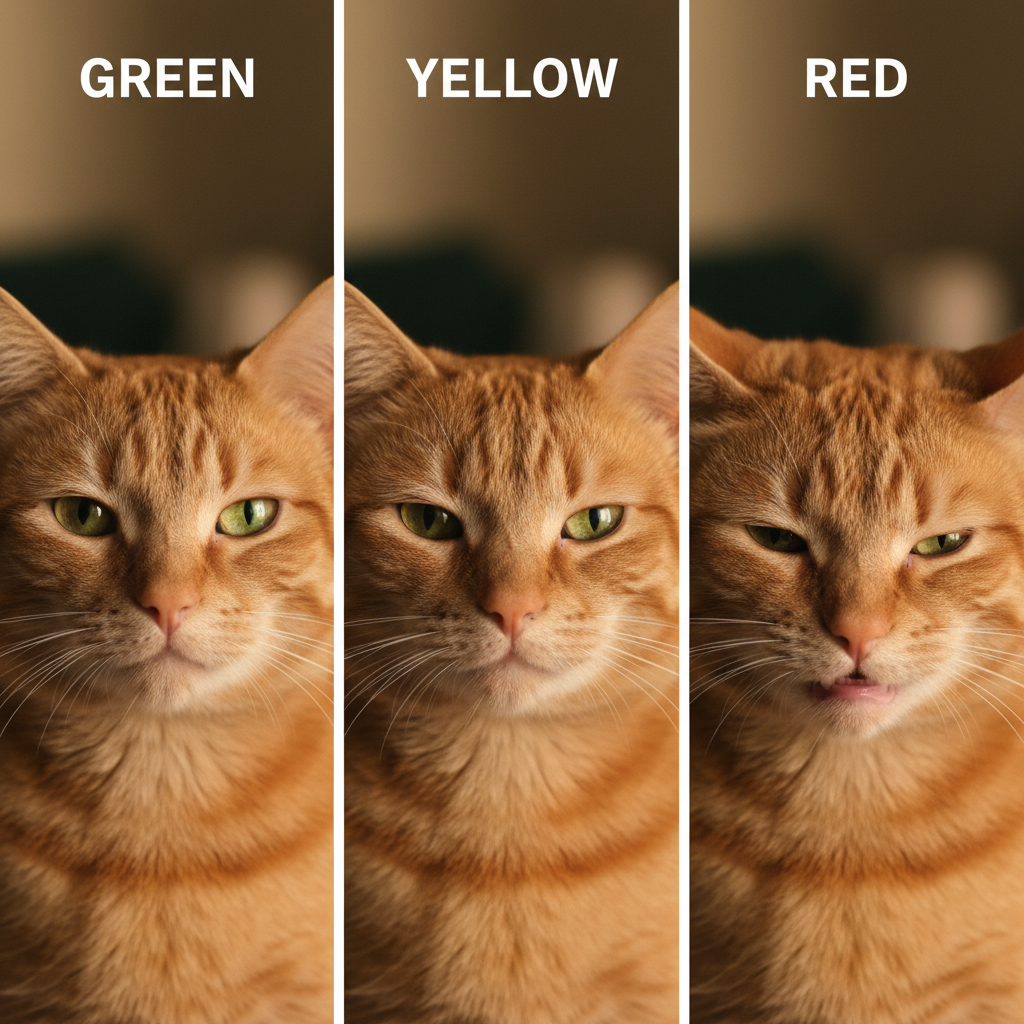
Cats are masters at hiding discomfort, making it easy to miss crucial stress signals during a litter transition. Ignoring these subtle cues can derail your entire effort and cause lasting aversion. This 'Stress Audit' checklist, adapted from validated tools like the Feline Grimace Scale (FGS), helps you interpret your cat's body language and make informed decisions during the transition iCatCare. Remember: your cat isn't 'being difficult'; they're communicating their fear or discomfort. A typical cat's Grimace Scale involves assessing ear position, orbital tightening, muzzle tension, whisker position, and head position to gauge their level of pain or distress.
Green Light Signals (Continue the Plan)
These are the behaviors you want to see! If your cat is consistently displaying these, you can confidently proceed with the next step in your transition plan:
- **Litter Box Use:** Enters the box without hesitation; uses it consistently for both urination and defecation.
- **In-Box Behavior:** Normal digging and covering of waste in a relaxed, purposeful manner.
- **Post-Use Behavior:** Exits the box calmly, without rushing or excessive paw shaking.
- **Feline Grimace Scale:** Ears forward and relaxed, eyes fully open with a soft gaze, muzzle relaxed and rounded, whiskers relaxed and curved, head held above shoulders.
- **General Demeanor:** Normal appetite, grooming, social interaction, and play.
Yellow Light Signals (Slow Down)
These are warning signs that your cat is experiencing mild stress or hesitation. It's time to pause and revert to the previous successful litter ratio for 2-3 extra days before trying to progress again. Don't push it!
- **Litter Box Use:** Lingers or hesitates before entering; prolonged sniffing of the substrate; perches on the edge of the box to minimize contact Cat Behavior Associates.
- **In-Box Behavior:** Minimal or no attempt to cover waste; frantic or prolonged digging before or after use Cat Behavior Associates.
- **Post-Use Behavior:** Exits the box quickly but not in a panic; excessively shakes paws after leaving to remove litter particles.
- **Feline Grimace Scale:** Ears slightly pulled apart, eyes partially closed or squinted, muzzle mildly tense, whiskers slightly straight, head aligned with shoulders.
- **General Demeanor:** Hiding more than usual; mild changes in appetite; some over-grooming or under-grooming noted.
Red Light Signals (Pause and Reassess)
If you see any of these indicators, the transition has failed and is causing significant distress. Stop immediately and revert to 100% of the old, familiar litter. Schedule a veterinary consultation to rule out medical issues, as inappropriate elimination can signal underlying conditions like a UTI ASPCA. This is where patience truly comes in.
- **Litter Box Use:** Complete avoidance of the litter box; urinating or defecating near the box but not in it; eliminating in inappropriate locations (e.g., carpets, bedding).
- **In-Box Behavior:** Does not dig or cover at all; may paw at the wall or floor outside the box instead of the litter.
- **Post-Use Behavior:** Bolts from the box in a 'rocket-like' exit immediately after use; distressed vocalizations (howling, crying) after leaving.
- **Feline Grimace Scale:** Ears flattened or rotated outwards, eyes tightly squinted or closed, muzzle tense and drawn back, whiskers straight and forward, head lowered below shoulders.
- **General Demeanor:** Significant loss of appetite; withdrawal and hiding for long periods; new or increased aggression towards people or other pets.
Special Situations
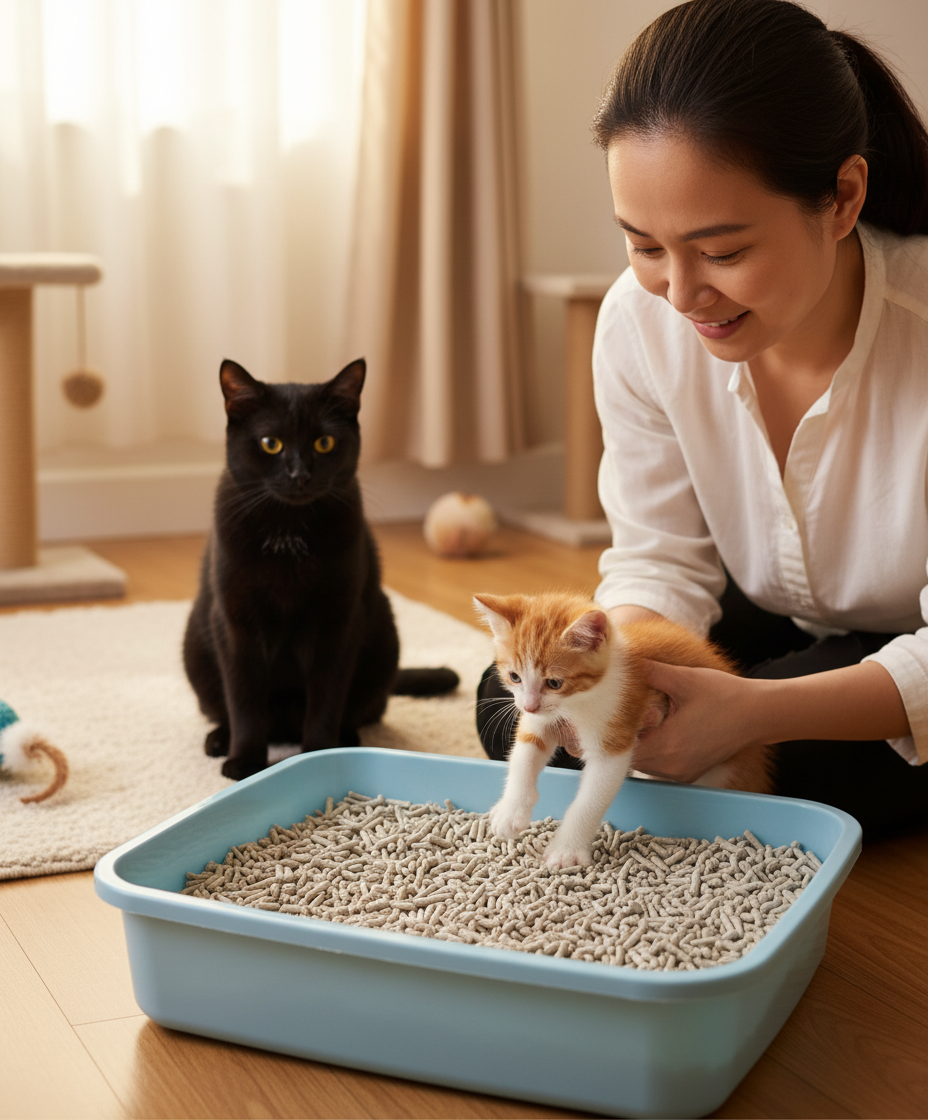
Just like people, cats have unique needs. A successful litter transition isn't always a one-size-fits-all process. Modifying your approach for multi-cat homes, kittens, or senior cats is vital for minimizing stress and ensuring long-term success. Ignoring these nuances can exacerbate existing behavioral challenges.
Multi-Cat Households
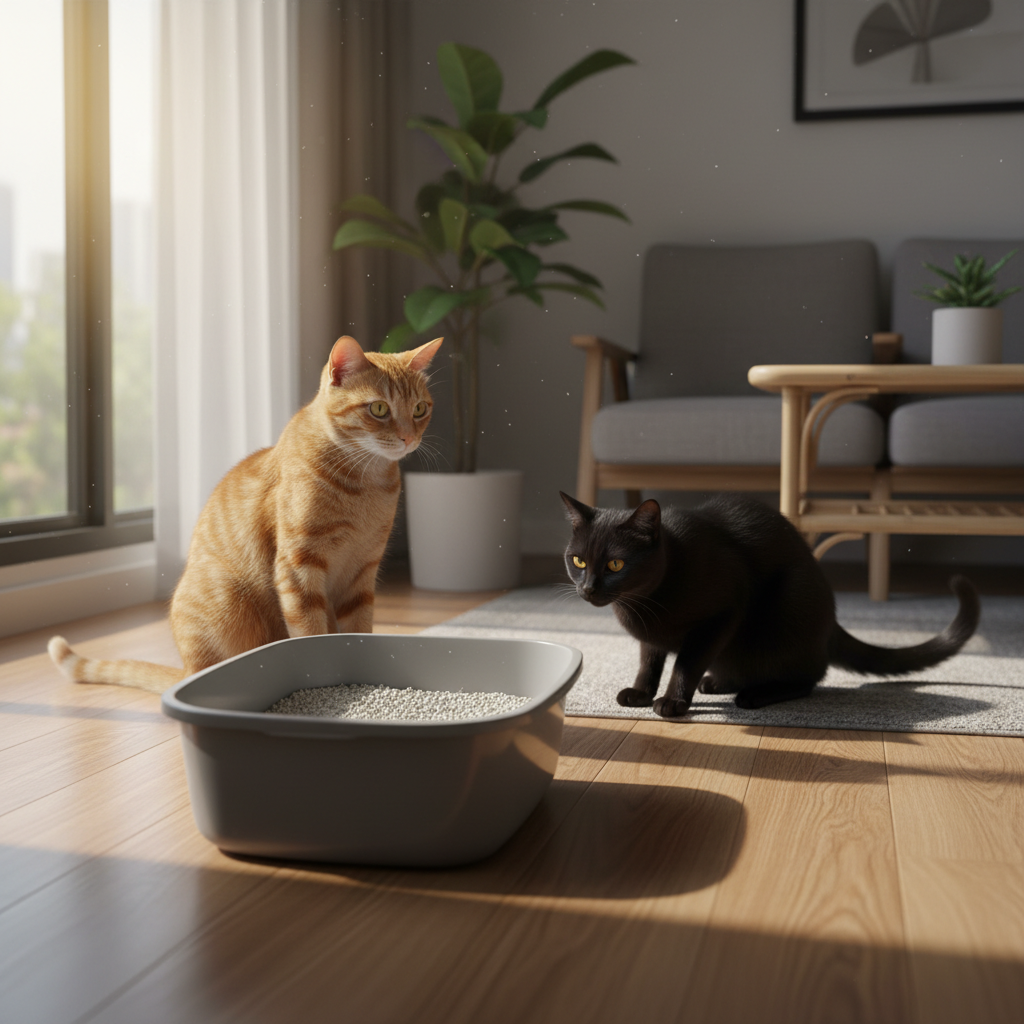
In a multi-cat household, resource competition is real, and one cat's rejection can quickly influence others. Switching all boxes at once is a high-risk gamble. Instead, adopt a staggered approach: either mix the new litter into *all* boxes simultaneously using the gradual method, or implement the 'Two-Box Method' for each cat, if possible. Remember the 'N+1' rule: always provide one more litter box than the number of cats you own, placing them in different, quiet locations to reduce conflict. This gives each cat options and reduces the pressure, making them less likely to 'act out' by eliminating outside the box.
Kittens vs Senior Cats
Age significantly impacts a cat's adaptability. Kittens, typically between two to seven weeks, are in a prime socialization window and often adapt faster to new textures, but safety is paramount Fear Free. Avoid clumping clay litters for kittens, as accidental ingestion during grooming can cause fatal intestinal blockages LadynPet. Digestible options like Liger Tofu Cat Litter or paper pellets are safer. For senior cats, the opposite is true: they are often more resistant to change. Transitions should be extra slow (14+ days) to accommodate their potential anxiety or physical limitations like arthritis. Provide large, low-entry litter boxes with soft, fine-grained litter to ensure comfort for aching joints Dr. Elsey's. Always use an ideal litter box size calculator to ensure comfort for cats of all ages.
What to Do When the Transition Fails
It happens. Even with the best intentions, a transition can fail, leading to your cat consistently avoiding the box. The first step is *always* a veterinary consultation. Inappropriate elimination can signal underlying medical issues like urinary tract infections or kidney disease VetCare Hospital, which stress can exacerbate. If medical issues are ruled out, immediately revert to 100% of the old, familiar litter. Give your cat at least a week of normal litter box habits to 'cool off' from the stress. Then, re-attempt the transition using the 'Two-Box Method' or an even slower, extended mixing plan (e.g., 3-4 weeks). Consider a different *type* of new litter if the first attempt was heavily rejected – perhaps one with a softer texture or a completely different scent profile. Sometimes, calling in a certified feline behaviorist can provide further personalized guidance.
Switching cat litter can feel like walking a tightrope, but it doesn't have to be a stressful ordeal for you or your beloved feline. By understanding the science behind your cat's preferences and patiently following a gradual transition plan, you're not just changing a product; you're nurturing their well-being and strengthening your bond. The biggest mistake isn't trying a new litter, but expecting your cat to simply 'get over it.' Instead, read their signals, slow down when needed, and remember that their comfort is your ultimate goal.
So, take a deep breath. Today, choose your cat's new litter with confidence, grab your mixing scoop, and begin your stress-free transition journey. Your cat will thank you for it, probably with a slow blink and a gentle headbutt. What's one specific thing you can do before noon tomorrow? Go ahead and set up your cat's current litter box and a second, temporary one with a small amount of your chosen new litter. Just observe for now. Seriously. It’s a great first step.