- tofu litter needs specific maintenance, especially in Malaysia's humidity, to prevent mold and ensure optimal clumping.
- A consistent daily, weekly, and monthly maintenance schedule is crucial for hygiene, odor control, and litter longevity.
- Flushing tofu litter in Malaysia requires caution due to infrastructure limitations and official warnings.
- Understanding common troubleshooting tips like proper litter depth and odor control methods can greatly improve your cat's experience.
- Strategic litter box placement and airtight storage are essential to combat Malaysia's high humidity and keep tofu litter fresh.
Ever feel like you're fighting a losing battle against litter box odors and messy floors, especially with Malaysia's relentless humidity? Trust me, you're not alone. Many cat parents switch to tofu cat litter for its natural benefits, like being ultra-low dust and eco-friendly. But if you’ve been scooping away and still wonder why things aren’t as fresh as you hoped, it probably comes down to understanding one thing: tofu litter needs a little different care than traditional clay.
This guide will equip you with the essential tofu cat litter maintenance tips, specifically tailored for Malaysian homes. From deciphering why it clumps differently to tackling our tropical climate head-on, we'll help you keep your cat's toilet clean, fresh, and perfectly optimized, just like a fellow cat parent who genuinely cares.
Why Tofu Cat Litter Needs Different Maintenance Than Clay
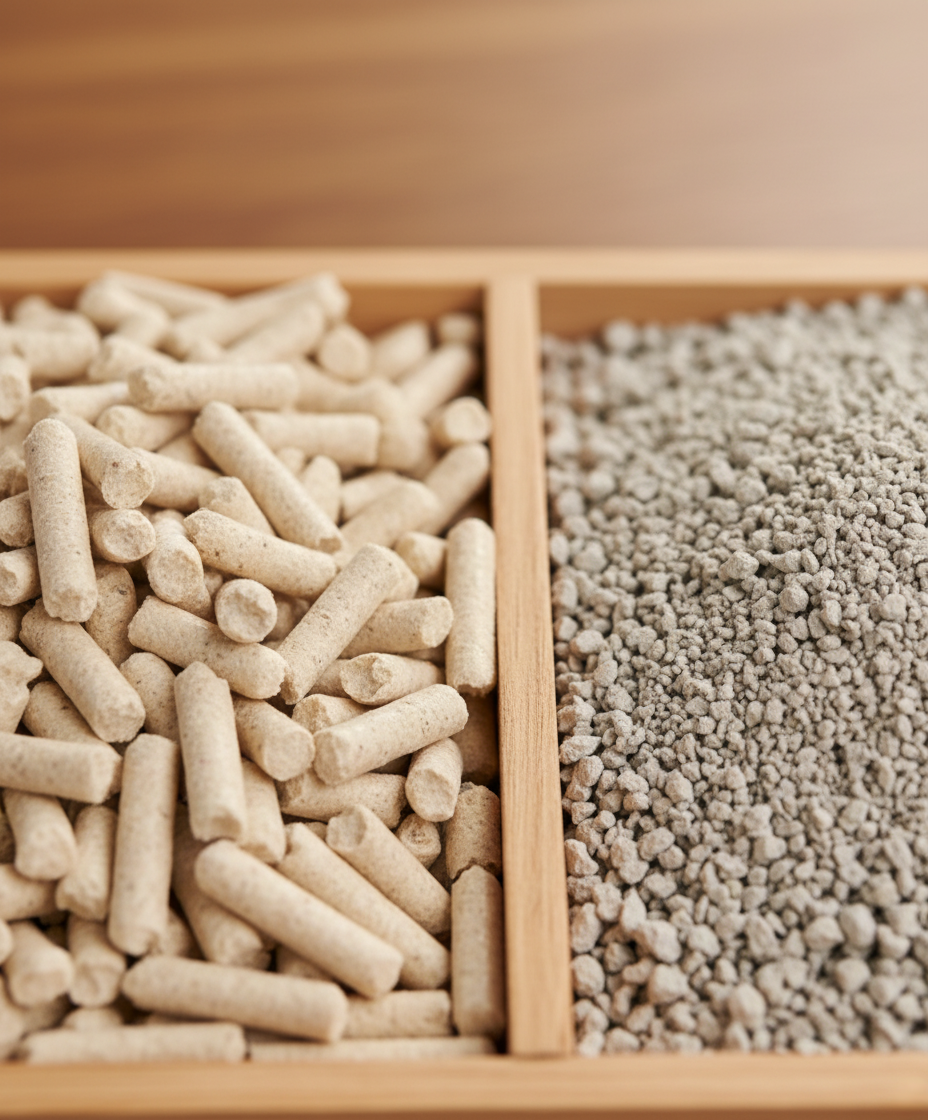
Tofu litter, a fantastic plant-based alternative, requires a slightly different approach to maintenance compared to its bentonite clay counterpart. The core difference lies in their fundamental chemistry and physical properties, especially how they interact with moisture. While both effectively absorb and clump, understanding these distinctions is key to getting the best performance from your chosen litter.
How Tofu Litter Clumps Differently
When urine hits tofu litter, the process is largely physical. Made from compressed soybean pulp, the pellets are rich in natural plant fibers and starches. These act like tiny, dense sponges, quickly soaking up liquid. Manufacturers then add natural binding agents, like guar gum or cornstarch, which become sticky when wet. This creates a firm, scoopable clump through a gelling and physical adhesion action, rather than a chemical reaction.
For example, Liger's tofu litter is designed for fast and firm clumping within seconds. This physical absorption mechanism allows tofu litter to absorb between 300% to 420% of its own weight in liquid, a figure supported by technical data sheets. This makes for efficient waste removal.
Bentonite clay, on the other hand, clumps through a fascinating mix of physical and chemical processes. Its primary mineral, montmorillonite, has a layered structure with a high surface area. When wet, bentonite clay swells dramatically, sometimes up to 18 times its original size, physically encapsulating moisture. Beyond that, its negatively charged platelets attract positively charged ions in urine, forming ionic bonds that pull granules together into a solid mass. It's an intricate dance of swelling and chemical attraction.
Moisture Sensitivity: The Humidity Factor
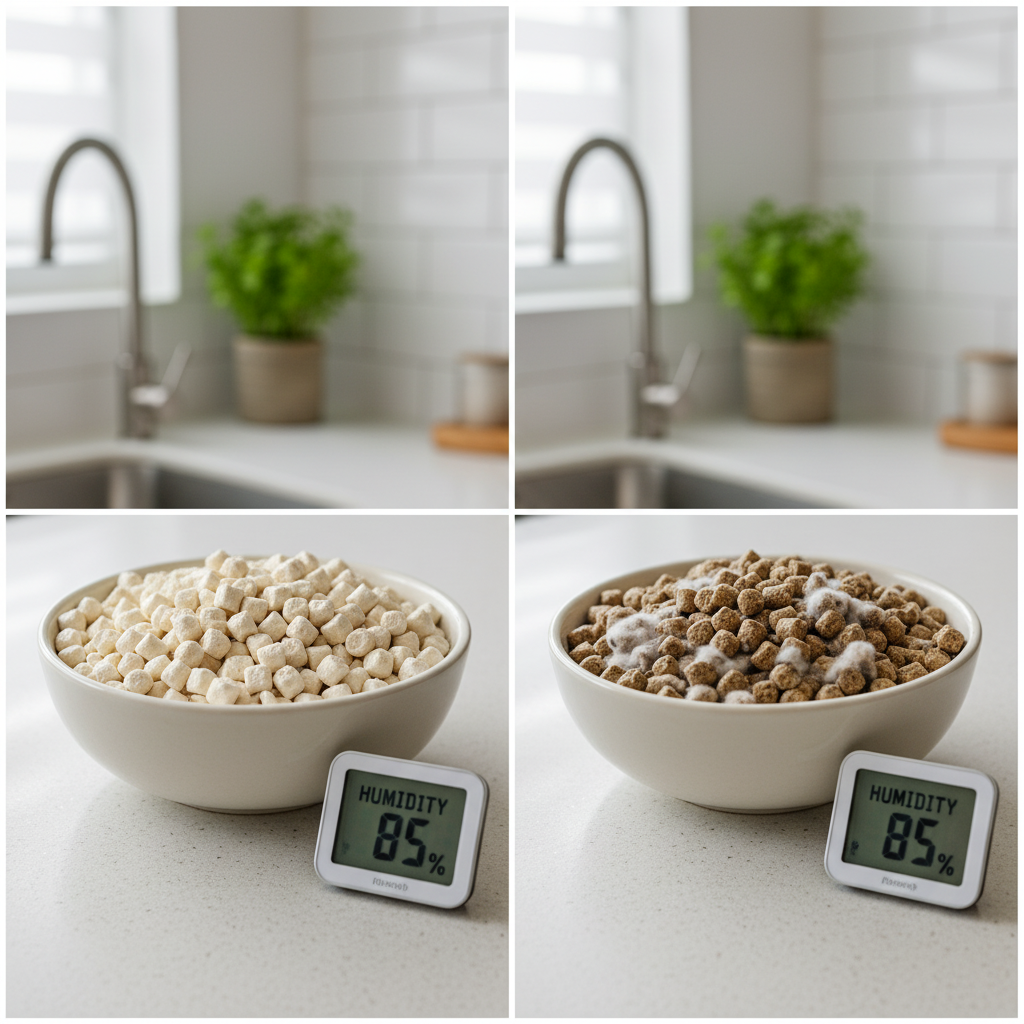
This is where Malaysia's tropical climate becomes a serious consideration. Tofu litter, being organic and plant-based, is inherently sensitive to ambient moisture. Research indicates that tofu litter begins to degrade and becomes susceptible to mold growth when relative humidity (RH) surpasses 60%. This is not ideal when you consider that average monthly relative humidity in major Malaysian cities consistently ranges from 70% to 90%, as confirmed by Malaysia climate data.
This high humidity can cause dry tofu pellets to passively absorb moisture from the air, even before your cat uses the box. When the litter is already damp, its capacity to absorb urine quickly and form strong clumps is reduced. It also creates a hospitable environment for mold to flourish, compromising both the litter's performance and your cat's health. My cat Ping'An, with her sensitive nose, would certainly let me know if the litter wasn't performing optimally!
The Complete Maintenance Schedule ⭐
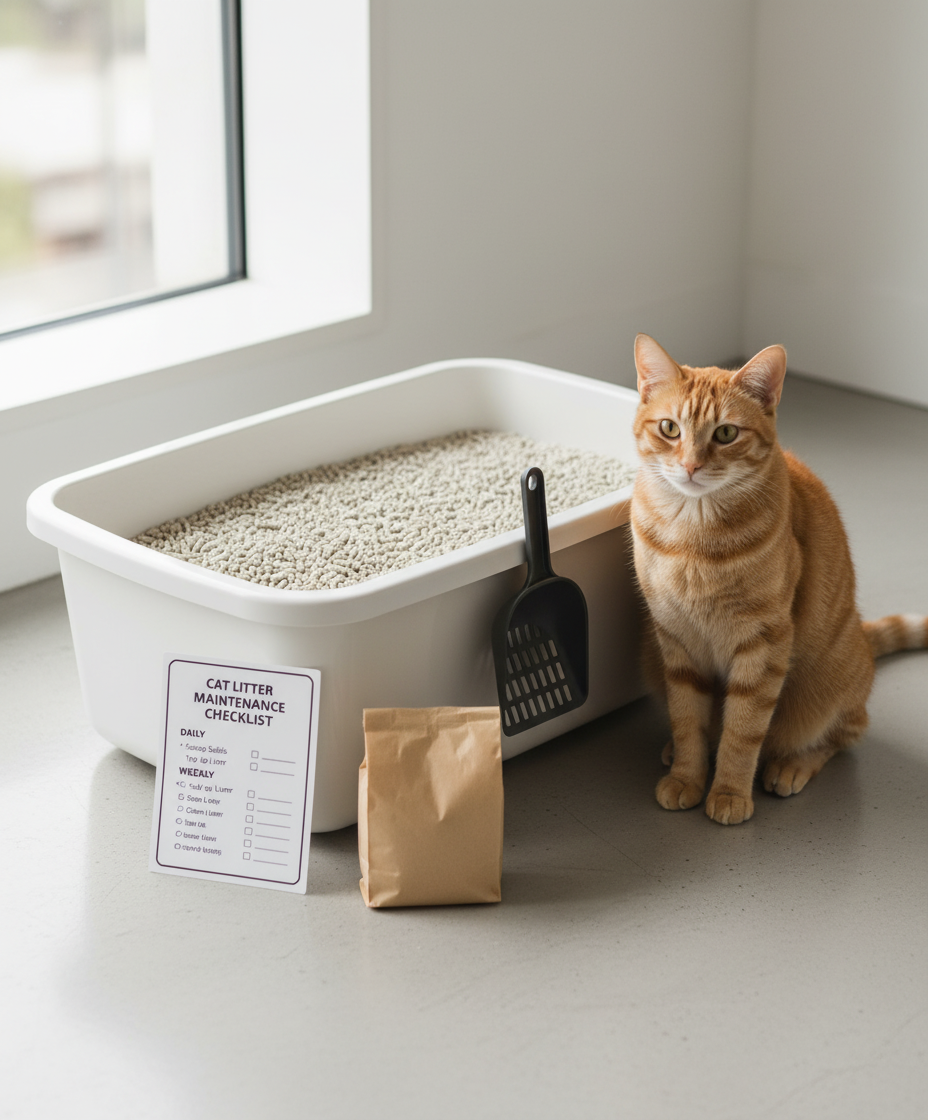
A consistent litter box maintenance schedule is the secret sauce to a perpetually fresh home and a happy cat, especially with tofu litter. Sticking to a routine ensures optimal hygiene and odor control, making your cat's toilet a place they actually want to use. This also protects your investment in quality litter by making it last longer.
Daily Routine (2 Minutes)
This is your non-negotiable step. Every single day, sometimes twice if you have a busy household, make time for this quick check-up.
- **Scoop Immediately:** Remove all urine clumps and feces. Liger tofu litter forms firm clumps quickly, making this easy. Prompt removal prevents odors from permeating the remaining litter and keeps bacteria at bay.
- **Check Level:** Ensure the litter depth still looks adequate. If it's starting to look sparse, make a mental note to top up soon.
- **Smooth the Surface:** Give the remaining litter a quick rake to smooth it out. Cats, especially picky ones like Lion, appreciate a level surface for their business.
Every 3 Days: Stir and Top Up
Beyond daily scooping, a little extra attention every few days can prolong the freshness of your litter.
- **Stir the Litter:** Gently stir the entire litter bed to redistribute any remaining moist areas or pockets of concentrated odor. This helps air out the litter and prevents some areas from becoming over-saturated while others remain pristine.
- **Top Up with Fresh Litter:** Add a fresh layer of Liger tofu litter to bring the depth back up to optimal levels. This ensures there's always enough fresh litter for your cat to dig and cover, promoting better clumping and odor control.
Weekly Check: Depth and Freshness
Once a week, take a slightly closer look at the overall state of your litter box.
- **Maintain Optimal Depth:** Aim for a consistent litter depth of 5-7 cm (2-3 inches). Too little litter means urine hits the bottom of the box, creating sticky messes and odors. Too much litter is wasteful. This sweet spot allows for proper clumping and digging without excess usage.
- **Assess General Freshness:** Take a sniff test. Does it still smell neutral, perhaps with a hint of Liger's mild milk fragrance? Or are you detecting any faint, lingering odors? This helps you gauge if your scooping and topping up schedule is sufficient or if an early full change might be needed.
Monthly: Full Change + Box Deep Clean
This is the big reset! Every month, typically every 2-4 weeks depending on usage and climate, it's time for a complete overhaul.
- **Discard All Old Litter:** Empty out every single pellet.
- **Deep Clean the Box:** Wash the litter box thoroughly. Hot water and a mild, pet-safe soap are your best friends here. Scrub away any residue, paying close attention to corners and edges.
- **Dry Completely:** This is crucial, especially in Malaysia! Ensure the litter box is bone-dry before adding fresh litter. Even a little residual moisture can encourage mold growth in your new batch.
- **Refill with Fresh Liger Tofu Litter:** Pour in enough fresh litter to reach that optimal 5-7 cm depth. It's like a brand-new bathroom for your cat!
Quarterly: Box Replacement Check
Litter boxes don't last forever. Over time, plastic litter boxes can develop scratches and microscopic grooves from scooping and your cat's digging. These tiny crevices become breeding grounds for bacteria and can trap odors that no amount of scrubbing can eliminate. If you notice persistent smells even after a deep clean, or visible wear and tear, it might be time for a replacement.
I once made the mistake of thinking my litter boxes would last indefinitely. After months of subtle odors that no amount of scrubbing could fix, I finally realized the plastic itself was scarred. Replacing the box, along with sticking to this schedule, made a world of difference. Sometimes, the solution is simpler than you think.
Here’s a quick overview:
| Frequency | Task | Description |
|---|---|---|
| Daily | Scoop Clumps & Feces | Remove waste promptly to prevent odor buildup. Smooth litter. |
| Every 3 Days | Stir & Top Up | Redistribute litter, add fresh pellets to maintain depth. |
| Weekly | Check Depth & Freshness | Ensure 5-7cm depth. Assess for lingering odors. |
| Monthly | Full Change & Deep Clean | Discard all litter. Wash box with pet-safe soap, dry completely. Refill. |
| Quarterly | Box Replacement Check | Inspect for scratches or persistent odors, replace if necessary. |
Step-by-Step: How to Clean Your Tofu Litter Box
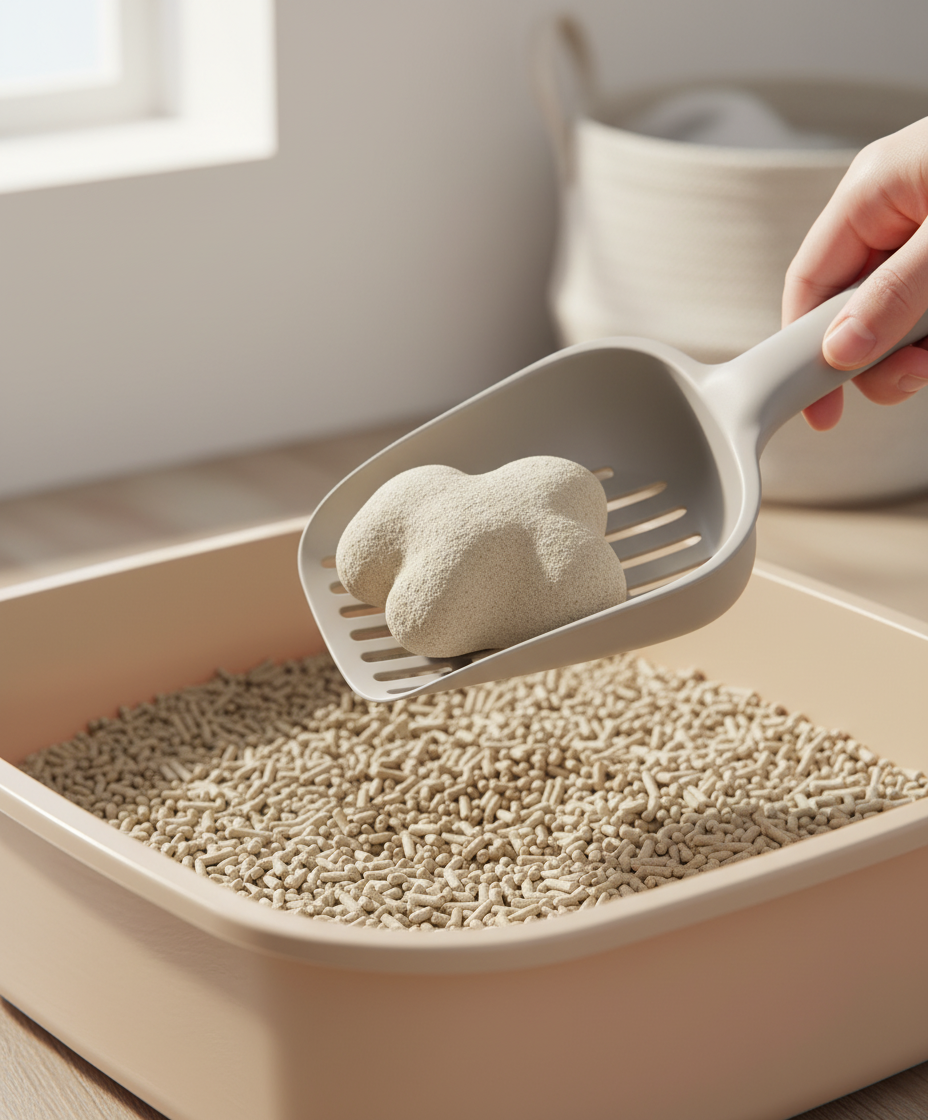
Cleaning your tofu litter box doesn't have to be a chore. With the right tools and technique, it becomes a quick and effective process that keeps your home smelling fresh and your cat happy. Consistency is far more important than intensity.
Tools You Need (Scoop Type Matters)
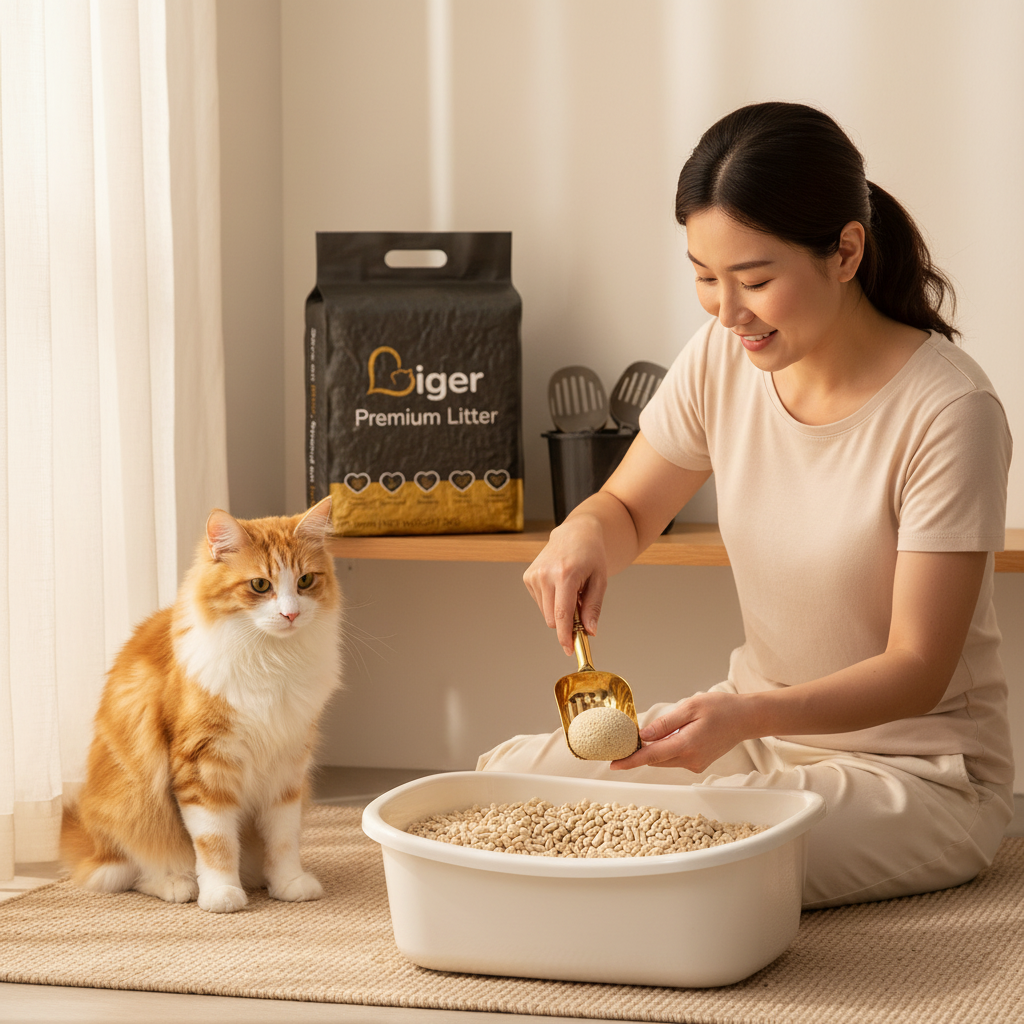
Forget those fine-mesh scoops designed for dusty clay litter. Tofu litter, with its larger cylindrical pellets, requires a specific type of scoop. Look for one with wide slots that allow the clean pellets to fall through easily while retaining the larger, firm clumps. An ergonomic handle will make the daily task much more comfortable.
Scooping Technique for Best Clump Removal
Patience is a virtue here. When your cat urinates, give the Liger tofu litter about 30 seconds to fully absorb the moisture and form a solid clump. Scooping too quickly can break apart soft clumps, leaving behind damp, smelly fragments. Gently dig around the clump, then lift it out carefully. You'll be surprised how firm and easy to remove they are if you give them a moment.
Deep Cleaning Protocol (Monthly)
For your monthly deep clean, start by emptying all the used litter into a sturdy trash bag. Then, take the empty litter box to a utility sink or bathroom where you can wash it. Use hot water and a mild, unscented, pet-safe soap (dish soap works fine, just rinse thoroughly). Scrub all surfaces, paying special attention to the corners and any textured areas. Rinse thoroughly until no soap residue remains. The most critical step, especially in Malaysia, is to ensure the box is completely dry before refilling with fresh litter. Air-dry in a well-ventilated area or wipe down with a clean towel.
Eco-Friendly Disposal Options (Flush, Compost, Bin)
Liger tofu cat litter is designed to be eco-friendly, offering a few disposal paths. Many brands advertise their tofu litter as 'flushable,' and indeed, Liger's formula is designed to dissolve. However, in Malaysia, exercising extreme caution is vital. Indah Water Konsortium (IWK), our national sewerage company, warns against flushing solid waste to prevent blockages in our pipelines. The Water Services Industry Regulations Malaysia explicitly prohibits discharging animal waste or solid substances into sewage systems. Our plumbing, especially in older apartments, can be narrow, making large or multiple clumps a potential disaster. If you choose to flush, only flush one small, broken-up clump at a time.
As for composting, while tofu litter itself is biodegradable, cat feces can harbor the *Toxoplasma gondii* parasite, which causes toxoplasmosis and is dangerous for pregnant women and immunocompromised individuals. The CDC guide on cat health and safety explicitly recommends against home-composting cat waste. To truly inactivate these oocysts, compost piles need to maintain sustained temperatures of at least 63°C, which is hard to achieve in a home compost bin. So, for ultimate safety in Malaysia, bagging soiled litter securely and disposing of it in regular household trash remains the safest and most recommended method.
Maintaining Tofu Litter in Malaysia's Climate ⭐
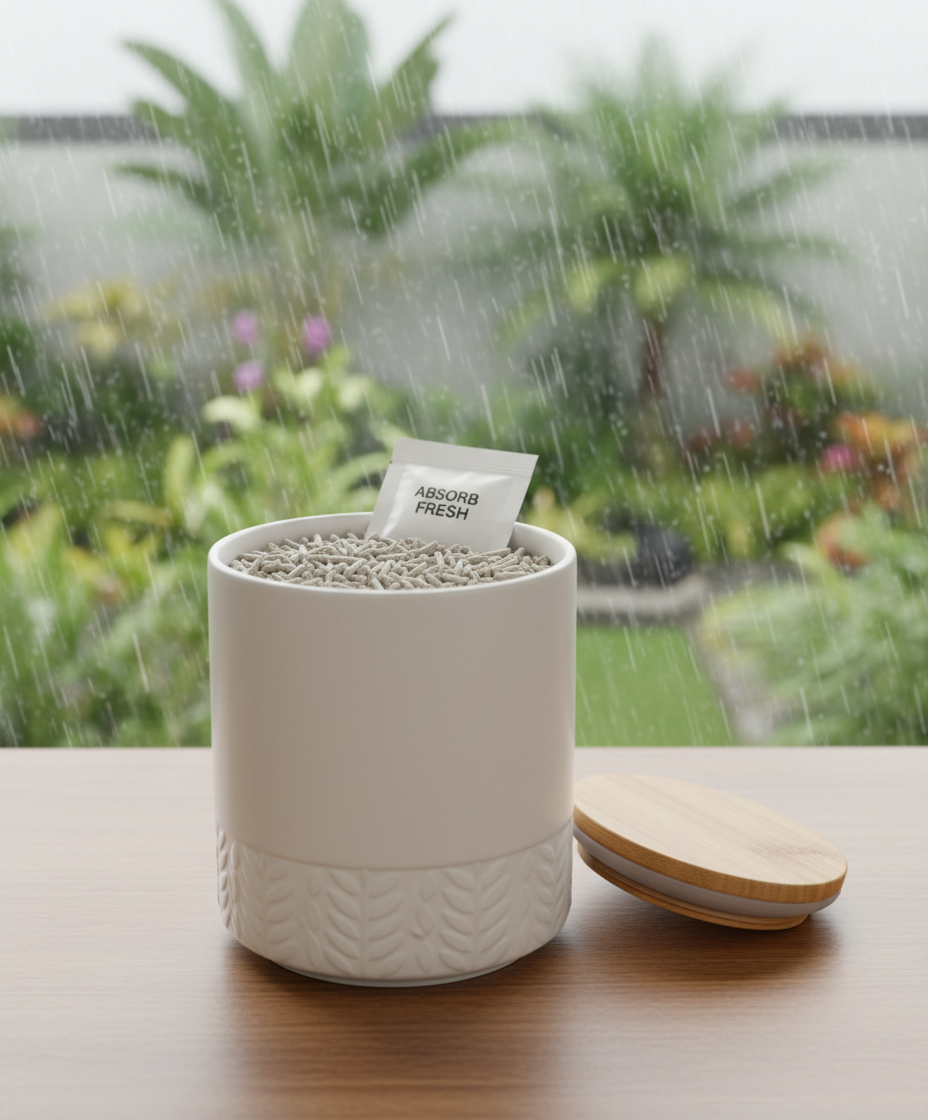
Malaysia's tropical climate, with its consistent heat and high humidity, presents a unique set of challenges for maintaining organic cat litter like tofu. With average monthly relative humidity often hovering between 70% and 90%, preventing degradation and mold growth requires proactive strategies.
Humidity-Proofing Your Litter Storage
The single most important step for maintaining tofu litter in Malaysia is how you store it. Unused litter, even in its original bag, can absorb moisture from the air, reducing its effectiveness and making it prone to mold. My advice? As soon as you open a new bag of Liger tofu litter, transfer the unused portion into an airtight container. Food-grade plastic bins or ceramic jars with silicone seals work wonderfully. Adding a few food-safe silica gel packets to the container can provide an extra layer of protection by absorbing ambient moisture. Store these containers in the coolest, driest part of your home, ideally in an air-conditioned room or a cupboard away from direct sunlight.
Monsoon Season vs Dry Season Tips
Malaysia's climate shifts between dry and monsoon seasons, and your litter maintenance should adapt accordingly. During the monsoon season (typically October to March), humidity levels are at their peak. You'll likely need to increase your scooping frequency and consider replacing the entire litter box content more often, perhaps every 2 weeks instead of 3-4. A small, plug-in dehumidifier in the room where the litter box is kept can be a game-changer during these damp months, helping to keep the indoor relative humidity below the critical 60% threshold that encourages mold.
Mold Prevention: Signs and Solutions
Mold growth on organic litter is not just unsightly; it poses a serious health risk due to mycotoxins. Be vigilant for any signs: a musty smell, visible discoloration (green, black, white fuzzy patches), or unusual textures on the pellets. If you spot any mold, discard the entire litter box contents immediately and thoroughly disinfect the box. Do not try to salvage molded litter. To prevent it, ensure your storage is airtight and your home is well-ventilated. A cat's sensitive respiratory system, like Ping'An's, is particularly vulnerable to airborne mold spores, so prevention is always better than cure.
Best Room Placement for Litter Box in Malaysian Homes
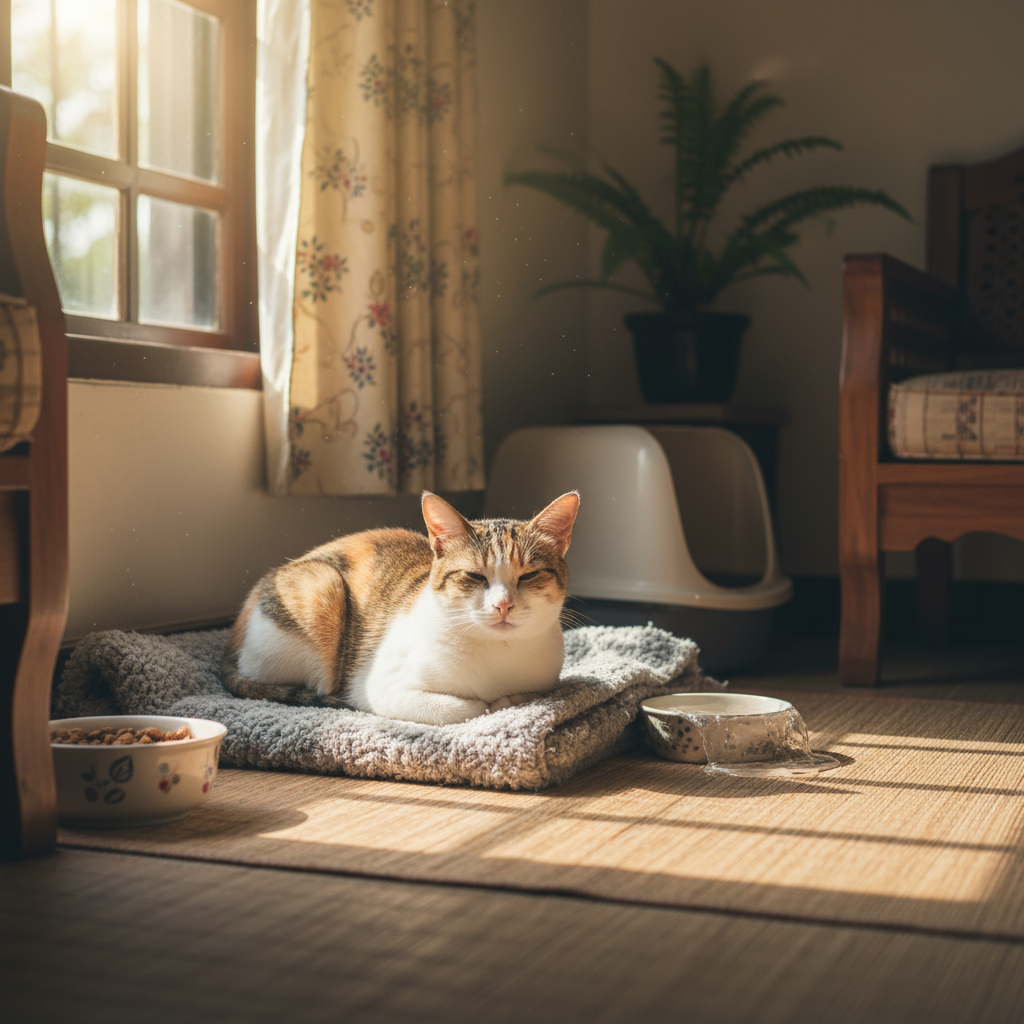
Where you place your litter box can significantly impact its freshness in a humid climate. Avoid placing litter boxes in bathrooms, laundry rooms, or any other area prone to high humidity, as these spots actively encourage moisture absorption and mold growth. Instead, opt for a well-ventilated area, perhaps a corner in a living room with good airflow or a spare room that is regularly air-conditioned. If you're living in a condo, finding the right spot can be tricky, but ensuring it's not in a damp corner is paramount. Check out our Condo Cat Owner's Guide for more tips on small spaces.
Multi-Cat Household Maintenance Guide
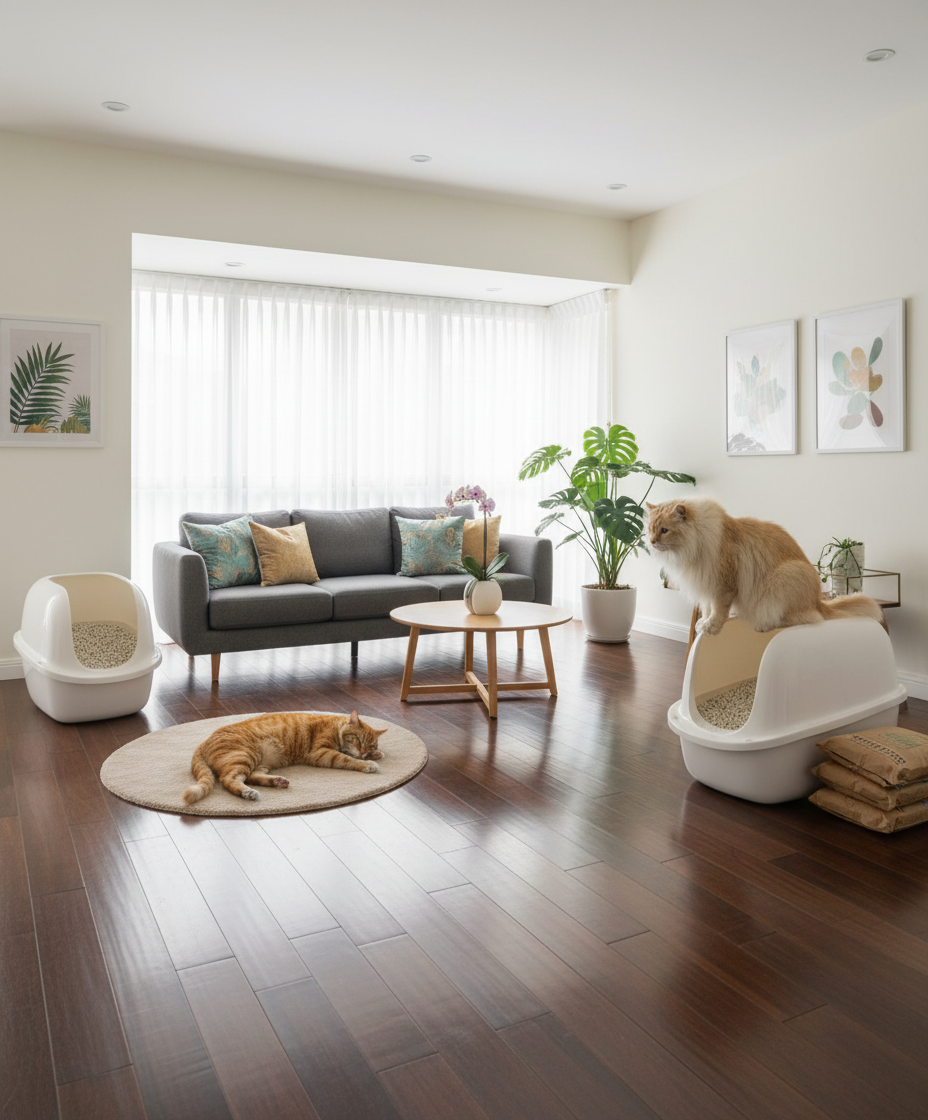
Having more than one feline friend brings double the joy, but also requires a scaled-up approach to litter box management. Keeping multiple cats happy and preventing behavioral issues often comes down to providing adequate, clean facilities.
How Many Litter Boxes (The N+1 Rule)
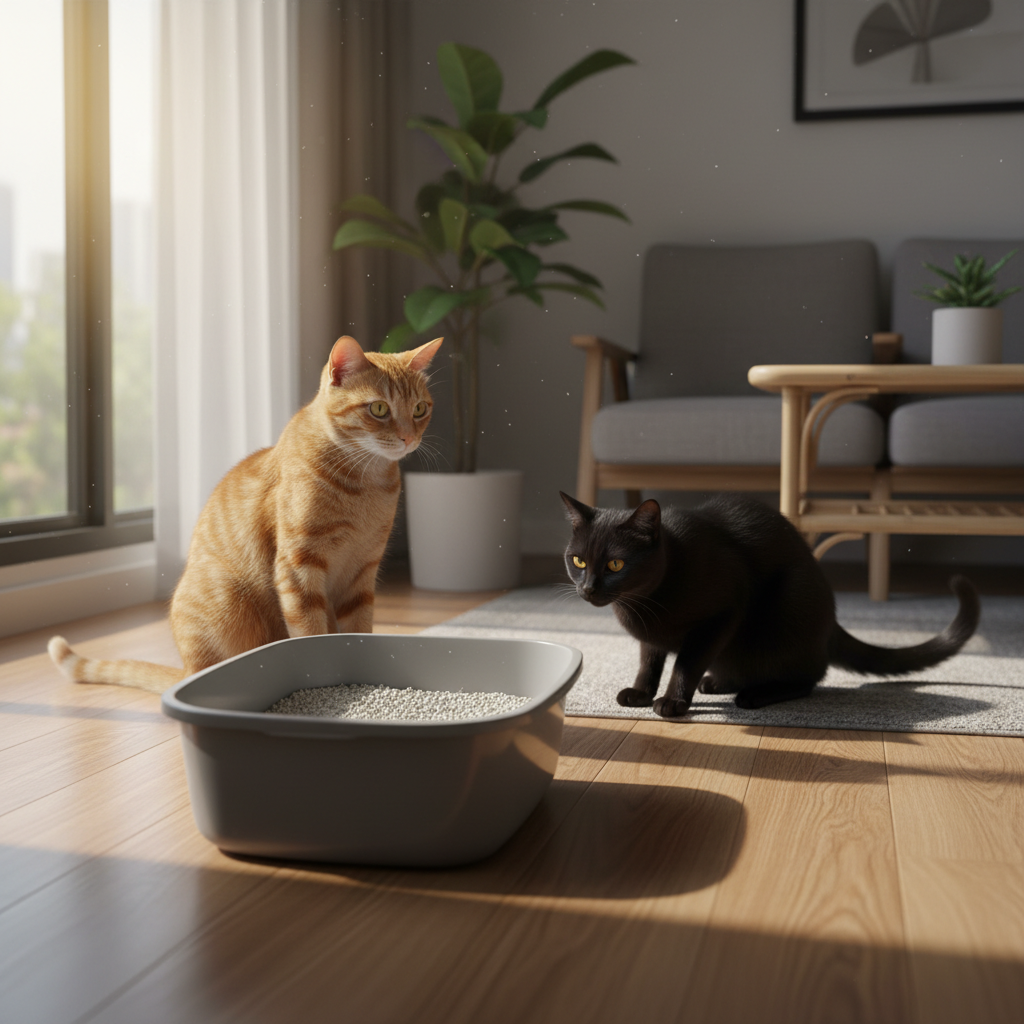
This is arguably the most important rule for multi-cat homes: the 'N+1' rule. It means you should have one litter box for each cat you own, plus one extra. So, if you have two cats like Tiger and Lion, you should ideally have three litter boxes. This isn't just about providing enough space; it's about giving each cat options, preventing resource guarding, and reducing the likelihood of accidents outside the box. As veterinary experts at PetMD suggest, this simple rule can dramatically improve feline harmony. You can also use our Litter Box Size Calculator to ensure each box is perfectly sized for your individual cats.
Litter Consumption Calculator
With multiple cats, your litter consumption will naturally increase, which impacts your budget. The average cat consumes approximately 2.5 to 3.5 kilograms of tofu litter per month. This means for two cats, you're looking at 5-7 kg, and for three, it could be 7.5-10.5 kg. Keeping track can feel overwhelming, but tools can help. You can easily estimate your monthly needs and costs by using our Litter Calculator, ensuring you never run out and can budget effectively.
Rotation Strategy for Multiple Boxes
To maximize freshness and reduce your workload, consider a rotation strategy for your litter boxes. Instead of performing a full change on all boxes simultaneously, stagger them. For instance, if you have three boxes, do a deep clean on one box each week. This way, there's always at least one completely fresh box available, and your cats always have appealing options. It also spreads out the effort, making it less daunting than tackling all boxes at once.
Troubleshooting Common Tofu Litter Problems ⭐
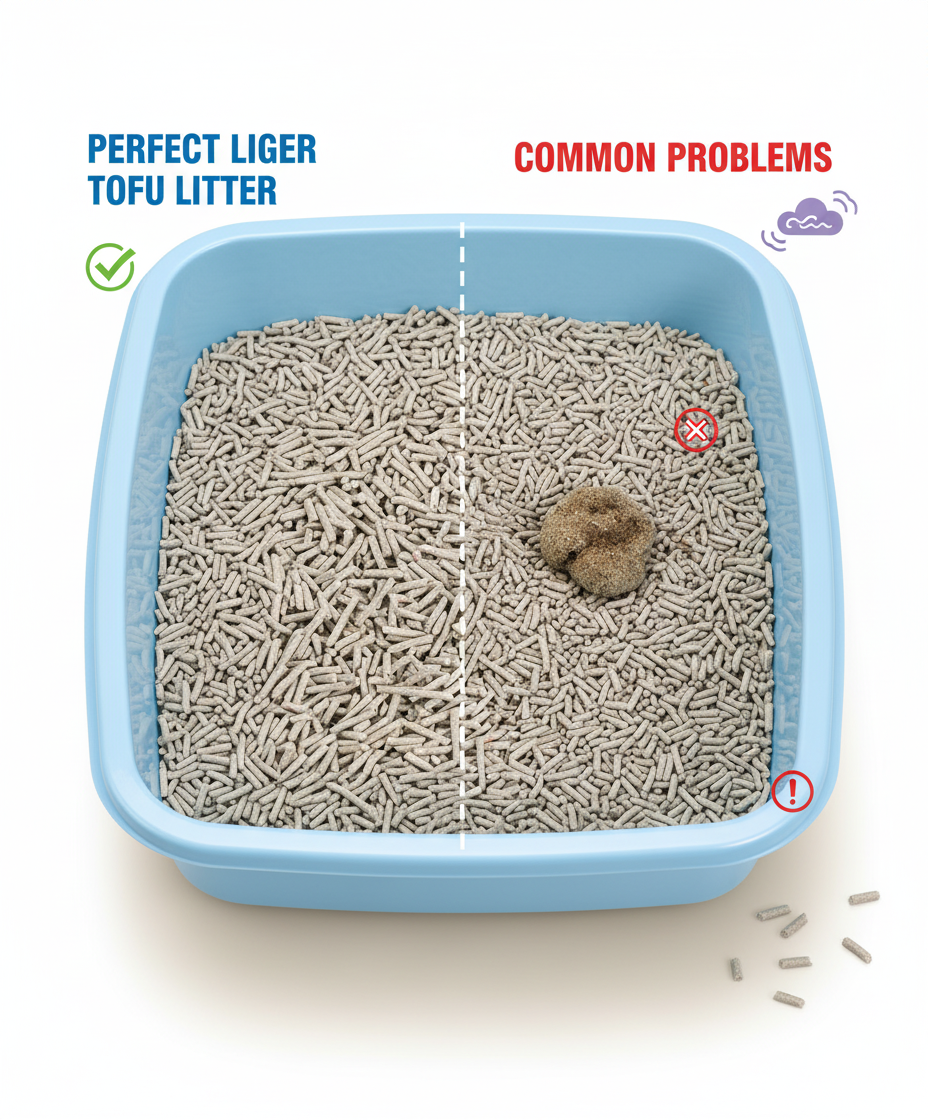
Even the best cat parents run into a snag or two when it comes to litter box maintenance. Tofu litter, while fantastic, isn't entirely immune to issues. But fear not! Most common problems have simple, science-backed solutions that can turn a frustrating situation into a purr-fectly fine one.
Problem: Litter Not Clumping Properly
Cause: This is usually a sign that the litter is either too shallow, you're scooping too soon, or the litter itself has absorbed too much ambient moisture. Liger's tofu litter is designed for fast, firm clumps, but it still needs a moment to work its magic. High humidity can also prematurely damp the pellets, reducing their clumping power.
Solution: Ensure a litter depth of at least 5-7 cm. After your cat uses the box, wait at least 30 seconds before scooping to allow the clump to solidify. Store unused litter in an airtight container to protect it from Malaysia's humidity.
Problem: Persistent Odor Despite Scooping
Cause: Even with regular scooping, ammonia can build up in the remaining litter, or odors might be trapped in an old, scratched litter box. Cat urine contains urea, which breaks down into alkaline ammonia. Many tofu litters, including Liger's with its natural milk fragrance, incorporate odor-neutralizing agents. Some also use activated charcoal or zeolite. Activated charcoal works through physical adsorption, trapping ammonia molecules in its porous structure. Zeolites use cation exchange to attract and lock away positively charged ammonium ions. If the smell persists, it might be a deeper issue.
Solution: Perform a full litter change and a deep clean of the box more frequently. Ensure adequate ventilation in the litter box area. Sometimes, sprinkling a thin layer of baking soda at the bottom of the empty box before refilling can help, but avoid mixing it directly into the litter daily as it can deter some cats. If the box is old and scratched, it's time for a replacement.
Problem: Excessive Tracking
Cause: While tofu litter is generally considered low-tracking due to its larger pellet size compared to fine clay, no litter is entirely track-proof. It usually happens when pellets get caught in your cat's paws or fur as they exit the box.
Solution: Place a textured litter mat directly outside the litter box. These mats are designed to gently dislodge pellets from your cat's paws. A covered litter box can also help contain errant pellets. Liger's tofu pellets are specifically designed for minimal tracking, but a mat is always a good backup.
Problem: Cat Refusing the Litter
Cause: Cats are notoriously particular. A sudden refusal can be due to a dirty box, a new type of litter they don't like, a change in litter box location, or even an underlying medical issue. Ping'An, for example, is very sensitive to dusty litters, and Lion is extremely picky about his box's cleanliness.
Solution: Rule out medical causes with a vet visit first. Ensure the box is impeccably clean and consider if it's too small for your cat. If you've recently switched litter, try a gradual transition by mixing the new litter with the old over 7-10 days. Ensure the litter box is in a quiet, accessible location where your cat feels safe.
Problem: Mold Appearing
Cause: This is almost always due to high humidity, poor storage of unused litter, or infrequent scooping allowing moisture to linger. Tofu litter, being organic, is susceptible if exposed to consistently damp conditions, especially in Malaysia's climate.
Solution: Discard all molded litter immediately. Deep clean and thoroughly dry the litter box. Review your storage methods for unused litter – move it to an airtight container in a dry, possibly air-conditioned area. Increase ventilation around the litter box or consider a dehumidifier to keep indoor humidity below 60%. This is critical for both your cat's and your family's health.
Here’s a quick troubleshooting reference:
| Problem | Cause | Solution |
|---|---|---|
| Weak/Broken Clumps | Shallow litter, scooped too soon, high humidity | Maintain 5-7cm depth, wait 30 sec before scooping, airtight storage |
| Persistent Odor | Ammonia buildup, old box, poor ventilation | Frequent full changes, deep clean/replace box, increase airflow |
| Excessive Tracking | Pellets on paws, no barrier | Use a textured litter mat, consider a covered box |
| Cat Refusing Box | Dirty box, new litter, wrong location, medical issue | Clean frequently, gradual litter transition, vet check, quiet spot |
| Mold Appearance | High humidity, poor storage, infrequent cleaning | Discard all litter, deep clean/dry box, improve storage/ventilation |
Cost Optimization: Making Your Tofu Litter Last Longer

Choosing tofu litter is an investment in your cat's health and the environment. But smart maintenance can also make it a cost-effective choice. Understanding how to use your litter optimally can significantly extend its lifespan, saving you money in the long run.
Optimal Depth (Not Too Much, Not Too Little)
The 'Goldilocks' zone for litter depth is 5-7 cm (2-3 inches). Too little litter means urine can quickly reach the bottom of the box, creating sticky, hard-to-remove messes that waste litter. Too much litter, on the other hand, is simply wasteful. Maintaining this optimal depth ensures that urine has enough absorbent material to form a solid clump without saturating the entire box, making scooping efficient and using less fresh litter for topping up.
Monthly Cost Calculation (1 Cat vs 2 Cats vs 3 Cats)
To budget effectively, it helps to know what to expect. The average cat consumes approximately 2.5 to 3.5 kilograms of tofu litter per month. In the Malaysian market, prices for tofu litter can range, but a good quality 6L or 7L bag (which typically corresponds to 2.4-2.8kg) might cost between RM20 to RM35, as seen with local brands like Pottycats. Liger's own natural milk fragrance tofu litter offers a premium, ultra-low dust experience, making it an excellent choice for respiratory health, like for Ping'An who sneezes at dusty litters.
Here’s a rough breakdown of estimated monthly costs:
| Number of Cats | Estimated Monthly Consumption | Estimated Monthly Cost (RM) |
|---|---|---|
| 1 Cat | 2.5 - 3.5 kg | RM 20 - RM 35 |
| 2 Cats | 5.0 - 7.0 kg | RM 40 - RM 70 |
| 3 Cats | 7.5 - 10.5 kg | RM 60 - RM 105 |
These figures can vary based on brand and your cat's habits, but they offer a solid starting point for planning your budget.
Subscribe & Save vs One-Time Purchase
Many cat litter brands, including Liger, offer different purchasing options. While a one-time purchase is convenient, exploring 'subscribe and save' options or buying in bulk can lead to significant savings. Larger packages often have a lower price per kilogram. For instance, if Liger offers a multi-pack subscription, the per-bag price might drop, offering long-term value. This strategy not only saves money but also ensures you always have fresh litter on hand, avoiding last-minute dashes to the pet store.
Mastering tofu cat litter maintenance in Malaysia isn't just about scooping; it's about understanding the science, adapting to our unique climate, and creating a truly clean and healthy environment for your beloved felines. By implementing these tips, you're not just maintaining a litter box; you're nurturing your cat's well-being and contributing to a more sustainable home.
So, here's your task for tomorrow morning: take five minutes to assess your current litter box setup. Check the depth of your Liger tofu litter, ensure your unused bags are in airtight storage, and maybe even consider where a small dehumidifier could make a big difference. Your nose, your floors, and especially your cat, will thank you for it!