You just clicked "Confirm Order" on a 10-pack of Liger tofu cat litter — that's 20kg of food-grade pellets landing on your doorstep within 48 hours. The cost-per-day math made sense (down to RM169 for 10 bags, or roughly RM0.46 per day for one cat). But now you're staring at your tiny condo storage closet wondering: where do I put all this litter without it going mouldy before I open it?
This guide is for the cat parent who just received that delivery. Not the one whose litter already smells off — if you're already noticing weird smells or clumps, read the companion piece first, then come back here for Day-1 prevention.
Malaysia's climate is genuinely hostile to organic, starch-based pellets. Pasir Gudang, Petaling Jaya, Penang island — average relative humidity sits at 80% year-round, climbing past 90% during the northeast monsoon (November-February). The U.S. FSIS food safety "Danger Zone" framework — 4°C to 60°C — is essentially every minute of every day in Malaysia. Your tofu litter is food-grade pea protein and corn starch. Treat it like food.
Why Malaysian Humidity Is Brutal to Cat Litter
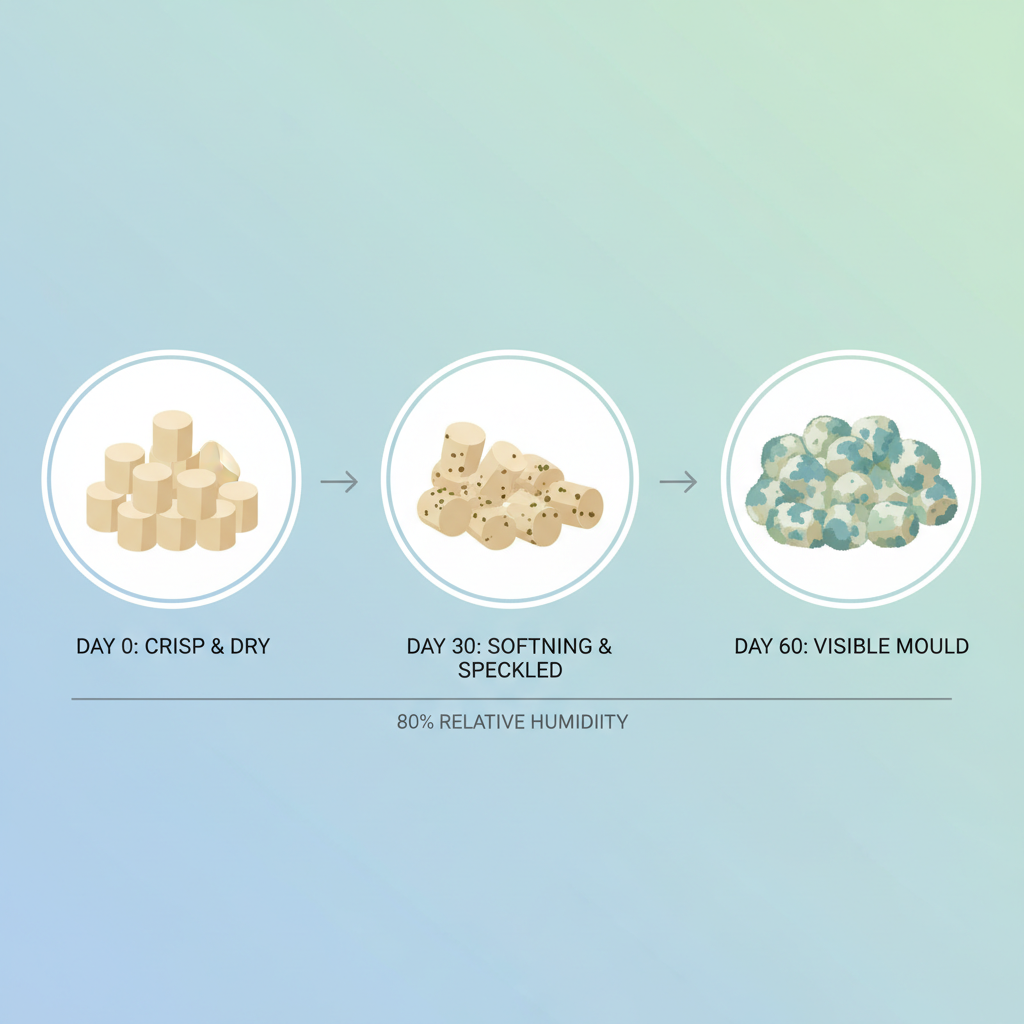
Tofu cat litter is made from food-grade plant materials — typically pea fibre, corn starch, and tapioca starch pressed into cylindrical pellets. UiTM researchers studying biomass-based cat litter confirmed that plant-fibre pellets behave like dried grain: they are hygroscopic, meaning they actively pull moisture out of the surrounding air.
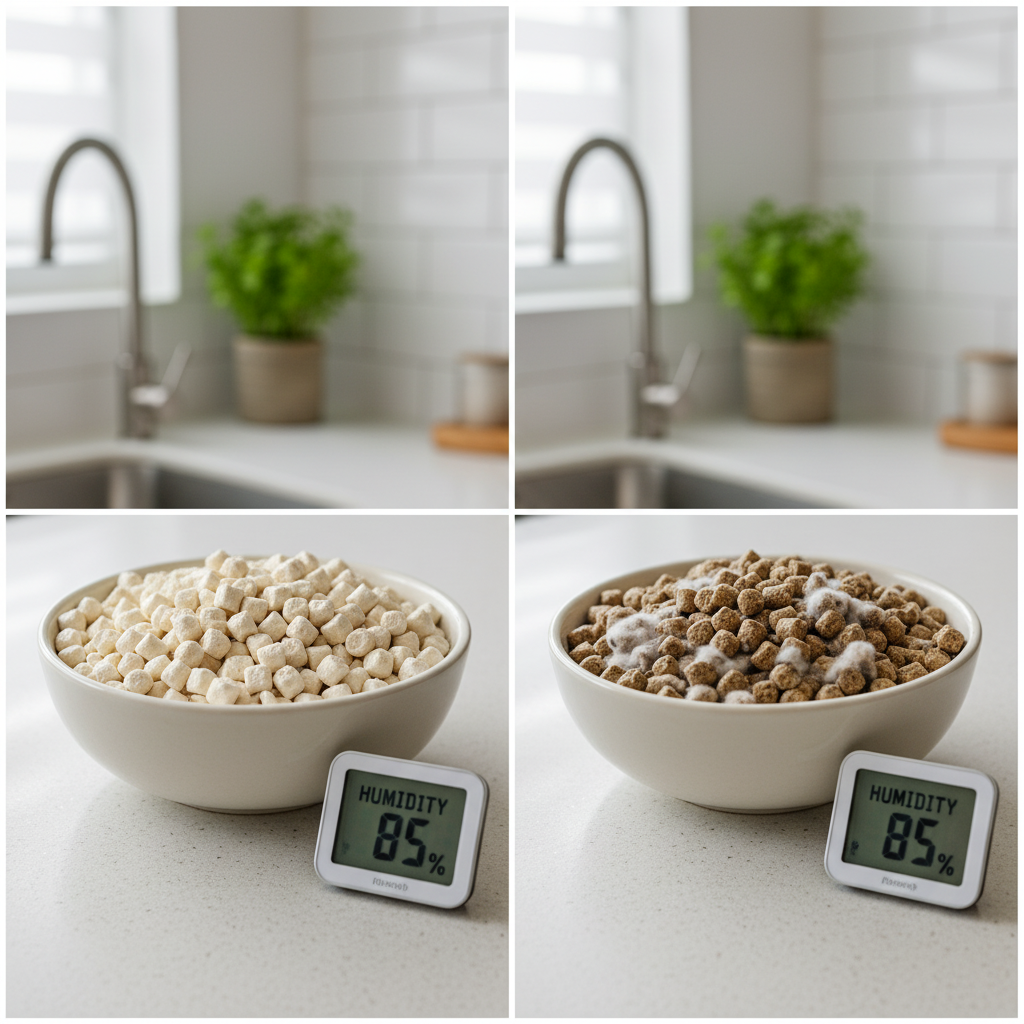
At Malaysian ambient humidity (75-90% RH), an opened bag of tofu litter equilibrates with the air within 48-72 hours. The pellets gain 3-8% moisture by weight before you even pour them into the tray. Three things go wrong from there:
- Premature clumping inside the bag. Pellets touching each other in a humid bag start binding together. You scoop out half-formed clumps that disintegrate in the tray.
- Mould bloom. Starch + 25-30°C + 80% RH = exactly what bakers call "yeast-friendly conditions". Wild Aspergillus and Penicillium spores in your kitchen air settle on exposed pellets within 5-7 days.
- Aflatoxin risk. Once mould colonies establish, certain Aspergillus strains produce aflatoxins — the U.S. FDA documents aflatoxin poisoning in pets through contaminated food and bedding. Cats inhaling mouldy litter dust is not a hypothetical risk.
This is why "just stuff it in the bathroom cabinet" — the default for 90% of Malaysian cat parents — is the single most expensive storage mistake. You'll lose 2-3 bags out of a 10-pack before you finish the carton.
Day 1: Where Your Bags Should Go (and Where They Shouldn't)
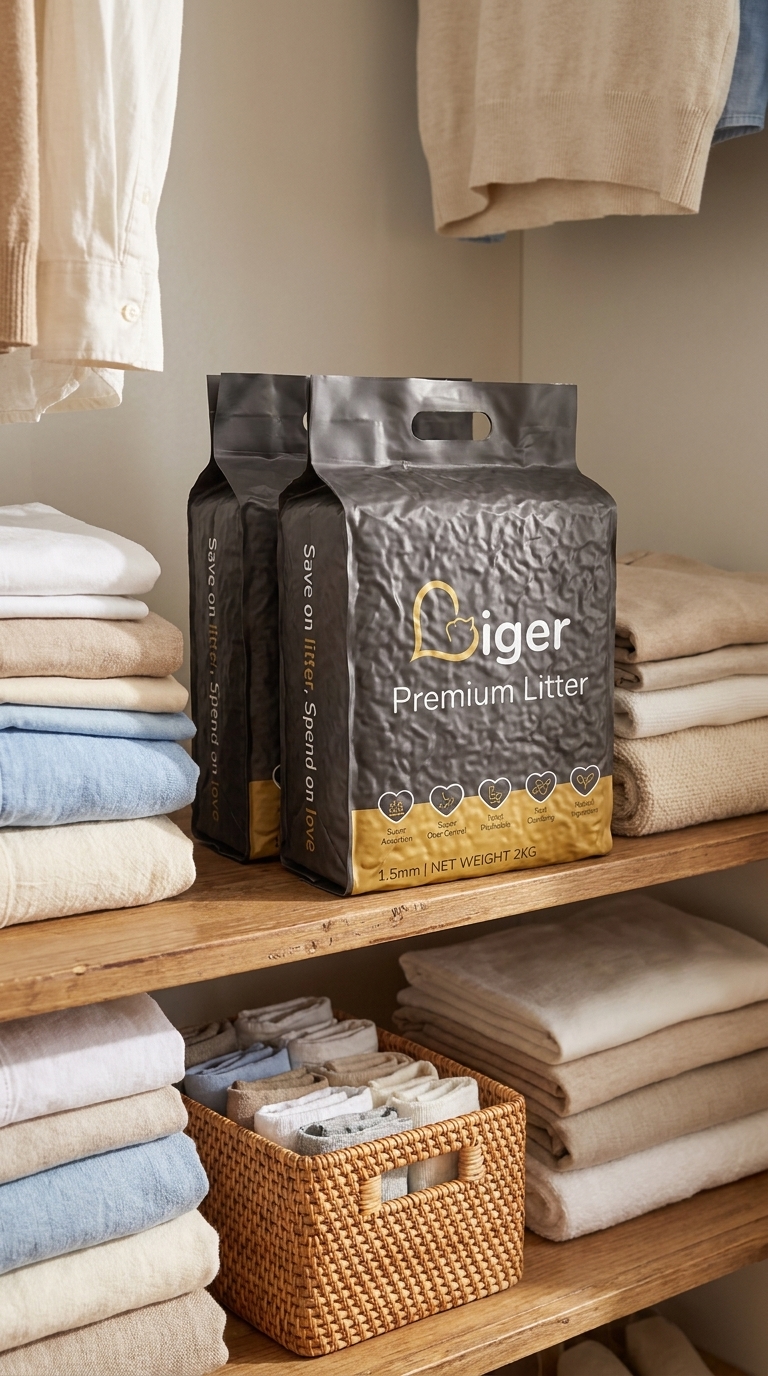
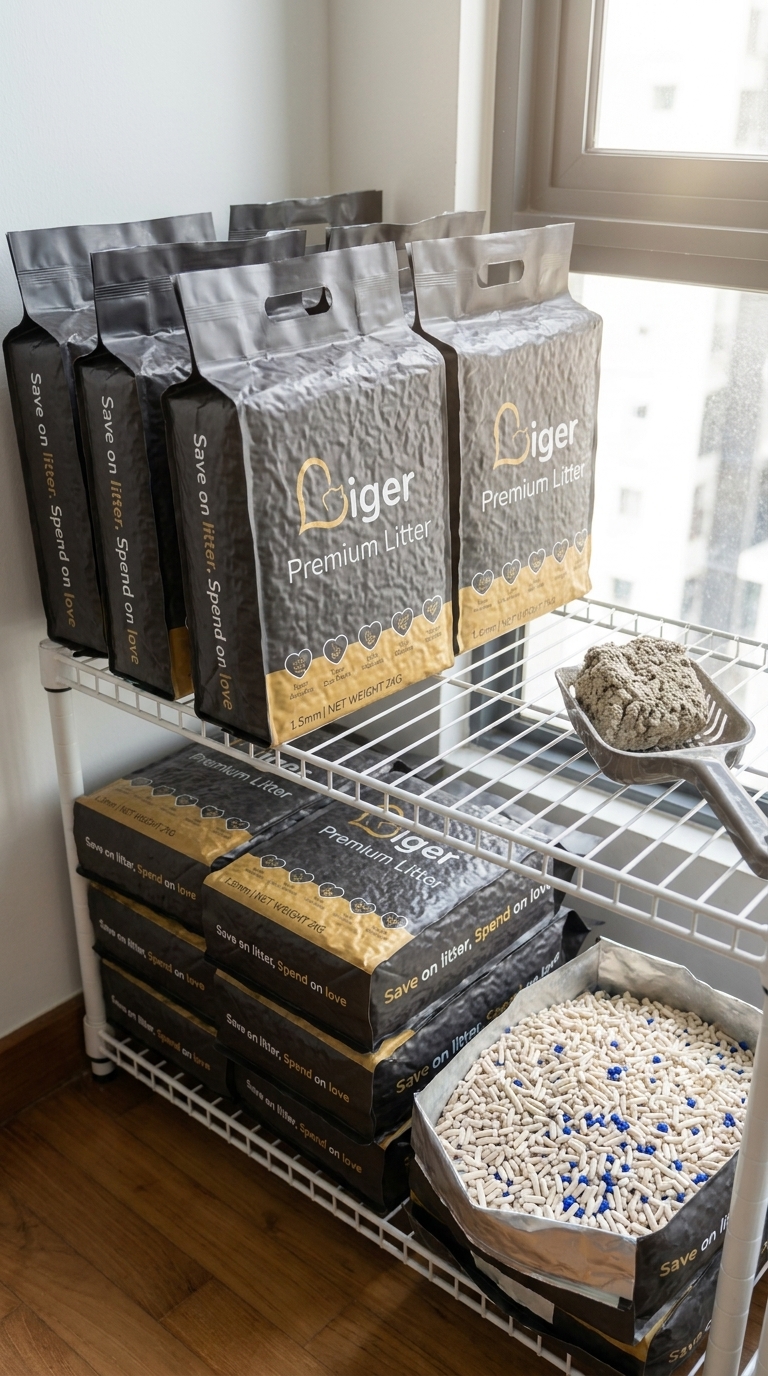
The moment the delivery arrives, do not open every bag to "check the quantity". Each unopened Liger pack is sealed against moisture at the factory — that nitrogen-flushed seal is the single best storage technology you'll ever own. Keep it intact.
Avoid these five locations
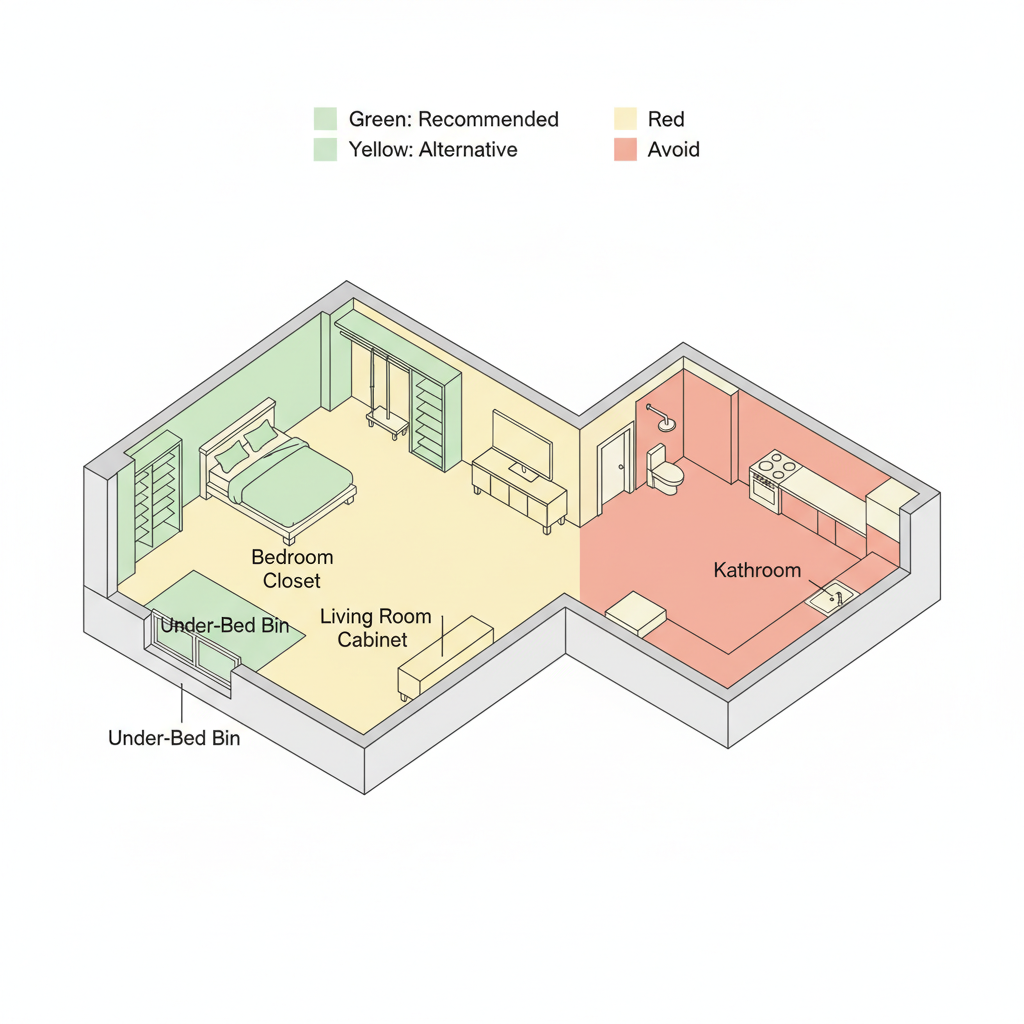
- The bathroom. Humidity here spikes to 95-100% after every shower. Your seal is good but not magic.
- The kitchen floor (especially under the sink). Plumbing leaks + ant trails + cooking steam. Triple threat.
- The yard / laundry balcony. Direct sun raises bag-interior temperature to 45°C+ during 12pm-3pm. Starch degrades thermally — pellets get brittle and lose clumping power.
- On top of the fridge / on top of the washing machine. Both produce continuous low-grade heat (35-40°C) and vibration that breaks pellet structure.
- Inside the storeroom with the rice and flour. Tempting (food-grade with food-grade), but rice weevils and grain mites cross-contaminate freely. If you have any pest activity in your dry-goods storage, your litter is part of the buffet.
The four locations that actually work
- Bedroom closet, upper shelf. Air-conditioned overnight, stable 25-27°C, lower humidity (60-65% RH). Best option for most condo dwellers.
- Wardrobe with silica gel packets. Toss in 5-10 large silica desiccant packs (you can buy 100g packs from any baking-supplies shop for RM3-5). Replace every 2-3 months.
- Under the bed in a sealed plastic bin. The 60L IKEA SOCKERBIT or any food-grade airtight container. Critically: choose a bed away from external walls (external walls in Malaysian condos run 3-5°C cooler than interior walls, which causes condensation inside sealed bins).
- Dedicated pet supplies cabinet in the living room. If you have air-conditioning that runs at least 6 hours/day in the living room, this is excellent.
| Storage Spot | Avg Temp | Avg RH | Verdict |
|---|---|---|---|
| Bathroom cabinet | 28°C | 85-95% | Avoid |
| Kitchen floor cabinet | 30°C | 75-85% | Avoid |
| Storeroom (no aircon) | 30°C | 75-80% | Risky |
| Bedroom closet | 26°C | 60-65% | Recommended |
| Sealed bin under bed | 27°C | 50-55% | Best |
| Living room aircon cabinet | 25°C | 55-60% | Best |
Day 1-30: The Honeymoon Period
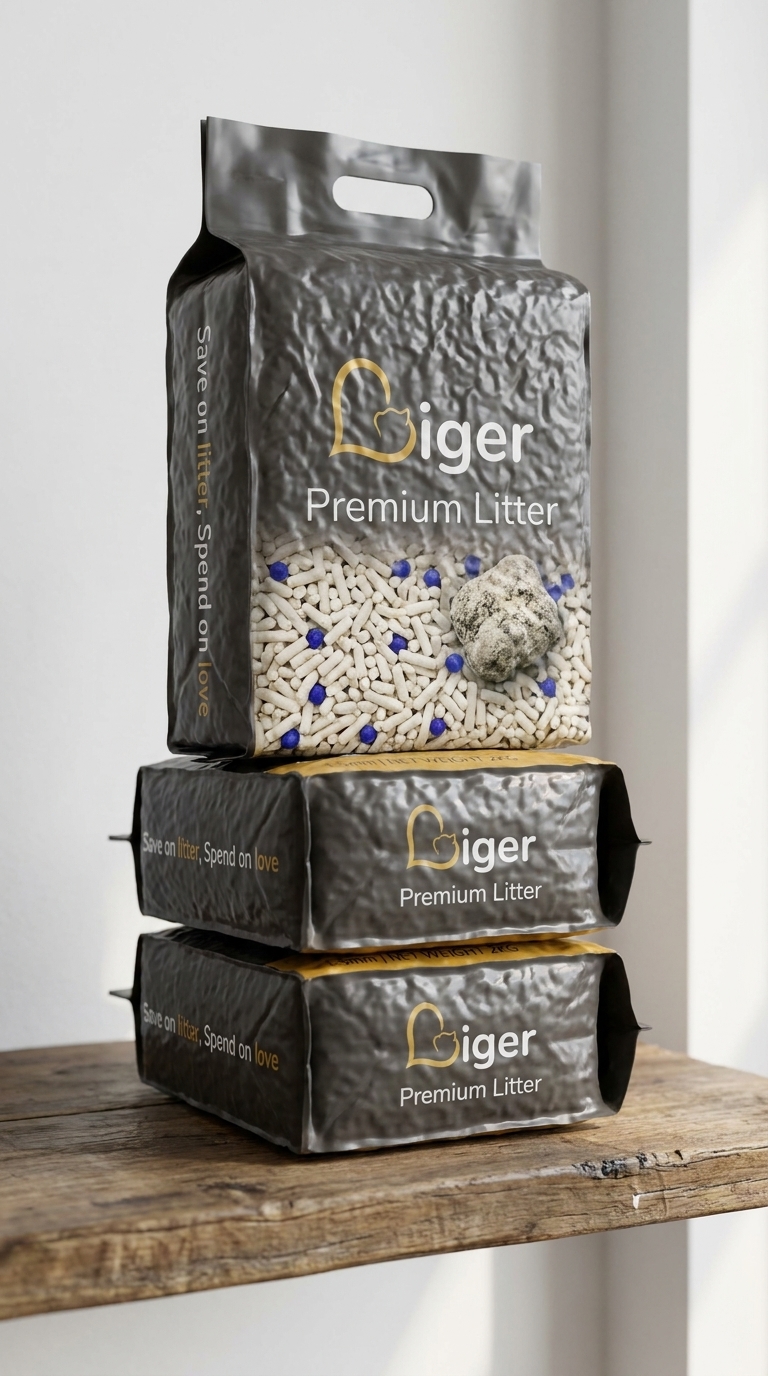
While all 10 bags remain sealed, your job is shockingly simple: do not open them and keep them above the floor. That's it.
Stack them vertically (Liger packs are designed to stack 4-5 high without crushing) rather than horizontally — the pellets at the bottom of a horizontal stack will eventually settle and form micro-clumps even in a sealed bag. Vertical stacking distributes the weight evenly along the pellet axis.
If you have shelving, separate the bags with at least 2cm of air gap between them. Bags pressed flat against each other and a cool external wall develop condensation rings on the inside of the polyethylene where surface temperature drops below dew point. FAO water and food storage guidance repeatedly cites air circulation as the single biggest factor in tropical dry-goods preservation.
Quick Day-1 checklist
- Inspect each bag for tears or punctures from delivery handling. One pinhole near the bottom of a bag is enough to ruin it within 4 weeks.
- Write the purchase date in marker on each bag. Future-you will thank present-you.
- Number the bags 1 through 10. Open them in order.
- Place all bags in the chosen storage location that same day. Don't leave the carton in the foyer for a week.
Day 30-60: The First Opened Bag
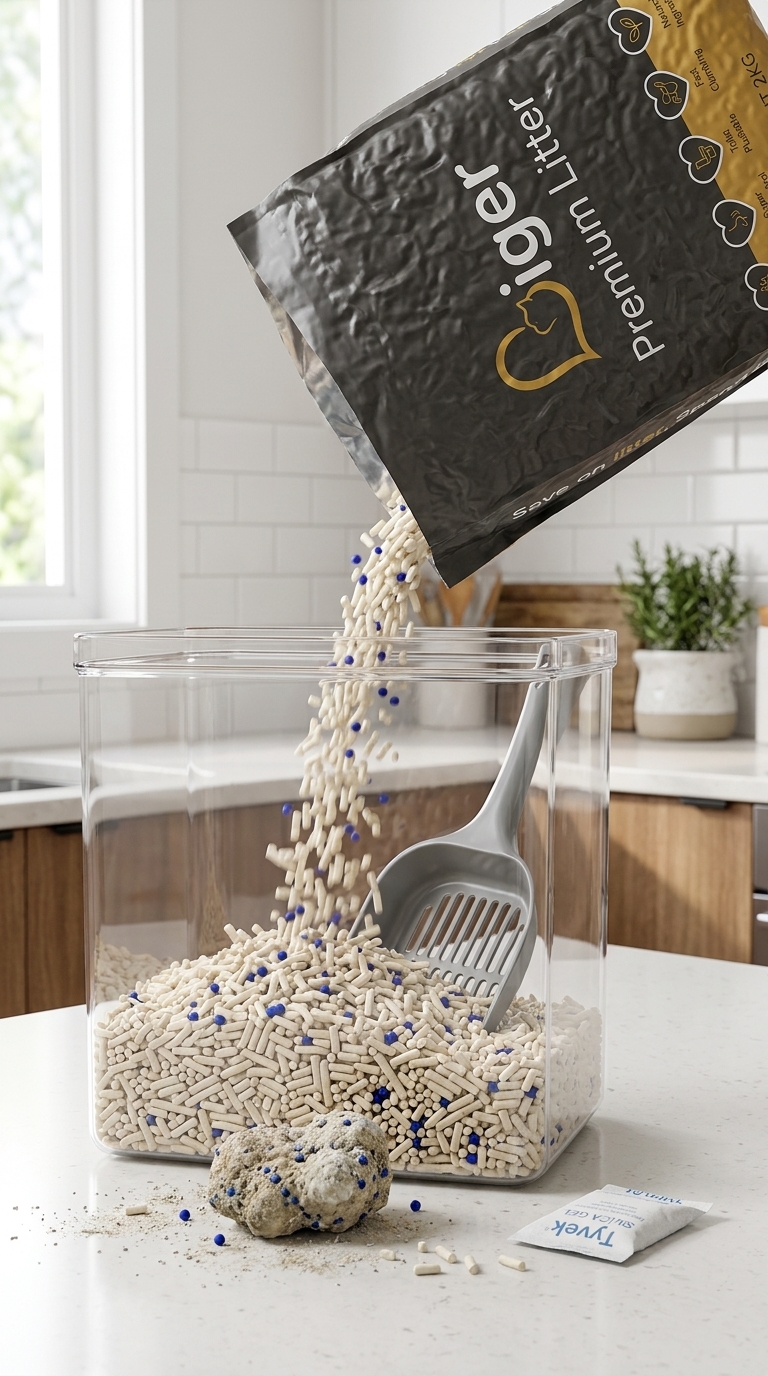
Around Day 25-30, you'll finish your current litter and crack open Bag #1. This is the moment your storage strategy actually matters. The factory seal is broken; from now on, the clock is ticking.
For an average single-cat household calculated by our litter calculator, one 2kg pack lasts 3-4 weeks when used as a top-up over a base layer (the maintenance approach we recommend in our maintenance guide). Multi-cat homes burn through it in 10-14 days.
The "decant immediately" rule
The instant you open Bag #1, pour the entire contents into a sealed airtight container. Do not leave litter sitting in the original opened bag with a clip or rubber band — those seals lose against Malaysian humidity within 72 hours.
What works for decanting:
- Food-grade rice storage containers (5-10L). Lock & Lock, Tupperware, or any BPA-free polypropylene tub with a silicone gasket lid. RM25-40 each. Buy two so you can rotate.
- Glass jars with rubber gaskets (3-5L). Heavier but completely impermeable. Good if your closet has stable temperature.
- Plastic ice cream tubs (the 4L variety from any supermarket). Free, reusable, and surprisingly effective for short-term (under 30 days) storage.
What does not work: zip-top freezer bags (the zipper isn't airtight), the original bag rolled and clipped (humidity wins), open buckets with loose lids (cats and dust find their way in).
Add a humidity buffer
Drop one silica gel packet inside each decanting container. A 30g packet absorbs roughly its own weight in moisture before saturating; replace or re-dry (oven 100°C for 90 minutes) every 4-6 weeks. This single trick extends opened-bag shelf life from 6-8 weeks to 12-16 weeks.
Day 60-90: The Stretch Zone (Bulk-Buyer's Critical Window)
This is where most 10-pack buyers go wrong. By Day 60, you've opened bags 1 and 2. Bags 3 through 10 are still sealed — but you've been opening and closing the storage area multiple times daily, dragging warm humid air in every time.
The rotation principle: last in, first out is wrong. Always reach for the oldest sealed bag (Bag #3 next, then #4, etc.). This is the same first-in-first-out (FIFO) principle the USDA applies to commercial food storage. Mark dates clearly to make this effortless.
Mid-stretch checkpoint at Day 75
Around the time you open Bag #4 or #5, do a 30-second sensory check:
- Smell: Fresh Liger pellets are nearly odourless with a faint cereal note. A sour, beer-like, or sharp ammonia smell means microbial activity has started.
- Colour: Pellets should remain uniform off-white to pale beige. Grey speckles, green spots, or any visible fuzz = mould. Discard immediately.
- Texture: Pellets should feel hard and dry. Soft, spongy, or slightly tacky pellets have absorbed too much moisture and won't clump properly.
If any of those flag, jump to the companion guide on spotting spoiled litter. If everything checks out, congratulations — your storage system is working.
Storage Containers: What Actually Works in a Malaysian Condo
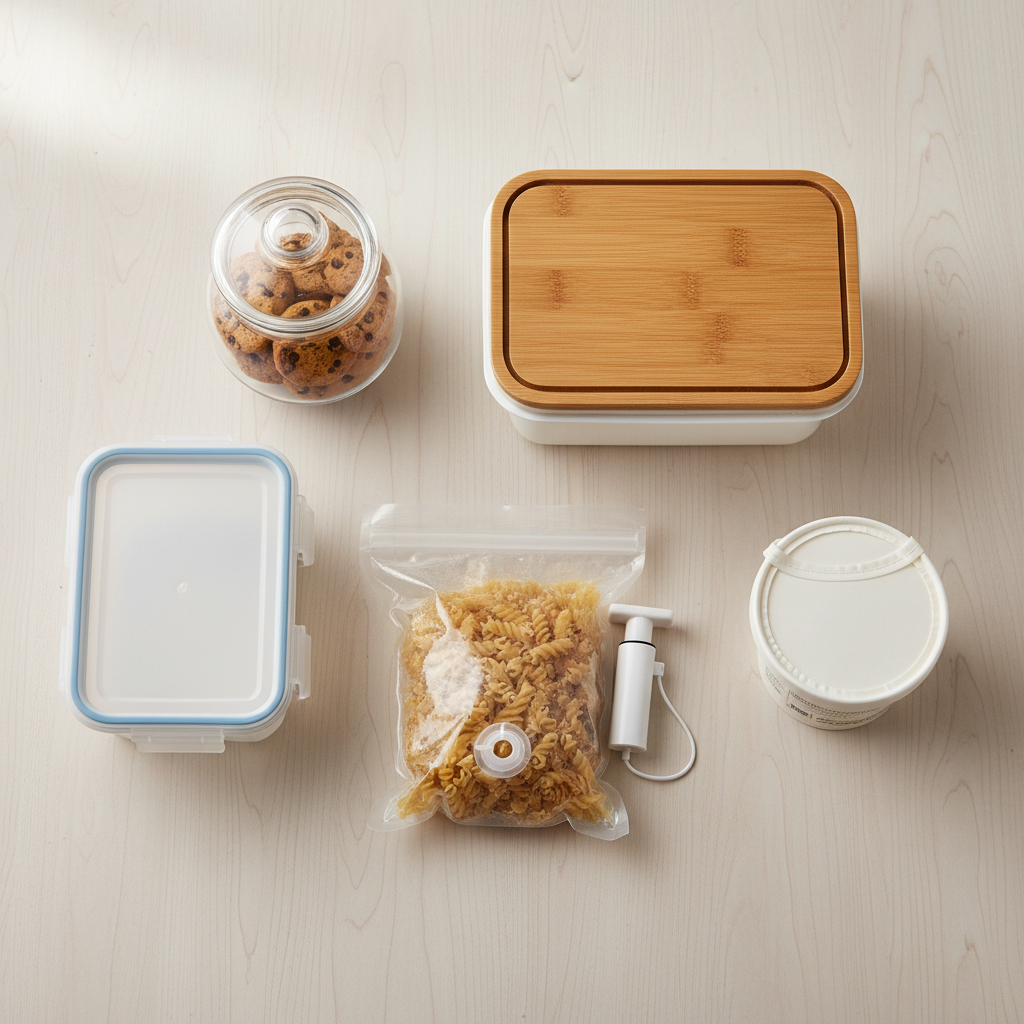
Pet stores will try to sell you "specialised pet food containers" at RM80-150. They're nice but not necessary. Here's the honest hierarchy:
| Container Type | Cost | Airtight Rating | Best For |
|---|---|---|---|
| Vacuum-seal storage bag with hand pump | RM45-80 | Excellent | Long-term sealed bag storage (months) |
| Lock & Lock 10L rectangular | RM35-50 | Excellent | Active-use opened bag |
| Pet-branded food container 15-25L | RM80-150 | Very Good | Premium option, scoop included |
| Glass cookie jar with gasket | RM30-60 | Excellent | Decorative, kitchen-friendly |
| IKEA SOCKERBIT 60L | RM39 | Good | Storing 4-6 sealed bags together |
| Reused ice cream tub 4L | Free | Good | Short-term backup container |
What to look for when buying:
- Silicone gasket on the lid. Hard plastic-on-plastic seals fail in Malaysian humidity within 6-8 months.
- BPA-free polypropylene or food-grade glass. Cheaper PVC tubs leach plasticisers when in contact with starchy materials over time.
- Opaque, not clear. Light slowly degrades organic pellets. If you only have clear containers, store them in a dark closet.
- Squat and wide, not tall and narrow. Pellets at the bottom of a 50cm-tall narrow bin compress under their own weight; squat containers preserve pellet integrity.
Signs Your Stored Litter Is Still Fine
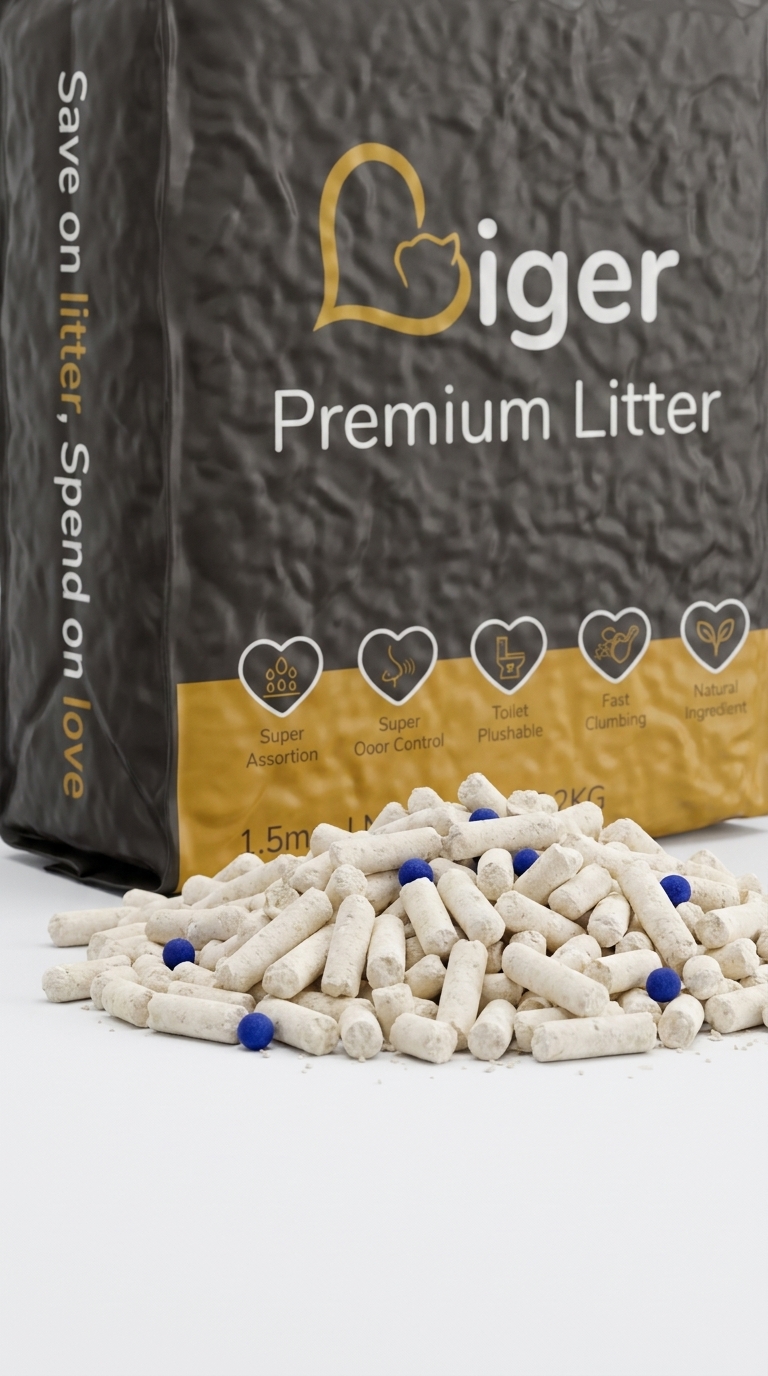
A monthly 60-second inspection prevents 95% of catastrophic losses. Here's what a healthy stored bag looks like:
- Bag feels firm when squeezed — not soft or pillowy (soft = moisture-saturated pellets sticking together).
- No condensation visible on the inside surface of the bag.
- Pellet shape audible when you shake the bag — a crisp, dry rattling sound. Muffled or quiet = absorbed moisture.
- Original cereal-like scent when you open a fresh bag. Sweet/sour fermented smell = throw it out.
- No insect activity in or around the storage area. Pantry moths and weevils love starch.
Run this check the first weekend of every month. Put a recurring reminder in your phone. Three minutes, zero litter wasted.
When to Cut Your Losses
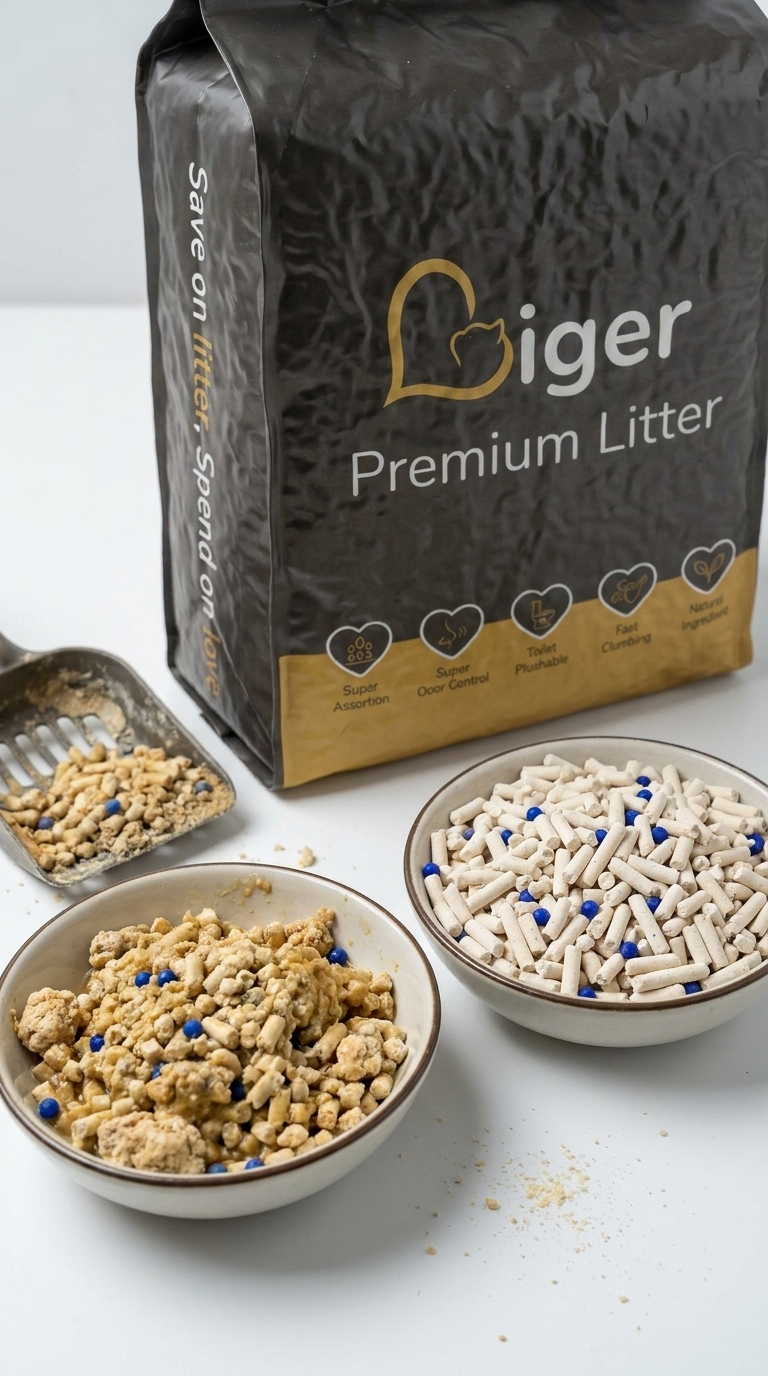
If you discover one bag has gone bad in your 10-pack stash, do not panic — but do act fast. Mould spores spread by air. One contaminated bag in a sealed storage bin will contaminate the other bags within 2-3 weeks.
Procedure:
- Remove the suspect bag, double-bag it in trash plastic, and dispose of it outside the home immediately.
- Wipe down the storage container with a 1:10 vinegar-water solution. Let dry completely (use a fan, don't leave it damp).
- Inspect every remaining bag individually. Run the sensory check on the next two bags you open.
- Reset your storage approach — likely you have a humidity issue, not a manufacturing issue.
For full diagnostic detail on what spoiled tofu litter looks, smells, and feels like, the spoilage identification guide walks through every failure mode with reference photos.
Bulk-Buyer's Storage Quick Reference
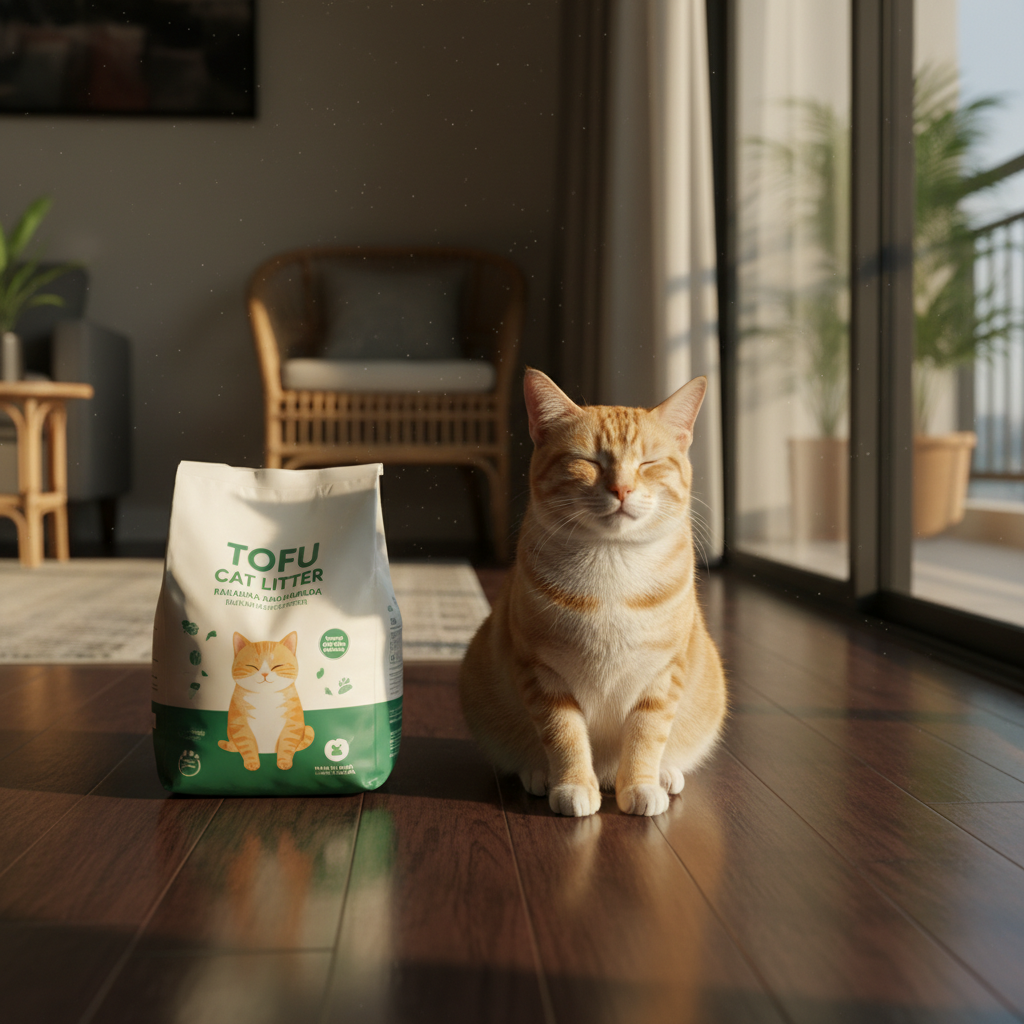
If you bought the 10-pack at RM169 (free West Malaysia shipping), here's your one-page action plan:
| Day | Action |
|---|---|
| Day 0 (delivery) | Number bags 1-10. Write purchase date. Inspect for damage. Move all to bedroom closet or under-bed bin. |
| Day 1-30 | Use existing litter. Don't open new bags. Check storage spot RH weekly (cheap hygrometer). |
| Day 30 (open Bag #1) | Decant entire bag into airtight container immediately. Add silica gel pack. |
| Day 30-60 | Monthly inspection of sealed bags. Replace silica gel packs every 6 weeks. |
| Day 60 | Open Bag #2 (oldest first — FIFO). Sensory check the pellets before pouring. |
| Day 75 | Mid-stretch checkpoint on Bags #3-#5. Smell, look, feel. |
| Day 90-180 | Continue FIFO rotation. Re-order when 3 bags remain (avoid running out). |
At one cat, 10 packs typically lasts 9-12 months. At three cats, expect 3-4 months. Use the litter calculator to dial in your exact reorder cadence, and compare against alternatives on our cheapest-per-kg comparison if you're still validating the bulk-buy economics.
FAQs
How long does unopened tofu cat litter last in Malaysia?
Stored properly (cool, dry, sealed) — 12-18 months from manufacture date. The factory nitrogen-flushed seal is excellent. Stored badly (bathroom shelf, kitchen floor) — as little as 4-6 months before pellets start absorbing ambient humidity through the seal seam.
Does the original Liger bag count as airtight?
While sealed, yes. The factory heat-seal is excellent. Once you've opened it and re-clipped or rubber-banded it, no — the polyethylene resists vapour transmission but the opening doesn't reseal. Decant into a proper airtight container the same day you open it.
Should I refrigerate cat litter to extend its shelf life?
No. Refrigeration creates condensation when you remove the bag back into room temperature — moisture droplets form on cold pellets and accelerate spoilage. Room-temperature storage at 25-27°C with low humidity is ideal. Treat it like flour, not like cheese.
How many silica gel packets do I need for a 10-pack?
One 30g packet inside each active-use decanting container, plus 3-5 packets sprinkled around the area where sealed bags are stored. Total cost: about RM10-15 for a year's supply from any baking-supplies shop. Re-dry packets in the oven (100°C, 90 minutes) when they feel heavy or stop rattling.
Can I store opened tofu litter in a vacuum-sealed bag?
Yes, and it's arguably the best long-term solution. Vacuum sealing removes the ambient air entirely, slowing oxidation and preventing moisture transfer. A hand-pump vacuum storage system (about RM45-80) pays for itself the first time it saves you from discarding one bag.
Will my cat refuse litter that's been stored for 8 months?
If the litter is still structurally sound — hard pellets, no off-smell, normal colour — cats generally don't notice storage duration. Cats reject litter that smells different, which is why proper storage matters: it preserves the neutral cereal-like scent they're used to. Cornell Feline Health Center research on house-soiling confirms scent change is a leading trigger for litter rejection.
Is it safe to mix old and new tofu litter in the same tray?
If both are still in good condition (no mould, no off-smell), yes. In fact, blending a thin layer of new pellets on top of slightly older base layer is the recommended maintenance approach for cost efficiency. Never mix questionable old litter with fresh — one suspect bag will contaminate the rest.