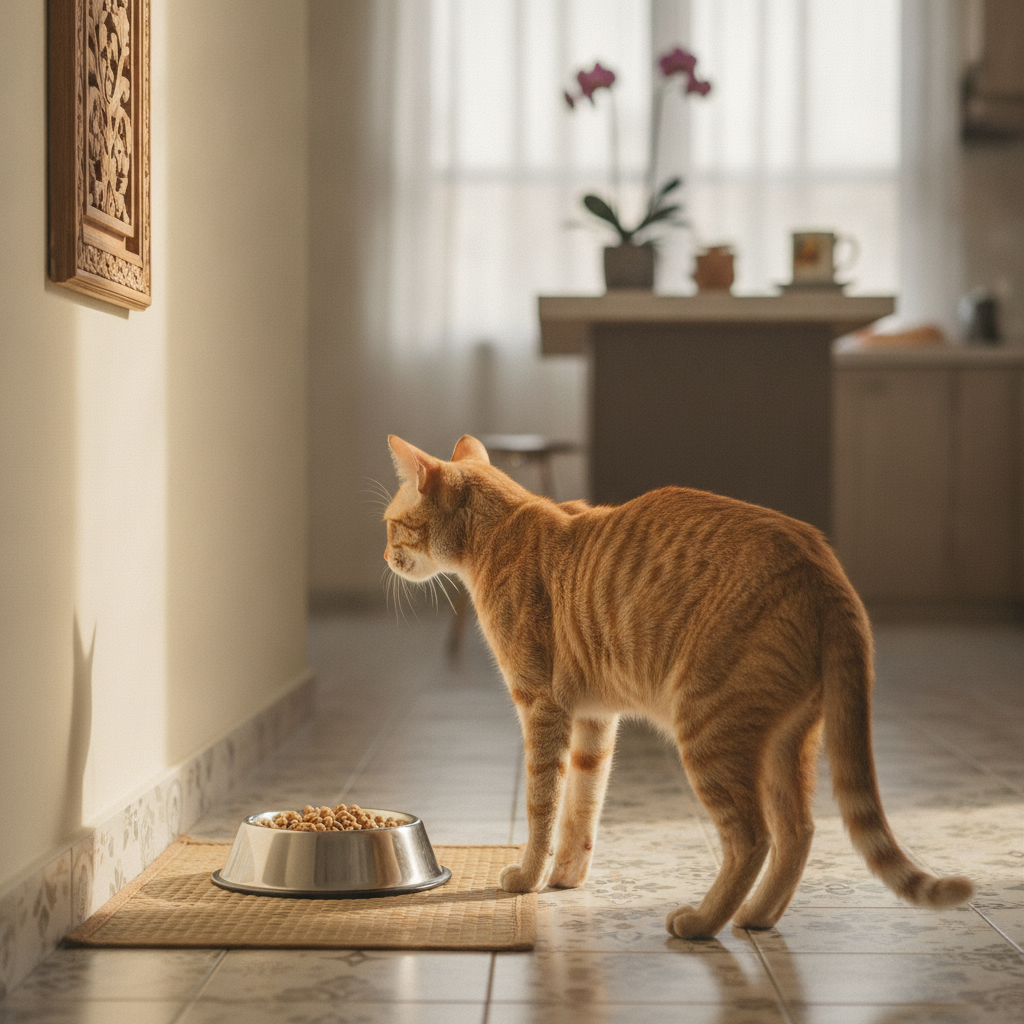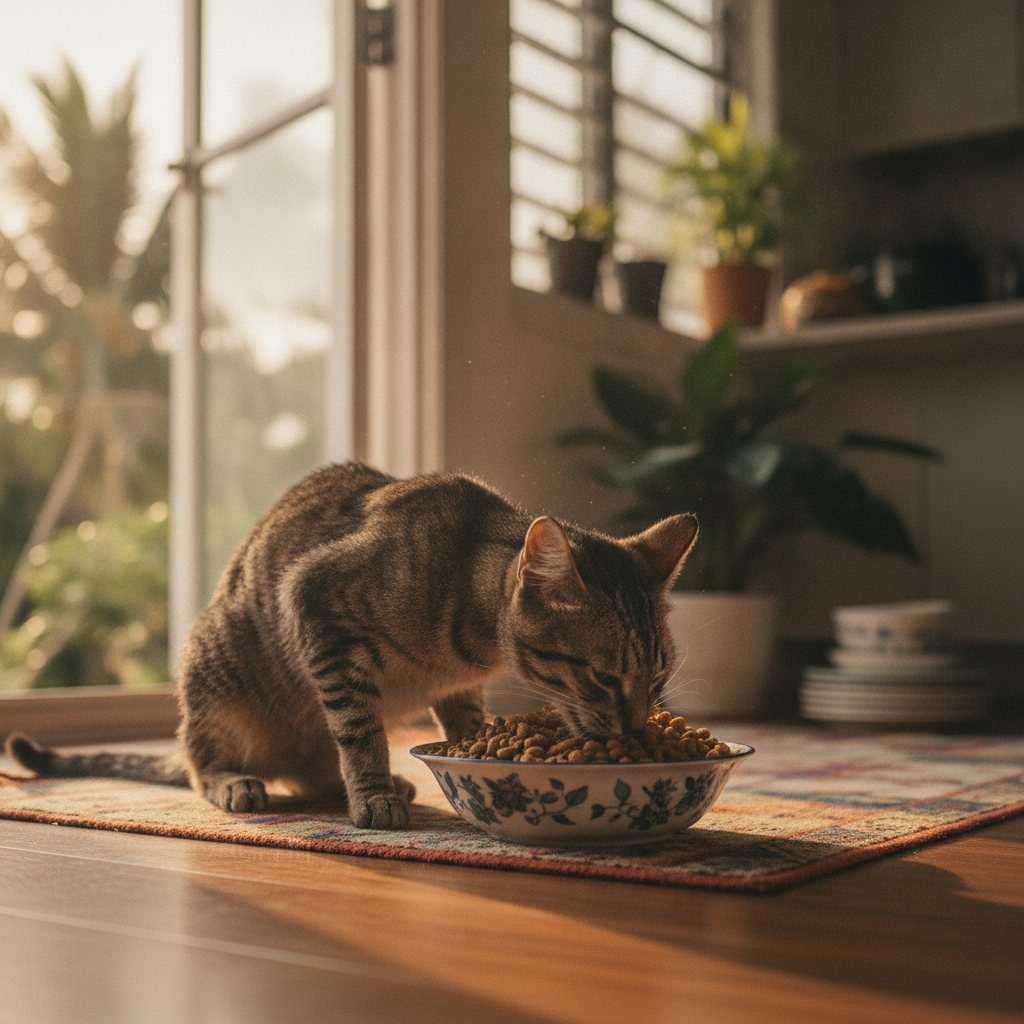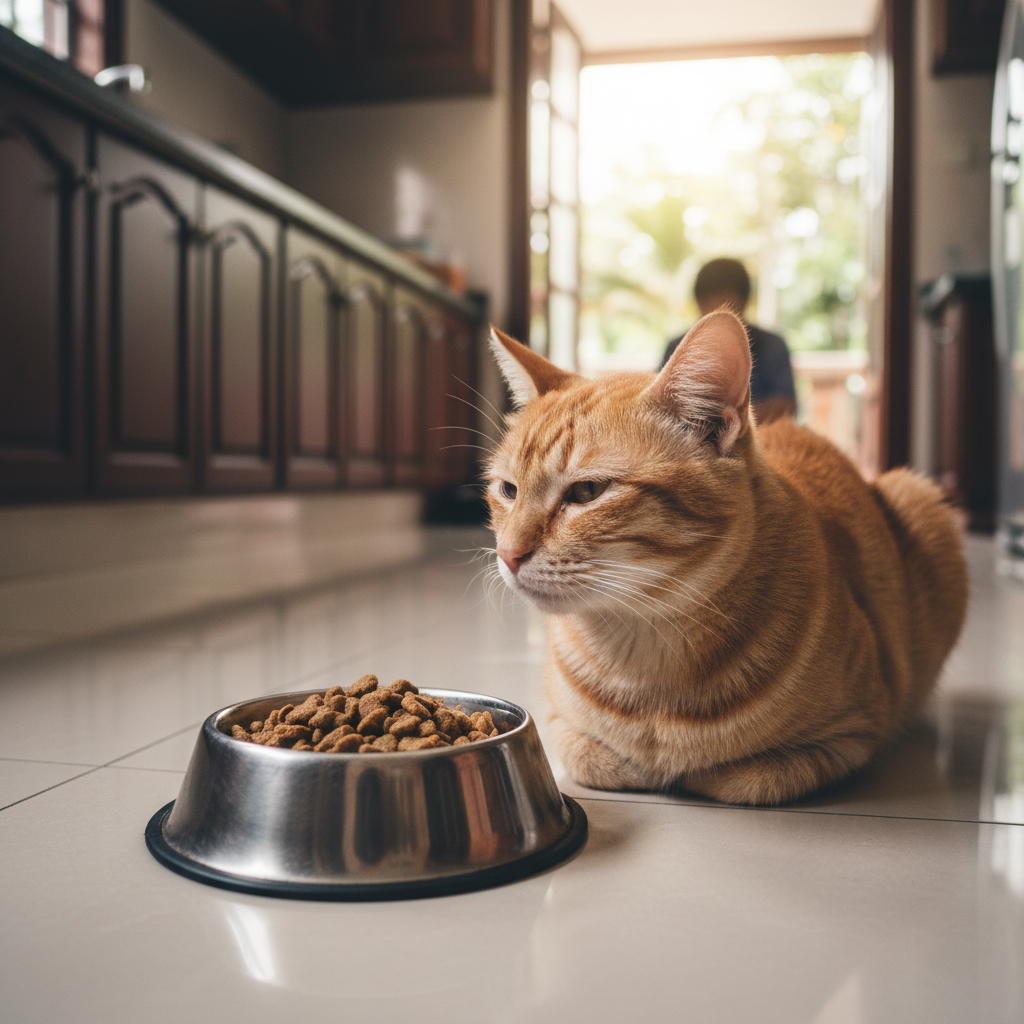
Your cat sniffs its dinner, gives you a look, and walks away. You shrug — maybe it's just being fussy. But here's the thing every cat parent needs to burn into their memory: a cat that stops eating is not the same as a dog or a human skipping a meal. In cats, going without food is genuinely dangerous, and it can spiral into a fatal condition in a matter of days. This isn't scaremongering — it's feline physiology. So before you wait it out, read this. We've had scares with our own four (Tiger, Lion, Ping'An and Lucky), and 'wait and see' is the one mistake you don't want to make here.
Don't Wait: Why a Cat Not Eating Is an Emergency
When any animal stops eating, the body starts breaking down fat stores for energy. In most species that's fine. But a cat's liver is uniquely bad at processing a sudden flood of fat. When a cat doesn't eat, fat mobilised from its body overwhelms the liver and gets stored in the liver cells, clogging the organ — a condition called hepatic lipidosis, or fatty liver syndrome. It causes the liver to fail, and it can be fatal if not caught and treated.
The terrifying part is how fast it starts. A cat typically only needs to go three to four consecutive days of little or no eating for the process to set in — and it's even faster and more likely in cats that were overweight to begin with (which, in Malaysia's apartment-cat population, is a lot of cats). That's why 'my cat hasn't eaten in a few days, should I worry?' has a clear answer: yes, urgently. Appetite loss is not a symptom to monitor casually; it's a clock ticking.
How Long Is Too Long? The 24-48 Hour Rule
So how long can you reasonably wait? Use this as your guide:
- Adult cat, 24 hours of eating nothing: start paying close attention. Note when it last ate, whether it's drinking, and any other symptoms.
- Adult cat, 36-48 hours: call the vet. Don't push past two full days of total refusal.
- Kittens, senior cats, overweight cats, or cats with a known illness: the window is much shorter. A kitten that won't eat needs a vet the same day — they have tiny reserves and can crash fast.
- Eating much less than normal (not zero, but clearly reduced) for several days: also worth a vet visit. Partial appetite loss still counts.
One important nuance: a cat that's drinking water but not eating is still in danger — water doesn't prevent fatty liver. And a cat that suddenly seems hungry but can't or won't actually swallow food (drops it, cries at the bowl, paws its mouth) often has a painful problem and needs checking too.
Why Cats Stop Eating: The Common Causes
Here's the key fact that should send you to the vet rather than playing detective forever: in more than 90% of cases, appetite loss is caused by an underlying medical problem. It's a symptom, not the disease. The usual culprits:
- Dental pain. One of the most common and most missed. A painful tooth, resorptive lesion, or inflamed gums makes eating hurt, so the cat avoids food — especially hard kibble. (Our guide on cat bad breath covers the dental warning signs.)
- Nausea and tummy trouble. Kidney disease, an upset stomach, intestinal issues, or pancreatitis all cause nausea that kills appetite.
- A blocked nose. Cats decide what's edible largely by smell — their sense of smell is around 14 times stronger than ours. A cat with an upper respiratory infection and a stuffy nose literally can't smell its food, so it won't eat.
- Other illness. Hyperthyroidism (though this often increases appetite while the cat loses weight — common in cats over 10), diabetes, infections, pain anywhere in the body, or organ disease.
- Poisoning. Many toxins cause appetite loss; if your cat may have eaten something it shouldn't, that's an immediate vet trip — see our list of human foods toxic to cats.
- Stress and anxiety. A move, a new pet, renovations, or fireworks can put a cat off its food. An ASPCA study found 46% of grieving cats showed a significant drop in appetite. Stress is real, but it's still a diagnosis of exclusion — rule out the medical causes first.
The Malaysian Angle: Heat, Spoiled Food and Fussy Eaters
A few things specific to feeding cats in our climate that can masquerade as 'my cat won't eat':
- Spoiled food. Our heat and humidity turn wet food rancid within an hour or two, and open kibble goes stale (and can grow mould carrying aflatoxins cats are very sensitive to). A cat refusing food might simply be refusing off food. Always offer fresh, and don't leave wet food out for hours.
- Heat suppresses appetite. On very hot days cats naturally eat a little less. Mild reduction in scorching weather isn't the same as total refusal — but don't use the heat to explain away a genuine hunger strike.
- Genuine fussiness vs. a problem. Some cats are picky, and a cat that turns its nose up at a new food but happily eats its old one is being fussy, not sick. If you're mid-switch, slow down — our guide to switching cat food explains how to do it without a hunger strike. The line to watch: a fussy cat still eats something; a sick cat refuses everything.
- The dirty-bowl factor. Cats are clean and smell-sensitive; a smelly, greasy bowl or one placed next to the litter box can put them off. Wash bowls daily and keep food away from the toilet.
What You Can Safely Do at Home

If your cat has only just started refusing food and shows no other alarming signs, you can try gently tempting its appetite while you decide whether it's vet time — but treat these as short-term nudges, not a substitute for veterinary care:
- Warm the food. Gently warming wet food (a few seconds, to body temperature) releases the aroma and can wake up a dull appetite. Smell is everything.
- Offer something strong-smelling and tasty. A little plain boiled chicken, or a topper of a smellier wet food, can coax a reluctant cat. Plain, unseasoned, no onion or garlic.
- Hand-feed or offer in a calm, quiet spot, away from other pets and the litter box.
- Make sure water is available everywhere — check hydration with our cat hydration calculator, since dehydration often rides along with not eating.
What not to do: never force-feed a cat by syringing food down its throat without veterinary guidance (you can cause aspiration), never give human appetite medicines or painkillers (many are toxic to cats), and never try to 'starve them into' eating their proper food — that's exactly how you trigger fatty liver. If tempting doesn't work within a few hours and your cat is into its second day of refusal, stop experimenting and go to the vet.
Red Flags: When to Go to the Vet Now
Skip the home tricks and go straight to the vet — today, or to an emergency clinic — if appetite loss comes with any of these:
- Total refusal of all food for more than ~48 hours (much sooner for kittens, seniors, or overweight cats).
- Vomiting, diarrhoea, or visible yellowing of the gums, eyes, or ears (jaundice — a fatty-liver warning sign).
- Lethargy, hiding, or collapse; a cat that's gone quiet and flat.
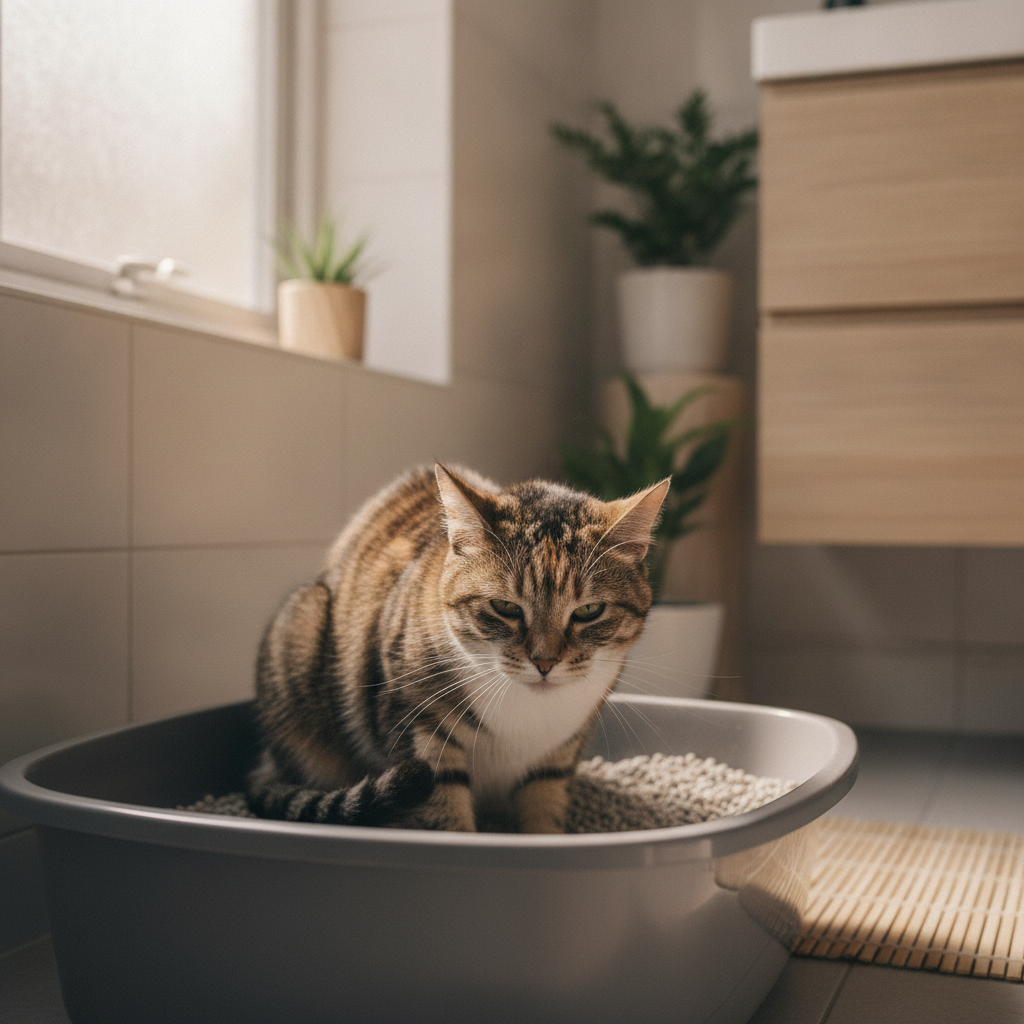
- Not using the litter box normally — especially a male cat straining to pee (a possible blockage, which is a separate emergency), or no stool at all.
- Drooling, pawing at the mouth, or obvious difficulty eating.
- Known or suspected poisoning, or access to something toxic.
The bottom line is simple and worth repeating: with cats, 'not eating' is never just stubbornness to wait out. The clock to fatty liver starts within days, and the cause is medical more than 90% of the time. Tempt gently for a few hours if your cat is otherwise bright, but set a hard limit — and when in doubt, the vet visit that turns out to be 'just a fussy day' is far cheaper than the one you left too late. For the bigger picture of spotting illness early, our guide to the warning signs your cat is sick is worth keeping bookmarked.