For most cats, the carrier is the thing that appears right before the worst day of their month — the vet trip. Pick the wrong one and every visit starts with a wrestling match, a stressed cat, and a real temptation to skip the appointment altogether. Pick the right one and you've quietly removed the single biggest source of vet-day drama.
This is a guide to choosing the carrier — the features that veterinary behaviour science says actually matter. Teaching your cat to love it is a separate (and equally important) job we cover in stress-free vet visits: how to carrier-train your cat. The best carrier in the world still needs that training; but the right carrier makes the training far easier.
Hard-Sided or Soft-Sided? Match It to the Trip
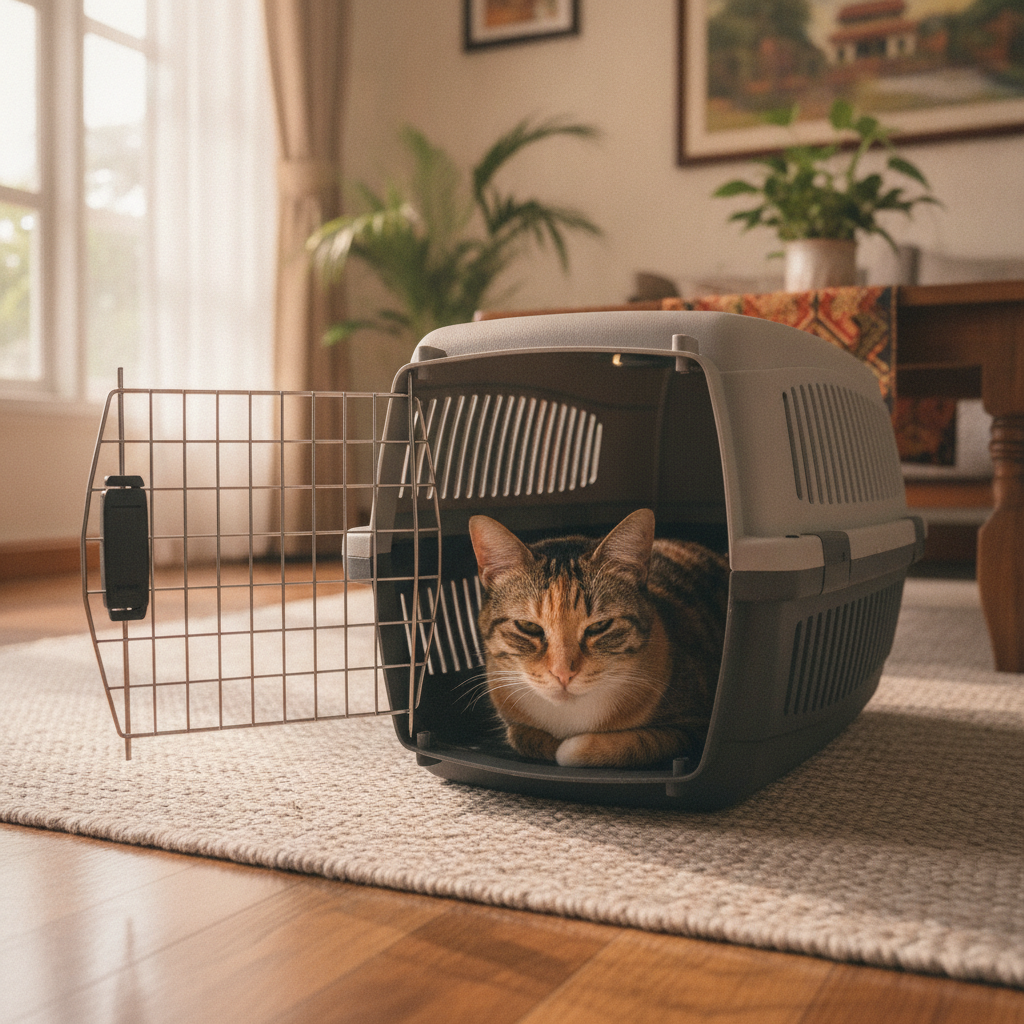
The first fork in the road is structure, and the right answer depends on what you're doing. For vet visits and car travel — which is 95% of a Malaysian cat's life — a hard-sided plastic carrier wins. It protects the cat in the car, can be seat-belted in place, and — crucially — wipes clean and disinfects if your cat pees or vomits on the way (it happens, often). Veterinary groups overwhelmingly favour hard carriers for clinic trips.
Soft-sided carriers earn their place for one job: in-cabin air travel, where they need to squash under the seat in front of you. They're light and packable, but a determined cat can claw or chew the mesh, urine soaks into the fabric and is a nightmare to clean, and they offer less crash protection. If you buy soft, look for a waterproof base and a removable, machine-washable liner so a mid-journey accident doesn't ruin it. If you fly with your cat, you may own both. If you don't, a good hard-sided carrier is all you need.
Whichever you choose, ventilation is non-negotiable in our heat. Look for openings on at least two or three sides so air actually crosses through, not a single mesh panel on the door. Good airflow keeps the cat cool in a stationary car and reduces the panicky, stuffy feeling that ramps up stress on a slow KL traffic crawl.
The One Feature Vets Beg You to Buy: A Removable Top
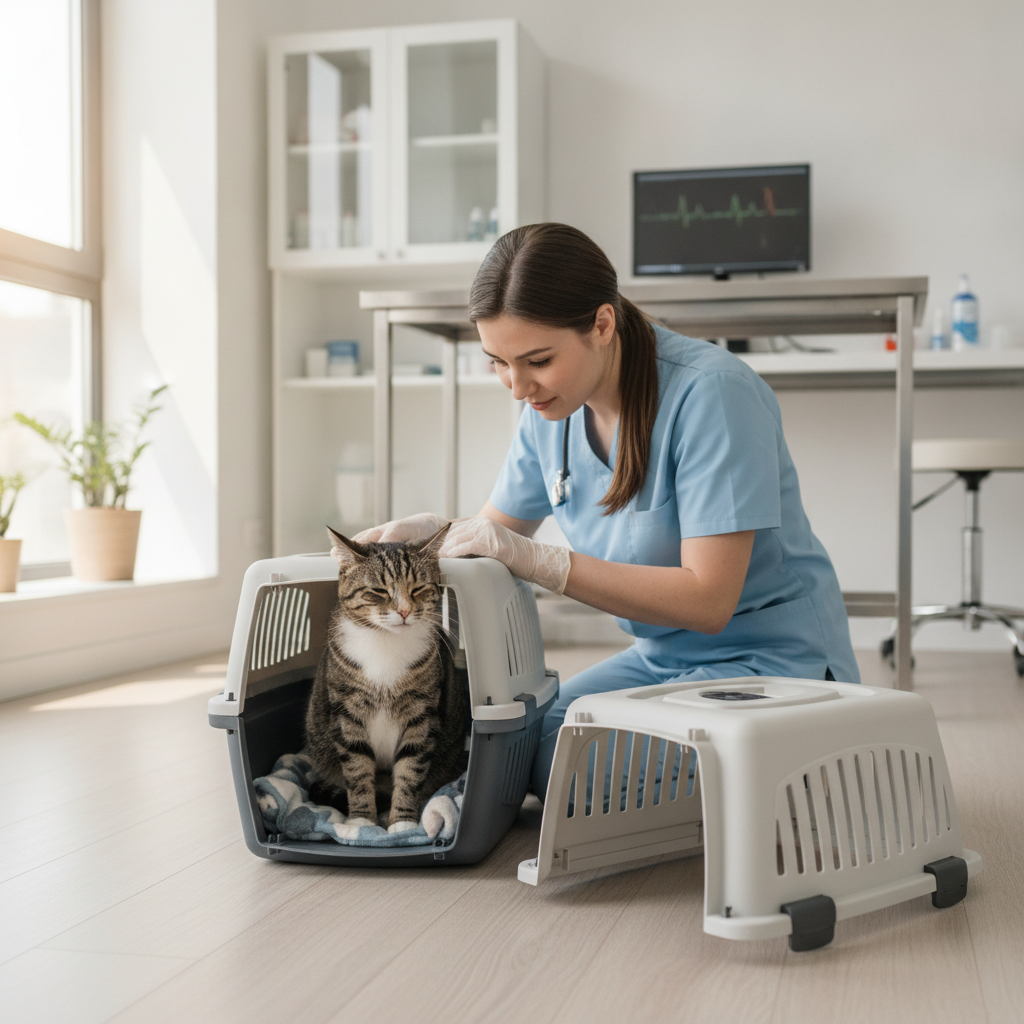
If you remember nothing else, remember this: buy a carrier whose top half comes off entirely. This single feature is endorsed by the American Association of Feline Practitioners (AAFP) and International Cat Care, and it changes the entire vet experience.
Here's why. Forcing a frightened cat headfirst into a front-only door is, in the cat's mind, a predatory move — it splays its legs and fights. Worse is the other end: at the clinic, dragging or tipping a terrified cat out of a front door starts the exam in pure defence mode, raising the odds of bites, scratches and a cat that fears the vet even more next time. A removable top flips the script. You gently lower the cat in at home, and at the clinic the vet can simply lift the lid off and examine, vaccinate, even draw blood while the cat sits in the familiar, home-smelling base. If the cat gets agitated, the top goes back on — far safer than shoving it back through a hole. Top-loading or a wide top zip is good; a fully removable top is the gold standard. Avoid two-part shells held together by a dozen fiddly screws — you want clips you can pop in seconds.
Getting the Size Right (Bigger Isn't Safer)
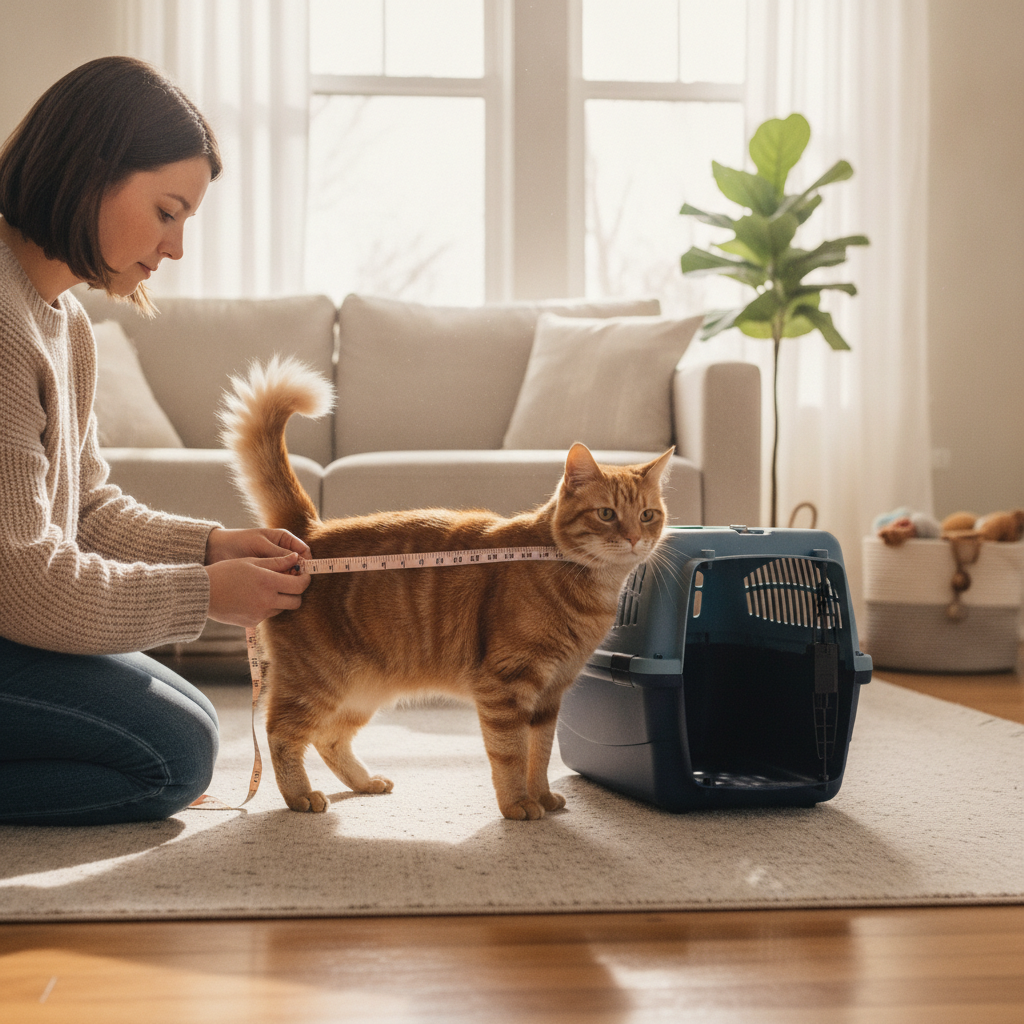
The widely used rule of thumb: a carrier should be about 1.5 times the length of your cat, measured nose to base of tail. That's enough room to stand up, turn around and lie down — and no more. It's tempting to think roomier is kinder, but an oversized carrier is genuinely less safe: in a braking or cornering car, a cat in a too-big box gets thrown around and feels insecure, while a snug carrier holds it steady and den-like. Measure your cat before you buy; don't guess from the picture on the box. Kittens grow fast, so size for the adult cat or be prepared to upgrade. For very large breeds like Maine Coons, double-check the internal dimensions rather than trusting a vague "large" label, since many off-the-shelf carriers are built for an average 4–5 kg cat and leave a big cat cramped.
Latches, Zips and Crash Safety: The Details That Fail
Carriers usually fail at their weakest joint. On hard-sided models, the cheap plastic snaps that hold the two halves together can go brittle and pop — look for versions assembled with metal screws/bolts, and a door latch that's a squeeze or dial type rather than a simple slide a clever cat can nudge open. On soft-sided models, the zipper is the escape hatch: cats hook a claw into a standard zip pull and work it open, so locking zippers that clip shut are essential.
One sobering note from veterinary travel-safety sources: independent crash testing finds many carriers — hard shells and soft alike — fail on impact, with shells cracking and zips bursting. A handful of carriers carry independent crash-test certification; if you drive a lot with your cat, it's worth seeking one out. No carrier replaces careful driving, but for car travel always secure the carrier with a seat belt on the floor behind a seat or strapped in, never loose on a lap or seat. A loose carrier becomes a projectile in a crash.
One last detail that's easy to overlook: material safety and cleaning. Hard plastic shells are non-porous and take a pet-safe disinfectant well, which matters when one cat brings home something contagious. For fabric carriers, look for durable, non-toxic textiles — some carry certifications confirming they're free of harmful chemicals — and confirm the whole liner lifts out for a proper machine wash. A carrier you can actually clean is one you'll keep using for a decade.
Flying With Your Cat: Airline and IATA Basics
Air travel adds a second rulebook. The International Air Transport Association (IATA) sets baseline welfare standards — the carrier must let the cat stand, turn and lie down, be securely built and well ventilated — but IATA does not certify any specific brand, and your airline always has the final say. Check your exact airline's website before buying.
For in-cabin travel the carrier must fit fully under the seat in front, so soft-sided is usually required; a common (not universal) maximum is around 46 x 28 x 28 cm, but limits vary by airline and even by aircraft, and there's usually a combined cat-plus-carrier weight cap. Demand a leak-proof base and locking zips. And one firm rule from IATA and vets alike: do not sedate your cat for flying — sedatives interfere with temperature regulation and balance and can cause breathing or heart problems at altitude. Acclimatising the cat to the carrier ahead of time is the safe alternative.
Why Skip Backpacks and Slings (Mostly)
Bubble backpacks look adorable on social media, but many feline behaviour experts are cautious about them for genuine transport. The walking motion is jerky and unsettling, the space is often too cramped for a cat to stand or turn, ventilation can be poor, and those clear bubble windows can flood an already-stressed cat with sights and sounds it can't hide from. A cat sitting still in a bubble may look calm but can actually be "frozen" with fear. The nuance: a confident cat specifically trained to it may tolerate a backpack for short outings — but for vet trips and real travel, it's not the tool. When in doubt, default to a stable hard-sided carrier.
A Carrier Is Only Half the Job — Then Comes Home
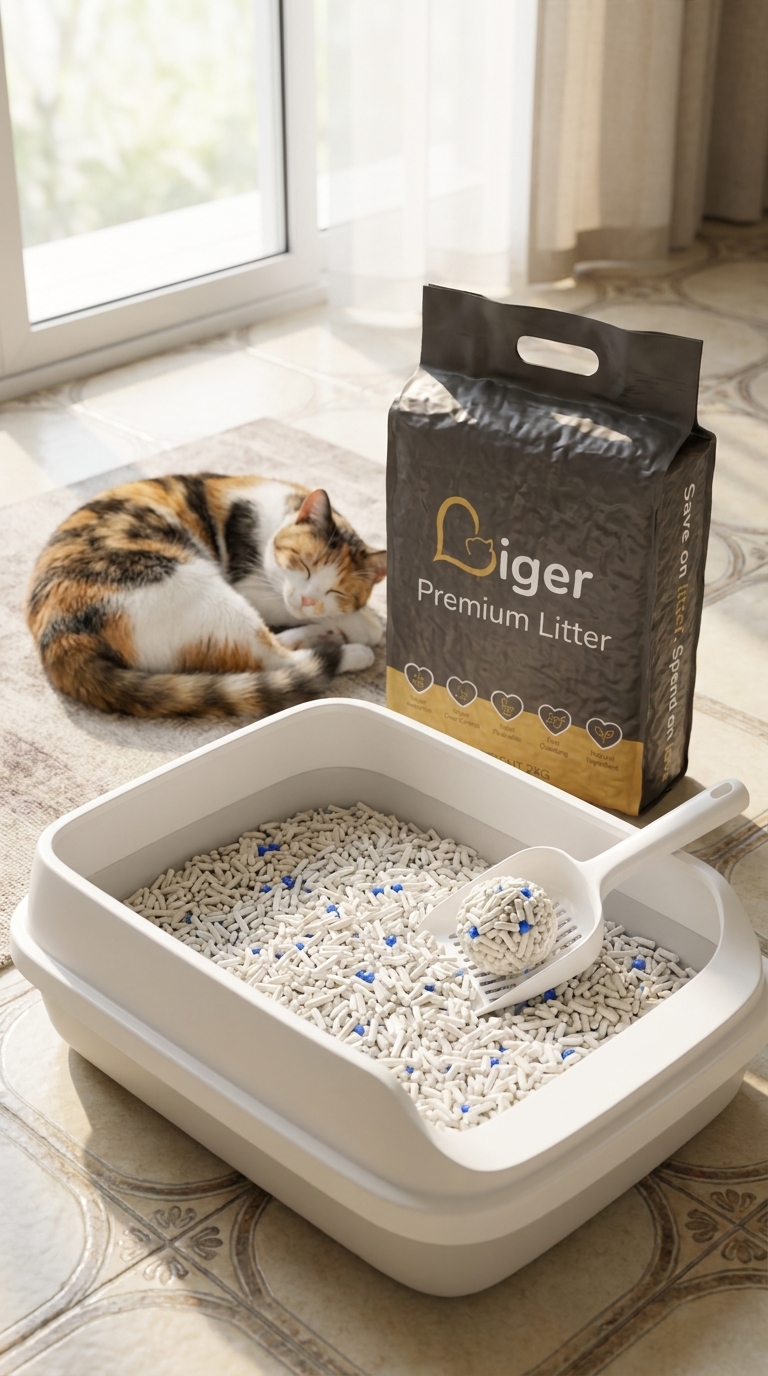
A good carrier gets your cat to the vet calmly; what happens at home matters just as much. Stress from travel and vet visits frequently shows up first in the litter box — a stressed or unwell cat may go outside it, and the litter box is also where you'll spot early warning signs between checkups. So the home setup deserves the same thought you gave the carrier.
Give your cat a correctly sized box (about 1.5x its body length — the same proportion as the carrier; our litter box size calculator sorts it) and a litter that keeps a humid Malaysian home liveable. Liger Premium Tofu Cat Litter is built for exactly that: low dust for sensitive airways, firm clumping that makes spotting changes in urine and stool easy, blue deodorising beads for odour, plus flushable and Halal-friendly. As of 2026 it runs RM21.90 for a 2 kg starter pack up to RM169 for the 20 kg bundle (RM8.45/kg — about 23% cheaper per kilo than singles, free shipping in West Malaysia); the litter calculator shows how long a bag lasts. Setting up for a brand-new cat? Our new cat owner checklist and the full cat essentials buying guide cover the rest of the kit.