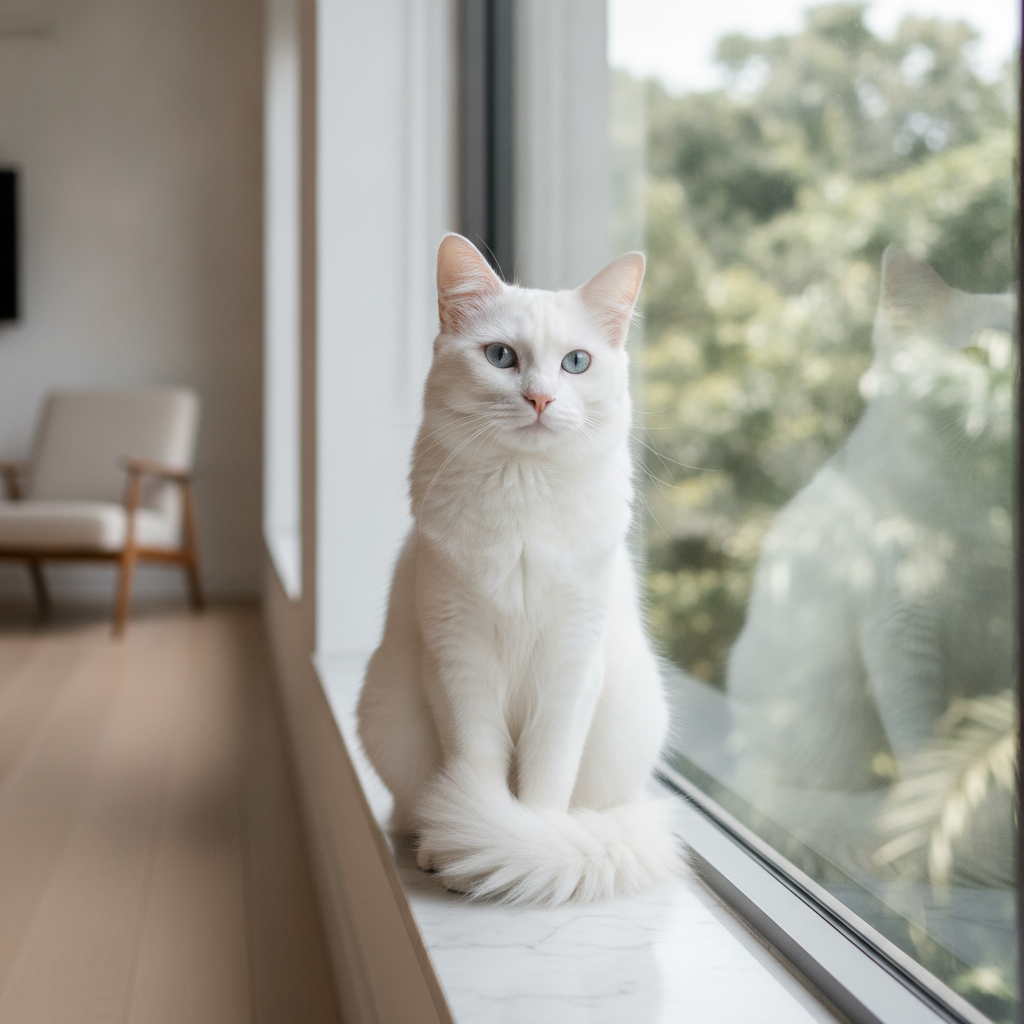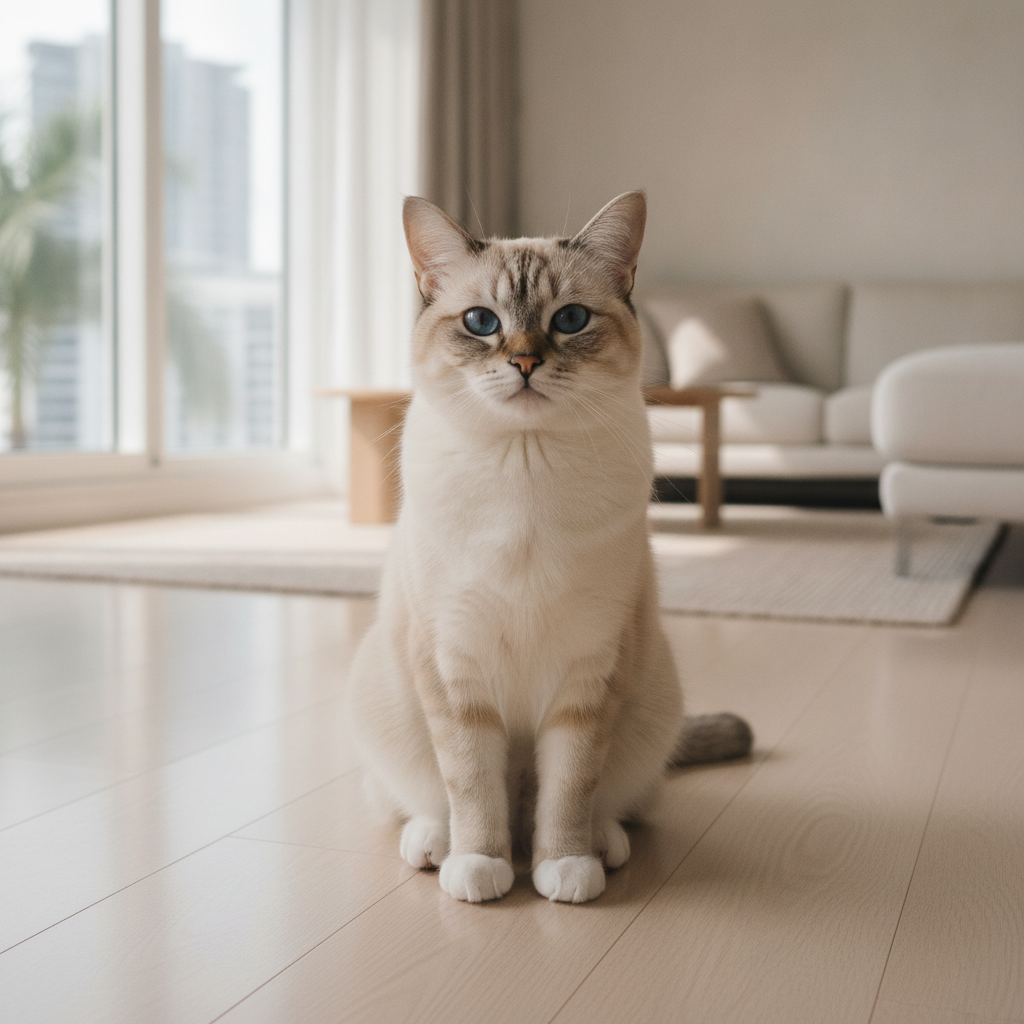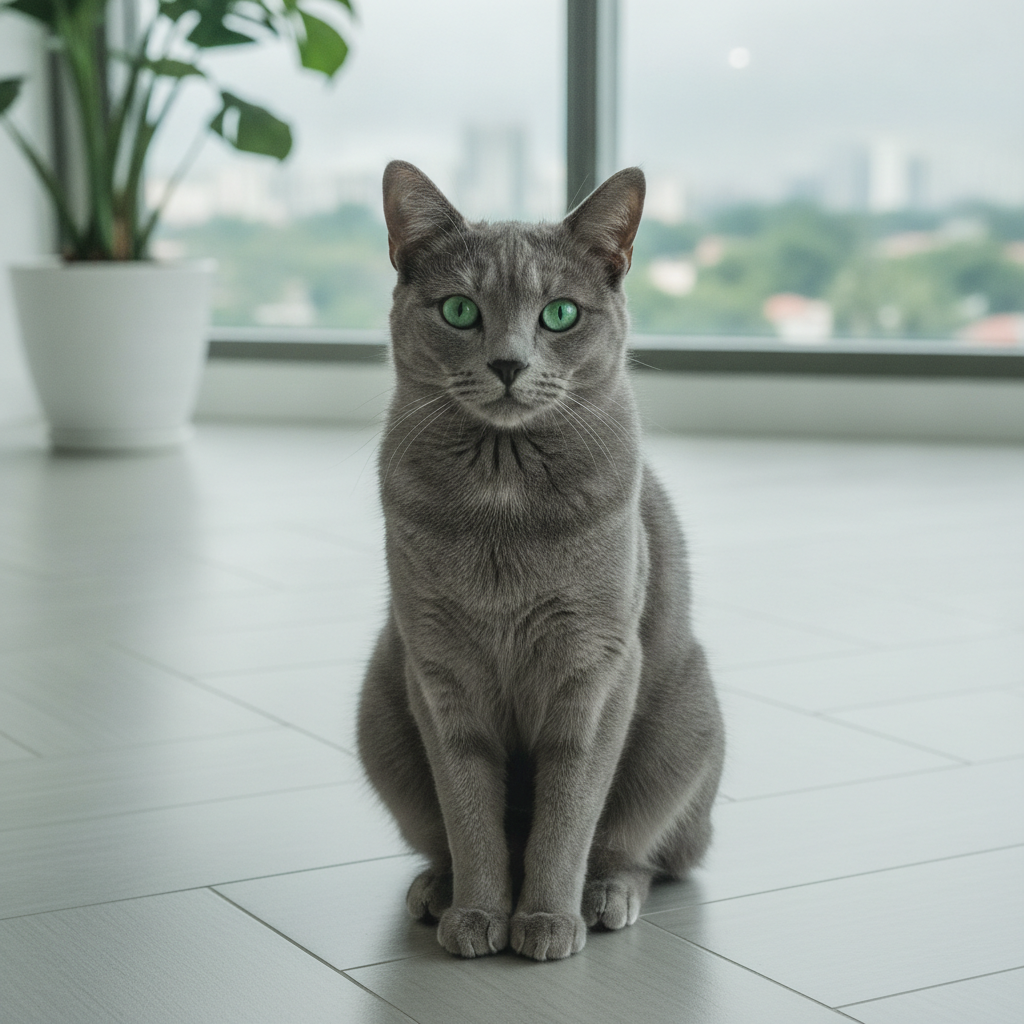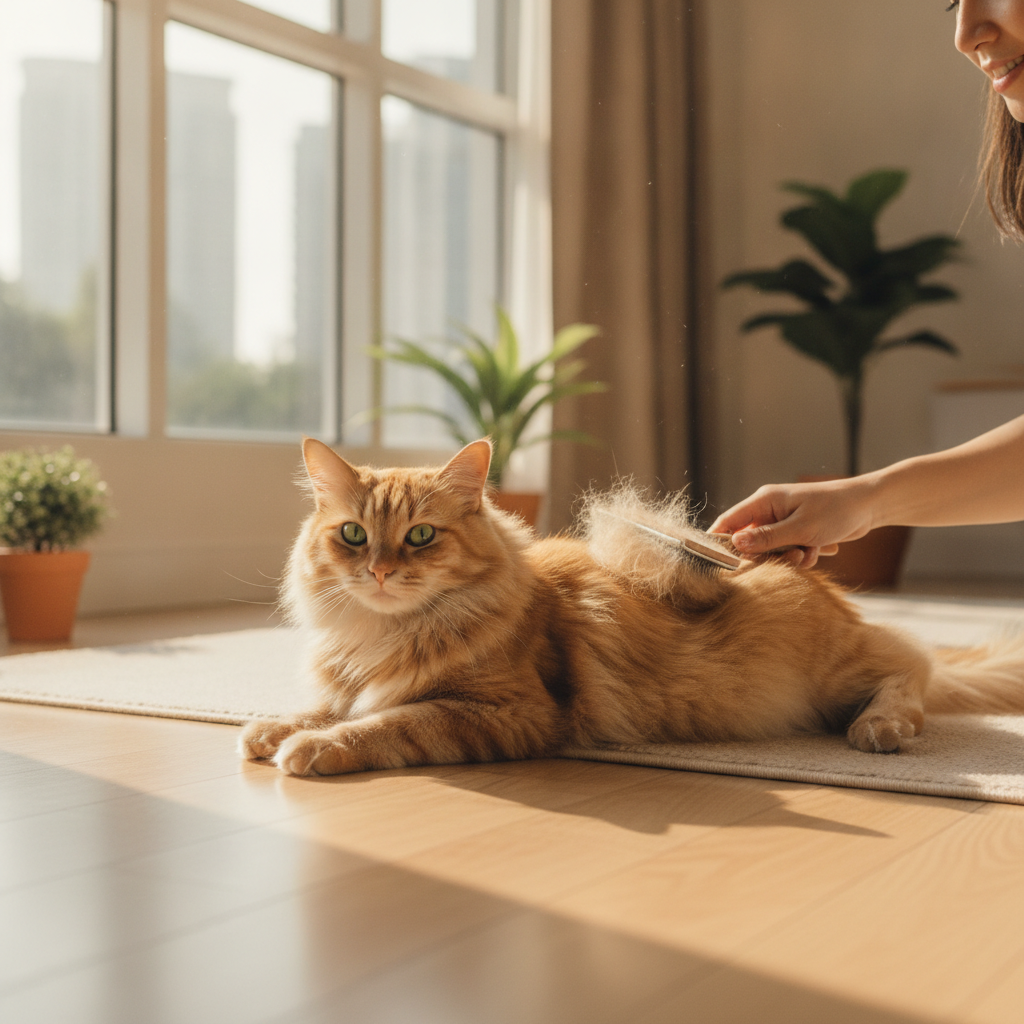
Most of us think of grooming as something cats handle themselves. And mostly, they do — a healthy cat spends up to half its waking hours licking itself clean. So why does your cat still need you? Because the parts a cat can't manage alone — the dense undercoat that mats, the claws that overgrow, the teeth that rot, the eyes that gunk up — are exactly the parts that turn into painful, expensive problems when ignored.
Here's the mindset shift that makes grooming actually worth your time: it's a monthly health MOT, not a beauty session. Every brushing run is a chance to feel for lumps, spot fleas, and catch a skin issue early. This is your complete home grooming guide for Malaysian cat parents — coat by coat, task by task — with links to deeper how-tos for each job. We groom Tiger, Lion, Ping'An and Lucky this way, and it genuinely keeps the vet bills down.
Why Grooming Is a Health Check, Not Just a Beauty Routine
The numbers make the case. Between 50% and 90% of cats over four years old have some form of dental disease, according to figures cited by VCA Hospitals — a condition a simple at-home routine helps prevent. Grooming is where you notice the early stuff: a new lump, a flea-dirt speckle, a tender spot your cat flinches from, a patch of fur that's thinning. Catch these at the grooming mat and they're cheap to fix. Miss them and they become abscesses, infestations, and emergencies. Treat each session as a wellness check and the "chore" suddenly earns its place in your week.
Know Your Cat's Coat: Short, Long, or Double
Your cat's grooming needs aren't arbitrary — they're written into its coat, a leftover from the climate its breed evolved in. A full coat has three hair types: coarse guard hairs (the outer shield), awn hairs (insulation), and soft down hairs (the undercoat, basically thermal underwear).
- Short-haired (most Malaysian "kucing kampung", domestic shorthairs): a single sleek coat that sheds heat well and rarely tangles. Lowest maintenance.
- Long-haired (Persians, ragdolls): long fur that mats fast, especially behind the ears, in the armpits and along the back legs.
- Double-coated (Maine Coons, Norwegian Forest Cats): a dense undercoat built for cold winters — which becomes a liability in a tropical apartment, trapping heat and shedding constantly.
Identify which one you've got, because everything below changes depending on it.
Brushing: How Often and With What (by Coat Type)
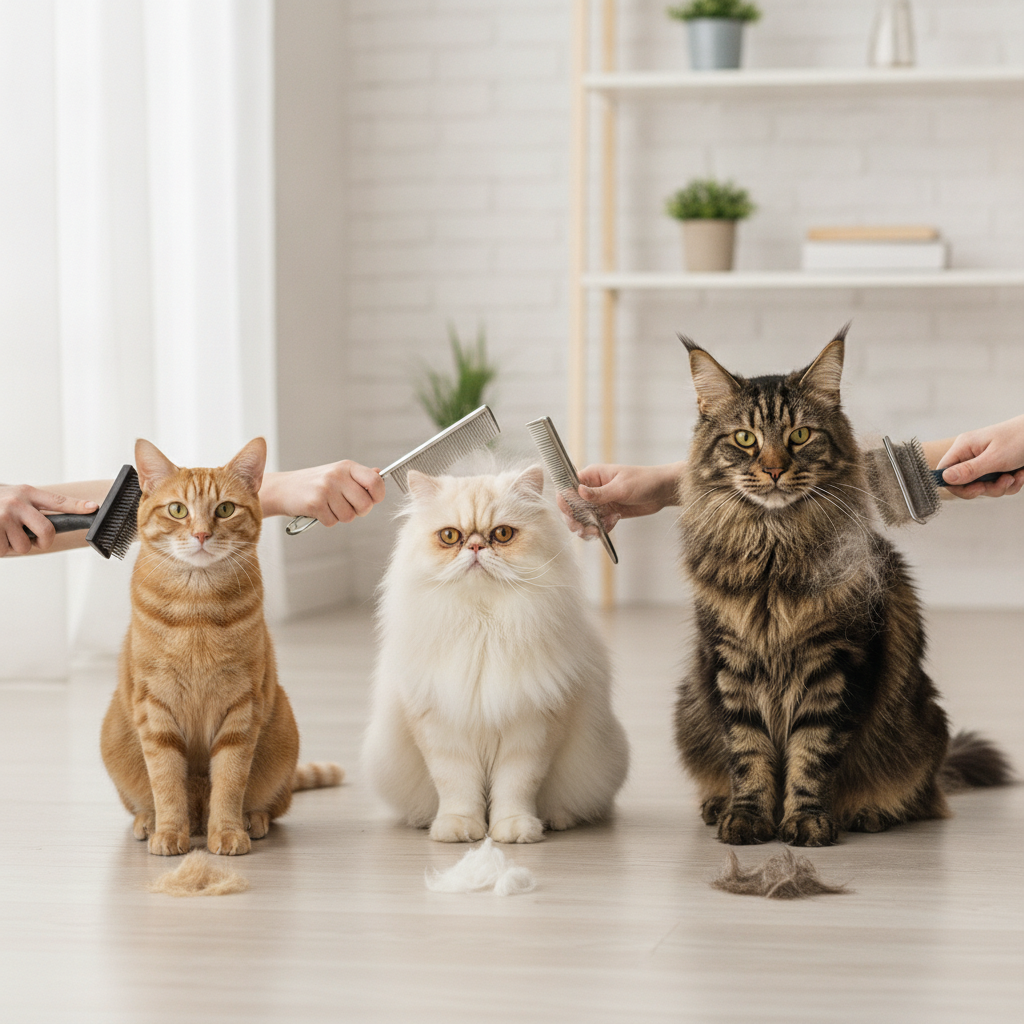
Brushing is the foundation. It removes loose fur (so your cat swallows less and coughs up fewer hairballs), spreads healthy skin oils, and prevents mats. Frequency depends entirely on the coat:
- Short-haired: 1–2 times a week. A metal comb to lift dead fur, then a rubber mitt or bristle brush to grab it. Brush with the grain, head to tail.
- Medium/long-haired: 3–4 times a week, ideally daily. A slicker brush plus a long-toothed metal comb to find hidden knots near the skin. Work upward from the legs and belly.
- Double-coated: about 4 times a week — and daily during shedding peaks — using an undercoat rake that reaches through the topcoat.
Picking the wrong tool is the #1 reason brushing fails. Our full breakdown of cat brushes and deshedding tools by coat type walks through each one, and if your cat is dropping fur all over the sofa, our guide to why cats shed and what to do explains what's normal versus a red flag.
Nails, Ears, Eyes and Teeth: The Head-to-Paw Checklist
Beyond the coat, four small jobs prevent the biggest problems:
- Nails: PetMD recommends trimming every 10–14 days for most indoor cats; more often for less active seniors whose claws can grow into the pad. Our step-by-step on cutting cat nails safely covers the technique. There's more to feet than claws, too — see paw and claw care beyond nail trimming.
- Ears: check weekly, but per VCA, most cats never need ear cleaning — only clean if you see discharge or smell odour, and never with a cotton bud. Head-shaking, redness or dark discharge means vet, not DIY.
- Eyes: wipe away gunk only as needed, inner corner outward, fresh cotton per eye. Full method in how to clean your cat's eyes safely.
- Teeth: daily brushing is the gold standard — and PetMD calls it the single most effective thing you can do at home. Start with our beginner's guide to brushing cat teeth, and book an annual professional clean on top.
The Trickier Jobs: Mats, Anal Glands and Cats Who Hate It
Some grooming tasks are higher-stakes. Mats aren't cosmetic — a tightly matted or "pelted" coat pulls painfully on the skin, traps moisture and parasites, and restricts movement. Never cut a mat out with scissors; feline skin is thin and pulls into the blades far too easily, causing serious lacerations. Learn the safe way in how to de-mat a long-haired cat without hurting them.
Anal glands are the one job most cats never need — unlike dogs, they empty naturally. But scooting and a fishy smell are worth understanding; our guide on cat anal glands and when to see a vet explains why squeezing them yourself is usually a mistake.
And if your cat treats the brush like a weapon, you're not alone. Forcing it only makes the next session worse. The fix is slow desensitisation, covered in how to groom a cat that hates being groomed.
To Bath or Not to Bath?
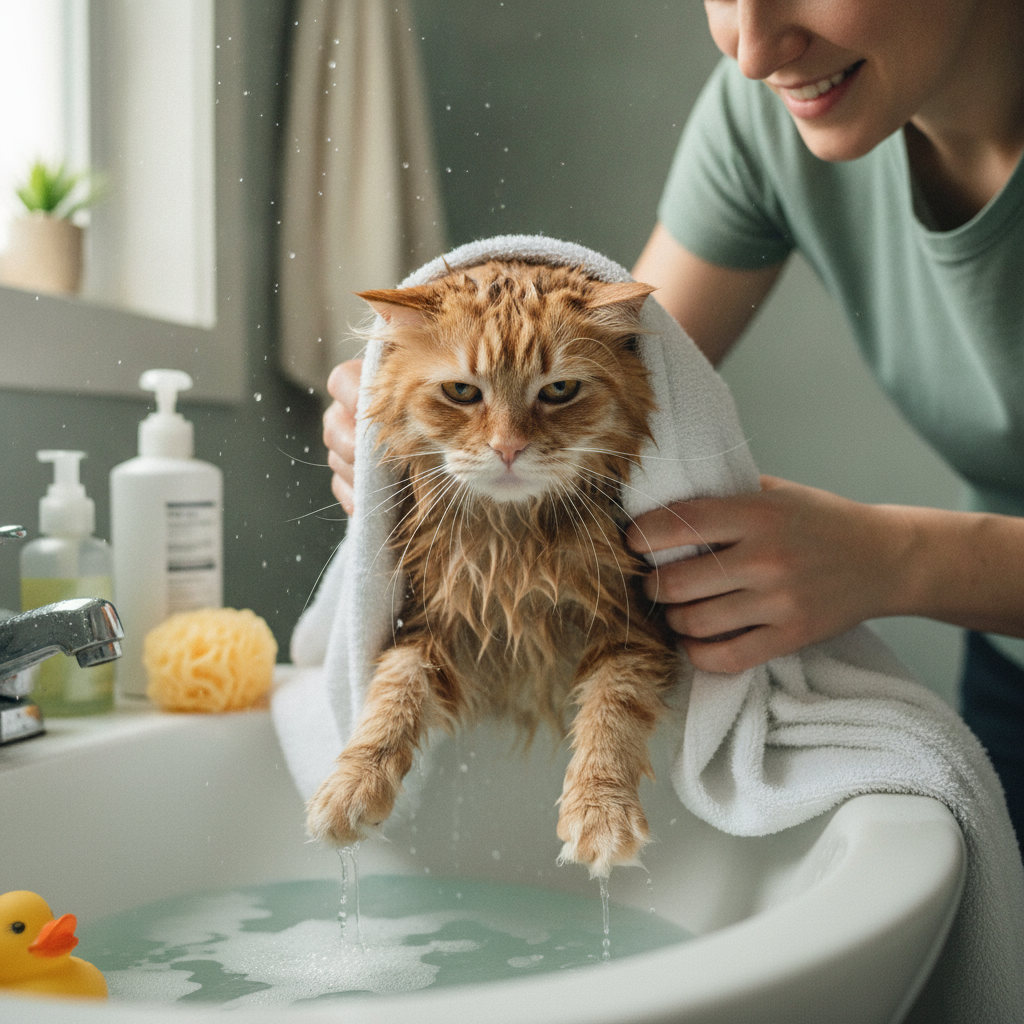
For most cats: don't. As Cats Protection notes, their self-grooming keeps them clean, and over-bathing strips the natural oils that protect their skin, washes off flea treatments, and stresses them badly. Baths are only genuinely needed for specific cases — exposure to a toxic substance, a vet-prescribed medicated wash, a hairless Sphynx (whose skin oils build up with no coat to absorb them, per Texas A&M veterinary experts), or an elderly/arthritic cat that can no longer reach to clean itself. We unpack the full science in why you probably shouldn't bath your cat. For a normal grubby patch, a damp cloth wipe-down beats a full bath every time.
Grooming a Cat in Malaysia's Heat and Humidity
This is where local advice beats generic Western guides. Our climate makes everything harder for long-haired and double-coated cats. High humidity makes loose fur and skin oils clump together, so mats form faster here than in temperate countries. Those mats trap heat and moisture against the skin — a perfect breeding ground for bacterial skin infections and fungal patches.
Heat is the bigger danger. Cats cool themselves poorly (they only sweat through their paw pads), and a heavy coat in 33°C weather pushes long-haired, flat-faced, senior and overweight cats toward heatstroke. Watch for excessive panting, drooling and lethargy — and get to a vet fast if you see vomiting or bright-red gums. The practical defence is simple: brush daily during hot spells to strip the heat-trapping undercoat. A "lion cut" can help chronically matted cats, but a shaved coat loses its UV protection, so limit sun exposure afterwards; a lighter "sanitary trim" around the back end is often enough. Year-round warmth also means year-round fleas and ticks — another reason regular brushing matters, since it's how you spot them first.
One humid-climate trap to watch: persistent discomfort from mats or skin irritation can tip a cat into compulsive over-grooming — licking a patch raw. If you spot bald spots or broken skin, that's a vet conversation, not just a grooming one. And remember the early-detection rule: a well-brushed coat is the easiest place to find the flea dirt, scabs and lumps that humidity-driven skin problems leave behind.
The Other Half of a Clean Cat: Litter Hygiene
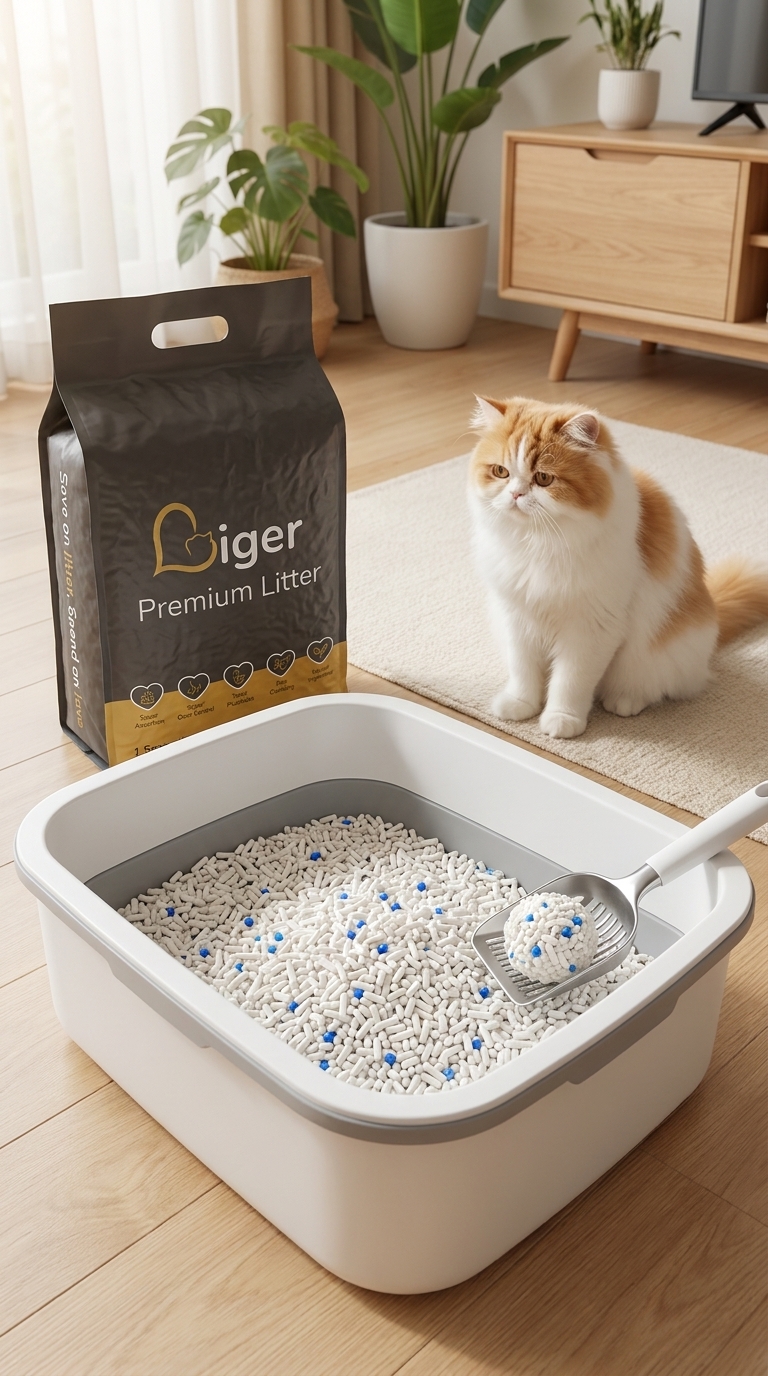
Here's the bit grooming guides skip: half of how clean your cat stays comes down to the litter box. A dusty, poorly-clumping litter coats your cat's paws and belly fur in fine powder every visit — which it then licks off, and which you end up brushing out. A low-dust, firm-clumping litter does the opposite: less mess tracked into the coat, less to groom out, and a cleaner cat overall.
That's why we use Liger Premium Tofu Cat Litter at home. It's a soft, soy-based litter that's low-dust and clumps hard, so paws stay cleaner and the box is quick to scoop — and it's lightly milk-scented and flushable, which matters in a humid Malaysian apartment where odour builds fast. Current pricing (as of May 2026): RM21.90 for a 2kg pack, RM53.90 for 3 packs, RM89 for 5 packs, and RM169 for the 10-pack — that bulk pack works out to roughly RM8.45/kg, with free shipping in Peninsular Malaysia. Use the litter calculator to size it to your household, or compare fines with our dust-level comparison tool. Grooming and a clean litter box are two halves of the same job: a comfortable, tidy, healthy cat.
Start with whichever task your cat needs most, build a rhythm, and treat every session as a five-minute health check. Your cat — and your vet bill — will thank you.