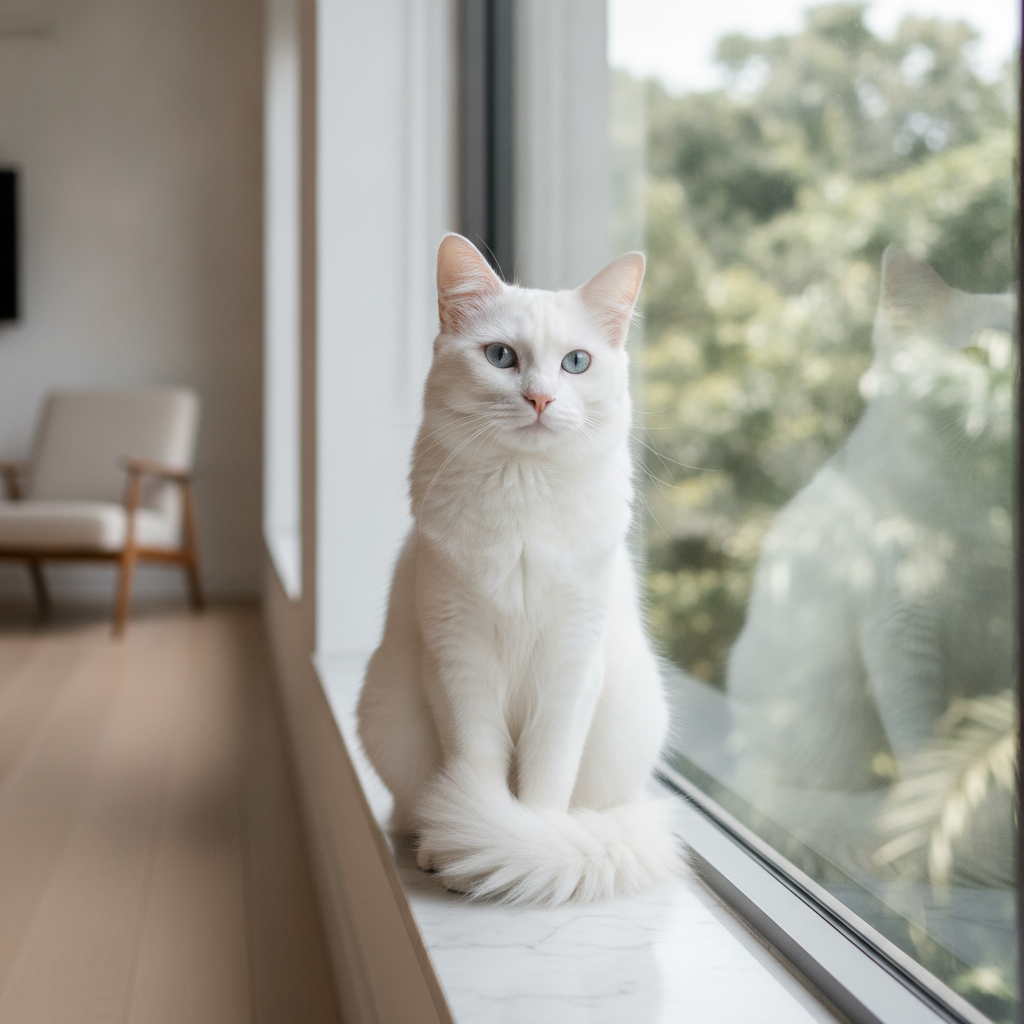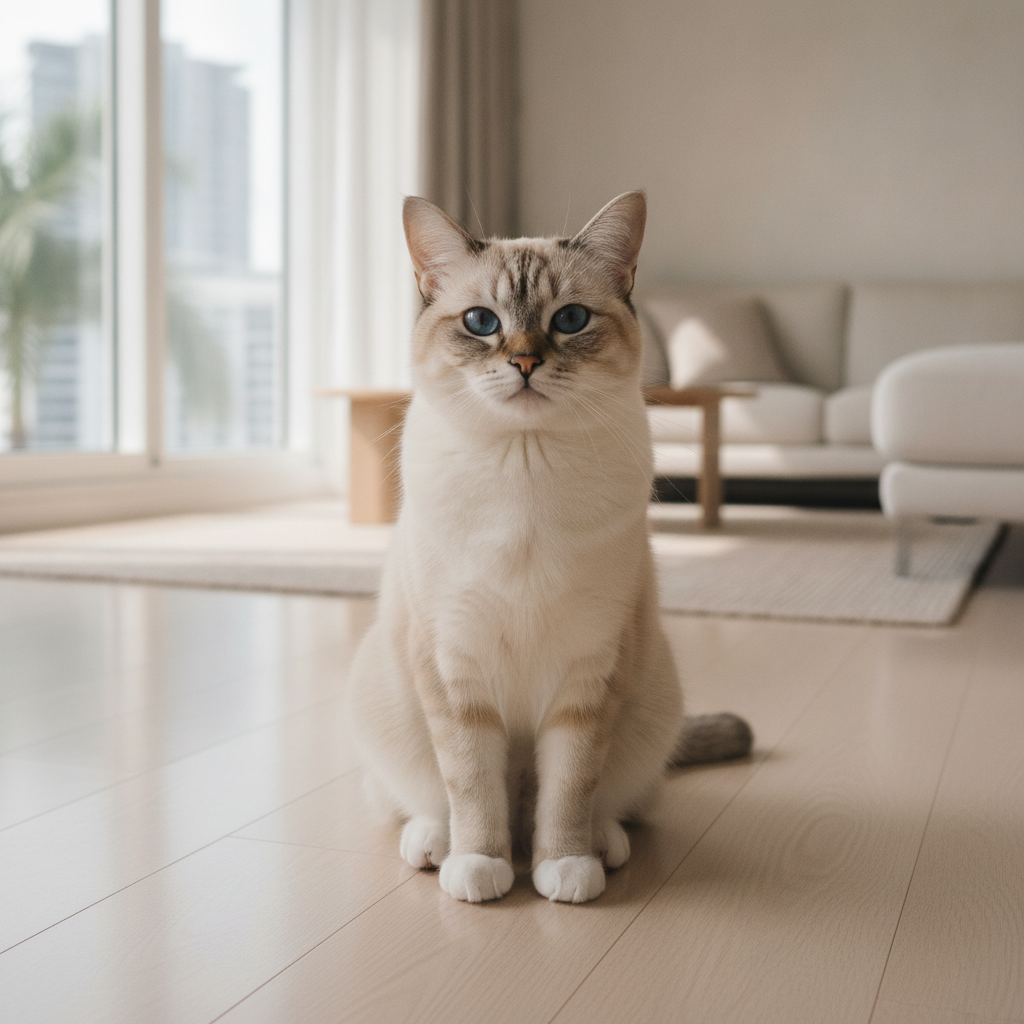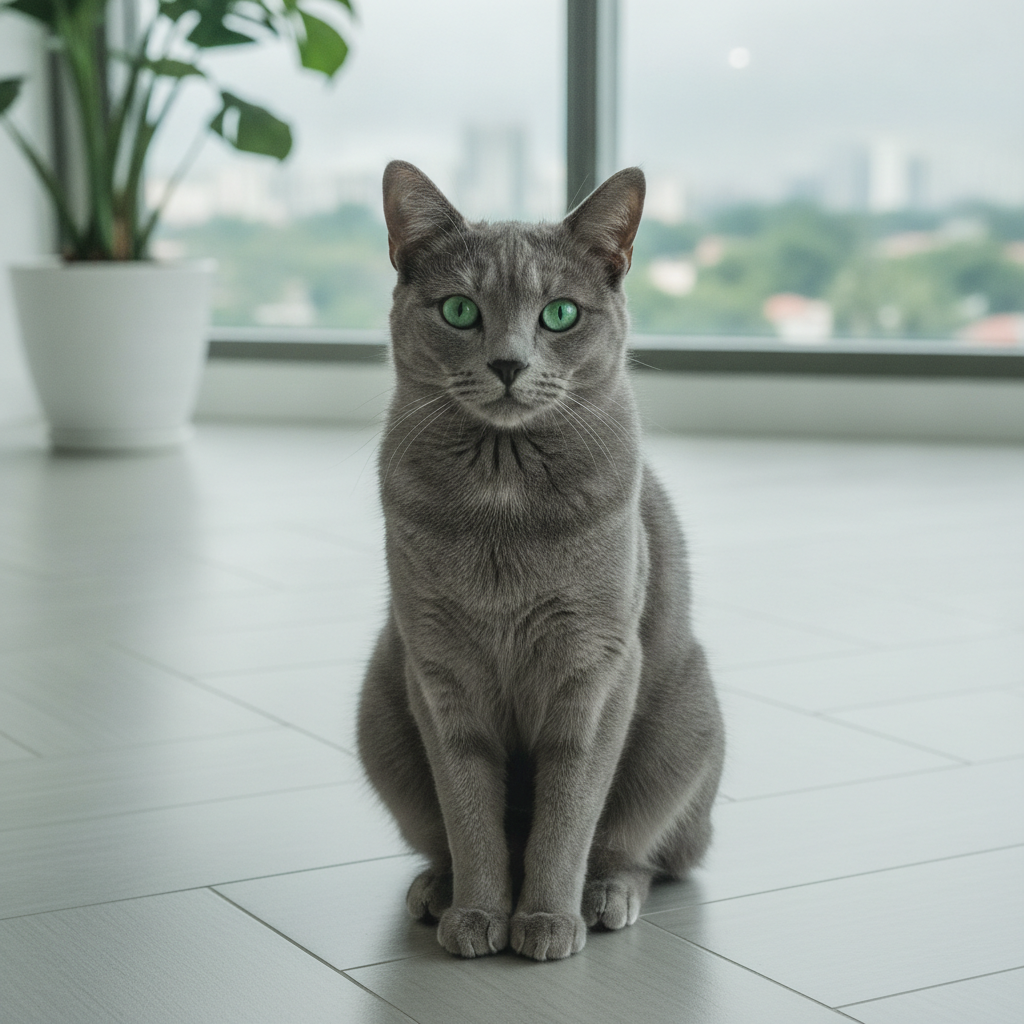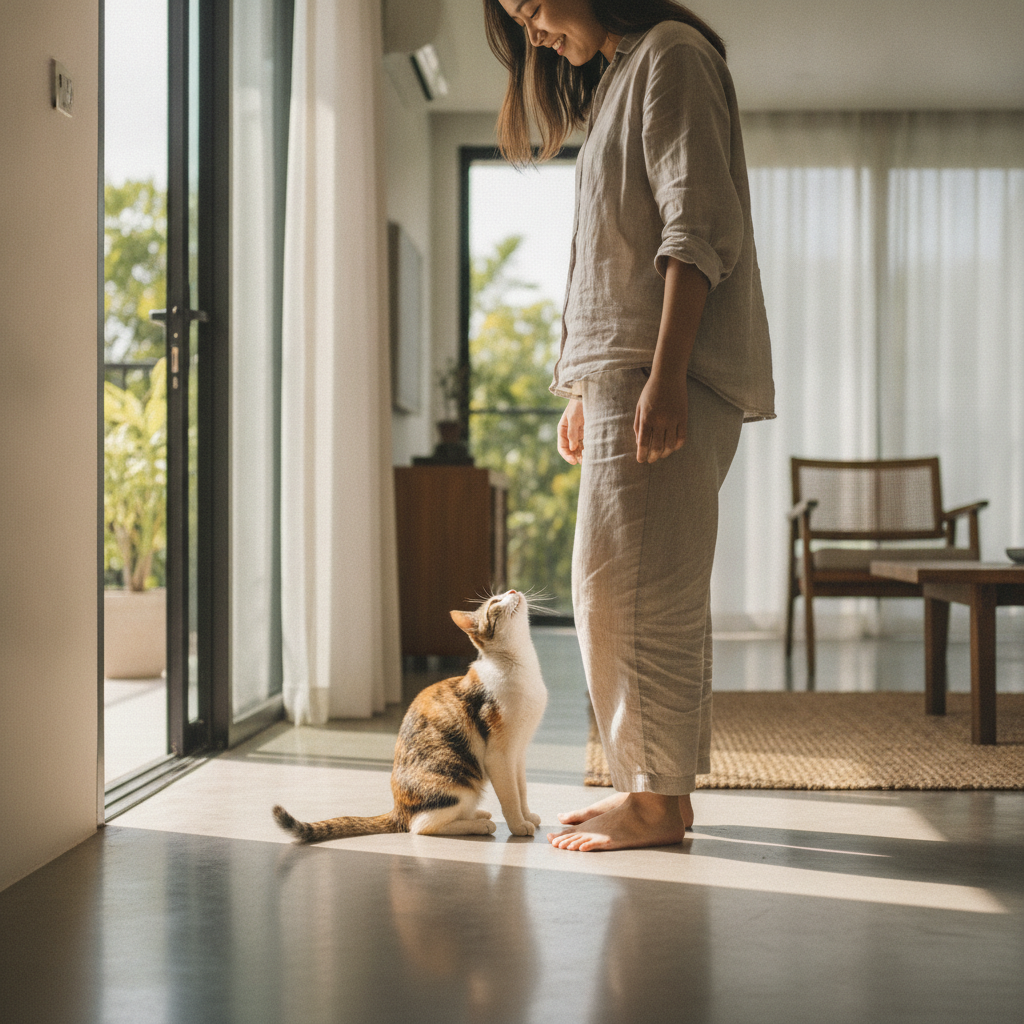
You get up; your cat gets up. You walk to the kitchen; it's underfoot. You go to the bathroom and close the door — and a paw appears underneath, followed by a plaintive cry. If you live with a "velcro cat", you know the feeling of never being truly alone. Most of the time this shadowing is a lovely sign your cat adores and trusts you. Occasionally, it's a signal worth paying attention to. Here's how to tell which.
This guide explains why cats follow their owners, the difference between healthy bonding and anxiety, and when clinginess is a red flag. It's part of our Malaysian guide to cat behaviour.
Meet the Velcro Cat
"Velcro cat" is the affectionate nickname for a feline that wants to be wherever you are — every room, every chore, every bathroom trip. It's worth saying up front: this is usually not a problem, and it firmly puts to bed the tired old myth that cats are aloof and don't care about their people. Cats are far more social than that reputation suggests, and following a trusted human around is a perfectly normal way of staying close to the centre of their world. The real question is whether your cat follows you out of confidence or out of insecurity — because those are two very different things wearing the same fluffy coat, and they need very different responses.
Secure Bond vs Anxious Clinginess
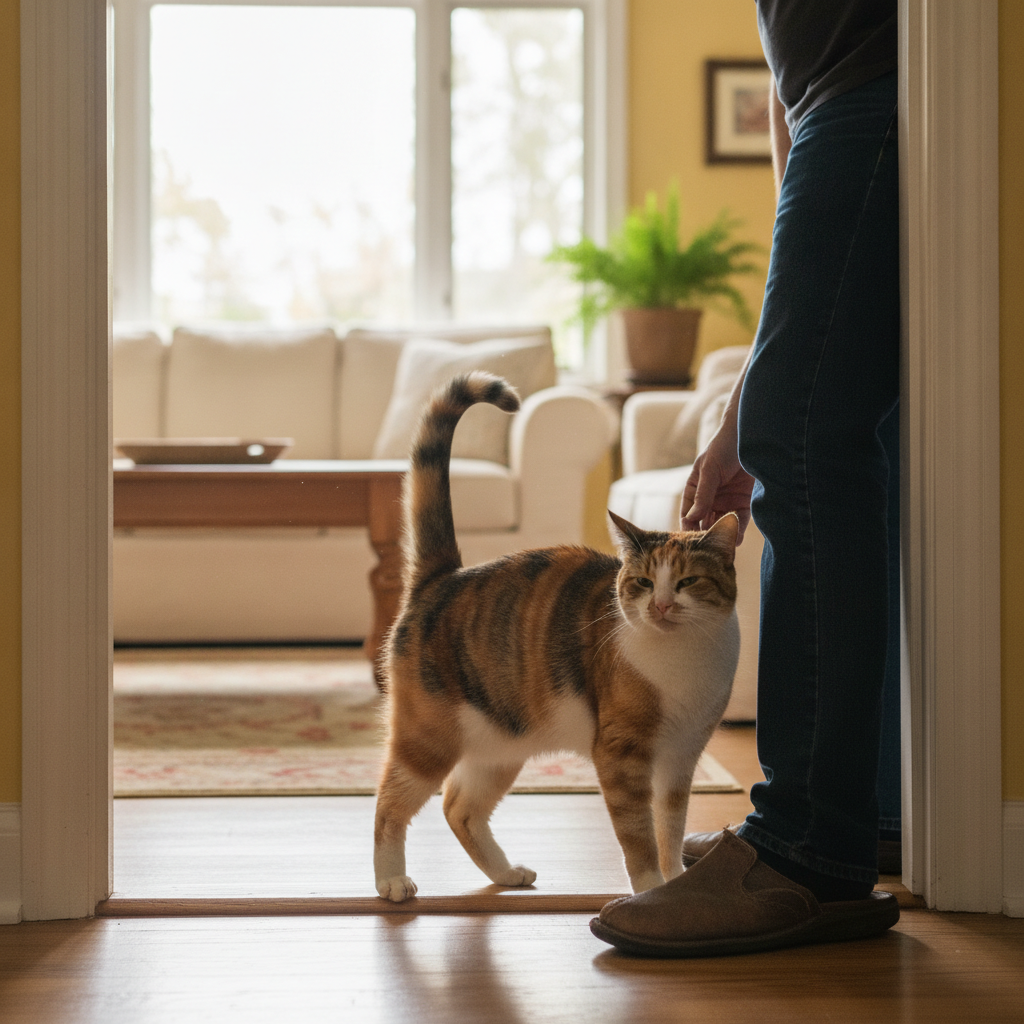
Modern research shows cats form attachment styles to their humans much like babies do to parents. In a well-known Oregon State University study published in Current Biology, about 64% of cats showed a secure attachment — and over a third showed an insecure one. The difference isn't how much affection a cat shows; it's its underlying confidence.
- A securely attached cat treats you as a "home base." It greets you with a tail-up hello and a leg-rub, enjoys your company, then happily wanders off to nap or play. It copes fine when you leave. Following you is just sociable.
- An anxiously attached cat can't settle. It follows obsessively, cries when a door separates you, gives frantic over-the-top greetings, and never quite relaxes. This clinginess comes from insecurity, not extra love.
A confident, secure cat is the goal — one that enjoys you and can be content alone. The slow-blinks and trust signals in does your cat actually trust you are the marks of that healthy bond.
Why Cats Follow: The Everyday Reasons
For most velcro cats, the following is driven by simple, healthy motivations, per PetMD:
- You are the food god. Through classic conditioning, your cat has learned that you are the source of every meal. The sound of the right cupboard or a can opener triggers an instant escort to the kitchen.
- Following gets rewarded. If trailing you has ever earned petting, play or a treat, your cat has learned that staying close pays off. It's smart attention-seeking, and it works because you respond.
- Companionship and security. As social animals, cats simply like to be near their trusted person, keeping you in sight as the safe centre of their territory.
- Pure curiosity. You're the most interesting thing in the house. What are you doing? Is it food? Can they help? (They cannot.)
None of these are problems — they're the everyday glue of the human-cat bond.
The Stress Trigger: When the Routine Changes
Cats run on predictability, so a sudden spike in clinginess often means something in their world has shifted. A normally independent cat that turns into your shadow overnight may be reacting to:
- A house move, renovation, or even rearranged furniture that disrupts its territory
- A change in your work schedule or feeding times, or returning from a long holiday
- A new baby, partner, or pet upsetting the social balance
- Frightening noises — thunderstorms, fireworks or nearby construction (our cats and fireworks guide helps here)
In these cases the extra shadowing is a coping mechanism: your cat is monitoring a changing world from the safety of your side, and as Zoetis Petcare notes, it usually eases as the new routine settles and your cat feels secure again. Early life matters too: kittens taken from their mother too young (before eight weeks) are more prone to anxiety-driven behaviours as adults, a link found in a large Finnish study of over 5,700 cats published via the NIH. And some cats are simply wired this way — sociable breeds like the Siamese, Ragdoll and Burmese are naturally more people-focused and likely to shadow you by temperament rather than anxiety.
When Clinginess Is a Red Flag
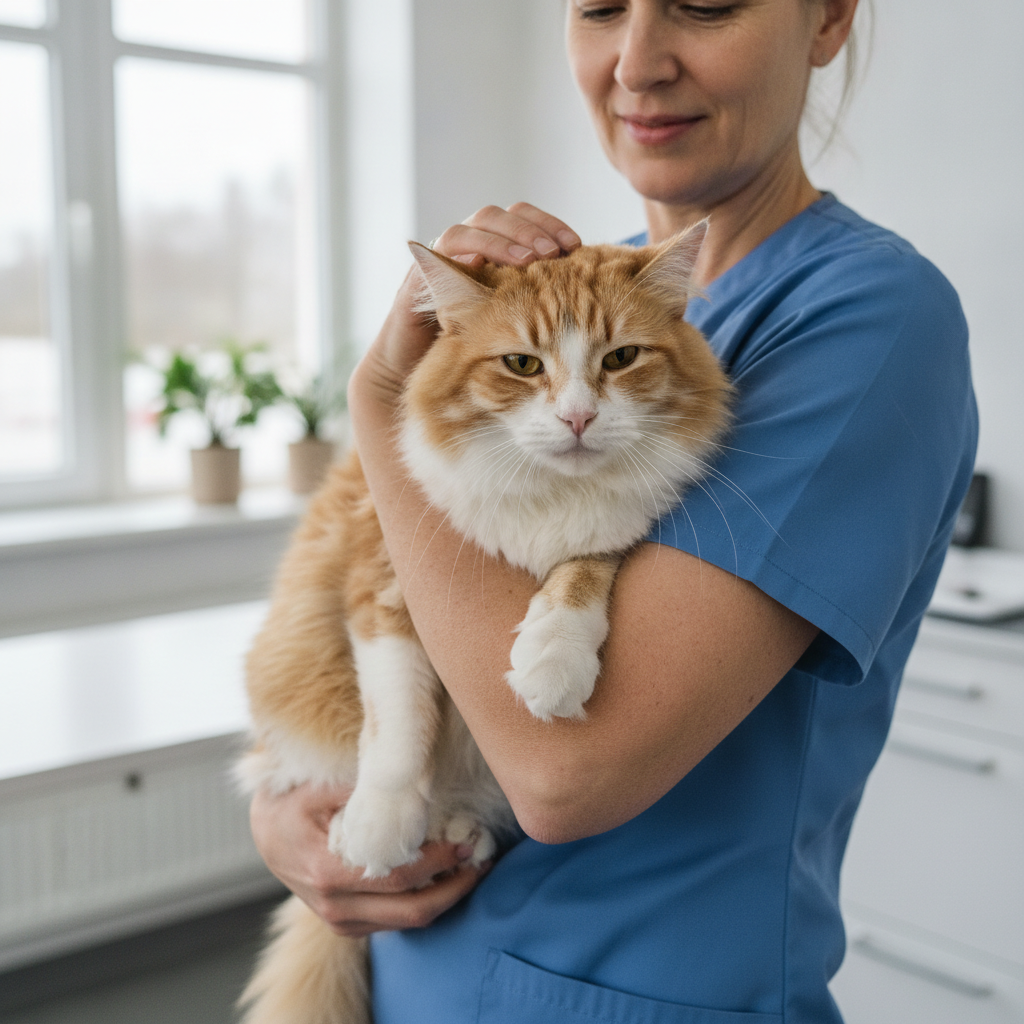
Here's the part to take seriously: a sudden shift from independent to clingy can be one of the earliest signs your cat is unwell. Cats are experts at hiding illness, and seeking constant comfort is how some show that something's wrong. As the Merck Veterinary Manual notes, behaviour change warrants a health check. Watch for:
- Hyperthyroidism — common in older cats; the overactive thyroid causes anxiety and restlessness, often with weight loss despite a big appetite, increased thirst, and a scruffy coat.
- Chronic pain — arthritis or dental disease can drive a cat to shadow you for security (others, by contrast, withdraw — any change is worth noting).
- Chronic kidney disease — feeling persistently unwell and nauseous, a cat may seek more comfort.
- Cognitive dysfunction — feline dementia affects around half of cats over 15, causing disorientation and anxiety, so they stick close to feel safe. Failing sight or hearing does the same.
The rule: any abrupt personality change, especially in a senior cat, means a vet visit and bloodwork first — before you assume it's "just" behavioural.
Velcro Cat vs Separation Anxiety: The Key Difference
Owners often confuse a clingy-when-home cat with one that has true Feline Separation Anxiety Disorder (SAD) — but they're distinct, and the distinction is simple. Attention-seeking and following happen when you're present. SAD is defined by distress that happens only when you're gone or about to leave.
The clinical signs of genuine separation anxiety appear in your absence: urinating or defecating outside the box — classically on your bed or clothes, where your scent is strongest — destructive scratching at doors, non-stop distressed yowling the neighbours report, refusing to eat while alone, or over-grooming to bald patches. If that's your cat, it's a real welfare issue covered fully in our guide to feline separation anxiety. A cat that simply likes to supervise your shower, on the other hand, is just being a cat. Video of your cat home alone is the best way to tell which you've got.
How to Build a Confident Cat
If your velcro cat is anxious rather than just affectionate, the goal isn't to push it away — it's to build its confidence so being alone feels safe. The evidence-based approach, recommended by Best Friends Animal Society:
- Enrich heavily. Puzzle feeders and hidden food tap natural foraging; vertical perches give a secure lookout; two daily play sessions burn anxious energy. A tired, stimulated cat copes far better alone — more in indoor cat enrichment.
- Desensitise departures. If picking up your keys triggers panic, pick them up and put them down without leaving, repeatedly, pairing it with a treat until "keys" stops meaning "abandonment."
- Keep comings and goings low-key. No dramatic goodbyes or gushing reunions. Calm departures and ignoring frantic greetings (until the cat settles) teach it that you leaving and returning is no big deal.
- Reward independence. When your cat naps calmly in another room or plays alone, quietly praise or treat it. You're reinforcing that solitude is safe and good.
- Never punish the clinginess — it only deepens the anxiety driving it. And don't assume a second cat will fix it; that often adds stress rather than removing it.
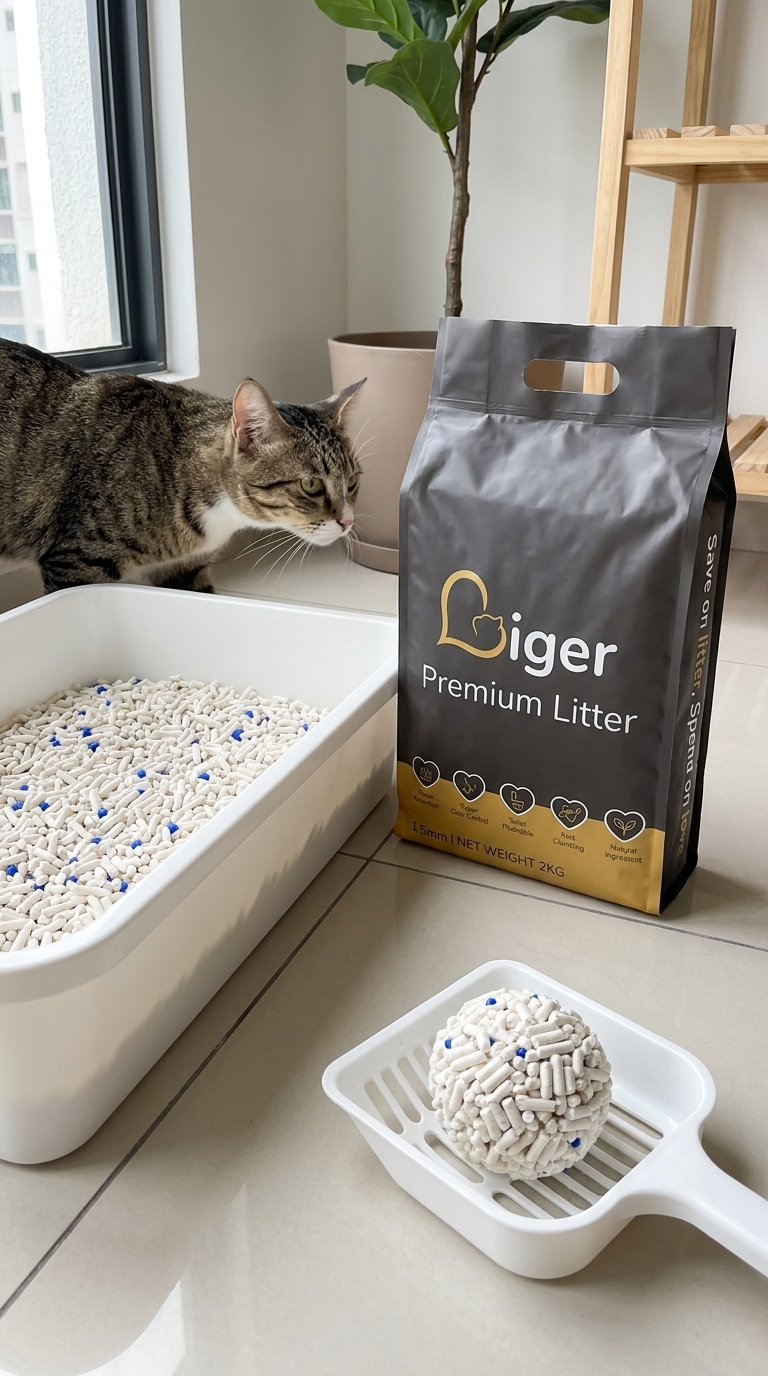
Part of that secure base is a calm, predictable environment — and the litter box is a surprisingly important piece of it. A confident cat needs its core resources to be reliable and low-stress, so keep the litter setup consistent and clean, and place it somewhere quiet and safe (see where to put the litter box). A low-dust, firmly clumping litter like Liger Premium Tofu Cat Litter keeps that box pleasant and predictable — and because it clumps cleanly, it makes it easy to spot the subtle changes (going more, less, or outside the box) that often signal the stress or illness behind a sudden clingy phase. Made from natural plant starch, it runs from RM21.90 (2 kg) to RM169 for the 10-pack (about RM8.45/kg, free shipping in Peninsular Malaysia, current pricing as of May 2026); size your usage with the litter calculator.
A velcro cat is, more often than not, a compliment with fur — proof that you're its favourite thing in the world. Make sure that devotion sits on a foundation of confidence rather than anxiety, keep an eye out for the sudden changes that signal illness, and you'll have a companion that loves your company without falling apart the moment you step away.