Your older cat is eating like a teenager — demanding food, cleaning the bowl — yet getting bonier by the month. Maybe it's yowling at 3am, drinking more, a bit manic. It's easy to think "good appetite = healthy cat", but in a senior cat that combination of ravenous hunger plus weight loss is a classic warning sign of hyperthyroidism: an overactive thyroid running the body in permanent overdrive. It's the most common hormonal disease of older cats, and the good news is it's very treatable — often curable. This vet-sourced guide explains the signs, how it differs from diabetes, the treatment options, and the early clue hiding in your cat's litter box.
Please note: this is educational, not a diagnosis. Only a vet and a blood test can confirm hyperthyroidism — if your senior cat is losing weight, get it checked.
The Senior Cat Disease Hiding in Plain Sight
Hyperthyroidism is the most common endocrine (hormonal) disorder in middle-aged and older cats, usually diagnosed around 12–13 years of age, per the Cornell Feline Health Center. The thyroid glands in the neck make hormones (mainly T4) that set the body's metabolic "speed". When they overproduce, every organ runs too fast — and the cat literally burns itself away despite eating well.
It's so common in seniors that any older cat losing weight should be screened for it. If you're not sure how "old" your cat really is, our cat years to human years guide puts it in perspective.
What Goes Wrong: The Overactive Thyroid
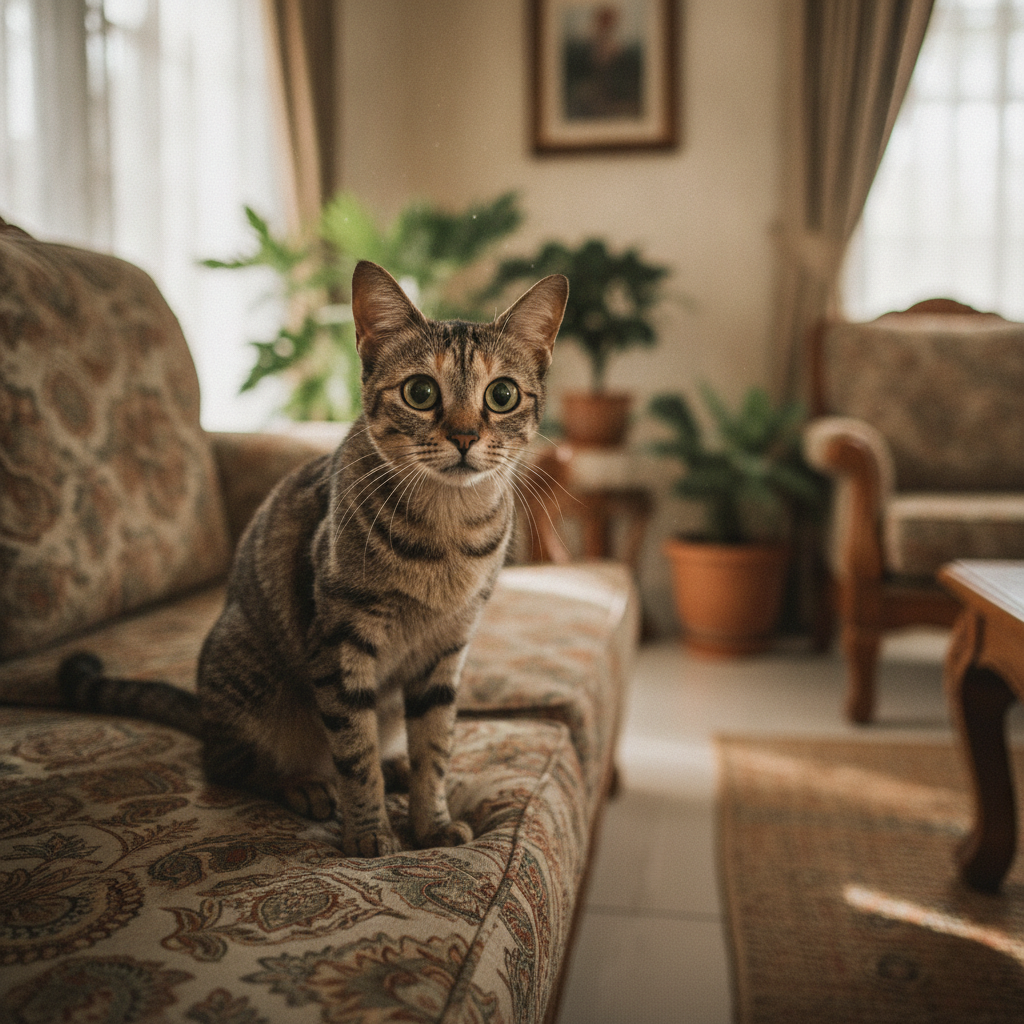
In over 95% of cases, the cause is a benign (non-cancerous) growth of the thyroid gland — an adenoma or adenomatous hyperplasia — that pumps out hormone without listening to the body's normal "stop" signals, per the Merck Vet Manual. Cancerous thyroid tumours are rare (under 5%).
Why has it become so common since the 1970s? Researchers suspect environmental and dietary factors play a role — including chronic exposure to flame-retardant chemicals (PBDEs) in household dust that cats swallow while grooming, BPA from canned-food linings, and long-term canned (especially fish-flavour) diets. None of these is proven as the sole cause, but they're active areas of study — and a reason to keep a clean, low-dust home for an indoor cat.
The Classic Signs: Eating More, Weighing Less
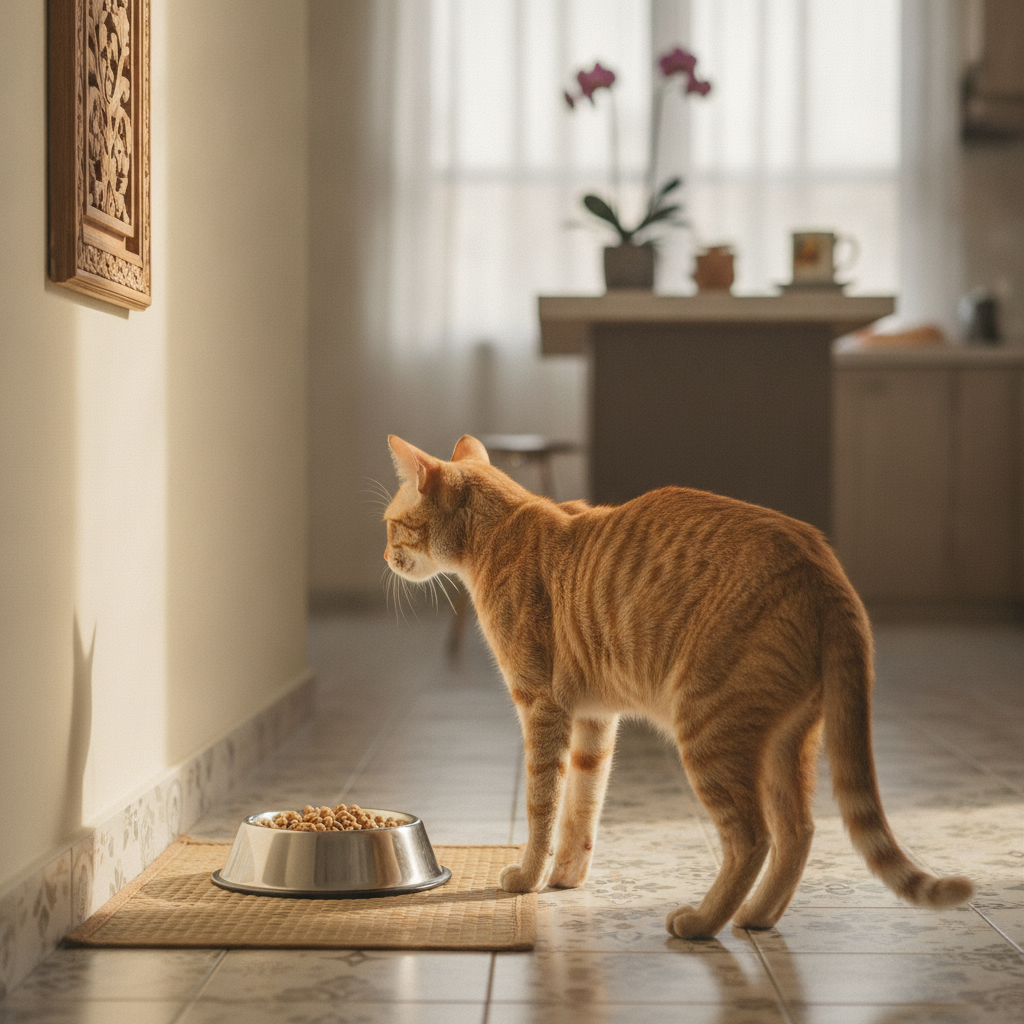
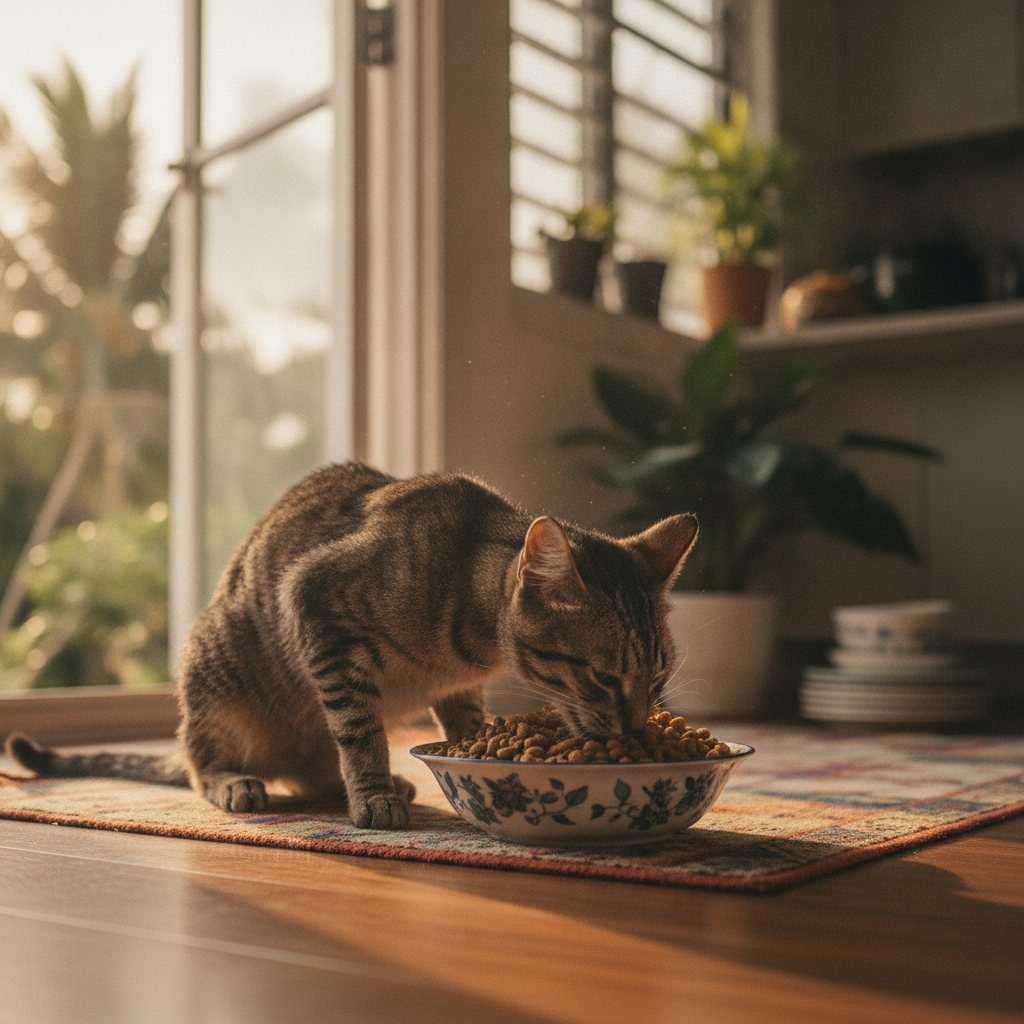
The hallmark is the paradox of weight loss despite a ravenous appetite. Watch for this cluster:
- Weight loss while eating normally or more
- Increased hunger (polyphagia) — relentless food demands
- Increased thirst and urination (PUPD) — more on this in the litter-box section
- Hyperactivity, restlessness, night-time yowling
- Vomiting or diarrhoea
- Unkempt, greasy or matted coat from poor grooming
- A fast heart rate, sometimes a new heart murmur (found by your vet)
Because these creep in slowly and an active, hungry cat can look well, hyperthyroidism is often caught late — the weight loss and restlessness get written off as "just getting old". But normal ageing does not make a cat lose weight while eating more, or yowl through the night; those are medical signals worth acting on. Persistent weight loss in a senior cat is never normal — cross-check our 12 warning signs your cat is sick.
Hyperthyroid or Diabetic? Telling Them Apart
Two of the most common senior-cat diseases — hyperthyroidism and diabetes — share a confusing overlap: weight loss with a big appetite, plus increased thirst and urination. So how do vets tell them apart? The mechanism differs entirely. In hyperthyroidism, an overactive metabolism simply burns fuel too fast. In diabetes, the body can't get sugar into the cells because of an insulin problem, so it starves amid plenty and spills sugar into the urine.
You can't distinguish them at home — both need bloodwork (a thyroid hormone test for one, blood/urine glucose for the other), and a cat can even have both at once. The Cornell Feline Health Center's diabetes resource is a useful companion read if you're weighing the two. The point is simply: a hungry-but-thinning senior cat needs a vet work-up, because the two diseases have completely different treatments — insulin won't help a thyroid problem, and thyroid medication won't help diabetes.
Hidden Dangers: Heart, Blood Pressure and Kidneys
Untreated, the hypermetabolic state strains multiple organs:
- Heart: the overworked heart can thicken (hypertrophic changes), risking heart failure if untreated — though this often improves once the thyroid is controlled.
- Blood pressure: hypertension affects roughly 10–25% of hyperthyroid cats and can cause sudden blindness from retinal damage — one reason prompt treatment matters.
- Kidneys — the tricky one: hyperthyroidism can mask underlying chronic kidney disease by artificially boosting blood flow through the kidneys. Around 30% of cats only reveal kidney disease after treatment normalises their metabolism. This is why vets monitor kidney values closely during treatment — it's expected, not a treatment failure.
How Vets Diagnose It
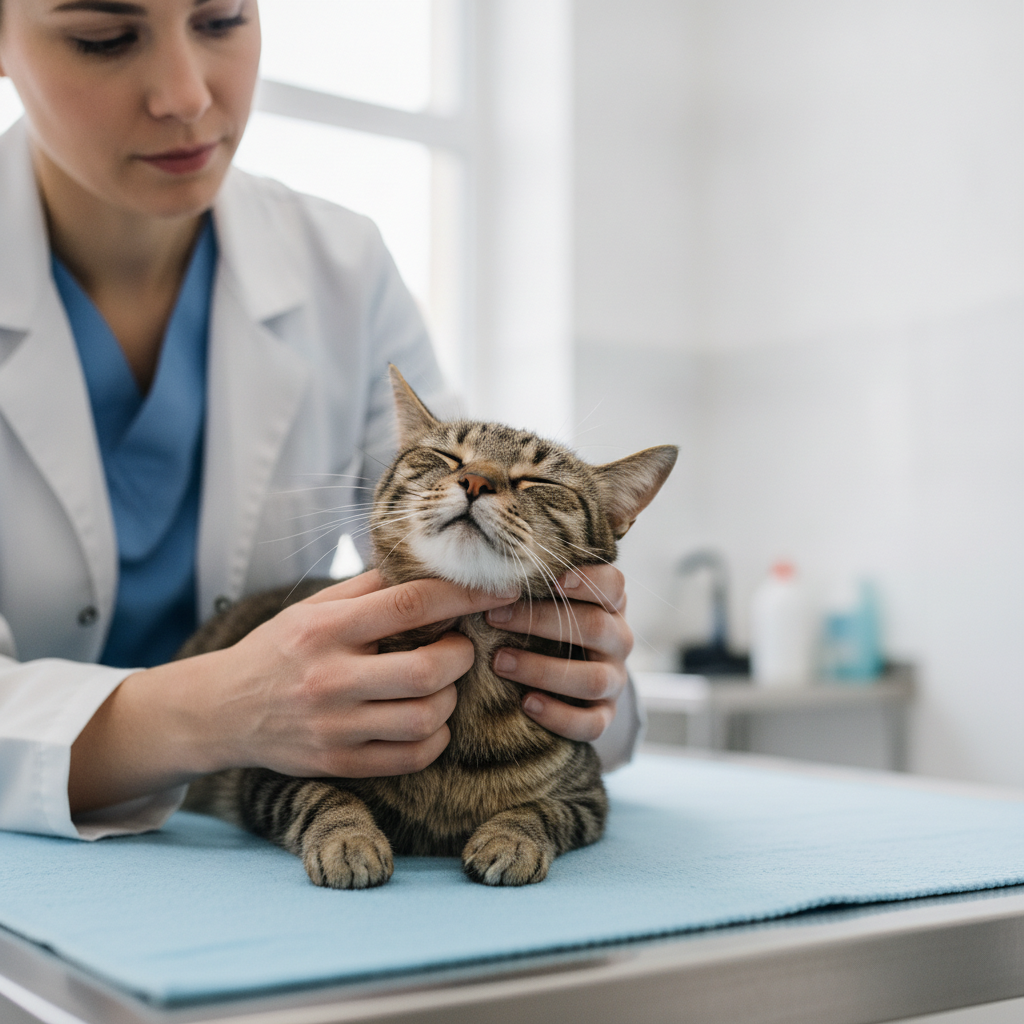
Diagnosis combines the clinical picture with bloodwork, per PetMD:
- Physical exam — vets can often feel an enlarged thyroid gland (a "thyroid slip") in the neck, plus check heart rate and blood pressure.
- Total T4 (TT4) blood test — the main test; a high level with matching signs confirms it.
- Extra tests when needed — about 10% of hyperthyroid cats have a normal TT4 (early disease or other illness suppressing it), so vets may add a free T4 (fT4) or, for genuinely puzzling cases, a T3 suppression test, all interpreted together rather than in isolation.
- General bloodwork, urinalysis and blood pressure — to check kidneys, heart and the whole senior picture.
One reassuring note: most cases are straightforward, and curiously, Siamese and Himalayan cats appear to have a lower-than-average risk, hinting at a protective genetic factor still being studied.
The Four Treatment Options
Hyperthyroidism is one of the more treatable serious feline diseases, with four main options, per VCA Hospitals:
- Radioactive iodine (I-131) — the gold standard. A single injection cures roughly 95–98% of cats by destroying only the overactive tissue, with no daily pills. Needs a few days' stay at a licensed facility.
- Anti-thyroid medication (methimazole) — lifelong daily pills or gel that control the hormone but don't cure it (the growth keeps going). Flexible and widely available, but requires lifelong dosing and monitoring.
- Surgical thyroidectomy — removing the affected gland(s); can be curative but carries anaesthetic and surgical considerations in older cats.
- Iodine-restricted prescription diet — controls hormone levels only if the cat eats nothing else, which is hard in multi-cat homes.
Curative options (I-131 or surgery) are linked to longer survival — a median over 5 years — while cats managed on methimazole alone have a shorter reported median survival of around 2 years, partly because the underlying growth keeps progressing and these cats are often older with other conditions. But the "best" choice depends on your cat's age, kidneys, heart, your budget and access. We don't give doses here — methimazole dosing and monitoring are strictly vet-led, and the kidney interaction makes self-management risky. This is a decision to make with your vet.
Monitoring, Prognosis and the Litter-Box Clue
With treatment, the prognosis is genuinely good, and many cats regain weight and calm down within weeks. Treated cats need ongoing rechecks — thyroid levels, kidney values, blood pressure and weight — especially in the first months, when the dose is being fine-tuned and any masked kidney disease may surface. Don't be alarmed if your vet wants frequent blood tests early on; that's careful medicine, not bad news. Cats on methimazole also need watching for side effects like appetite loss, vomiting or facial itching, which should be reported promptly.
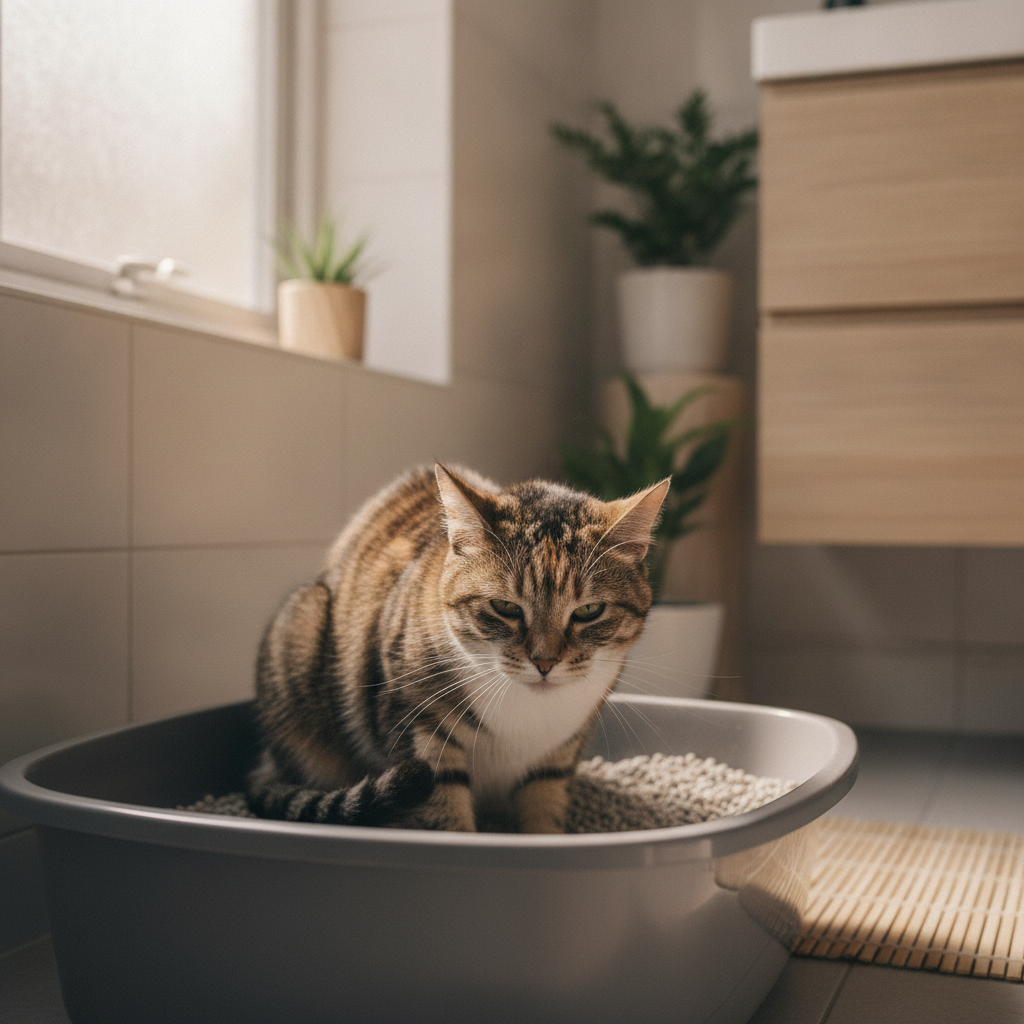
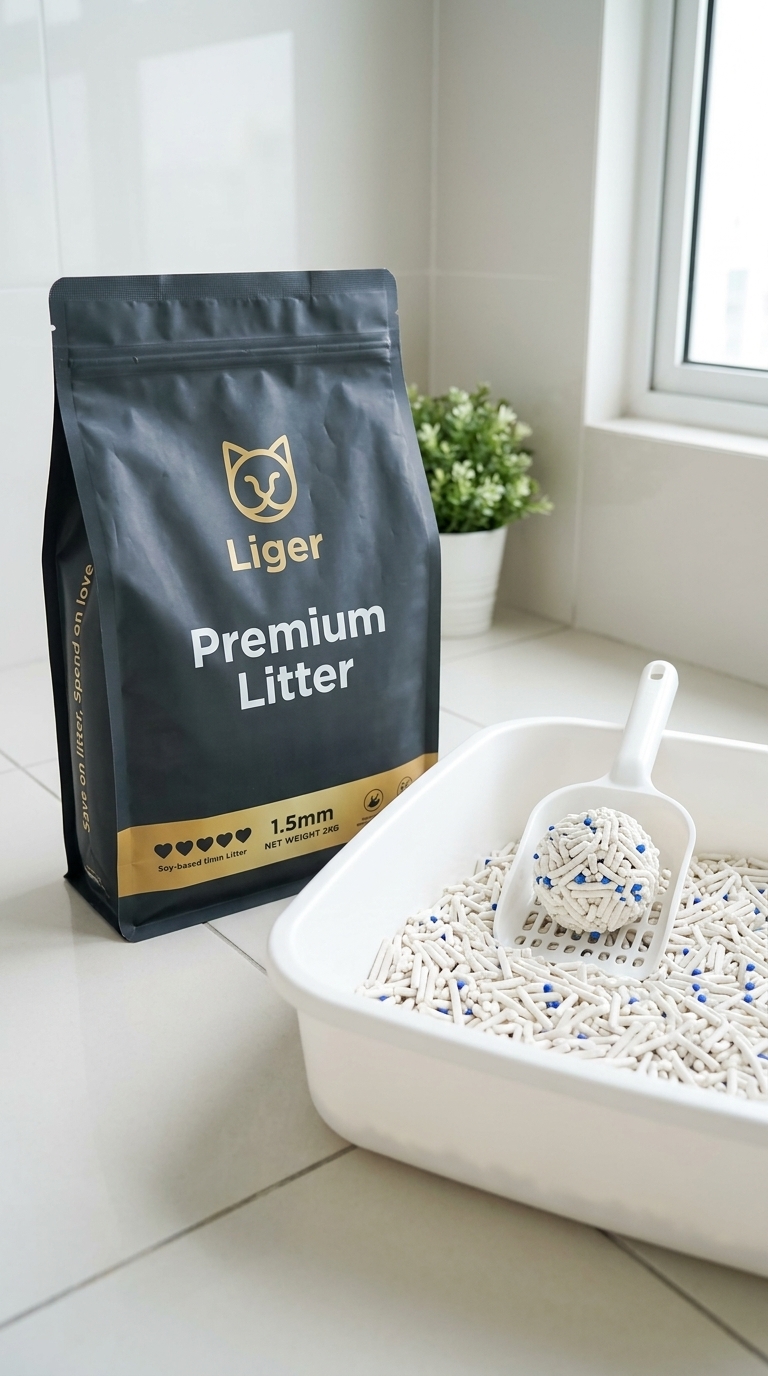
Here's the practical early-warning tip: one of the first changes owners actually notice is in the litter box. Because hyperthyroid cats drink and urinate more (PUPD), you'll often see bigger or more frequent urine clumps before anything else clicks. A litter that clumps firmly and is easy to scoop daily makes that change obvious — and tracking it (alongside weight on a kitchen scale) gives your vet real data.
This is where Liger Premium Tofu Cat Litter quietly helps. It's a soy-based, low-dust, flushable tofu litter that clumps firmly, so changes in urine volume are easy to spot day to day — Halal-certified and priced from RM21.90 for a 2 kg pack down to RM8.45/kg on the 10-pack. For senior cats specifically, our guide to the best litter for senior cats goes deeper, and the litter calculator helps you stock up. Liger doesn't treat hyperthyroidism — but a clean box you read daily turns you into an early-warning system.
Bottom line: in a senior cat, eating more while weighing less is a classic red flag, not a sign of a healthy appetite. Catch it early and it's very manageable, and often genuinely curable. For the wider picture, see our overview of common cat diseases in Malaysia — and book that thyroid blood test if the numbers on the scale keep dropping, because the earlier it's caught, the more of your cat's heart and kidneys you can protect.