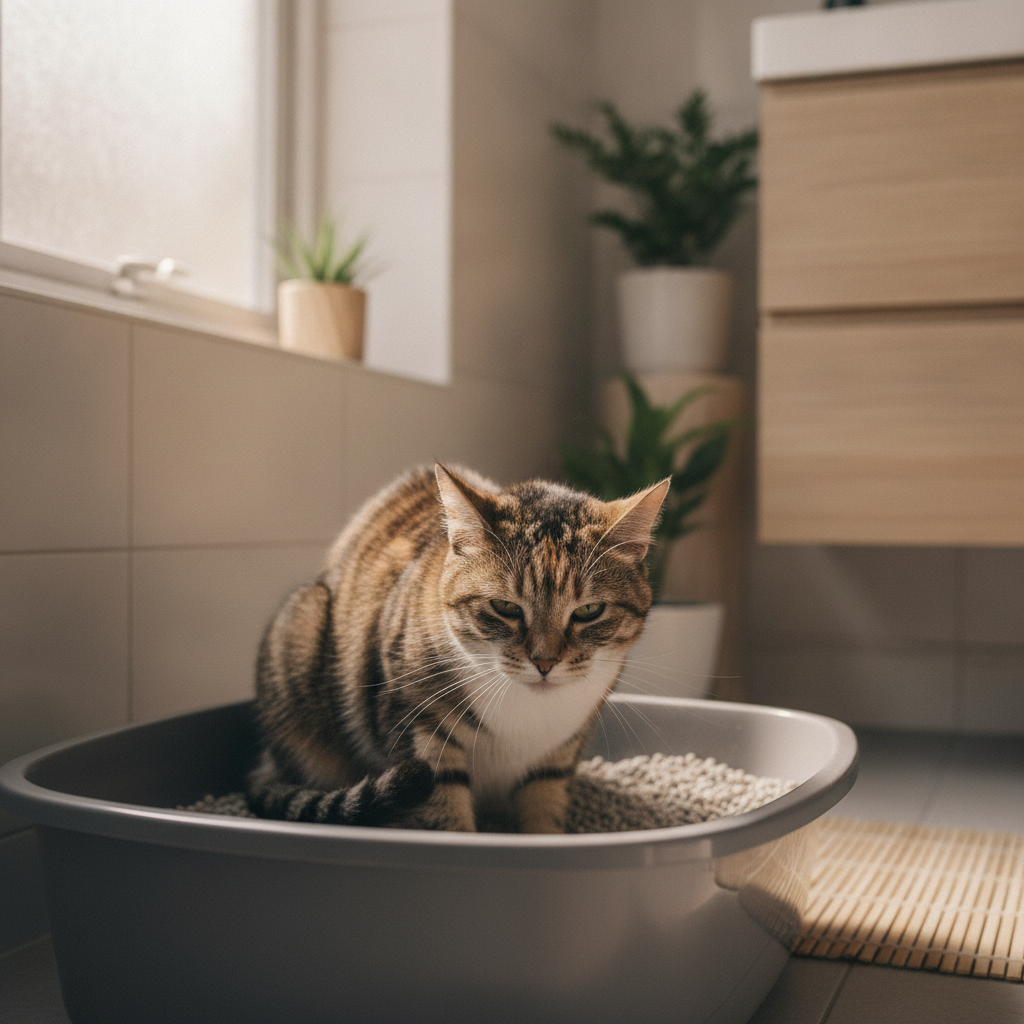
Few things are as frightening as watching your cat suddenly collapse, paddle its legs, and lose control of its body. A seizure is dramatic and scary — but knowing what to do (and what not to do) in those minutes, and understanding what might be causing it, can genuinely change the outcome. Crucially, in cats a seizure is almost always a sign of something else going wrong, not a stand-alone disease. This vet-sourced guide explains the types, the causes (including a deadly flea-product mistake common in Malaysia), the first-aid steps, and when it's an emergency.
Please note: this is educational, not a diagnosis. A seizure lasting over five minutes, or repeated seizures, is a life-threatening emergency — if that's happening now, get to a vet immediately.
What a Seizure Is (And Why It's Different in Cats)
A seizure is a temporary burst of uncontrolled, excessive electrical activity in the brain. As VCA Hospitals explains, it's a clinical sign, not a disease in itself.
Here's the key difference between cats and dogs: in dogs, "idiopathic epilepsy" (recurrent seizures with no findable cause) is fairly common. In cats it's rare — one large UK study put the prevalence of all epilepsy at just 0.04%. That means when a cat seizures, vets assume there's an underlying cause until proven otherwise, and they look hard for it. A seizure in a cat is never something to "wait and see" about.
Types and the Three Phases of a Seizure
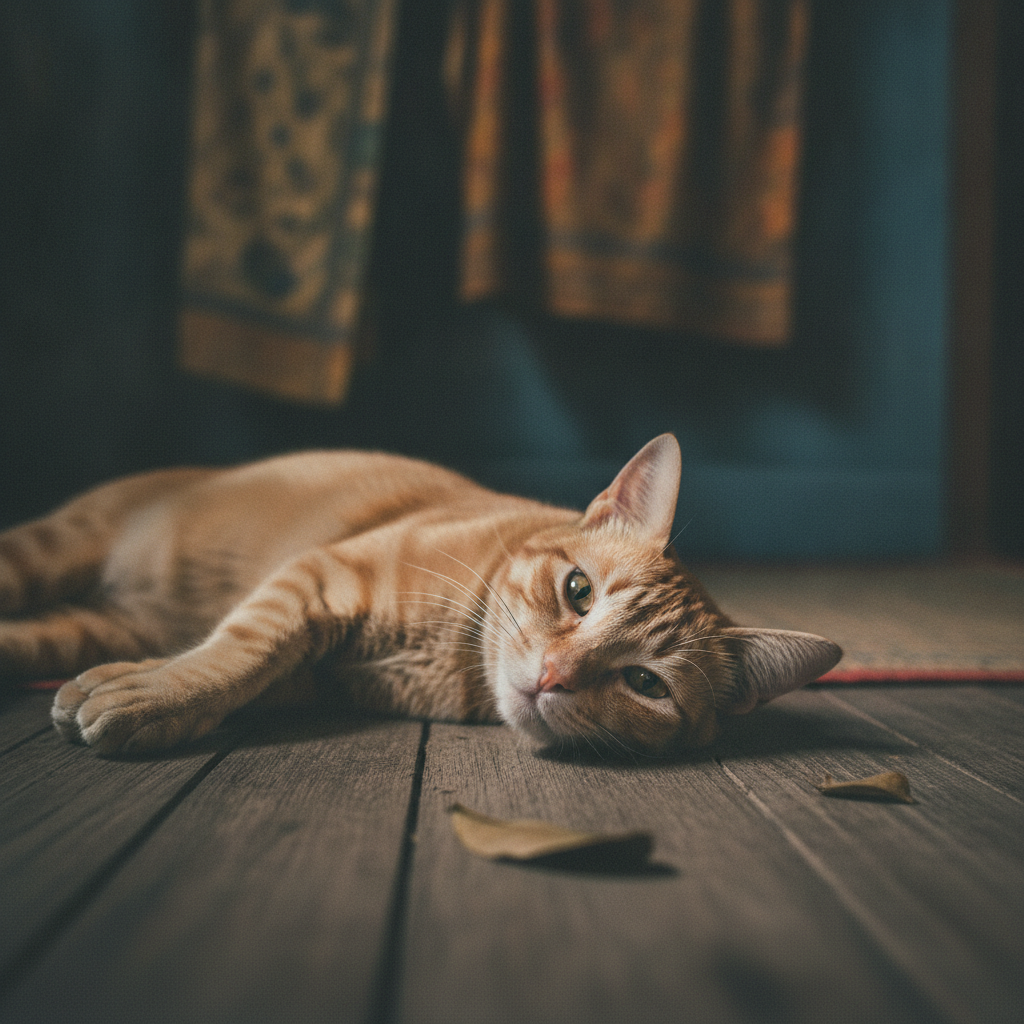
Seizures come in two broad types:
- Focal (partial) seizures — more common in cats. Electrical activity stays in one brain area, so signs are localised and can be subtle: twitching eyelids, whiskers or ears, head shaking, a single twitching limb, drooling, or bizarre behaviour like sudden aggression, frantic running, tail-chasing or "fly-biting" at the air. Owners often mistake these for behaviour problems — but they're neurological.
- Generalized (grand mal) seizures — the dramatic, whole-body kind: loss of consciousness, falling over, stiff limbs then paddling/jerking, often with involuntary urination, defecation and drooling.
A seizure typically unfolds in three phases: the pre-ictal phase (an "aura" of anxiety, clinginess, restlessness or hiding, seconds to hours beforehand); the ictal phase (the seizure itself, usually only 1–2 minutes); and the post-ictal phase (recovery — disorientation, temporary blindness, pacing, intense hunger or thirst, lasting minutes to many hours). Knowing the phases helps you describe events accurately to your vet.
What Causes Seizures: Inside vs Outside the Brain
Causes split into two camps, per the Merck Vet Manual:
Intracranial (inside the brain):
- Brain tumours — a major cause of new seizures in older cats; meningiomas are the most common in cats over 10.
- Inflammation/infection — encephalitis from FIP, toxoplasmosis or fungal disease.
- Head trauma and strokes (sometimes driven by high blood pressure).
Extracranial (outside the brain, affecting it secondarily):
- Toxins — covered in its own section below because it's so important.
- Liver disease / hepatic encephalopathy — a failing liver lets toxins like ammonia build up and scramble brain function.
- Hypoglycaemia (low blood sugar) — a real risk for diabetic cats given too much insulin, and for tiny kittens.
- Kidney disease (uraemic toxins), high blood pressure (often secondary to kidney disease or hyperthyroidism), and thiamine (vitamin B1) deficiency.
Structural disease becomes more likely in cats over seven, which is why an older cat's first seizure especially warrants imaging.
The Toxin Danger: Dog Flea Products Can Kill Cats
This section could save your cat's life. One of the most common feline poisonings is permethrin and other pyrethroid insecticides — the active ingredients in many dog flea-and-tick spot-on products. Cats lack the liver enzyme to process these chemicals safely, and even small exposure (applying a dog product to a cat, or a cat grooming a recently-treated dog housemate) can cause violent tremors and seizures. International Cat Care has a dedicated warning on permethrin poisoning.
The rule is simple: never use a dog flea product on a cat, and keep treated dogs separated from cats until dry. Always use cat-specific, vet-approved parasite control — our flea & worm checker helps you stay on a safe schedule. Other seizure-triggering toxins include antifreeze (ethylene glycol), lead, some rodenticides, lilies, and medication overdoses. If your cat is ever exposed to a dog flea product, don't wait for symptoms — bathe off any visible product with mild dish soap and get to a vet immediately, because tremors can escalate to seizures fast. Always read the species on the label before applying anything.
What To Do During a Seizure (First Aid)
Stay calm — your cat is not in pain or "swallowing its tongue" during the event. Follow these steps:
- DO NOT put your hands near the mouth. A seizing cat can bite hard involuntarily — you can be seriously injured, and you can't help by holding the tongue.
- Time it. Note when it starts. Five minutes is the critical line (see below).
- Protect from injury. Gently move furniture away, or slide the cat (by the scruff of a blanket, not your bare hands) away from stairs or sharp edges.
- Dim the lights and keep it quiet to reduce stimulation.
- Video it if you safely can — this is genuinely one of the most useful things you can give your vet.
- Afterwards, let the cat recover in a safe, confined, quiet space; it may be disoriented or briefly "blind", and the post-ictal phase can last anywhere from minutes to a day or more.
- Don't rush food or water into a disoriented cat that could choke; wait until it's fully alert, then offer small amounts. Note the time and length in a diary so you can spot clusters.
🚨 When it's an emergency: a single seizure lasting more than five minutes (status epilepticus), or two or more seizures in 24 hours (cluster seizures), is a life-threatening emergency that can cause dangerous overheating and brain damage. Go to the vet immediately. Even a first-ever brief seizure deserves a prompt (non-emergency) vet visit.
How Vets Diagnose It
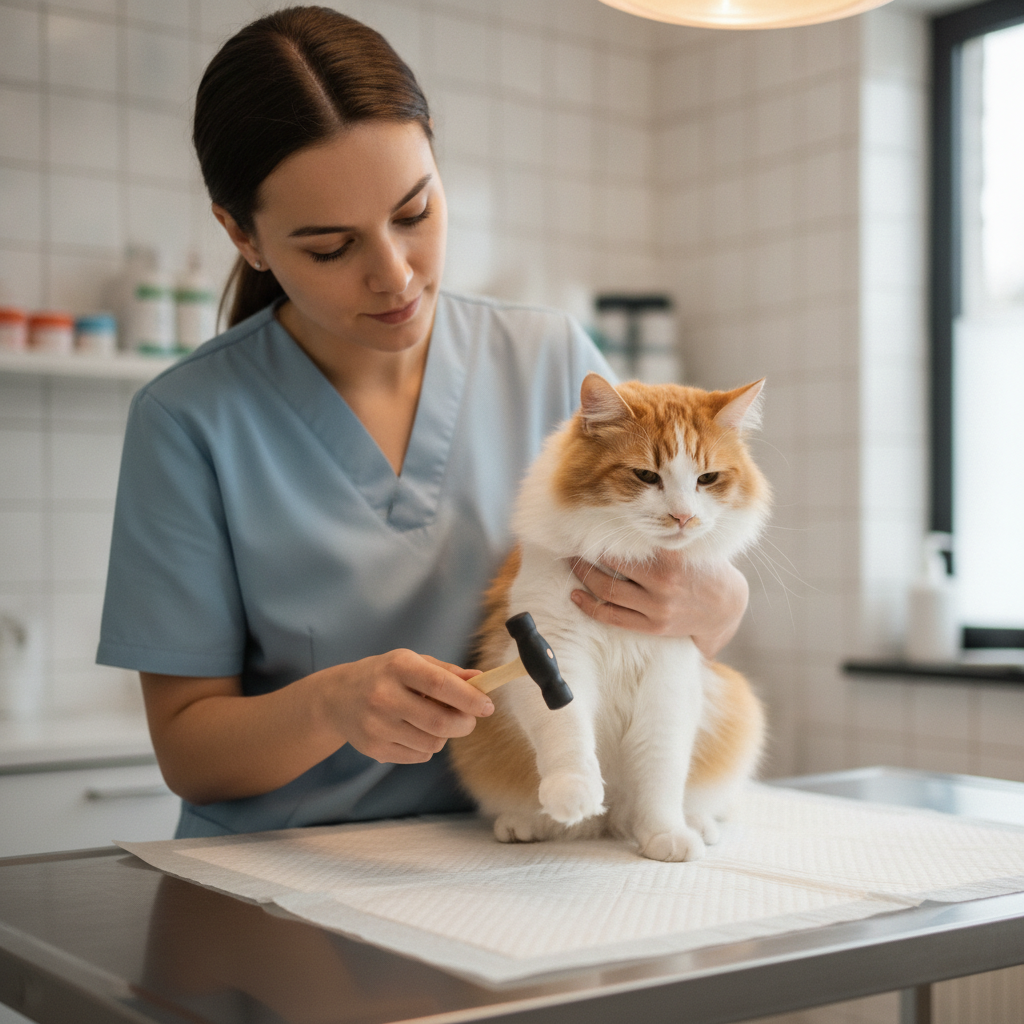
Because cats usually have an underlying cause, diagnosis is a systematic hunt, per PetMD:
- Detailed history — your description (and video!) of the events, plus any toxin access, medications, or other illness.
- Physical and neurological exam and blood pressure.
- Bloodwork and urinalysis to find extracranial causes — liver and kidney values, blood sugar, and screening for infections like FeLV/FIV.
- Advanced imaging (MRI) and cerebrospinal fluid (CSF) analysis if no systemic cause is found, to investigate the brain itself.
Idiopathic epilepsy is only diagnosed once everything else has been excluded.
Treatment and What to Expect
Treatment has two prongs: fix the underlying cause where possible (remove the toxin, manage the liver/kidney disease, correct blood sugar), and control the seizures with anti-seizure medication. Common choices include phenobarbital and levetiracetam, chosen and dosed by your vet with monitoring bloodwork.
We don't give doses here on purpose. Anti-seizure drugs need careful titration and must never be started, changed or stopped abruptly without veterinary guidance — sudden withdrawal can itself trigger seizures. This is firmly a vet-led, long-term partnership.
Prognosis and Living With an Epileptic Cat

Prognosis depends entirely on the cause. For treatable extracranial problems (a toxin, low blood sugar), the outlook can be excellent once fixed. For idiopathic epilepsy managed on medication, it's generally favourable — studies report a median survival of roughly 3.2 to 4.9 years from diagnosis, and many cats live normal lifespans with good control. For structural disease like brain tumours, it's more guarded. The single biggest factor is getting an accurate diagnosis early.
For context on how the diagnostic odds break down: one study of cats presenting specifically for seizures found idiopathic epilepsy was the final answer in about 22% of them (median onset around 4.5 years of age) — meaning the majority did have a findable underlying cause, exactly as International Cat Care describes. That's the whole reason vets investigate rather than just medicate.
Day to day, your job is consistency: give medication on schedule, keep a simple seizure diary (date, length, what preceded it), minimise stress, and keep your home toxin-safe. After a seizure, a disoriented cat may stumble and sometimes loses bladder or bowel control, so a clean, easy-to-reach litter setup on the floor (no high-sided box to climb into while wobbly) helps a recovering cat keep its dignity and stay clean.
This is one health topic where litter genuinely isn't a treatment — we won't pretend otherwise. But a calm, low-dust, low-fuss environment does support a vulnerable cat. Liger Premium Tofu Cat Litter is a soft, low-dust, flushable tofu litter that's gentle underfoot and quick to clean after an accident — Halal-certified and priced from RM21.90 for a 2 kg pack down to RM8.45/kg on the 10-pack. Size your supply with the litter calculator. For the wider picture of feline illness, see our overview of common cat diseases in Malaysia and our 12 warning signs your cat is sick. Above all: any seizure means a vet visit, and a long one means now.