Your cat keeps trekking to the litter box, hunching, straining… and producing little or nothing. Constipation is common in cats — but it sits on a spectrum that, left unchecked, can progress to a permanently damaged colon (megacolon). And there's a genuinely dangerous look-alike: a cat straining to urinate can look identical to one straining to poop, and a urinary blockage is a life-threatening emergency. This vet-sourced guide explains the difference, the causes, how vets treat it, and why your litter box is the single best monitoring tool you have.
Please note: this is educational, not a diagnosis. If your cat is straining unproductively, see the urgent warning in the next section — some of these situations are emergencies.
Constipation, Obstipation, Megacolon: A Spectrum
These aren't three separate diseases — they're stages of the same problem getting worse, per VCA Hospitals:
- Constipation — infrequent or difficult defecation with hard, dry stool. A healthy cat usually goes every 24–36 hours; a constipated one goes less, with straining.
- Obstipation — constipation so severe the colon is packed and the cat can't pass stool at all. Needs medical intervention.
- Megacolon — the end stage: the colon stretches, weakens, and permanently loses its ability to contract. Idiopathic megacolon (no identifiable cause) is the most common reason for unmanageable constipation in cats.
The scary part is that it's a self-perpetuating cycle: retained stool gets harder, stretches the colon, and the stretching damages the muscle and nerves — which makes the next blockage worse. Catching it early is everything.
Straining to Poop or to Pee? Don't Confuse Them
This is the most important safety point in this article. Straining in the litter box (tenesmus, straining to defecate) can look exactly like straining to urinate (stranguria) — and the latter can mean a urinary blockage, which is a true emergency, especially in male cats. A blocked cat can go into kidney failure and die within hours.
You often can't tell which is which at home, so the safe rule is: any cat straining unproductively in the litter box needs a same-day vet check. Vets tell them apart on examination — a blocked-bladder cat has a large, firm, painful bladder, while a constipated cat's bladder is small. If you want to understand the urinary side, our cat urinary tract guide covers it; but when in doubt, don't wait and guess — go.
What Causes Feline Constipation
Per the Merck Vet Manual, common causes include:
- Dehydration — the colon's job is to absorb water; a dehydrated cat makes hard, dry stool. This is a big one in our hot climate and in cats with chronic kidney disease.
- Pain making posturing hard — arthritis in older cats can make squatting to poop genuinely painful, so they hold it.
- Litter box aversion — a dirty, cramped or hard-to-reach box makes a cat withhold stool, kicking off the cycle.
- Ingested hair and low-fibre diets forming hard masses.
- Pelvic narrowing from a poorly healed fracture, tumours, or nerve damage.
- Obesity and inactivity, which weaken colon tone — another reason to help an overweight cat slim down.
- Less common drivers like hypothyroidism, electrolyte imbalances, or nerve damage.
There's also a time element worth knowing: after a pelvic fracture that narrows the canal, if constipation and colon enlargement drag on beyond about six months, the colon muscle can degenerate permanently into megacolon — which is exactly why vets push to resolve constipation early rather than letting it become a chronic pattern.
The Signs: What You'll See in the Litter Box
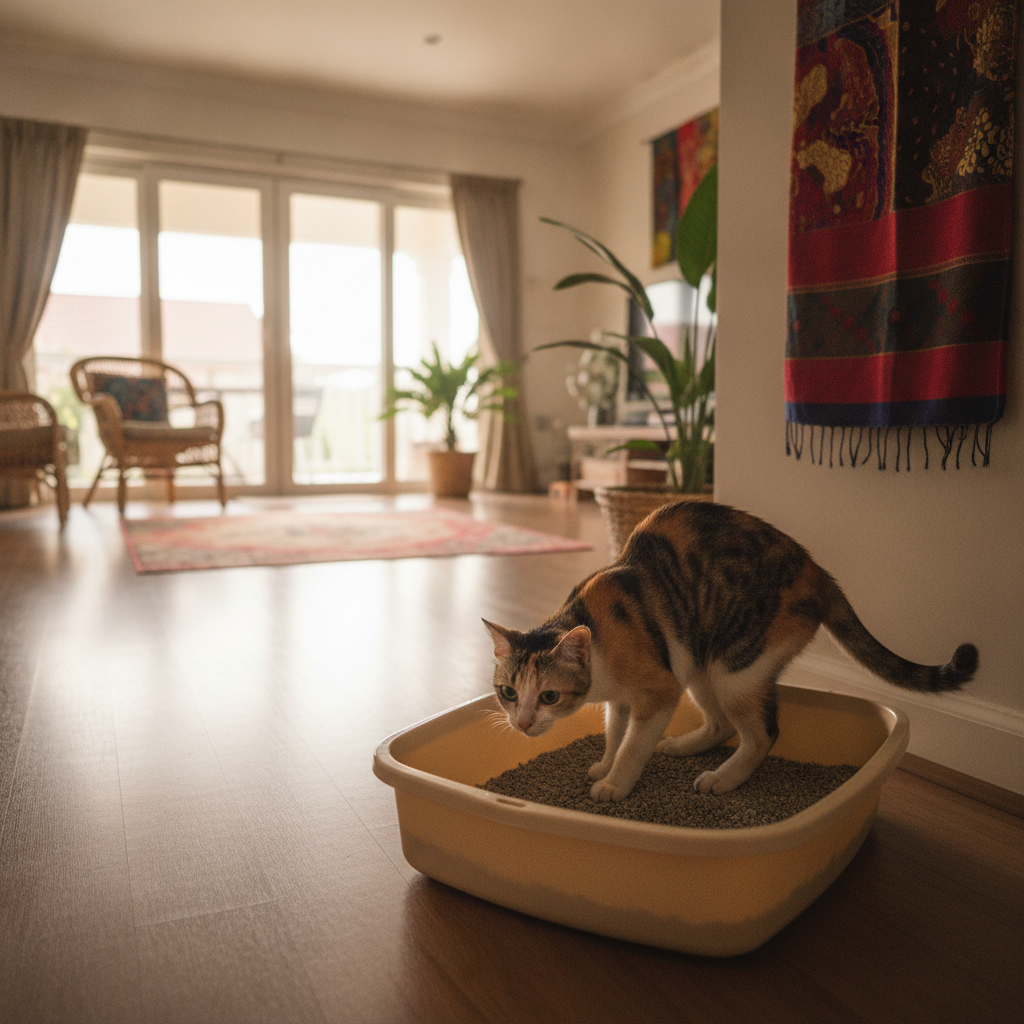
This disease announces itself in the litter box more clearly than almost any other, per PetMD:
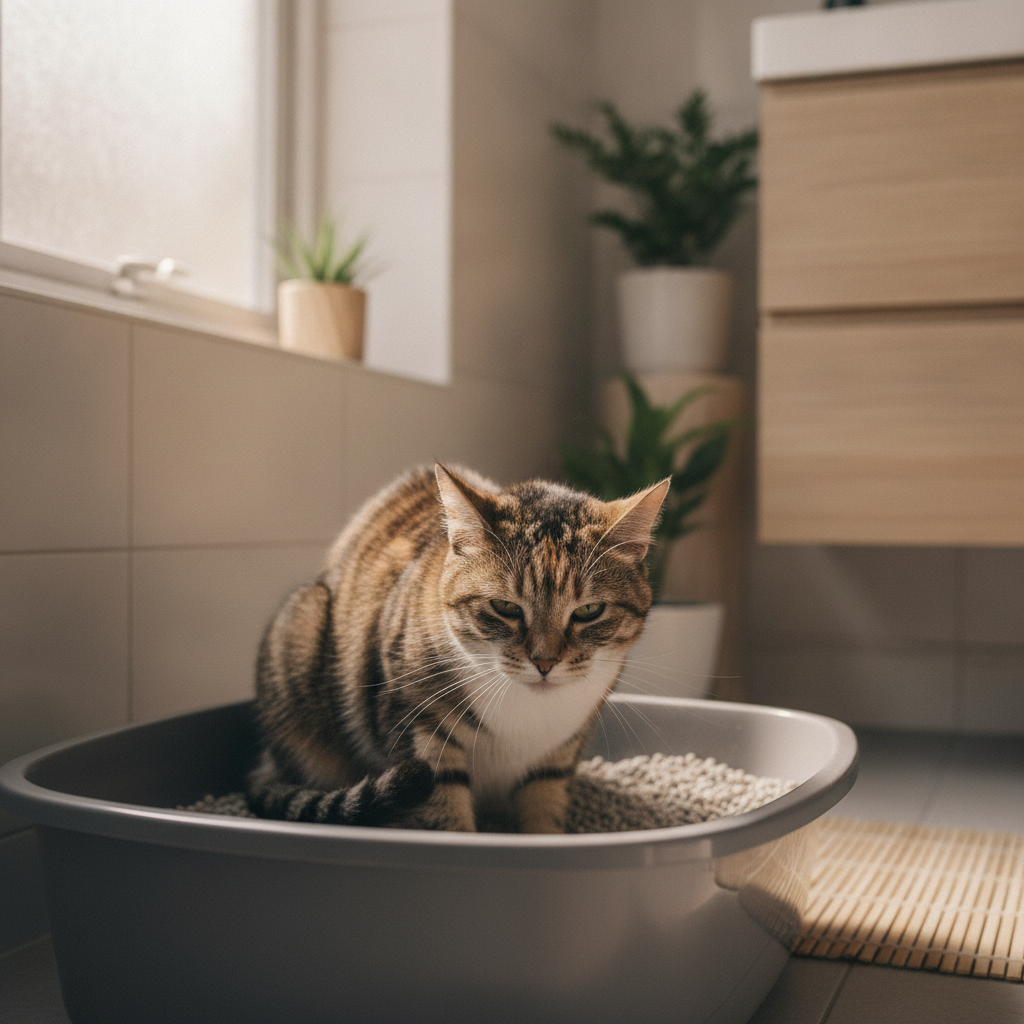
- Frequent, unproductive trips to the box, often with straining and sometimes vocalising
- Small, hard, dry stools — or none at all
- Liquid sneaking past the blockage — a little watery stool can slip around an impacted mass, fooling you into thinking it's diarrhoea
- Going outside the box from discomfort (litter box aversion)
- As it worsens: lethargy, reduced appetite, vomiting, and a hard belly
This is exactly why tracking output matters — our cat poop health guide shows what healthy stool looks like, and noticing the absence of it is just as important.
How Vets Diagnose It
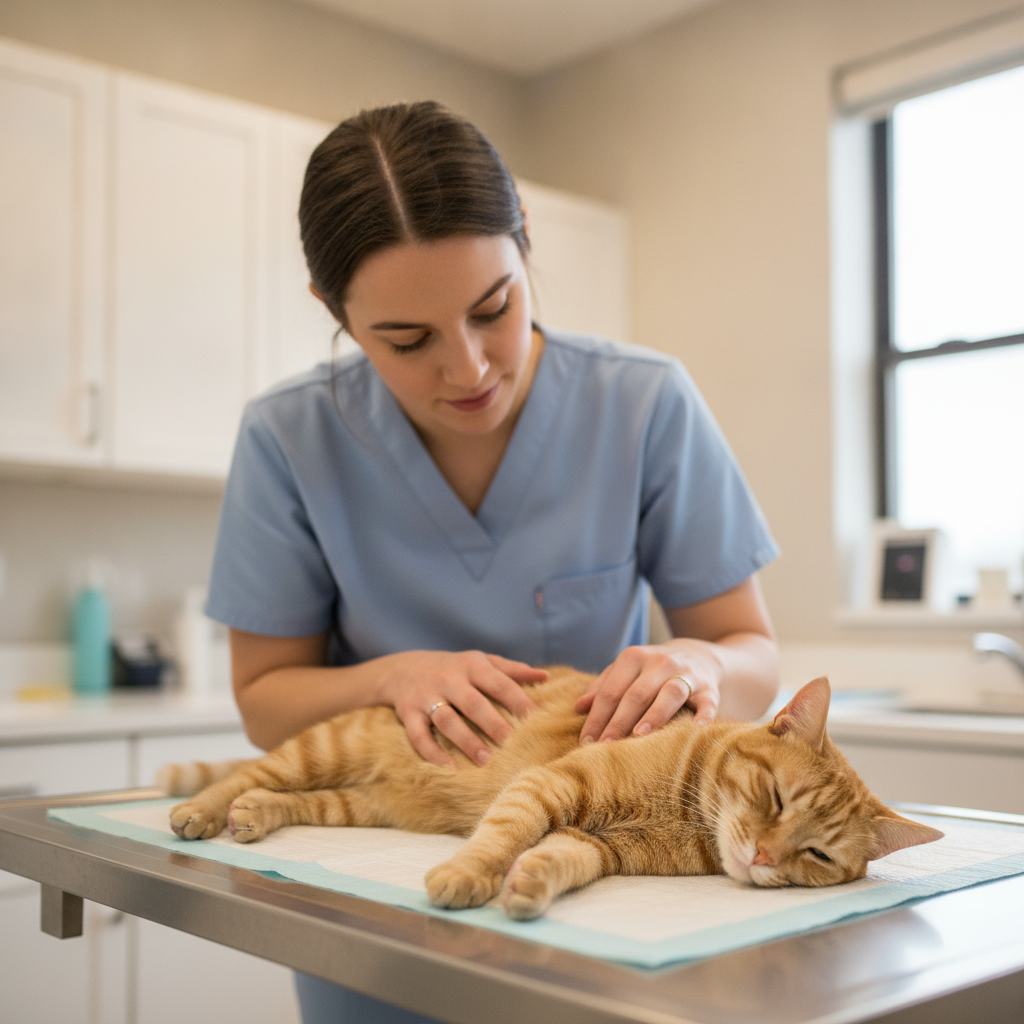
Diagnosis is usually quick and confirms severity, per the Cornell Feline Health Center:
- Abdominal palpation — the vet can usually feel the firm, stool-packed colon (and crucially check the bladder to rule out a urinary block).
- X-rays — the definitive way to see how much stool is retained and to spot causes like a narrowed pelvis. Megacolon is diagnosed when the colon's width exceeds about 1.5 times the length of a specific back vertebra (L5).
- Bloodwork and urinalysis — to find underlying drivers like kidney disease, dehydration or electrolyte problems.
- A rectal exam (sometimes under sedation) — to feel for a narrowed pelvis, masses or strictures that might be blocking the way and would change the treatment plan.
Pinning down the underlying cause matters because treating the constipation without fixing, say, the dehydration of kidney disease just means it comes straight back.
Treatment: From Laxatives to Surgery
Treatment is tiered to severity, per the VCA megacolon guide:
- Hydration first — often switching to a high-moisture canned diet and improving water intake.
- Osmotic laxatives like lactulose or polyethylene glycol (PEG 3350), and prokinetics like cisapride to help the colon contract — all vet-prescribed.
- Manual deobstipation — for severe impaction, the vet removes the mass with the cat under anaesthesia and fluids.
- Subtotal colectomy surgery — for end-stage megacolon that no longer responds to medication, the surgeon removes most of the diseased colon. Reported long-term success is around 90% and most cats go on to a good quality of life, though it carries real surgical risk — one 2021 study of 166 cats reported a roughly 9.9% major perioperative complication rate and a 5.6% ten-day mortality rate. It's a serious operation, but a genuine cure when medication has failed.
🚨 Critical safety warning: never give your cat a human enema. Over-the-counter sodium phosphate enemas (like Fleet) are toxic and can be fatal to cats, causing severe electrolyte derangements — dangerously high phosphate and low calcium — with clinical signs appearing in as little as 30 minutes. Cats have died from a single well-meaning home enema. The same caution applies to human laxatives, mineral oil and any "remedy" not prescribed for your specific cat. We don't list doses here — laxative and prokinetic dosing is strictly vet-led and depends on the cause. Don't improvise; call your vet.
The Litter-Box Connection: Prevention That Works
Of all feline diseases, this is the one where your litter box is genuinely part of both the problem and the solution. Prevention leans on a few habits:
- Boost water intake — this is the foundation. Switching some or all meals to high-moisture canned food, adding water fountains (many cats prefer running water), and placing several water bowls around the home all fight the dehydration that hardens stool. In Malaysia's heat, hydration slips easily, so it's worth being deliberate about it.
- Keep the weight down and encourage play to maintain colon tone.
- Make the litter box impossible to avoid. Cats withhold stool when the box is dirty, cramped, covered, or hard to climb into — and withholding starts the whole cycle. Offer one box per cat plus one spare (size it with our litter calculator), scoop daily, and for older or arthritic cats choose a large, low-sided tray that's easy to step into.
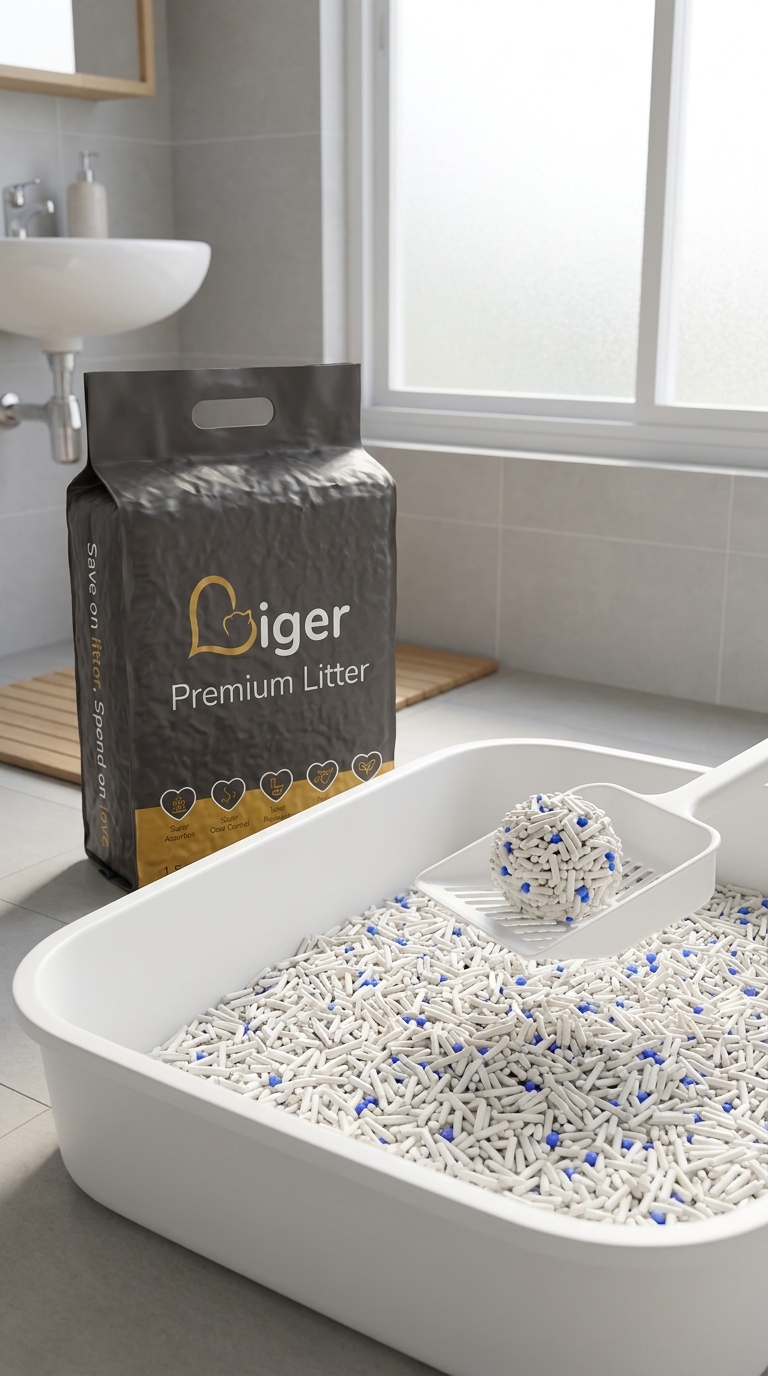
This is where Liger Premium Tofu Cat Litter genuinely pulls its weight. It's a soft, low-dust, soy-based tofu litter that cats find comfortable underfoot (so they're less likely to avoid the box), clumps firmly so you can see exactly what is — or isn't — being produced, and is flushable for fast daily scooping that keeps the box inviting. It's Halal-certified and priced from RM21.90 for a 2 kg pack down to RM8.45/kg on the 10-pack. A clean, comfortable box your cat actually wants to use is real, practical prevention — and the firm clumps make you an early-warning system for changes in output. Track frequency with the poop frequency checker.
When to Worry and the Bottom Line
Constipation is common and often fixable early — but it's progressive, so don't let it ride. Call your vet if your cat hasn't passed stool in more than 48 hours, is straining repeatedly without result, is vomiting, off its food, or lethargic — and treat any unproductive straining as potentially a urinary emergency until a vet says otherwise. Watching the litter box daily is the simplest, most powerful habit for catching this before it ever reaches megacolon. For the wider picture, see our overview of common cat diseases in Malaysia and our 12 warning signs your cat is sick. Your cat can't tell you in words that its bowels are blocked — but a litter box you check every day surely can.