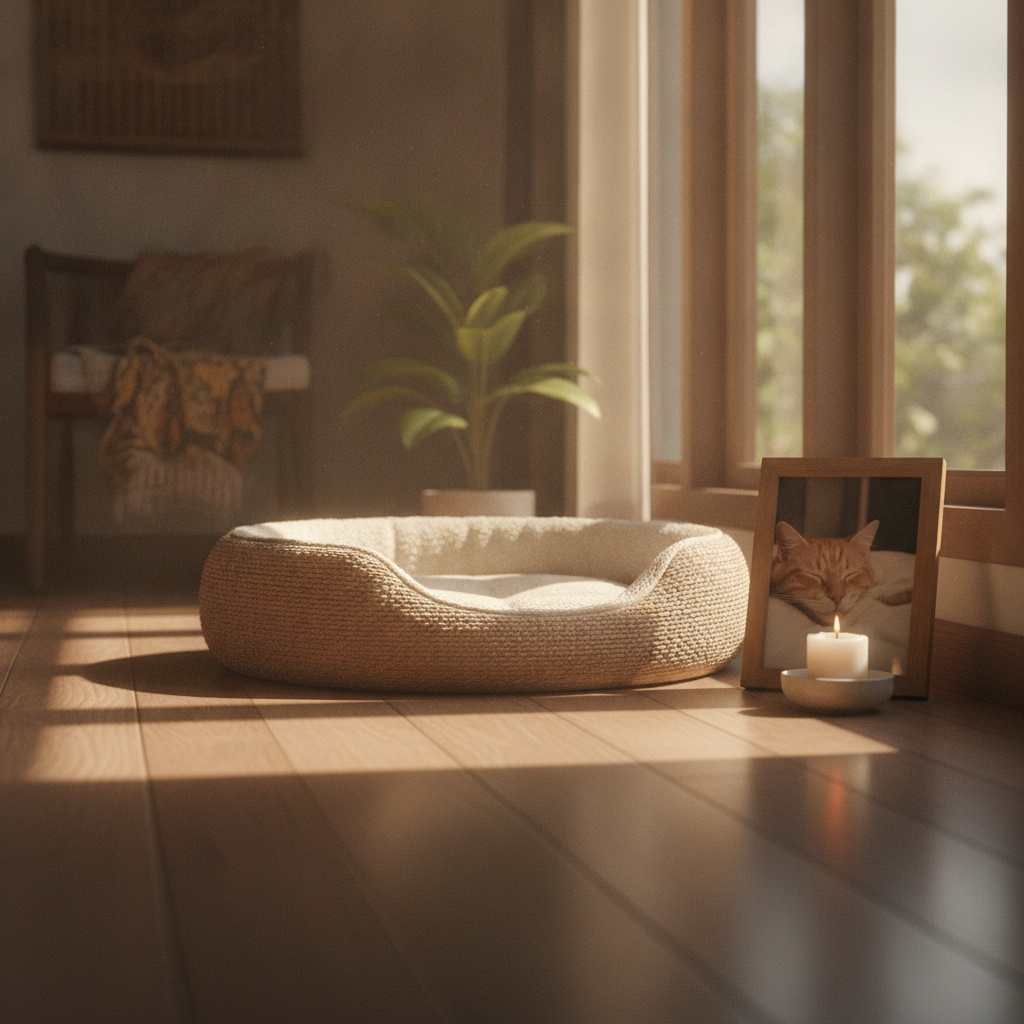
The house is too quiet. There's no weight on the end of the bed at night, no small shadow waiting by the food bowl in the morning. If you've just lost your cat, the size of the hole they've left can take your breath away — and you may be quietly wondering whether it's normal to hurt this much "over a cat." Let us be clear from the first line: yes, it is. Your grief is real, it is valid, and you are not overreacting.
This guide is here to sit with you through that. It explains why pet loss hits so hard, what's normal to feel, how to carry it, and where to turn if it becomes too heavy. It's the companion piece to our guide on quality of life and saying goodbye, and part of our wider cat life-stage care guide.
Grief for a Cat Is Real Grief
Your cat wasn't "just a pet." For most of us they're family — in one well-known study, nearly two-thirds of owners described their animal as a baby, child or best friend. Psychology backs this up: we form genuine attachment bonds with our cats, and brain-imaging research shows that losing a pet activates the same neurological grief pathways as losing a human loved one. The pain is not in your head; it's wired into it.
What makes pet loss uniquely lonely is something grief experts call disenfranchised grief — grief that society doesn't fully recognise. There's no funeral leave, no casserole from the neighbours, and sometimes a careless "you can always get another one." In Malaysia, where dedicated pet-bereavement support is still rare, that isolation can bite harder. None of it means your loss counts for less. As Blue Cross and other welfare bodies affirm, mourning a pet deeply is a sign of a bond well loved, not weakness.
What Grief Actually Feels Like (All of It Is Normal)
Grief is physical, emotional and mental all at once, and it can blindside you with its force — one survey found 67% of owners were shocked by how intense it was. Expect some mix of:
- Emotional: waves of sadness and crying, anger (at the vet, yourself, the unfairness), deep loneliness, and yearning. Relief is normal too if your cat suffered — often followed by guilt for feeling relieved. That doesn't make you a bad person.
- Mental: trouble concentrating, replaying their final moments, and the startling, common experience of briefly "hearing" a meow or seeing them from the corner of your eye. This is your brain adjusting to an absence, not you losing your mind.
- Physical: exhaustion, broken sleep, appetite changes, headaches. Grief genuinely floors people.
There's no "right" set of reactions, and there's no fixed clock on them either — the RSPCA notes that some people feel the worst weeks after the loss, once the initial numbness wears off and the daily reminders pile up. Whatever you're feeling, and whenever it arrives, it is part of a normal response to real loss.
Grief Is a Tide, Not a Timeline

Forget the tidy "five stages." Modern grief understanding, echoed by Cornell University, sees grief as non-linear — one bereavement therapist describes it as "more like a tide than a timeline. It ebbs and flows." A dreadful morning can give way to a functional afternoon; months of calm can be split open by a song, a vet reminder, or an empty food bowl. Healthy grieving naturally swings between facing the loss (crying, looking at photos) and stepping back into life (new routines, tasks) — that oscillation isn't inconsistency, it's how we heal.
And here's the kindest reframe of all: you don't "get over" a cat you loved. You grow around the grief. The loss doesn't shrink so much as your life slowly grows larger around it, until the pain becomes a smaller part of a fuller whole — while the love stays exactly where it was. This is also why secondary losses can ambush you weeks later: the first time you instinctively buy cat food out of habit, the vacant spot on the windowsill at sunset, the silence where a familiar greeting used to be. These aren't setbacks or signs you're "failing" at grief — they're simply the tide coming back in. Let it. Trying to rush or suppress it tends to prolong the pain, not shorten it.
The Special Weight of Guilt After Euthanasia
If you chose euthanasia, you may be carrying a particular, gnawing question: did I do the right thing? Did I do it too soon, or too late? This guilt is almost universal, and it's the price of having loved a creature who depended on you completely. The single most important reframe, supported by the AVMA, is this: you did not take a life — you ended suffering. That is an act of love, not betrayal.
When the "what ifs" circle, self-compassion is the most effective tool grief researchers have found. Try repeating, and believing:
- "I made the best decision I could with what I knew at the time."
- "Choosing to end suffering is an act of love, not betrayal."
- "My cat didn't know it was coming. They only knew I was there with them."
Healthy Ways to Carry It: Rituals and Support

Grief is something you do, not just something that happens to you — and having a few gentle, concrete things to do can be an anchor when the feelings feel formless. None of these are about "moving on" or forgetting; they're about honouring a bond and giving your sorrow a shape it can live in. Active, gentle steps help:
- Make a memorial. A memory box with their collar and favourite toy, a photo album, a written tribute or letter, a planted tree, or a donation to a shelter in their name — rituals give love somewhere to go.
- Reach for people who get it. Tell empathetic friends; join a pet-loss support group (many run online, which suits Malaysia well); or call a pet-loss hotline like those run by the ASPCA and Cornell, staffed by trained volunteers.
- Mind the basics. Eat, hydrate, keep some routine, move your body gently. Self-care isn't a distraction from grief — it's what gives you the strength to feel it.
Helping Children and Surviving Pets Grieve
Children need honesty, not euphemisms. Use the real words — "died," not "put to sleep" or "gone away," which can make a child fearful of sleep or feel abandoned. Reassure them the death wasn't their fault, answer questions simply and repeatedly (children process loss in small doses, circling back over days and weeks), and let them join in remembering — drawing a picture, saying a few words, or choosing a favourite photo gives their feelings a shape. It's also okay, and healthy, to let your children see you cry; it teaches them that grief is a normal part of love rather than something to hide.
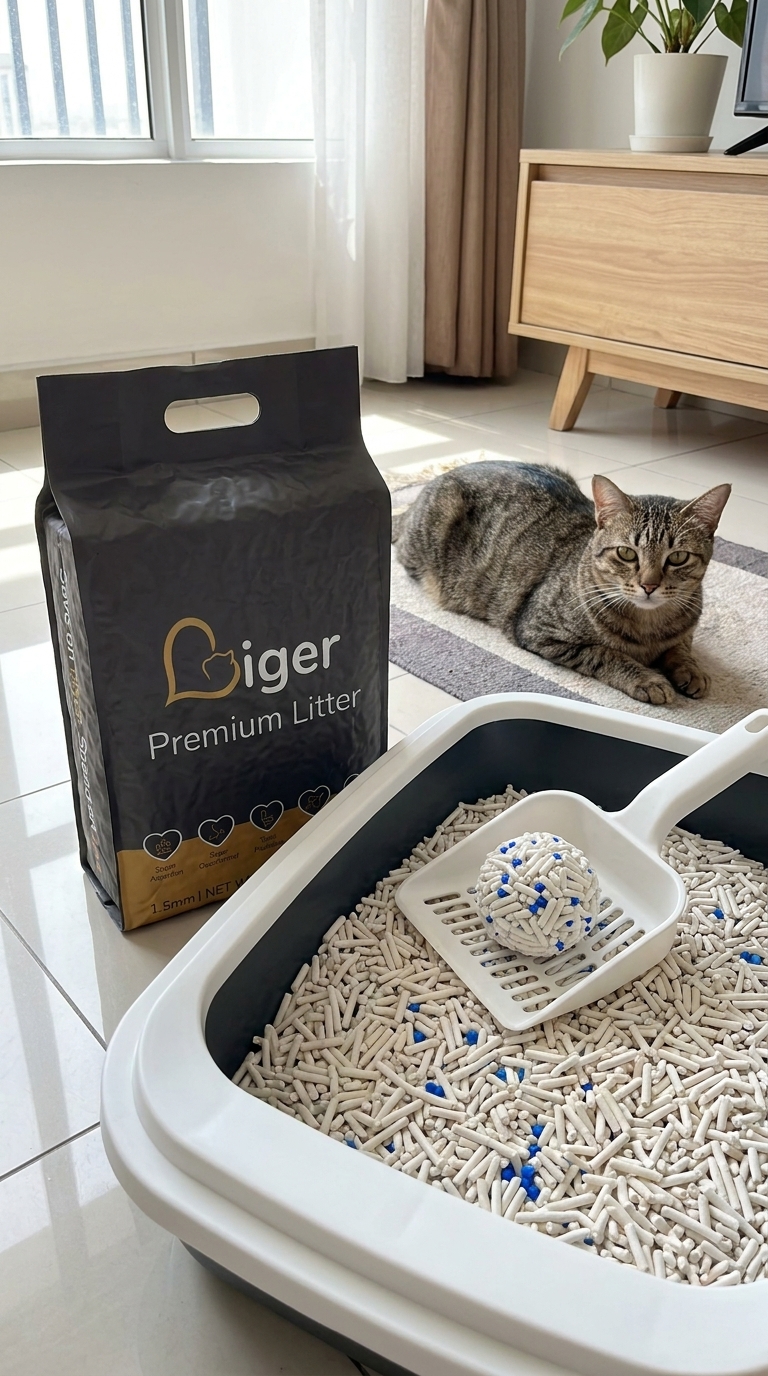
Surviving pets grieve too. A remaining cat may search the house, call out, go off its food, sleep more, or become clingy. The best medicine is stability: keep feeding times, play and their environment as consistent as possible while they adjust, including keeping their litter setup unchanged and inviting — a stressed cat is quick to develop toilet troubles. Keeping a familiar, low-dust litter such as Liger Premium Tofu Cat Litter in the same spot is one small constant you can offer; our litter calculator helps if your household size has changed. Extra gentle attention, interactive play and patience carry a grieving cat through. Do resist the urge to rush out and adopt a new cat purely to "fill the gap" for a surviving pet — let them settle into the new normal first, and if appetite changes or hiding drags on beyond a couple of weeks, have your vet rule out a physical cause, since stress and illness can look alike.
When Grief Needs More Help
For most people, grief slowly softens. But for an estimated 7–10%, it becomes "complicated" or prolonged — staying at full, life-disrupting intensity for many months, with an inability to function, hopelessness, or withdrawal from everything. Up to 20% of owners still report real grief a year on, so time alone isn't the only marker; it's whether you're able to live alongside it. If your grief isn't easing, is overwhelming you, or is bringing thoughts of not wanting to go on, please treat that as the signal it is and reach out to a doctor or mental-health professional. Seeking help is strength, not failure — and you deserve support as real as your loss.
However you're feeling today, be as gentle with yourself as you were with your cat. You gave them a loved life and, at the end, a kind one. That love doesn't end — it just changes shape, settling quietly into memory where it can keep you company rather than only hurt. When you're ready, and only then, our life-stage guide will be here if another cat one day finds their way to you.