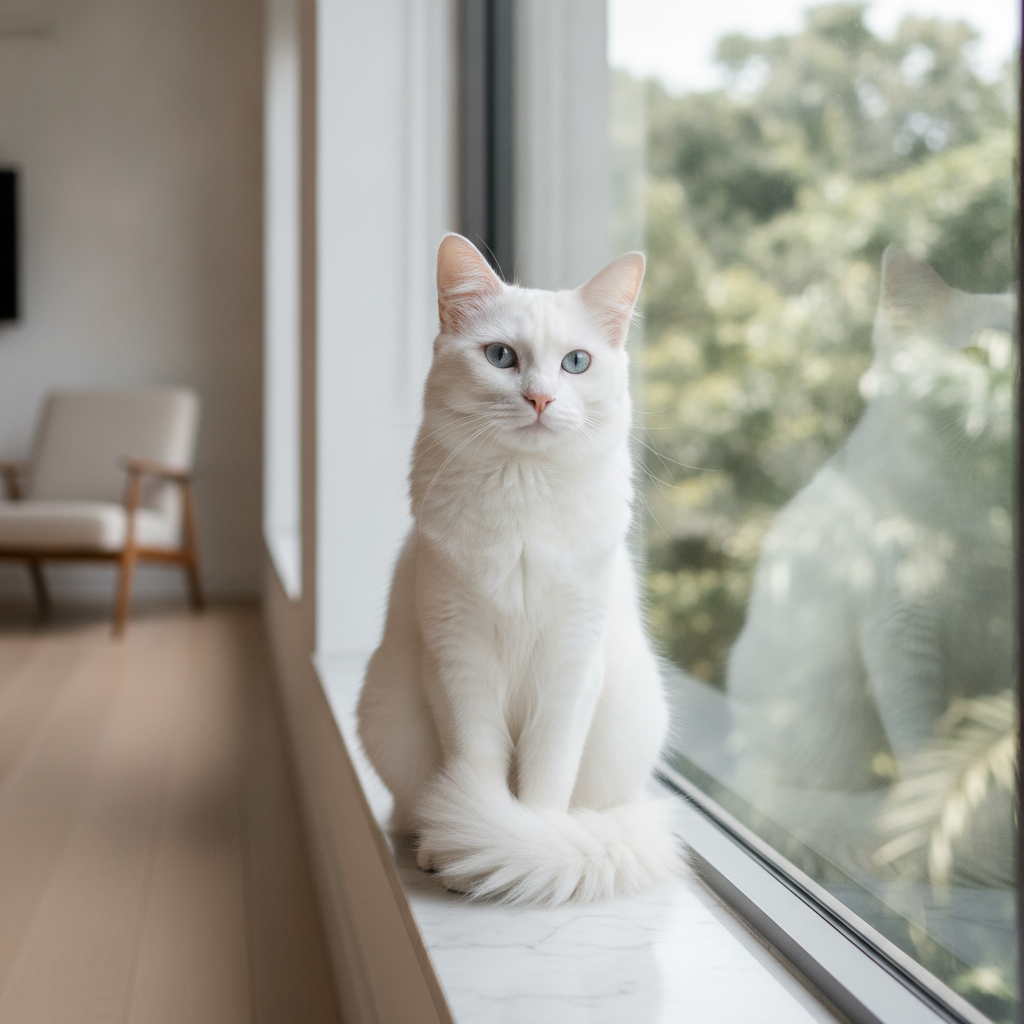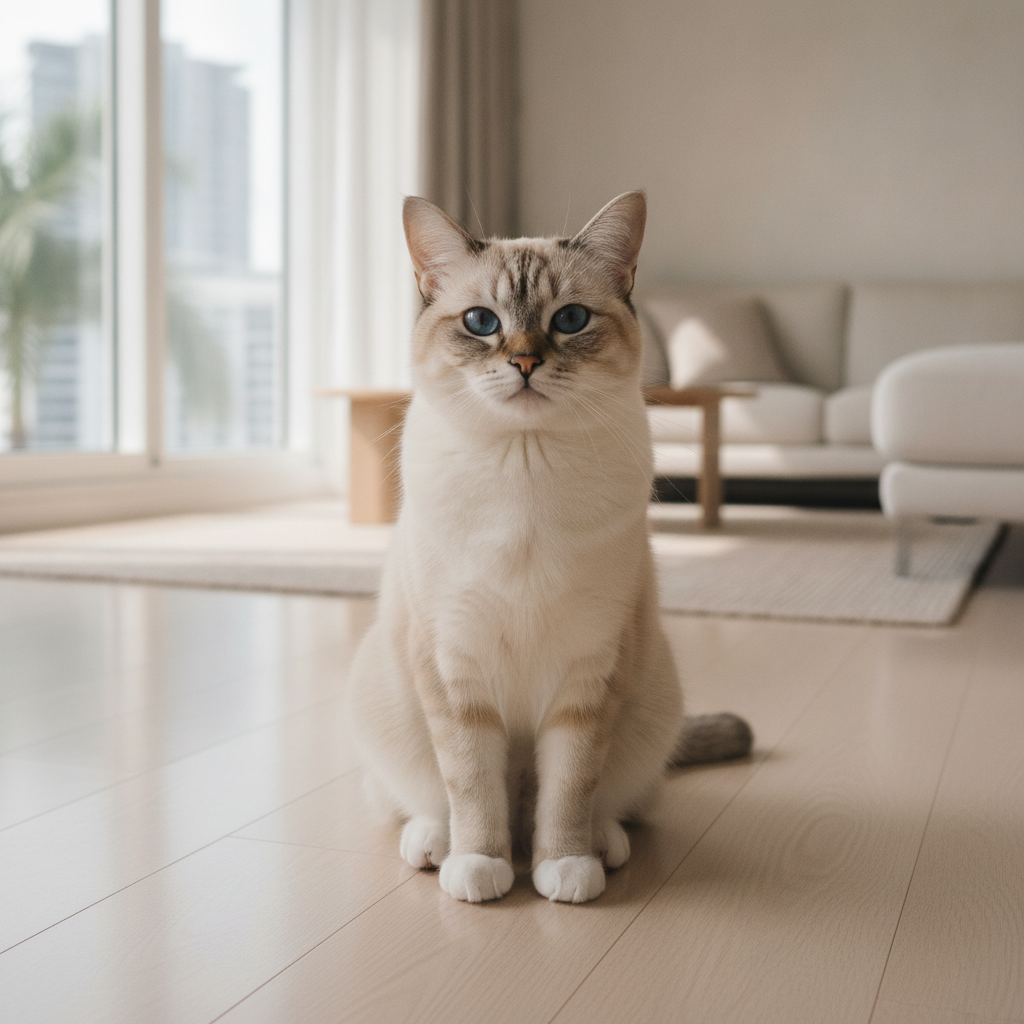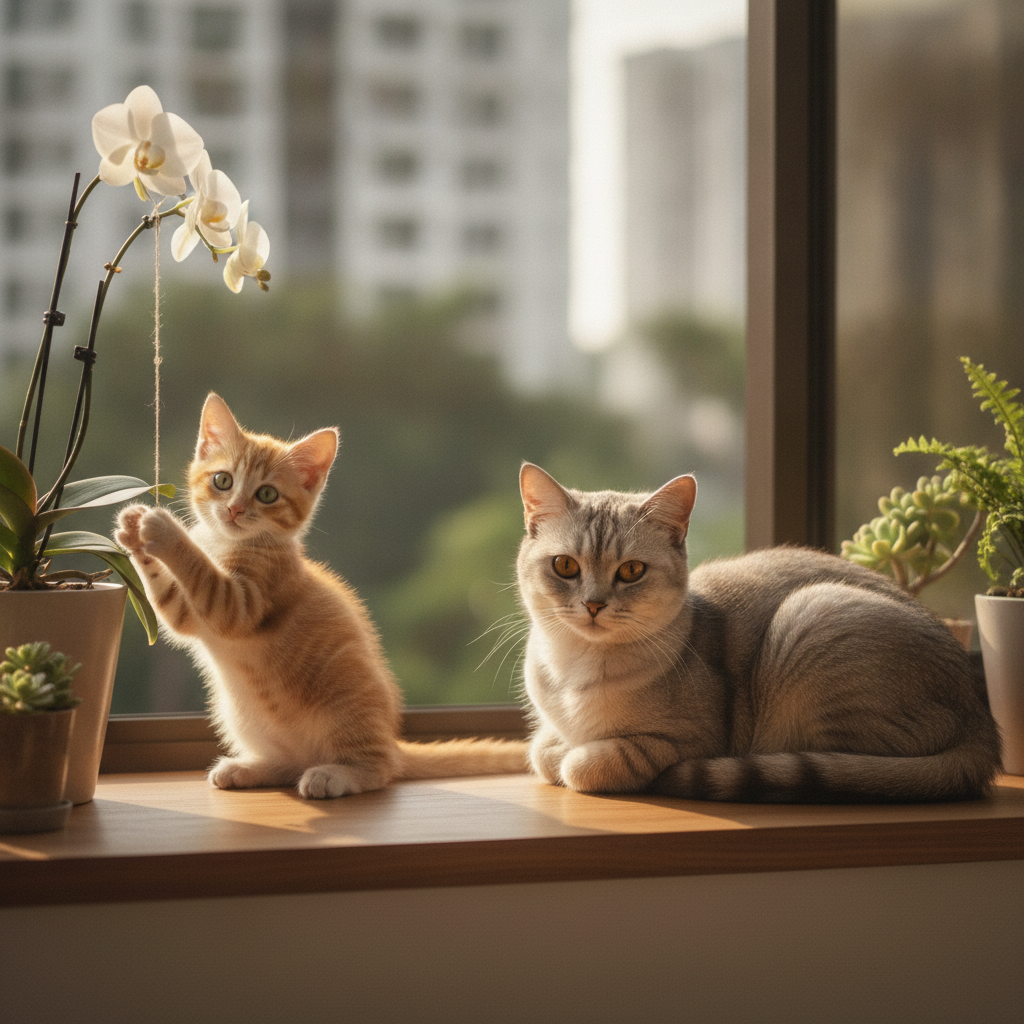
Your cat at eight weeks and your cat at eighteen years are, in almost every way that matters, two different animals. One is a wide-eyed learning machine soaking up the world; the other is a creature of habit who feels every cold morning in their joints. Yet we often feed, house and care for them as if a cat is just a cat. It isn't. A cat moves through six distinct life stages, and the care that keeps a kitten thriving can quietly fail a senior.
This is the hub guide for Malaysian cat parents: the big picture of how a cat changes from kitten to geriatric, what to watch for at each stage, and where to go deep on any one topic. Bookmark it, and jump to the Life-Stage Directory at the bottom if you already know which stage you're chasing answers for.
The Six Life Stages of a Cat
Vets used to lump cats into three crude buckets: kitten, adult, senior. That model quietly broke as cats started living well into their late teens and twenties. Today the two most respected frameworks are the 2021 AAHA/AAFP Feline Life Stage Guidelines, which use five stages, and the six-stage model from International Cat Care, which splits the older years more finely. We'll follow the six-stage version here because it maps better to how cats actually age.
| Life stage | Age | Roughly, in human years | What it's really about |
|---|---|---|---|
| Kitten | 0–6 months | 0–10 | Explosive growth and learning |
| Junior | 7 months–2 years | 12–24 | Finishing growing up |
| Prime / Adult | 3–6 years | 28–40 | Physical peak |
| Mature | 7–10 years | 44–56 | Quiet onset of disease |
| Senior | 11–14 years | 60–72 | Catching problems early |
| Geriatric | 15+ years | 76+ | Comfort and quality of life |
The exact birthdays don't matter as much as the direction of travel. A cat doesn't read the calendar and suddenly become "senior" at 11. But knowing roughly where your cat sits tells you what to feed, how often to see the vet, and which warning signs deserve a phone call. Not sure how old your cat is in human terms? Our cat age calculator does the maths, and if you want stage-by-breed longevity, see how long your cat will live by breed.
Kitten and Junior: Building the Foundation (Birth to 2 Years)
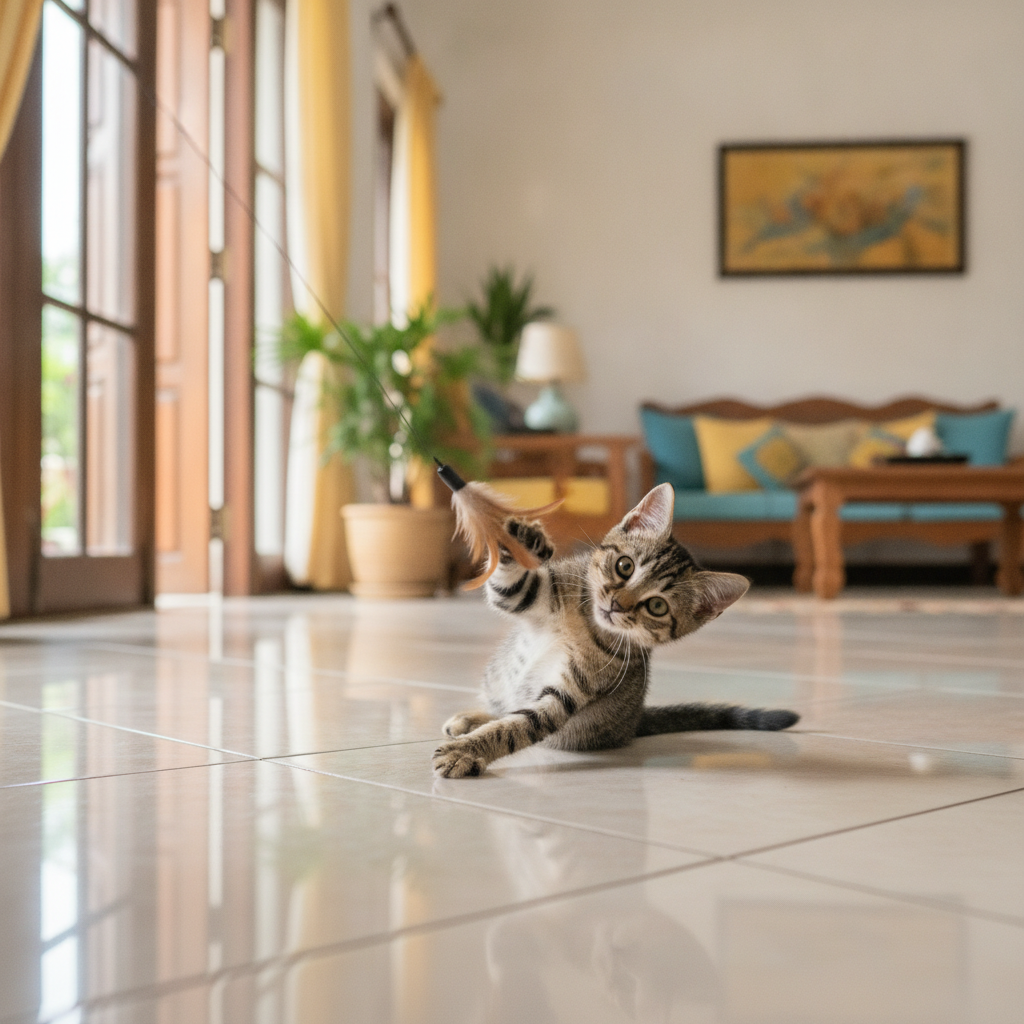
Everything you do in the first two years pays compound interest for the next twenty. This is the stage of rapid growth, finished by around 10–12 months in most cats, and of the behavioural wiring that decides whether you get a confident lap cat or a nervous wreck who bolts at the doorbell.
The single most important window is socialisation, which runs from roughly two to nine weeks — often before a kitten even reaches your home. Gentle handling, new sounds, and positive experiences during this phase physically shape the brain. Miss it and the damage is hard to undo. Because it matters so much, we've given it its own deep-dive: the kitten socialisation critical window. To track the physical milestones — teeth, eyes, weight, sexual maturity — follow our kitten development month by month guide.
Practically, the kitten and junior years are a checklist:
- Vet visits every 3–4 weeks until ~16 weeks for the core vaccine series and parasite control. We've mapped the whole first year in the kitten first-year health timeline.
- Kitten-formula food, higher in calories and protein, transitioning to adult food between 6 and 12 months. See the kitten feeding guide by age.
- Litter training and safe litter — kittens nibble everything, so the litter itself matters. Our litter training guide and safe litter choices by age cover this.
- Surviving teething (the "land shark" phase) and brand-new arrivals — see kitten teething and, for orphaned newborns, the newborn kitten SOS guide.
This is also the time to start daily tooth-brushing as a habit, and to book that first dental check — the AAHA recommends a professional oral assessment by one year of age, long before most owners think dental disease is even possible.
Prime and Mature: The Quiet Years That Matter Most (3 to 10 Years)
From three to six, your cat is in its prime — the human equivalent of your late twenties to early forties. They look bulletproof. They mostly are. The trap is complacency, because the mature stage that follows (7–10 years) is when disease starts creeping in silently. Research on middle-aged cats has found that the majority already carry at least one detectable problem on a thorough exam — commonly dental disease, early arthritis, or excess weight — long before the owner notices anything wrong.
So the job in these years shifts from "fuel growth" to "catch trouble early":
- Annual vet visits through the prime years, moving to twice-yearly as your cat hits the mature stage.
- Weight management. A slowing metabolism plus free-feeding is how a sleek prime cat becomes an overweight mature one. Obesity feeds straight into arthritis and diabetes. Measure meals; don't leave the bowl topped up all day.
- Real dental care. Dental disease is the most under-treated problem in adult cats. Daily brushing plus a professional cleaning when your vet advises.
- Behaviour is data. Drinking more, weeing more, jumping less, grooming less — per Cornell's Feline Health Center, these subtle shifts are often the first sign of kidney disease, hyperthyroidism or pain. You see them before any blood test does.
The Senior Cat: Catching Trouble Early (11 to 14 Years)
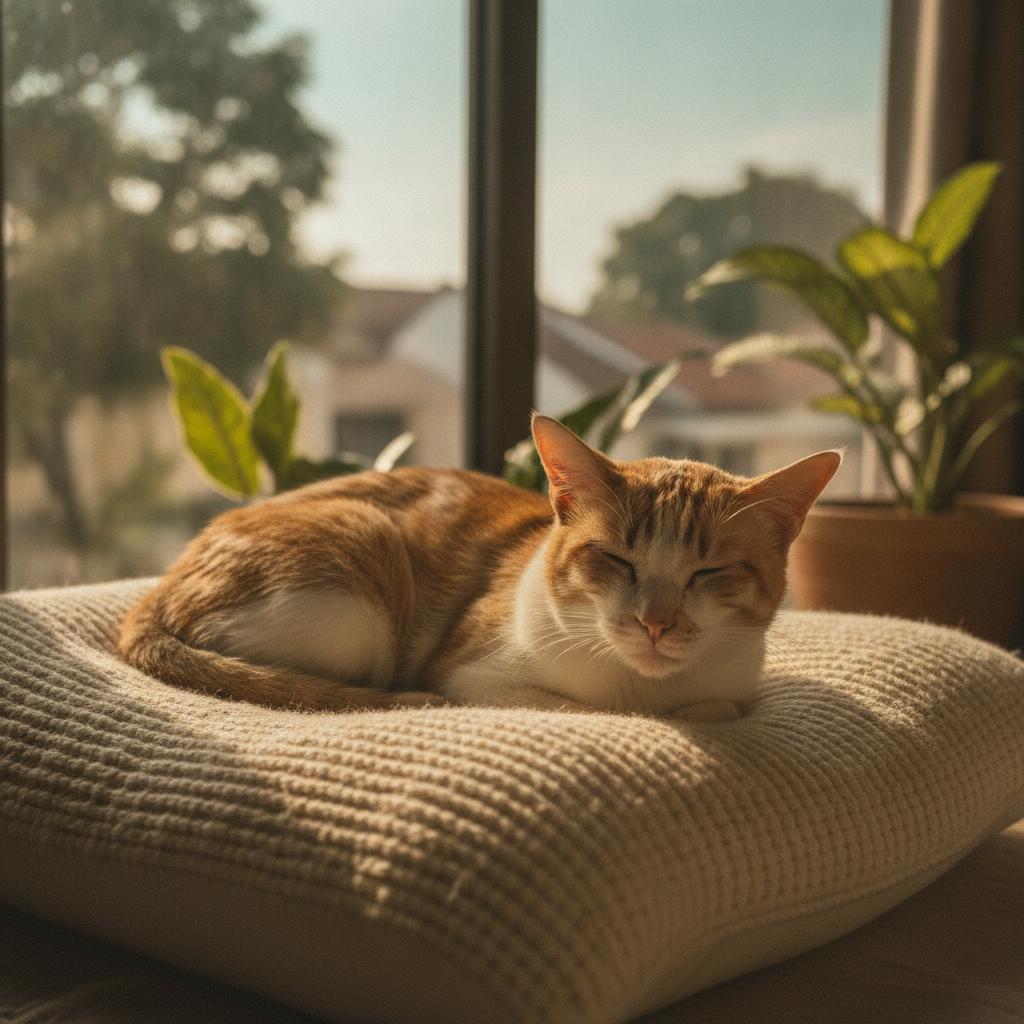
At 11, your cat crosses into the senior years — about 60 in human terms. This is the stage where chronic kidney disease, hyperthyroidism, high blood pressure and arthritis genuinely start to show up. The good news: caught early, all of them are manageable, and cats can live happy, comfortable years with them.
The headline change vets recommend is simple — see the vet every six months, not once a year. Cats hide illness brilliantly, and six months is a long time in an old cat's life. Those visits should build a "minimum database": bloodwork (ideally including the SDMA kidney marker), urine testing, a thyroid (T4) check, and a blood-pressure reading, as set out in the 2023 AAHA Senior Care Guidelines.
At home, your job is to notice and adapt. Learn the early warning signs in our spoke on signs your cat is getting old. Two of the most common senior problems already have full guides: the silent limp of feline arthritis and senior nutrition and kidney care. Diet shifts toward high-quality, digestible protein to protect muscle, controlled phosphorus if the kidneys are struggling, and more water — wet food earns its place here.
The Geriatric Cat: Comfort Comes First (15 Years and Older)
Past 15, the philosophy of care changes. You're no longer trying to prevent disease so much as keep a frail, dignified old cat comfortable while managing several conditions at once. The numbers are sobering: by 12 years, up to 90% of cats show signs of osteoarthritis, and cognitive decline becomes common — affecting over 80% of cats aged 16 to 20.
If your old cat is yowling at 3am, getting "stuck" in corners, forgetting where the litter box is, or sleeping at strange hours, that may not be stubbornness — it can be feline dementia. We cover it gently and practically in feline cognitive dysfunction. The watchwords for geriatric care are access and predictability:
- Vet checks as often as every four months, even for a cat that seems fine.
- Calorie-dense, highly palatable, often wet food — warmed slightly to wake up a fading sense of smell — in small frequent meals to fight weight and muscle loss.
- Ramps or steps to favourite perches; warm, soft, easy-to-reach beds (older cats struggle to stay warm, even in our climate — see our cat bed guide).
- Night-lights for failing eyes, and a litter box on every floor so a stiff, confused cat never has far to go.
The Litter Box at Every Life Stage
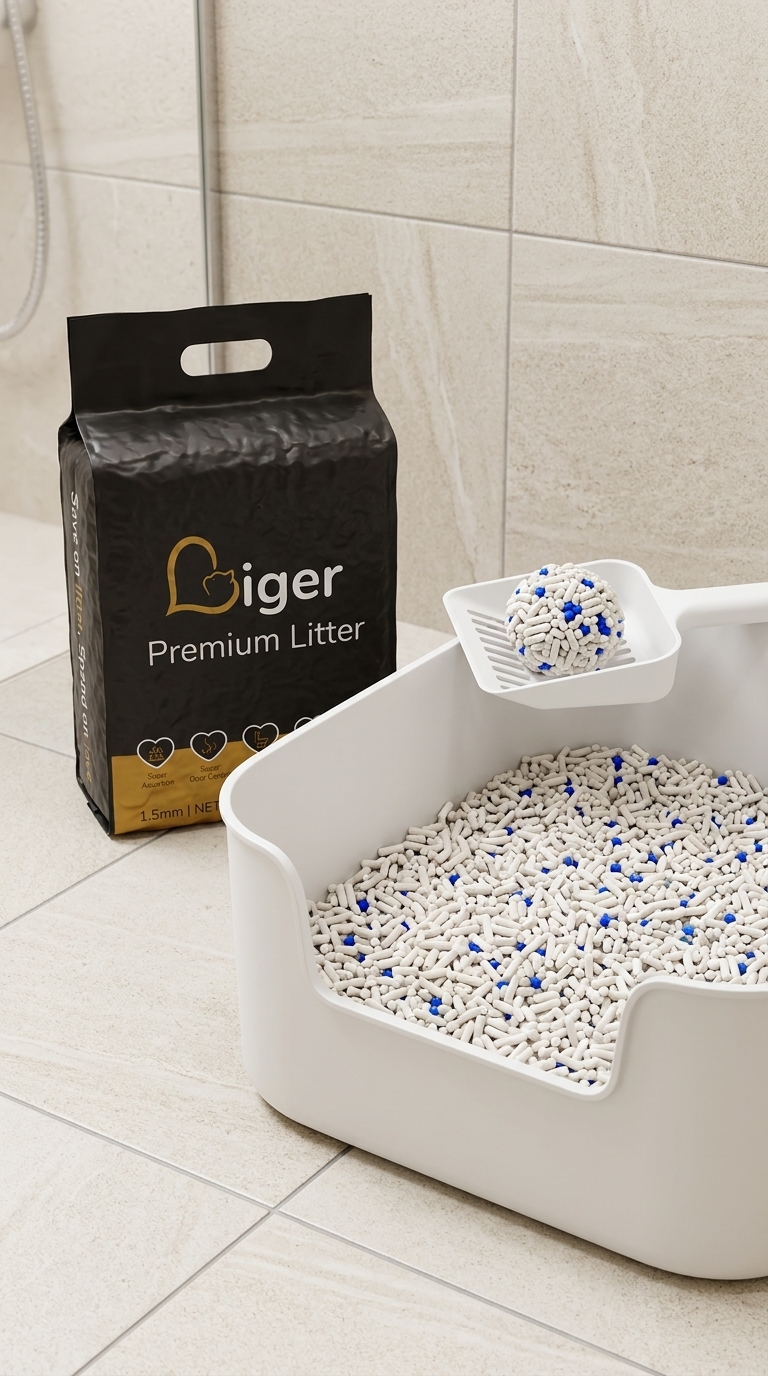
One thing follows your cat through all six stages: the litter box. And what works at each end of life is surprisingly similar — low dust and easy access. Kittens nibble and dig in everything, so a food-grade, low-dust litter matters for the same reason it matters for an arthritic 16-year-old who can't tolerate a dusty, hard-to-enter box.
This is exactly where Liger Premium Tofu Cat Litter fits a whole-of-life household. Made from food-grade plant starch, it throws off minimal airborne dust — kinder to a kitten's developing airways and a senior's lungs alike — clumps firmly so scooping stays quick, and is light enough to manage. For a tiny kitten or a wobbly geriatric cat, pair it with a box that has a low entry side (around 3–5 cm) so getting in is never a struggle; our litter box size calculator helps you pick the right one.
Liger runs from RM21.90 for a single 2 kg pack to RM169 for the 10-pack (20 kg, about RM8.45/kg), with free shipping in Peninsular Malaysia (current Liger pricing, as of May 2026). Work out how much your household actually gets through with the litter calculator. For stage-specific picks, we've also written up safe litter for kittens and the best litter for senior cats.
Saying Goodbye, and Grieving Well
There's no gentle way to write this section, so we'll be honest: the last life stage is the hardest, and you deserve real help with it rather than platitudes. Knowing when a cat's bad days outnumber the good is one of the most painful judgement calls a cat parent ever makes — and it's one your vet can walk through with you using a proper quality-of-life framework, not guesswork. We've laid it out compassionately in quality of life and saying goodbye.
And when the day comes, the grief that follows is real, valid, and nothing to apologise for. If you're carrying that weight now, our guide to coping with pet loss is there for you. A cat gives you their whole life. Mourning them properly is simply love with nowhere left to go.
Why Does My Cat Do That at This Age? A Life-Stage Directory
Whatever stage your cat is in, here's the deep-dive for it:
Kitten & junior: Socialisation window · Development month by month · First-year health timeline · Feeding by age · Litter training · Safe litter for kittens · Teething · Newborn kitten SOS
Senior & geriatric: Signs your cat is getting old · Arthritis · Senior nutrition & kidneys · Feline dementia · Best litter for seniors · Quality of life & goodbye · Coping with pet loss
All ages: Cat age calculator · Lifespan by breed · New cat owner checklist · Litter calculator
Care isn't one thing you do once. It's six different jobs, each timed to the cat in front of you right now. Get the stage right, and you give your cat the best shot at a long life lived well — not just a long one.