Scratching itself isn't the problem — we've covered why your cat scratches and that it's perfectly normal elsewhere. This guide is about the buying decision: faced with a wall of posts and towering cat trees at the pet shop (or an endless scroll online), how do you pick one your cat will actually use instead of ignoring in favour of your sofa?
The honest answer is that most scratchers fail on two or three boringly predictable specs. Get the material, height, stability and placement right and you've solved 90% of "my cat won't use the post." Here's the buyer's framework — with the extra bits that matter in a small, vertical Malaysian condo.
Material: Why Sisal Beats Carpet (and When Cardboard Wins)
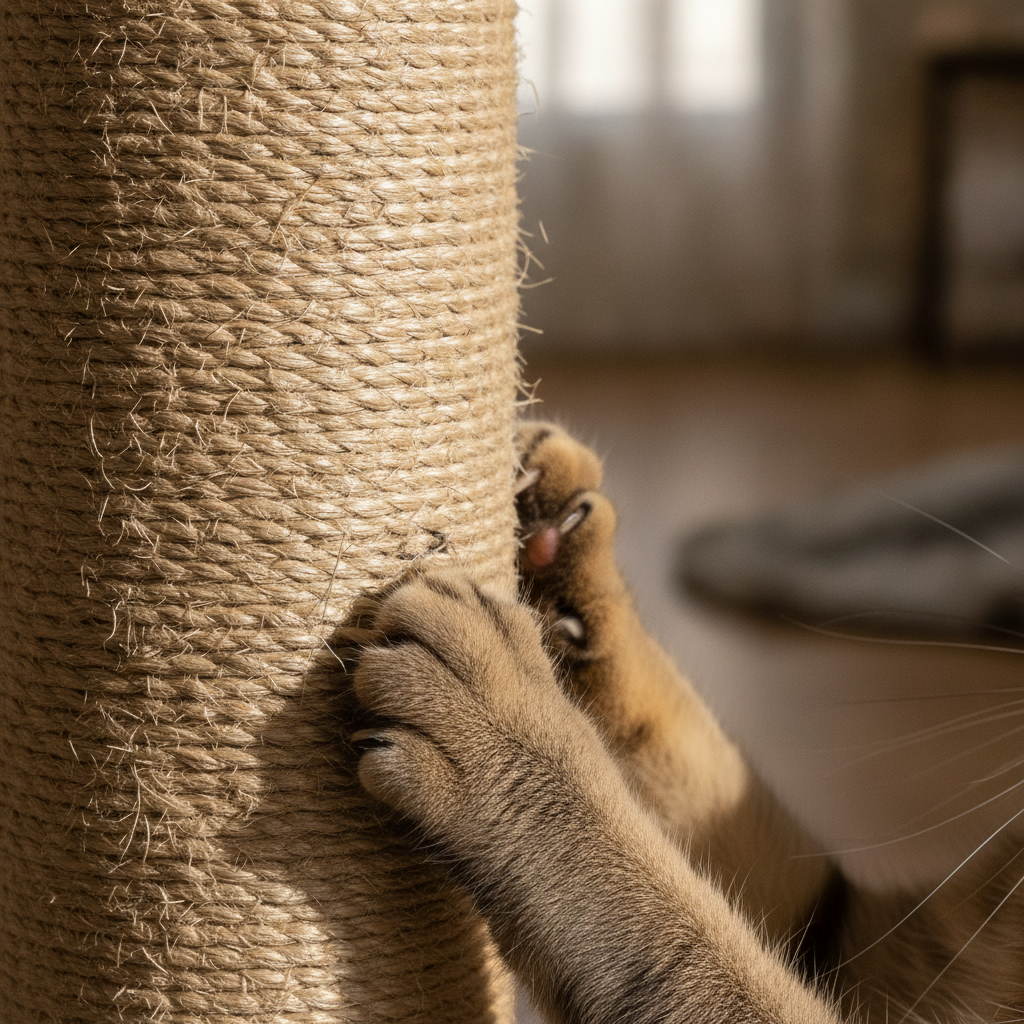
The scratching surface is the single biggest predictor of whether your cat adopts a post. Feline behaviourists and welfare bodies treat sisal fabric as the gold standard: its coarse, woven texture mimics tree bark and gives a deeply satisfying shred, and it's durable enough to survive years of daily abuse. International Cat Care notes cats need surfaces they can really dig into and rake downward — exactly what sisal delivers.
Corrugated cardboard is the budget hero, especially for cats that like to scratch flat on the ground. It's cheap, the tearing sound is satisfying, and it's a brilliant low-risk way to test a new cat's preference. The trade-off is lifespan — it shreds into confetti and needs replacing often. A quick note on sisal itself: both sisal rope (wound around the post) and sisal fabric (woven and stapled flat) work, but many behaviourists rate the fabric slightly higher because it lets the cat rake in one long continuous downward motion rather than catching between rope coils.
Carpet is the one to be wary of, even though it covers most cheap commercial cat trees. Looped carpet pile can snag and pull a claw, which hurts and can put a cat off the post for good. It also blurs the line between "post you may scratch" and "floor carpet you may not." Cats given a choice tend to pick sisal or cardboard over carpet. If a tree you like is carpet-covered, look for one with sisal-wrapped posts instead. According to the American Association of Feline Practitioners (AAFP), the texture has to invite scratching, not fight it.
Height and Stability: The Two Specs Most Posts Fail
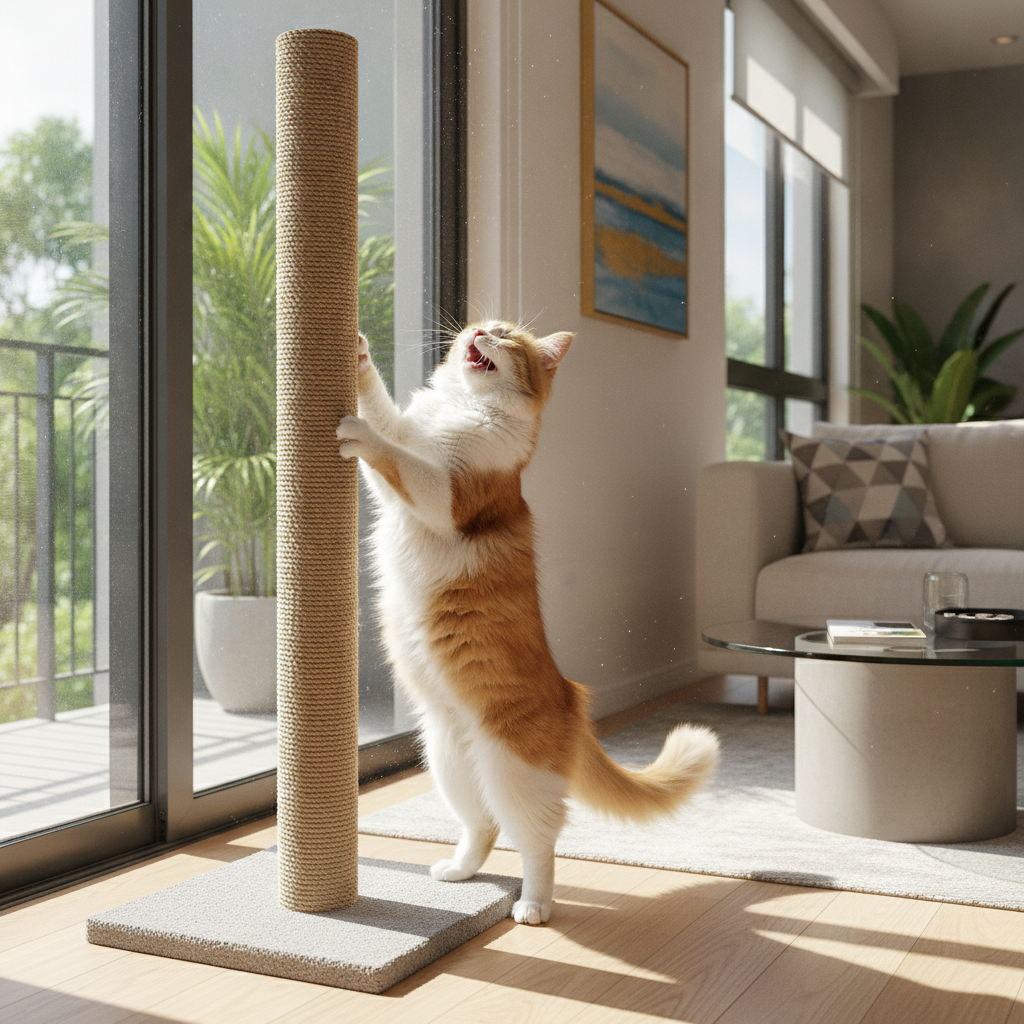
A huge number of posts on the shelf are simply too short. A core reason cats scratch is to perform a full-body stretch — reaching up and pulling down to tone the muscles along the back, shoulders and legs. If the post doesn't allow that full extension, your cat gets no payoff and walks away. The AAFP's guidance is that a post should be taller than the cat's full body length, and surveys point to a minimum of about three feet (90 cm) for an adult; the Canadian Veterinary Medical Association phrases it as taller than the cat standing on its hind legs.
The second silent failure is stability. A cat throws real force into a scratch, and a post that wobbles, slides or tips even once teaches the cat it's unsafe — and they abandon it permanently, as VCA Hospitals warns. Look for a wide, heavy base; a common guideline is roughly a 40 cm (16-inch) square base for a 75 cm (30-inch) post. Before you buy, push the display model hard at the top. If it rocks, your cat will reject it too.
Vertical, Horizontal or Angled? Read Your Cat First
Your cat has already told you what it prefers — you just have to read the evidence. Cats that claw the sides of sofas, chair legs and door frames are vertical scratchers wanting that upward stretch. Cats that rake at rugs and carpets prefer horizontal surfaces, crouching and pulling claws toward the body. Some lean into an angled surface, front paws higher than back.
The smart, cheap move PetMD suggests: before committing to an expensive tree, drop a few cheap cardboard scratchers — flat, upright and angled — near the spots your cat already targets, and watch which gets used. Then buy the durable sisal version that matches the winning orientation. Offering variety is ideal anyway; many cats use a tall post for the morning stretch and a flat pad for a quick claw session.
Your cat will also tell you, in body language, whether it approves of the new scratcher. A long, satisfying stretch during or right after a session is the clearest green light — it confirms the height and texture are physically adequate. Frequent return visits, purring, and rubbing the face and cheeks against the post (depositing facial pheromones) all signal acceptance. If the cat sniffs it once and goes straight back to the sofa, treat that as data: something — material, height, stability or location — is wrong, and it's cheaper to fix that than to buy a second tree.
Choosing a Cat Tree for a Small Malaysian Condo
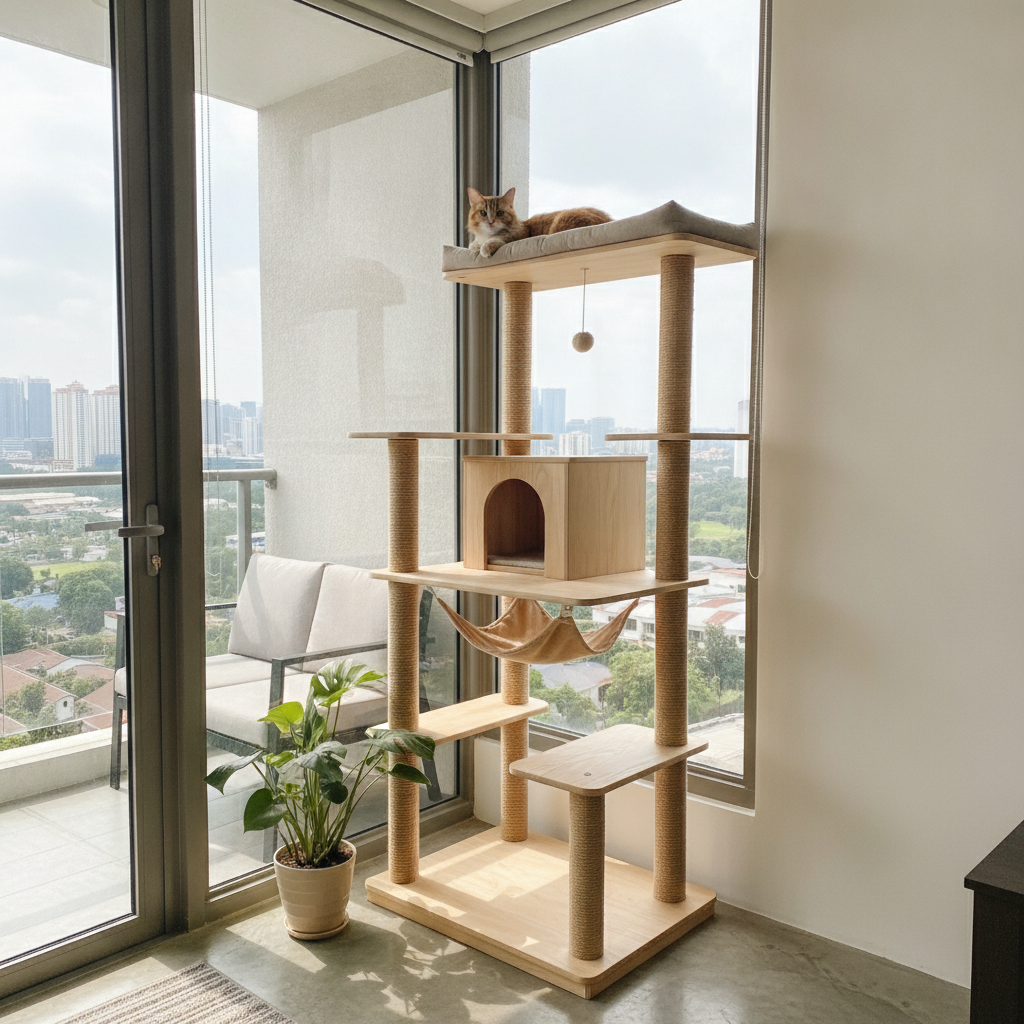
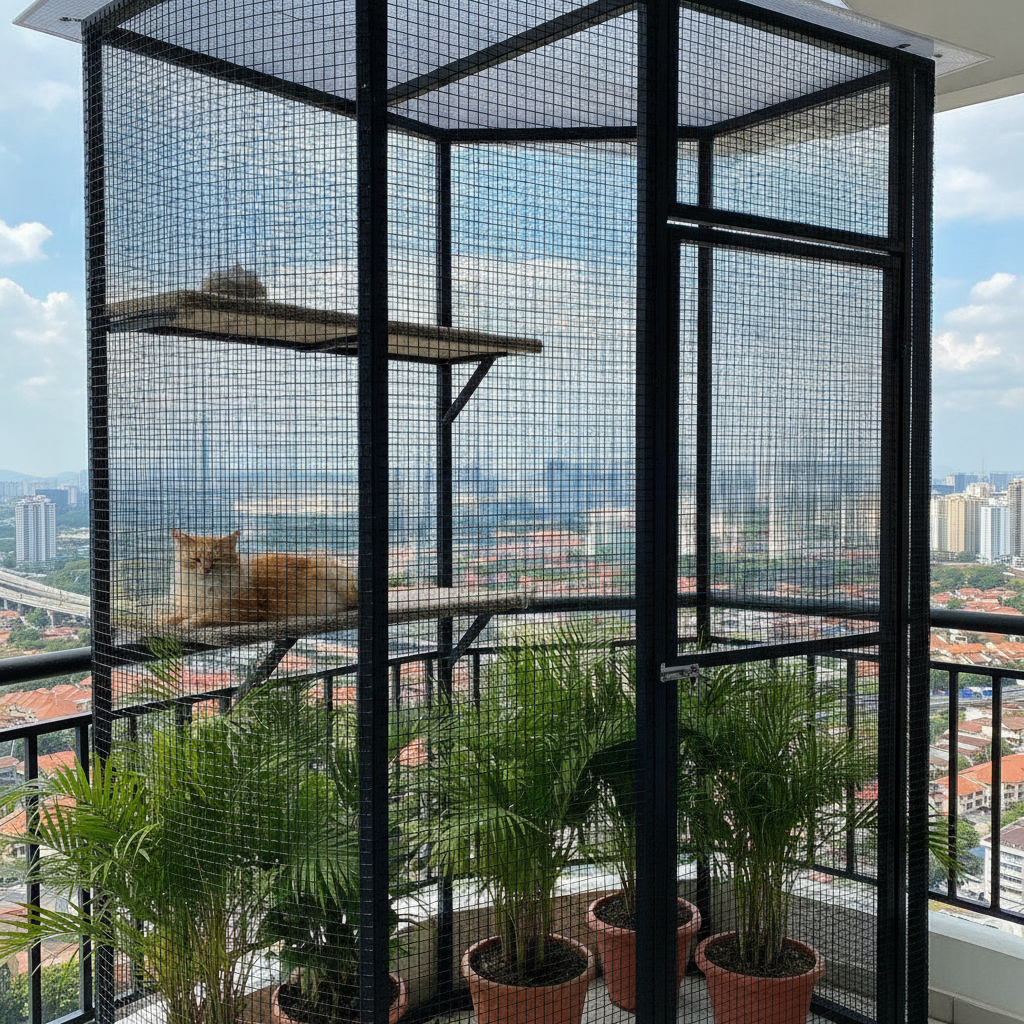
In a high-rise, a cat tree isn't a toy — it's vertical territory. Cats are both predator and prey and feel safest when they can climb to a high vantage point and survey the room. Denied that, they scale your curtains and bookshelves instead. In a compact KL or Penang condo where floor space is precious, a tall, narrow tower or a set of wall-mounted shelves creating a "cat highway" expands usable territory without eating your living room.
Match tree height and platform design to the cat. Beyond the general adult minimum, check the weight rating (a single cat needs the structure to hold ~9–11 kg comfortably; more for big breeds) and platform size so the cat can actually rest, not just cling. Place at least one perch by a window — a shaded one, given our sun — so the tree doubles as a bird-watching enrichment station.
Kittens, Seniors and Multi-Cat Homes
One size does not fit all life stages. Use this as a buying reference:
| Life stage | Tree height | Platform spacing | Key feature to look for |
|---|---|---|---|
| Kitten (under 1 yr) | Lower, under ~1.2 m | Close, ~30–40 cm | Low falls risk; horizontal cardboard scratchers |
| Healthy adult (1–7 yr) | Tall, >90 cm post | ~45–60 cm | Sturdy base, varied materials, high perch |
| Senior / arthritic (7+ yr) | Shorter, with ramps | Close, ~20–30 cm | Ramps or steps, oversized non-slip platforms, floor-level scratcher |
For homes with more than one cat, apply the n+1 rule recommended across veterinary behaviour resources: provide one more scratching post than you have cats (two cats = at least three posts), spread around the home so a dominant cat can't guard them all. The Ohio State University Indoor Pet Initiative frames abundant, well-placed resources as a cornerstone of indoor-cat welfare. Senior cats with stiff joints especially need a low-angle or horizontal scratcher at floor level once vertical stretching gets painful.
Placement: Where to Put It So Your Cat Actually Uses It
The best post in the wrong spot gathers dust. Two rules cover it. First, redirect at the scene: place a new, superior post immediately next to the sofa corner or door frame your cat already scratches — not in a far bedroom. Once the cat commits to the post, you can edge it a little toward where you'd prefer it. Second, go where the action is: scratching is territorial signalling, so cats want to do it in prominent, high-traffic spots and right after waking. A post by the sofa or near the bed gets used; a post hidden in a spare room does not, as the San Francisco SPCA points out. Sprinkle catnip or play a wand-toy game around the base to seal the positive association — and never force your cat's paws onto it, which only creates fear.
Don't Forget What's Under the Tree: The Litter Setup
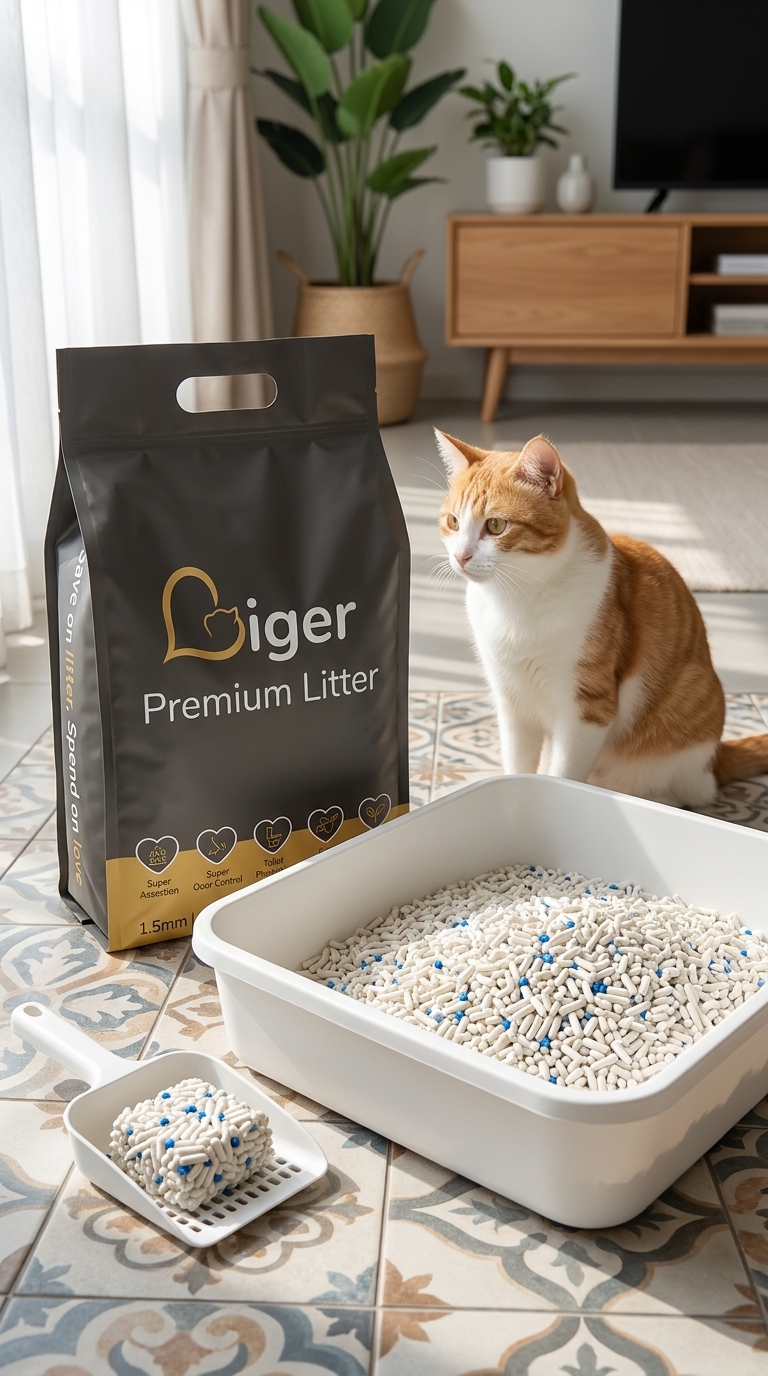
Once you've sorted vertical territory, remember the other station your cat uses every single day — far more than any scratching post — is the litter box. It deserves the same care. Size the box at roughly 1.5 times your cat's body length and follow the same n+1 rule for multiple cats; our litter box size calculator handles the math.
For the litter itself, a humid Malaysian apartment rewards low dust, firm clumping and genuine odour control. Liger Premium Tofu Cat Litter ticks those boxes — bright white soy-based pellets that clump firmly, blue deodorising beads, very low dust for sensitive airways, flushable and Halal-friendly. Pricing is local and honest (as of 2026): RM21.90 for a 2 kg starter pack up to RM169 for the 20 kg bundle, which works out to RM8.45/kg — about 23% cheaper per kilo than singles, free shipping in West Malaysia. Work out how much you'll need with the litter calculator, and if dust is a concern in your home, the dust level comparison is worth a look. For the bigger picture on kitting out a new cat, head back to our Malaysian cat essentials buying guide.