Most Malaysian cats live the indoor life — and for good reason, given the traffic, disease and dangers outside. But four walls and a sofa, however loving the home, can leave a cat under-stimulated and bored. And a bored cat isn't just a sleepy cat: boredom quietly drives some of the most common "behaviour problems" owners complain about, from shredded furniture to non-stop 3am yowling.
The fix isn't a bigger house. It's a smarter one. Here's how to turn a compact condo into a genuinely enriching world for your cat.
Why Indoor Cats Get Bored (and Why It Matters)
Cats are predators wired for a busy day of stalking, pouncing, climbing and patrolling territory. Take all of that away and replace it with a food bowl that's always full, and a lot of that energy has nowhere to go. As VCA Animal Hospitals puts it, environmental enrichment is about providing a positive, species-appropriate environment that meets a cat's physical and emotional needs — and it matters most for indoor cats who can't meet those needs themselves.
This isn't fluffy theory. A peer-reviewed review on environmental enrichment for indoor cats links a barren environment to both behavioural and medical problems, including stress-related illness. Enrichment is preventive healthcare, not a luxury.
Signs Your Cat Is Under-Stimulated
Cats don't sigh and tell you they're bored. They show it. Watch for:
- Overgrooming — bald patches or constant licking, often rooted in boredom or stress
- Destructive scratching of furniture and carpets
- Excessive meowing, especially attention-seeking or night-time vocalising
- Pestering and "zoomies" at odd hours from pent-up energy
- Over-eating out of sheer boredom, leading to weight gain
- Lethargy and excessive sleeping beyond a cat's normal generous quota
One important caveat from the vets: rule out medical causes first. Overgrooming and litter-box changes can have physical roots, so if a behaviour appears suddenly, a vet check comes before you blame boredom.
Go Vertical: The #1 Fix for Small Condos
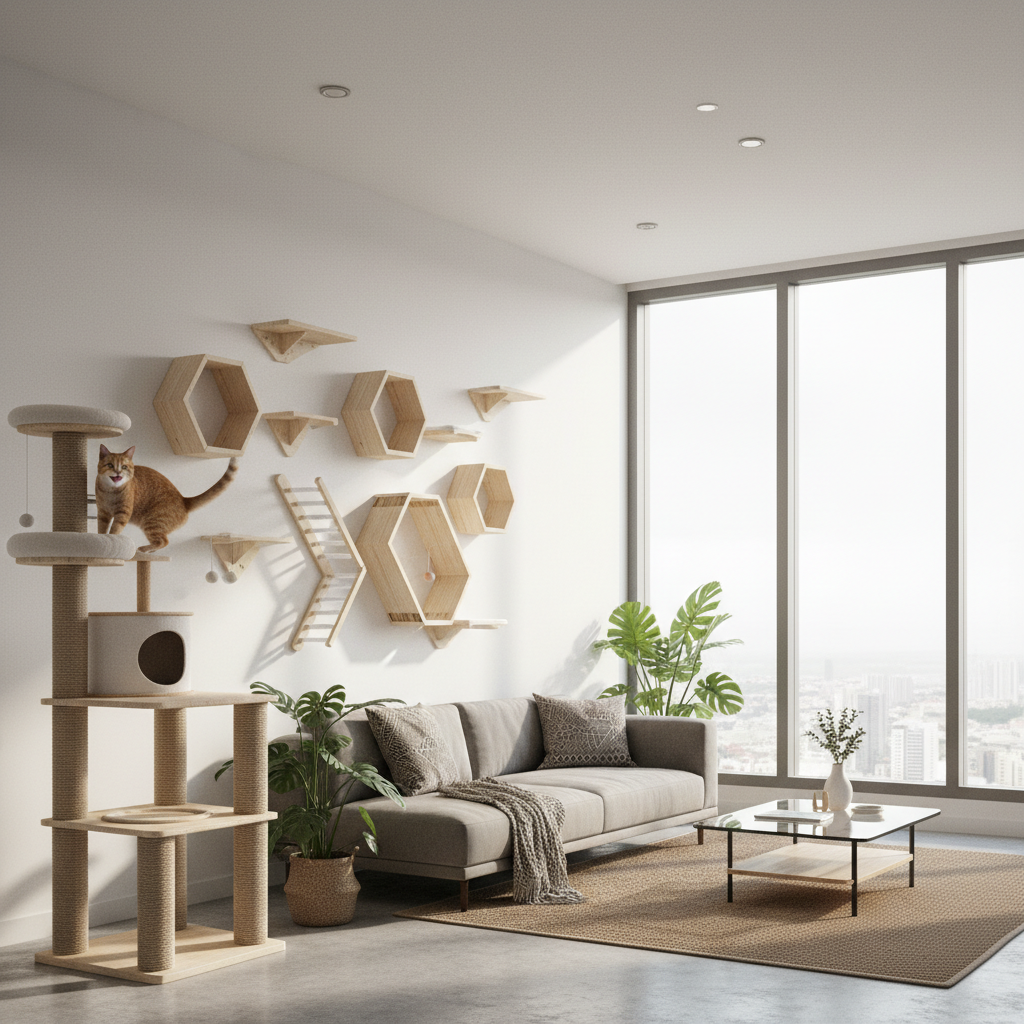
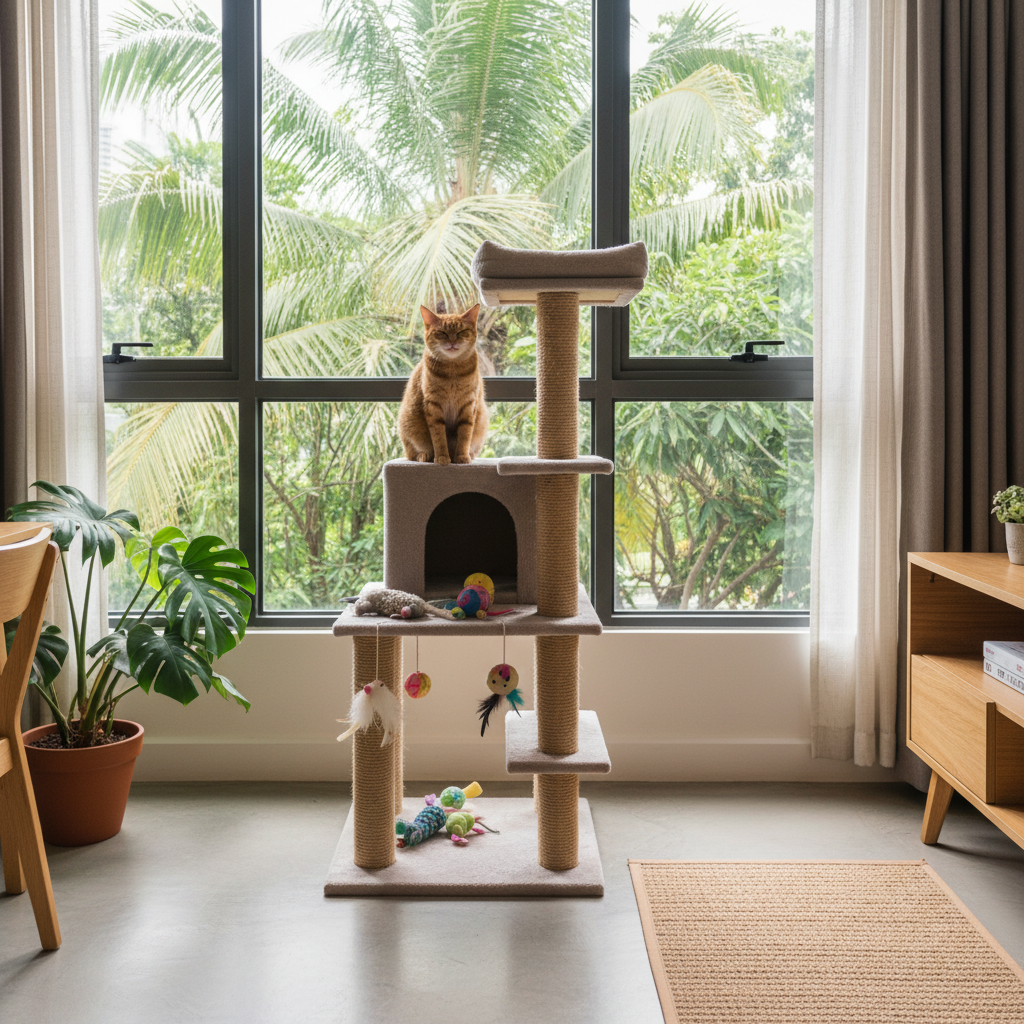
If you do only one thing, do this. A condo has limited floor space — but the walls are wide open. Cats experience territory in three dimensions, and going vertical effectively multiplies your home's usable space.
A tall cat tree, a set of staggered wall-mounted shelves, or a window perch gives your cat somewhere to climb, survey its kingdom, and retreat above the action. Elevated resting spots aren't just fun; they provide security. Research on shelter cats published in PLOS ONE found that cats given access to hiding and elevated spaces showed measurably lower stress. The animal charity Battersea similarly recommends vertical space and enclosed hiding spots to help nervous cats feel confident. In a multi-pet home this is doubly true — if you've also got a dog, our cats and dogs living together guide explains why escape routes upward are essential.
Play Like a Hunter: Interactive Play and Puzzle Feeders
The secret to play that actually satisfies a cat is mimicking the hunt: stalk, chase, pounce, catch, "kill". A laser dot alone can frustrate (there's never a catch), so finish laser games with a treat or a physical toy your cat can actually grab.
Wand and feather toys are the gold standard for interactive play. Aim for two or three short sessions a day — five to ten minutes each is plenty — rather than one marathon. End each session with a "catch" and, ideally, a small meal, mirroring the natural hunt-eat-groom-sleep cycle.
Puzzle feeders and food foraging turn mealtime into mental work. Make your cat bat kibble out of a puzzle ball, or hide small portions around the home for it to "hunt". This is brilliant for the boredom-eater too, because it slows eating and adds activity. It's also a neat way to feed a cat that's a little too round — pair it with portion control from our guidance on keeping home-alone cats settled and occupied.
Windows, Scratching and Scent
Beyond play, three everyday needs round out an enriched home.
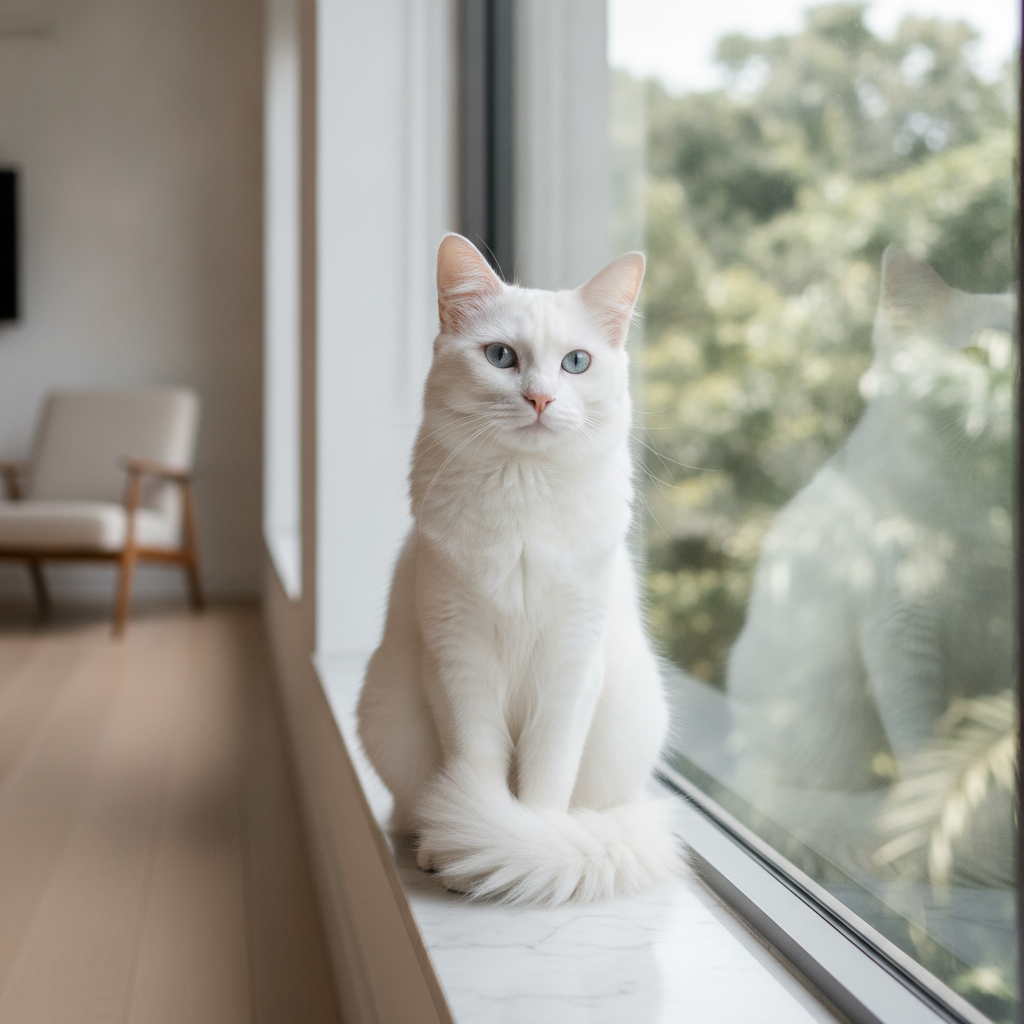
A window view is "cat TV". A perch by a window where your cat can watch birds, insects, and the world go by provides hours of low-effort stimulation. If you have a safe balcony, cat-proof it properly before giving access.
Scratching is non-negotiable. Scratching isn't bad behaviour — it's how cats maintain claws, stretch, and mark territory. Deny them an outlet and your sofa becomes the outlet. Offer both vertical and horizontal scratchers in materials cats love; our scratching post guide covers what works.
Don't overlook scent — it's a whole sense we tend to ignore. Cats experience the world through smell far more than we do, and scent-based enrichment is cheap and effective. Many cats respond to catnip or silvervine (matatabi) with a burst of joyful play; a pot of cat grass gives a safe plant to nibble; and rotating a few scented toys keeps things novel. Equally important is protecting your cat's own scent landscape — cats mark territory with facial pheromones, so try not to scrub every surface they rub against, and use enzymatic cleaners (not ammonia-based ones) for accidents so you're not unintentionally erasing their sense of "home".
Consider safe access to the outdoors. You don't have to choose between "indoor-only" and "free-roaming". A cat-proofed balcony (a "catio"), a securely screened window, or harness training for short supervised outings can give an indoor cat a rich hit of fresh air, sounds and smells without the dangers of the street. Rotate toys every week or two so old toys feel new again, and let your cat enjoy a sense of routine and control over its space — the "let the cat choose" research from NTU shows cats are happier and more affectionate when they get to decide when interaction happens.
A Stimulating Routine on a Budget
Enrichment doesn't need to be expensive. Some of the best stimulation is free or nearly so: a cardboard box becomes a fort, a paper bag (handles removed) a hideout, a rolled-up ball of paper a "prey" toy. Foraging with their normal kibble costs nothing. Five minutes of focused wand play twice a day is the most valuable thing you can give, and it's free.
Don't forget the unseen foundation: a calm, clean environment. Cats are deeply sensitive to their space, and stress undermines everything else you do. That means quiet retreats, predictable routines, and clean, accessible resources — including a fuss-free litter setup. A low-dust, low-odour litter such as Liger Premium Tofu Cat Litter keeps the one corner your cat must use every day pleasant rather than stressful, which is a small but real part of a contented indoor life. New to indoor cat life? Our new cat owner checklist helps you set the whole environment up right, and our indoor vs outdoor cats guide covers the bigger picture.
A well-enriched cat is calmer, healthier, and far better company. Build upward, play like prey is on the line, and rotate the novelty — and that bored, sofa-shredding troublemaker becomes the contented condo cat you hoped for.