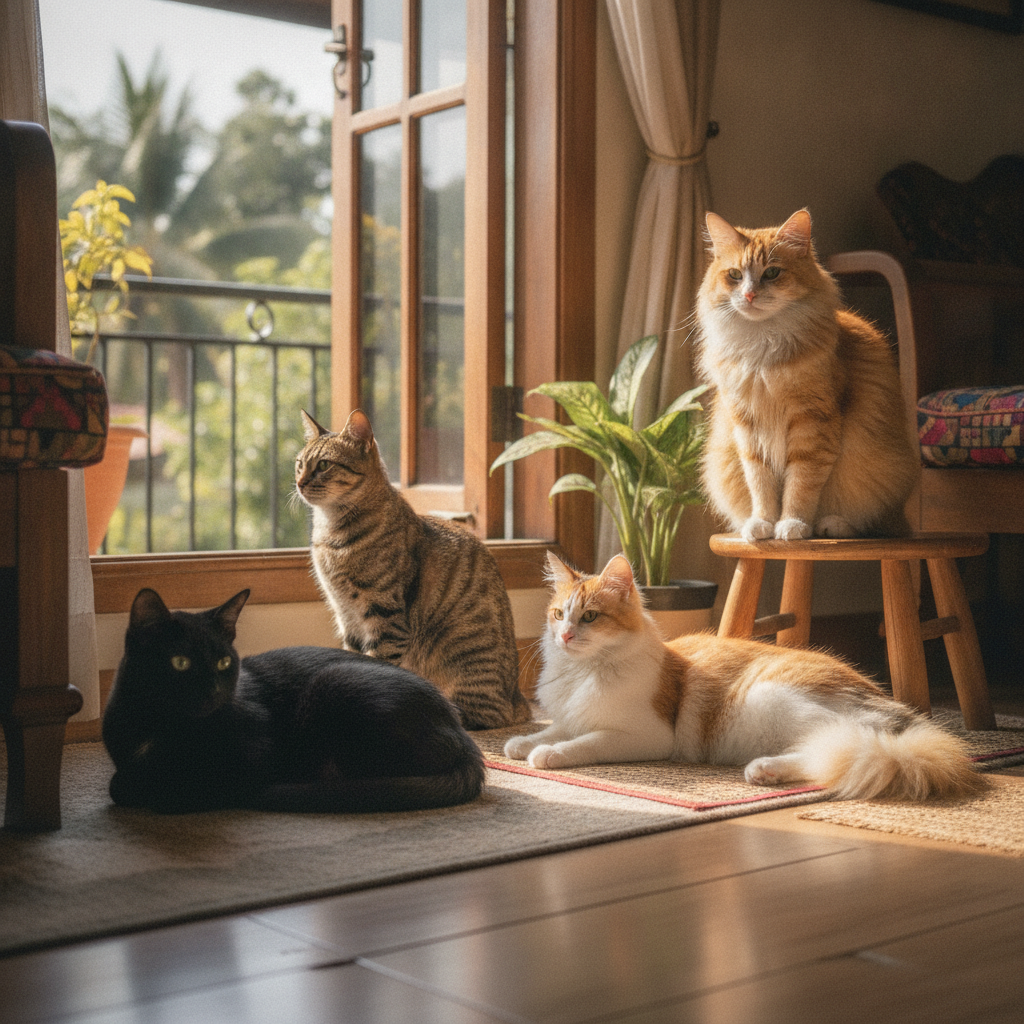
Calico, tabby, tuxedo, tortie, ginger, black, colourpoint — a cat's coat can look impossibly varied. Yet behind every pattern on every cat in Malaysia sits the same small toolkit of genes shuffling just two pigments. Once you know the handful of switches involved, you can practically read a cat's genetics straight off its fur, like decoding a label. This is the hub guide to how cat colours and patterns actually work — the real science, minus the myths.
Use it as your map: each section links to a full deep-dive on that coat. And one thing to hold onto throughout — colour is a pattern, not a breed. To explore breeds instead, start with our cat breeds guide or the cat breed identifier. Jump to the colour directory at the bottom if you already know which coat you're chasing.
Two Pigments, Endless Cats
Every coat colour a cat can wear is built from just two pigments: eumelanin, which makes black and brown, and phaeomelanin, which makes red, orange and cream. That's the entire palette. Everything else — the swirls, the patches, the points — is a set of genes deciding which pigment gets made, where, how much, and how dark. As veterinary genetics sources like the UC Davis Veterinary Genetics Laboratory describe it, a handful of interacting genes generate the whole feline rainbow. The cat genome was fully sequenced in 2007, turning what used to be guesswork into a readable blueprint. The pigment granules even differ in shape: eumelanin granules are rounded and soak up light to look black, while phaeomelanin granules are elongated and bounce back the warm red-orange tones. Get the genes right and you can predict, fairly reliably, what colour a kitten will be before it's born — which is exactly what breeders and the science of cat colours rely on.
Solid Colours: Black, Blue, Chocolate and Cream
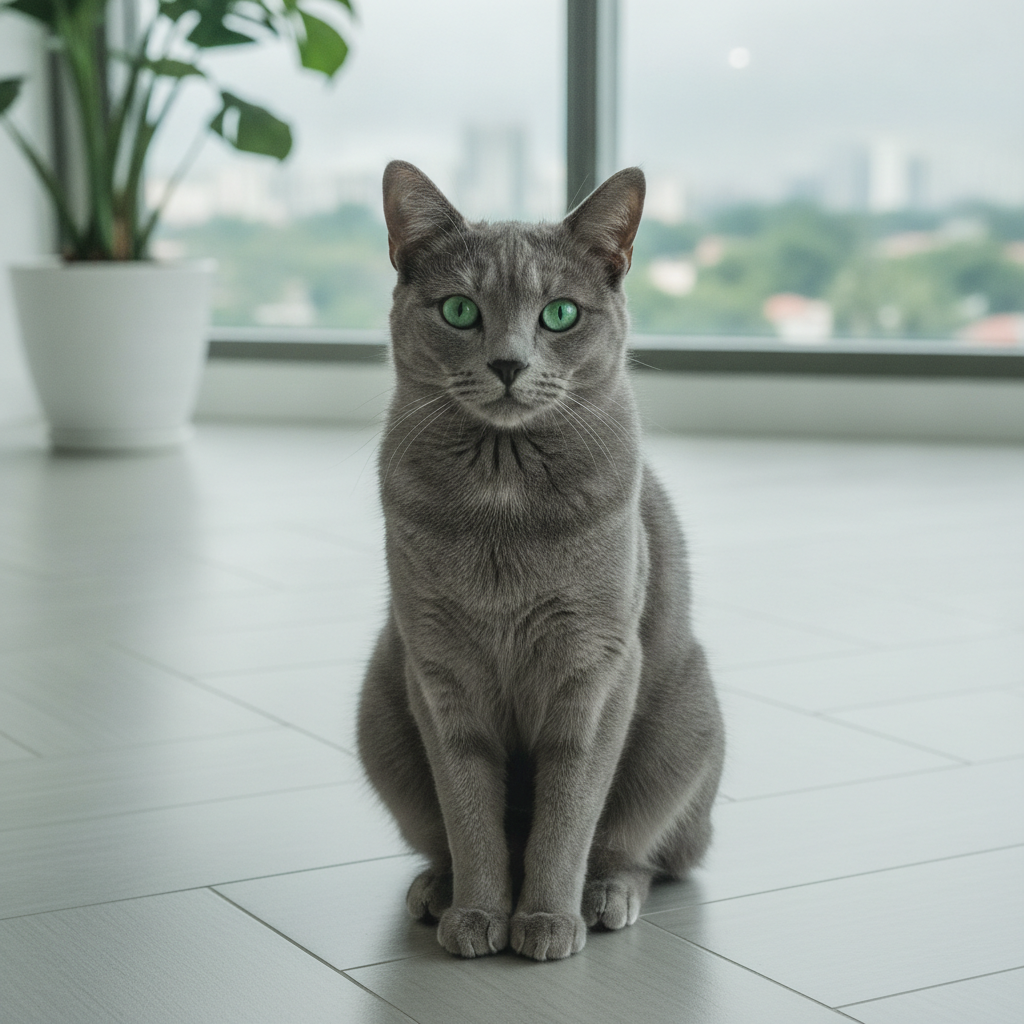
A solid-coloured cat is one whose genes lay down a single pigment evenly. A gene called the B locus tweaks black eumelanin into chocolate (brown) or even cinnamon. Then a separate dilution gene acts like a dimmer switch: with two copies, it clumps the pigment so black softens to grey (called "blue") and orange fades to cream. That's why a "blue" British Shorthair and a black cat are genetically the same coat at different brightness, and why "lilac" (dilute chocolate) and "fawn" (dilute cinnamon) exist at all. The full dominance order runs black → chocolate → cinnamon, each step needing two recessive copies to show. None of this touches an orange cat, incidentally — the B locus only edits black-based pigment, so a ginger coat stays ginger no matter what. Solid black cats are a story all their own — wrapped in centuries of superstition — which we untangle in black cats: myths, luck and the truth.
The Orange Gene: Tortoiseshell, Calico and Ginger
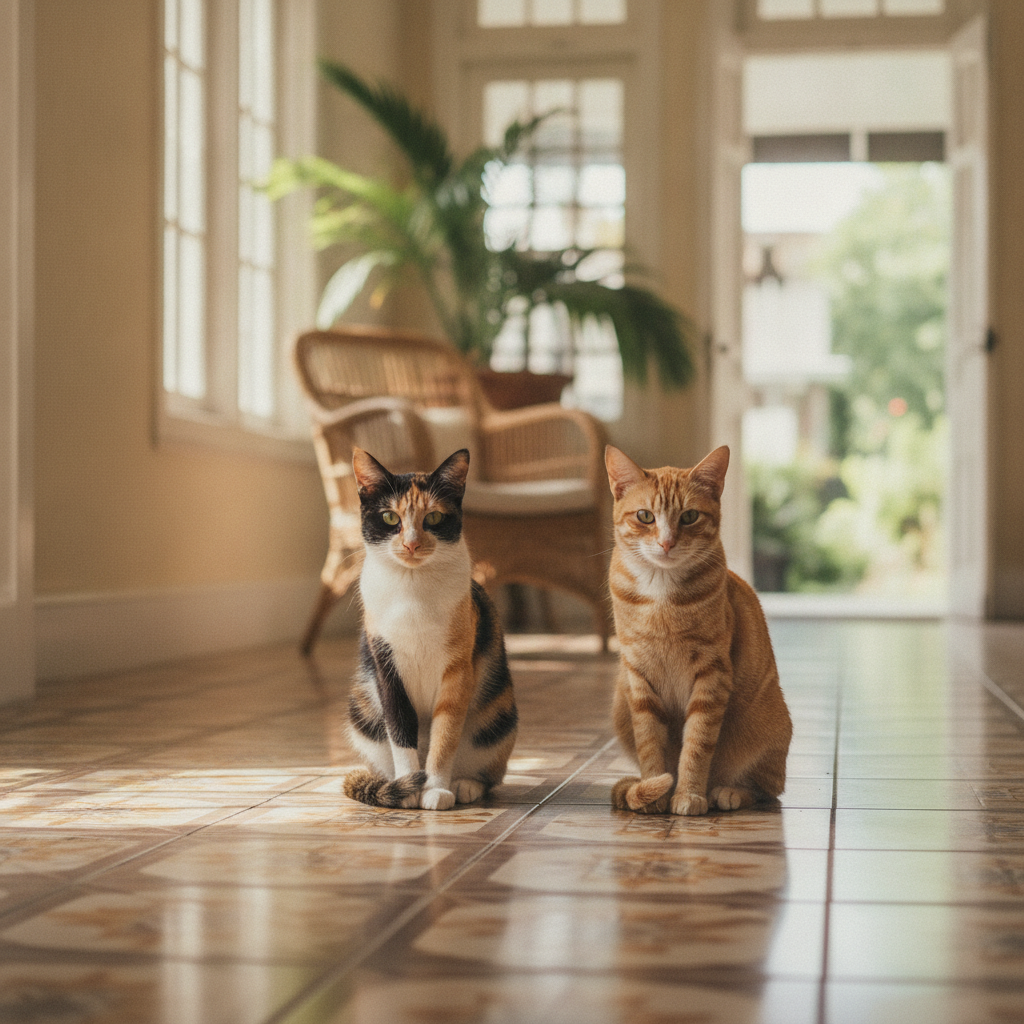
Here's the most famous trick in cat genetics. The gene that decides orange-versus-black rides on the X chromosome. Females (XX) can carry orange on one X and black on the other; through a process called X-inactivation, each cell randomly switches one off, painting a mosaic of both colours. Males (XY) have only one X, so they're usually one colour or the other — a single instruction, single result. It's one of the cleanest examples of sex-linked inheritance in any pet, and it produces three of the most recognisable cats around. This is why:
- Tortoiseshells (black-and-orange mosaic) are almost always female — see tortoiseshell cats and 'tortitude'.
- Calicos (the same mosaic plus white) are almost always female too — the full story in why calico cats are almost always female.
- Orange/ginger cats are usually male, for the mirror-image reason — explained in orange (ginger) cats.
A rare male tortie or calico (about 1 in 3,000) usually carries an extra X chromosome (XXY) and is typically sterile. Excitingly, in 2025 researchers at Stanford and in Japan finally pinned down the actual orange gene — a quirk near a gene called ARHGAP36 — solving a 100-year-old genetic puzzle that even Darwin had puzzled over.
Tabby: The Pattern Every Cat Secretly Has
Tabby — those stripes, swirls and spots topped with an "M" on the forehead — is the ancestral wild-type pattern, and in a sense every cat carries it. A master switch called the agouti gene decides whether it shows: switched on, you see the tabby; switched off (a solid cat), it's hidden underneath but still genetically present. A second gene then decides which tabby you get. That's why orange cats are always visibly tabby, and why a black cat in strong sun sometimes reveals "ghost" stripes. There are four main flavours — mackerel (narrow stripes), classic (bold swirls), spotted, and ticked (the salt-and-pepper Abyssinian look) — and the legend of the "M" gets the full treatment in tabby cats: patterns, types and the 'M' marking. (Curious about tabby behaviour rather than the coat? That's covered in our cat behaviour guide — coat and character are separate things.)
White, Bicolour and the Tuxedo
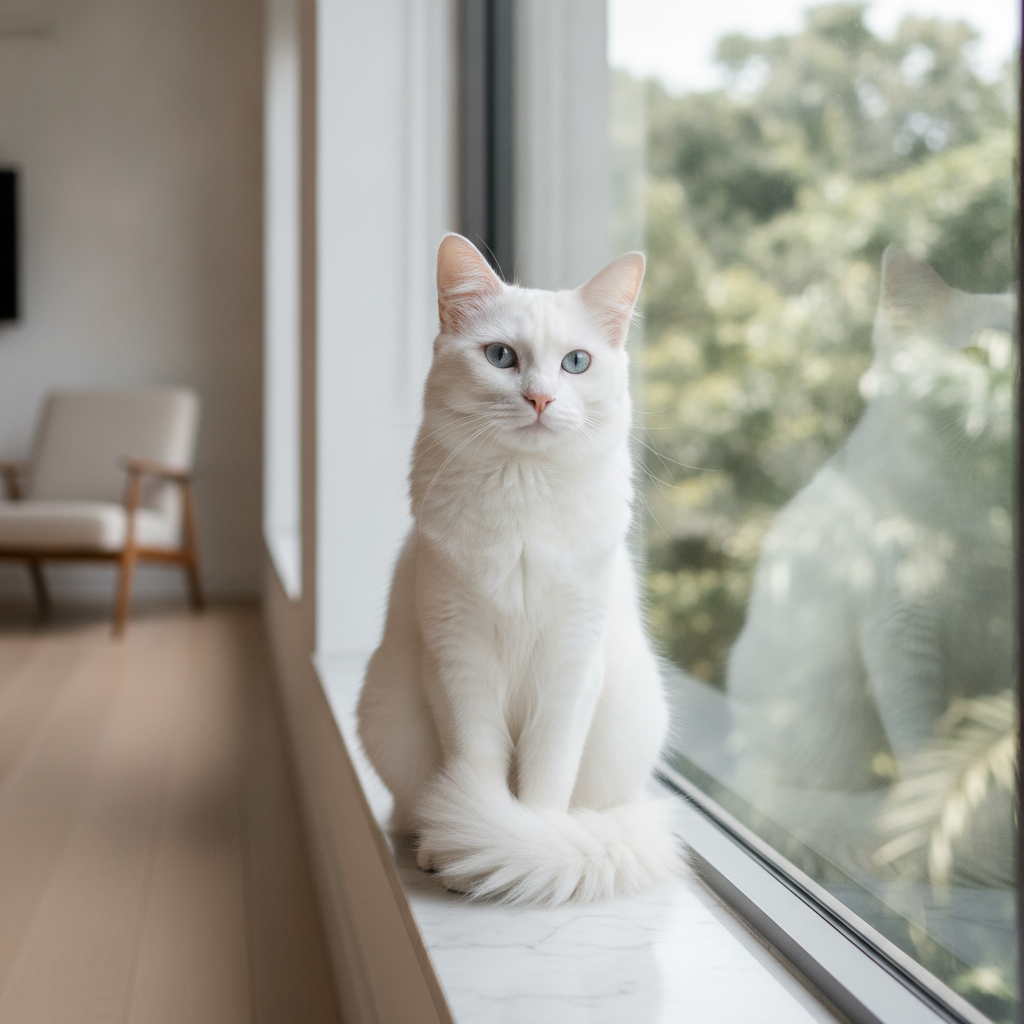
White works differently — it's not a pigment but the absence of one, governed by the KIT gene. Two settings matter. Dominant White (W) masks every other colour to produce an all-white cat (and carries a link to deafness, more on that below). White spotting (S) adds patches of white over a coloured coat — a little gives you white "boots" and a bib (the classic tuxedo cat), more gives you a mostly-white cat. The amount and placement of white is why no two bicolour cats match. White patches form because pigment-making cells migrate out from the back during development and sometimes don't reach the belly, chest, paws and face in time — which is exactly why white so often lands on a cat's "underside" as a bib, socks and a blaze. It also explains why a tuxedo's white is so consistently placed: low spotting, low coverage, dapper result.
Colourpoint Cats and Eye Colour
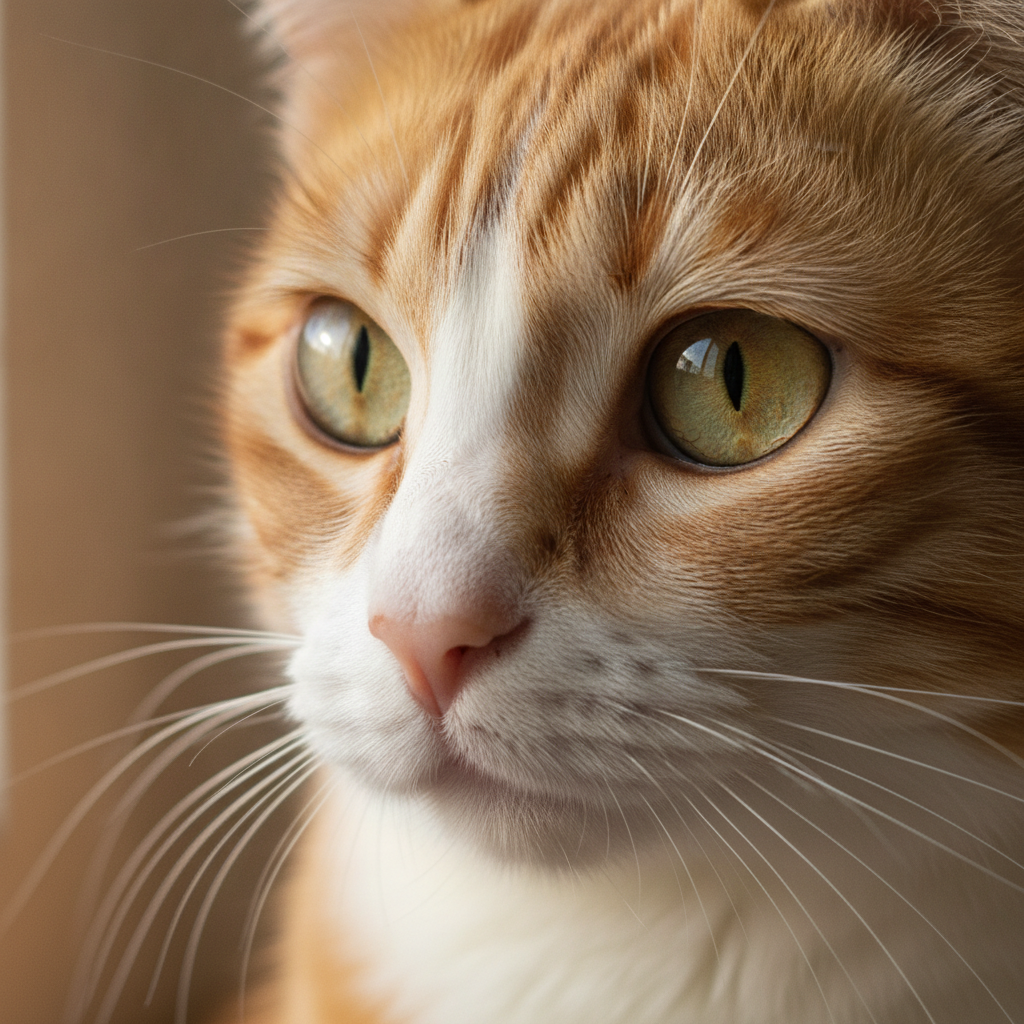
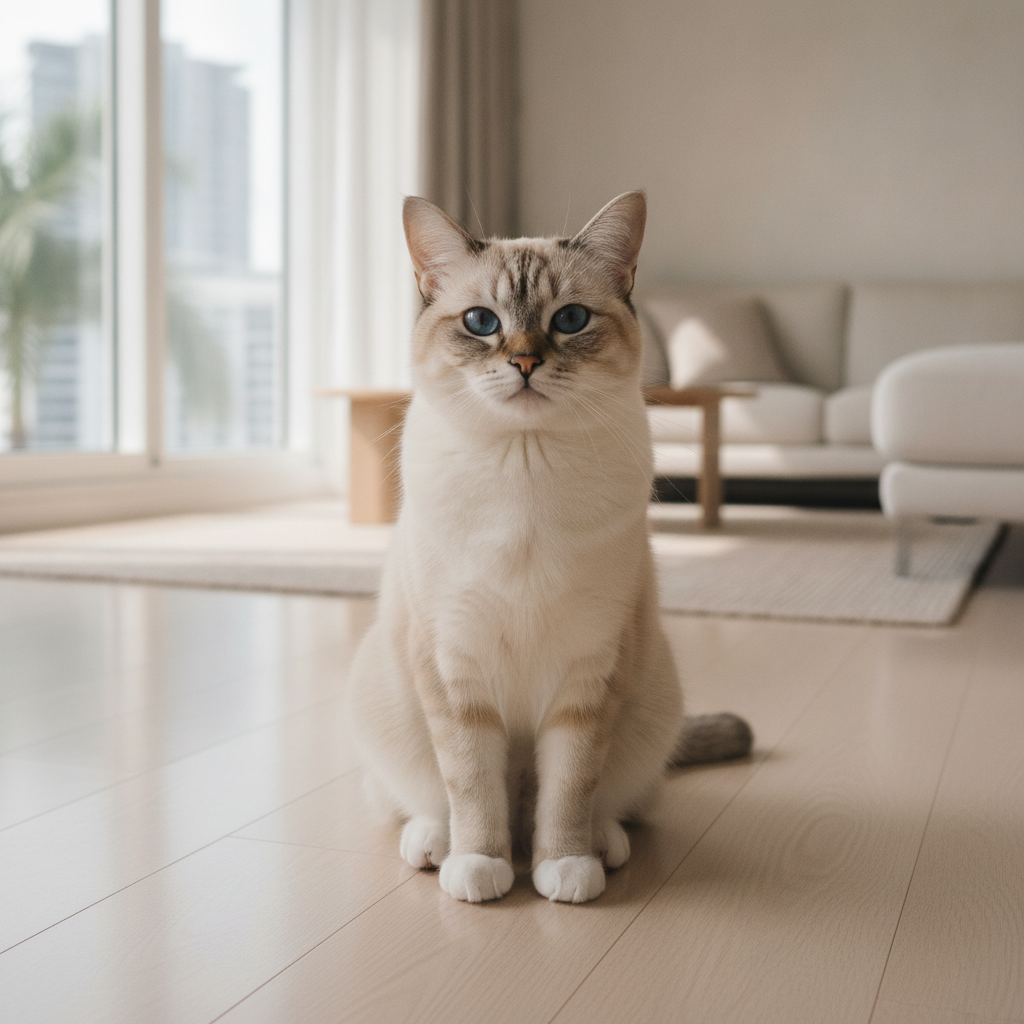
Ever wondered why a Siamese is pale-bodied with dark face, ears, paws and tail? That's the colourpoint gene — a temperature-sensitive mutation that only lets pigment form on the cooler parts of the body. The warmer a point cat's environment, the lighter its points tend to be — some Malaysian Siamese run paler than their temperate cousins for exactly this reason. The very same gene forces those striking blue eyes. Eye colour in general comes from how much pigment sits in the iris and isn't tightly tied to coat — every kitten starts with blue eyes that settle into their true colour by a few months old. There is one important link, well documented by the Cornell Feline Health Center: white cats with blue eyes carry a higher chance of being deaf, and odd-eyed white cats are sometimes deaf only on the blue-eyed side. The whole spectrum, from copper to odd-eyed, is in cat eye colours explained.
Colour, Personality and Luck: Myth vs Real
This is where folklore takes over from genetics, so tread carefully. "Tortitude," friendly orange cats, aloof black cats, smart tuxedos — these are popular beliefs, not proven science. The one well-known study (UC Davis, 2015) found only tiny, owner-reported differences, and the broad veterinary consensus — from International Cat Care and others — is clear: temperament is shaped by genetics, early socialisation and environment, not by coat colour. Judging a cat by its colour is a real welfare problem; it's a big reason black cats wait longest at shelters. Why do the myths feel so true, then? Partly confirmation bias — once you "know" torties are sassy, every grumble confirms it — and partly that some colours skew toward one sex, so we end up describing sex-linked behaviour and blaming the coat. Enjoy the legends, adopt the individual.
Caring for a Cat of Any Colour
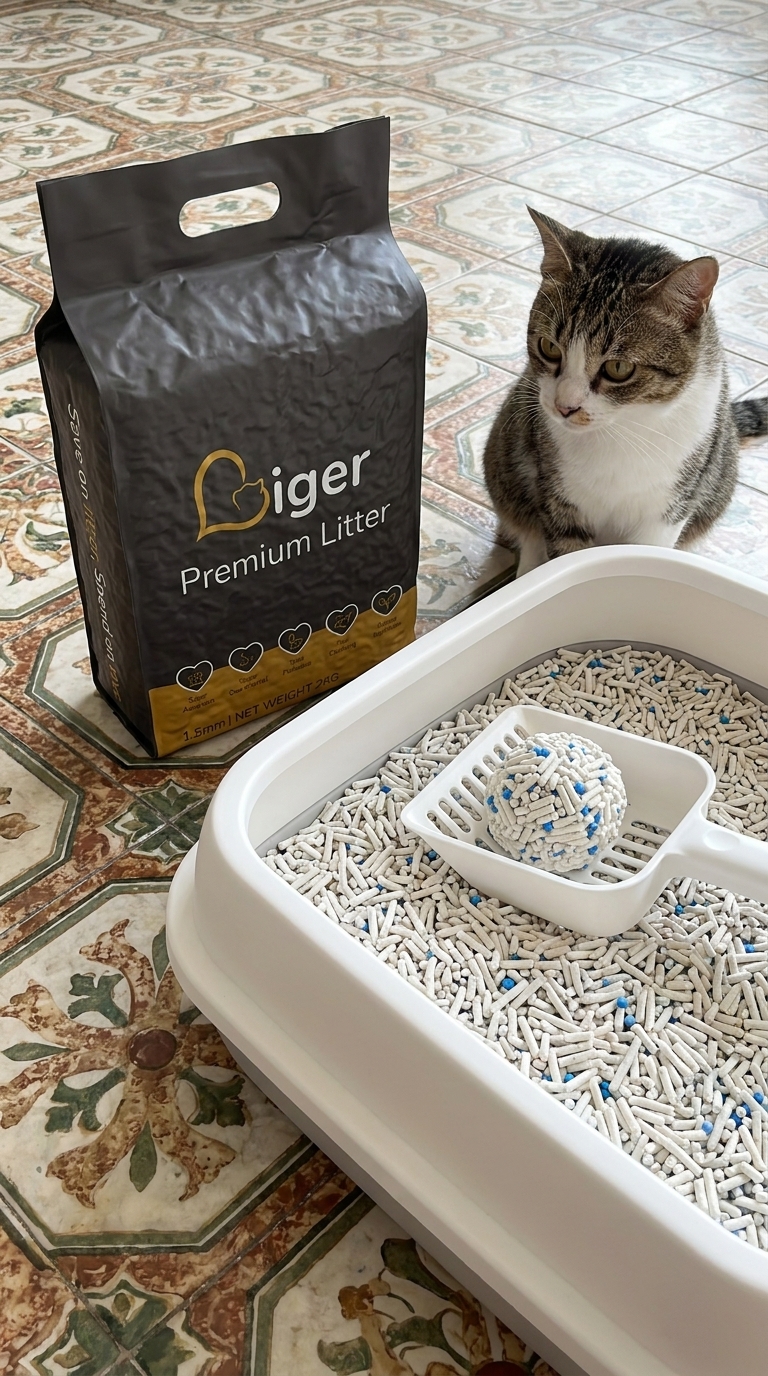
The happy truth: coat colour changes nothing about how you care for a cat. Black, calico or ginger, tabby or tuxedo, they all want exactly the same things: good food, regular vet checks, enrichment and a clean litter box. A natural, low-dust litter like Liger Premium Tofu Cat Litter keeps fine dust off any coat and the box fresh between scoops — from RM21.90 for a single 2 kg pack to RM169 for the 10-pack (about RM8.45/kg), free shipping in Peninsular Malaysia (current Liger pricing, as of May 2026). Work out your household's needs with the litter calculator, and if a new arrival still needs naming, our cat name generator has colour-inspired ideas.
The Cat Colour Directory
Pick a coat and dive deeper:
Calico cats · Tortoiseshell & tortitude · Orange / ginger cats · Black cats & myths · Tabby patterns & the 'M' · Tuxedo & bicolour · Cat eye colours
Whatever colour stole your heart, remember the coat is just the wrapping. Underneath, every cat is an individual — and once you know the genetics, that wrapping becomes even more fascinating to read.
Curious what colours your two cats could produce? Try our kitten coat colour predictor — it predicts your kittens' colours and patterns from both parents.