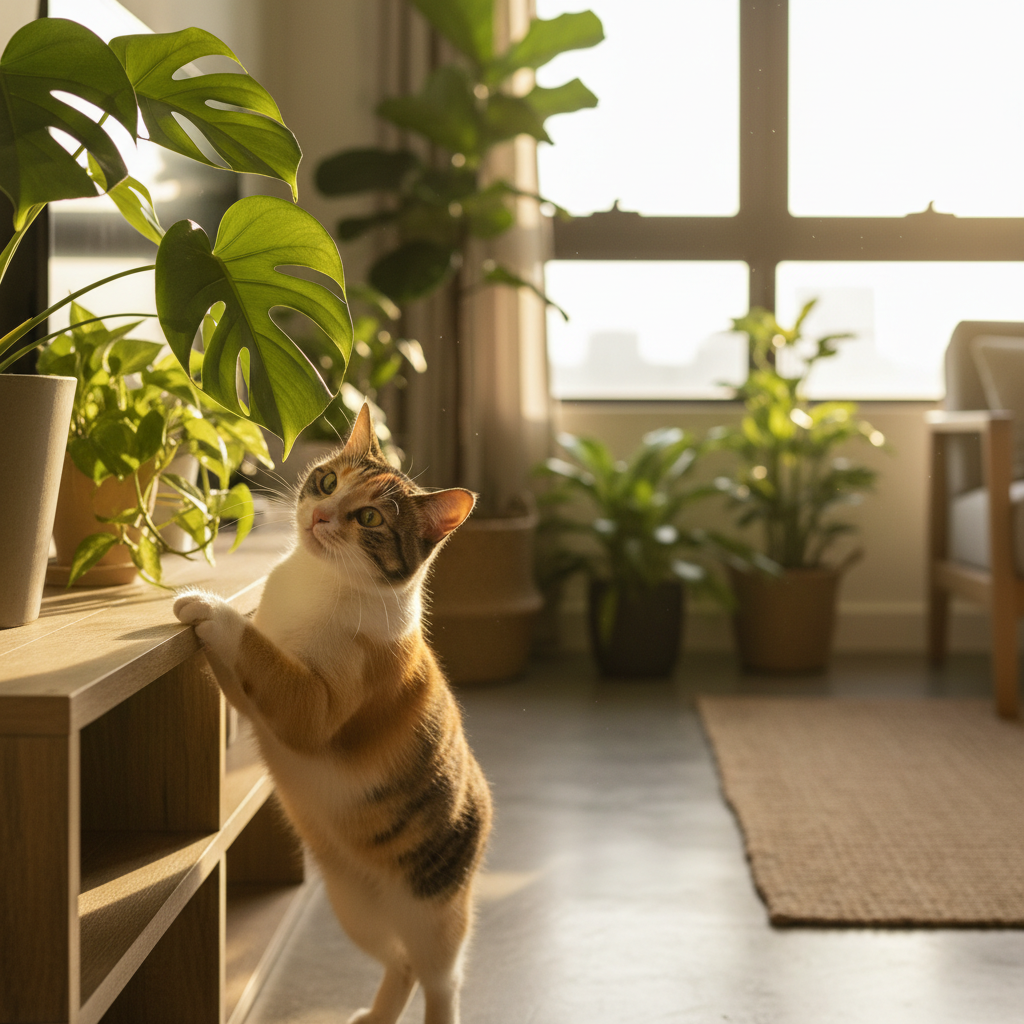
You bring home a gorgeous new houseplant, set it on the shelf, and feel very accomplished — until you turn around and see your cat thoughtfully chewing a leaf. Here's the uncomfortable truth most plant-loving cat parents don't realise: a surprising number of the plants we keep in Malaysian homes and gardens are toxic to cats, and a few are outright deadly. Cats nibble greenery for all sorts of reasons, and they can't tell a safe fern from a fatal lily. This guide sorts the dangerous from the safe, with a focus on what's actually common in our homes — so you can keep both your plants and your cat (Tiger, Lion, Ping'An and Lucky have tested our shelves thoroughly).
Why It Matters: Cats Nibble, and Some Plants Kill
Cats chew on plants out of curiosity, boredom, to aid digestion, or just because dangly leaves are irresistible toys. Most of the time a nibble causes nothing worse than a bit of vomiting. But with the wrong plant, the consequences range from a painfully burning mouth to drooling, vomiting, organ damage, and death. Cats are especially vulnerable to many plant toxins because their livers lack certain enzymes other animals use to detoxify compounds.
The tricky part is that toxic plants are everywhere we don't expect — the bouquet someone gifted you, the trendy houseplant from the nursery, the flowering shrub by the gate. You don't need to live in a bare concrete box; you just need to know which plants to keep out of reach or out of the house entirely, and which are genuinely safe. Let's start with the one that matters most.
The Deadliest: Why Lilies Are a True Emergency
If you remember only one plant from this article, make it this: true lilies are lethal to cats, full stop. This includes Easter lilies, Asiatic and Oriental lilies, tiger lilies, day lilies, and stargazers — common in gift bouquets, especially around festive seasons. The toxicity is extreme and unique to cats: ingesting even a small amount of lily — a leaf, a petal, or just the pollen — can cause irreversible acute kidney failure. A cat that brushes against the flower and then grooms the pollen off its fur, or sips the vase water, can be fatally poisoned.
There is no safe amount, and time is everything — kidney damage sets in within hours. If you even suspect your cat has touched a lily, treat it as an immediate emergency and go straight to the vet. The simplest rule for a cat household: never bring true lilies into your home, and politely check any gifted bouquet before it comes through the door. (Note: some unrelated plants with 'lily' in their common name, like peace lily and calla lily, are toxic in a different, less lethal way — irritating but not the kidney-killer the true lilies are. When in doubt, treat anything called a lily as dangerous.)
Common Malaysian Houseplants to Watch
Beyond lilies, several hugely popular houseplants — the kind sold in every nursery and Tesco garden section — are toxic to cats. The frequent offenders in our homes:
- Pothos / 'money plant' (Epipremnum / devil's ivy). One of the most common houseplants in Malaysia, and it contains insoluble calcium oxalate crystals that cause intense oral burning, drooling, and vomiting if chewed.
- Dieffenbachia ('dumb cane'). Same oxalate crystals, strong enough that its nickname comes from the mouth-numbing, speech-blocking reaction it causes.
- Philodendron and Monstera. Trendy, leafy, and also full of those irritating oxalate crystals.
- Peace lily and calla lily. Despite the name, not true lilies — but still cause oral irritation, drooling and vomiting.
- Aloe vera. Great for your skin, bad for your cat — it causes vomiting and lethargy if eaten.
- Sago palm (cycad). This one is genuinely severe — highly toxic and potentially fatal, causing liver failure. Keep it out entirely.
- Snake plant (Sansevieria) and caladium / 'keladi'. Both toxic, causing nausea, drooling and vomiting.
This isn't a reason to throw out every plant — it's a reason to either rehome the toxic ones or place them genuinely out of reach (remembering cats climb, so 'high up' isn't always enough). A determined cat will find a way to a hanging pothos.
Garden & Outdoor Plants Around Malaysian Homes
If your cat has any garden access — even a supervised wander — the outdoor plant list matters too. Common Malaysian garden and landscaping plants that are toxic include:
- Oleander. A popular hardy ornamental shrub that is extremely toxic — it affects the heart and can be fatal in small amounts.
- Azalea / rhododendron. Also seriously toxic, affecting the heart and gut.
- Frangipani (kemboja). The milky sap is an irritant to mouth and skin.
- Lantana (bunga tahi ayam). Common roadside and garden plant; the leaves and unripe berries are toxic.
- Cycads / sago palms again — common in Malaysian landscaping and dangerously toxic.
- Morning glory and several flowering vines, whose seeds are toxic.
Reassuringly, a few Malaysian garden staples are generally considered non-toxic to cats — the classic bunga raya (hibiscus) is one — but common names are unreliable, so always verify the specific species. This outdoor exposure is one more entry on the long list of reasons many vets favour keeping cats indoors or in supervised setups, where you control what they can reach.
Cat-Safe Plants You Can Actually Keep
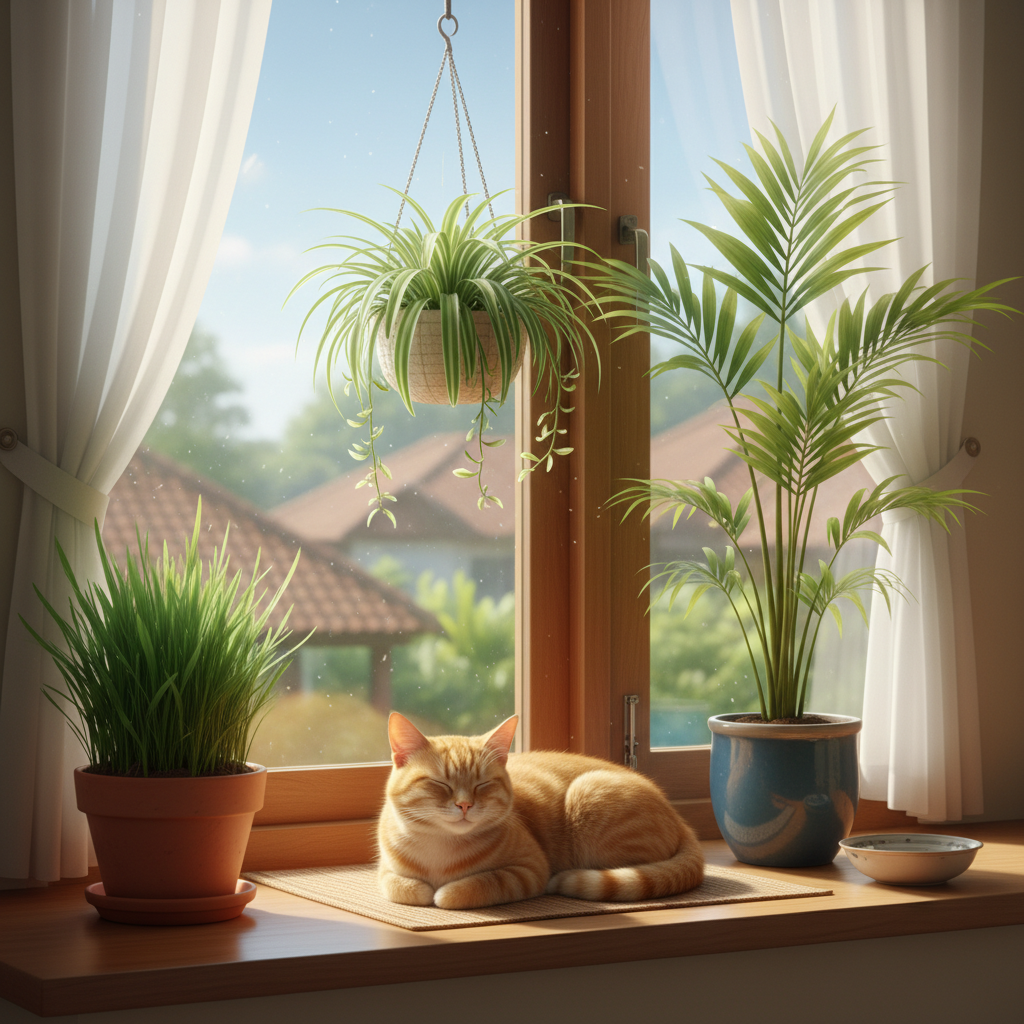
Good news: you can absolutely be a plant person and a cat person. Plenty of attractive plants are non-toxic and cat-safe (always confirm by botanical name, since common names overlap):
- Cat grass (wheat, oat, or barley grass). Not just safe but beneficial — a deliberate, cat-friendly green they can chew freely, which often distracts them from your other plants. Pair it with our explainer on cat grass vs catnip.
- Spider plant (Chlorophytum). Hardy, easy, and non-toxic (though it can mildly fascinate cats, so expect some chewing).
- Areca palm and parlour palm. Safe, leafy, and great for that tropical look — just avoid the toxic sago 'palm,' which isn't a true palm.
- Calathea and Maranta (prayer plants). Beautiful patterned foliage, non-toxic to cats.
- Boston fern. A safe, lush classic.
- Orchids (Phalaenopsis) and African violets. Non-toxic flowering options for colour.
- Herbs like basil, mint, and rosemary, and of course catnip and valerian for enrichment.
A smart strategy: give your cat its own pot of cat grass to chew, keep the cat-safe plants accessible, and remove or relocate the toxic ones. A cat with its own legal greenery is far less interested in raiding the shelf.
If Your Cat Eats a Toxic Plant: What to Do
Even careful owners have accidents. If you think your cat has eaten — or even chewed or brushed against — a toxic plant, act fast and calmly:
- 1. Remove the cat from the plant and take any remaining plant material out of its mouth.
- 2. Identify the plant. Take a photo, and ideally a sample (a leaf, the label, the flower). Knowing exactly what it ate helps the vet treat it correctly.
- 3. Call your vet or the nearest emergency clinic immediately — do not wait for symptoms. With lilies and the severe toxins, by the time symptoms appear, serious damage may already be done.
- 4. Do NOT induce vomiting unless a vet specifically tells you to — with some plants it makes things worse.
- 5. Watch for symptoms on the way: drooling, vomiting, pawing at the mouth, lethargy, wobbliness, or difficulty breathing.
For the full emergency playbook, keep our cat first-aid guide handy, and our list of human foods toxic to cats covers the kitchen dangers too. When you're unsure whether something — a plant, a food, a treat — is safe, our can-my-cat-eat-this tool is a quick first check (though for a suspected poisoning, always call the vet rather than relying on a lookup).
You don't have to choose between a green home and a safe cat. Learn the deadly few — lilies above all — clear the high-risk houseplants out of paw's reach, give your cat its own pot of grass to munch, and keep the vet's number handy. Do that, and your home can stay leafy and your cat can stay curious, without the two combining into a 2am emergency.