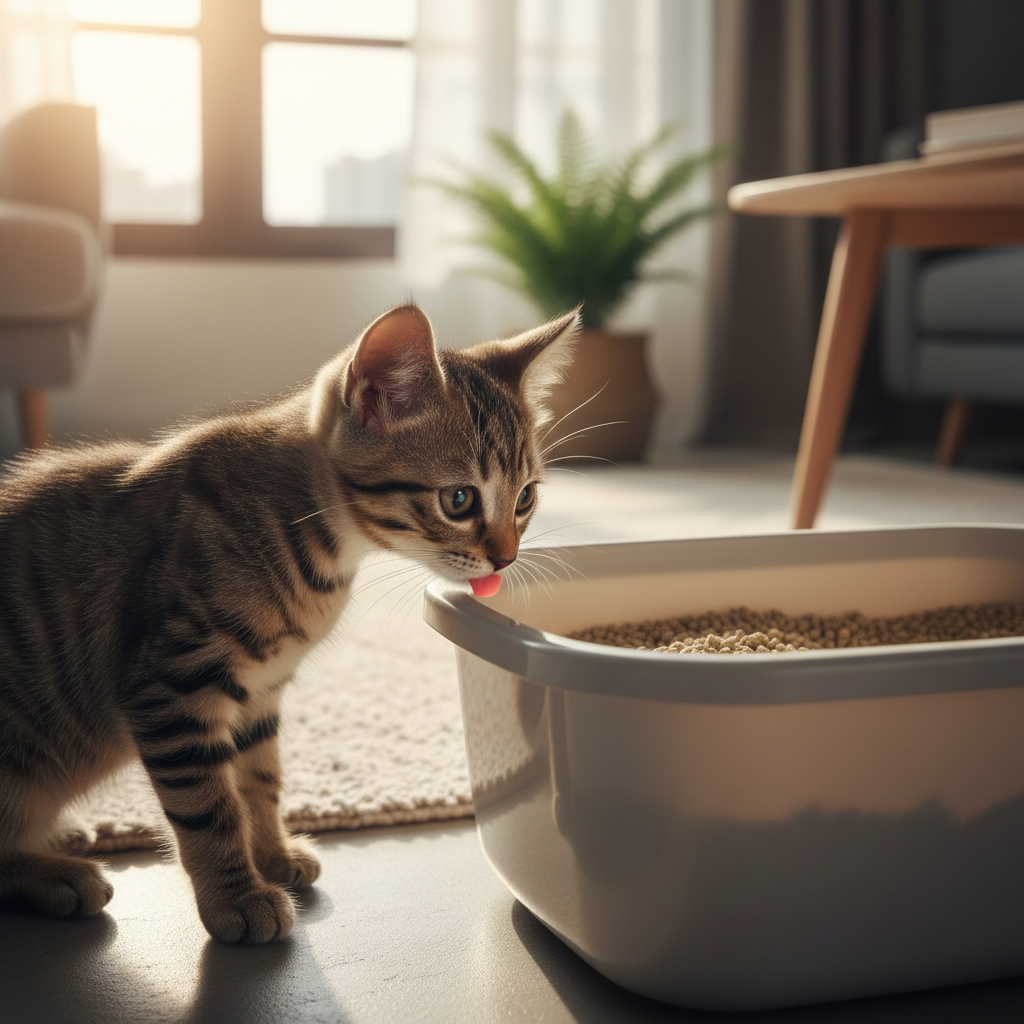
You walked into the laundry room and caught your cat with grey crumbs around her mouth, hunched over the litter box like it was a buffet. Or you noticed your kitten chewing on a clump. Or your senior cat — who has never done this in 11 years — suddenly started licking the box clean after every pee.
First: do not panic. Second: do not ignore it. Cats eating cat litter is almost never "just weird behaviour." In Malaysian feline medicine it sits in the same bucket as eating the wall, eating the carpet, or chewing plastic bags — a behaviour called pica, and pica is a clinical sign, not a personality trait.
This is the Malaysia-specific, vet-first guide. We will tell you exactly when to go to the vet, why it matters that you go first (not after switching litter), and only then will we compare litter categories honestly so that if your cat keeps mouthing the box, you are at least working with a material that does the least damage on the way down.
First: When to Call a Vet (Not Google)
If you are reading this in the middle of the night and any of these are true, stop reading and book a vet visit for tomorrow morning:
- Your cat has eaten a visible mouthful of clumping clay litter (not licks — actual swallows), especially if she is under 6 months old.
- There is blood in the stool, vomit, or urine.
- The cat is lethargic, hiding, or skipping meals.
- Weight loss, pale gums (lift the lip — healthy gums are bubblegum pink, not white or grey), or rapid breathing.
- Straining in the litter box with little or no urine output — this is a urinary emergency in male cats.
For everything else — occasional licks, mild curiosity, kitten exploration — book a routine vet appointment within 1–2 weeks. The American Association of Feline Practitioners and ISFM both classify repeated pica as a medical workup trigger; the litter swap conversation comes after bloodwork.
Need a triage tool while you wait? Run the symptoms through our free urinary health checker if there is any straining or frequent box visits — FLUTD is one of the most overlooked drivers of litter-eating in Malaysian cats.
5 Medical Reasons Cats Eat Litter
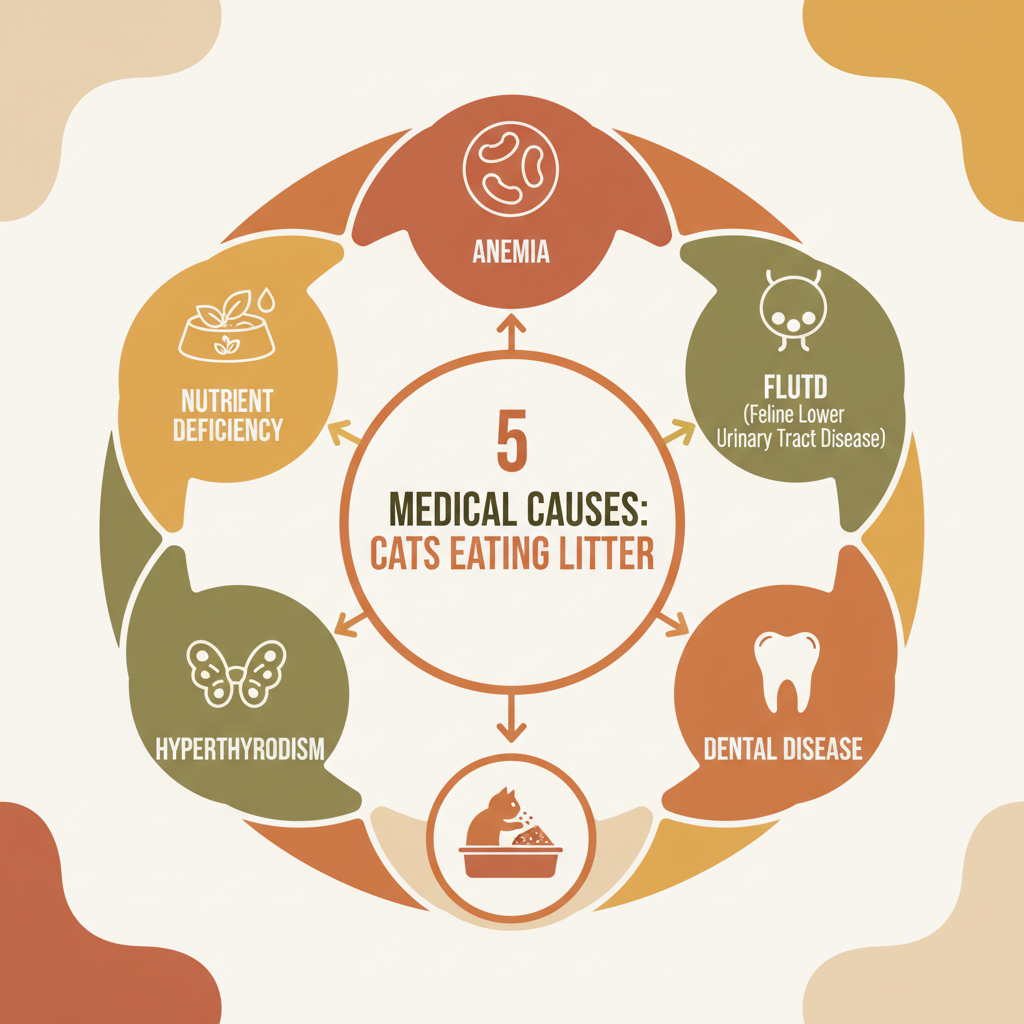
Here is what your vet is going to look for, in roughly the order of likelihood for a Malaysian cat:
1. Anemia (Iron and Haemotropic Mycoplasma)
This is the classic textbook answer for a reason. Cats with low red blood cell counts will sometimes try to eat clay litter — researchers think they are instinctively seeking minerals (iron, clay-bound trace elements) that their bodies sense are missing. The vet diagnoses this with a quick PCV/haematocrit blood test.
In Malaysia specifically, Feline Haemotropic Mycoplasmosis caused by Mycoplasma haemofelis is the leading cause of feline anemia, and it is transmitted by fleas. In northeast Malaysia, infection rates of 11.7% to 20% have been documented in owned and stray cats. If your cat goes outside, lives with other cats, or has had flea exposure, this is high on the differential. Treatment is doxycycline and it works — but only if you catch it.
2. FLUTD (Feline Lower Urinary Tract Disease)
Cats with cystitis or early urinary obstruction sometimes display unusual litter-box behaviours, including mouthing the substrate. Dry-food diets and chronic dehydration — both endemic in tropical Malaysia — are major risk factors. If your cat also pees small amounts frequently, cries in the box, or licks her genitals excessively, FLUTD is suspect number one. Read our deeper guide on UTI prevention for Malaysian cats.
3. Dental Disease and Tooth Resorption
When a cat's mouth hurts, she will sometimes mouth strange objects to investigate the pain or self-soothe. Feline tooth resorption affects an estimated 30–60% of cats over five, and it is severely under-diagnosed in Malaysia because dental X-rays are not yet routine in many clinics. Other signs: dropping kibble while eating, chewing on one side, drooling. See our tooth resorption guide.
4. Hyperthyroidism (in Cats 8+)
An overactive thyroid causes ravenous appetite, weight loss despite eating, restlessness — and sometimes pica. A simple T4 blood test catches it. Untreated hyperthyroidism damages the heart and kidneys, so this is not a wait-and-see.
5. Nutritional Deficiency or Malabsorption
This is the rarest cause in a cat fed a complete and balanced commercial diet, but it is sometimes seen in:
- Cats on long-term home-cooked diets without taurine, B12 or iron supplementation
- Cats with chronic intestinal disease (IBD) that prevents nutrient absorption
- Cats fed extremely cheap kibble high in fillers and low in bioavailable minerals
Bloodwork plus a diet history sorts this out quickly.
3 Behavioural Reasons Cats Eat Litter
Once medical causes are ruled out, your vet (and a feline behaviourist if needed) will look at behaviour:
1. Pica (the Behavioural Form)
True behavioural pica — eating non-food items with no underlying medical cause — is more common in cats who were weaned too early (a chronic problem in Malaysia's informal kitten-adoption market, where 6-week-old kittens are routinely rehomed). It can also appear in highly anxious or under-stimulated cats. Treatment is environmental enrichment, sometimes with a behavioural medication prescribed by your vet.
2. Stress and Boredom
Cats are not little dogs. They handle disruption — a new pet, a renovation, a moved litter box, the kids' school holidays — by developing odd compensatory behaviours. If the litter-eating started within 4 weeks of a household change, stress is a strong candidate. Our guides on cats stopping covering poop and litter box refusal cover the same underlying psychology.
3. Kitten Exploration
Kittens under 4 months mouth everything — that is how they map the world. A few exploratory licks of litter in the first month at home is normal and almost always self-limiting. What is NOT okay: a young kitten in regular contact with sodium bentonite clumping litter. The risk is real (we cover the data below) and the fix is simple — see our kitten litter training guide and use a non-clumping or plant-based litter until she is at least 4 months old.
If It Keeps Happening: Why Litter Material Matters
Let us be clear: no cat should be eating any litter as a regular habit. The job of the litter material conversation is not to make ingestion "safe" — it is to make ingestion structurally less catastrophic while you and your vet sort out the underlying cause.
Different litter categories carry very different ingestion-risk profiles. Here is the honest, citation-backed comparison:
How Different Litter Categories Compare for Ingestion Risk
| Category | Main Ingredient | Behaviour When Wet | Documented Ingestion Risk |
|---|---|---|---|
| Sodium bentonite clay (clumping) | Expanding clay mineral | Expands up to 15x volume; forms hard clumps | GI obstruction (bezoars), especially in kittens; respiratory silica dust |
| Silica gel / crystal | Synthetic anhydrous silica | Absorbs liquid into bead; does not expand much | GI irritation; chemical desiccant — not a food |
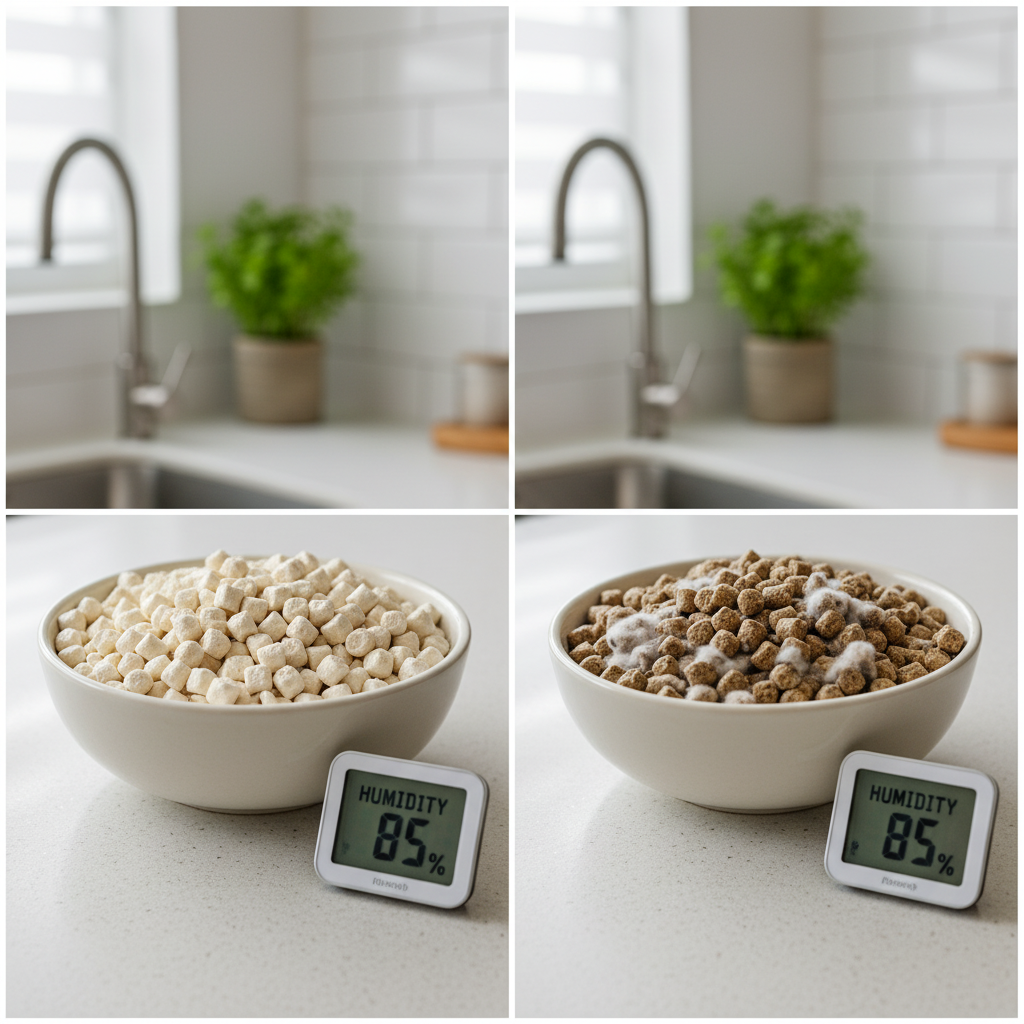
| Tofu / soy / corn starch pellets | Food-grade plant fibre and starch | Softens and dissolves; biodegradable | Same risk as overeating any non-food: GI upset; no expansion mechanism |
| Paper / pine / walnut | Plant fibre | Absorbs and crumbles | Generally low; walnut may be irritating in volume |
Bentonite Clay: The Expansion Problem
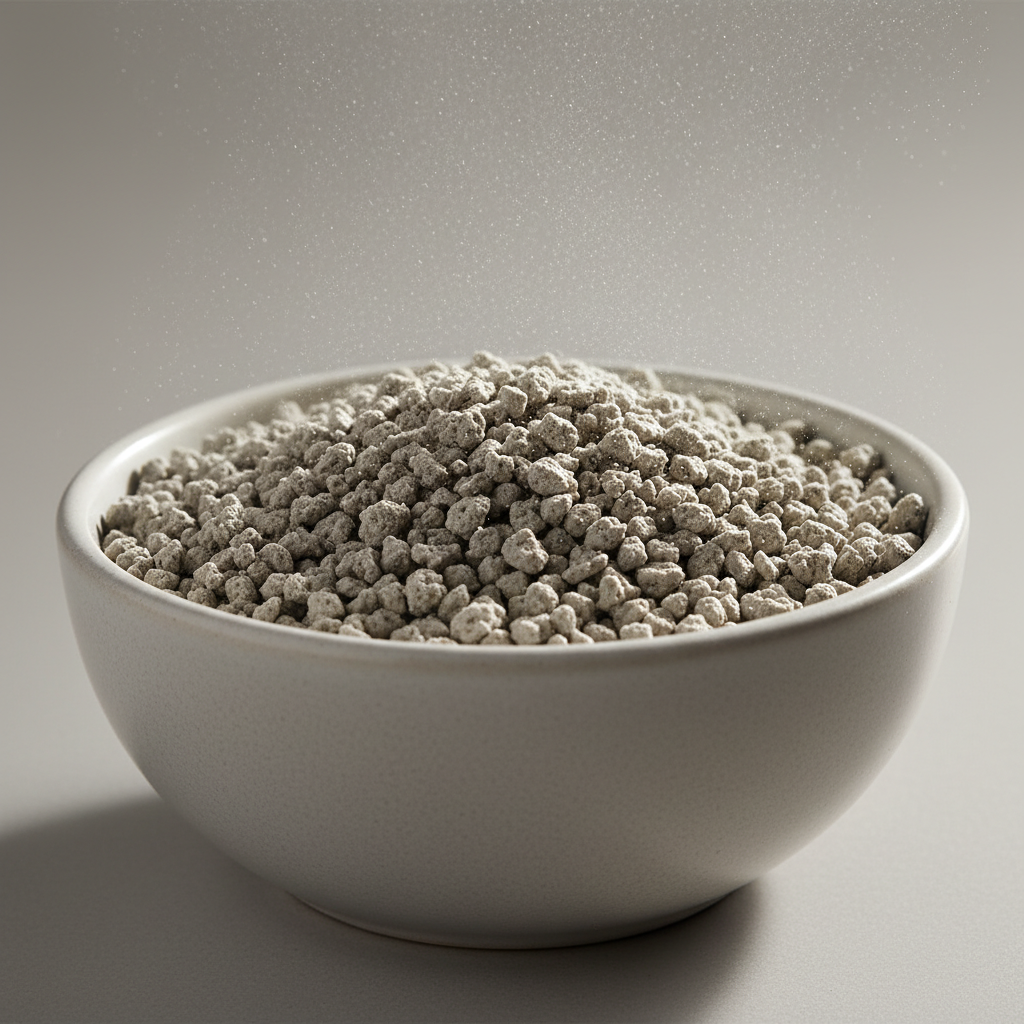
Sodium bentonite is a swelling clay — that is literally why it clumps. The same expansion that traps urine in a neat ball also happens, on a smaller scale, in a kitten's intestine.
The veterinary case literature on this is unambiguous: bentonite toxicosis from ingestion has been documented in case reports going back decades, with kittens at highest risk because their GI tract is small enough for a swallowed clump to cause complete obstruction. A 2022 study on bentonite-related lung disease also raises a separate concern: respirable crystalline silica dust from clumping clay litter is associated with silicosis-like changes in humans and animals chronically exposed in poorly ventilated rooms.
Translation for a Malaysian home: if you have a young kitten, a pica-prone cat, or you live in a small high-rise unit where the box sits in an enclosed bathroom, sodium bentonite is the highest-risk category on both ingestion and inhalation axes.
If you are not sure how bad your current litter is on dust, run it through our dust level comparison tool.
Silica Crystal / Gel: What Ingestion Data Shows
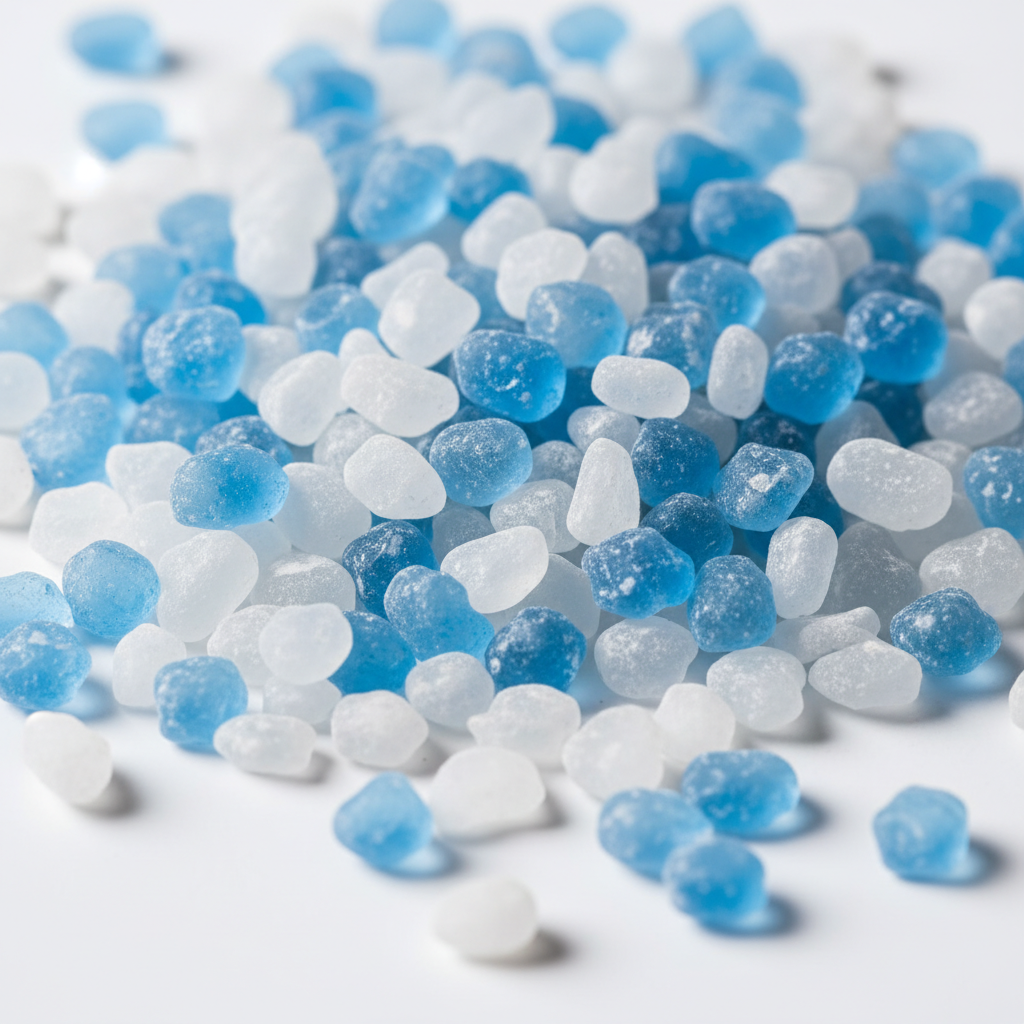
Silica gel beads are anhydrous absorbents — the same family as the "DO NOT EAT" packets in shoeboxes. ASPCA Animal Poison Control treats silica gel as a low-acute-toxicity ingestion (it is not poisonous in the chemical sense), but the beads can cause GI irritation, vomiting and, in larger volumes, mechanical issues. Silica crystals do not expand the way bentonite does, so the catastrophic obstruction risk is lower — but "low" is not "safe," and the dust component still raises respiratory questions. Compare options in our litter comparison tool.
Tofu / Soy / Plant-Based: Structurally Lower Concern
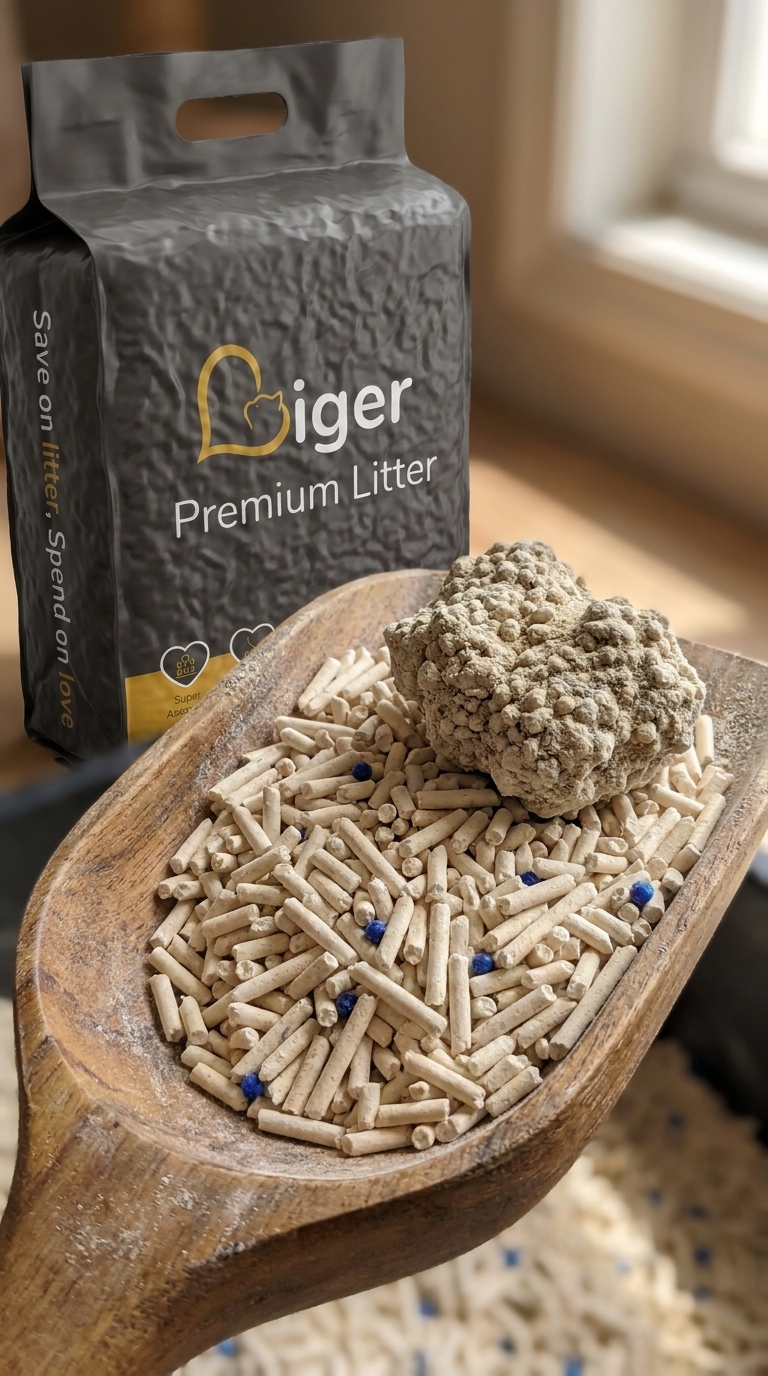
Plant-based pellets — tofu, soy hulls, pea fibre, corn starch — are made from the same family of ingredients that show up in commercial pet food. They are food-grade, biodegradable, and crucially, they dissolve in liquid rather than expanding into a hard mass. If a curious kitten swallows a pellet, the worst-case downstream story is GI upset; there is no expansion mechanism to create an obstruction bezoar.
This is the structural reason we recommend plant-based pellets as the default for: kittens under 4 months, any cat with a known pica history, and any household where a vet workup is in progress but the cat has not yet stopped mouthing the litter.
Important disclaimer: plant-based pellets are not "safe to eat." No litter is. We are saying the ingestion risk profile is structurally lower than bentonite or silica — that is a relative statement, not a free pass. The first action remains a vet visit.
If you are weighing a switch, our how to choose the best cat litter guide walks through the full decision tree, and our dust-free litter guide covers the respiratory side.
What to Do This Week
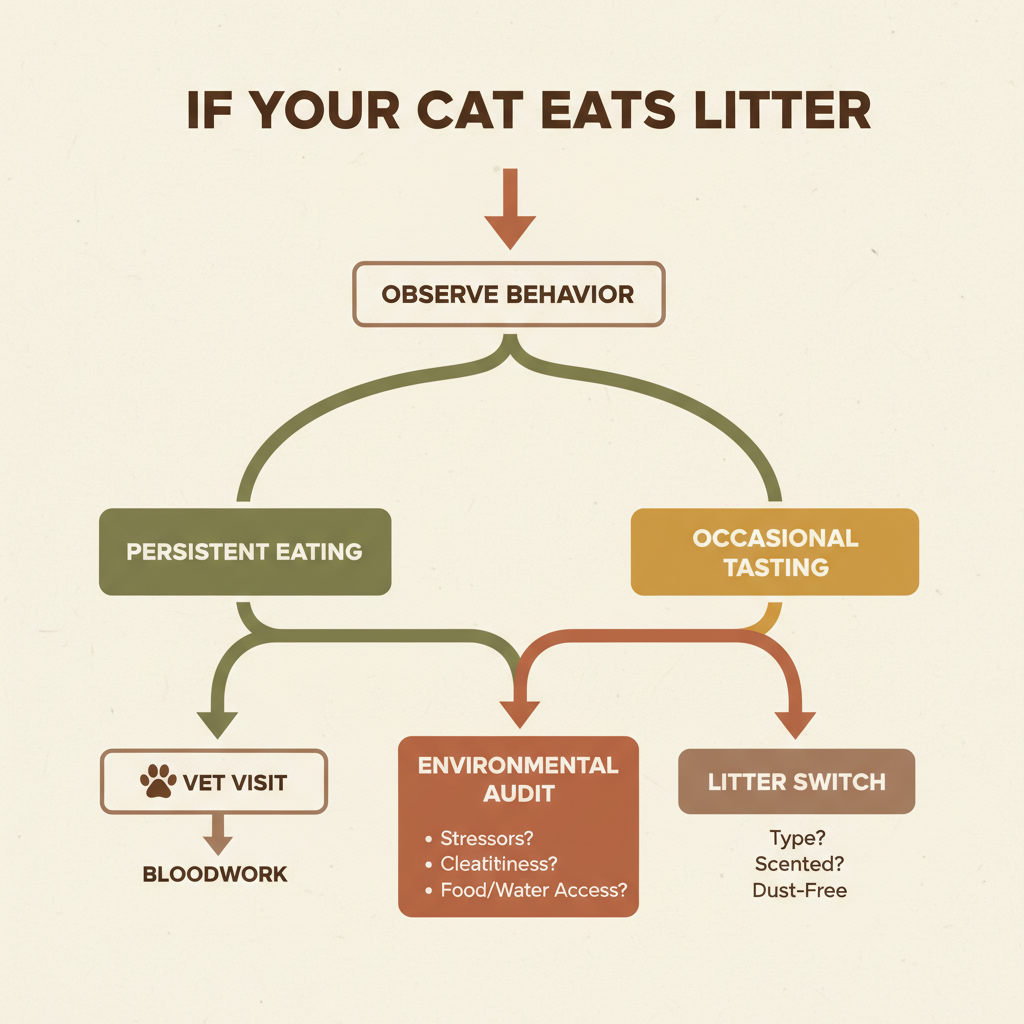
Here is the action plan in order. Do not skip steps:
- Today: Lift the lip and check gum colour. Pale or white gums = vet today, not tomorrow.
- This week: Book a vet appointment. Ask specifically for a CBC (complete blood count), urinalysis, and an oral exam. If your cat is 8+, add a T4. If she goes outside or lives with multiple cats, ask about haemotropic mycoplasma PCR.
- While you wait: Start an observation diary. Note time, situation, whether food was available, and how much litter was actually swallowed (versus mouthed and dropped).
- After medical clearance: Audit the environment. Is there enough play? Multiple feedings? Food puzzles? A second litter box (N+1 rule — number of cats plus one)?
- Last step: If the behaviour persists despite medical clearance and enrichment, switch to a plant-based pellet litter to lower the structural risk of incidental ingestion. Liger Tofu Cat Litter is available in 1/3/5/10 packs at RM21.90 / RM53.90 / RM89 / RM169 with free West Malaysia delivery.
Red Flags That Mean ER, Not Wait-and-See
Go to a 24-hour vet immediately if you observe:
- Repeated vomiting, especially with clumps of swallowed litter in the vomit
- Distended, painful abdomen
- No bowel movement for more than 48 hours after suspected ingestion
- Male cat straining to pee with no output (urinary blockage — fatal within 24–48 hours)
- Collapse, pale gums, rapid breathing
- Any kitten under 6 months that has swallowed clumping bentonite
Cat eating litter is rarely an emergency by itself — but the underlying cause sometimes is. Trust your gut, get the bloodwork, and only then start thinking about what is in the box.