Walk into any pet shop in Malaysia and the cat food shelf is a wall of confident promises: "premium", "holistic", "grain-free", "human-grade". It's overwhelming by design. The honest truth is that there's no single best cat food — only the right food for your cat, made by a company that knows what it's doing. This guide is a buyer's framework, not a brand ranking: four checks that let you judge any bag or can on the shelf objectively. For the deep dive on individual label terms, pair it with our guide to reading cat food labels, and you can line up options side by side with the cat food brand comparison tool.
Why There Is No Single Best Cat Food
The "best food" depends on your cat's life stage, health, and how its body responds — a kitten, a sedentary senior, and a cat with kidney disease need genuinely different things. So instead of chasing a magic brand, you want a repeatable way to evaluate any food. That comes down to four questions: Is it complete and balanced? Who made it? What's actually in it? And does it suit this particular cat? Work through those in order and the wall of choices sorts itself out. For the full nutritional grounding behind all of this, see our cat nutrition hub.
The good news for Malaysian owners is that the framework works regardless of budget or where you shop. The local market has plenty of complete-and-balanced options — AAFCO-certified local brands such as Powercat, Halal-certified choices like MISHA and ProDiet, and widely stocked international ranges — so you're rarely forced to overspend to feed well. What separates a good buy from a poor one isn't the price tag or the country of origin; it's whether the food clears the four checks below. A reasonably priced food that passes beats an expensive one that doesn't.
Step 1: Find the AAFCO Statement
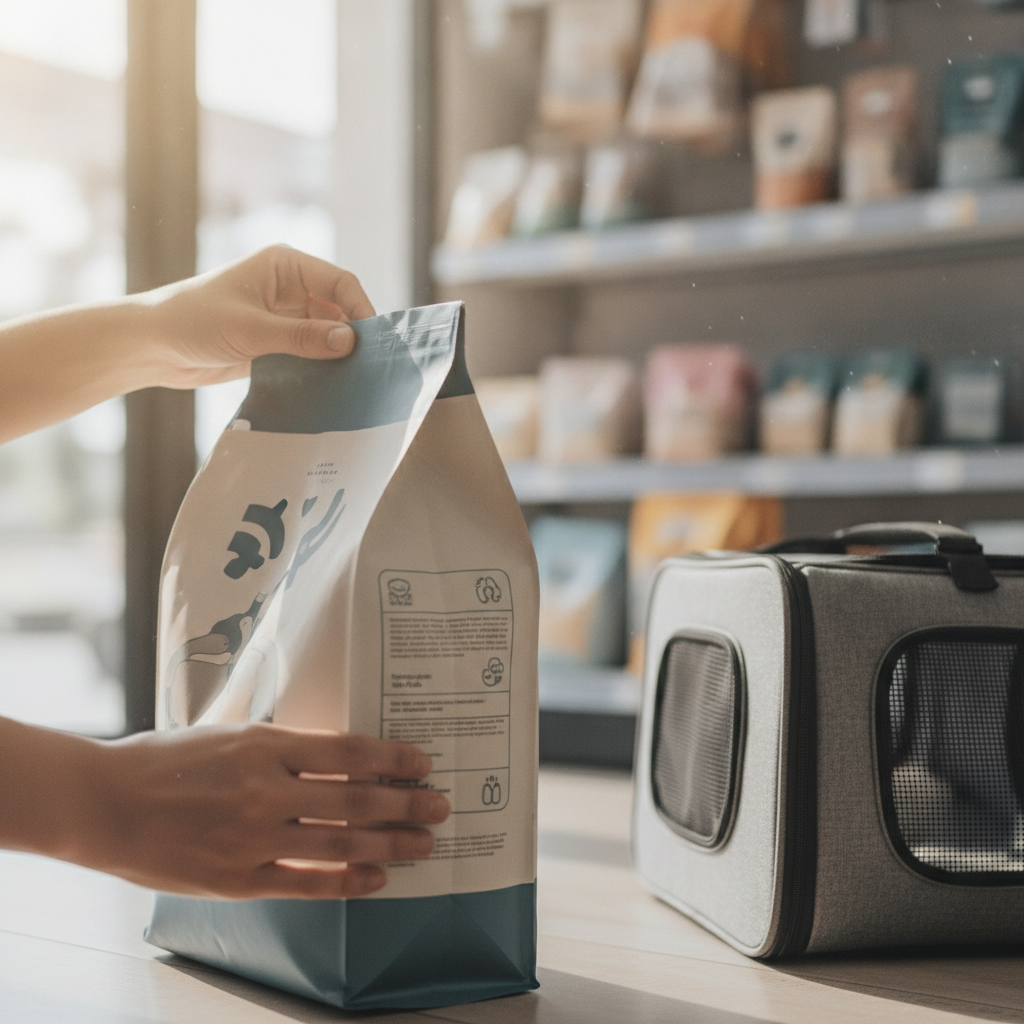
The single most important line on any cat food label isn't on the front — it's the small nutritional adequacy statement, usually near the feeding guide. If a food is meant to be your cat's main diet, it must say it's "complete and balanced" for a life stage, and per AAFCO there are two ways a maker can back that up:
- "Formulated to meet" AAFCO nutrient profiles — the recipe was analysed in a lab to hit the required minimums.
- "Animal feeding tests using AAFCO procedures substantiate..." — the food was actually fed to cats (at least eight, for 26 weeks for adult maintenance) and their health monitored.
The feeding-trial version is stronger proof, and the World Small Animal Veterinary Association (WSAVA) treats it as the gold standard. A food with no AAFCO statement at all is a treat or a "complementary" food, not a complete diet — don't build meals around it.
Step 2: Vet the Manufacturer, Not the Marketing
Here's the counterintuitive part most owners miss: who makes the food predicts quality better than any single ingredient. WSAVA publishes a set of questions to judge a manufacturer, and a good company can answer all of them:
- Do they employ a full-time qualified nutritionist — a PhD in animal nutrition or a board-certified veterinary nutritionist (ACVN)?
- Do they own their factories and test both raw ingredients and every finished batch against the AAFCO profile?
- Do they fund and publish peer-reviewed research?
This is why long-established names that run their own feeding trials and staff nutritionists — Royal Canin and Hill's among them — are frequently cited by vets, while a glossy boutique brand built on trendy ingredients may have none of that rigour behind it. The veterinary nutrition team at Tufts University's Petfoodology makes the same point: the expertise behind a diet matters far more than a pretty ingredient panel. You're not buying the label; you're buying the company's competence.
Step 3: Read the Ingredient List Honestly
Ingredients are listed by pre-cooking weight, which quietly misleads. "Deboned chicken" listed first sounds great, but fresh meat is up to 75% water — once the food is dried, its real protein contribution can be smaller than an ingredient further down. That's why a named "chicken meal" or "salmon meal" is actually a transparent, concentrated protein source (it takes three to five pounds of fresh meat to make one pound of meal), whereas a vague "poultry meal" hides which animal it came from.
And let's kill the biggest myth: by-products are not floor sweepings. By AAFCO's definition, meat by-products are clean organ meats — liver, kidney, lung — which are genuinely nutrient-rich, and the definition legally excludes hair, hooves, horns and teeth. A reputable maker can build excellent food around them. We unpack the marketing tricks in full in decoding cat food ingredient scams, and the food ingredient checker helps you sanity-check a label.
One more panel worth understanding is the Guaranteed Analysis — the box listing minimum protein and fat, and maximum fibre and moisture. As PetMD notes, "crude" here refers to the test method, not quality, and the figures are minimums and maximums rather than exact amounts. The bigger trap is that they're given "as fed", moisture included, so you cannot compare a 78%-moisture can directly against a 10%-moisture kibble without converting both to a dry-matter basis first. It's a useful sanity check, not a quality score.
The Grain-Free Question and the DCM Investigation
Grain-free is one of the most successful marketing stories in pet food, but the science is more complicated. Since July 2018, the U.S. FDA has been investigating a possible link between certain "BEG" diets (Boutique brands, Exotic ingredients, Grain-free) and dilated cardiomyopathy (DCM), a serious heart disease. In the reported cases, a large majority were on grain-free diets, most of which listed peas, lentils or other legumes high on the ingredient list. An early taurine-deficiency theory hasn't held up consistently, no definitive cause is proven, and the work is ongoing — but it's enough that many veterinary nutritionists now advise caution about grain-free unless there's a specific medical reason. Grains aren't the enemy most marketing makes them out to be; cats handle moderate cooked grains fine. The practical takeaway isn't "grain-free is bad" — it's that grain-free is a marketing choice, not automatically a health upgrade, and a food shouldn't earn your trust simply for leaving grains out. Judge it on the AAFCO statement and the maker, like everything else.
Marketing Words That Mean Nothing
Some label words are pure decoration. "Premium", "gourmet", "super-premium" and "holistic" have no legal definition — any food can use them without meeting any standard. Two terms, however, are regulated: "natural" means all ingredients come from plant, animal or mined sources (with a disclaimer when synthetic vitamins are added), and "human-grade" is strict — every ingredient and the whole facility must be fit for human food production. So treat the front of the bag as advertising and the adequacy statement plus manufacturer track record as the real signal.
Wet, Dry, or Mixed — and Matching Food to Your Cat
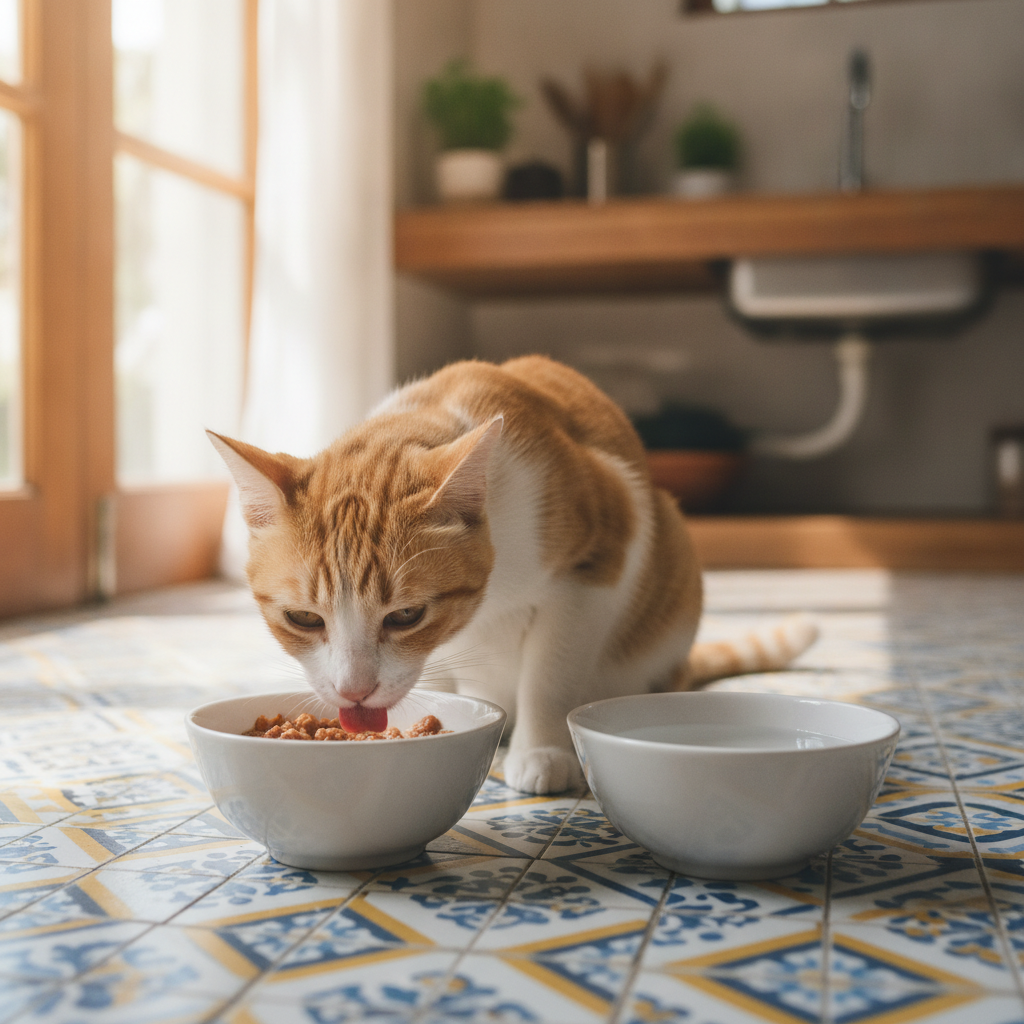
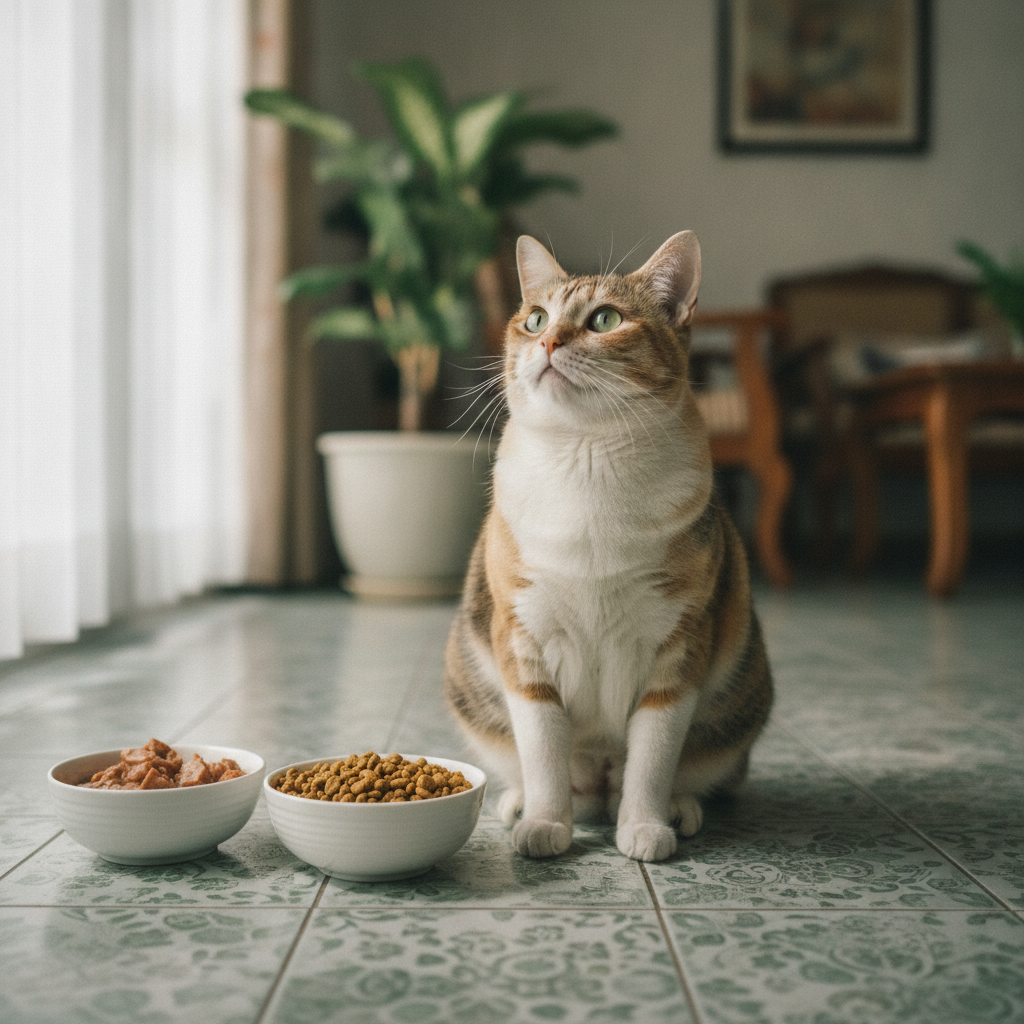
Format matters as much as brand. Wet food's 70–80% moisture supports hydration and urinary health — valuable for cats with their low thirst drive, and doubly so in Malaysia's heat — while dry food is convenient and economical but easy to over-pour. Many vets suggest a mixed approach; we compare them in dry vs wet cat food. Then match the formula to the cat: kittens need a "growth" food (30% minimum protein), adults "maintenance" (26%), and cats with conditions like kidney disease or diabetes need a vet-prescribed therapeutic diet — more on renal feeding in our senior and kidney nutrition guide. Whatever you pick, switch to it slowly over 7–10 days, as covered in how to switch cat food.
The Real Proof Is in the Litter Box
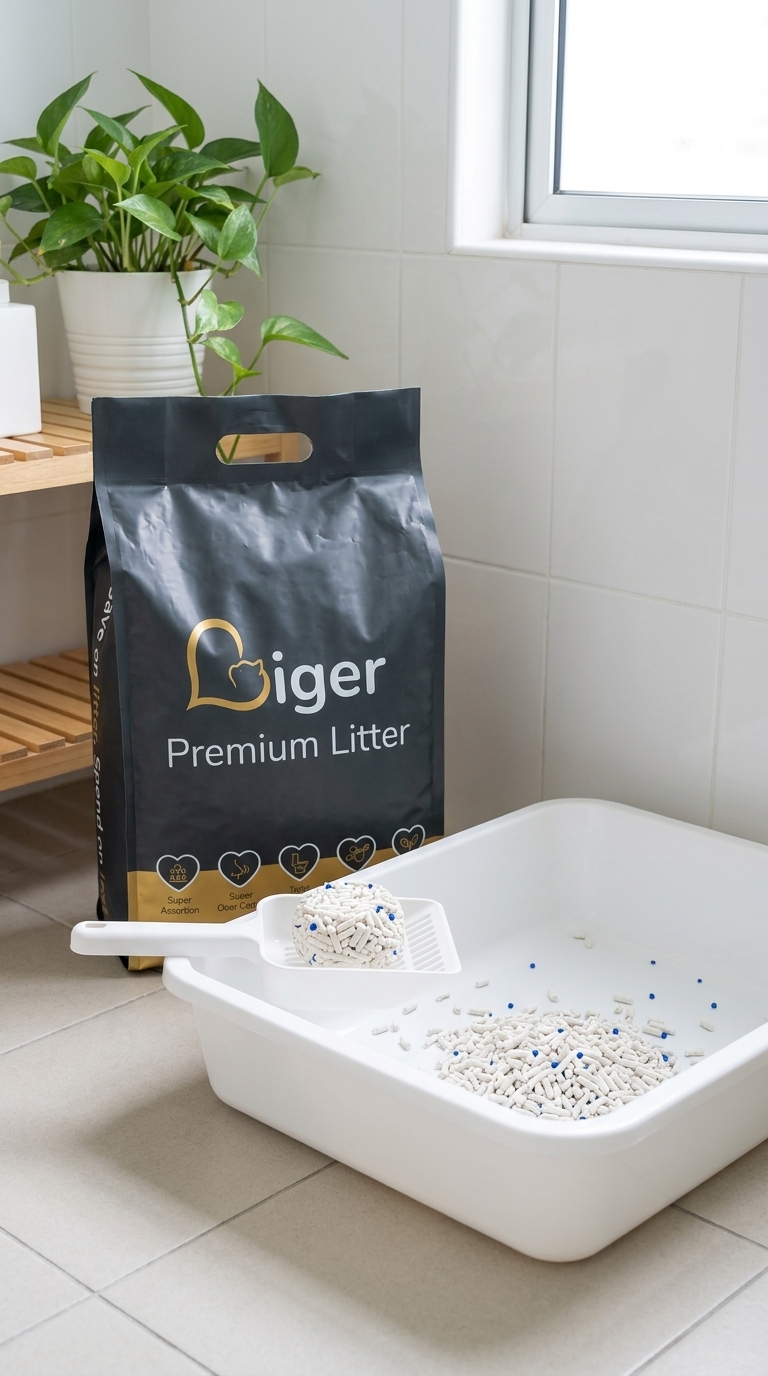
After all the label-reading, the final verdict on whether a food actually suits your cat is written in its body and its litter tray. Over a few weeks on a new food, watch for a glossy coat, stable healthy weight, good energy — and, crucially, what lands in the box. Firm, well-formed, dark-brown stool and clear, pale urine say the food is working; chronic loose stool, straining, or a cat going off its food say it isn't, regardless of how good the bag looked. You can only read those signs clearly with a litter that shows them, which is where a low-dust, firmly clumping option like Liger Premium Tofu Cat Litter helps: each deposit seals into a clean, scoopable clump so changes are obvious, and the natural plant-starch formula keeps dust and odour down indoors. To be upfront — Liger makes litter, not food — but the litter box is genuinely your best feedback loop on a diet. A 2 kg pack is RM21.90, dropping to RM8.45/kg on the 10-pack with free Peninsular shipping (current pricing as of 2026); size your supply with the litter calculator. And for anything beyond the basics, your vet's recommendation always beats the shelf.