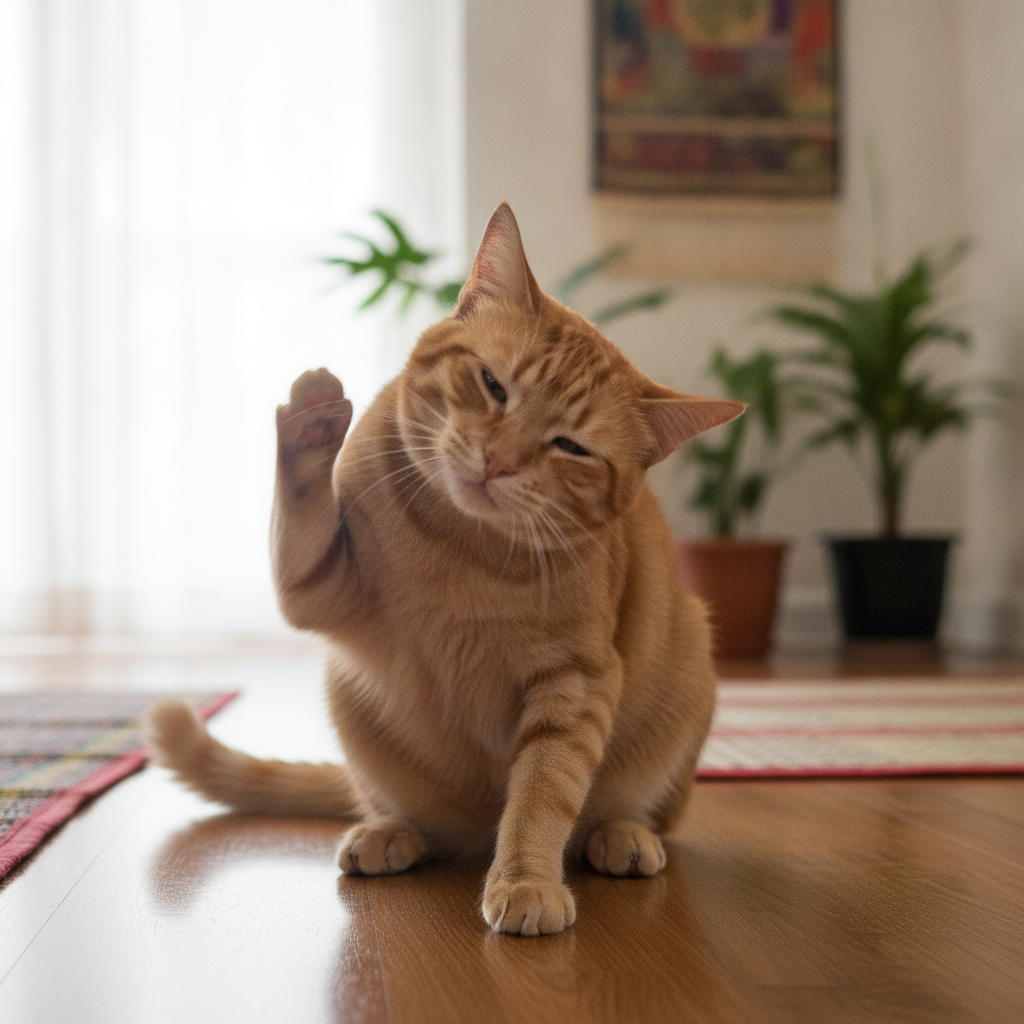
Your cat won't stop shaking its head, scratching at one ear, and there's a funky smell when you get close. Most Malaysian cat parents immediately think "ear mites" — but a head-shaking, smelly, painful ear is very often a bacterial or yeast ear infection (otitis externa), which is a completely different problem with a completely different fix. Getting the two mixed up wastes weeks and money. This guide, built from veterinary sources, helps you tell them apart, spot the warning signs, and understand how vets actually treat it.
One thing upfront: this is an educational guide, not a diagnosis. Ears connect to balance and the brain, and a neglected ear infection can cause permanent damage. If your cat's ear is sore, smelly or weepy, the safe move is a vet visit.
Ear Infection or Ear Mites? Get This Right First
This is the single most important distinction in this whole article, so we lead with it. Ear mites and bacterial/yeast ear infections look similar from across the room but are not the same thing.
Ear mites (Otodectes cynotis) are tiny parasites. They cause intense itching and a classic discharge that is dry, black and crumbly — like coffee grounds. They're contagious between pets and are responsible for up to half of ear-itch cases, especially in kittens. We cover them in detail in our guide on why your cat's ears aren't just dirty — they're colonized.
Bacterial and yeast otitis is different. The discharge is moist, waxy or pus-like — brown, yellow or green — usually with a strong foul or musty odour, and the ear is visibly red, swollen and painful to touch. According to VCA Hospitals, these infections are rarely a "primary" disease — they flare up when something else has already upset the ear. (Confusingly, a long-standing mite infestation can damage the ear and cause a secondary bacterial/yeast infection, which is exactly why a vet cytology beats guessing.)
What Causes Otitis (And Why It's Usually Not the Real Problem)
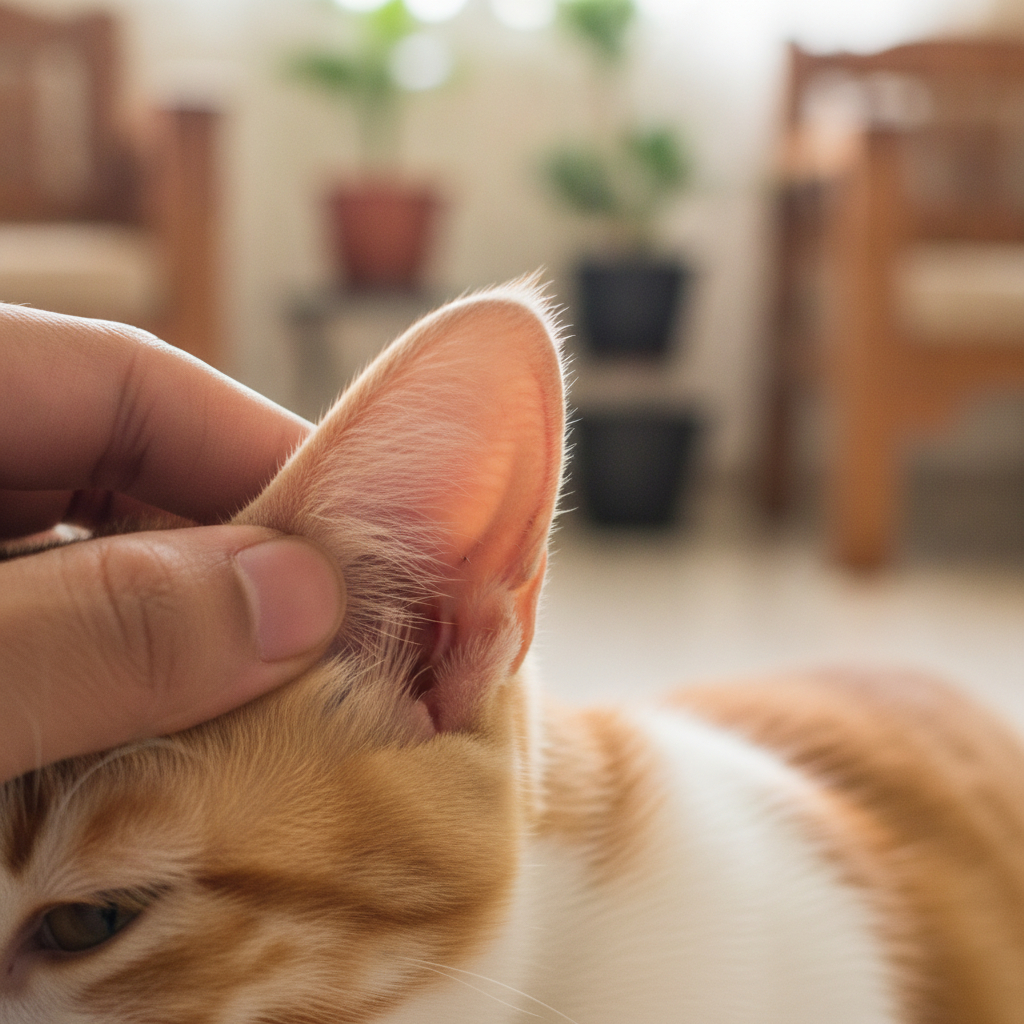
Here's the mental shift that fixes recurring ear infections: in cats, bacteria and yeast are opportunists. They overgrow only when the ear's normal environment is already compromised. So the infection you see is often a symptom of a deeper cause.
- Allergies — the #1 driver. Per the Cornell Feline Health Center and dermatology literature, atopic dermatitis (reactions to environmental allergens like pollen, mould and dust mites) and adverse food reactions are the most common cause of recurrent feline otitis. For some allergic cats, an ear flare is the first sign. Skin and ears are connected — see our Malaysian cat skin guide.
- Inflammatory polyps. Benign fleshy growths, common in younger cats, that physically block the canal.
- Tumours/cysts — considered in older cats, especially when only one ear is affected.
- Moisture and humidity. Malaysia's climate matters here. The feline ear canal is a deep "L" shape that traps water and warmth — a perfect incubator after a bath or in humid weather.
- Foreign bodies like plant matter (less common in cats than dogs).
How big is the allergy link? In cats with diagnosed allergies, studies show roughly 16–20% present with otitis externa as a clinical sign — sometimes the ear is the loudest complaint while the skin issue is subtle. That's why a vet treating the ear in isolation, without ever asking "what's the trigger?", tends to see the same cat back in a month.
The two most common culprits, once the ear is compromised, are the yeast Malassezia (found in 41–83% of cases) and bacteria like Staphylococcus (33–68%), with the tougher Pseudomonas in roughly 7–22% — per published prevalence data. Pseudomonas is the one that often needs a culture-and-sensitivity test because it can be stubbornly antibiotic-resistant.
Signs Your Cat Has an Ear Infection
Cats hide pain well, so behaviour is often the first clue:
- Persistent head shaking and scratching at the ear
- Rubbing the head against furniture or the floor
- Pain — yowling when the ear is touched, flinching from head pats, even aggression when you try to look
- Red, swollen ear flap and canal opening
- A foul or musty smell
- Visible waxy or pus-like discharge
- ⚠️ Head tilt or loss of balance — a red flag that the infection may have reached the middle/inner ear
Vigorous scratching can burst a blood vessel in the ear flap, causing a painful swelling called an aural haematoma that often needs surgery. If you're learning to read feline illness generally, our 12 warning signs your cat is sick pairs well with this.
The Discharge Decoder: Yeast vs Bacteria
You can't diagnose from colour alone — only cytology confirms it — but the discharge offers clues your vet will combine with the microscope:
- Dark brown/black, waxy, moist → often Malassezia yeast overgrowth.
- Creamy yellow or greenish, pus-like → often bacterial (Staphylococcus, or the tougher Pseudomonas).
- Dry, black, crumbly "coffee grounds" → think ear mites, not bacterial/yeast otitis (back to that first section).
How Your Vet Diagnoses It
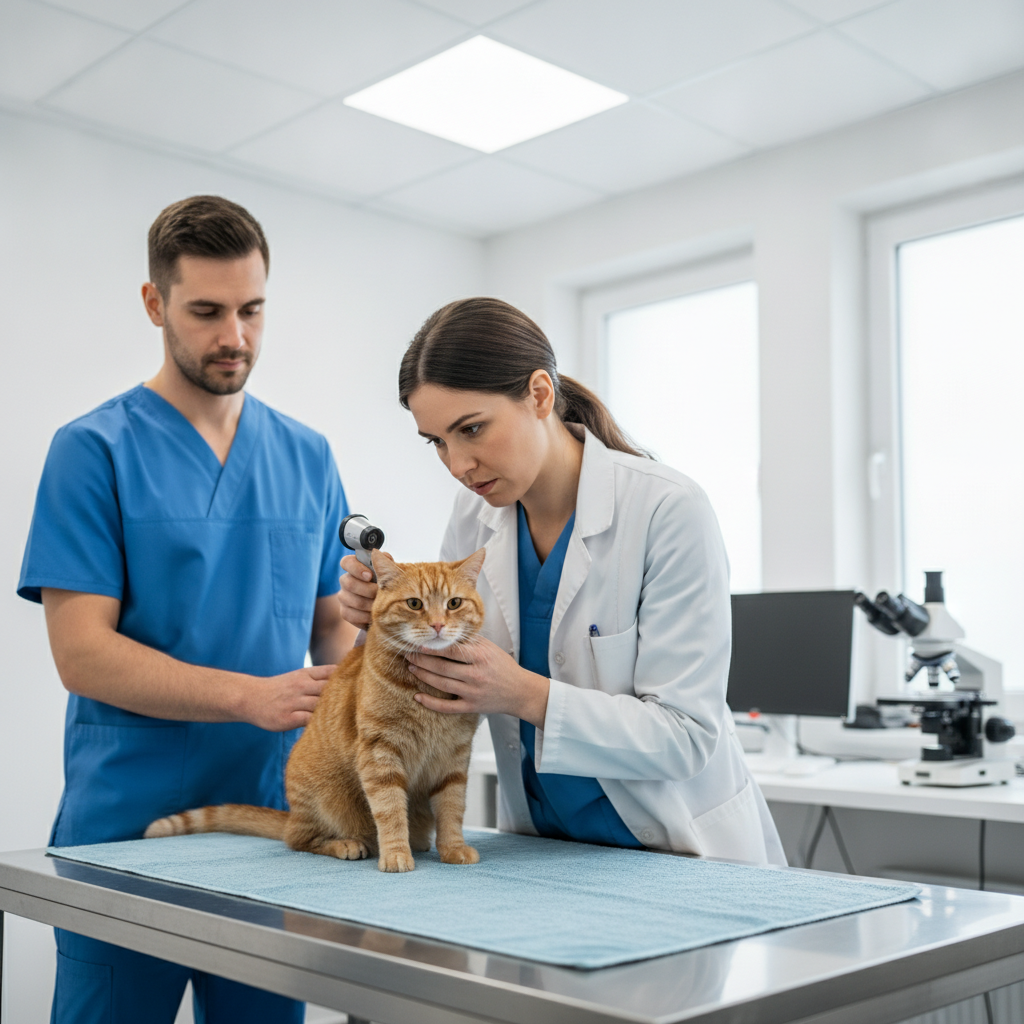
This is where home guesswork falls apart. A proper work-up includes:
- Otoscopy — looking down the full canal to the eardrum, checking for inflammation, narrowing, polyps, tumours or foreign bodies. A painful cat may need sedation.
- Confirming the eardrum is intact. This is a safety must: some ear medications are ototoxic (damaging) if the eardrum is ruptured.
- Ear cytology — a swab rolled onto a slide, stained and read under the microscope. Peanut-shaped yeast, round cocci, or rod bacteria each point to different treatment. Per the Merck Vet Manual, this is what makes treatment precise rather than a shot in the dark.
- Culture & sensitivity for severe or resistant infections (especially Pseudomonas).
Treatment: Clean, Medicate, Fix the Root Cause
Effective treatment has three legs, and skipping any one is why infections keep coming back:
1. Thorough cleaning. Medication can't work through a canal packed with wax and pus. The first deep clean of a sore ear is often done by the vet, sometimes under sedation. The cleaning solution must be chosen carefully — some agents are ototoxic if the eardrum is compromised.
2. Targeted medication. Guided by cytology, vets usually prescribe a topical combo of antibiotic + antifungal + anti-inflammatory. PetMD notes treatment should continue until a recheck confirms the infection is gone — often a week or two after signs disappear. Stopping early is a classic cause of relapse.
3. Fix the underlying cause. If allergies are driving it, the ear will keep flaring until the allergy is managed (an elimination diet trial for suspected food allergy, or environmental allergy management). Polyps usually need removal.
We deliberately don't list drug names or doses to use at home — the right medicine depends on whether it's yeast, cocci or rods, and on whether the eardrum is intact. Using the wrong product (or a human ear product) can deafen a cat. Your vet sets the plan; please follow it.
🚫 The Cotton Bud Danger & Serious Complications
Never push a cotton bud (Q-tip) deep into your cat's ear. Because of the L-shaped canal, a cotton bud acts like a plunger — compacting debris against the eardrum, scratching the delicate lining (an entry point for infection), and risking a painful perforated eardrum. Clean only the visible outer ear with a vet-approved cleaner and cotton ball.
Why this matters: untreated or mismanaged otitis externa can climb inward to otitis media and interna (middle/inner ear), causing a head tilt, facial nerve paralysis, Horner's syndrome (droopy eyelid + constricted pupil), balance problems, and even permanent deafness. The Cornell Feline Health Center stresses that chronic inflammation can also permanently narrow the canal, making future treatment harder.
Prevention and a Healthy Home Environment
For cats prone to ear infections, prevention is mostly about managing the root cause and keeping the environment calm and clean:
- Manage the allergy. This is the cornerstone for recurrent cases. Work with your vet on diet trials or environmental allergy control.
- Use only vet-approved ear cleaners, with proper technique: fill the canal, massage the base 20–30 seconds, let the cat shake, then wipe the outer ear only.
- Dry the ears gently after baths; don't let moisture sit in our humid climate.
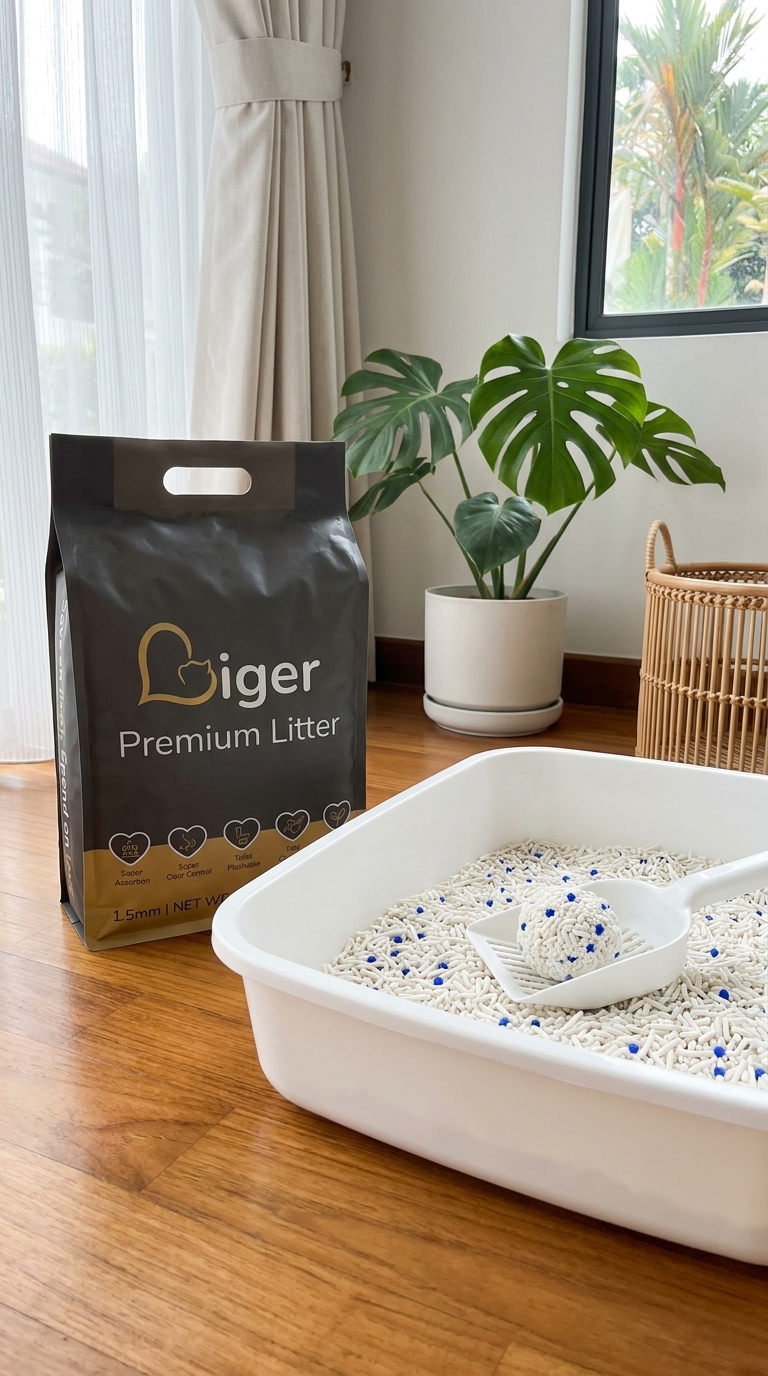
- Reduce environmental allergen load. Since dust and dust mites are documented allergy triggers, a low-dust home genuinely helps allergy-prone cats. A clean setup and a low-dust litter both cut down airborne irritants near where your cat spends its day. Liger Premium Tofu Cat Litter is a soy-based, low-dust, flushable tofu litter — Halal-certified and priced from RM21.90 (2 kg) down to RM8.45/kg on the 10-pack — a small, honest way to keep airborne dust down. For the deeper dust-and-allergy story, see our best litter for asthma & allergies guide, and our litter calculator for sizing.
- Routine vet checks catch a minor flare before it becomes a chronic, canal-narrowing mess.
Bottom line: a smelly, itchy, painful ear is not automatically "just mites", and it's rarely something to treat blind at home. Pin down whether it's mites, yeast or bacteria, fix the underlying trigger, and you break the cycle. For the bigger picture, see our overview of common cat diseases in Malaysia — and when an ear looks angry or your cat tilts its head, call the vet.