You've decided to get your cat fixed — now you just need to know the practical stuff: how much it costs, the best age, what surgery day looks like, and how to nurse your cat through recovery without a hitch. This is that guide. We're skipping the "should I or shouldn't I" debate (if you're still weighing it up, read our honest take on whether to neuter your cat first) and focusing purely on the logistics of getting it done well in Malaysia.
Spaying and neutering is a core part of preventive cat care. Done right, it's a routine, one-time procedure — and the recovery is almost entirely in your hands.
The Best Age to Spay or Neuter
The old advice of "wait until 5 or 6 months" has been overtaken by evidence. The current veterinary consensus, promoted as "Fix Felines by Five" and backed by the American Veterinary Medical Association, AAHA and WSAVA, is to sterilise before five months of age. The reason is simple: female cats can fall pregnant from as early as four months, so fixing before then virtually eliminates accidental litters.
There are real health upsides too — spaying before the first heat dramatically lowers the risk of mammary tumours (which are malignant in around 90% of feline cases per International Cat Care) and removes the risk of pyometra, a life-threatening womb infection. In shelters, pediatric neutering from 8–12 weeks is standard and considered safe; older worries about stunted growth or urinary problems haven't held up in research, and younger kittens often recover faster. For the long-term health picture after a male is done, see our guide on health shifts to watch after neutering.
What It Costs in Malaysia: Private vs Subsidised
Malaysia has a two-tier system: full-service private clinics, and subsidised high-volume programmes run by the government and welfare NGOs. The price gap is large, so it pays to know your options. Treat these as typical ranges and always confirm with the clinic — costs vary by location and your cat's size.
| Where | Neuter (male) | Spay (female) |
|---|---|---|
| Private veterinary clinic | RM100 – RM250 | RM150 – RM400 |
| DVS (government) clinic | RM30 – RM60 | RM50 – RM80 |
| SPCA / welfare programmes | from ~RM25 | from ~RM35 |
| Klinik Kembiri (DBKL-SPCA, KL) | from RM60 | from RM80 |
At private clinics, the headline price often excludes extras like pre-surgery blood tests (RM80–RM200) and an e-collar (RM10–RM30), so ask for the full quote. Subsidised routes are dramatically cheaper: SPCA Selangor runs low flat rates, and the high-volume DBKL-SPCA Klinik Kembiri model keeps costs down by specialising almost entirely in sterilisation. These programmes exist because of decades of NGO advocacy for humane population control — SPCA Selangor alone has sterilised over 55,000 cats and dogs in the Klang Valley since 2003, and newer state efforts like Selangor's neutering subsidy have followed. Don't assume cheaper means riskier, either: a high-volume clinic's repetition can make it exceptionally safe — one study found mortality rates roughly one-tenth those of low-volume practices. Booking through a subsidised programme stretches your ringgit and supports stray management at the same time.
The Day of Surgery: Fasting, Anaesthesia and the Procedure
The single most important pre-op instruction is fasting. Adult cats are usually fasted for 8–12 hours beforehand (so no food after midnight for a morning slot). This isn't fussiness — under general anaesthesia the gag reflex is suppressed, and a full stomach risks vomiting and inhaling food into the lungs (aspiration pneumonia). Young kittens are different: because they can develop low blood sugar, those under four months often fast only 3–4 hours. Water is usually fine until a couple of hours before. Always follow your own vet's exact instructions, especially for cats with conditions like diabetes.
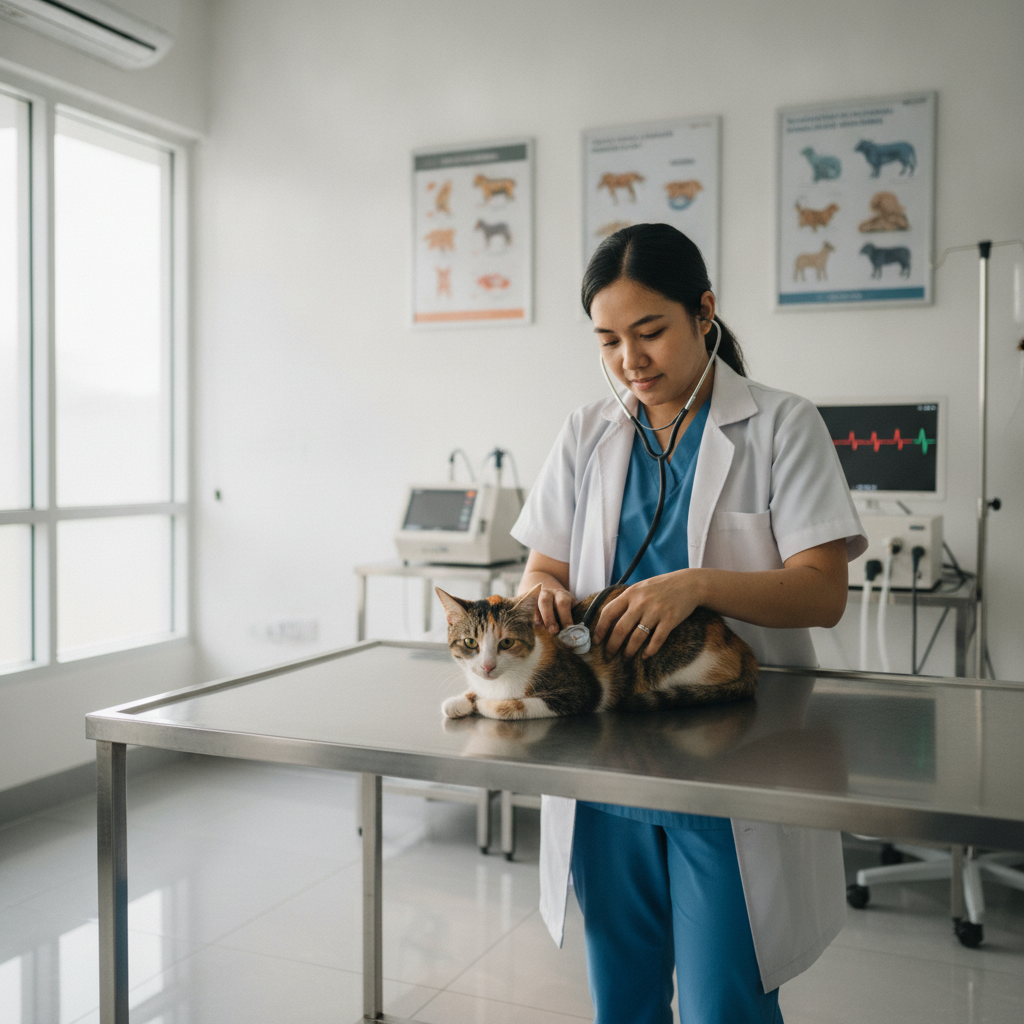
At the clinic, the vet does a pre-surgical check (sometimes pre-anaesthetic bloodwork), then the cat goes under general anaesthesia with vital signs — heart rate, blood pressure, oxygen levels — monitored throughout, and pain relief given before, during and after. Anaesthetic protocols are tailored to each cat's age, weight and health, and WSAVA surgical guidance treats good pain management as standard, not optional. The two procedures themselves differ a lot:
- Neuter (male) — orchiectomy: removal of the testicles through two small scrotal incisions, often left open to heal without stitches. Quick — frequently under 10 minutes.
- Spay (female) — ovariohysterectomy: removal of the ovaries and uterus through a small abdominal incision, with sutures. More involved — commonly around 20–40 minutes, sometimes longer.
Most cats go home the same day, groggy and a little wobbly. That disorientation is normal and usually settles within 12–24 hours. The clinic will send you home with discharge instructions, pain medication and an e-collar — follow them to the letter.
The 10-14 Day Recovery at Home
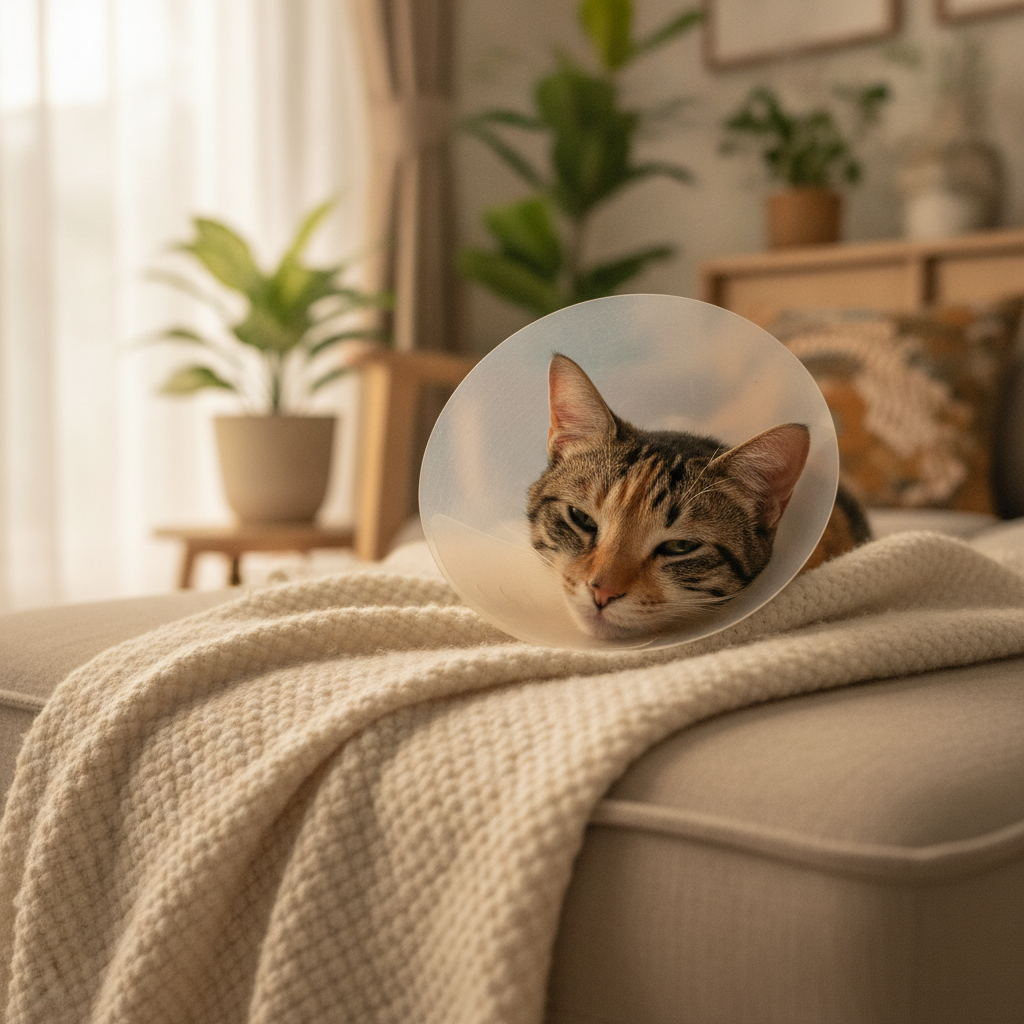
The surgery is routine; the recovery is where your diligence decides the outcome. The standard healing window is 10 to 14 days, and two rules are non-negotiable, per the ASPCA and PetMD:
- Keep the e-collar on continuously. A cat's tongue is abrasive and carries bacteria; a few seconds of licking can introduce infection or pull sutures open. The cone stays on for the full 10–14 days — and keep other pets from grooming the wound too.
- Restrict all activity. No running, jumping, climbing or rough play, and strictly indoors. Confine your cat to a quiet room when you can't supervise. This protects the incision and internal sutures from strain.
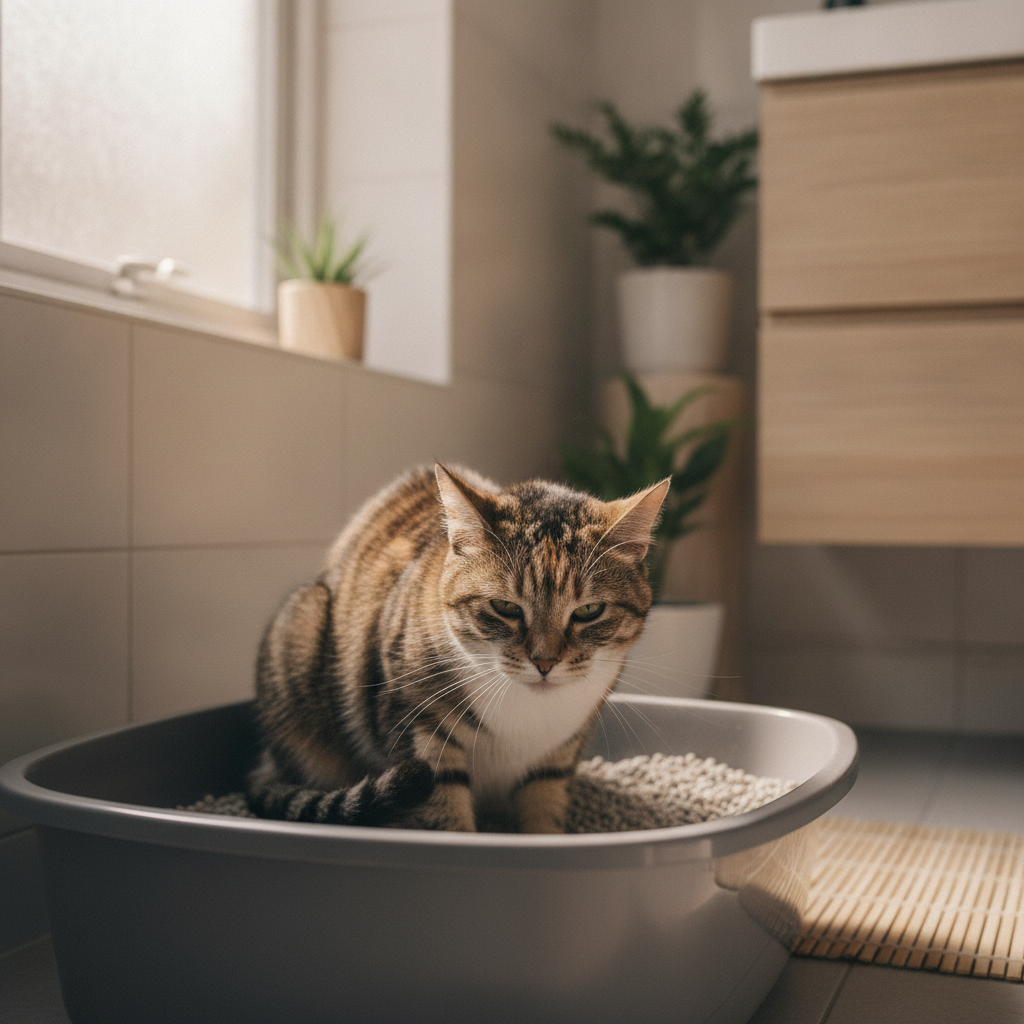
It helps to prepare the recovery space before surgery day: a small, warm, quiet room (a bathroom or spare room works well) away from children, other pets and high furniture your cat might try to leap onto. Set up food, water, a low-sided litter box and a comfortable bed at floor level so nothing requires jumping. Having this ready means you're not scrambling while your cat is groggy.
On surgery evening, offer just a small meal (about a quarter of the normal portion) with fresh water; appetite should return by the next morning. Check the incision at least twice a day. A little redness, mild swelling or minor bruising in the first 48 hours is normal, as is a small firm lump (the dissolvable suture knot) or a green tattoo many clinics add to mark a sterilised cat. Keep the site dry — no bathing — for the whole period.
Litter After Surgery: Protecting the Incision
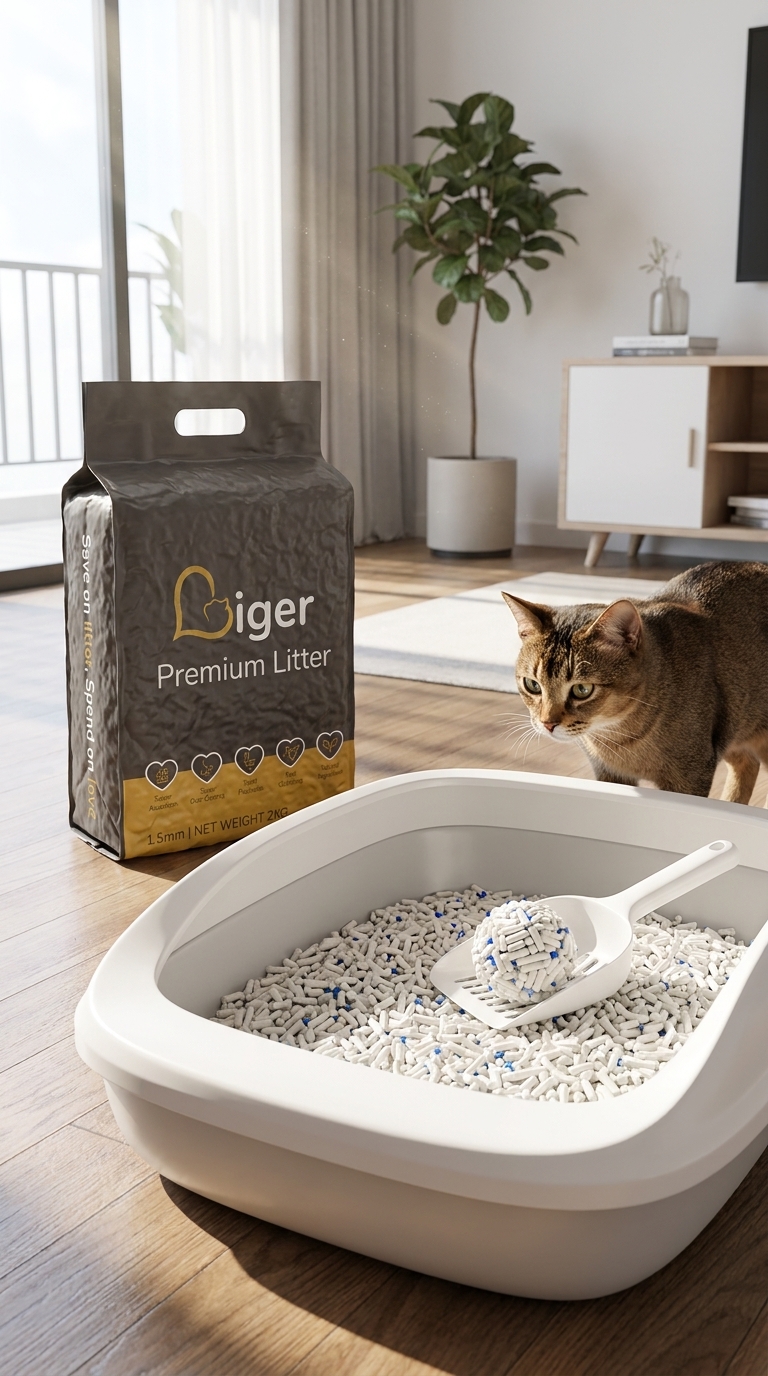
Here's a detail many owners miss. For the first 5 to 14 days after surgery, vets recommend switching away from your usual clumping or clay litter to a plain, dust-free, non-clumping option — shredded newspaper or paper pellets — because fine particles and clumping granules can stick to a fresh incision and introduce bacteria. This matters most for male cats, whose scrotal incisions are often left open to heal. So during the healing window, go simple: plain paper litter, changed frequently.
Once the incision has fully healed and your vet gives the all-clear, transition back to a litter you'll both be happy with long-term — and this is where a low-dust litter earns its place. We use Liger Premium Tofu Cat Litter in our own home because the natural soybean pellets produce far less airborne dust than traditional clay, clump firmly for easy scooping, and are gentle and flushable. Reintroduce it gradually once healing is complete (our litter comparison tool and dust comparison tool help you see the difference). A 2kg pack is RM21.90, scaling to RM169 for the 10-pack (RM8.45/kg) with free shipping in Peninsular Malaysia (current Liger pricing, as of May 2026); size your supply with the litter calculator. The rule of thumb: plain paper while the wound heals, low-dust Liger for everyday life after.
Warning Signs That Need a Vet
Most recoveries are smooth, but call your vet promptly if you see any of these:
- Redness or swelling that spreads or worsens after day two, or warmth around the incision.
- Any discharge — especially yellow-green pus or a foul smell — or continuous bleeding.
- A gaping or opening incision (dehiscence) — this is a surgical emergency.
- A lump at the site that keeps growing.
- Lethargy or refusal to eat lasting more than 24 hours, or persistent vomiting.
- Straining or inability to urinate (an emergency), or no bowel movement for over 72 hours.
These overlap with the broader warning signs that a cat is sick. One hard rule: never give human painkillers like paracetamol (Tylenol) or ibuprofen (Advil) — they are highly toxic to cats. Only use the medication your vet prescribed, on schedule.
The Bottom Line
Aim to spay or neuter before five months, budget for it (subsidised DVS, SPCA and Klinik Kembiri options make it very affordable), fast your cat correctly before surgery, and then treat the 10–14 day recovery as the real job: cone on, activity down, incision checked daily, plain paper litter while it heals. Get those right and complications are rare. New to all this? Pair it with a proper first vet visit and the full kitten first-year timeline to keep everything on track.