One day you notice your cat isn't jumping onto the bed anymore. They take the chair, then the bed, in two careful hops instead of one easy leap. It's easy to shrug off as "just getting old." But here's the thing every cat parent of an ageing cat needs to hear: most of the changes we write off as old age are actually signs of treatable disease. A cat slowing down, losing weight, or grooming less isn't simply running out the clock — it's often telling you something a vet can fix or manage.
This guide covers how to read the signs your cat is getting old, the conditions worth screening for, and how to make home life easier for a senior. It's part of our full cat life-stage care guide.
When Is a Cat Actually Senior?
Vets use three brackets for older cats, and they matter because disease risk climbs at each step:
- Mature: 7–10 years. The first subtle, often invisible, changes begin. Roughly a human in their 40s to mid-50s.
- Senior: 11–14 years. Age-related conditions become genuinely common. This is when "getting old" starts to show.
- Geriatric: 15+ years. The "super seniors" — needing the most attentive care.
As International Cat Care notes, these are guides, not hard lines — a cat's health status often tells you more than its birthday. Curious where yours sits in human terms? Try the cat age calculator.
The Signs Your Cat Is Getting Old
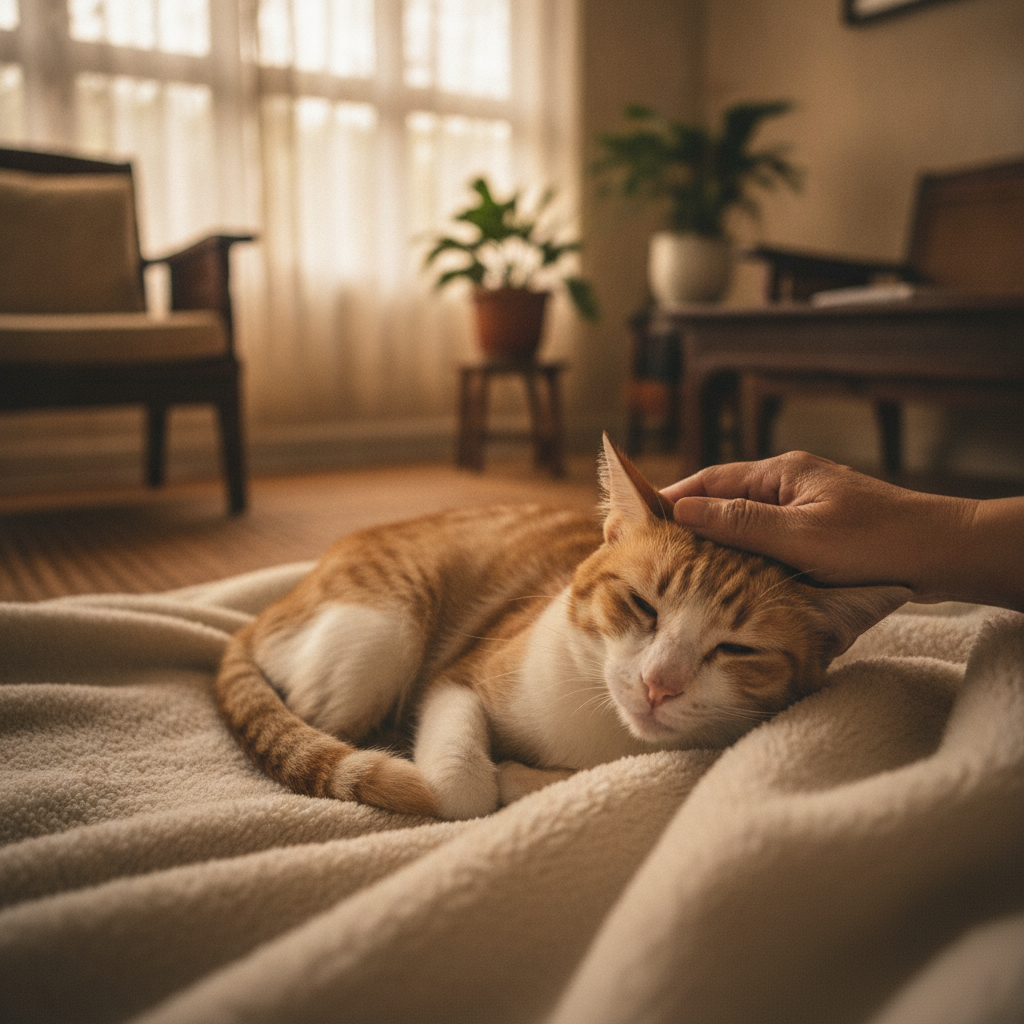
Because cats are masters at hiding illness, you — not the annual check-up — are the early-warning system. Watch for these, and mention any of them to your vet:
Body and coat. Gradual weight loss is the big one, and it can happen even with a healthy appetite. A drop of just 5% of body weight in a month is worth a vet call. You may also feel the spine and hips becoming bony — that's muscle loss (sarcopenia), which can happen even if the scale hasn't moved. A dull, greasy or matted coat usually means your cat has stopped grooming properly, often because arthritis makes twisting painful. Claws thicken and overgrow when an old cat scratches less, and can curl into the paw pads if not trimmed.
Movement and behaviour. Hesitating before a jump, taking the stairs one at a time, or choosing lower perches is classic arthritis pain — not laziness. Senior cats also sleep more (16–20 hours a day is normal) and may become either clingier or more withdrawn. Night-time yowling is common too.
Senses. Failing sight shows up as bumping into things, misjudging jumps, or startling easily; hearing loss as not responding to your voice or meowing much louder than before. A bluish haze in the eyes is often harmless age-related change, but always worth a check.
The mind. Getting "lost" in familiar rooms, staring at walls, forgetting where the litter box is, or flipping day and night can signal feline dementia — covered fully in our guide to feline cognitive dysfunction.
The Big Conditions to Screen For
The reason early detection matters so much: the most common senior diseases are silent at first but very manageable when caught early. Per Cornell's Feline Health Center and the MSD/Merck Veterinary Manual, these top the list:
| Condition | How common in older cats | What you might notice |
|---|---|---|
| Chronic kidney disease | 30–40% of cats over 10 | Drinking & weeing more, weight loss |
| Hyperthyroidism | Over 1 in 10 cats over 10 | Weight loss despite ravenous appetite, hyperactivity |
| Arthritis | ~74% of cats over 12 | Reduced jumping, stiffness, poor grooming |
| Hypertension | ~60% of cats with kidney disease | Often silent; can cause sudden blindness |
| Dental disease & diabetes | Very common | Bad breath, dropping food; or increased thirst |
A little more on the two heavyweights. Chronic kidney disease creeps in slowly and irreversibly — by the time a cat is visibly drinking and weeing more, a good chunk of kidney function is already gone, which is exactly why the SDMA blood marker (positive after just 25% loss) is such a useful early flag. Hyperthyroidism is the opposite picture: a cat that eats like a horse yet keeps losing weight, often restless or vocal, sometimes with a racing heart. The good news is that it's one of the most treatable conditions in feline medicine once diagnosed. Both are confirmed with simple blood tests, and both reward early action with years of extra good life.
Two of these already have full Liger guides: the silent limp of feline arthritis and senior nutrition and kidney care. The takeaway: a single early blood test can flag kidney or thyroid disease months before your cat looks sick.
The Senior Wellness Plan: Every Six Months
The most important upgrade for a cat aged 11 or over is simple: see the vet twice a year, not once. Six months is a long time in an old cat's life, and a lot can change. The AAFP senior care guidelines recommend each visit build a "minimum database":
- Full physical exam with weight, body and muscle condition scoring, and a careful joint and mouth check.
- Bloodwork — a complete blood count and chemistry panel, ideally including the SDMA marker, which can flag kidney disease after just 25% of function is lost.
- Urine test to assess the kidneys and check for diabetes or infection.
- Thyroid (T4) to catch hyperthyroidism.
- Blood pressure — the only way to catch silent hypertension before it blinds your cat.
None of this is about chasing problems — it's about buying time. Found early, kidney disease, thyroid trouble and arthritis can all be managed for years of good living. It also gives your vet a baseline: knowing what your cat's "normal" bloodwork looks like at 11 makes a worrying change at 13 obvious instead of ambiguous. Many Malaysian clinics now offer bundled senior wellness panels that make this routine and affordable — ask yours.
Feeding the Ageing Cat
Nutrition needs flip as a cat ages. Mature cats (7–10) often pile on weight as their metabolism slows, and obesity feeds straight into arthritis and diabetes — so measured meals matter. But from the senior years onward the problem usually reverses: older cats digest fat and protein less efficiently and tend to lose weight and muscle. The priority becomes high-quality, highly digestible protein to protect lean muscle, with adjustments like controlled phosphorus if the kidneys are affected. According to VCA Hospitals, hydration is a constant challenge for older cats, which is why wet food — or warming food slightly to wake up a fading sense of smell — earns its place. We go deep on this in senior cat nutrition and kidney care. Any sudden change in appetite, up or down, deserves a vet call rather than a wait-and-see.
Adapting Your Home for an Older Cat
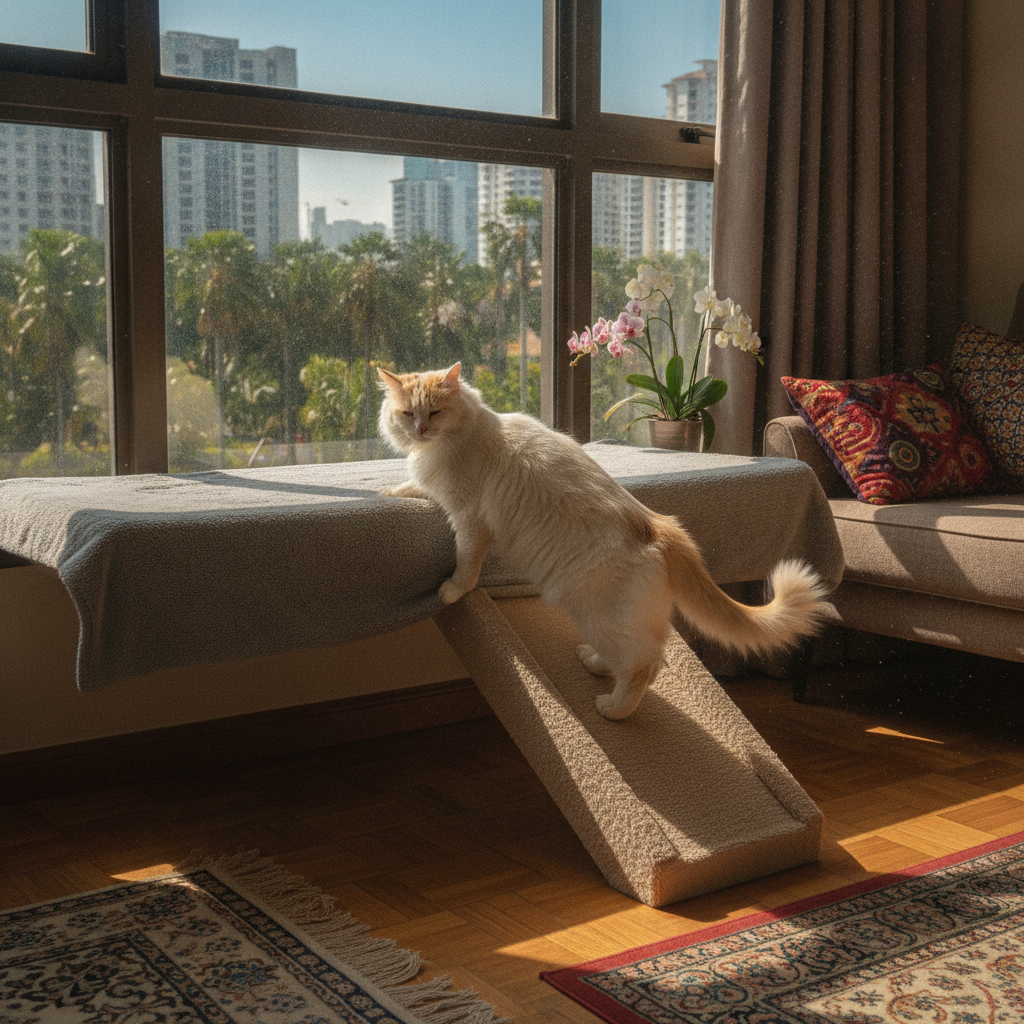
You don't need to renovate the house. A handful of cheap, thoughtful tweaks can give a stiff, half-deaf, slightly confused old cat back much of the independence and confidence that ageing chips away. Think of it as meeting your cat where they are now, rather than expecting an 18-year-old to move like a kitten:
- Ramps and steps to favourite perches and the bed, so arthritis doesn't cut your cat off from where they love to be.
- Warm, soft, easy-to-reach beds. Older cats struggle to hold their body heat even in our climate — see our Malaysian cat bed guide.
- Night-lights for failing eyes, and keeping furniture in consistent places so a cat with fading sight or memory can navigate.
- Food and water within easy reach on every level they use, with wide or raised bowls that don't press on a sore neck.
The Litter Box: A Senior Cat's Daily Struggle
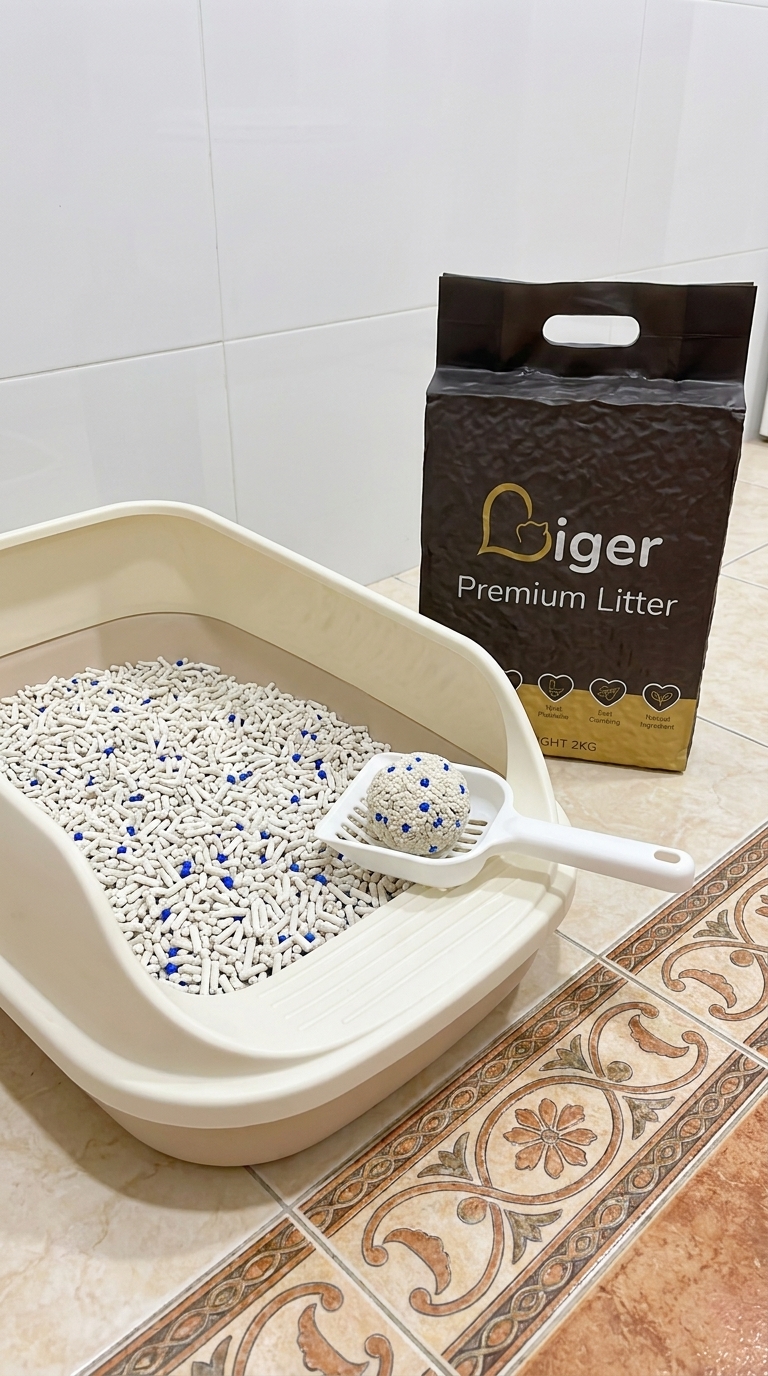
The litter box is where ageing quietly causes accidents. A high-sided box an arthritic cat can't climb into, or a dusty litter that irritates older lungs, leads to a cat that "stops using the box" — when really it just can't manage the one it has. The fix is a box with a low entry side (around 3–5 cm), large enough to turn around in, on every floor, plus a low-dust litter. Our litter box size calculator helps you choose, and the best litter for senior cats guide goes deeper.
This is exactly why Liger Premium Tofu Cat Litter suits older cats: made from food-grade plant starch, it's genuinely low-dust (kinder to senior airways), light to handle, and clumps firmly so a box stays clean and odour-free between scoops — which keeps a fussy senior using it. It runs from RM21.90 for a single 2 kg pack to RM169 for the 10-pack (about RM8.45/kg), free shipping in Peninsular Malaysia (current Liger pricing, as of May 2026). Size your supply with the litter calculator.
Growing old is not, in itself, a disease — and with twice-yearly check-ups, a few home tweaks and a watchful eye, your senior cat can have years of comfortable, dignified life. When that balance eventually tips, our guide to quality of life and saying goodbye is there for the harder conversations.