You pick up the brush and your cat turns into a hissing, swatting tornado. You're not alone — and your cat isn't being "difficult". A cat that fights grooming is telling you, in the only language it has, that it's frightened, in pain, or overwhelmed. The worst thing you can do is force it. The good news: with patience and the right approach, even a brush-hating cat can learn to sit (mostly) still. Here's how to get there without losing skin or trust.
This pairs with our complete home grooming guide and the tool advice in our guide to choosing brushes — once your cat tolerates handling, those make the actual grooming easy.
It's Fear, Not Stubbornness
Reframe the whole thing: resistance to grooming is a welfare issue, not disobedience. Cats have excellent memories and form powerful associations — one rough session where a cat was muzzled and pinned can create a lasting terror of the brush. Common roots are fear (the restraint, the clipper sound, the tugging feels like a threat), a lack of gentle handling when young, a stressful home, or simply overstimulation — where petting that started out nice tips over into "too much" and the cat lashes out to make it stop. Some cats even learn that hissing works, because every time they growl, we back off. Understanding the why is the first step to fixing it.
Rule Zero: Check for Pain First
Before any training, one non-negotiable rule: if grooming resistance is sudden or your cat reacts violently to being touched in one spot, see a vet first. A cat that snaps when you touch its back may have arthritis; one that won't let you near its face may have dental pain; a badly matted patch hurts every time it's tugged. Aggression that appears out of nowhere is very often a pain signal. Treating the underlying medical problem can resolve the grooming aversion entirely — no behaviour work needed. Don't desensitise a cat that's actually hurting. This is doubly true for older cats: a senior that used to tolerate brushing but now flinches and hides has very likely developed arthritis or dental disease, and no amount of treats will fix a sore joint. When in doubt, a quick vet check rules pain in or out before you invest weeks in training.
The Real Fix: Desensitisation + Treats
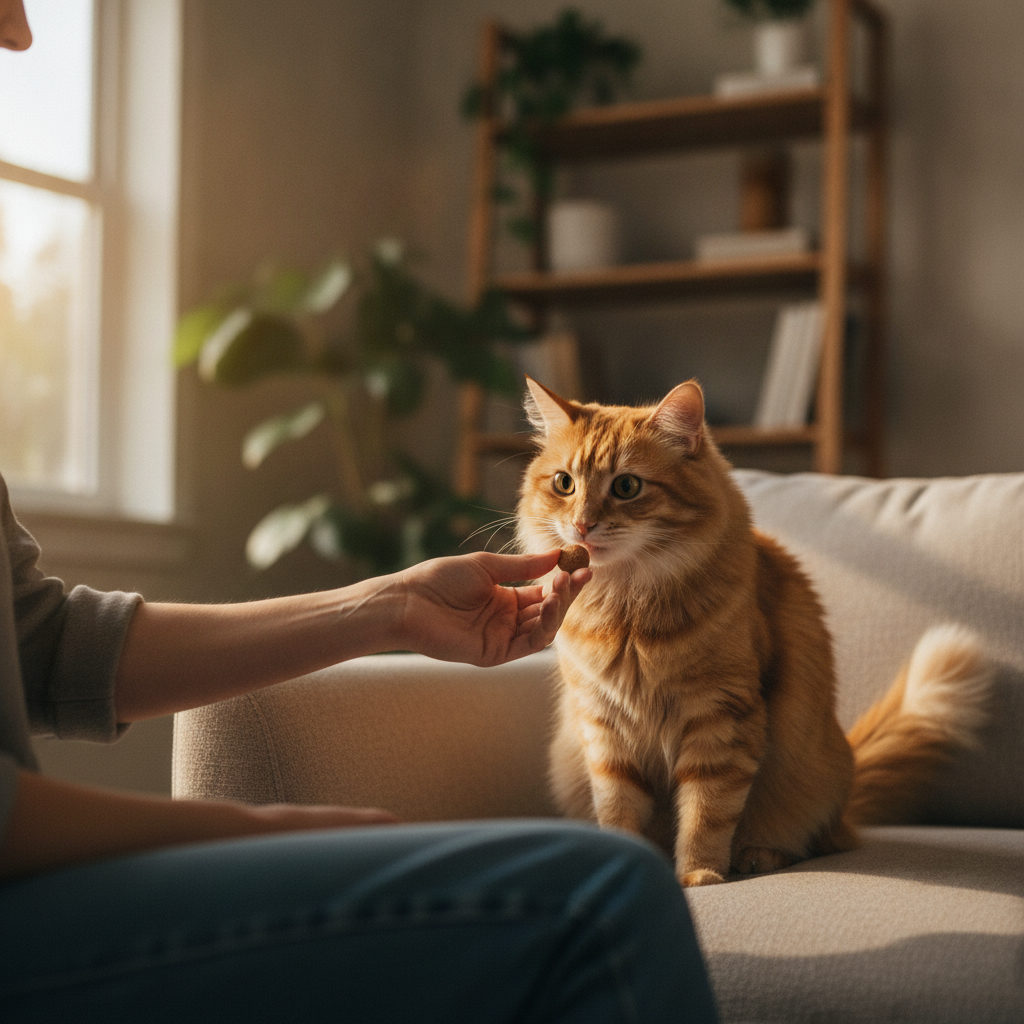
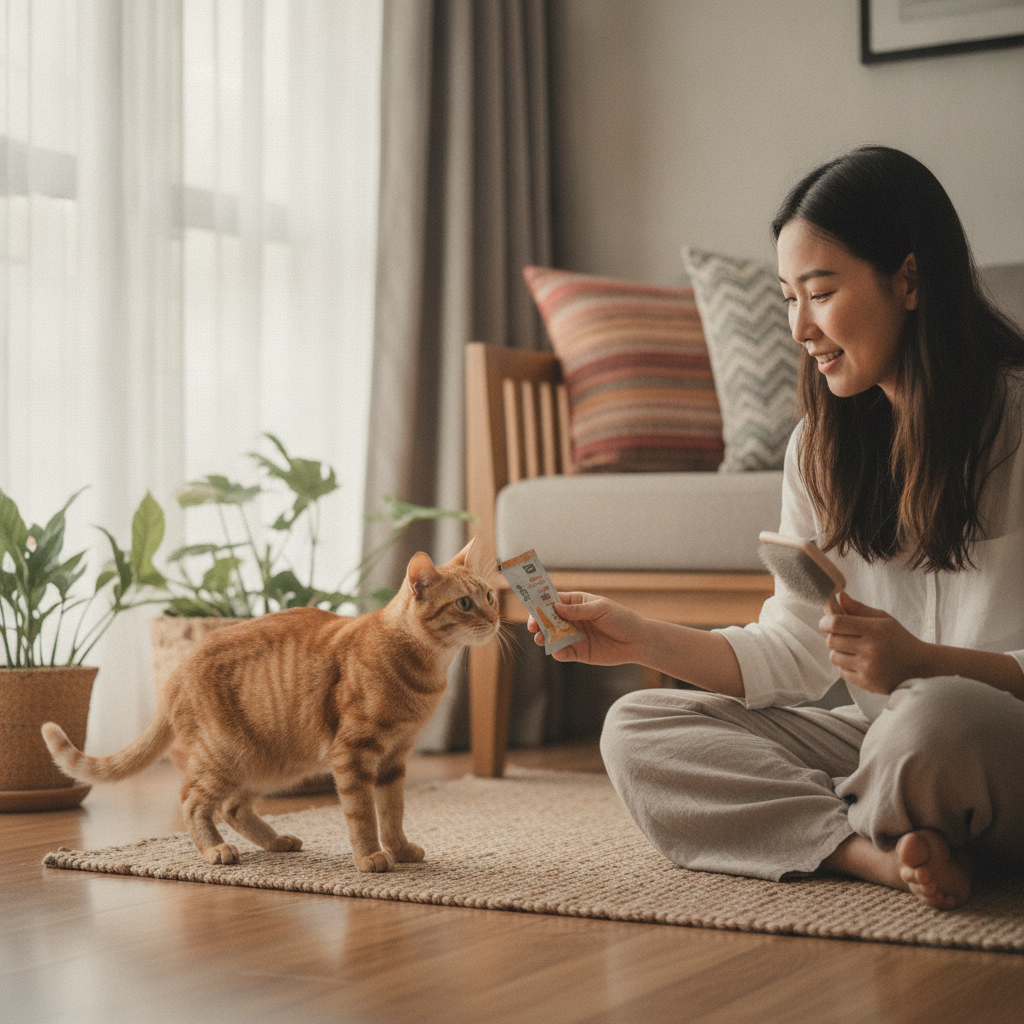
The proven method is desensitisation and counter-conditioning — a fancy way of saying: expose your cat to grooming so gently it never gets scared, and pair every step with something delicious so it changes how it feels about the brush. The two rules that make it work:
- Stay under the threshold. Never push to the point of fear. Go so slow it feels silly.
- Pair with high-value treats. Tuna, chicken, a lickable treat — given right after each tiny successful step.
Here's the brushing ladder, one rung per session (sessions under five minutes, always ending before stress shows):
- Show the brush → treat.
- Touch a favourite spot (cheek, back) with the back of the brush for one second → treat.
- Build up to two, then three seconds → treat each time.
- One second with the bristle side → treat.
- One short stroke in the direction of the fur → treat.
- Slowly add stroke length, then two strokes, then move to trickier areas like legs and belly.
It might take days or weeks to climb the ladder. That's normal. The same approach works for nail trims — start with one-second paw touches and build to clipping a single nail, then jackpot with several treats (see our nail-trimming guide). Slow is fast here.
Two small details make a big difference. First, timing: give the treat immediately after a successful step, not during it — you want the reward to confirm "that was fine", not to bribe a frightened cat through something scary. Second, environment: groom when your cat is naturally relaxed (after a meal or a nap), in a quiet familiar spot, never on a table that looks and smells like the vet's. A lickable treat smeared on a lick mat can keep a cat happily occupied for the few seconds you need. And don't aim to "finish" — doing one section beautifully and stopping beats a stressful full-body battle every single time.
Learn Your Cat's "Stop" Signals
The single most trust-building skill is reading your cat and stopping before it boils over. According to PetMD, watch for these escalating signs:
- Dilated pupils in good light — rising fear.
- "Airplane ears" — flattened back or rotated sideways.
- Tail twitching, lashing, or tucked tight.
- Skin rippling along the back, lip licking, a crouched, tense body.
- Low growl, hiss or spit — the final warning.
One dangerous myth worth busting: a cat that goes completely still and "frozen" is not calm — that's a shutdown from intense fear, and such a cat can explode from frozen to biting with no warning. Treat freezing as a red alert, not a green light. The rule is simple and absolute: at the first real stress signal, stop. Ending early teaches your cat that grooming is safe and predictable, which makes the next session easier. Pushing through teaches the opposite.
Stop Scruffing — It Backfires
Please don't grab the scruff. It's an outdated, harmful handling method, and the "it calms them like their mum did" story is a myth. As behaviourists at Tufts University and the RSPCA explain, the limpness reflex fades after kittenhood. To an adult cat, being grabbed by the neck mimics a predator attack — it triggers terror, not calm. The stillness people read as "cooperation" is actually frozen, learned helplessness. Scruffing also raises blood pressure (dangerous for flat-faced Persians), can strain neck muscles, and erodes your cat's trust in you for good.
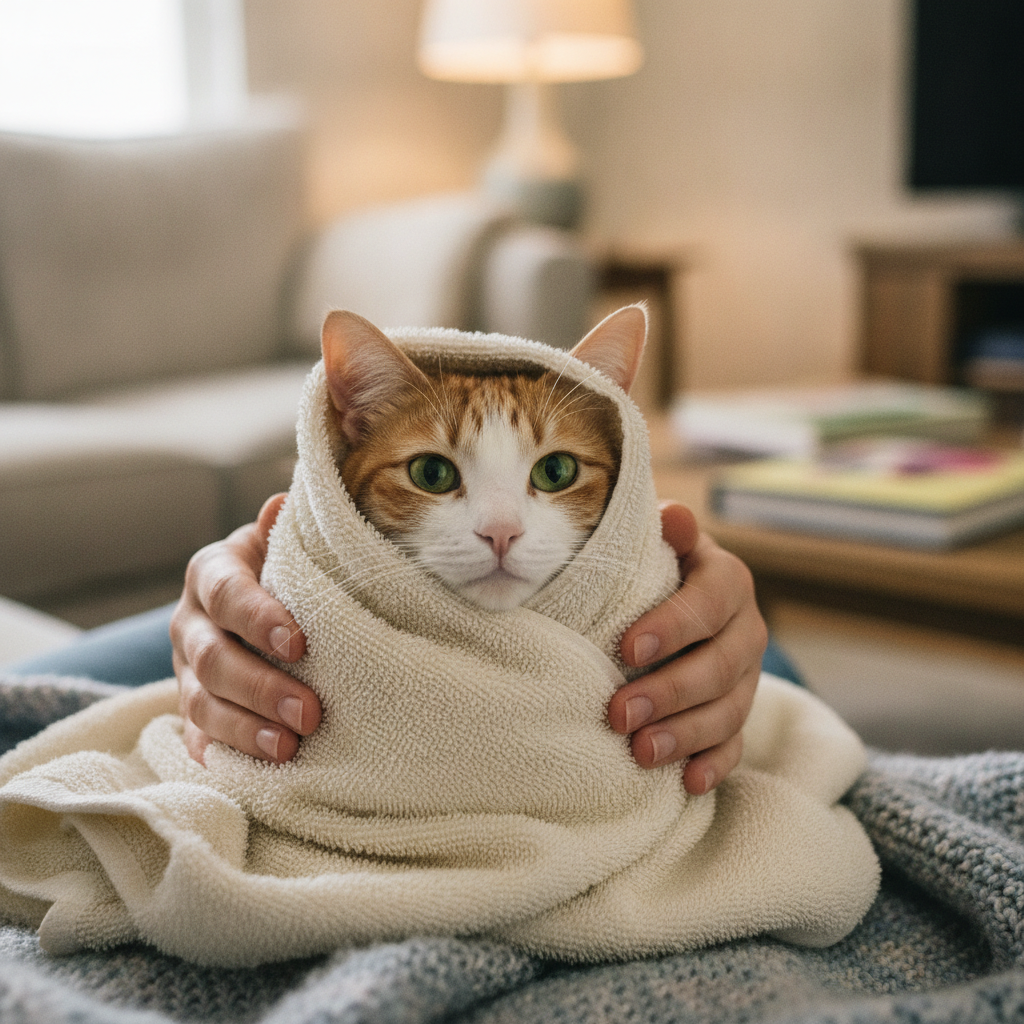
The safe alternative is the "kitty burrito" towel wrap, which gives a cat a reassuring, swaddled sense of security while keeping claws contained and the head free:
- Lay a large towel on a flat surface; place your cat near one short edge.
- Wrap one short side snugly over and around the cat, tucking it underneath.
- Fold the towel behind the rump up and over so the cat can't reverse out.
- Bring the long side firmly over the other side, keeping the front paws inside.
- Snug but never tight — the cat must breathe easily, head exposed.
Make the towel a friend first by feeding treats on it for a few days. And skip face muzzles entirely — covering a cat's eyes only deepens panic.
When to Escalate: Vet, Gabapentin, Fear Free Groomer
If your cat consistently escalates to fear-based aggression — persistent hissing, swatting, biting, dilated pupils, flat ears — it's beyond learning in that moment, and forcing it is unsafe. Stop and escalate. A vet visit comes first (to rule out pain), and for cats with severe anxiety the vet may prescribe a pre-visit medication. Gabapentin is the common one — given at home about 2–3 hours before grooming, it dials down fear and sensory overload so the cat can cope while staying awake. As PetMD notes, it must be vet-prescribed (the dose is adjusted for cats with conditions like kidney disease) and usually causes mild, temporary wobbliness.
For cats with a real history of grooming aggression, the safest route is a Fear Free Certified professional groomer or vet tech — find one via Fear Free. They're trained to read feline stress, use towel wraps instead of force, work in short breaks, and often coordinate with your vet on a gabapentin dose beforehand. That's not failure — for a fearful or badly matted cat, it's the kindest, safest option.
Lower the Whole-House Stress (Litter Included)
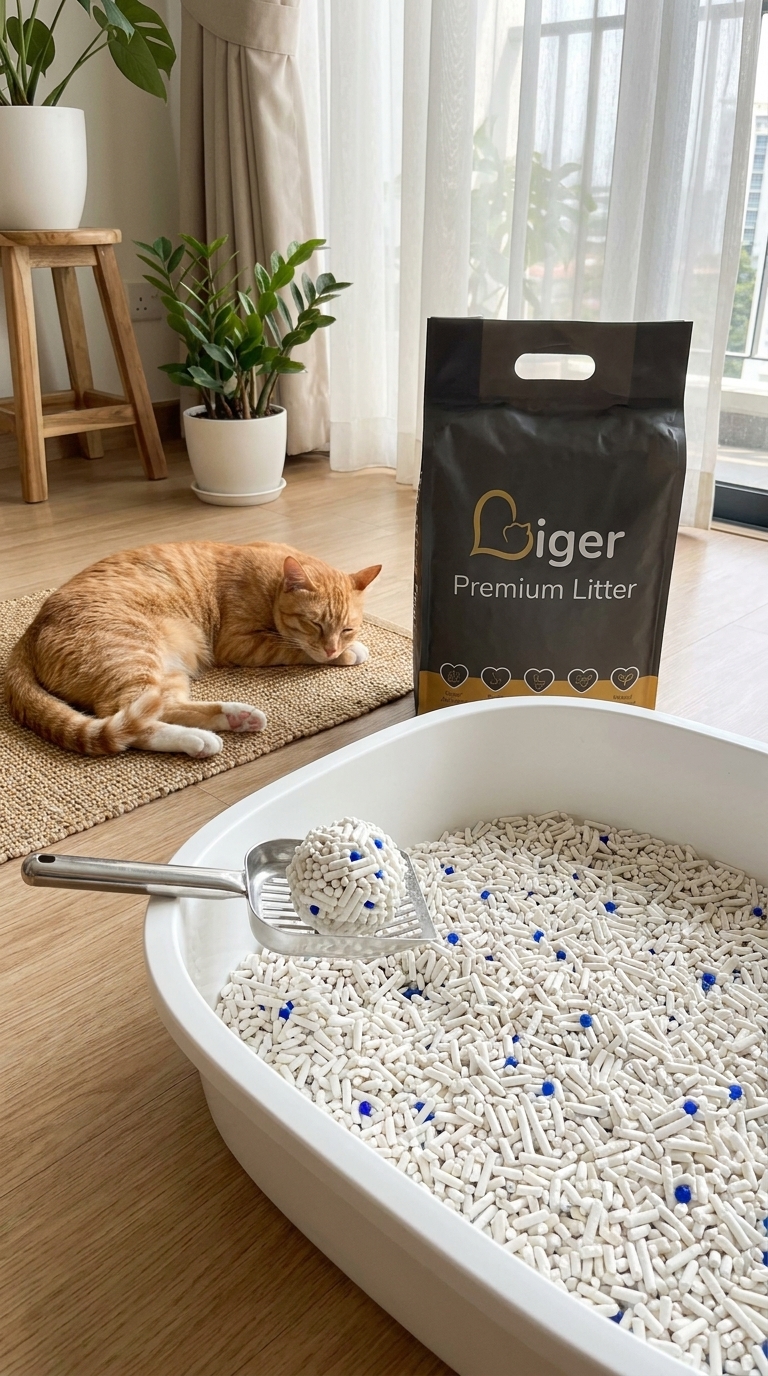
Here's the piece people miss: a cat that's anxious all the time has a lower tolerance for any new stressor, grooming included. Lowering your cat's baseline stress makes every brushing session easier — and a calm, predictable litter setup is a surprisingly big part of that. Cats are deeply territorial about their toilet: a clean, accessible, low-odour box that's the right size lowers daily anxiety, while a smelly, cramped or shared box quietly winds a cat up. The rule of thumb is one box per cat plus one — size yours with our litter box size calculator.
It's also why we use Liger Premium Tofu Cat Litter in our own multi-cat home with Tiger, Lion, Ping'An and Lucky — a soft, low-dust, lightly milk-scented litter that clumps firmly and controls odour, so the box stays fresh and inviting (and a low-dust litter means less irritation for an already-sensitive, over-grooming cat). Current pricing (as of May 2026): RM21.90 for 2kg, RM53.90 for 3 packs, RM89 for 5, and RM169 for the 10-pack — about RM8.45/kg, free shipping in Peninsular Malaysia. A relaxed cat in a low-stress home is a cat you can actually groom.
Patience, observation, consistency. Honour the "stop" signals, never scruff, reach for help when you need it — and you'll trade a grooming battle for a calmer, healthier, happier cat.