It's one of the first things people ask when they discover their cat is expecting: how many kittens are we talking about — two? Ten? The honest answer is "usually four to six, but cats love to surprise you." Litter size swings with her age, her breed and her health, and the all-time record will make your jaw drop. Here's the full picture, plus the bit that really matters for Malaysian cat parents: how fast it can all add up.
If she's newly pregnant, pair this with how long cats are pregnant and the early signs, and the full pregnancy and birth guide.
How Many Kittens Do Cats Have?
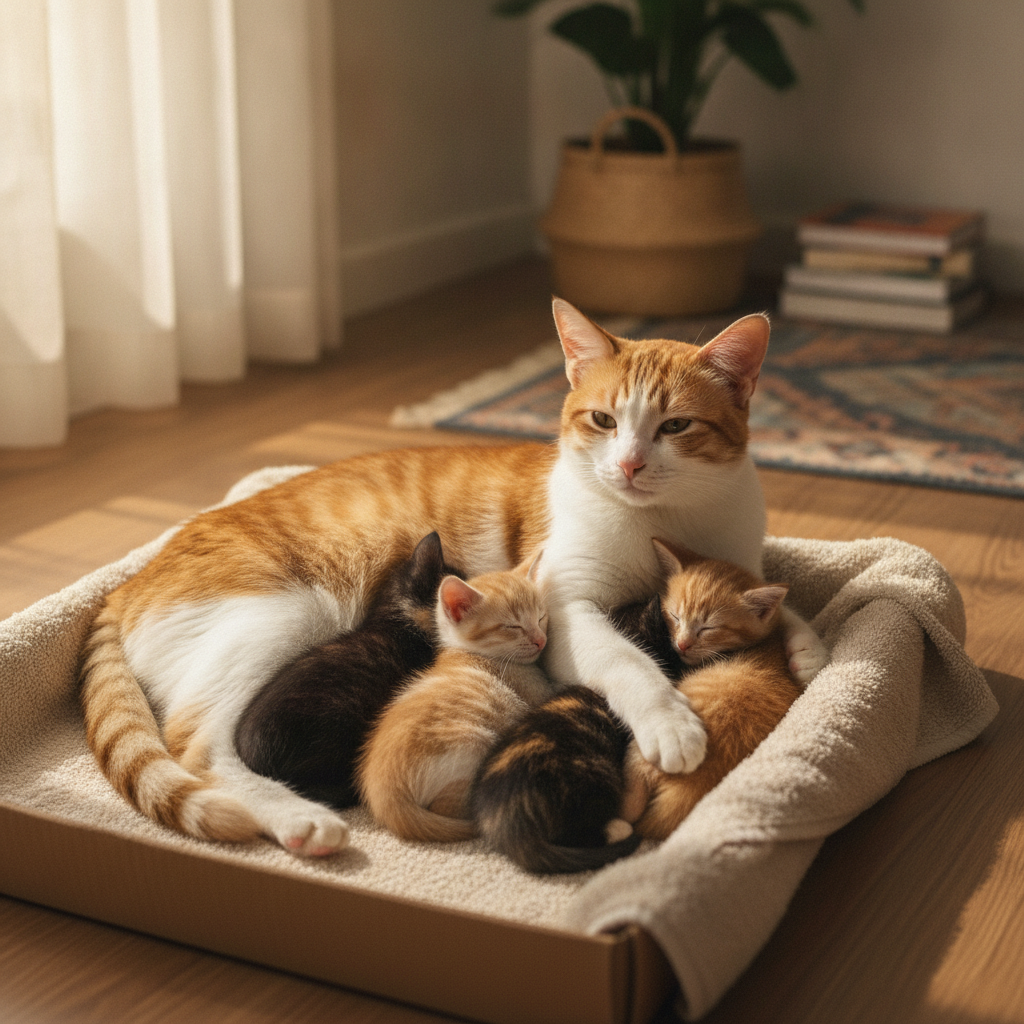
The typical domestic cat has a litter of four to six kittens, and four is an especially common number. But the range is wide: a litter can be a single kitten at one end, and stretch into double digits at the other. According to PetMD, most healthy queens in their prime land squarely in that four-to-six band, so if your cat delivers five wriggling kittens, she's textbook normal.
First-Time Mums Have Smaller Litters
A queen's first litter is almost always on the smaller side — commonly just one to three kittens, especially in a young cat under a year old. It's nothing to worry about; it's simply how feline reproduction warms up. From there, litter sizes tend to grow, peaking during her prime reproductive years between roughly two and six years of age, when she'll more reliably produce that four-to-six average. As she ages past her prime, fertility tapers and litters may shrink again toward first-litter sizes. So a one-kitten first litter followed by a litter of five next time is a completely normal progression, not a sign anything went wrong.
What Decides Litter Size: Breed, Age and Health
Three big levers move the number up or down.
Breed and genetics. Queens often have litters of a similar size to their own mothers — it's partly hereditary, and as feline-health writers note, inbreeding tends to push fertility and litter size down, which is one reason carefully managed pedigree lines matter. Some breeds are consistently more prolific than others, as a study of pedigree litters recorded:
| Breed | Average litter size |
|---|---|
| Burmese | 5.25 kittens |
| Siamese | 4.5 kittens |
| Persian | 3.9 kittens |
| Abyssinian / Somali | 3.49 kittens |
| Chinchilla | 2.8 kittens |
Malaysia's everyday kucing kampung (domestic shorthair) generally sit comfortably in the four-to-six range. If you're curious how breed shapes other things like cost and care, our cat breed cost calculator is a useful detour.
Age. As above, the two-to-six-year window is peak production, with smaller litters at both ends of her reproductive life.
Health and nutrition. Body condition matters in both directions: an overweight queen can have fewer kittens because of a lower ovulation rate (and faces a higher risk of a difficult birth), while an underweight, poorly-nourished queen may also have small litters, because malnutrition can cause embryos to be reabsorbed. A balanced, complete diet during pregnancy is what lets her genetic potential actually show up — the practical feeding side is covered in caring for a pregnant cat.
The Record-Breakers
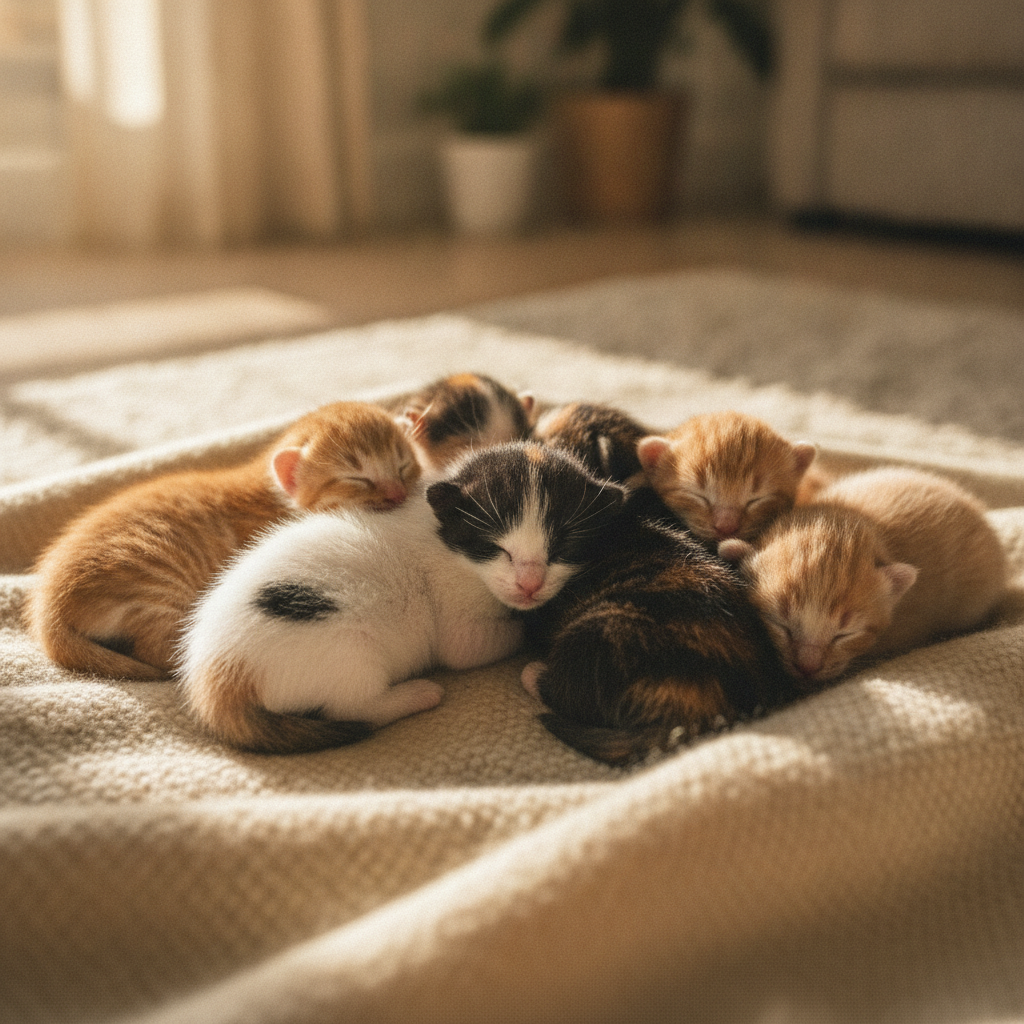
Now the fun part. The largest litter of domestic kittens ever recorded, per Guinness World Records, was an astonishing 19 kittens, born in 1970 to a Burmese/Siamese cat named Tarawood Antigone in the UK — 15 of them survived. The record for the largest litter where every kitten survived goes to a Persian named Bluebell, who had 14 in 1974, all of which lived.
These are extreme outliers, and bigger isn't better. Very large litters (more than ten kittens) often mean lower individual birth weights, because the kittens compete for space and nutrients in the womb. As International Cat Care explains, low birth weight is a leading contributor to "fading kitten syndrome", where newborns struggle to survive the first weeks. A tidy litter of four or five healthy, good-weight kittens is a far better outcome than a record-chasing dozen.
How Many Litters Can a Cat Have in a Year?
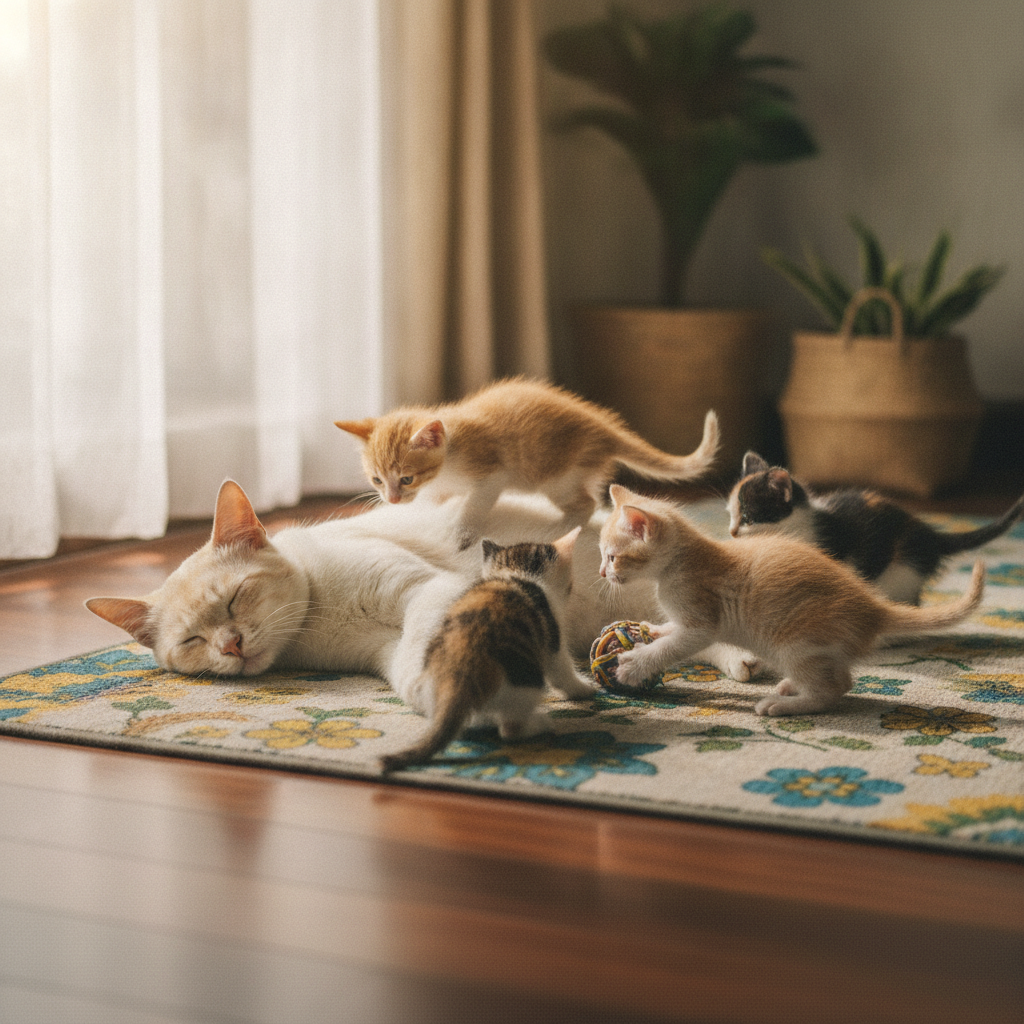
This is the number that should give every cat owner pause. A female cat can reach sexual maturity as early as four months old. With a gestation of just 63–65 days, and the ability to come back into heat every two to three weeks — and even fall pregnant again within weeks of giving birth, while still nursing — a healthy queen is biologically capable of three to four litters a year, occasionally five. Indoor cats exposed to artificial light can cycle and breed all year round, with no seasonal pause.
Do the maths and it's sobering: one unspayed female and her descendants can theoretically produce thousands of cats in just a few years. In reality, free-roaming queens average far fewer — one large study of over 2,000 street cats found just 1.4 litters per year on average, because hunger, disease and high kitten mortality cut the potential down. But that gap between biology and reality is exactly the tragedy behind Malaysia's huge stray-cat population. The capacity is always there; it just needs an unspayed cat and a roaming tom.
It's worth sitting with one detail: a queen can conceive her next litter while she's still feeding the current one. That means an unspayed cat who delivers in, say, January could realistically be raising a second litter before that first set of kittens is even fully weaned. This back-to-back breeding is exhausting for her body and is a big part of why free-roaming queens often look so worn down. It's not a moral failing on the cat's part — it's simply how the species is wired to survive, and it's precisely why human intervention through spaying makes such a difference.
A Big Litter Means a Big Job
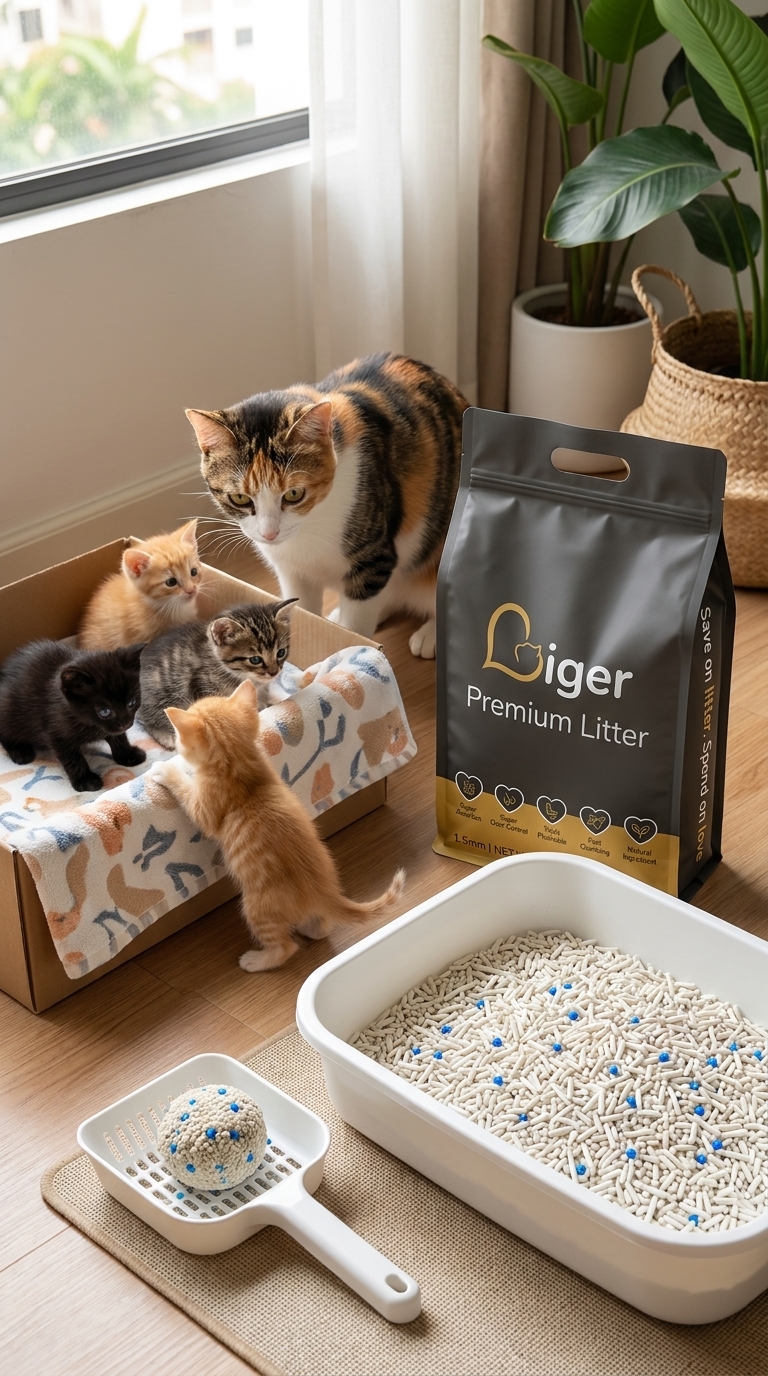
Whether she has three kittens or seven, your workload — and your litter usage — climbs fast once they start moving around and using the tray at three to four weeks. A mother cat plus a hungry litter goes through a lot of litter, so this is the moment a clean, economical, low-dust set-up really pays off.
Liger Premium Tofu Cat Litter fits a growing household well: it's made from natural soy fibre, is low-dust (kinder to developing kitten lungs), clumps firmly so a busy multi-cat tray stays manageable, controls odour in our humid Malaysian weather, is flushable in small amounts, and is Halal-certified. The pricing rewards buying for a bigger family: RM21.90 (1 pack, 2 kg), RM53.90 (3 packs), RM89 (5 packs) and RM169 (10 packs) — the 10-pack works out to about RM8.45/kg, versus RM10.95/kg on a single pack, so buying in bulk saves roughly 23% (current Liger pricing). With a litter of kittens that adds up quickly. Work out exactly how much you'll need with the litter calculator. (A reminder: very young kittens should start on kitten-safe, non-clumping litter, moving to regular litter as they grow.) For the day-to-day of raising the litter, see caring for a nursing queen and her newborn litter.
The Responsible Answer: Spaying
Here's where the litter-size conversation has to land. Because cats breed so efficiently, the single most responsible thing an owner can do — unless you're a registered, intentional breeder — is to spay. It prevents unwanted litters at a time when Malaysian shelters and feeders are already overwhelmed, and it brings real health wins for your cat: it eliminates the risk of uterine and ovarian cancers, sharply reduces mammary tumours (which are malignant in around 90% of feline cases), and rules out the dangerous uterine infection pyometra. It also ends the heat-related yowling and roaming. We won't repeat the cost, age and recovery details here — that's covered fully in spaying and neutering in Malaysia, with the broader decision in to snip or not to snip. If your cat just surprised you with a litter, the kindest follow-up plan is to talk to your vet about spaying once she's finished nursing.
Litter Size and Kitten Health: When to Worry
Litter size only matters insofar as it affects health, so keep an eye on a few things:
- Very small or very large litters can both carry slightly higher risks, so a vet check around the birth is wise — an X-ray after day 45 gives an accurate kitten count, which tells you when she's finished delivering.
- Low birth weight: a healthy newborn weighs roughly 90–100 grams; kittens much below this need close monitoring, as very low birth weight strongly predicts trouble.
- A queen still straining long after the last kitten, or a count that doesn't match the X-ray, means a possible retained kitten — call the vet. The full labour picture is in cat giving birth: labour signs.
- Remember a swollen belly isn't always kittens — sometimes it's a false pregnancy, so confirm with your vet.
The bottom line: expect four to six, don't panic at one or count on a dozen, feed her well, get a vet to confirm the count, and — unless you're deliberately breeding — plan to spay. That's how you turn a happy surprise into a responsible, healthy outcome for every cat involved.