Walk into any pet shop in KL and the cat-brush wall is overwhelming: slickers, rubber gloves, combs, scary-looking metal rakes. Most people grab whichever one looks nice and wonder why brushing still ends in fur everywhere and a grumpy cat. Here's the secret no packaging tells you: the wrong tool is the single biggest reason brushing fails. A bristle brush will never reach a Maine Coon's matting undercoat; a deshedding rake on a short-haired cat is overkill that risks irritation. This guide matches the right tool to your cat's coat — and shows you how to use it without hurting them.
For the bigger routine, see our complete home grooming guide. This one is all about the tools. (Note: this isn't about why your cat sheds — that's covered in our guide to cat shedding — it's about choosing the gear to manage it.)
The Right Brush Is the Whole Game
Before tools, one mindset point. Your cat's coat is a health dashboard. The Cornell Feline Health Center notes that a clean, shiny, smooth coat reflects good health, while a sudden dull, greasy, flaky or thinning coat can be an early sign of nutritional gaps, allergies or systemic illness. Brushing isn't just tidying — it's your weekly hands-on check for lumps, fleas and skin changes. Pick the right tool and the whole thing becomes faster, gentler and genuinely useful.
There's also a practical Malaysian reason to get this right. Our cats live indoors in air-conditioning and shed more or less year-round, not just in two seasonal bursts. That means loose fur is constantly being produced — and if you're not lifting it off with the right brush, it's being swallowed (hello, hairballs) or settling on every surface in your condo. The correct tool removes far more of that loose hair in far less time.
The Five Tools That Actually Matter
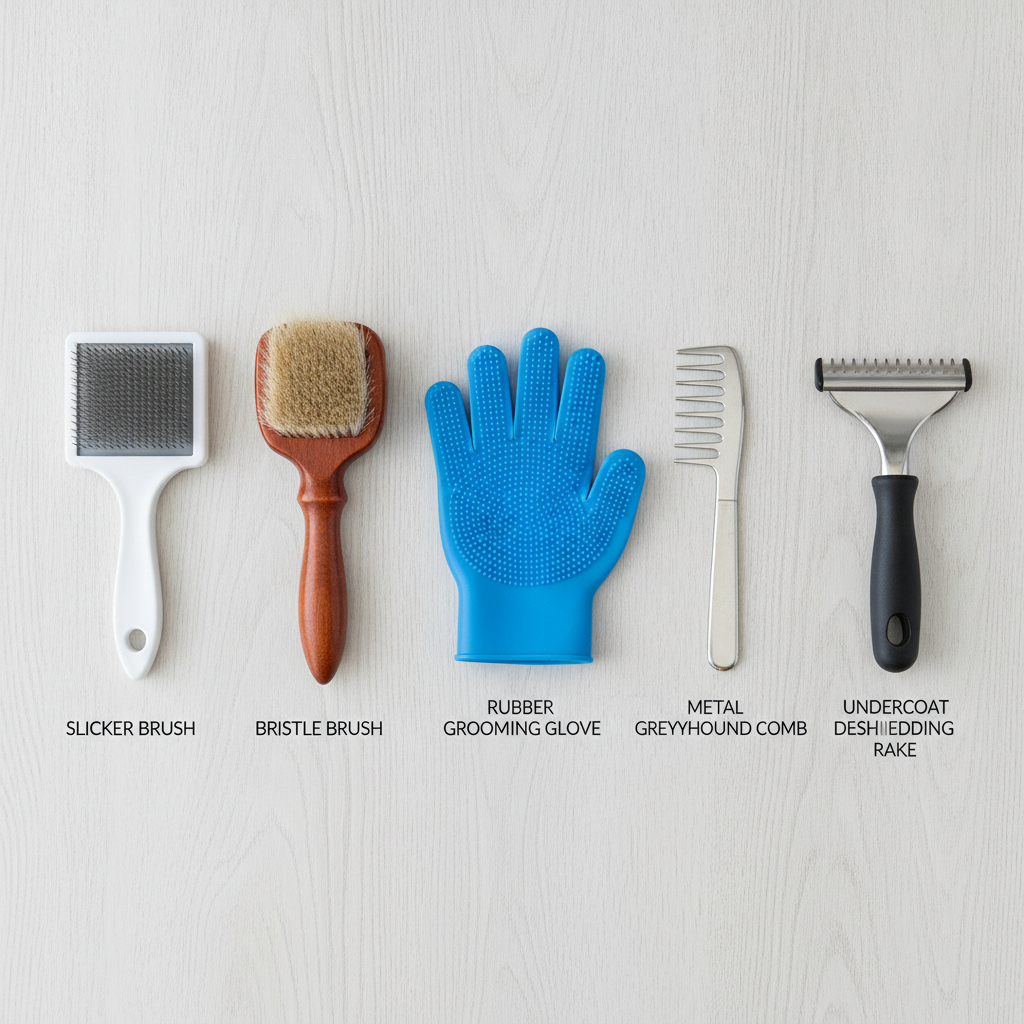
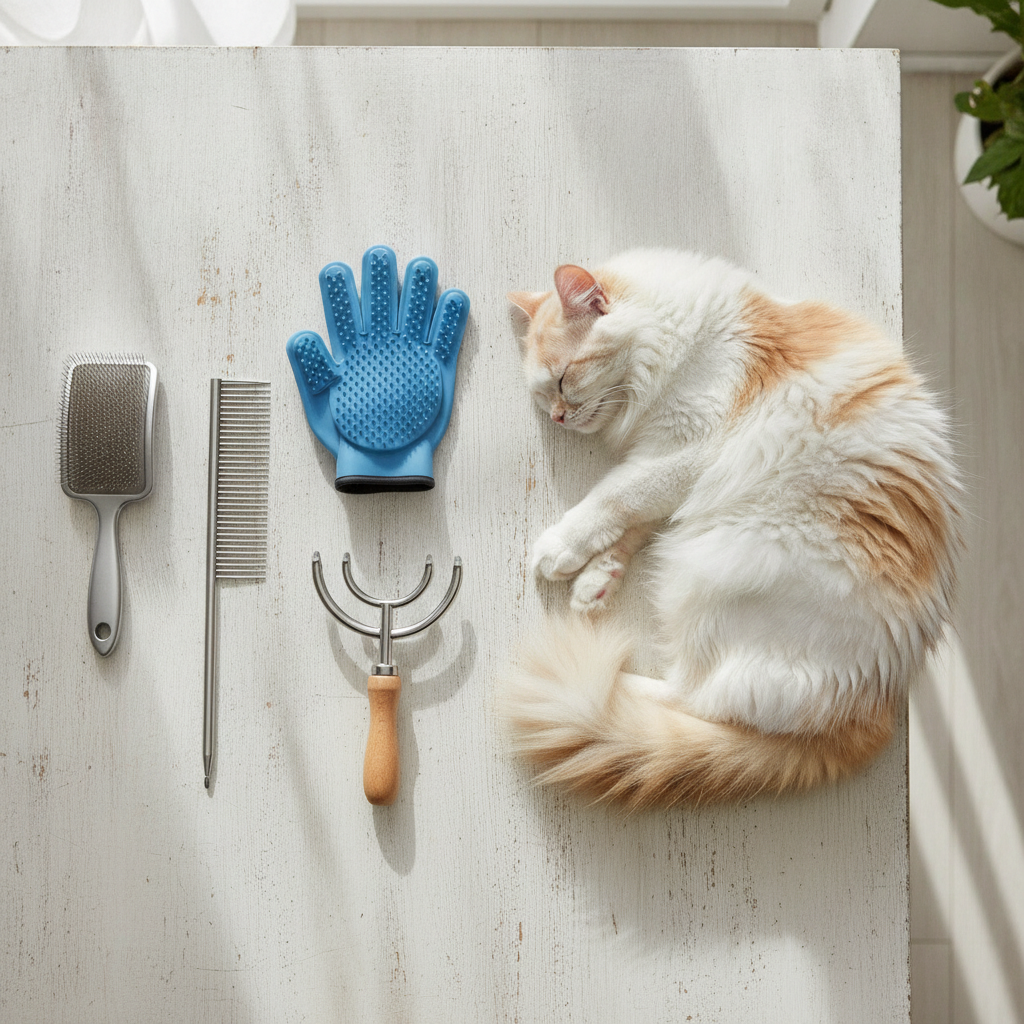
Ignore the gimmicks. These five do everything:
- Slicker brush: fine, short, bent wire pins set close together. They slip through the topcoat to lift loose undercoat and break up minor tangles. Versatile across coat types — but the fine wires can cause irritation if you press too hard, so it's not for daily heavy use.
- Bristle brush: densely packed bristles for surface fur and, crucially, for spreading the cat's natural skin oils (sebum) to give the coat its shine. A finishing tool.
- Rubber curry brush / grooming glove: soft rubber nubs that lift shed fur and dander while feeling like a massage. The glove mimics petting, so it's brilliant for nervous cats — but it can't penetrate a dense undercoat.
- Wide- and fine-tooth metal combs: the wide side detangles knots gently; the fine side does the final check, catching tiny knots near the skin and lifting dander. A greyhound comb has both.
- Undercoat deshedding rake: long blade-like teeth that bypass the guard hairs and hook out dead undercoat. Essential for double coats — but powerful, so use it sparingly.
Match the Tool to Your Cat's Coat
This is the part that actually matters. Match the kit to the coat:
- Short-haired (domestic shorthairs, most kucing kampung): a rubber curry or grooming glove to lift loose fur, then a bristle brush to finish and spread oils. 1–2 times a week. Brush with the grain, head to tail.
- Long-haired (Persians, Himalayans, ragdolls): a wide-tooth comb first to find and ease out knots in mat-prone spots (belly, chest, armpits, behind the ears), then a slicker for loose undercoat. Daily — non-negotiable, per the ASPCA. Work upward from the legs and belly; part the tail down the middle.
- Double-coated (Maine Coons, some ragdolls): start with a slicker or comb for surface tangles, then an undercoat rake with gentle pressure in the direction of growth, finishing with a smoothing pass. 1–3 times a week, more during shedding peaks.
Senior, overweight and arthritic cats can't twist to reach their own lower back and tail base, so they need you to take over those zones whatever their coat type — that's where neglected pelts form first. If your long-haired cat is already knotted, don't force it; read our guide on how to de-mat safely first.
One pro technique worth borrowing for thick or double coats is line brushing: use the comb to part the fur in a line down to the skin, then brush that exposed strip before moving the part along. It's slower, but it guarantees your tool actually reaches the undercoat instead of just skating over the top — which is exactly where mats and trapped dead fur hide. For breeds that need it most, our Persian care guide and Maine Coon guide go into breed-specific coat care.
How to Brush Without Hurting Your Cat
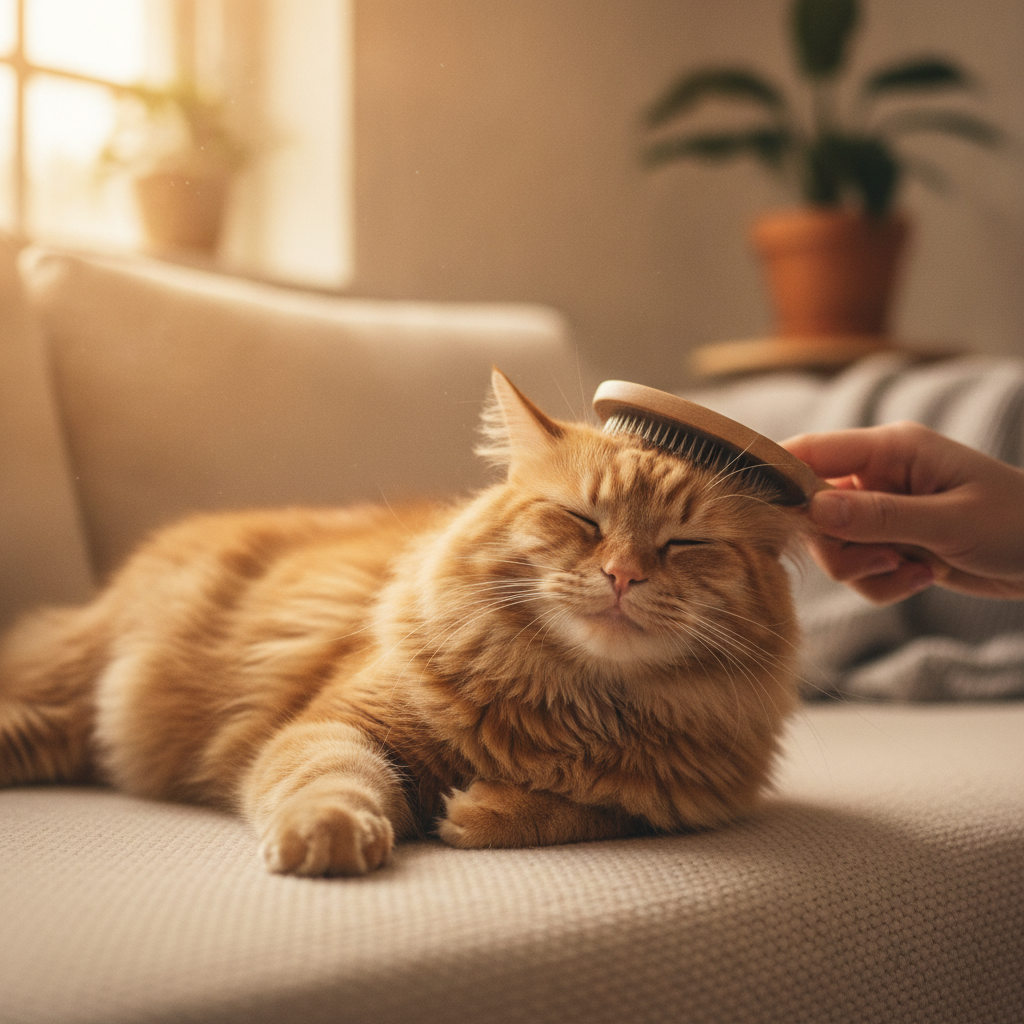
Technique decides whether brushing builds trust or breaks it. The rules:
- Always brush in the direction of fur growth. Going against the grain tugs follicles and instantly teaches your cat to hate the brush.
- Test pressure on your own forearm first. Run a new slicker down your inner arm — if it feels scratchy on you, it's worse on thin feline skin.
- Mind the sensitive zones: belly, chest, legs, tail and face have thinner skin. Clean the face with a soft damp cloth, never a wire brush. For the tail, part it and brush each side — never pull the tail itself.
- Keep it short. Five to ten minutes, ending on a treat, beats one long wrestling match. Zoetis recommends building up gradually with lickable treats so your cat associates the brush with good things.
Brush Burn and Over-Deshedding: The Risks Nobody Warns You About
Grooming tools can cause real damage when misused — and almost nobody mentions this in the shop. "Brush burn" is friction irritation from too much pressure, too-harsh bristles, or going over the same spot again and again. You'll see redness, warmth, sensitivity, sometimes scabs — and a cat that suddenly licks the sore patch or refuses to be brushed there. PetMD and other veterinary sources flag it as a common, preventable injury.
Over-deshedding is the other trap. Deshedding rakes are meant to pull dead undercoat only. Aggressive or repeated passes strip out healthy, living undercoat — the insulation your cat needs — and snap the protective guard hairs, leaving a dull coat or even bald patches. The fix is simple: let the tool's weight do the work, use gentle pressure, and never run it over the same section repeatedly in one session. More is not better.
And remember the limits of any brush: if the coat is dull or shedding heavily no matter how well you groom, the problem may be internal. VCA Hospitals notes that poor nutrition is a frequent cause of excessive shedding and a dry, lifeless coat, while persistent bald spots, dandruff or skin irritation can point to parasites, allergies or hormonal issues. No tool fixes those — that's a vet conversation, not a shopping decision.
Reading Your Cat: When to Stop
Your cat will always tell you when it's had enough — if you watch. Stop the session the moment you see:
- Tail swishing or twitching hard
- Skin rippling along the back
- Ears flattening back
- A tense, rigid body
- Low growling or hissing
Never pin a cat down to finish — forcing it past its limit destroys trust and makes the next session worse. End on a good note, even if you only managed one section. If your cat is so resistant that grooming becomes impossible or unsafe, that's covered in our guide on grooming a cat that hates being groomed, and a professional groomer or vet can help.
Brushing and a Low-Dust Litter: Less Fur, Less Mess
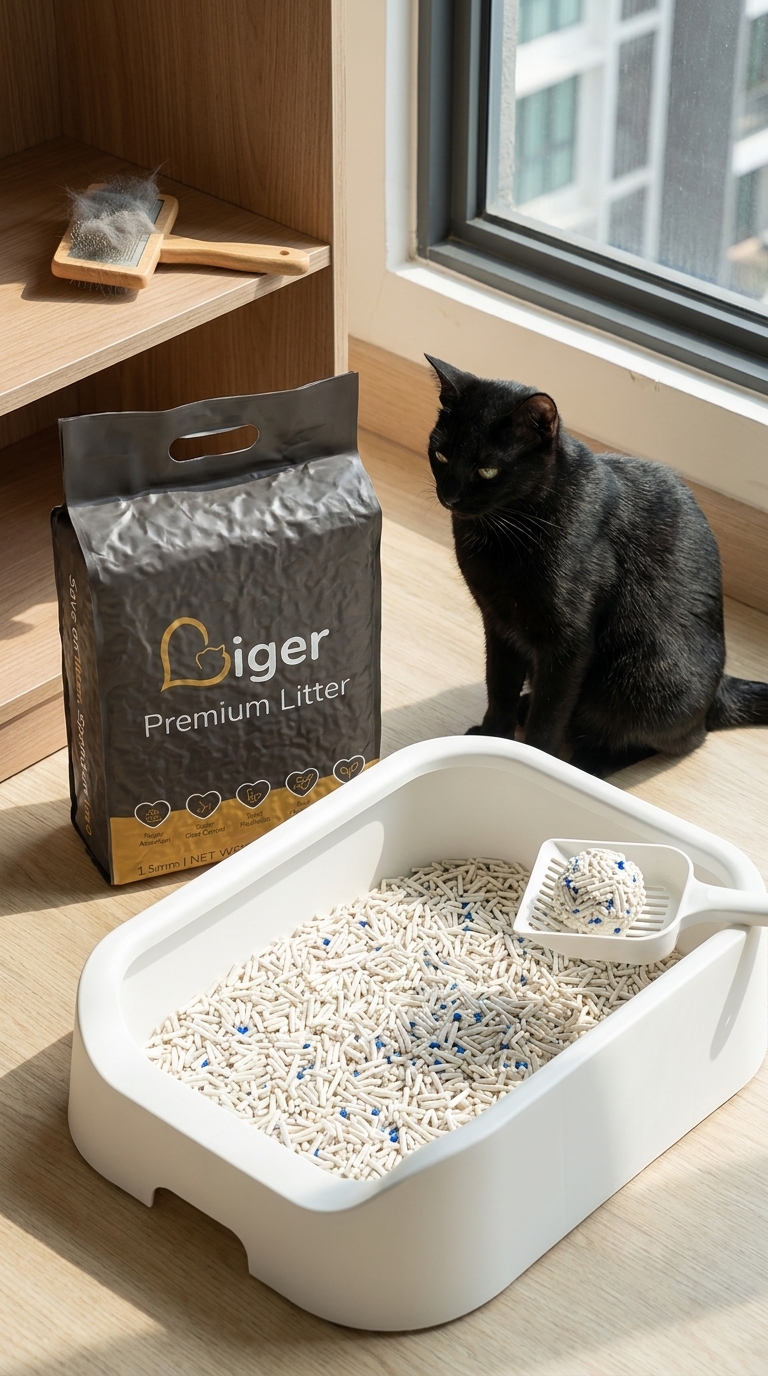
Two habits together keep your home — and your cat — far cleaner than either alone. Regular brushing pulls loose fur off the cat before it ends up on your sofa, in the litter box, and (swallowed) as hairballs. And a low-dust litter stops fine powder clinging to your cat's belly and leg fur every time it visits the box — which is one less thing you have to brush out, and one less irritant on the skin you're trying to keep healthy.
That pairing is why we use Liger Premium Tofu Cat Litter alongside a daily brush. The soft, soy-based pellets are low-dust and don't powder into the coat, while still clumping firmly so the box stays clean and quick to scoop. Current pricing (as of May 2026): RM21.90 for 2kg, RM53.90 for 3 packs, RM89 for 5, and RM169 for the 10-pack — about RM8.45/kg, free shipping in Peninsular Malaysia. You can compare how much fine dust different litters throw off with our dust-level comparison tool, or weigh textures in the litter comparison. And since coat quality starts from the inside, a balanced diet rich in omega fatty acids matters too — our cat food calculator helps you get the portions right.
Buy the right brush for your cat's coat, use it gently and briefly, and pair it with a clean, low-dust box. That's the whole formula for a healthy coat and a lot less fur on your black work trousers.